Military Helicopters
The twin-engine Cobra the Marines built to fight from ships.
Updated: by Tim de Vries
The latest aviation news and stories sent to your inbox.
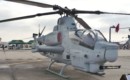
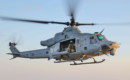
The Bell AH-1 SuperCobra is the twin-engine branch of the Cobra family, built for the United States Marine Corps because a helicopter that lives over the sea needs a second engine to get home. The line runs from the AH-1J SeaCobra of 1970 through the stretched AH-1T to the AH-1W, the definitive SuperCobra, which carried TOW, Hellfire and Sidewinder missiles. The Marines flew the AH-1W for 34 years before retiring it in October 2020 in favor of the AH-1Z Viper, and Taiwan and Turkey still fly it today.
Live Fleet Activity (SUCO)
Fetching live data…


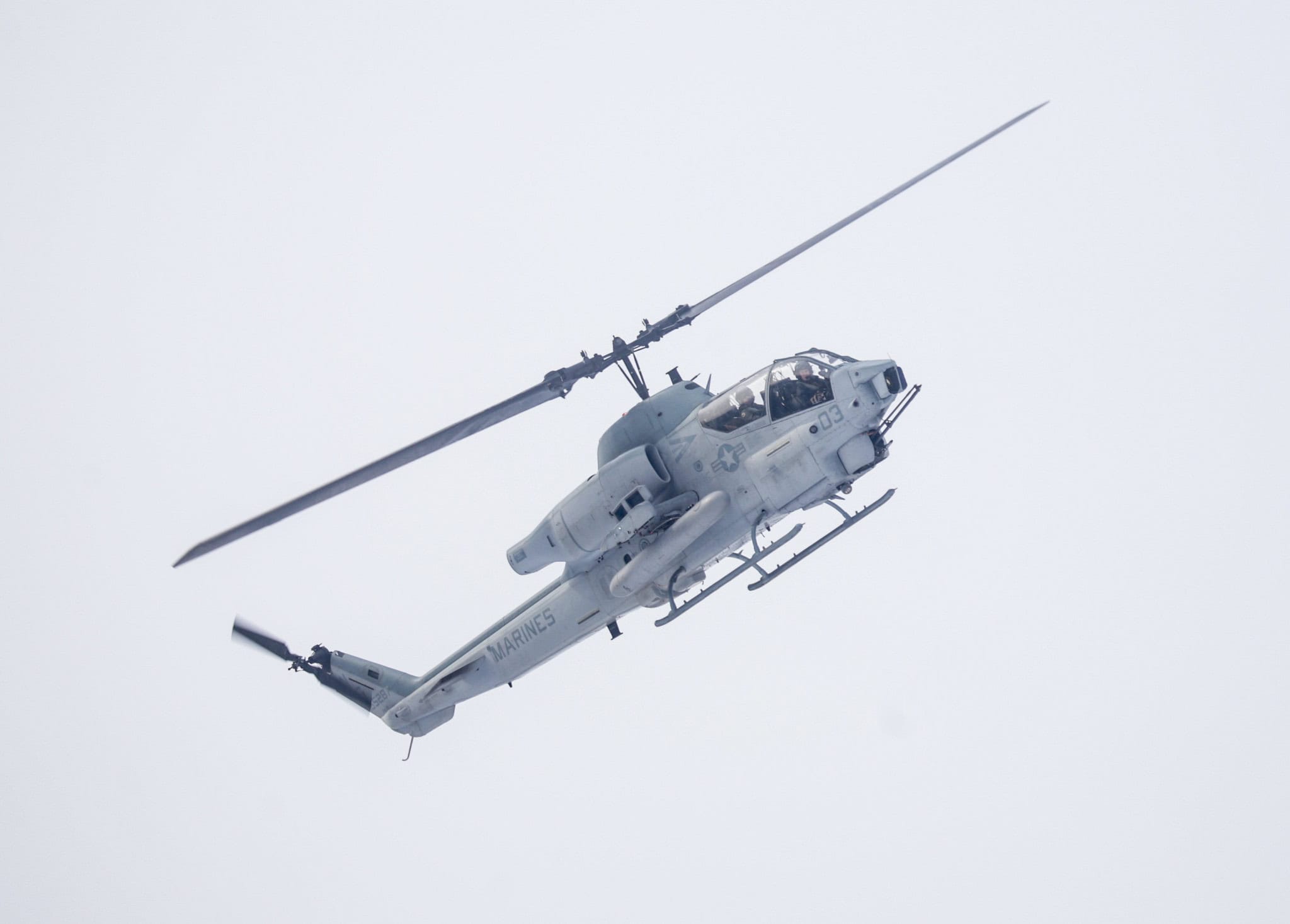
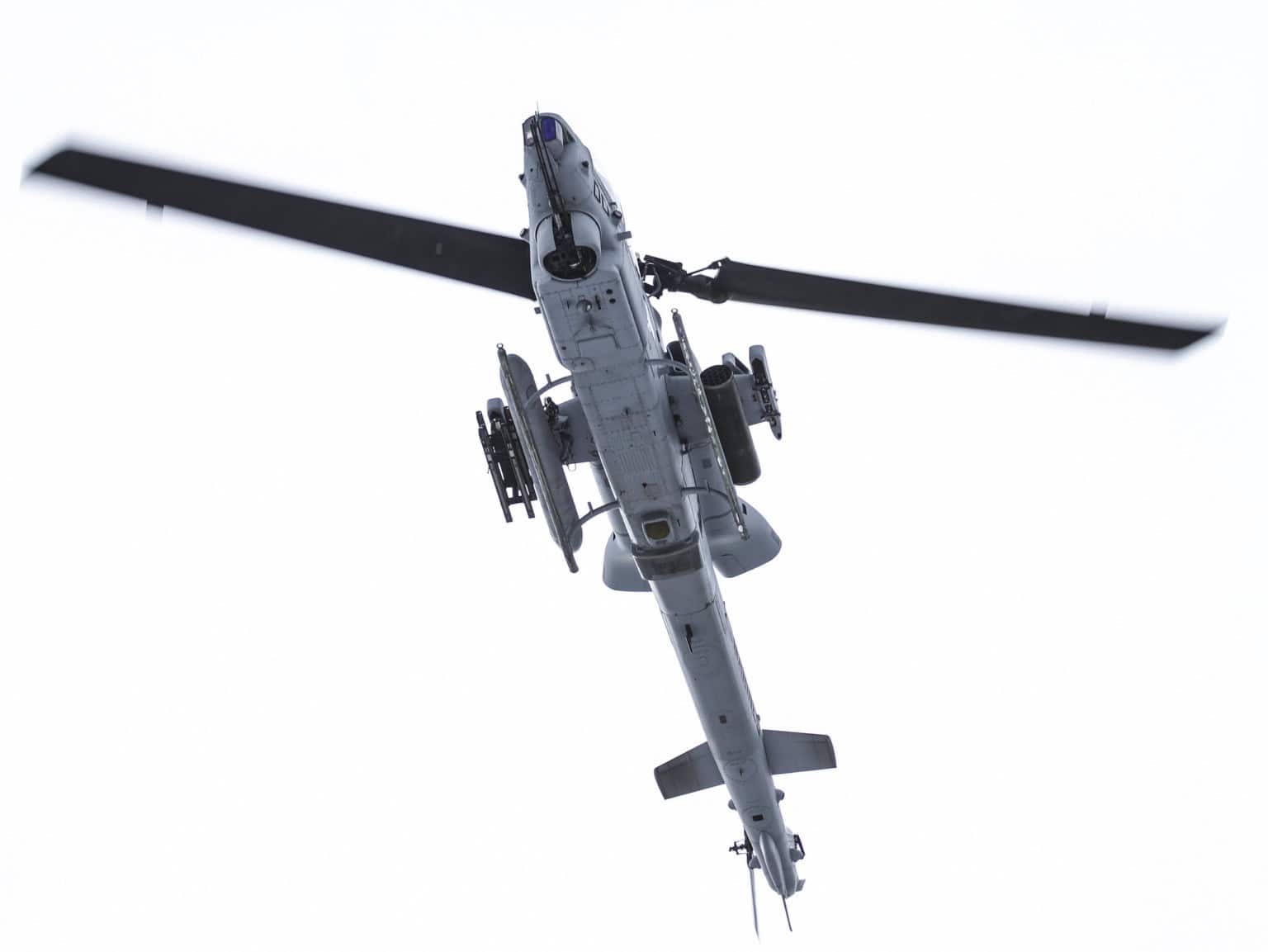
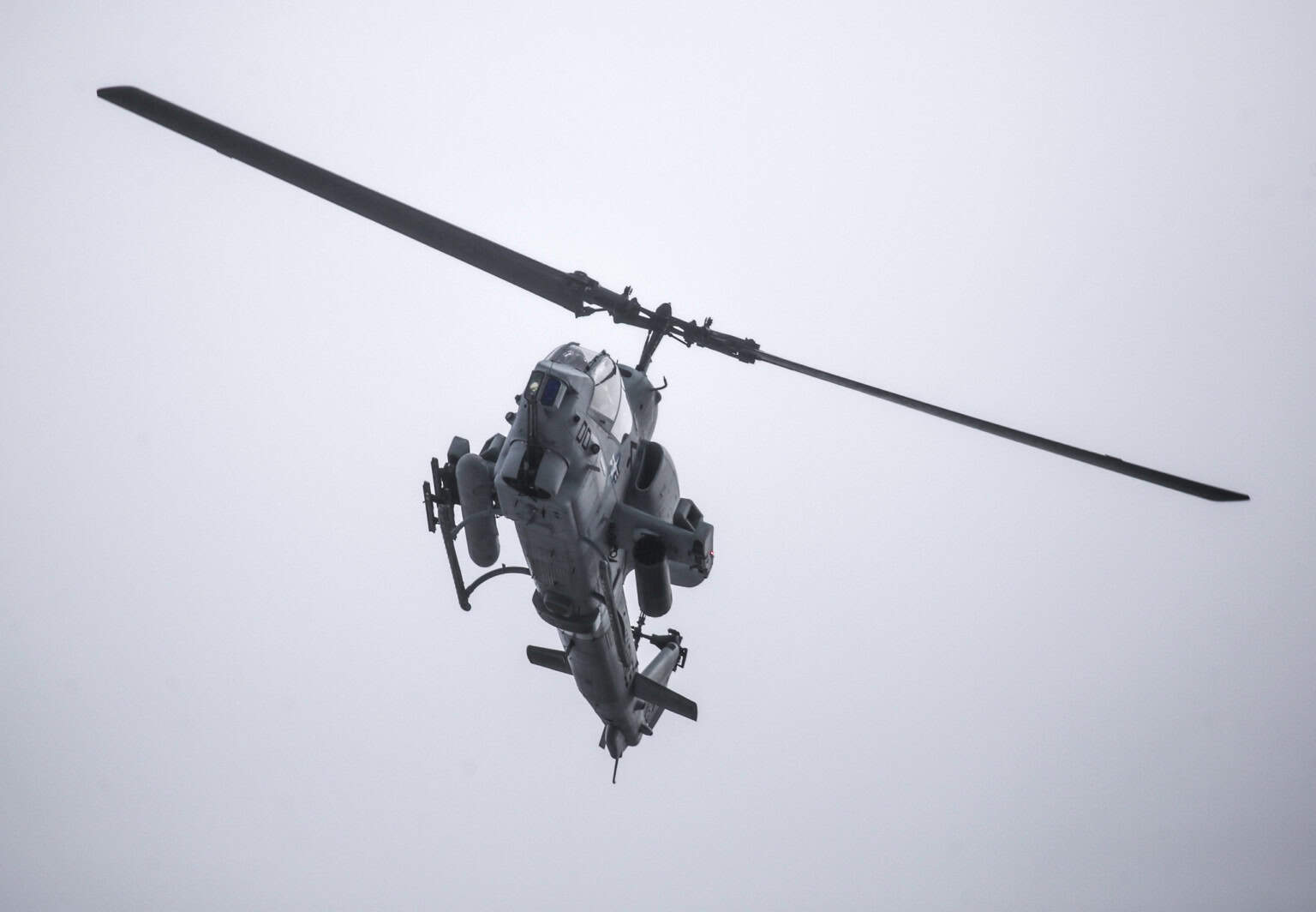


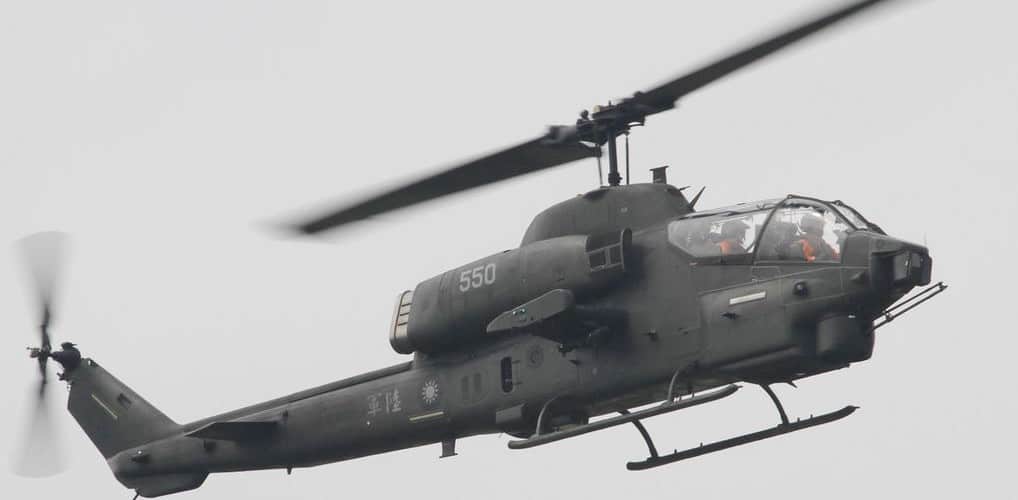
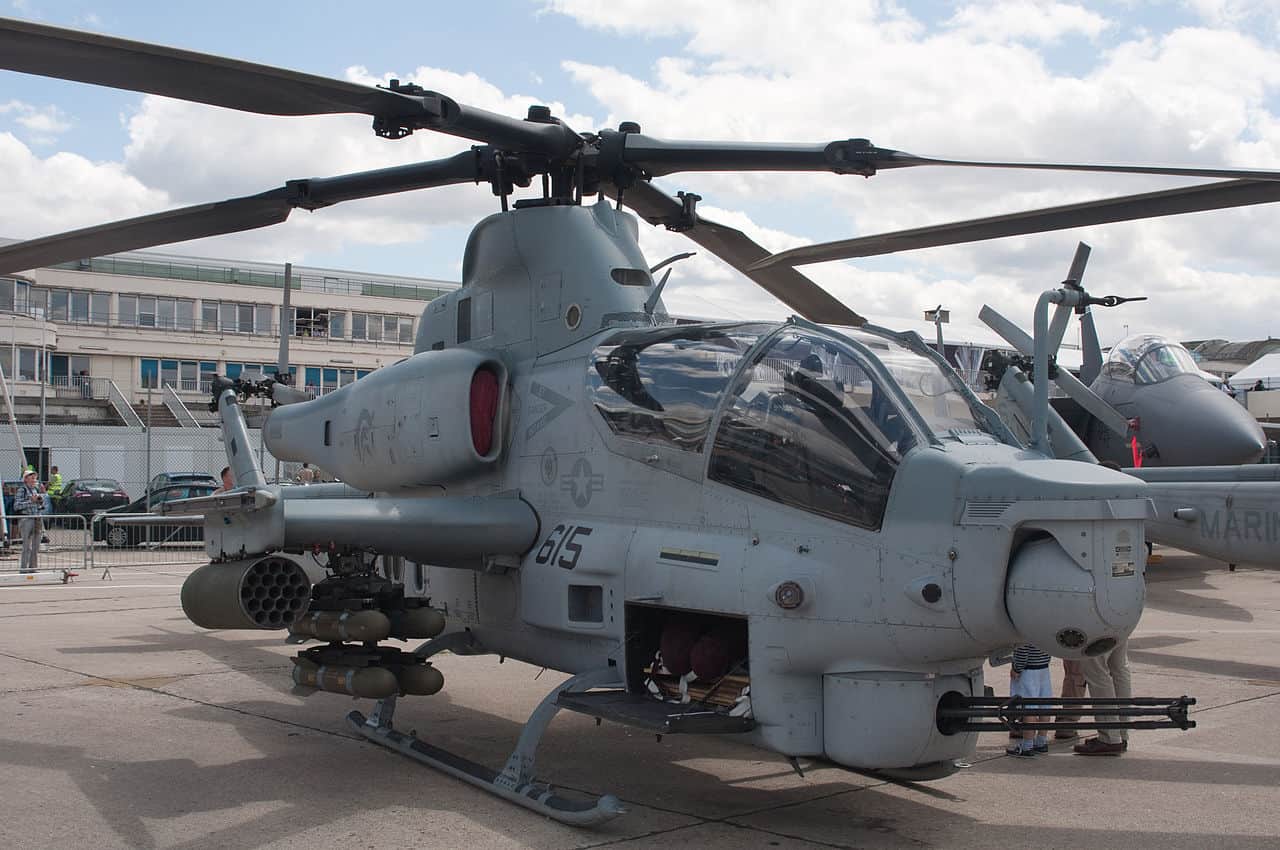


The Bell AH-1 SuperCobra is the twin-engine branch of the Cobra attack helicopter family, built for the United States Marine Corps. It runs from the AH-1J SeaCobra, first flown in 1969, through the stretched AH-1T to the AH-1W, the definitive SuperCobra that the Marines called the “Whiskey Cobra.”
The single-engine Army gunships that started the line, from the AH-1G to the AH-1F, have their own page: the Bell AH-1 Cobra. The four-blade successor that replaced the AH-1W is the AH-1Z Viper. This page covers the Marine twins in between, and the specification panel describes the AH-1W.
The Marines flew the AH-1W for 34 years and retired it in October 2020. It is still in front-line service in Taiwan and Turkey, and Iran’s older AH-1Js remained nominally in service as of mid-2025, in unknown numbers.
The Army’s AH-1G proved in Vietnam that a narrow, two-seat gunship built from Huey parts worked. The Marine Corps wanted one too, but it wanted two changes first.
The first was a second engine. Marine helicopters spend much of their lives over water, flying from amphibious ships, and a single-engine failure far from the deck means a ditching. The second was a heavier gun in the nose turret.
The Department of Defense initially refused, arguing that commonality with the Army’s AH-1Gs outweighed a different engine. The Marines won the argument, and in May 1968 Bell received a contract for 49 twin-engine AH-1J SeaCobras.
The AH-1J first flew in 1969 and entered service in 1971. Its powerplant was a Pratt & Whitney Canada T400 Twin-Pac, rated at 1,800 shp but limited to 1,530 shp by the drivetrain. The nose carried the three-barrel 20 mm M197 cannon, derived from the six-barrel M61 Vulcan.
The SeaCobra still used a 44 ft rotor. Everything that followed on the Marine side grew from this airframe.
By the 1970s the Marines wanted more lifting capacity in high temperatures, where a helicopter’s performance falls away. Bell took the dynamic system of its experimental Model 309 KingCobra, stretched the fuselage and tailboom, and fitted an upgraded transmission and engines.
The result was the AH-1T Improved SeaCobra, designed to be more reliable and easier to maintain in the field. It gained full BGM-71 TOW anti-tank missile capability, and TOW-capable AH-1Ts reached the fleet in 1978.
Bell also offered an AH-1T+ with General Electric T700 engines to Iran. The Iranian Revolution ended that sale, but the T700 idea did not go away.
In the early 1980s the Marines looked hard at buying the AH-64 Apache. They evaluated it for two weeks in September 1981, including shipboard trials, but Congress refused to fund the purchase that year.
The alternative was a more powerful AH-1T. The Marines contracted Bell for 44 AH-1Ws in 1983, and deliveries began in March 1986. The new version paired twin General Electric T700-GE-401 turboshafts, fully marinized for salt air, with a fire-control system that could fire Hellfire and Sidewinder missiles.

Each T700-GE-401 delivers 1,690 shp (1,260 kW) in the AH-1W, de-rated from its 1,800 shp capability because the drivetrain could not take more. The main rotor stayed a two-blade design, but grew to 48 ft 0 in (14.63 m).
Production eventually totaled 179 new-built AH-1Ws for the Marines, plus 43 AH-1Ts upgraded to the same standard. NAVAIR records that the last AH-1W was delivered in 1998.
The AH-1W kept the M197 20 mm cannon in a chin turret with 750 rounds. The stub wings carry four stations, two on each side, and they are where the Whiskey’s flexibility came from.
The outboard stations can each take a four-round launcher, for up to eight TOW or eight AGM-114 Hellfire anti-armor missiles. The same stations can carry an AIM-9 Sidewinder each for air-to-air defense, and Army Technology credits the SuperCobra as the first attack helicopter qualified with both the Sidewinder and the Sidearm anti-radiation missile.

Rockets round out the loadout. The AH-1W fires 2.75 in (70 mm) Hydra rockets from 7-shot or 19-shot pods, later including laser-guided APKWS rounds, and the larger 5 in (127 mm) Zuni in 4-round launchers.
Night capability came later in its career. The AH-1W was retrofitted with the Night Targeting System, a turret combining a forward-looking infrared sensor with a laser rangefinder and designator, supplied by Kollsman and Israel Aircraft Industries’ Tamam division.
The AH-1W’s job was escort and fire support for Marines coming ashore. It flew alongside transport helicopters, suppressed landing zones, attacked armor and marked targets for jets.

Marine Light Attack Helicopter Squadrons (HMLAs) flew the Cobras alongside UH-1 utility helicopters. Detachments from those squadrons went to sea with Marine Expeditionary Units, which is why the SuperCobra shows up in so many operations launched from amphibious ships. The same squadron model continues today with the Viper and the UH-1Y Venom, as part of the wider Marine Corps helicopter fleet.
The AH-1J went to war before the twin-engine Cobra was fully settled. From June to December 1972, HMA-369 flew SeaCobras at night from amphibious ships off North Vietnam in Operation MARHUK, hunting small boats that carried cargo ashore, one of the lesser-known chapters among the helicopters of the Vietnam War.
In April 1975, AH-1Js covered the evacuation of the U.S. Embassy in Saigon. The Marine twins went on to fight in a long list of American operations over the next four decades.
The Marines chose to rebuild rather than replace. In 1996 the service launched the H-1 upgrade program, which began converting AH-1Ws into four-blade AH-1Zs.
The last Marine AH-1W flight took place on October 14, 2020, flown by HMLA-773 out of Naval Air Station Joint Reserve Base New Orleans. That helicopter had joined the squadron in 1994 and flown in Afghanistan between 2003 and 2005.
Military.com put the fleet’s total at 34 years of service and more than 930,000 flight hours. The Viper that replaced it carries up to 16 Hellfire missiles, twice the Whiskey’s load, and has an all-glass cockpit.
The full specification table for the aircraft is on this page. Four of its figures are worth unpacking, because the AH-1W’s published numbers disagree more than most.
The first is speed. Wikipedia, GlobalSecurity and museum placards list 190 knots, or 218 mph, as the “maximum speed,” but in the Jane’s-style data FAS publishes, that figure is the never-exceed speed, a structural limit.
The panel’s maximum speed of 170 kt · 196 mph · 315 km/h is the published maximum attainable speed.
Normal cruise is lower: 152 kt · 175 mph · 282 km/h, which Jane’s also gives as the maximum level speed at sea level.
The second is weight. The panel’s max payload of 4,550 lb · 2,050 kg is the useful load: everything the helicopter can carry above its empty weight, fuel and weapons included. A full missile load and a full fuel load compete for the same margin.
The third is range. The 317 nm · 360 mi · 590 km figure is measured at sea level with standard fuel and no reserves, so real missions plan well short of it. Some references print it as 317 miles, which understates it, because the source unit is nautical miles.
The fourth is ceiling. The panel’s 12,200 ft · 3,700 m is the figure most references agree on, while the Jane’s data gives a service ceiling above 15,000 feet. Treat the panel figure as the conservative one.
The two look alike, and many Vipers began life as Whiskeys. The quickest way to tell them apart is the rotor: the AH-1W has two blades, the AH-1Z four.
Under the skin the Viper is a different helicopter. It adds a four-blade composite rotor, a new transmission, a glass cockpit, longer stub wings with six stations and a far heavier missile load. One Marine pilot who flew both, speaking at the Whiskey’s final flight, described the Viper as faster, better armed and able to stand off farther from the fight.
For the full comparison of attack helicopters, including the Apache that the Marines were twice denied, see our guide to the best attack helicopters in the world.
The Marine Corps was the main operator, but three other countries bought twin-engine Cobras. Taiwan and Turkey were flying theirs in 2026, while Iran’s fleet is harder to count.
Taiwan ordered 42 AH-1Ws in 1992 and another 21 in 1997, and two have been lost in accidents. The fleet serves with the Army’s 602nd Air Cavalry Brigade, alongside 30 AH-64E Apaches bought in the 2010s.

With the Marine fleet gone, parts are harder to find. Taiwan budgeted NT$3.67 billion for a maintenance contract running from September 2024 to the end of 2031, and in December 2025 the U.S. approved the possible sale of a further $96 million support package for the AH-1W fleet.
The helicopters are still exercising. In July 2026, AH-1Ws flew dispersal drills in Tainan during Taiwan’s Joint Defense Exercises, and the Army describes the type as one of its principal attack helicopters.
Turkey bought ten AH-1Ws in the early 1990s, alongside ex-U.S. Army single-engine Cobras. In May 2016 one was shot down by a PKK shoulder-launched missile, killing both pilots.
On February 21, 2022, the first four of ten AH-1Ws moved from the Turkish Army to the Turkish Navy, the Navy’s first attack helicopters. They now fly from the amphibious assault ship TCG Anadolu, and in February 2026 they gave close air support in NATO’s STEADFAST DART 26 exercise in the Baltic, the first time Turkish naval attack helicopters operated from Anadolu in a NATO exercise.
Iran received 202 AH-1J Internationals between 1975 and 1978, with uprated engines and a stabilized gun sight. They saw heavy use in the Iran-Iraq War, including clashes with Iraqi Mi-24s whose outcomes are still disputed.
Iran has since built its own upgraded derivatives, known as the Panha 2091 and the Toufan. In June 2025, Israeli accounts said Israeli aircraft had destroyed between five and eight AH-1s at an air base in western Iran. No reliable public count of Iran’s surviving Cobras exists.
South Korea and the Imperial Iranian forces are former operators. For how the whole class developed from the first Huey gunships, see our history of the attack helicopter.
Yes, but not with the U.S. military. Twin-engine AH-1W SuperCobras still fly with Taiwan and the Turkish Navy, and Iran has kept some AH-1Js nominally in service. The U.S. Army retired its single-engine Cobras from the active force in 1999, and the Marines replaced the AH-1W with the AH-1Z Viper in 2020.
No. The Marine Corps flew its last AH-1W on October 14, 2020, after 34 years in service. Marine attack squadrons now fly the AH-1Z Viper, which has a four-blade rotor and carries twice as many Hellfire missiles.
The AH-1W is a two-seat, twin-engine attack helicopter Bell built for the U.S. Marine Corps, delivered from 1986 to 1998. It was the most capable of the twin-engine Cobras, able to fire TOW, Hellfire and Sidewinder missiles as well as its 20 mm cannon.
GlobalSecurity lists a unit replacement cost of $10.7 million for the AH-1W, but the figure is undated and is not a flyaway price for a specific production lot, so this page does not carry it as a price. New AH-1Ws have not been built since 1998. Today the money goes into support, such as the $96 million package the U.S. cleared for possible sale to Taiwan in December 2025.
The published maximum attainable speed is 170 kt · 196 mph · 315 km/h. The often-quoted 190 knots (218 mph) is the never-exceed speed, a structural limit rather than a speed the helicopter flies at.
Normal cruise is 152 kt · 175 mph · 282 km/h.
SeaCobra is the name of the first Marine twin-engine versions, the AH-1J and the improved AH-1T. SuperCobra is the AH-1W, which added General Electric T700 engines and the fire control to carry Hellfire and Sidewinder missiles.
AH stands for attack helicopter. Under the U.S. military’s 1962 designation system, the “A” is the mission letter for attack and the “H” is the vehicle type for helicopter, and NAVAIR calls the AH-1 the world’s first attack helicopter.
There is no measurable answer, and the claim usually goes to the AH-64 Apache or the Russian Mi-24 in popular rankings. The Cobra family’s claim is age and reach: NAVAIR calls it the world’s first attack helicopter, and twin-engine versions are still flying more than 55 years after the SeaCobra’s first flight.
Sources and references used for research and fact-checking.