Military Helicopters
Boeing RAH-66 Comanche
ICAO: H66
The mast-mounted radar that turned the Apache into a networked tank killer.
Updated: by Tim de Vries

The latest aviation news and stories sent to your inbox.
The Boeing AH-64D Apache Longbow is the U.S. Army’s primary attack helicopter, built around the mast-mounted AN/APG-78 radar that finds and prioritizes targets before the aircraft is exposed. It remanufactured the original AH-64A into a networked, all-weather tank killer starting in 1997.
Live Fleet Activity (H64)
Fetching live data…
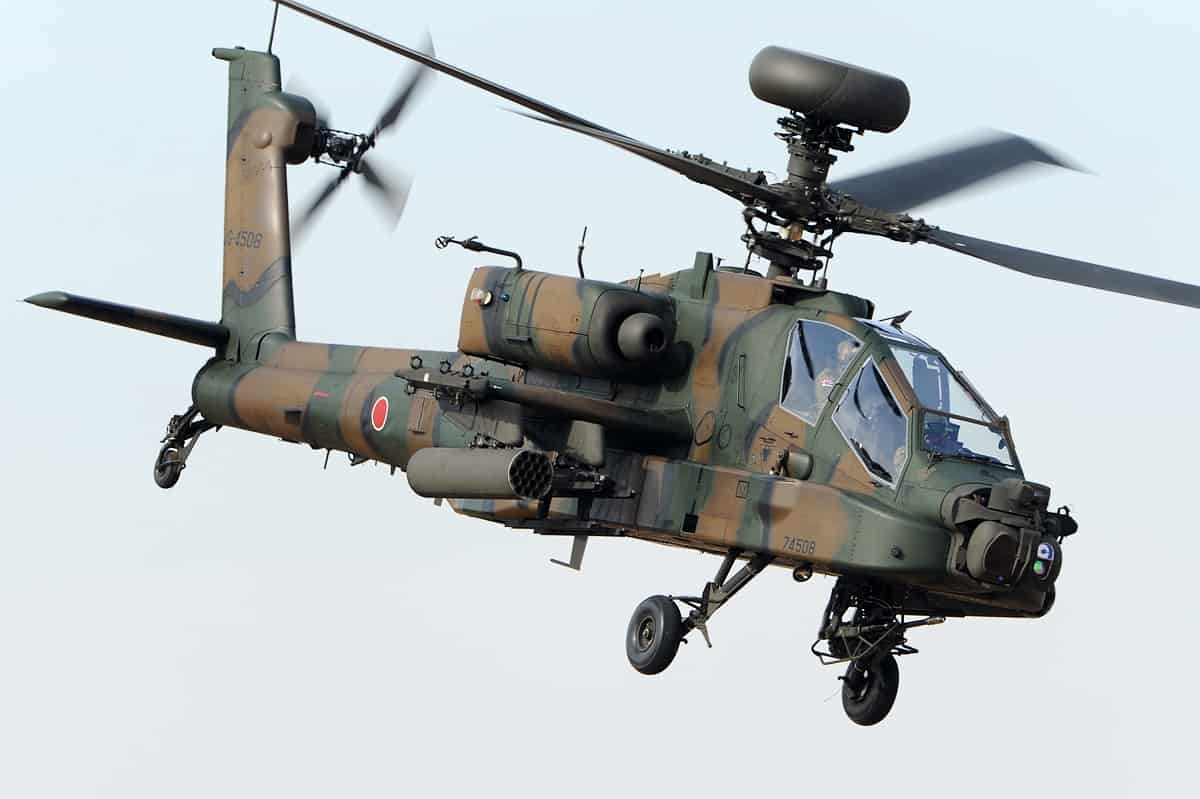


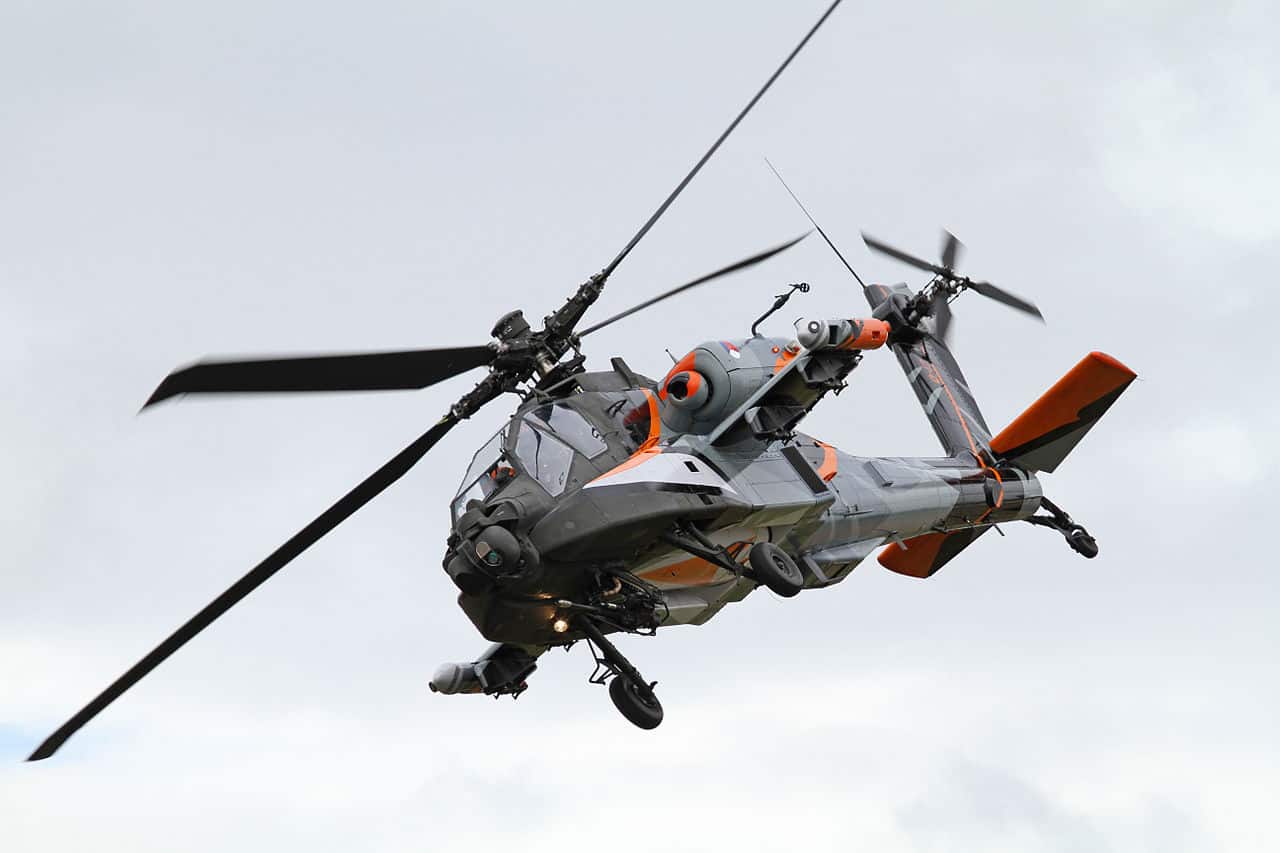
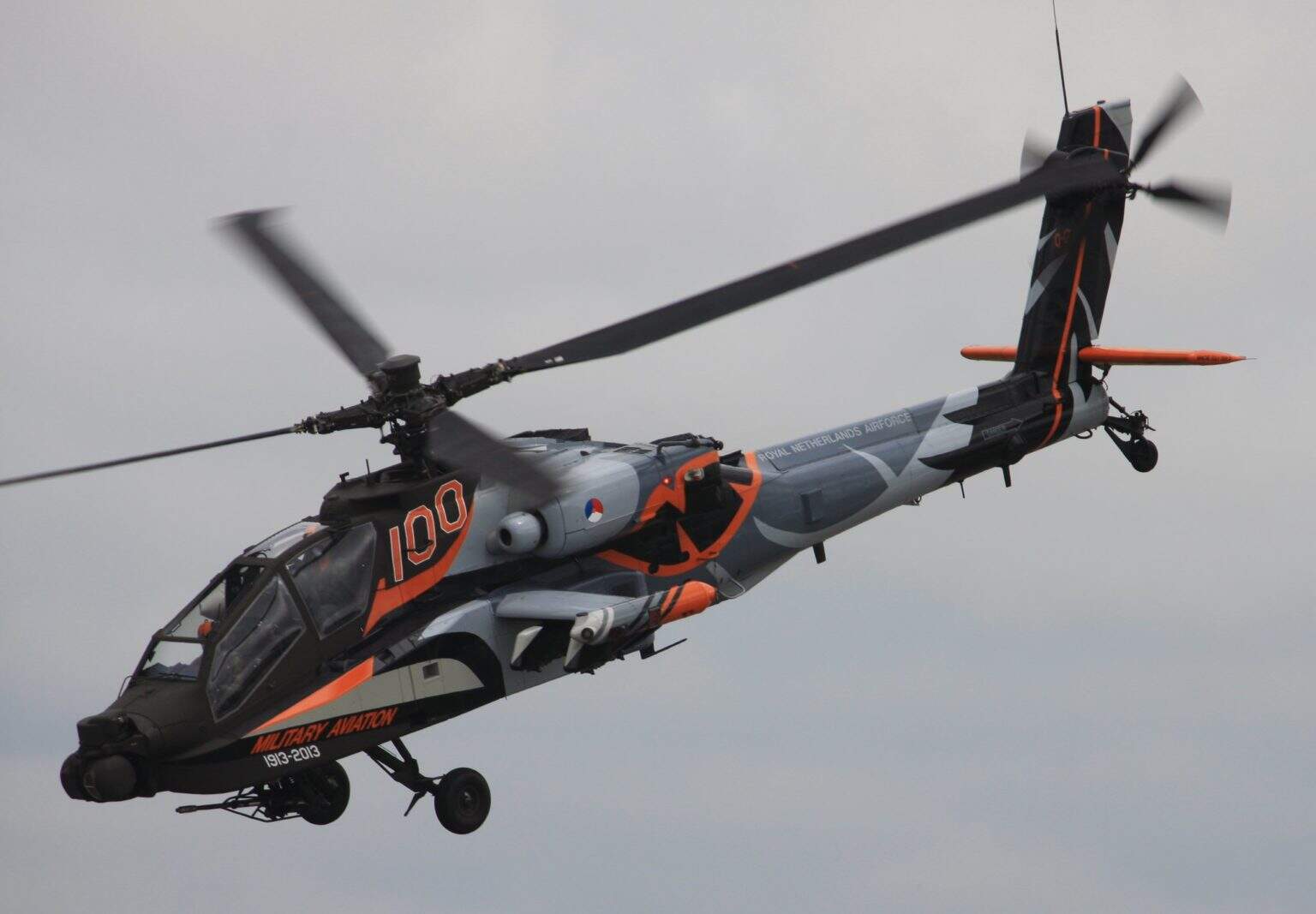

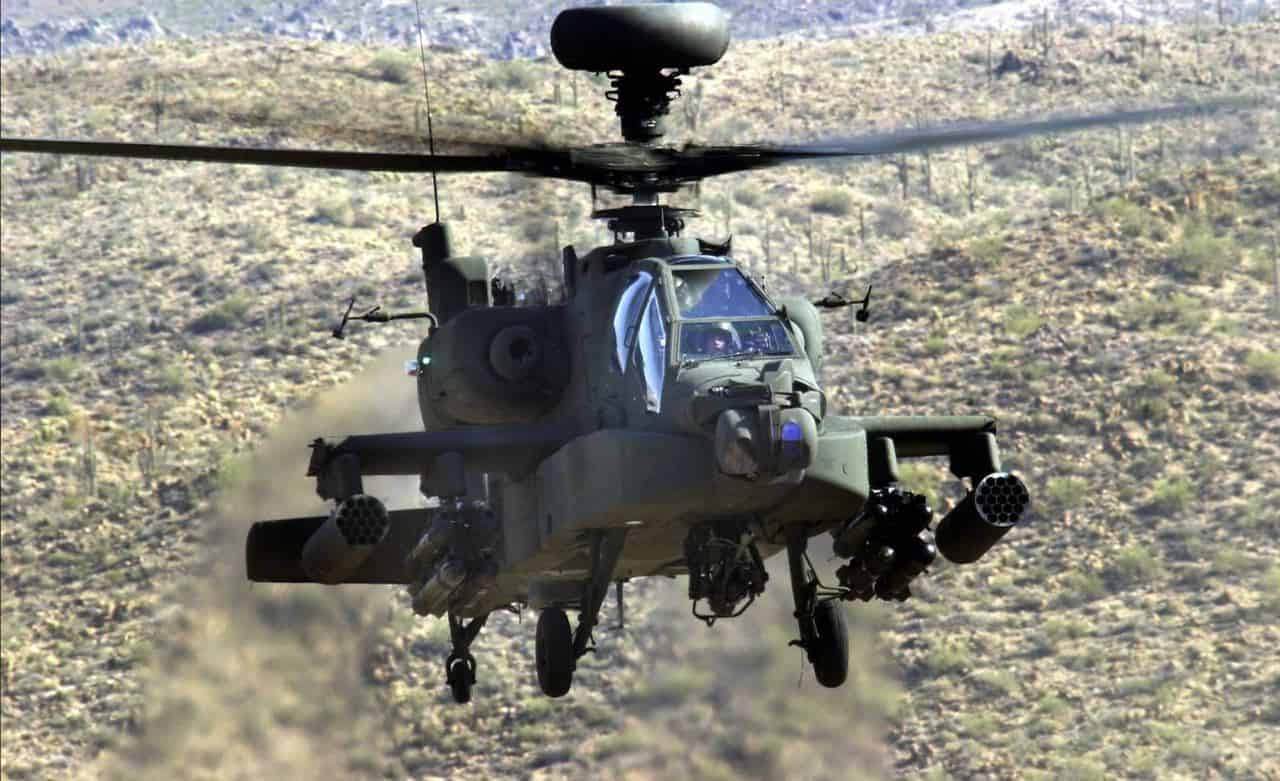


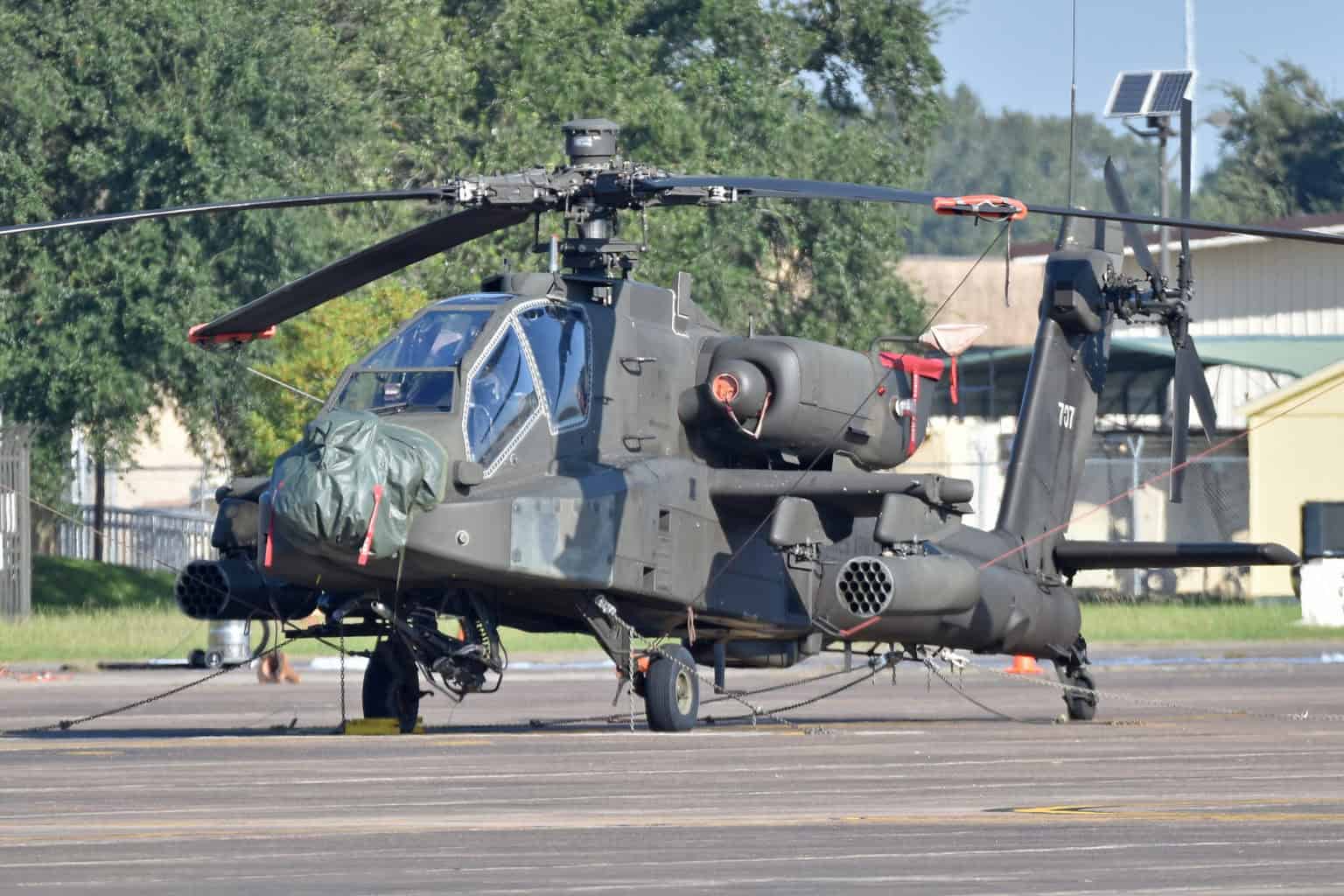
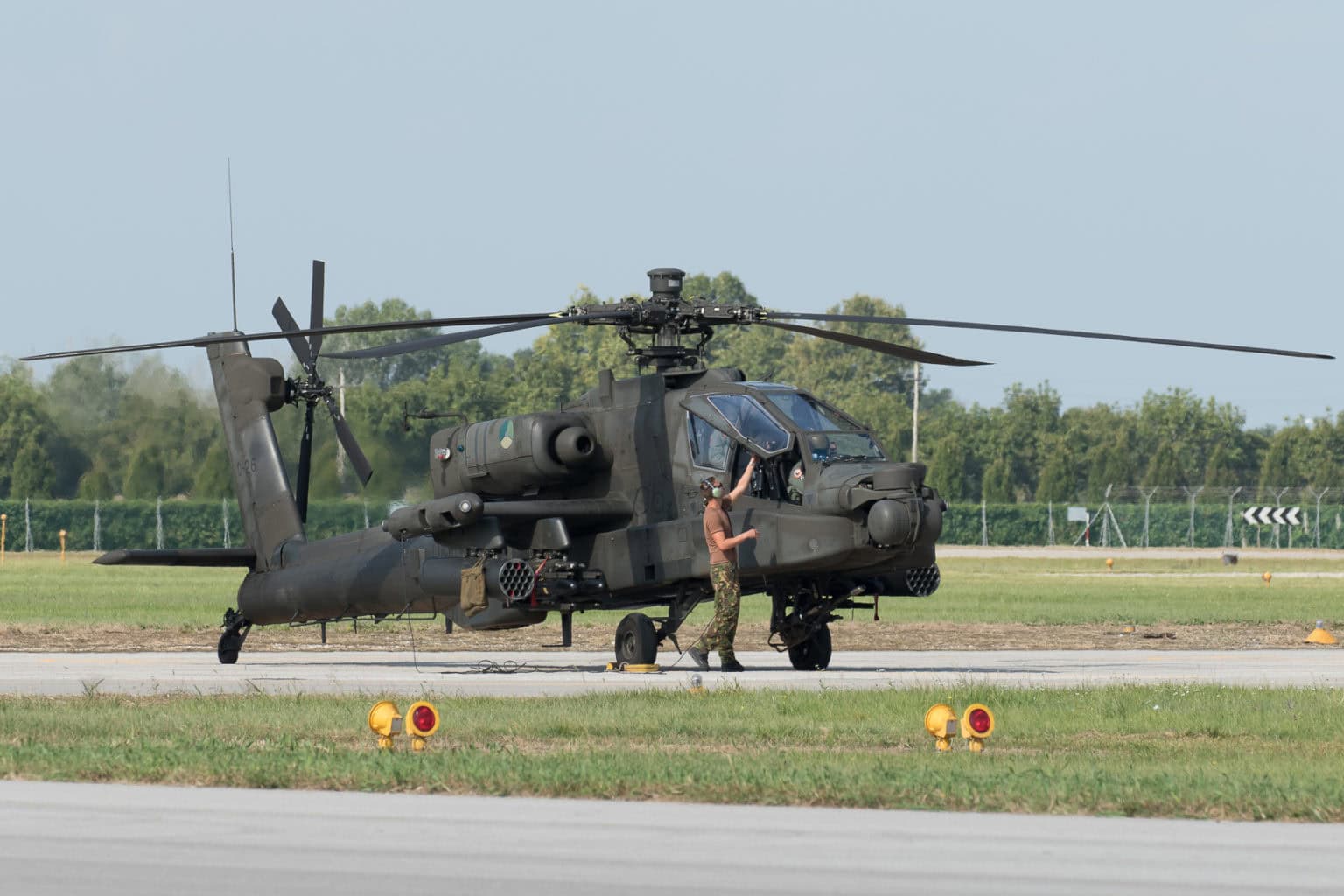
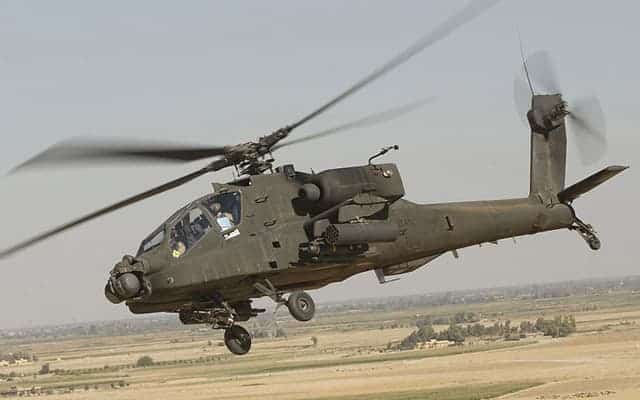
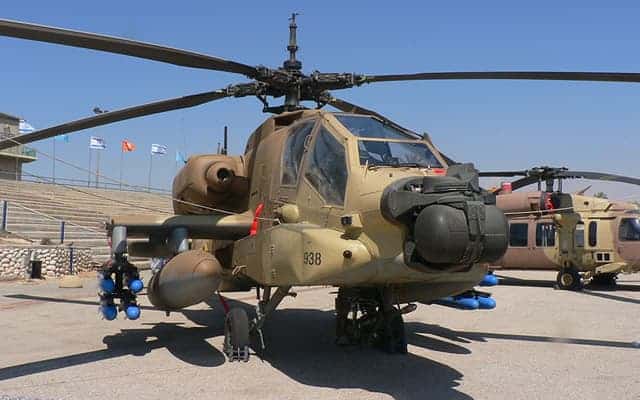

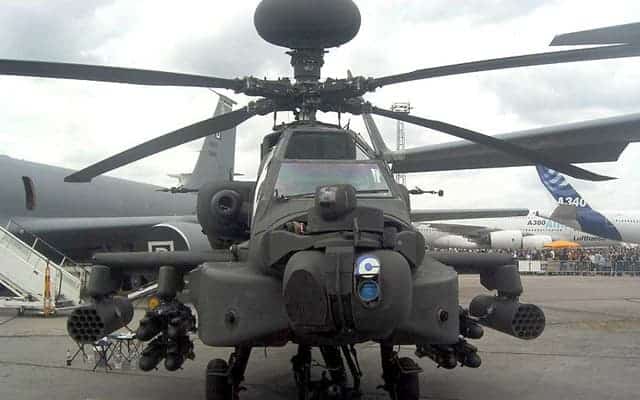
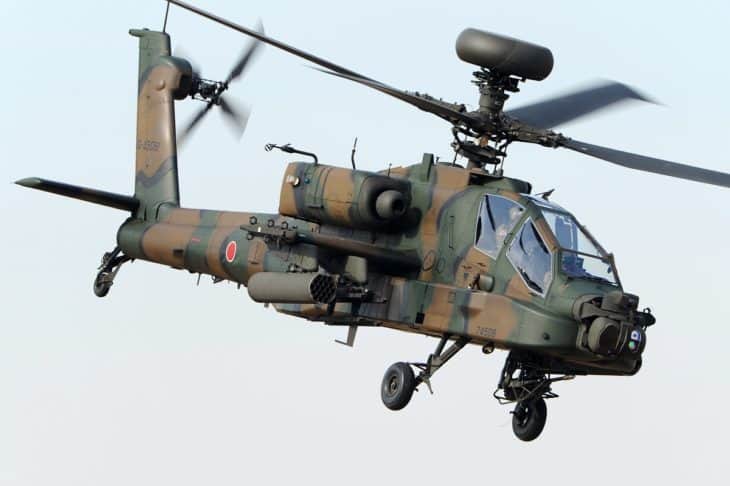
The Boeing AH-64D Apache Longbow is the U.S. Army’s primary attack helicopter, built around a radar dome that lets it find and prioritize dozens of targets before it ever comes into view. It is the aircraft that turned the original 1980s Apache into a networked, all-weather tank killer.
The “Longbow” name comes from the AN/APG-78 fire control radar mounted above the main rotor. That single addition, more than any other change, separates the AH-64D from the AH-64A it replaced.
Not every AH-64D carries the radar. “Longbow” specifically refers to aircraft fitted with the mast-mounted AN/APG-78, a millimeter-wave radar that scans the battlefield from above the rotor disc while the fuselage stays hidden behind terrain.
The Longbow radar can detect, classify, and prioritize up to 256 potential targets within about 31 miles (50 km) in seconds. It hands that data to the crew, or over a datalink to other Apaches, without the helicopter needing to expose itself to return fire.
Many U.S. Army AH-64Ds flew without the radar dome in Iraq and Afghanistan, where armored threats were rare. Export customers such as Egypt also received remanufactured AH-64Ds built without the Longbow radar at all.
The original AH-64A Apache entered service in 1984. Boeing began developing the D-model upgrade in 1990, and the first AH-64D prototype flew on April 15, 1992.
In August 1996, the Army signed a $1.9 billion, five-year contract to remanufacture 232 existing AH-64As into AH-64D standard. The first production aircraft was delivered on March 31, 1997.
Flight testing found the AH-64D delivered roughly seven times the survivability and four times the lethality of the AH-64A it replaced. The full modernization program cost about $11 billion through 2007, an investment that reshaped every type of military helicopter the Army has fielded since.
The AH-64D is powered by two General Electric T700-GE-701D turboshaft engines producing nearly 2,000 shaft horsepower each. That gives the helicopter a top speed of 158 knots (182 mph, 293 km/h). Its normal cruise speed is near 143 knots (165 mph, 265 km/h).
Service ceiling is 21,000 feet (6,400 m), and the aircraft can climb at up to 2,635 feet per minute (803 m/min) at sea level. Rotor diameter is 48 ft 0 in (14.63 m). Overall length with rotors turning is 58 ft 2 in (17.73 m).
Internal fuel tanks hold 380 gallons (1,400 liters), enough for a range of about 296 miles (476 km) with the Longbow radar mast fitted. Adding external tanks stretches that to a ferry range of about 1,180 miles (1,900 km).
Empty, the AH-64D weighs about 11,387 pounds (5,165 kg). Its primary mission gross weight is 16,027 pounds (7,270 kg). Maximum takeoff weight is 23,000 pounds (10,400 kg).
The standard weapon is a 30 mm M230 chain gun with up to 1,200 rounds, firing at roughly 625 rounds per minute. The pilot or gunner can slave the gun to their helmet through the Integrated Helmet and Display Sighting System (IHADSS), so it tracks wherever they look.
Four stub-wing pylons carry up to 16 AGM-114 Hellfire missiles, Hydra-70 rockets, or a mix of both. On Longbow-equipped aircraft, the radar guides a fire-and-forget version of the Hellfire that can hit armor from several miles out without the Apache needing a clear line of sight.
The AH-64D carries roughly 2,500 pounds (1,100 kg) of armor and structural protection around the crew and critical systems. Fuel cells are self-sealing and built to withstand hits from 23 mm rounds, the caliber commonly used in Soviet-era anti-aircraft guns.
That combination of armor, redundant flight controls, and a tandem cockpit that separates the pilot and gunner is why the Apache has a reputation as one of the toughest attack helicopters ever built.
The U.S. Army has been the primary AH-64D operator since 1997, flying it extensively over Iraq and Afghanistan. Several allied air arms fly their own versions.
The United Kingdom built 67 helicopters as the WAH-64D, using Rolls-Royce Turbomeca RTM322 engines instead of the American GE turboshafts. The Netherlands received 30 AH-64Ds between 1998 and 2002, and Israel took delivery of its first AH-64D, locally named “Saraph,” in April 2005.
Saudi Arabia, the United Arab Emirates, Kuwait, and Egypt have also operated AH-64Ds, some built new and others remanufactured from older A-model airframes. Across the whole Apache family, Boeing has delivered close to 2,900 aircraft that have logged more than 5.3 million flight hours, over 1.3 million of them in combat.
Boeing has never published an official flyaway price for a new-build AH-64D. The clearest public figure comes from a 2019 Department of Defense Inspector General audit, which put the cost of remanufacturing an AH-64A into AH-64D standard at about $20.2 million per aircraft.
Full foreign military sales packages, which bundle in radar units, missiles, spare parts, and training, run far higher. Recent Apache-family export deals have priced complete packages well into the tens of millions of dollars per aircraft.
There is no official new-build flyaway price. A 2019 DoD Inspector General audit put the cost of remanufacturing an older AH-64A into AH-64D standard at about $20.2 million per aircraft, before weapons and support packages.
The mast-mounted AN/APG-78 radar. Only AH-64Ds fitted with this millimeter-wave radar dome above the rotor are properly called Longbows; some AH-64Ds, including many flown in Iraq and Afghanistan, carry no radar at all.
Intercepted radio chatter from Afghanistan showed Taliban fighters calling the Apache “the Monster,” a nickname that stuck after repeated encounters with the helicopter in combat.
The AH-64 Apache is widely regarded as the world’s most combat-proven attack helicopter, with more logged combat hours than any other rotorcraft and a weapons fit, in the Longbow variant, built specifically to find and destroy armor before it can return fire.
The AH-64D has a top speed of 158 knots (182 mph, 293 km/h). It typically cruises around 143 knots (165 mph, 265 km/h).
Sources and references used for research and fact-checking.