Military Helicopters
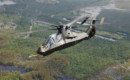
Boeing RAH-66 Comanche
ICAO: H66
The latest aviation news and stories sent to your inbox.
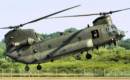
The Boeing HH-47 was a proposed combat search and rescue variant of the CH-47 Chinook. Developed under the CSAR-X program, it was intended to provide extended range and survivability. The program was later restructured before full production.


The HH-47 was based on the CH-47F Chinook platform and proposed in the mid-2000s for U.S. Air Force rescue missions. It incorporated additional fuel capacity, defensive systems, and specialized equipment. The design emphasized long-range recovery capability in contested environments.
Powered by twin turboshaft engines producing approximately 4,700 shaft horsepower each, the HH-47 would have cruised at around 160 knots (300 km/h). Maximum gross weight would exceed 50,000 pounds (22,700 kg). The aircraft was designed to carry rescue teams and recovered personnel.
The CSAR-X contract was ultimately canceled and recompeted, leading to alternative solutions. Although the HH-47 did not enter service, it reflected evolving requirements for combat rescue operations. The Chinook platform continues in other military roles.