Military Helicopters
Sikorsky HH-3F Pelican
ICAO: HH3F
The heavy-lift helicopter built for long-range assault and logistics
Updated: by Tim de Vries
The latest aviation news and stories sent to your inbox.
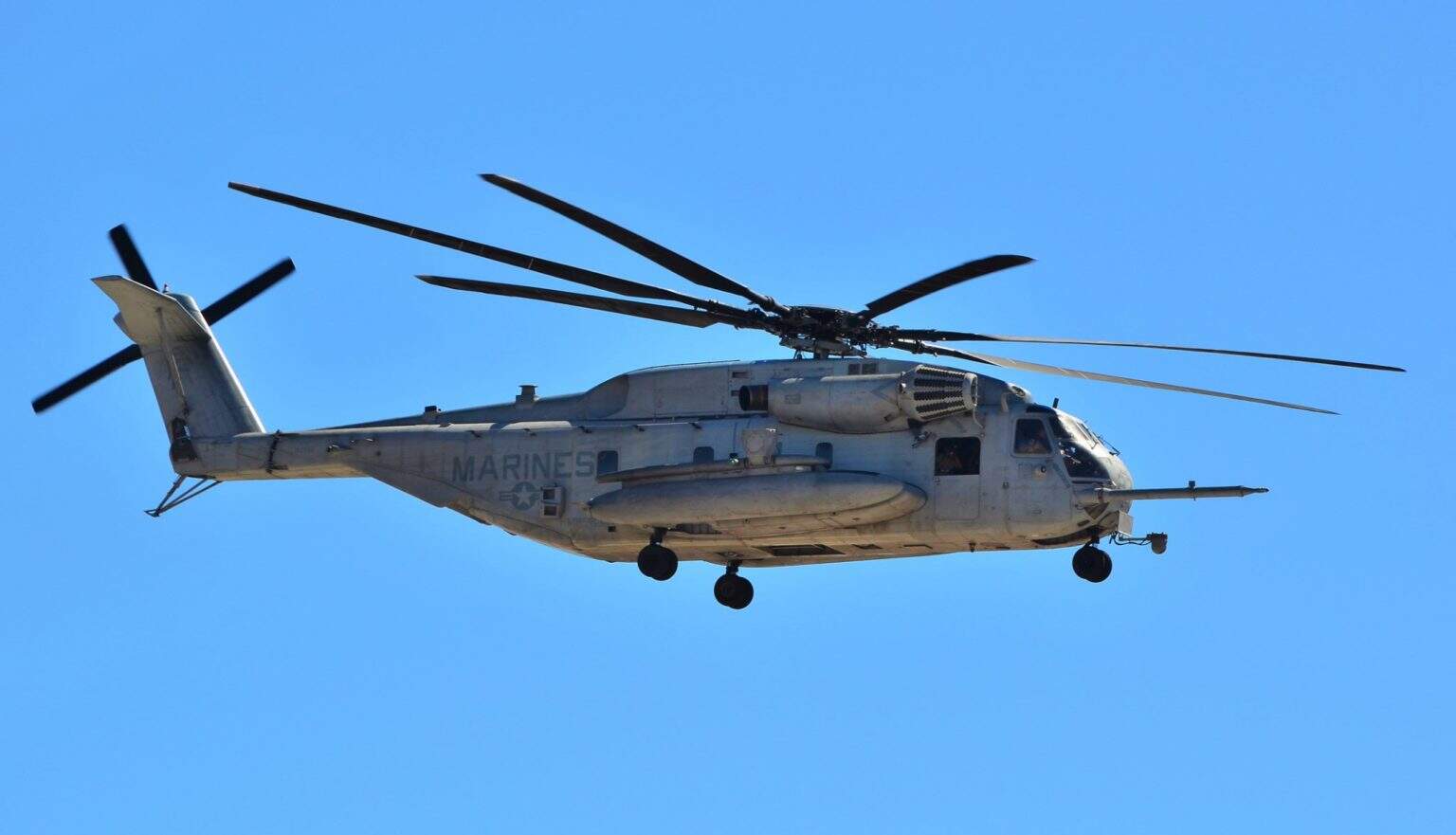
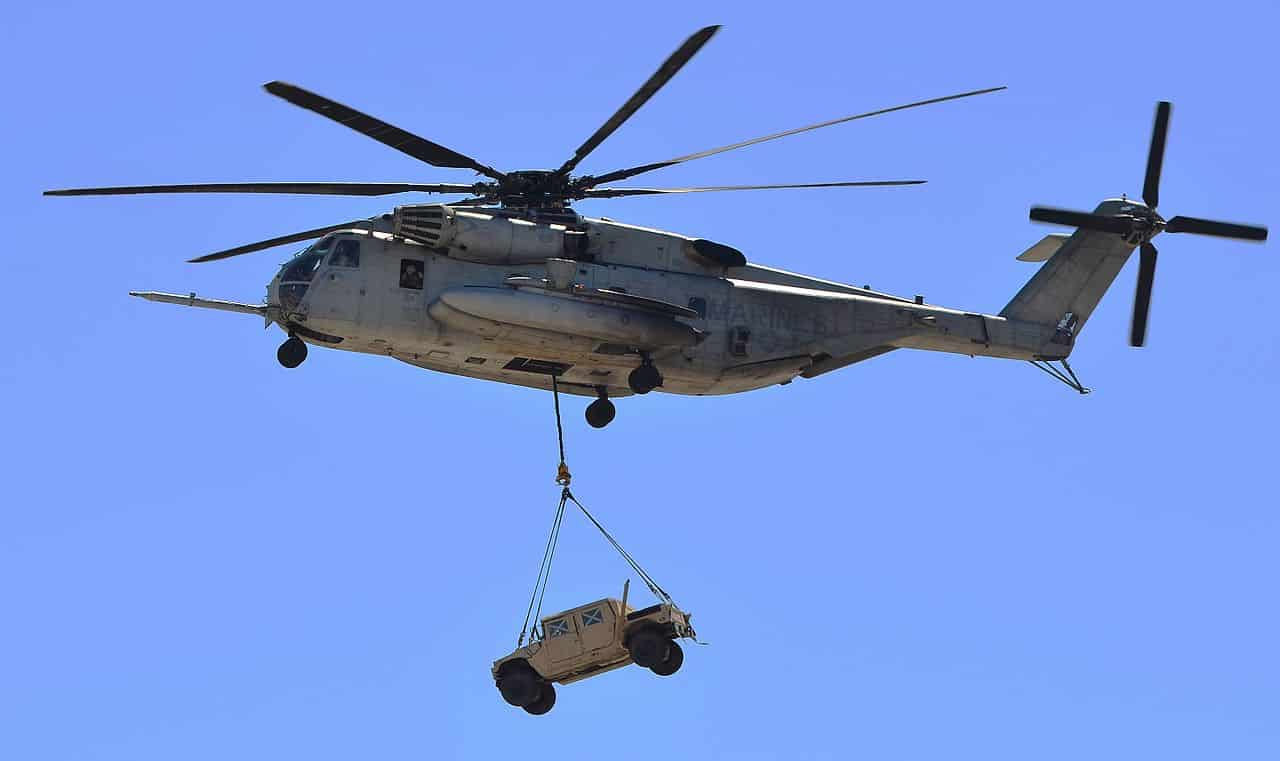
The Sikorsky CH-53E Super Stallion is the U.S. Marine Corps’ three-engine heavy-lift helicopter, able to carry up to 55 troops or sling 36,000 pounds (16,330 kg) under its cargo hook. It entered service in 1981 and was the largest helicopter in the U.S. military until its successor, the CH-53K King Stallion, arrived. The Marines plan to retire the last CH-53Es in 2032.
Live Fleet Activity (H53S)
Fetching live data…


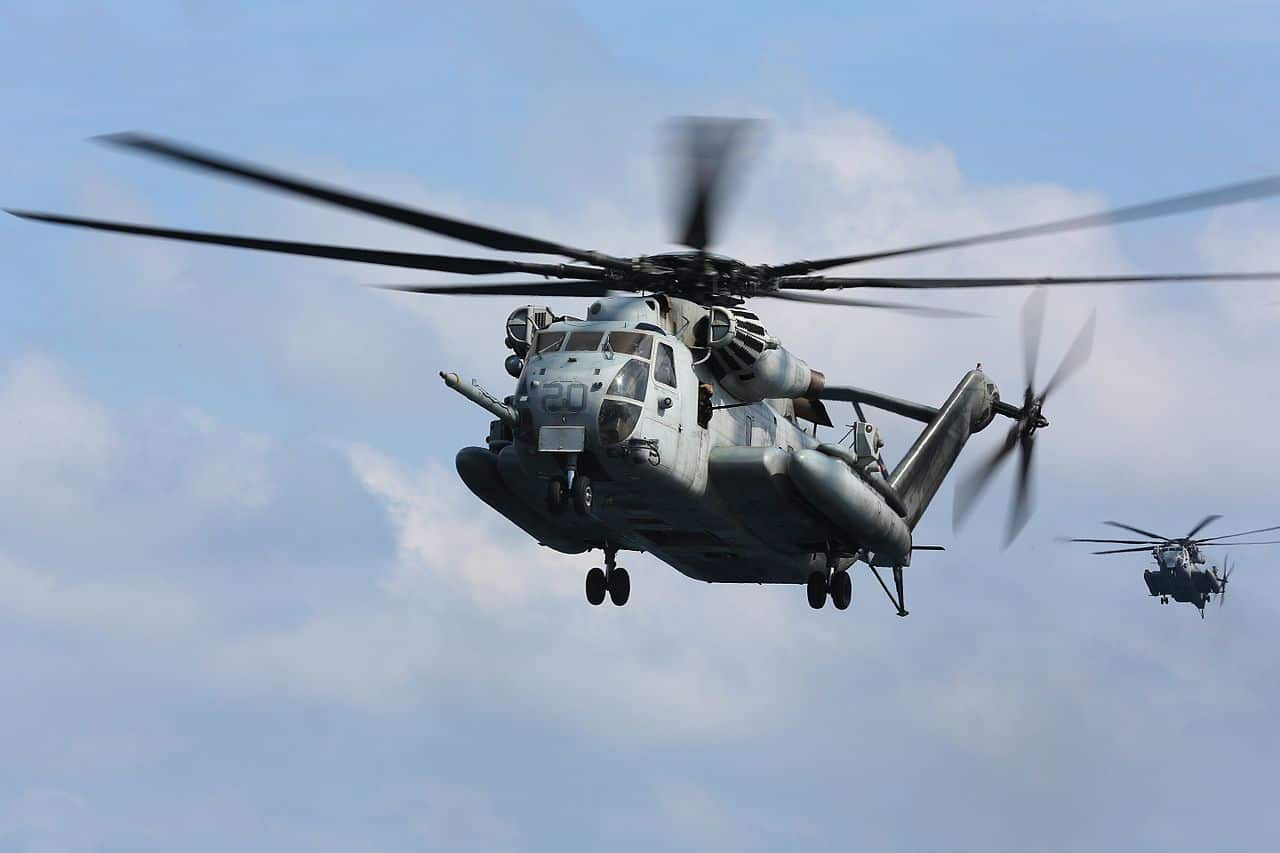
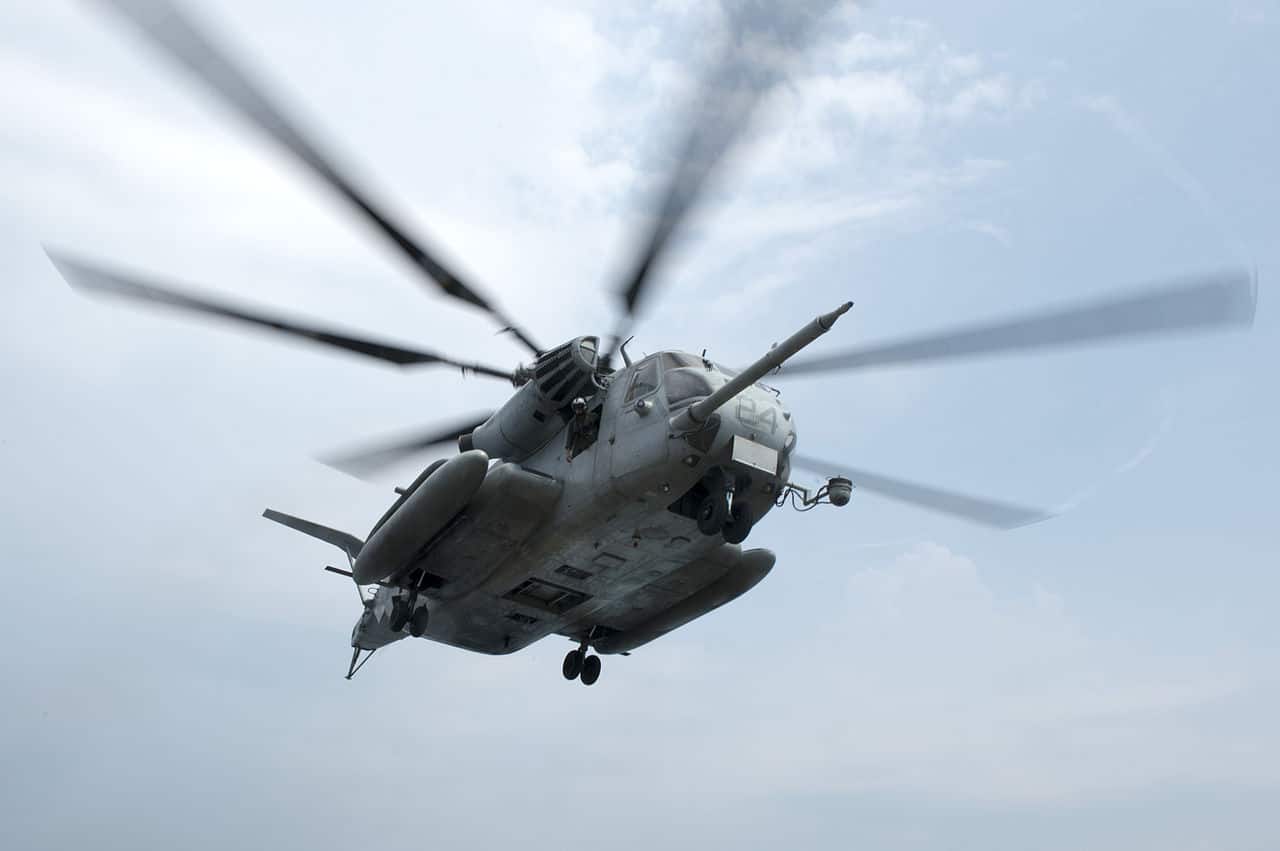


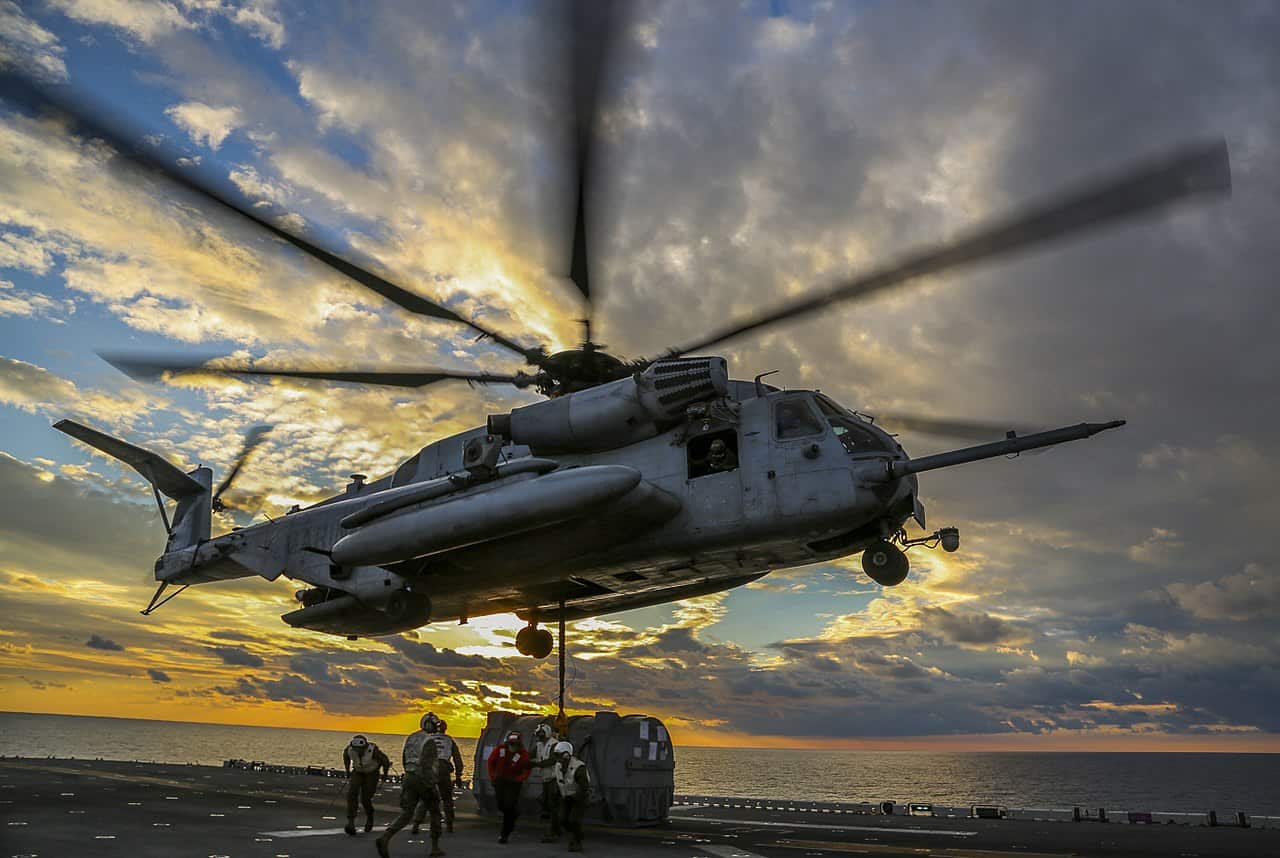
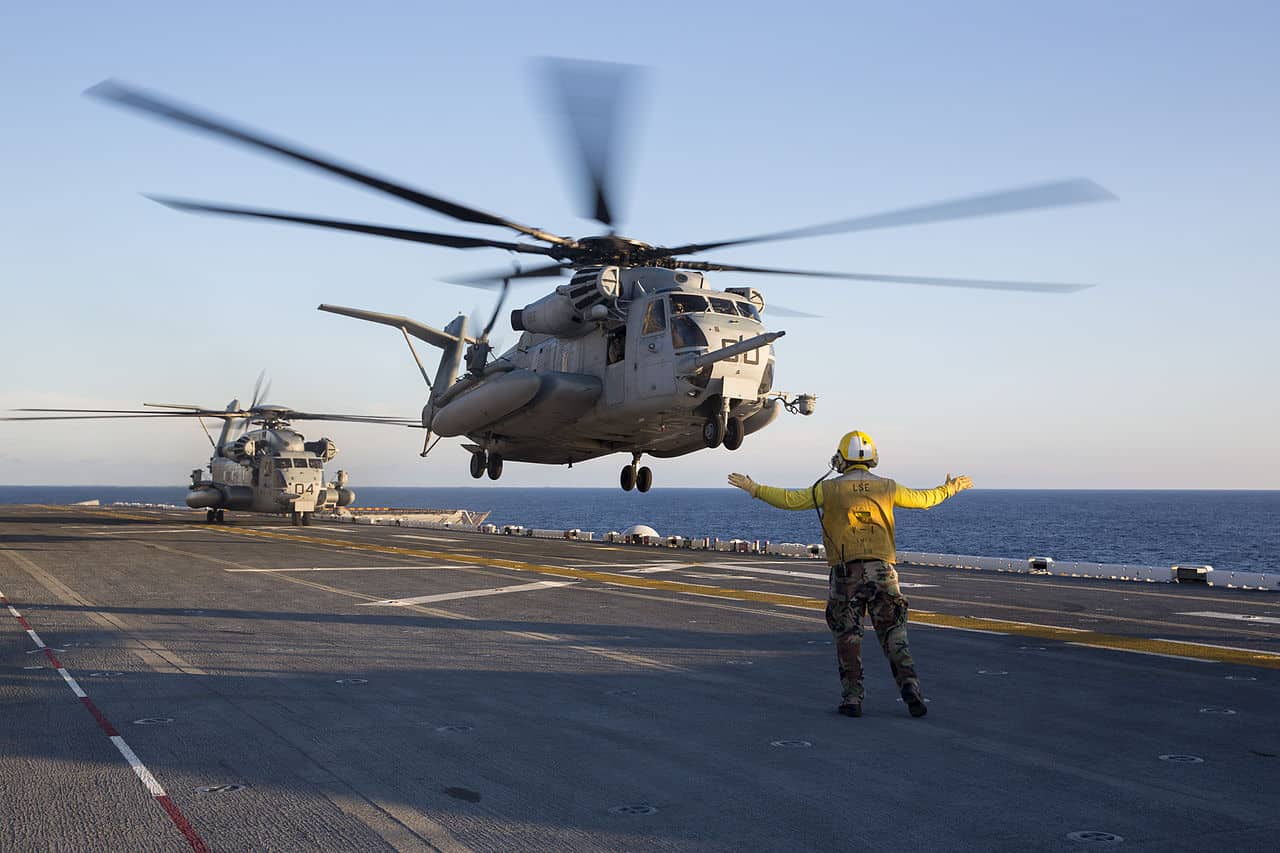
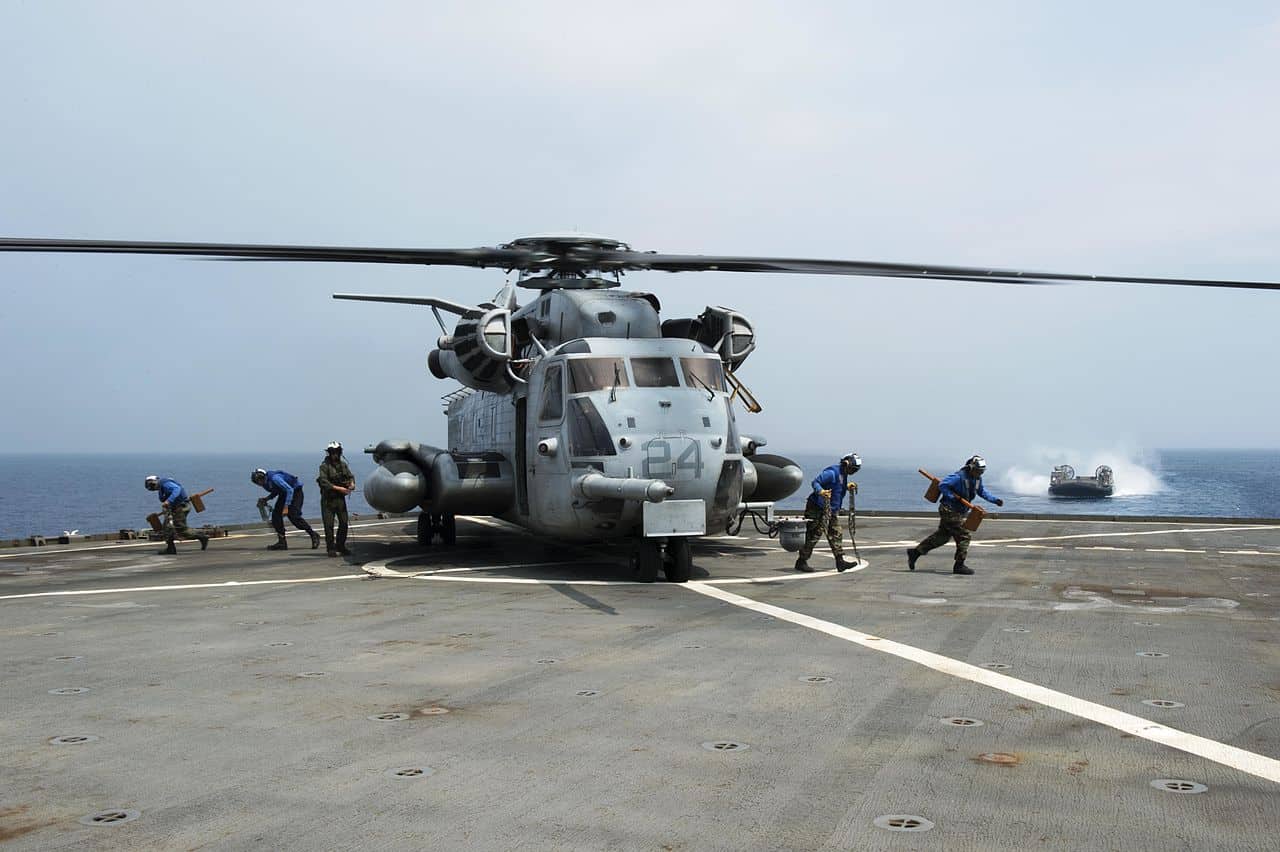

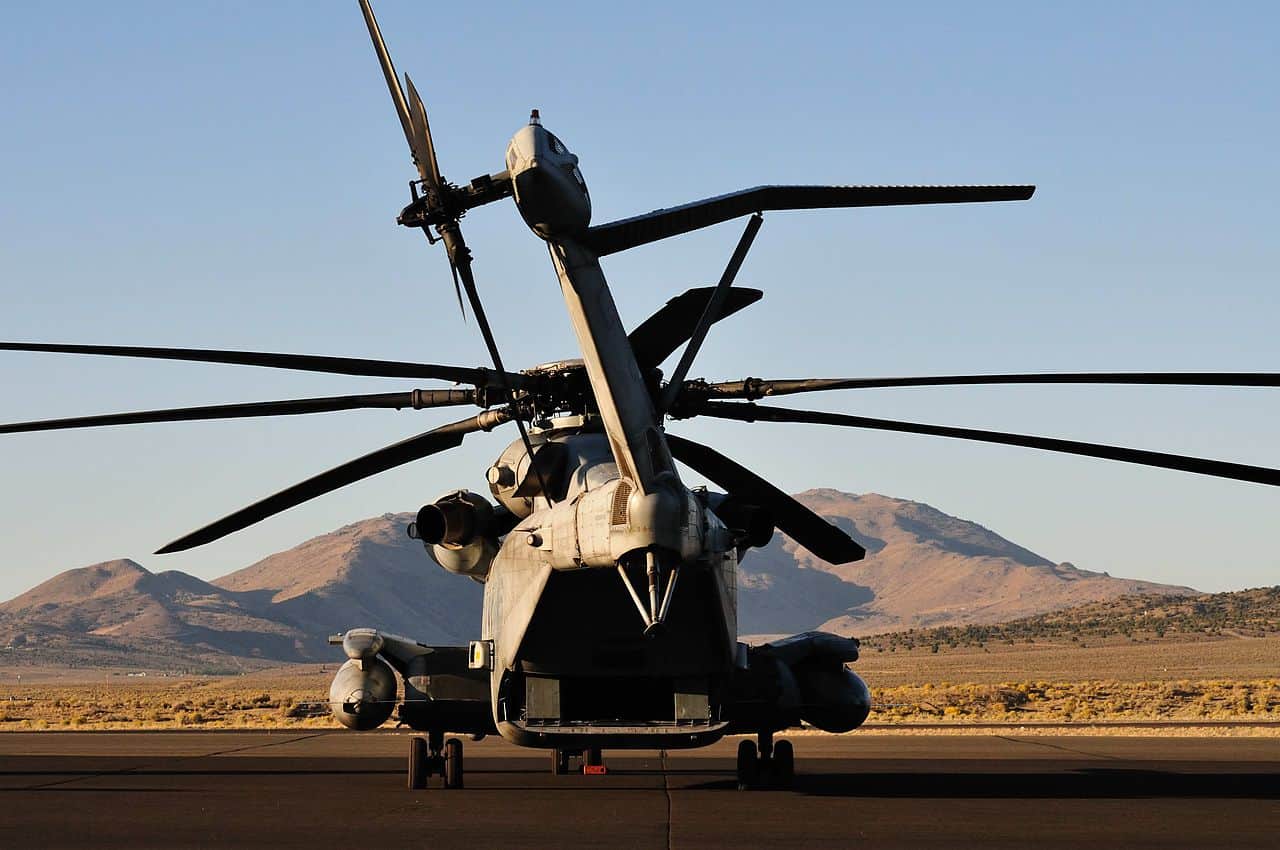
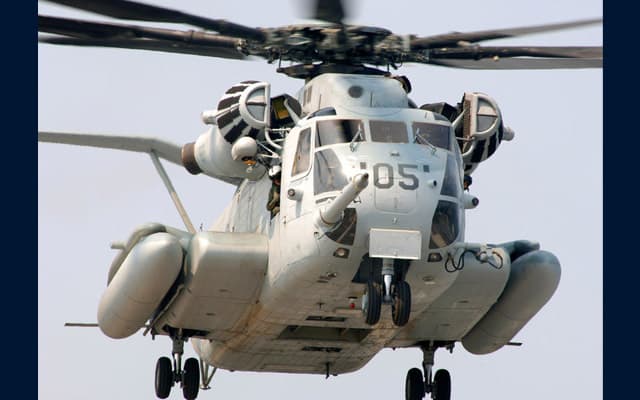
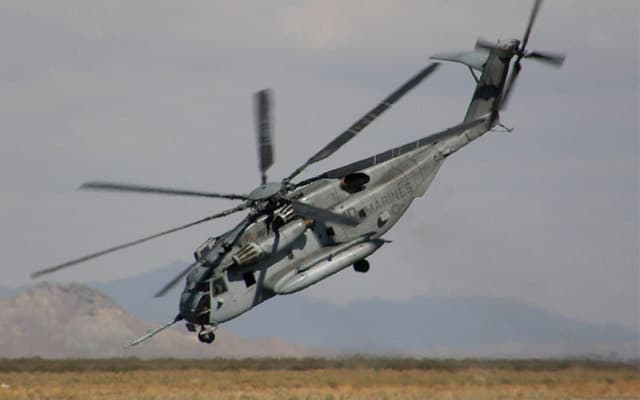
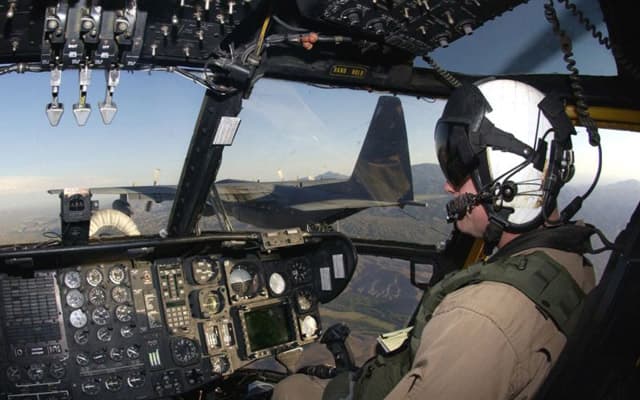

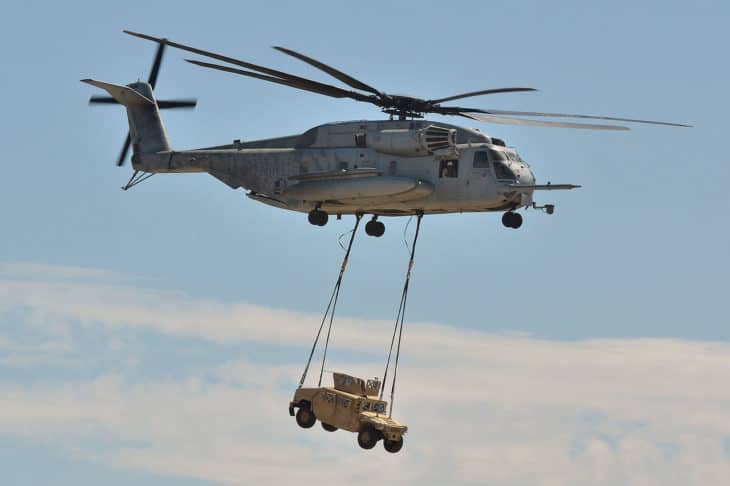
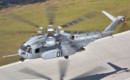
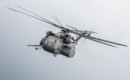
The Sikorsky CH-53E Super Stallion is the heavy lifter of the U.S. Marine Corps helicopter fleet, built to move troops, vehicles and artillery from amphibious ships to the shore. It is one of the few helicopters in the world with three engines and an in-flight refueling probe.
Until the CH-53K King Stallion arrived, it was the largest helicopter in the U.S. military. It can carry 36,000 lb (16,330 kg) on its cargo hook, enough to lift every aircraft in the Marine inventory except the KC-130.
The type entered service in 1981 and has flown combat operations in Beirut, Somalia, the Persian Gulf, Afghanistan, Iraq and Libya. The Marine Corps plans to retire the last ones in 2032.
The Super Stallion grew out of the twin-engine CH-53 Sea Stallion, which won the Marines’ heavy helicopter competition launched in 1962. In October 1967, the Marine Corps asked for a helicopter with 1.8 times the lift of the CH-53D that would still fit aboard amphibious warfare ships.
Sikorsky already had a candidate. Its company project, the S-80, added a third turboshaft engine and a more powerful rotor system to the CH-53D. Sikorsky proposed it to the Marines in 1968, and they funded a testbed to evaluate it.
In 1970, the Defense Secretary pressed the Navy and Marines to take the Army’s Boeing Vertol XCH-62 instead. The sea services showed it was too large to operate from their landing ships and were allowed to keep their own design.
The first YCH-53E prototype flew on March 1, 1974. In testing it lifted 17.8 short tons (16.1 t) to a 50-foot (15 m) wheel height, and without an external load it reached 170 knots (196 mph).
The production contract followed in 1978, and the first production CH-53E flew in December 1980. Service introduction came in February 1981, with Marine Heavy Helicopter Squadron 464 (HMH-464) at Marine Corps Air Station New River, North Carolina, as the first Super Stallion unit.
The third engine is the obvious difference, but it was only part of the redesign. Sikorsky stretched the fuselage by 6 ft 2 in (1.88 m), fitted a stronger transmission and added a seventh main rotor blade, with the blades switched to a titanium-fiberglass composite.
The tail changed most visibly. The tail rotor is canted 20 degrees from vertical, so it provides some lift in a hover while still countering the main rotor’s torque.
A digital automatic flight control system was added to stop pilots from overstressing the airframe. The engines are General Electric T64 turboshafts, the same engine family used in every H-53 variant.
The full specification table for the CH-53E is on this page. A few of its figures get quoted against each other so often that they need context.
Range. The panel’s 540 nautical miles (1,000 km) is the published range. Combat range is much shorter, at 180 nautical miles (330 km), while ferry range stretches to 990 nautical miles (1,830 km), and the refueling probe lets a tanker extend any of them.
Payload. The panel’s 32,000 lb (14,515 kg) is the internal payload, while the cargo hook takes up to 36,000 lb (16,330 kg). The Navy’s own yardstick is more practical: take off from an amphibious ship with 16 tons of cargo, deliver it 50 miles away and fly back.
Power. The panel’s 4,380 shaft horsepower per engine is the rating of the original T64-GE-416. The Navy’s fact file now lists the upgraded T64-GE-419, rated at 4,750 shaft horsepower each.
Size. On a helicopter record, the panel’s wing span row holds the main rotor diameter, 79 ft (24.08 m). Published heights differ: most references give 27 ft 9 in (8.46 m), while the Navy’s fact file gives 28 ft 5 in (8.66 m), the figure used in the panel.
With the standard folding canvas seats along the cabin walls, a CH-53E seats 37 troops. Adding a center row of seats raises that to 55, the figure in the panel.
Newer crash-attenuating seats, the same type fitted to the MV-22B Osprey, cut troop capacity to about 30. Martin-Baker’s contract for those seats supplies 31 per helicopter, which is why both numbers circulate.
The Navy lists a crew of four: pilot, copilot, crew chief and a mechanic who doubles as gunner. Three .50-caliber machine guns can be mounted, one at the starboard crew door, one at a port window behind the copilot and one on the tail ramp.
For cargo, the cabin takes up to seven standard 40 by 48 in (1.02 by 1.22 m) pallets through a hydraulic rear ramp. Typical Marine loads include the eight-wheeled LAV-25 light armored vehicle and the M198 155 mm howitzer with its ammunition and crew.
The Super Stallion’s first shipboard deployment came in 1983, when four HMH-464 aircraft sailed aboard USS Iwo Jima with the 24th Marine Amphibious Unit. Marines from that unit went ashore in Beirut as peacekeepers, and its CH-53Es provided combat support through an operation in which a truck bomb destroyed the Marine barracks on October 23, 1983, killing nearly 240 service members.
In 1991, two CH-53Es and several CH-46 Sea Knights evacuated U.S. and foreign nationals from the U.S. embassy in Mogadishu, Somalia, in Operation Eastern Exit. On June 8, 1995, two CH-53Es rescued Air Force Captain Scott O’Grady after he was shot down over Bosnia.
Some missions were less conventional. In April 1992, Super Stallions dropped large concrete blocks into lava channels on Mount Etna to divert a flow threatening the Sicilian town of Zafferana Etnea.
In November 2001, CH-53Es carried Marines from ships in the Arabian Sea to seize Camp Rhino near Kandahar, the first U.S. land base in Afghanistan. During the 2003 invasion of Iraq, they moved ammunition and supplies to the most forward Marine units and carried casualties back.
On April 1, 2003, Marine CH-53Es and CH-46Es carried the Army Rangers and special operations troops who rescued Army Private Jessica Lynch. In 2019, the Marine CH-53E fleet passed one million flight hours.
The Navy’s MH-53E Sea Dragon is a CH-53E derivative built for airborne mine countermeasures. It has enlarged side sponsons for more fuel and endurance, and its flight control system includes features designed to help tow minesweeping gear.
The prototype flew on December 23, 1981, and the Navy began using the type in 1986. Sources put Navy production at between 46 and 50, and Japan’s Maritime Self-Defense Force flew 11 export S-80-M-1s, retiring the last in 2017.
The MH-53 name also belongs to a different helicopter. The U.S. Air Force’s MH-53J and MH-53M Pave Low were twin-engine special operations and combat rescue helicopters upgraded from the HH-53B/C, variants of the original Sea Stallion, and the Air Force retired them in September 2008.
The Super Stallion is the heavier of the two. Its 73,500 lb (33,340 kg) maximum takeoff weight compares with 50,000 lb (22,680 kg) for a standard CH-47F Chinook and 54,000 lb (24,494 kg) in Boeing’s current Chinook specification.
Length is almost identical: 99 ft 0.5 in for the CH-53E against 98 ft 10.7 in for a CH-47F with its rotors turning. The Chinook stands far lower, at 18 ft 7.8 in (5.69 m) against the Super Stallion’s 28 ft 5 in (8.66 m).
The layouts differ too. The CH-53E has three engines driving one 79 ft (24.08 m) main rotor and a tail rotor, while the Chinook has two engines and two 60 ft (18.3 m) rotors in tandem.
Neither is the world’s biggest. Among heavy-lift helicopters, the Russian Mil Mi-26 remains the heaviest-lifting model in production, with a payload of up to 20 tonnes (22 short tons).
An independent investigation found that 132 people died in accidents on the Navy and Marine versions of the helicopter between 1984 and 2019. From 1984 to 2008, the MH-53E had the Navy’s highest helicopter mishap rate, at 5.96 Class A mishaps per 100,000 flight hours against a Navy average of 2.26.
On January 26, 2005, a CH-53E carrying 30 Marines and a Navy corpsman crashed in a sandstorm in Iraq’s Al Anbar province, killing all 31 aboard. The crash was part of the deadliest day of the Iraq War for U.S. forces.
Two midair collisions between Super Stallions on training flights killed 10 over the Gulf of Aden in February 2006 and 12 off Hawaii in January 2016.
Four Marines died when a CH-53E crashed near Plaster City, California, on April 3, 2018. On February 6, 2024, five Marines from HMH-361 were killed when their CH-53E went down near Pine Valley, east of San Diego.
In August 2025, a CH-53E caught fire on the ground at Twentynine Palms, California, and everyone aboard got out unhurt. These and other losses appear in our list of the worst helicopter crashes.
Keeping the fleet flying has grown harder with age. By 2017, the CH-53E reportedly needed about 40 maintenance hours for every flight hour, because of aging parts, scarce replacement parts and an extended airframe life.
The Marines first planned to upgrade their Super Stallions, but a March 2004 analysis concluded that a new-build airframe would be more cost-effective. Sikorsky won the full development contract for what became the CH-53K King Stallion in April 2006.
The King Stallion keeps the three-engine layout but uses General Electric T408 engines of 7,500 shaft horsepower each, new composite rotor blades and a wider cabin. Its maximum takeoff weight with an external load is 88,000 lb (39,916 kg).
It first flew on October 27, 2015, and reached initial operational capability on April 22, 2022. HMH-461 became the first fleet squadron to complete the switch in January 2022 and reached its full complement of 16 aircraft in fiscal 2026.
As of April 2026, four Marine Corps squadrons, including training and test units, had CH-53Ks, and the CH-53E was slated to retire in 2032. Until then the two types fly side by side, and the Navy’s fact file lists 136 CH-53Es in operation.
Reference listings give the CH-53E an average unit cost of $24.36 million in 1992 dollars, the figure shown in the panel. It is an average cost, not a flyaway price, and no new-build price exists today because the last Marine Super Stallion was delivered in November 2003.
Flying it is expensive too. As of 2014, a CH-53E flight hour cost about $20,000.
The replacement costs far more. The Marine Corps plans to buy 200 CH-53Ks at a total program cost of about $25 billion.
It is the Marine Corps’ heavy-lift helicopter. It carries troops, artillery, vehicles and supplies from amphibious ships to shore, lifts up to 36,000 lb (16,330 kg) on its cargo hook, and can recover downed aircraft, including another CH-53E.
Up to 55 with a center row of seats fitted, or 37 with the standard side seats. Aircraft fitted with the newer crash-attenuating seats carry about 30 troops.
The CH-53E is the Marines’ heavy-lift transport. MH-53 refers to two different helicopters: the Navy’s MH-53E Sea Dragon, a three-engine CH-53E derivative for mine countermeasures, and the Air Force’s twin-engine MH-53J/M Pave Low special operations helicopters, retired in 2008.
Yes. The CH-53E has a maximum takeoff weight of 73,500 lb (33,340 kg) against 50,000 lb (22,680 kg) for a standard CH-47F, stands nearly 10 ft (3 m) taller and has three engines to the Chinook’s two. Their overall lengths are almost identical.
Yes. As of April 2026, the Marine Corps planned to keep flying the CH-53E until 2032 while its squadrons convert to the CH-53K King Stallion. The Navy’s MH-53E Sea Dragon variant was also still in service.
The Sikorsky CH-53K King Stallion, which reached initial operational capability in April 2022. It keeps three engines but uses the far more powerful General Electric T408, and the Marines plan to buy 200.
Reference sources list an average unit cost of $24.36 million in 1992 dollars. The CH-53E is no longer built, so there is no current new-aircraft price.
Sources and references used for research and fact-checking.