

Table of Contents
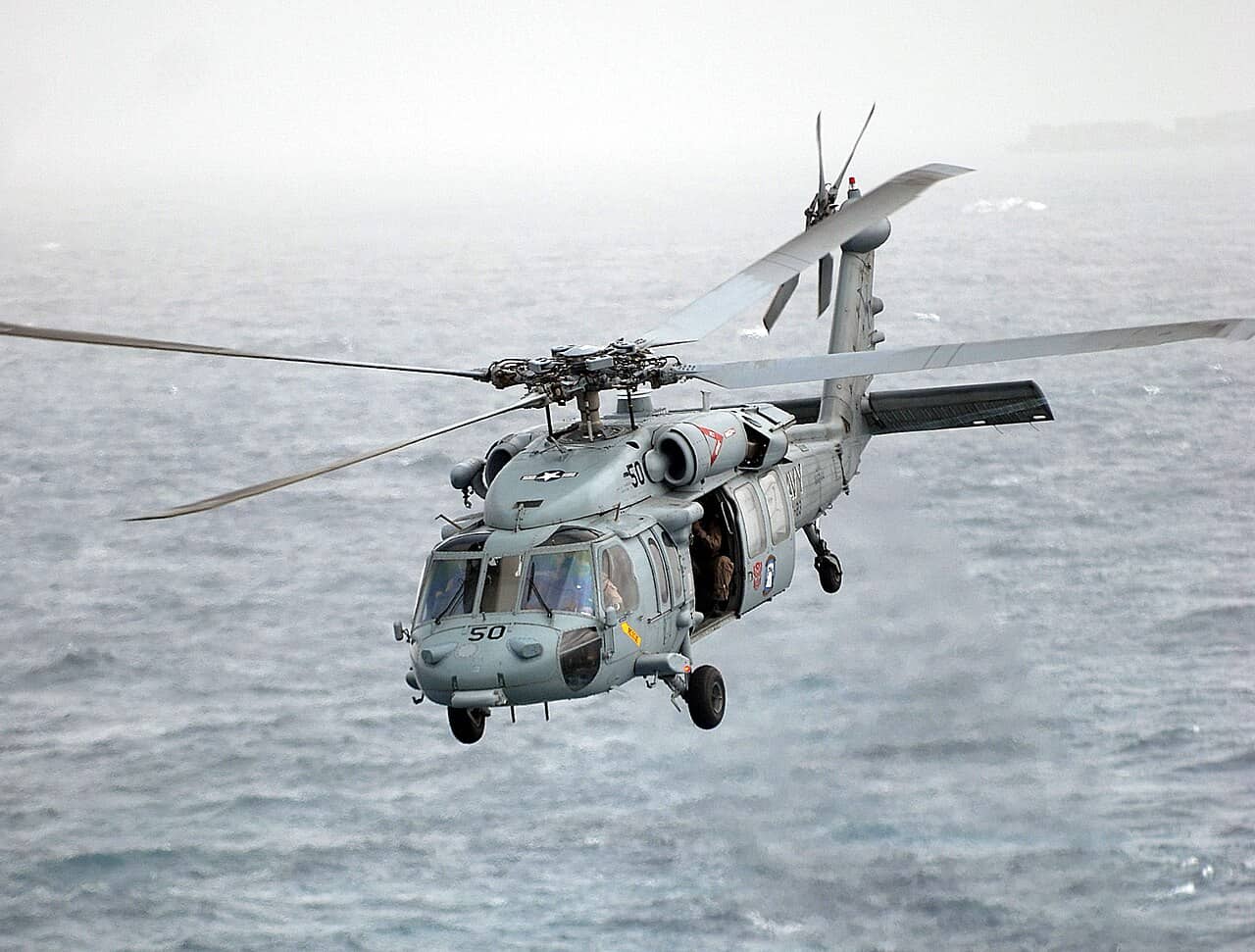
The US Navy flies five helicopter types in 2026, and two of them do almost all the work. The MH-60R and MH-60S Seahawks cover submarine hunting, rescue, resupply and mine hunting from nearly every ship in the fleet.
The other three are specialists. The MH-53E Sea Dragon sweeps mines until its planned retirement by the end of 2027, the TH-73A Thrasher trains every new helicopter pilot, and the UH-72A Lakota teaches test pilots.
What the Navy does not fly surprises most readers. Marine One, the CH-53K King Stallion and the H-1 family of attack and utility helicopters all belong to the Marine Corps, which is why so many “Navy helicopter” lists get it wrong.
| Helicopter | Main job | Who flies it | Status (September 2026) |
|---|---|---|---|
| MH-60R Seahawk (“Romeo”) | Anti-submarine and surface warfare | HSM squadrons | In service and still in production |
| MH-60S Seahawk (“Sierra”) | Combat support, rescue, resupply, mine hunting | HSC squadrons | In service, 256 aircraft per NAVAIR |
| MH-53E Sea Dragon | Airborne mine countermeasures, heavy lift | HM-15, the last squadron | Retirement planned by end of 2027 |
| TH-73A Thrasher | Basic and advanced helicopter training | Training Air Wing 5, NAS Whiting Field | In service since 2021 |
| UH-72A Lakota | Test pilot training | US Naval Test Pilot School | In service |
US Navy helicopters in service today
The Navy’s helicopter fleet is far simpler than it was a generation ago. In the early 1990s it ran Sea Kings, Seasprites, Sea Knights, three Seahawk models and Sea Dragons side by side, and today two Seahawk models have absorbed nearly all of those jobs.
1. MH-60R Seahawk “Romeo”
The MH-60R Seahawk is the Navy’s primary anti-submarine and surface warfare helicopter. NAVAIR describes it as able to operate “from any aviation ship or air-capable vessel,” from destroyers to aircraft carriers.
It hunts submarines with sonar and attacks them with Mk 54 lightweight torpedoes. Against ships and small boats it carries AGM-114 Hellfire missiles.

The Romeo reached initial operational capability in December 2005 and full operational capability in 2010, replacing both the SH-60B and SH-60F. It is 64 feet 10 inches long and weighs 15,170 pounds (6,880 kg) empty and 23,500 pounds (10,660 kg) at maximum gross weight, powered by two GE T700 turboshafts.
It is still being built. Lockheed Martin delivered its 350th MH-60R on January 13, 2026, to the fleet replacement squadron HSM-41 at NAS North Island in San Diego. Seven countries fly the type, including Australia, India and South Korea.
2. MH-60S Seahawk “Sierra”
The MH-60S is the Navy’s utility and combat support helicopter. Its official name is also Seahawk, but crews often call it the “Knighthawk,” a nod to the H-46 Sea Knight it replaced.
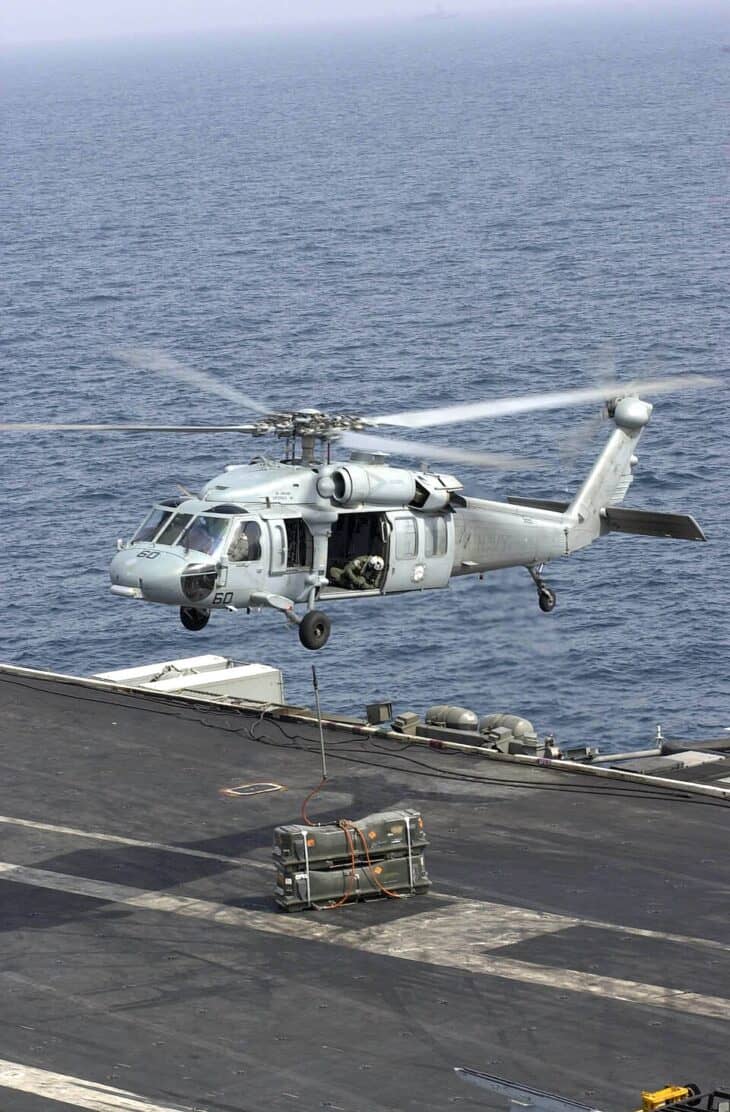
NAVAIR lists its missions as anti-surface warfare, combat search and rescue, medical evacuation, special warfare support, disaster relief and airborne mine countermeasures. Day to day, it also flies vertical resupply, moving cargo between ships at sea.
It entered service in 2002 and NAVAIR lists an inventory of 256 aircraft. It shares the Romeo’s 64-foot 10-inch length and 23,500-pound (10,660 kg) maximum gross weight, with a top speed of 180 knots and a range of 245 nautical miles.
The MH-60S is also taking over the Sea Dragon’s mine job. It can carry the Airborne Laser Mine Detection System, which spots floating and shallow mines with a laser, and the Airborne Mine Neutralization System, which drops a remote-controlled explosive vehicle to destroy them.
Romeo or Sierra: how to tell them apart
Squadron letters give it away. HSM (Helicopter Maritime Strike) squadrons fly the MH-60R and fight submarines and ships. HSC (Helicopter Sea Combat) squadrons fly the MH-60S and handle rescue, logistics, special operations support and mine hunting. The Sierra is based on the Army’s UH-60L Black Hawk.
3. MH-53E Sea Dragon
The MH-53E Sea Dragon is the Navy’s biggest helicopter and its dedicated airborne mine countermeasures platform. It tows minesweeping sleds and mine-hunting sonar through the water behind it, a job that needs the power of three engines.


NAVAIR lists a fuselage length of 73 feet 4 inches, a maximum gross weight of 69,750 pounds (31,640 kg) and three General Electric T64-GE-419 turboshafts of 4,750 shaft horsepower each. It is the Navy’s mine-hunting derivative of the Marine Corps’ CH-53E Super Stallion.
The Sea Dragon is in its last years. HM-14 flew its final MH-53E mission on December 8, 2022, and HM-12, the training squadron, held its sundown ceremony at Naval Station Norfolk on March 21, 2025.
That leaves HM-15 “Blackhawks” at Norfolk as the only squadron still flying it. As of May 2026, the fleet was scheduled for complete retirement by the end of 2027, with the MH-60S and uncrewed underwater vehicles taking over mine clearance.
Why the Sea Dragon suddenly matters again
The Navy was retiring its dedicated mine hunters just as mines came back into the news. When Iran moved to close the Strait of Hormuz in 2026, Navy Times listed the MH-53E among the key US assets for clearing Iranian mines, even as it was down to a single squadron. Whether that crisis changes the 2027 retirement plan had not been announced when this page was updated.
4. TH-73A Thrasher
Navy, Marine Corps and Coast Guard helicopter and tiltrotor pilots now learn to fly on the TH-73A Thrasher, a military version of the Leonardo AW119. The first one arrived at Naval Air Station Whiting Field in Milton, Florida, on August 6, 2021.
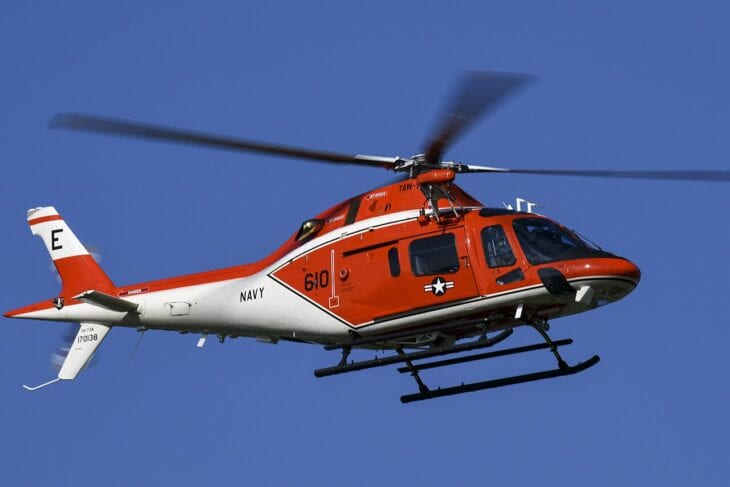
It is a single-engine helicopter with a Pratt & Whitney PT6B-37A turboshaft and a modern cockpit meant to reflect the aircraft students will fly in the fleet. It measures 42 feet 5 inches (12.92 m) with rotors turning and weighs 3,325 pounds (1,508 kg) empty.
Leonardo delivered the 100th Thrasher in September 2024, and NAVAIR expects the type to serve for about 30 years. It replaced the Bell TH-57 Sea Ranger, whose last training flight was on September 19, 2025.

5. UH-72A Lakota
The Navy’s smallest helicopter fleet sits at NAS Patuxent River, Maryland. The US Naval Test Pilot School flies the UH-72A Lakota, the Army’s light utility helicopter built by Airbus, to teach students rotary-wing flying qualities and test techniques.

NAVAIR also lists the TH-67 Creek, the Army trainer developed from the Bell 206 JetRanger, as a test pilot school aircraft.
Helicopters people think are Navy, but are not
The Marine Corps is part of the Department of the Navy, and NAVAIR buys aircraft for both services. That shared paperwork is why Marine helicopters so often show up on “Navy helicopter” lists, including the earlier version of this page.
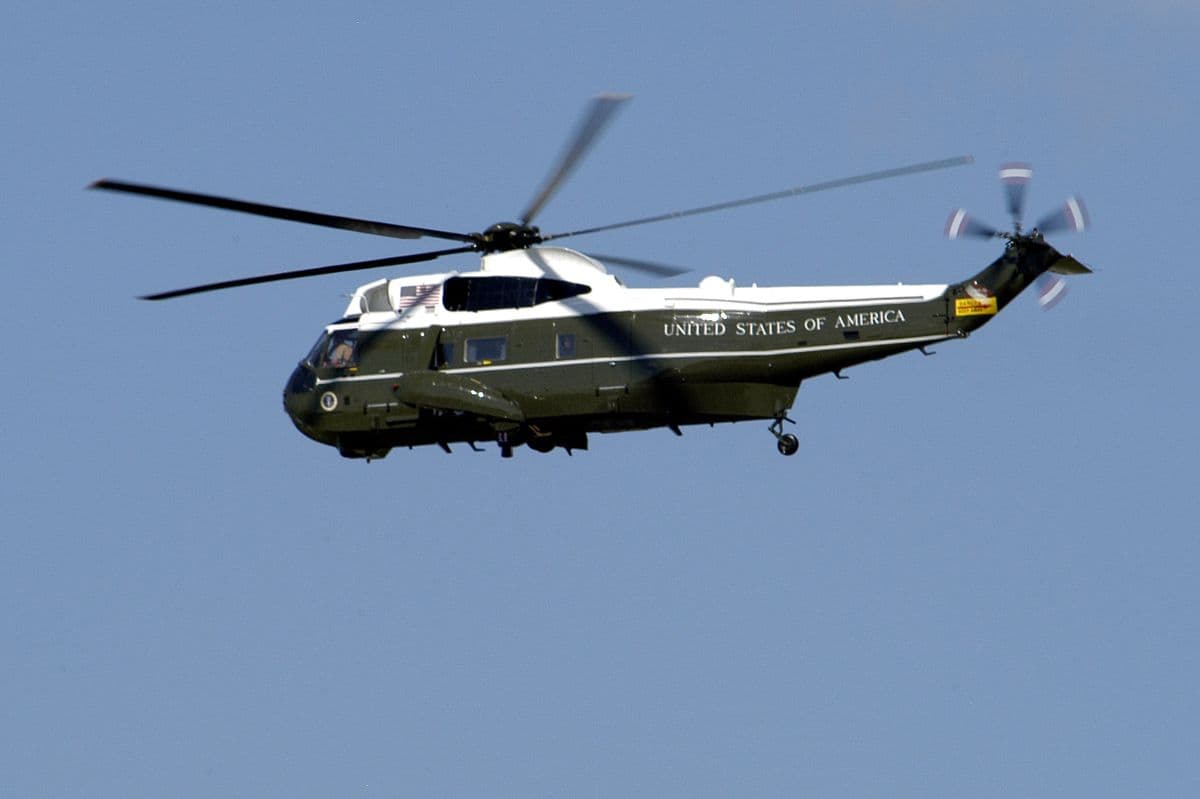
Marine One. The presidential helicopters are flown by Marine Helicopter Squadron One (HMX-1). The VH-92A Patriot, built to replace the VH-3D Sea King and VH-60N White Hawk, made its first flight as Marine One on August 19, 2024, and 23 were built.
Heavy lift and attack. The CH-53K King Stallion, the CH-53E Super Stallion, the AH-1Z Viper and the UH-1Y Venom are Marine Corps aircraft. The Navy has no dedicated attack helicopter at all.
The Osprey. The Navy does fly the CMV-22B Osprey for carrier onboard delivery, flying people and cargo out to carriers. It lands like a helicopter, but it is a tiltrotor, not a helicopter.
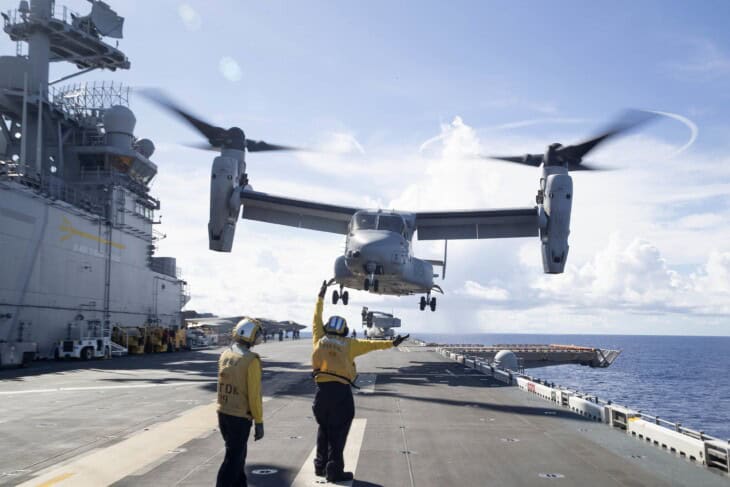
For the full picture across the Army, Air Force and Marines, see our guide to the types of military helicopters.
Retired US Navy helicopters
Here is when each of the Navy’s recent helicopter types left service.
| Helicopter | Navy role | Left Navy service |
|---|---|---|
| SH-2F Seasprite | Ship-based submarine hunting | 1993 |
| SH-2G Super Seasprite | Reserve anti-submarine squadrons | 2001 |
| H-46 Sea Knight | Vertical replenishment | September 24, 2004 |
| SH-3 Sea King | Carrier anti-submarine warfare, rescue | 2006 |
| SH-60B Seahawk | Anti-submarine warfare from frigates and destroyers | May 11, 2015 |
| SH-60F and HH-60H Seahawk | Carrier anti-submarine warfare (F), combat search and rescue (H) | 2016 |
| TH-57 Sea Ranger | Pilot training | September 19, 2025 (last training flight) |
| MQ-8C Fire Scout (uncrewed) | Uncrewed scouting from ships | Retirement announced 2024 |
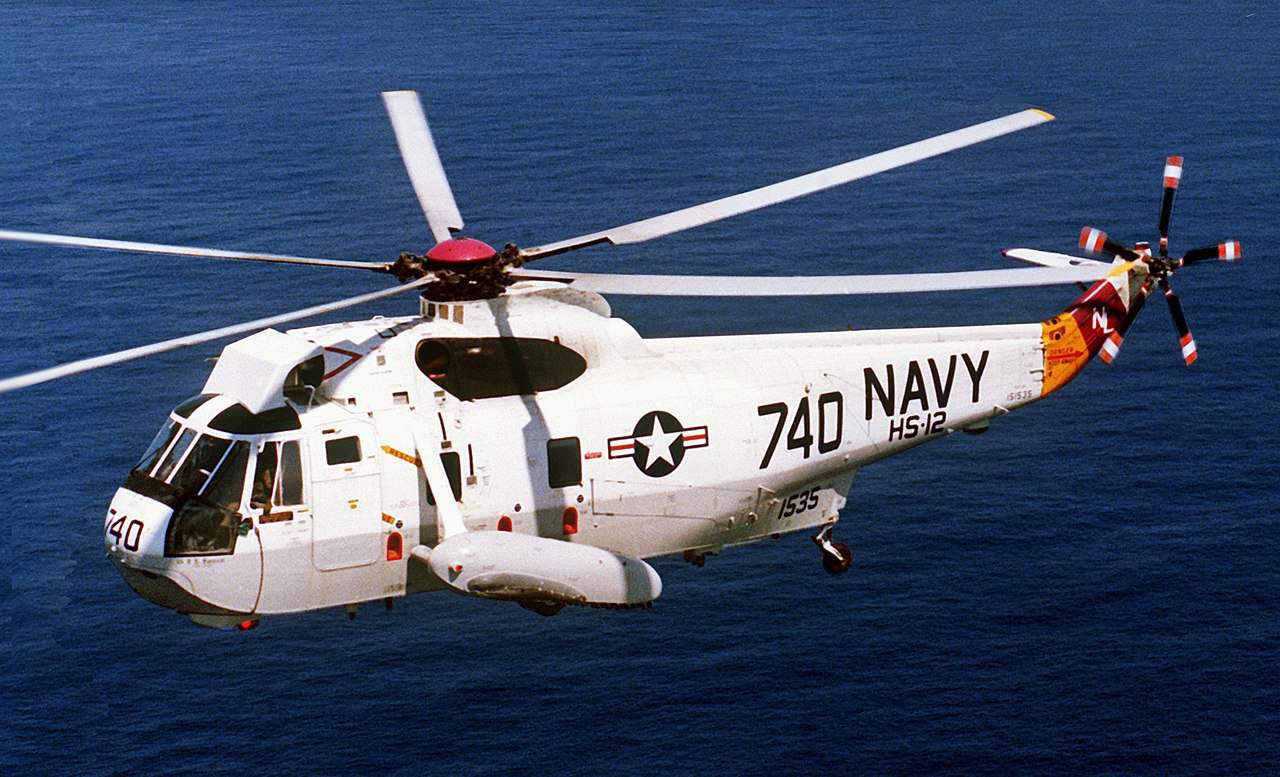
The SH-3 Sea King was the Navy’s carrier submarine hunter for decades, and the Seahawk replaced it in that role during the 1990s. Reserve units kept flying it for transport and rescue until 2006.

The SH-2 Seasprite hunted submarines from frigates and destroyers before the Seahawk. The Navy’s last SH-2Gs, flown by reserve squadrons, retired in 2001, though the G model still flies with other navies.
The Fire Scout is the odd one out. It was an uncrewed helicopter, and FlightGlobal reported in May 2024 that the Navy was retiring the MQ-8C just two years after it entered operational service, after spending nearly $1.5 billion developing it.
A short history of Navy helicopters
The Navy’s first helicopters were Sikorsky HNS-1s, the naval version of the Army’s R-4, the world’s first mass-produced helicopter. Coast Guard pilots flying them soon showed what a helicopter could do at sea.
January 1944
A lifesaving first. Coast Guard Commander Frank Erickson flies blood plasma from New York City in an HNS-1 for casualties of the destroyer USS Turner, which exploded and sank.
1984
The Seahawk arrives. The SH-60B enters Navy service, starting the H-60 family that now makes up nearly the whole fleet.
2002
MH-60S deployed. The Sierra reaches initial operational capability in August and begins replacing the H-46 Sea Knight.
2004
Sea Knight retired. The Navy retires the H-46 on September 24.
2005
MH-60R ready. The Romeo reaches initial operational capability in December.
2006
Sea King retired. The SH-3 leaves Navy service.
2015-2016
Older Seahawks retired. The SH-60B retires on May 11, 2015, followed by the SH-60F and HH-60H in 2016.
2021
New trainer. The first TH-73A Thrasher arrives at NAS Whiting Field on August 6.
2022-2025
Sea Dragon draws down. HM-14 flies its last MH-53E mission on December 8, 2022, and HM-12 holds its sundown ceremony on March 21, 2025.
2025
TH-57 retired. The last Sea Ranger training flight lands at NAS Pensacola on September 19.
2026
350th Romeo. Lockheed Martin delivers its 350th MH-60R on January 13.
2027
Planned Sea Dragon retirement. The MH-53E is scheduled to leave service by the end of the year.
Early 2040s
Seahawk successor. Target initial operational capability for Future Vertical Lift (Maritime Strike).
For the fixed-wing aircraft that share the flight deck with these helicopters, see our guide to the types of Navy planes.
What replaces the Seahawk?
According to the Navy, the MH-60R and MH-60S will begin to reach the end of their service lives in the late 2030s, after service life extensions for both. Their replacement is a program called Future Vertical Lift (Maritime Strike), or FVL (MS).
It is not planned as one helicopter. The Navy describes FVL (MS) as a family of crewed and uncrewed aircraft that will do today’s helicopter missions with more range and endurance, drawing on the Army’s Future Vertical Lift work.
The program has passed its Gate 2 requirements review and is aiming for initial operational capability in the early 2040s. Until then, the Seahawk will remain the only helicopter most sailors ever see at sea.
FAQ
Sources and references used for research and fact-checking.
- NAVAIR, MH-60R Seahawk
- NAVAIR, MH-60S Seahawk
- NAVAIR, MH-53E Sea Dragon
- NAVAIR, TH-73A
- NAVAIR, UH-72 Lakota / TH-67 Creek
- Naval Aviation News, Navy's Future Vertical Lift (Maritime Strike) Passes Key Milestone
- Lockheed Martin, Lockheed Martin Delivers 350th MH-60R Helicopter to U.S. Navy
- DVIDS, HM-12 Sundown Ceremony
- The Aviation Geek Club, The last Sea Dragon riders: US Navy qualifies its final two MH-53E pilots
- Second Line of Defense, Lewis B. Puller and the Mine Warfare Mission at the Strait of Hormuz
- Navy Times, The US has several options to counter Iranian mines. These are some key assets.
- Wikipedia, HM-14
- Seapower Magazine, Navy Concludes Helicopter Aviator Training in TH-57 SeaRanger
- Leonardo, Leonardo celebrates the 100th delivery of the TH-73A Thrasher to the US Navy
- FlightGlobal, US Navy's MQ-8C Fire Scouts fly into retirement just two years after entering operational service
- Wikipedia, Sikorsky SH-60 Seahawk
- Wikipedia, Sikorsky SH-3 Sea King
- Wikipedia, Kaman SH-2 Seasprite
- Wikipedia, Boeing Vertol CH-46 Sea Knight
- Wikipedia, Sikorsky VH-92 Patriot
- Wikipedia, Sikorsky R-4
- Wikipedia, Bell Boeing V-22 Osprey
- Wikipedia, AgustaWestland AW119 Koala
- Wikipedia, 2026 Strait of Hormuz campaign
Get the Newsletter
The latest aviation news and stories sent to your inbox.
About the Author

Tim is the owner and lead editor of AeroCorner since 2019, overseeing aviation content covering aircraft, airlines, airports, and the broader aviation industry. Through years of researching, writing, editing, and publishing aviation-focused content, he has developed extensive practical knowledge of commercial aviation and air travel. Based in Asia and a frequent traveler himself, Tim also brings firsthand passenger experience to AeroCorner’s coverage. Outside of publishing, he has also explored aviation firsthand through hands-on flight training in New Zealand.