


Table of Contents
The largest military base in the United States is the Nevada Test and Training Range, an Air Force range covering roughly 2.9 million acres (about 4,500 square miles) of southern Nevada. Measured by land the Defense Department owns outright rather than borrows from other federal agencies, the title goes to White Sands Missile Range in New Mexico.
Measured by people, neither one is close. That prize belongs to Fort Bragg in North Carolina, which supports roughly 140,500 soldiers, civilians, and family members on a footprint smaller than a dozen bases on this list.
That split is why no two lists of America’s biggest bases agree. This one ranks the 15 largest by total land area under military control as of 2026, then ranks them again by population, and says plainly which measure produced which order.
| Rank | Base | Branch | Land area |
|---|---|---|---|
| 1 | Nevada Test and Training Range, NV | Air Force | ~2,900,000 acres |
| 2 | White Sands Missile Range, NM | Army | ~2,300,000 acres |
| 3 | Barry M. Goldwater Range, AZ | Air Force / Marines | ~1,900,000 acres |
| 4 | Utah Test and Training Range, UT | Air Force | ~1,710,000 acres |
| 5 | Fort Wainwright, AK | Army | ~1,600,000 acres |
| 6 | Fort Bliss, TX / NM | Army | ~1,120,000 acres |
| 7 | NAWS China Lake, CA | Navy | ~1,100,000 acres |
| 8 | Yuma Proving Ground, AZ | Army | ~837,000 acres |
| 9 | Dugway Proving Ground, UT | Army | ~800,000 acres |
| 10 | MCAGCC Twentynine Palms, CA | Marine Corps | ~705,000 acres |
| 11 | Fort Irwin, CA | Army | ~637,000 acres |
| 12 | Eglin Air Force Base, FL | Air Force | ~463,000 acres |
| 13 | Joint Base Lewis-McChord, WA | Army / Air Force | ~414,000 acres |
| 14 | Fort Hood, TX | Army | 218,000 acres |
| 15 | Fort Benning, GA / AL | Army | ~182,000 acres |
How this ranking works
Entries are ranked by total land area the military controls, which is how the services describe their own installations and how most size comparisons are meant. That includes public land withdrawn from the Bureau of Land Management, not just land the Defense Department owns. Overseas bases are excluded. So is airspace, which is measured separately and is far larger than the ground beneath it.
Why lists of the largest military bases disagree
There are three defensible ways to measure a base, and they produce three different winners.
The first is total land under military control. Most of the giants on this list sit on public land withdrawn from other federal agencies for military use, which is how a range can span thousands of square miles without the Pentagon holding the deed.
The second is land the Defense Department owns outright. On that narrower measure White Sands Missile Range leads with more than 955,000 owned acres, and Fort Bliss drops from second place to third with about 288,000 owned acres.
The third is population, and it reshuffles the order completely. The biggest ranges are deliberately almost empty, because their job is to absorb missiles and live fire, not to house people.
Nine Army posts would fit inside White Sands
By the Army’s own accounting, White Sands Missile Range makes up 17 percent of all US Army land, and Fort Benning, Fort Bragg, Fort Campbell, Fort Hood, Fort Irwin, Fort Knox, Fort Polk, Fort Sill and Fort Stewart would all fit inside its boundaries at once.
15. Fort Benning, Georgia and Alabama
Fort Benning covers roughly 182,000 acres (about 284 square miles) spanning the Georgia-Alabama state line. It is the Army’s home of the infantry and its main airborne school.
The post was renamed Fort Moore in 2023 and restored to Fort Benning in March 2025, this time honoring Corporal Fred G. Benning, a World War I Distinguished Service Cross recipient, rather than the Confederate general the original name commemorated.
14. Fort Hood, Texas
Fort Hood spans 218,000 acres across Bell and Coryell counties in central Texas and is the largest active-duty armored post in the country. It is home to nearly 40,000 soldiers.
Like Benning, it went through a name change and back: Fort Cavazos from 2023 until 2025, when it reverted to Fort Hood in honor of Colonel Robert B. Hood, a World War I Distinguished Service Cross recipient.
13. Joint Base Lewis-McChord, Washington
Joint Base Lewis-McChord covers 647 square miles, or roughly 414,000 acres, but the number hides an unusual arrangement. Only 142 square miles sit at the main base in western Washington; the other 505 square miles are the Yakima Training Center, a sub-installation on the dry side of the Cascades.
JBLM is jointly run by the Army and Air Force and supports about 110,000 people, including 40,000 active-duty personnel, 60,000 family members, and 15,000 civilian and contract employees.
12. Eglin Air Force Base, Florida
Eglin covers 463,128 acres (about 724 square miles) of the Florida panhandle, most of it ceded from the Choctawhatchee National Forest in 1940. It is the largest Air Force base in the continental United States by land area and one of the biggest names on our list of the largest Air Force bases in the US.
Its land area understates it. Eglin’s Santa Rosa Island Range Complex adds 86,500 square miles of overwater airspace in the Gulf, used for weapons testing that cannot safely be run over land.
11. Fort Irwin, California
Fort Irwin occupies about 996 square miles (roughly 637,000 acres) of the Mojave Desert and exists for one reason: to be a place where a whole brigade can fight a realistic battle.
As the Army’s National Training Center, it holds mock villages built at full scale, the largest of which has 585 buildings. Units rotate through against a resident opposing force using laser engagement systems instead of live rounds.
10. MCAGCC Twentynine Palms, California
The Marine Corps Air Ground Combat Center at Twentynine Palms covers 1,102 square miles, roughly 705,000 acres, making it the largest Marine Corps base in the country.
The size is deliberate. Twentynine Palms is the only place the Marines can put an entire expeditionary brigade through live-fire combined arms training in one continuous exercise, with aircraft and artillery working the same ground at once.
9. Dugway Proving Ground, Utah
Dugway Proving Ground covers around 800,000 acres (about 1,250 square miles) of Utah’s West Desert. The Army uses it to test defenses against chemical and biological weapons, which explains both the acreage and the isolation.
Its east and west areas run contiguous with the southern section of the Utah Test and Training Range, creating one of the largest uninterrupted blocks of restricted land in the lower 48.
8. Yuma Proving Ground, Arizona
Yuma Proving Ground’s test center spans 1,307.8 square miles, about 837,000 acres, of the northwestern Sonoran Desert. Nearly all long-range artillery testing for US ground forces happens here.
It holds the longest overland artillery range in the nation at 40 miles (64 km), plus more than 2,000 square miles of controlled airspace above it. Around 3,000 people work there, most of them civilians.
7. Naval Air Weapons Station China Lake, California
China Lake and its two ranges cover more than 1.1 million acres, an area larger than Rhode Island. It is the Navy’s single largest landholding, accounting for 38 percent of the Navy’s worldwide land and 85 percent of the land it uses for weapons research and testing.
At least 95 percent of it is undeveloped. The base is where much of the Navy’s air-launched weaponry gets designed and proven, work that keeps the biggest military contractors permanently on site.
Its 19,600 square miles of restricted and controlled airspace amount to 12 percent of all the airspace over California.
6. Fort Bliss, Texas and New Mexico
Fort Bliss covers about 1.12 million acres reaching from El Paso into New Mexico, and it is the second-largest installation in the Army after the White Sands range it borders. Founded in 1848, it is also one of the oldest posts in the West.
It has the Army’s largest maneuver area at 992,000 acres, ahead of Fort Irwin’s 642,000, and the largest contiguous block of restricted airspace in the continental United States at roughly 1,500 square miles.
More than 30,000 soldiers are stationed there, and around 90,000 soldiers and family members call Fort Bliss and El Paso home.
5. Fort Wainwright, Alaska
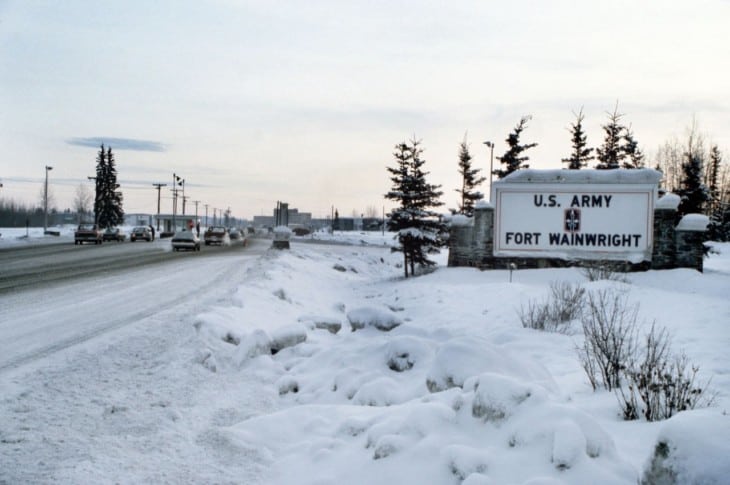
Fort Wainwright manages more than 1.6 million acres across the Fairbanks North Star Borough and Southeast Fairbanks, making it the largest US military installation by area outside the contiguous states.
It began life as Ladd Field in 1939 and served as an Air Force base until 1961 before becoming an Army post. Today it trains soldiers for Arctic operations under the 11th Airborne Division.
Despite the acreage, only about 15,000 people are on the installation, including roughly 6,500 military members.
4. Utah Test and Training Range, Utah
The Utah Test and Training Range has a ground footprint of 2,675 square miles, roughly 1.71 million acres, split into north and south ranges either side of Interstate 80.
Its real distinction is overhead. UTTR holds the largest contiguous block of overland supersonic-authorized restricted airspace in the contiguous United States, more than 19,000 square miles of it, which is where much of the country’s live weapons-release testing happens.
3. Barry M. Goldwater Range, Arizona
The Barry M. Goldwater Range sprawls across the Sonoran Desert of southwestern Arizona, running along much of the border with Mexico. The Air Force puts it at 1.9 million acres, while Luke Air Force Base range documents count over 1.7 million, a gap that comes down to which outlying parcels are included.
It is split in two. Goldwater East, over a million acres of it, is managed by Luke Air Force Base for fighter training; Goldwater West is run by the Marine Corps out of Yuma. Some rankings count the halves separately, which is one reason the range’s position moves around from list to list.
Almost nobody lives there. The range holds four scored surface attack ranges and two full-size airfield mockups for pilots to practice against.
2. White Sands Missile Range, New Mexico
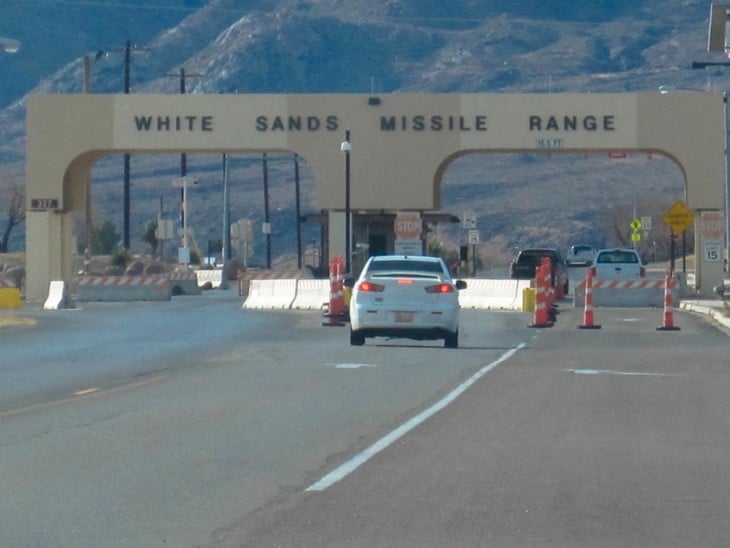
White Sands Missile Range spans approximately 2.3 million acres of southern New Mexico and is the largest fully instrumented, open-air test range in the Defense Department. On the narrower measure of land the department owns outright, its 955,000-plus owned acres make it the largest military base in the country outright.
It controls 3,421 square miles of restricted airspace from the ground to space, 24 hours a day, and that block can be expanded to 7,569 contiguous square miles when a test demands it.
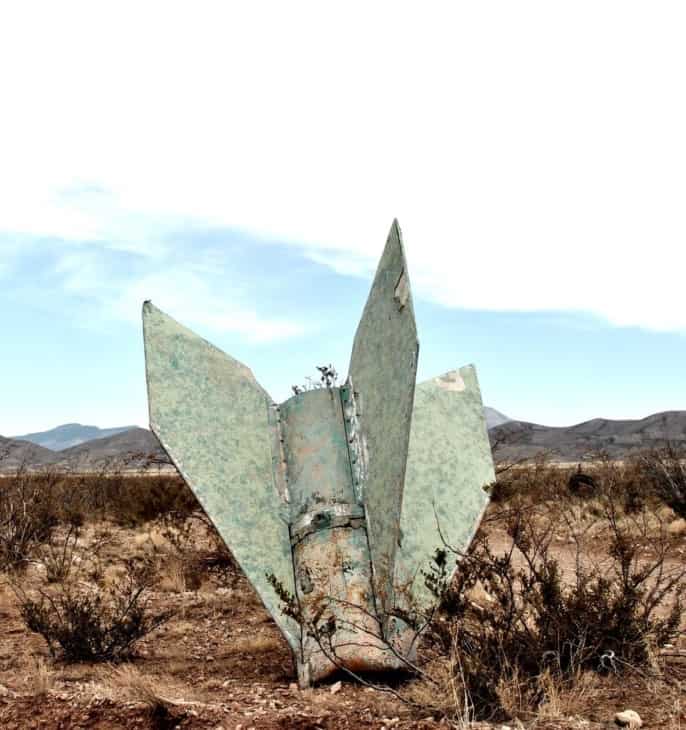
For long-range shots the Army reaches even further, launching from sites up to 750 miles away in Idaho and firing into the range. Roughly 6,500 soldiers, civilians, and contractors work there, most commuting in from Las Cruces, Alamogordo, and El Paso.
1. Nevada Test and Training Range, Nevada
The Nevada Test and Training Range covers roughly 2.9 million acres of southern Nevada and sits beneath 5,000 square miles of restricted airspace, plus another 7,000 square miles of military operating area shared with civilian traffic. The Air Force describes it as the largest contiguous block of air and ground space available for peacetime military operations in the free world.
Managed by the Air Force from Nellis Air Force Base, it is where large-force exercises such as Red Flag are flown, and where new aircraft and weapons are tested at full scale.
Most of the range is withdrawn public land rather than land the Pentagon owns, which is why it tops a total-area ranking but not an owned-acreage one. Its land withdrawal runs through November 2046 under Public Law 116-283.
The largest military bases by population
Rank the same country by people instead of acres and almost none of the names above survive. Active-duty personnel is the cleanest comparison, because total population figures are self-reported and each installation counts dependents, retirees, and contractors differently.
| Base | State | Active-duty personnel | Total supported |
|---|---|---|---|
| Fort Bragg | North Carolina | ~50,000 | ~140,500 |
| Joint Base Lewis-McChord | Washington | ~40,000 | ~110,000 |
| Fort Hood | Texas | ~40,000 | Not published |
| Fort Bliss | Texas | ~30,000 | ~90,000 with families |
| Fort Campbell | Kentucky / Tennessee | ~30,000 | Not published |
| Joint Base San Antonio | Texas | Not published | ~80,000 |
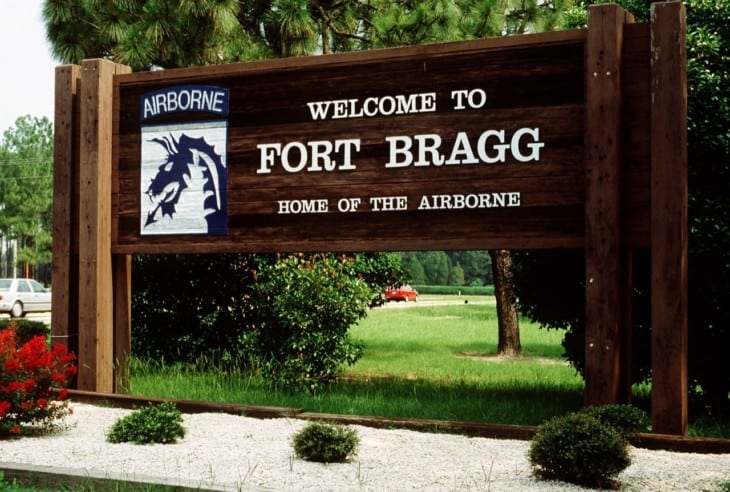
Fort Bragg is the largest by uniformed personnel, with roughly 50,000 troops and another 14,000 civilians working on the post. It covers just over 251 square miles, which would not have placed it in the top 15 by land area.
Joint Base San Antonio makes a competing claim as the largest single Defense Department installation, and on its own terms it is right: it combines Fort Sam Houston, Lackland, and Randolph, and puts up to 138,000 students a year through its schools on top of a resident population of about 80,000.
Careful with the population numbers you see quoted
Figures above 200,000 circulate for Fort Bragg, Fort Hood, and Fort Campbell. Those usually count everyone an installation serves, including retirees and veterans living across the surrounding region, not people on the base. Fort Bragg’s own newcomer guidance puts its supported population at roughly 140,500, which is the number used here.
Why the biggest bases are all in the West
Eleven of the 15 largest bases sit west of the Rockies or in Alaska, and the reason is airspace rather than land. A missile test or a supersonic weapons release needs a column of empty sky, and empty sky only exists above empty ground.
That is why these installations are so lightly populated. Fort Irwin, China Lake, Dugway, and the Goldwater Range are not cities with a range attached; they are ranges with a small town attached, and the acreage exists to guarantee that whatever comes down lands on government property.
It also explains why so much of this land is borrowed rather than bought. Withdrawing public land from the Bureau of Land Management is how the services assembled blocks this size without purchasing the West, and it is why the Nevada range tops a total-area ranking while White Sands wins on land actually owned.
Most of these ranges are closed to the public, though the rules vary by installation and by branch, and some posts do admit visitors with sponsorship. Our guide to whether civilians can get on military bases covers how access actually works, and the biggest military airplanes in service are a large part of why the ranges need so much room.
FAQ
Sources and references used for research and fact-checking.
- Nellis Air Force Base, U.S. Air Force, Nevada Test and Training Range
- U.S. Army, White Sands Missile Range, New Mexico Land Conservancy and State Land Office unite to safeguard 60,000 acres of land
- U.S. Army, White Sands Missile Range: About
- El Paso Matters, Fact check: Is Fort Bliss the largest military base in the U.S. based on acreage?
- Bureau of Land Management, BLM Publishes Public Notice of Legal Land Description and Map Availability for the Nevada Test and Training Range
- 944th Fighter Wing, U.S. Air Force, Barry M. Goldwater Range
- Luke Air Force Base, U.S. Air Force, Barry M. Goldwater Range East, Range Reader Vol. 1 Issue 1
- Wikipedia, Utah Test and Training Range
- Wikipedia, Fort Wainwright
- U.S. Army, Fort Bliss, Texas: Garrison
- Wikipedia, Fort Bliss
- U.S. Army, Excellence in the Desert: Fort Bliss takes home top 2026 Army installation honors
- Wikipedia, Naval Air Weapons Station China Lake
- Wikipedia, Yuma Proving Ground
- Wikipedia, Dugway Proving Ground
- Wikipedia, Marine Corps Air Ground Combat Center Twentynine Palms
- Wikipedia, Fort Irwin National Training Center
- Wikipedia, Eglin Air Force Base
- U.S. Army, Joint Base Lewis-McChord: About
- U.S. Army, Fort Hood: About
- U.S. Army, Fort Bragg newcomer information
- Wikipedia, Fort Bragg
- Wikipedia, Fort Benning
- U.S. Army, Fort Campbell installation information
- MyBaseGuide, Fort Campbell base guide
- Wikipedia, Joint Base San Antonio
- Stars and Stripes, Trump restores names of 7 southern Army bases
- ClearanceJobs, From Bragg to Hood: A Look at the U.S. Army Base Renaming Evolution
Get the Newsletter
The latest aviation news and stories sent to your inbox.
About the Author

Articles credited to the AeroCorner Editorial Team are created or maintained by multiple aviation contributors working under a shared editorial framework. Content is researched using authoritative aviation sources and reviewed to ensure clarity, technical accuracy, and consistency across AeroCorner.