


Table of Contents
Yes, civilians can get military training, but not the real boot camp. Basic training is only open to people who have signed an enlistment contract, so nobody can buy a seat at Fort Jackson or Parris Island.
What civilians can get is most of the skills. Government-backed programs such as Civil Air Patrol, the Coast Guard Auxiliary and ROTC teach drill, flying, search and rescue and leadership with no service obligation. Private schools run by veterans sell firearms, endurance and SEAL-style courses to anyone who pays.
Below are nine real routes, what each one actually teaches, who can join, and what it costs.
| Route | Who can join | Cost | Service obligation |
|---|---|---|---|
| Civil Air Patrol cadets | Ages 12 to 18 to join | Orientation flights free | None |
| Coast Guard Auxiliary | U.S. citizens 17 and up, no upper age limit | Volunteer | None |
| Junior ROTC | High school students at host schools | Part of school | None |
| Army ROTC Basic Course | College freshmen and sophomores | Part of college | None without a scholarship |
| FEMA CERT | Volunteers in communities with a program | Varies by program | None |
| Civilian Marksmanship Program | U.S. citizens | Varies by clinic or match | None |
| Stop the Bleed | Anyone | Usually free | None |
| Joint Civilian Orientation Conference | Invited civilian leaders | By invitation | None |
| Private veteran-run schools | Adults who pay | $2,135 (Gunsite 250) to $4,499 (Kokoro) | None |
What Civilians Cannot Get: Basic Training Itself
Every branch runs its own recruit training, and every seat goes to someone who has already enlisted. The length varies a lot by service, from about 7.5 weeks in the Air Force to 13 weeks in the Marine Corps.
| Branch | Basic training length | Enlistment age range |
|---|---|---|
| Marine Corps | 13 weeks | 17 to 28 |
| Army | 10 weeks | 17 to 42 |
| Navy | 9 weeks | 17 to 41 |
| Coast Guard | 8 weeks | 17 to 41 |
| Air Force and Space Force | About 7.5 weeks | 17 to 42 |
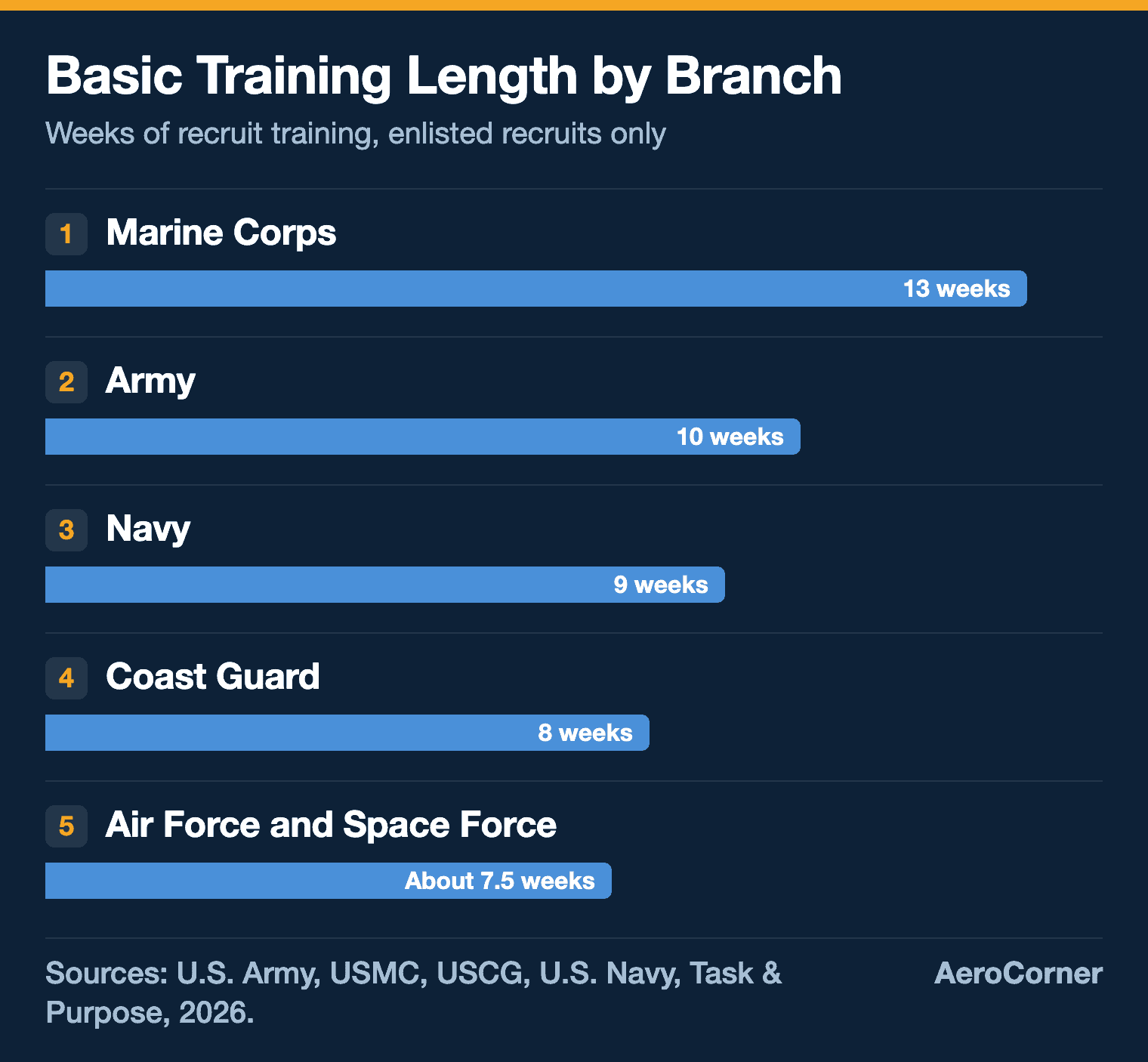
The Navy cut its boot camp from 10 weeks to nine in January 2025. The Air Force rebuilt its basic training in October 2025 but kept it at about seven and a half weeks.
Some of what recruits do there is simply not for sale: live training with service weapons, military drill instructors, and the contract that makes you subject to military law. Anything advertised as “civilian boot camp” is a private imitation, however good.

Government Programs That Train Civilians
The closest thing to real military training without enlisting comes from programs the government charters or runs itself. None of them requires you to serve.
1. Civil Air Patrol (ages 12 to 18 to join as a cadet)
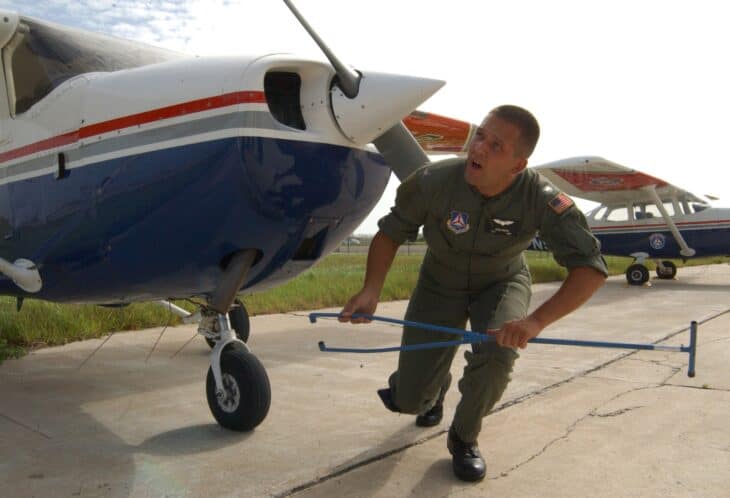

Civil Air Patrol is the civilian auxiliary of the U.S. Air Force, a congressionally chartered nonprofit founded on December 1, 1941. It is the best route for anyone drawn to military aviation.
Cadets join between 12 and 18, wear uniforms, learn drill and leadership, and attend a week-long summer encampment. Orientation flights are free to cadets, and the program says it flies more than 20,000 hours a year across its 950-plus squadrons.
There is no military obligation, but CAP says 8% of U.S. Air Force Academy cadets are former CAP cadets. For the flying side, see our guide to types of flight schools.
2. Coast Guard Auxiliary (17 and up, no upper age limit)


The Coast Guard Auxiliary, established in 1939, has no upper age limit, so it suits adults who want to train alongside a military service. Members must be U.S. citizens, at least 17, and pass a Coast Guard background check.
Certified boat crews patrol for recreational boating safety, search and rescue, and marine safety alongside active-duty Coast Guard personnel. Members use their own boats and aircraft, and the aviation arm flies search and rescue and pollution patrols.
3. Junior ROTC (high school)
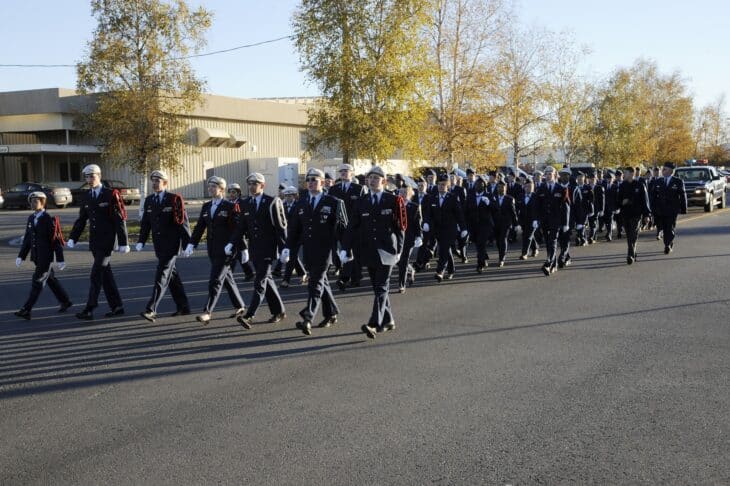

Junior ROTC is a military-sponsored program that runs inside host high schools. Students wear the uniform and learn drill and leadership.
According to the Congressional Research Service, JROTC “does not incur any military obligation” and recruiting is not a stated objective in statute or policy.
4. Army ROTC Basic Course (first two years of college)
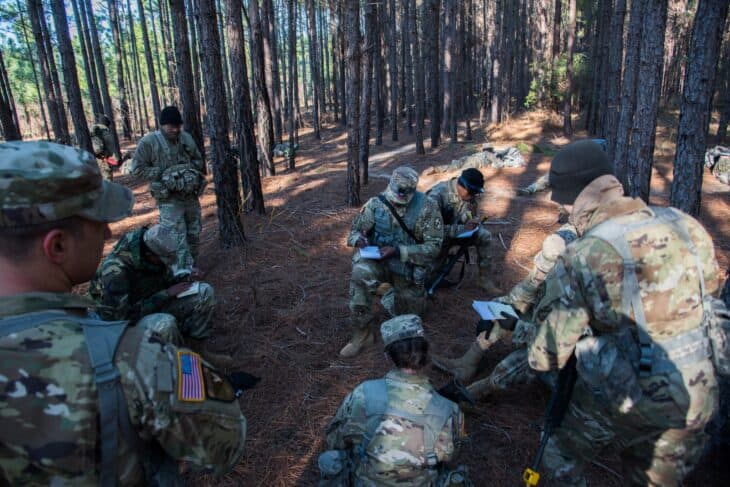

College students can enroll in Army ROTC as freshmen and sophomores with no commitment. The Army says enrolling in the Basic Course “does not obligate you to serve unless you receive a scholarship.”
That makes it the most direct no-commitment taste of officer training. Taking a scholarship changes the deal: a four-year scholarship carries four years of full-time service.
5. FEMA Community Emergency Response Team (CERT)
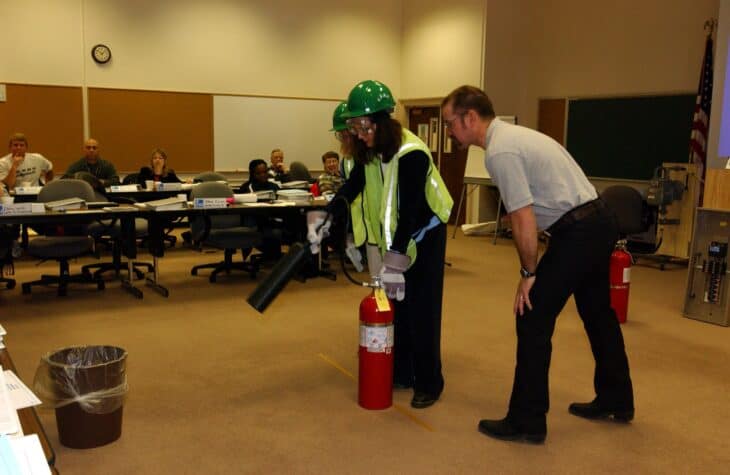

CERT trains volunteers in basic disaster response: fire safety, light search and rescue, team organization and disaster medical operations. It is not military training, but it is the same kind of drilled, team-based emergency work.
FEMA offers a free online introduction, IS-317, and local programs run the hands-on basic course.
6. Civilian Marksmanship Program
The Civilian Marksmanship Program is a federally chartered nonprofit created by a 1996 federal law, formally named the Corporation for the Promotion of Rifle Practice and Firearms Safety. Its charter is to instruct U.S. citizens in marksmanship and promote safe firearms practice.
It also conducts competitions and restores and sells rifles. For civilians who want structured rifle instruction, it is the government-chartered route.
7. Stop the Bleed (about 90 minutes, usually free)
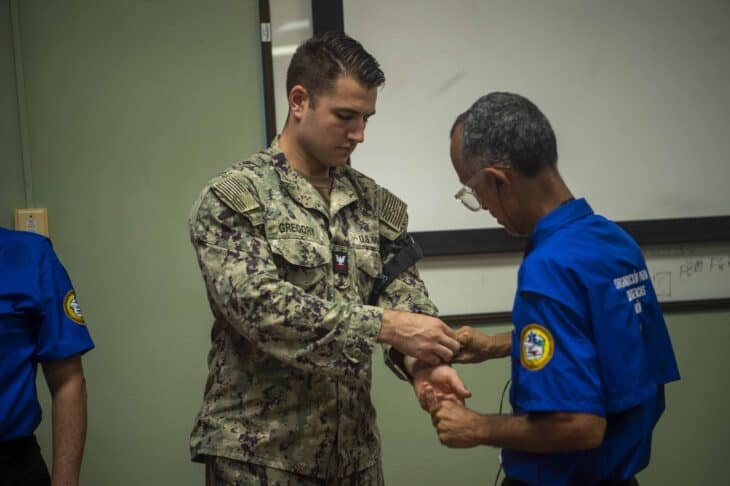

Stop the Bleed is the most direct transfer of battlefield skill to civilians. The American College of Surgeons course teaches bleeding control, and its organizers say it was informed by military medicine’s advances during the wars in Afghanistan and Iraq.
Most courses last no longer than 90 minutes, and most carry no charge.
8. Joint Civilian Orientation Conference (invitation only)
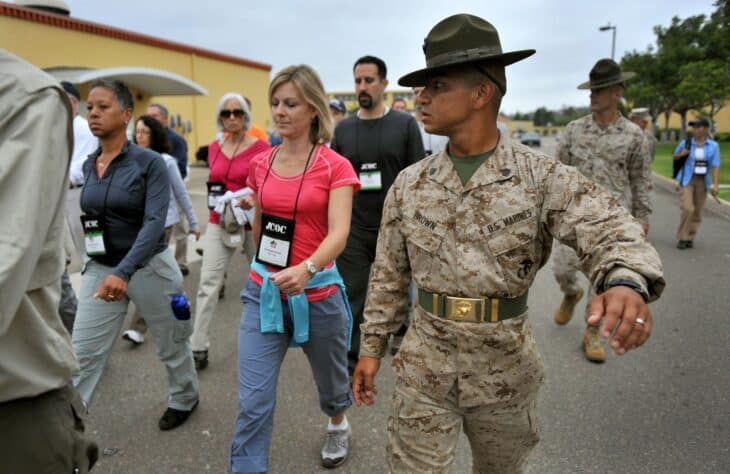

The JCOC is the Defense Department’s oldest public liaison program, established in 1948. It brings a small group of civilian leaders who have little exposure to the military onto bases for about a week.
Participants see and try military training firsthand. They are nominated, and the public cannot apply. Its 2026 class, one participant reported, numbered about 40 and visited nine installations.
If you just want to see a base rather than train on one, the rules are in our guide to whether civilians can get on military bases.
9. Private Military-Style Training Schools
Everything else is private: companies, often founded by veterans, that sell military-style courses to the public. They are the only route a civilian adult can simply sign up and pay for, and quality varies, so look at who founded the school and how long it has run.

Firearms: Gunsite Academy
Gunsite was founded in 1976 by Lt. Col. Jeff Cooper near Paulden, Arizona. Its flagship 250 Defensive Pistol class runs five days, needs no prerequisite and costs $2,135, plus 1,000 rounds of ammunition.
Endurance and teamwork: GORUCK
GORUCK was started by Jason McCarthy, who served in the 10th Special Forces Group from 2006 to 2008. He and his wife started the company, and its flagship event is the GORUCK Challenge.
The company says it has run more than 10,000 events since 2010.
SEAL-style crucibles: SEALFIT Kokoro
Kokoro is a 50-hour event that SEALFIT models on the U.S. Navy SEALs’ Hell Week. It was listed at $4,499 in late 2025.
Which route fits you
Teenagers who love aircraft: Civil Air Patrol. College students who might want a commission: the Army ROTC Basic Course. Adults who want to serve without enlisting: the Coast Guard Auxiliary or CERT. Adults who want a specific skill fast: Stop the Bleed, a CMP clinic or a school like Gunsite.
What It Takes to Get the Real Thing
If none of these is enough, the only way into real basic training is to enlist. Civilians need no special training beforehand, but they do need to meet the entry standards.
Age. Federal law sets the outer limit at 17 to 42, and recruits under 18 need written parental consent. Each branch sets its own cap inside that, from 28 in the Marine Corps to 42 in the Army, Air Force and Space Force.
Education. You need a high school diploma or a GED, and there are fewer slots for GED holders. By law, a non-graduate needs an Armed Forces Qualification Test score at or above the 31st percentile.
Aptitude. The same law caps recruits scoring at or above the 10th but below the 31st percentile at 4% of a service’s active-duty enlistees each year, unless the Secretary of Defense raises it.
Fitness. The Army replaced the Army Combat Fitness Test with the Army Fitness Test from June 1, 2025. Its five events are a three-repetition maximum deadlift, hand-release push-ups, a sprint-drag-carry, a plank and a two-mile run.
Civilians who work on bases go through a different process entirely, covered in can civilians work on military bases.
Can You Back Out of Military Training?
Before you ship, it is usually possible. Recruits wait in the Delayed Entry Program, and the GI Rights Hotline, an advocacy group, says it has not seen anyone who could not get out of the DEP when they wanted to.
After you ship, there is no simple quit button. The military can grant an entry-level separation during a recruit’s first stretch of service, and that window was extended from 180 days to 365 days, effective December 23, 2022.
That is the real difference between the civilian routes above and the real thing. Every civilian program on this list lets you walk away on any day you choose.
FAQ
Sources and references used for research and fact-checking.
- U.S. Army, Basic Combat Training
- U.S. Marine Corps, Recruit Training
- U.S. Coast Guard, Basic Training
- DVIDS, U.S. Navy Optimizes Basic Military Training Program to 9 Weeks
- Task & Purpose, Air Force to roll out major boot camp changes early next month
- U.S. Army, Army establishes new fitness test of record to strengthen readiness and lethality
- U.S. Army, Eligibility and Requirements to Join
- Army Times, Army raises maximum enlistment age to 42
- USAGov, Requirements to join the U.S. military
- Cornell Law School LII, 10 U.S. Code 505, Regular components: qualifications, term, grade
- Cornell Law School LII, 10 U.S. Code 520, Limitation on enlistment of persons whose AFQT score is below a prescribed level
- GI Rights Hotline, Entry Level Expanded
- GI Rights Hotline, Delayed Entry Program Discharge: Fact Sheet
- Civil Air Patrol, Who We Are
- Civil Air Patrol, Cadet Programs
- Civil Air Patrol, Cadet FAQs
- Civil Air Patrol, Cadet Orientation Flights
- U.S. Coast Guard Auxiliary, US Coast Guard Auxiliary
- U.S. Army, Army ROTC
- Congressional Research Service, Defense Primer: Junior Reserve Officers' Training Corps (IF11313)
- FEMA, Community Emergency Response Team (CERT)
- Civilian Marksmanship Program, About the CMP
- DVIDS, JBER hosts Army, Air Force orientation conference for civilian leaders
- Minot Daily News, Warfighters leave impression during civilian experience
- American College of Surgeons, About Stop the Bleed
- American College of Surgeons, Stop the Bleed FAQ
- GORUCK, GORUCK Origins
- Gunsite Academy, History of Lt. Col. Jeff Cooper
- Gunsite Academy, Gunsite 250 Pistol Class
- SEALFIT, Kokoro: Navy SEAL 50-Hour Crucible
Get the Newsletter
The latest aviation news and stories sent to your inbox.
About the Author

Tim is the owner and lead editor of AeroCorner since 2019, overseeing aviation content covering aircraft, airlines, airports, and the broader aviation industry. Through years of researching, writing, editing, and publishing aviation-focused content, he has developed extensive practical knowledge of commercial aviation and air travel. Based in Asia and a frequent traveler himself, Tim also brings firsthand passenger experience to AeroCorner’s coverage. Outside of publishing, he has also explored aviation firsthand through hands-on flight training in New Zealand.