

Table of Contents
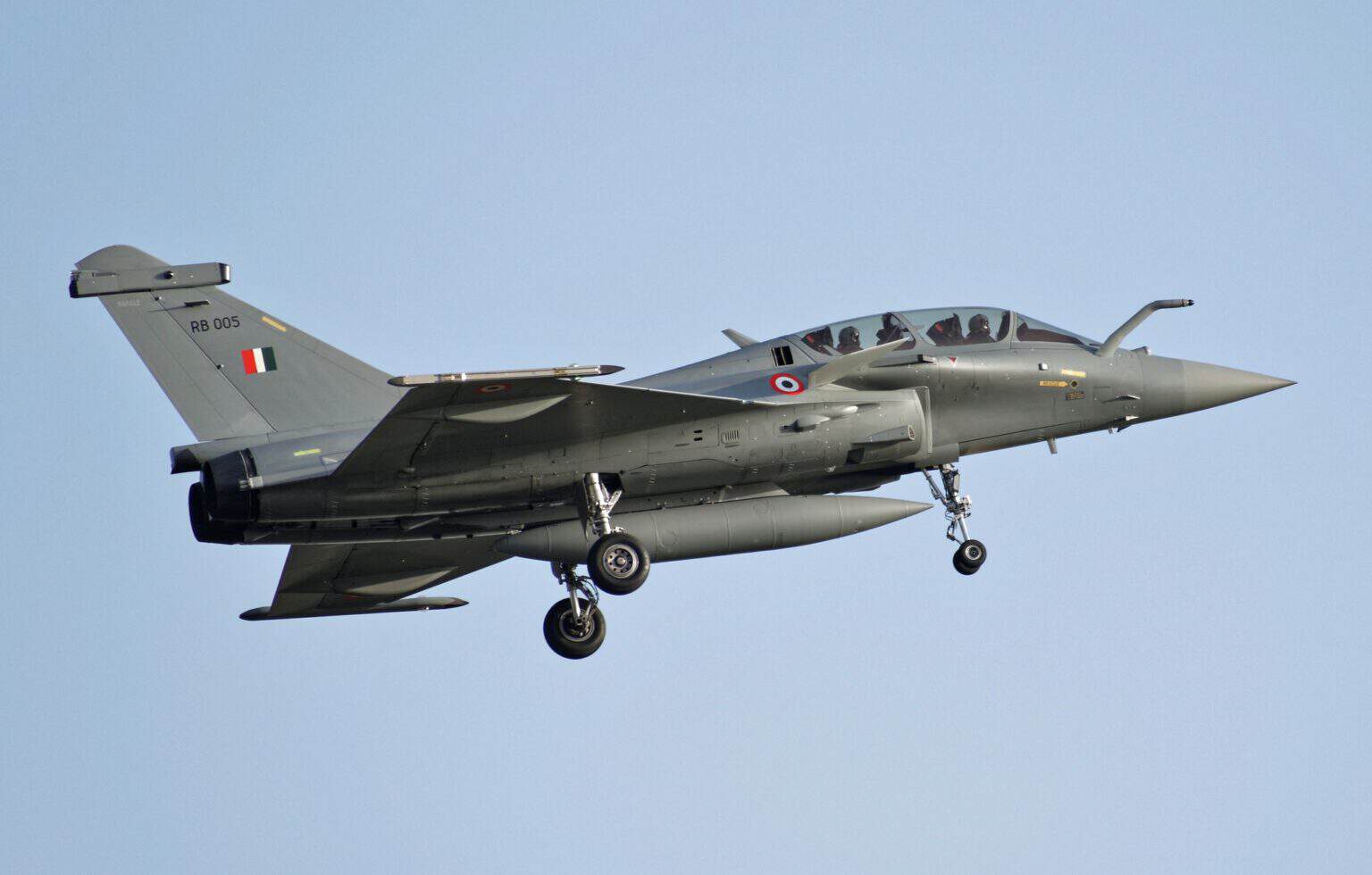
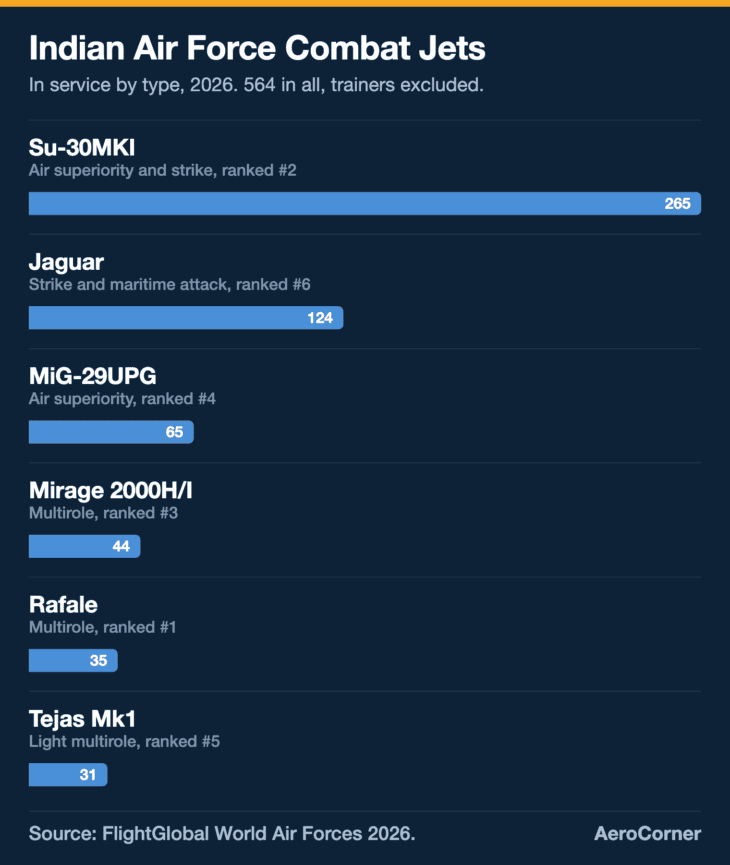
The Indian Air Force (IAF) flies 564 combat jets of six types, according to FlightGlobal’s World Air Forces 2026 directory. Its best fighter is the Dassault Rafale, and its backbone is a fleet of 265 Su-30MKIs.
It is a big air force that is shrinking. The IAF is down to 29 fighter squadrons against a sanctioned 42, its chief said on October 3, 2026, and not one of the 180 Tejas Mk1A fighters it has ordered has been handed over.
This list ranks every combat jet type the IAF flies by one measure: the fighting value it adds as of October 2026, weighing what the aircraft can do against how many India has. The helicopters, the support fleet, the May 2025 air war with Pakistan and the jets on order follow the ranking.
| Rank | Aircraft | Role | In service | On order |
|---|---|---|---|---|
| 1 | Rafale DH/EH | Multirole fighter | 35 (36 bought) | 114 in negotiation |
| 2 | Su-30MKI | Air superiority and strike | 265 | 12 |
| 3 | Mirage 2000H/I | Multirole fighter | 44, plus 11 trainers | None |
| 4 | MiG-29UPG | Air superiority fighter | 65, plus 10 trainers | None |
| 5 | Tejas Mk1 | Light multirole fighter | 31, plus 4 trainers | 180 Tejas Mk1A, none delivered |
| 6 | Jaguar | Strike and maritime attack | 124, plus 29 trainers | None |
How this ranking works
Each type is ranked by its fighting value in October 2026: its radar, weapons and age, weighed against how many the IAF flies. Counts come from FlightGlobal’s World Air Forces 2026 directory, which lists only aircraft in day-to-day use. Two-seat trainer versions are shown separately. The Indian Navy’s MiG-29Ks and the Rafale Ms it has ordered are not IAF aircraft and are left out of the ranking.
1. Dassault Rafale: Few in Number, First in Capability
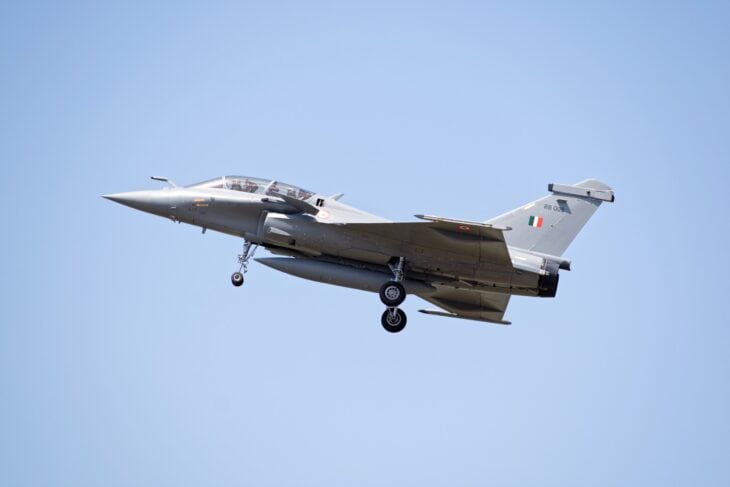

India signed for 36 Dassault Rafales on September 23, 2016, after a seven-year competition for 126 medium fighters collapsed. The first five landed at Ambala on July 29, 2020, for No. 17 Squadron, the Golden Arrows, with a second squadron planned at Hasimara in West Bengal.
The Rafale brought the long-range Meteor air-to-air missile and the SCALP cruise missile to the IAF. That weapons package, more than numbers, is why the smallest fleet on this list ranks first.
FlightGlobal counts 35 in service, not 36. It classed one Indian Rafale as lost in the May 2025 clash with Pakistan after reviewing images said to show its wreckage, while noting that Pakistan’s larger claims could not be verified.
India wants far more. It cleared a proposal for 114 more Rafales in February 2026, and on October 3, 2026, Air Chief Marshal A.P. Singh said price talks on the deal, estimated at about ₹3.25 lakh crore, were under way. Most of the jets would be built in India.
India could end up with 176 Rafales
If the 114-jet deal is signed, India’s Rafale inventory would reach 176: the 36 the IAF bought, the 114 under negotiation and the 26 Rafale M jets the Indian Navy has ordered for its aircraft carriers. India’s defense secretary said on October 1, 2026, that he expects the deal to close by the end of the financial year in March 2027. It is not signed yet.
2. Su-30MKI: The Backbone of the Fleet
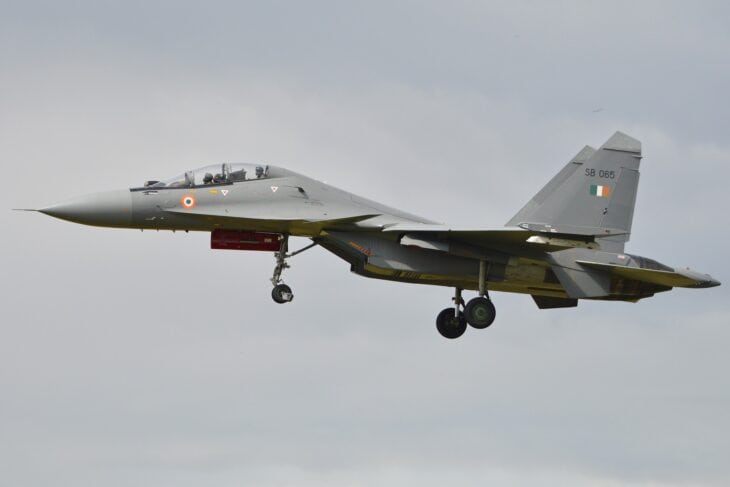
FlightGlobal counts 265 Su-30MKIs in IAF service, almost half of all its combat jets. India has received 272 since the type entered service on September 27, 2002, most of them built under licence by HAL at Nashik.
It is a big, two-seat, twin-engine fighter with canards and thrust-vectoring nozzles, and some carry the BrahMos cruise missile. By numbers alone it would be first. It ranks second because its radar and electronic warfare suite are older than the Rafale’s, and the planned Super Sukhoi upgrade was still awaiting final approval in February 2026.
Twelve more are coming. The Ministry of Defence signed a ₹13,500 crore contract with HAL on December 12, 2024, for 12 Su-30MKIs with 62.6% domestic content, mainly to replace crashed jets: 14 had been lost in accidents by March 2026.
3. Mirage 2000: The Jet India Sends When It Matters
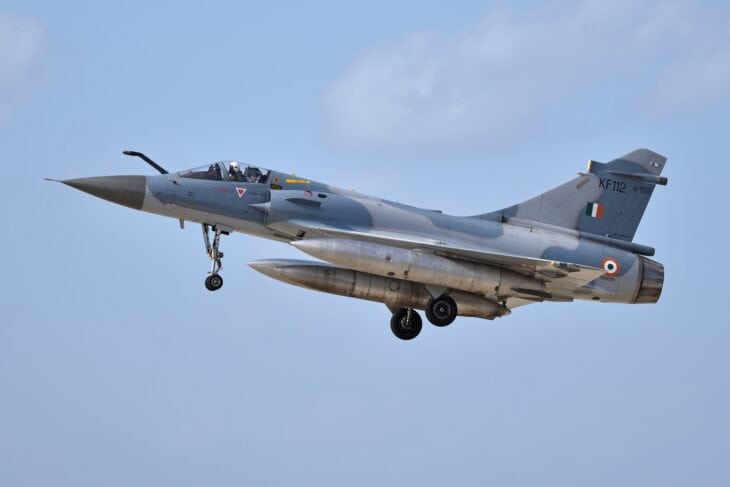

The first Mirage 2000 joined the IAF in 1985, a year after India ordered 49, and 10 more followed in 2004. FlightGlobal now counts 44 Mirage 2000H and 2000I fighters and 11 two-seat trainers.
Its record is the best in the fleet. Mirages dropped the IAF’s first precision-guided bombs during the 1999 Kargil War, and on February 26, 2019, they struck the camp at Balakot in Pakistan with Spice 2000 bombs.
HAL has been upgrading the fleet under a deal India signed with France in 2011. It ranks third, ahead of the bigger MiG-29 fleet, because of that upgrade and its strike record, but it is small and its oldest airframes date to the mid-1980s.
4. MiG-29UPG: Upgraded, but Near the End
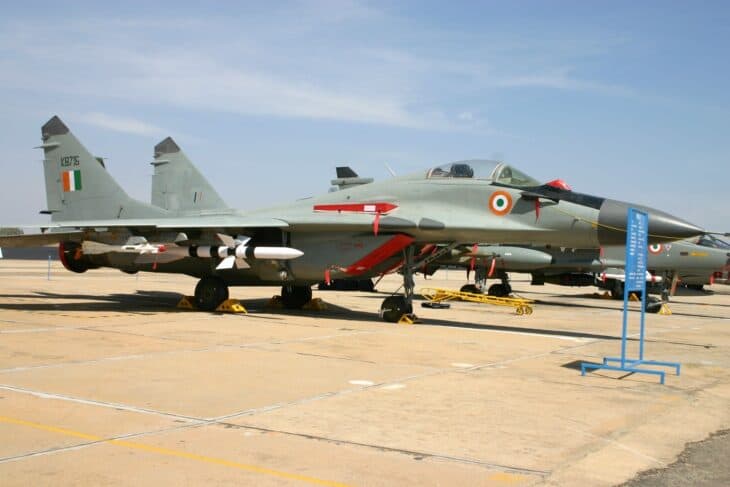

The MiG-29 entered IAF service in 1986. FlightGlobal counts 65 fighters and 10 trainers, flying in three squadrons that have been based at Adampur, Jamnagar and Srinagar.
All have been rebuilt to the MiG-29UPG standard, with a new radar, avionics, weapons and electronic warfare suite. The upgraded jets carry an extra fuel tank of about 250 US gallons (950 liters) in a hump behind the cockpit.
In 1999 MiG-29s escorted the Mirages bombing Kargil, and in 2020 they deployed to Ladakh during the standoff with China. They rank fourth because their clock is running out: all three squadrons are due to retire toward the end of the decade.
5. Tejas: India’s Own Fighter, and Its Biggest Delay
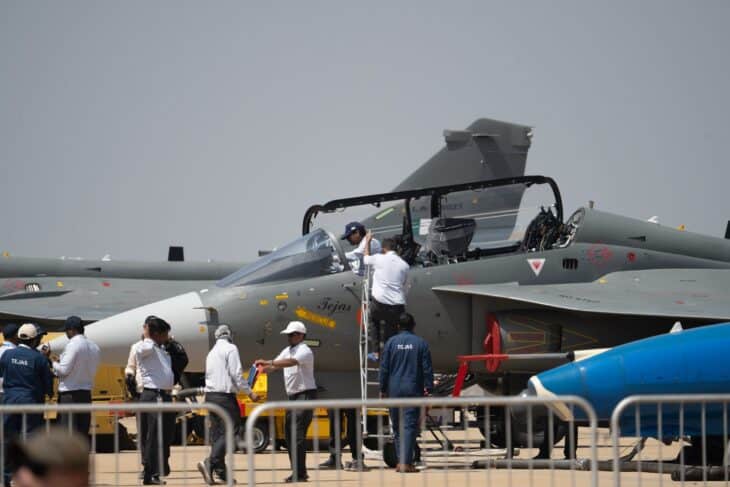
The HAL Tejas is the light, single-engine fighter India designed itself, in IAF service since 2016. FlightGlobal counts 31 Tejas Mk1 fighters and four trainers, enough for two operational squadrons.
On November 21, 2025, a Tejas crashed during a display at the Dubai Airshow, killing Wing Commander Namansh Syal. It was the second Tejas crash since the type entered service.
The real story is the jet that has not arrived. India ordered 83 improved Tejas Mk1As in February 2021 and 97 more in September 2025, for ₹62,370 crore. The first was due in early 2024, held up mainly by late GE F404 engines.
180 ordered, zero delivered
As of October 2026, HAL had built 27 Tejas Mk1A airframes and received 11 engines from GE, but not one jet had been handed over, because radar and weapons integration still needed certification. Air Chief Marshal A.P. Singh said on October 3, 2026, that the program was about two years late. His verdict: It is going to hurt us.
The Tejas ranks fifth because the Mk1 in service is a light fighter in small numbers. The Mk1A, with an AESA radar and the Astra missile, would move it up this list once it arrives in squadron strength.
6. Jaguar: The Last Jaguars Flying Anywhere
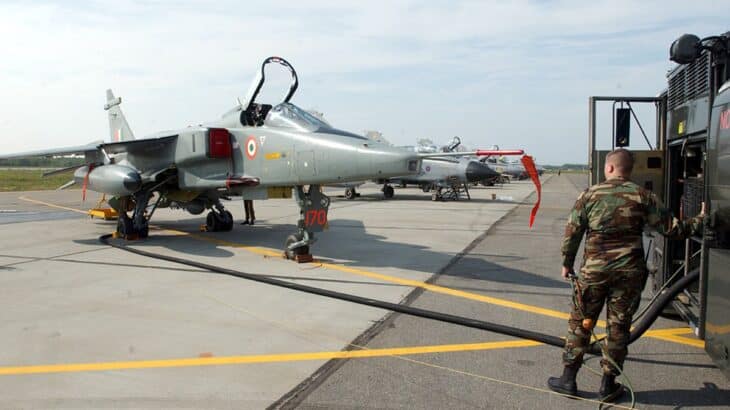

FlightGlobal counts 124 SEPECAT Jaguar strike and maritime attack jets and 29 trainers, the second-largest fleet in the IAF. The first, on loan from the Royal Air Force, became operational on July 27, 1979, and HAL later built the type under licence.
As of 2026, India is the only country still flying it. Britain, France and Oman have retired theirs, and in December 2025 India took 20 retired Omani Jaguars to strip for spare parts.
India keeps upgrading it: HAL built 54 Israeli-designed AESA radars for the Jaguar, and in the January 26, 2026, Republic Day parade the jets appeared with Astra missiles on rails above the wings. It still ranks last, because it is a 1970s low-level attack design. Three were lost in crashes in early 2025, and six squadrons are due to retire toward the end of the decade.
Why India Is Down to 29 Fighter Squadrons
The IAF is sanctioned for 42 fighter squadrons and has 29, the lowest level in about 60 years. Squadron size varies, so see how many planes are in a squadron for what that gap means in jets.
The latest drop came on September 26, 2025, when the IAF retired the MiG-21 after 62 years, at Chandigarh, where the type was first inducted. The last jets belonged to No. 23 Squadron, the Panthers, and Air Chief Marshal Singh had flown solo sorties in one that August.
The IAF bought more than 870 MiG-21s over six decades, and the type’s long crash record earned it the nickname flying coffin. Its exit left a gap that the Tejas Mk1A was supposed to fill.
Singh says the IAF needs 36 to 40 new fighters a year, about two squadrons, just to stop the decline. With the MiG-29s and Jaguars retiring toward 2030, the gap widens unless the Tejas Mk1A and the Rafale deal both deliver.
Operation Sindoor: The May 2025 Air War With Pakistan
India launched Operation Sindoor on May 7, 2025, striking nine alleged militant camps in Pakistan and Pakistan-administered Kashmir after the Pahalgam attack. Pakistani air bases including Nur Khan and Rahimyar Khan were hit in the four days of fighting that followed.
On August 9, 2025, Air Chief Marshal Singh said India had confirmed kills of at least five Pakistani fighters and one large aircraft, shot down at about 186 miles (300 km). He credited mainly the S-400 air defense system, which he called a game changer.
Did India lose Rafales? At least one, probably.
Pakistan claimed it shot down six Indian jets. India’s Chief of Defence Staff, General Anil Chauhan, confirmed on May 31, 2025, that India lost an unspecified number of jets, and called the six-jet claim absolutely incorrect. FlightGlobal classes one Rafale as lost. Neither side’s figures have been independently verified, so any exact count you read is a claim.
Pakistan’s side of the fight was led by Chinese-built J-10C fighters firing long-range PL-15 missiles, FlightGlobal notes.
Indian Air Force Helicopters: Apaches, Chinooks and the Prachand
The IAF flies about 500 helicopters, led by more than 200 Russian-built Mi-17 transports. India’s armed forces together fly 894 combat helicopters, fourth in the world, FlightGlobal says.
| Helicopter | Role | In service | On order |
|---|---|---|---|
| AH-64E Apache | Attack | 22 | None |
| Prachand (Light Combat Helicopter) | Attack | 10 | 66 |
| Mi-24/25/35 | Attack and transport | 15 | None |
| CH-47F Chinook | Heavy lift | 15 | None |
| Mi-17 | Transport | 222 | None |
| Dhruv ALH and Rudra | Utility and armed | 111 | 6 |
| SA316/319 Chetak and SA315 Cheetah | Light utility | 79 and 18 | None |
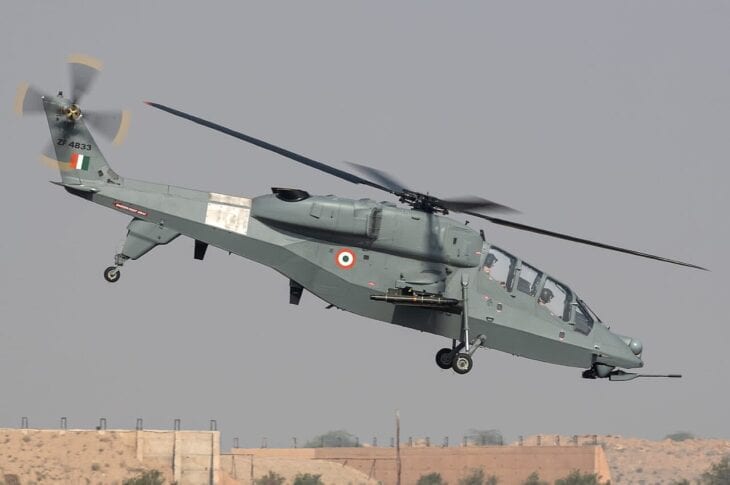
The Prachand is the one to watch. On March 28, 2025, India signed for 156 of them, 66 for the IAF and 90 for the Army, worth ₹62,700 crore. It is India’s first homegrown combat helicopter, built after the Kargil war to fight at over 16,400 feet (5,000 m).
The heavy end is American: 22 AH-64E Apaches and 15 CH-47F Chinooks.
The Support Fleet: Radar Planes, Tankers and Transports
India has the fourth-largest military transport fleet in the world, with 277 aircraft across its services, FlightGlobal says. Its weak spot is the radar and tanker fleet that a modern air war depends on.
| Aircraft | Role | In service | On order |
|---|---|---|---|
| Il-76 A-50EI | Airborne early warning | 3 | 2 |
| ERJ-145 Netra | Airborne early warning | 3 | None |
| Il-78 | Aerial refueling tanker | 6 | None |
| C-17 Globemaster III | Strategic transport | 11 | None |
| Il-76 | Strategic transport | 17 | None |
| C-130J Super Hercules | Tactical transport | 12 | None |
| C295 | Tactical transport | 16 | 40 |
| An-32 | Tactical transport | 101 | None |
| Dornier 228 and HS 748 | Light transport | 62 and 54 | None |
| Hawk Mk 132 | Advanced jet trainer | 83 | None |
| PC-7 Mk II and HTT-40 | Basic trainers | 74 and none yet | 70 HTT-40 |
Six Il-78 tankers serve a fighter force of more than 560 jets, and six radar planes watch two long borders. That is thin for an air force this size.
Transport is being renewed at home. India signed for 56 Airbus C295s in 2021, 16 built in Spain and 40 by Tata in Vadodara, and the first one built in India rolled off the line in May 2026. The big lifters are 11 C-17 Globemaster IIIs.
A Short History: From Four Biplanes to Air Force Day
The IAF was founded on October 8, 1932, which is why Air Force Day falls on October 8; the 94th was held in 2026. Its first squadron flew four Westland Wapiti biplanes.
October 8, 1932
Founded. Formed in British India as an auxiliary of the Royal Air Force.
April 1, 1933
No. 1 Squadron. The first squadron is commissioned with four Westland Wapitis and five Indian pilots.
1945 to 1950
Royal Indian Air Force. The Royal prefix is granted in 1945 and dropped in 1950 when India becomes a republic.
1999
Kargil. Operation Safed Sagar, the IAF’s air campaign, brings its first precision-guided bombing, by Mirage 2000s.
February 2019
Balakot. Mirage 2000s strike a camp at Balakot inside Pakistan, and a dogfight with Pakistani jets follows the next day.
May 2025
Operation Sindoor. Four days of strikes and air battles with Pakistan.
September 26, 2025
MiG-21 retired. The fighter leaves service after 62 years, taking the IAF to 29 squadrons.
October 31, 2026
New chief. Air Marshal Ashutosh Dixit succeeds Air Chief Marshal A.P. Singh as the 29th Chief of the Air Staff.
Dixit, a fighter pilot and test pilot commissioned in 1986, was named on October 6, 2026. He inherits the squadron gap, the Tejas Mk1A delay and the Rafale talks.
What Comes Next: Tejas Mk1A, 114 Rafales and the AMCA
Three programs decide whether the IAF recovers. The Tejas Mk1A is first in line, and a review of its radar and weapons work was due after October 15, 2026, before any delivery date is set.
The 114 Rafales are second, and the AMCA, India’s own twin-engine stealth fighter, comes last. Its prototype phase was approved in March 2024, and the plan set in May 2025 aims for a first flight in 2029 and service around 2034.
Russia has offered its Su-57 stealth fighter, but no decision has been made, Air Chief Marshal Singh said on October 3, 2026. No foreign stealth fighter appears in India’s order book.
How India Compares
India’s armed forces fly 2,183 military aircraft, fourth in the world behind the United States, Russia and China, FlightGlobal’s 2026 directory says. By combat aircraft India is also fourth, with 600 including the Navy’s MiG-29Ks.
Pakistan ranks seventh with 1,397 aircraft and 421 combat aircraft. The bigger problem is to the north: China fields 1,814 combat aircraft across its services, three times India’s total. Our guide to China’s air force breaks that fleet down by type.
For the full world table, see our ranking of the largest air forces in the world. Size is not strength, which is why the 35-jet Rafale fleet, not the 265 Su-30MKIs, tops this list.
FAQ
Sources and references used for research and fact-checking.
- FlightGlobal, World Air Forces 2026 directory (PDF)
- SSBCrack, IAF Down to 29 Fighter Squadrons Against Authorised
- IANS via ap7am, India likely to finalise 114 Rafale fighter jet deal with France by FY27-end: IAF chief
- Business Today, India eyes closing massive 114 Rafale fighter deal by financial year end: Defence Secy
- ANI, 114 Rafale deal likely to be completed by year-end, French company has agreed to integrate Indian weapons: Defence Secretary
- Gulf News, 5 Rafale jets arrive in India in a boost to IAF's combat capability
- Wikipedia, Sukhoi Su-30MKI
- Deccan Herald, Defence Ministry inks Rs 13,500 crore deal with HAL to procure 12 Sukhoi jets
- Onmanorama, Mirage 2000 strikes again when it matters the most
- The Tribune, Upgraded MiG-29s face fuel tank issues; IAF seeks urgent remedial measures
- Business Standard, Tejas Mk1A completes weapons trials; five jets ready for delivery to IAF
- Indian Defence News, TEJAS MK-1A Review After 15 October To Determine Delivery Timeline
- Gulf News, Tejas crash at Dubai Airshow: Who was IAF pilot Namansh Syal?
- Wikipedia, SEPECAT Jaguar
- The Hitavada, MiG-21 flies through Indian skies for last time
- Deccan Herald, India shot down six Pakistani aircraft including five fighter jets during Op Sindoor, says IAF chief
- South China Morning Post (Bloomberg), India confirms loss of fighter jets in recent Pakistan conflict
- Wikipedia, Indian Air Force
- Wikipedia, Ashutosh Dixit
- Deccan Herald, Defence Ministry signs Rs 62,700 crore deal with HAL for 156 Prachand LCHs
- Channel I'M, First C295 aircraft rolled out in India
- Wikipedia, Advanced Medium Combat Aircraft
Get the Newsletter
The latest aviation news and stories sent to your inbox.
About the Author

Tim is the owner and lead editor of AeroCorner since 2019, overseeing aviation content covering aircraft, airlines, airports, and the broader aviation industry. Through years of researching, writing, editing, and publishing aviation-focused content, he has developed extensive practical knowledge of commercial aviation and air travel. Based in Asia and a frequent traveler himself, Tim also brings firsthand passenger experience to AeroCorner’s coverage. Outside of publishing, he has also explored aviation firsthand through hands-on flight training in New Zealand.