

Table of Contents
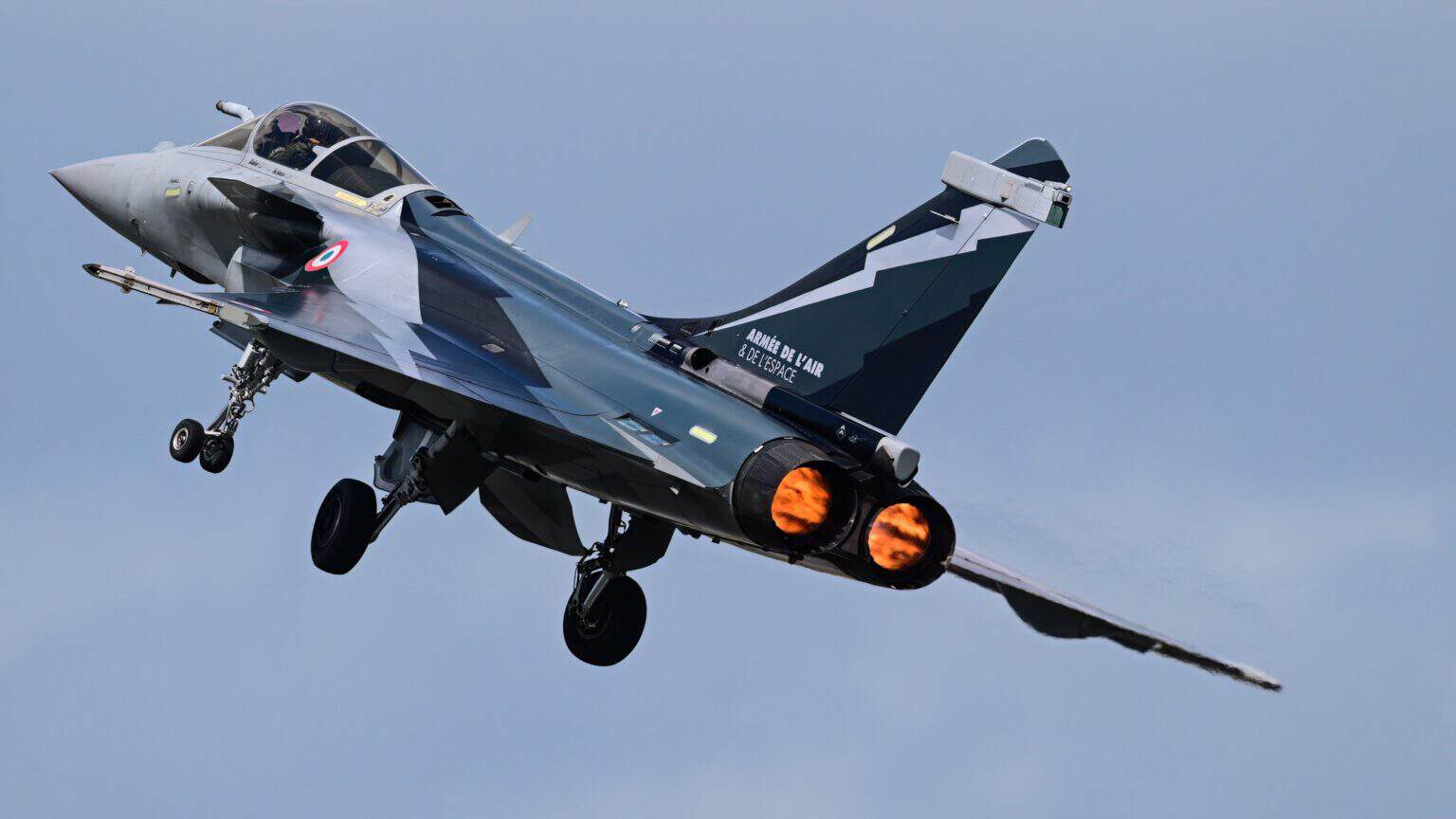
The French Air Force is built around one fighter. About 117 Dassault Rafales fly air defense, ground attack and the airborne half of France’s nuclear deterrent, backed by roughly 50 upgraded Mirage 2000Ds and a shrinking batch of Mirage 2000-5Fs.
Its official name since September 11, 2020, is the Armée de l’Air et de l’Espace, the French Air and Space Force. It has about 40,000 military personnel and 28 air bases, including bases in the United Arab Emirates and Djibouti.
This guide ranks every aircraft type it flies by its weight in French air power as of October 2026. It then covers the nuclear mission, the 2026 Gulf war, the collapse of the joint fighter with Germany, and why there has been no US air base in France since 1967.
| Rank | Aircraft | Role | Fleet | Status |
|---|---|---|---|---|
| 1 | Dassault Rafale B/C | Multirole fighter, nuclear strike | About 117 | In production, F5 standard due around 2033 |
| 2 | Mirage 2000D RMV | Ground attack | 50 | Upgrade finished June 2026, retiring 2035 |
| 3 | Mirage 2000-5F | Air defense | About 25, falling | Some transferred to Ukraine |
| 4 | Airbus A330 MRTT Phénix | Tanker and transport | 13 | 15 planned by about 2028 |
| 5 | Boeing E-3F AWACS | Airborne early warning | 4 | GlobalEye replacement from 2029 |
| 6 | Airbus A400M Atlas | Strategic and tactical airlift | More than 25 | At least 41 by 2030 |
| 7 | MQ-9 Reaper | Armed surveillance drone | 9 to 10 | Block 5 standard since December 2024 |
| 8 | C-130H, C-130J, KC-130J, CN235 | Tactical transport | 14, 2, 2, 27 | C-130H retiring by 2029 |
| 9 | Falcon 8X Archange, King Air 350 | Signals intelligence, surveillance | 3 Archange ordered, 2 King Air | Archange entering service |
| 10 | Dassault/Dornier Alpha Jet | Jet trainer, Patrouille de France | 30 to 47 | Kept until 2032 to 2035 |
| 11 | Pilatus PC-21 | Advanced turboprop trainer | 26 | In service |
| 12 | Fennec, Caracal, Puma | Helicopters | 40 Fennec, growing Caracal fleet | Pumas being retired |
| 13 | A330, Falcon 7X, Falcon 900 | Government transport | About 7 | In service |
How this ranking works
Aircraft are ranked by their weight in French air power in October 2026: combat jets first, then the tankers, radar planes and airlifters that let them fight far from home, then drones, intelligence aircraft, trainers, helicopters and the government fleet. Counts come from FlightGlobal’s World Air Forces 2026 directory (data as of October 2025) and the Ministry of the Armed Forces, updated with newer official deliveries where they exist. French Navy aircraft, including the Rafale M, are not counted.
1. Dassault Rafale: About 117 Jets Doing Every Job
.jpg)
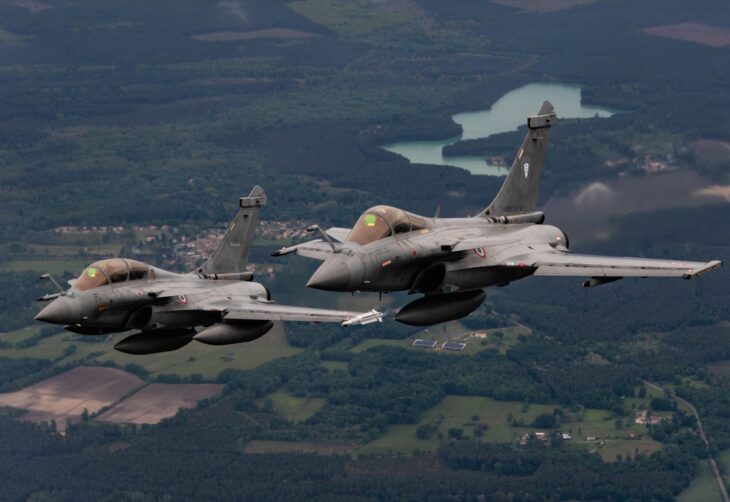
The Dassault Rafale entered Air Force service on June 27, 2006, with squadron EC 1/7 Provence at Saint-Dizier. It flew its first combat mission over Afghanistan on March 12, 2007.
The Air and Space Force had 105 Rafales at the end of 2024. Dassault delivered 11 more in 2025 and one more is due in 2026, which takes the fleet to 117, according to the report attached to the 2026 update of France’s military programming law. France does not say how many are two-seat Rafale Bs and how many are single-seat Cs.
The jets fly from Saint-Dizier, Mont-de-Marsan and Orange, plus a squadron at Al Dhafra in the UAE. By January 2025, France had ordered 234 Rafales for its air force and navy since 1993, the most recent batch being 42 single-seat jets at the F4 standard, announced in January 2024, with the first due in 2027.
The fleet is smaller than the Air Force wants. The current law sets 137 Rafales for 2030, while the service says it needs 185 fighters, and its chief told lawmakers the ideal fleet would be 230. Part of the gap comes from exports: France took 12 used Rafales from its own fleet for Greece and 12 for Croatia.
The next version is the F5. The defense procurement agency (DGA) placed the first F5 contracts in September 2026, covering a new RBE2-XG radar, a new datalink and early design work on a more powerful M88 engine, and expects to qualify the standard around 2033. The 2026 law update pushed 22 deliveries from 2031 and 2032 to 2033 and 2034 so they arrive as F5s.
The fleet has had losses. On August 14, 2024, two Rafales from the training squadron at Saint-Dizier collided near Colombey-les-Belles, killing the instructor and student in the two-seater. France is due to order two jets in 2026 to replace them. Beyond that, Macron’s March 2025 promise of more Rafales has not been funded.
The first shot over Libya
On March 19, 2011, French Rafales destroyed four Libyan tanks outside Benghazi at 5:45 p.m. local time. That was about three hours before the United States and Britain began their own strikes, which made the Rafale the first coalition aircraft to strike Gaddafi’s forces.
2. Mirage 2000D RMV: The Upgraded Bomber
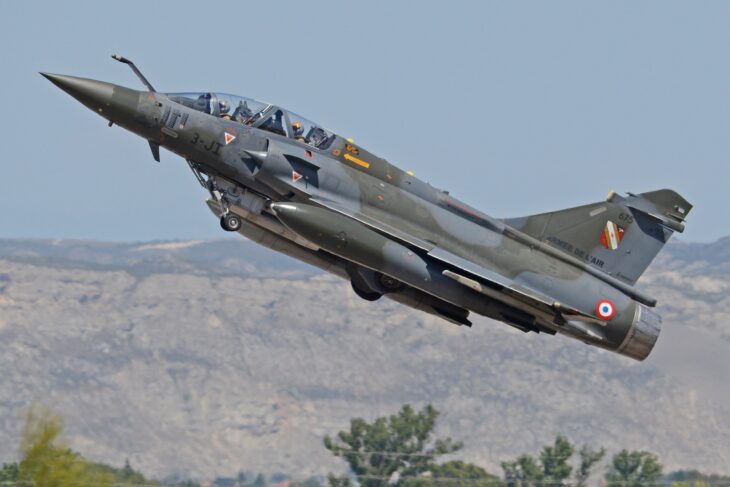
The Mirage 2000D is France’s dedicated ground-attack jet, based at Nancy-Ochey. On June 16, 2026, the DGA delivered the last of 50 renovated aircraft to the Air Force, plus two test jets, completing a mid-life upgrade launched in 2015.
The upgrade added a 30 mm gun pod and swapped the old Magic II missiles for MICA IR. The plan is to fly them until 2035. Two are based in Djibouti.
The nuclear Mirage 2000N left front-line service in June 2018 and the Mirage 2000C in 2022. For the full line of French fighters, see our ranking of the best French fighter jets.
3. Mirage 2000-5F: The Jets Going to Ukraine
.jpg)
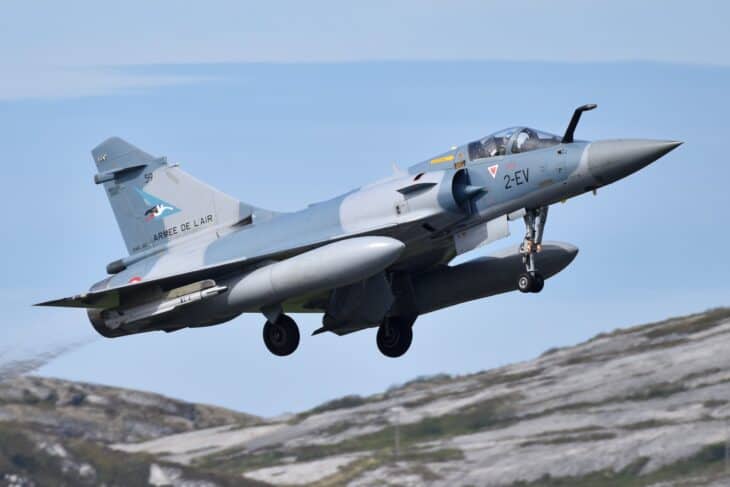
The Mirage 2000-5F is an air-defense fighter flown by squadron GC 1/2 Cigognes at Luxeuil. FlightGlobal counted 25 in October 2025. Three are based in Djibouti, where Mirage 2000-5s have shot down Houthi drones.
France has been giving these jets to Ukraine since early 2025, with their missiles, but has never published how many. Most press estimates put it at about 10, and Ukraine’s own air force said in February 2026 that more were coming. Our guide to the Ukrainian Air Force covers how they are used there.
The type was originally due to retire in 2029. Luxeuil will then be rebuilt to host two squadrons of nuclear-capable Rafales, covered below.
4. Airbus A330 MRTT Phénix: The Tanker Behind the Long-Range Raids


The Airbus A330 MRTT, called Phénix in French service, refuels fighters and carries troops and cargo. France received its 12th in September 2023 at Istres, and three A330-200s bought in 2020 under an aerospace support plan are being converted to the same standard.
The first conversion arrived in 2025, the second is due in 2026 and the third probably in 2028, for a final fleet of 15. The last three American-built KC-135 tankers left service at Istres on June 30, 2025, ending the Boeing C-135 era in the French Air Force.
The Phénix is what lets France fly the long-range raids that define it. The PEGASE 26 deployment, running from September 8 to October 15, 2026, sent four Rafales, three MRTTs and two A400Ms more than 24,800 miles (40,000 km) through Greenland, Japan, Korea, Indonesia, India and the Middle East. Our list of tanker aircraft compares it with every other tanker flying.
5. Boeing E-3F AWACS: Four Radar Planes Near the End
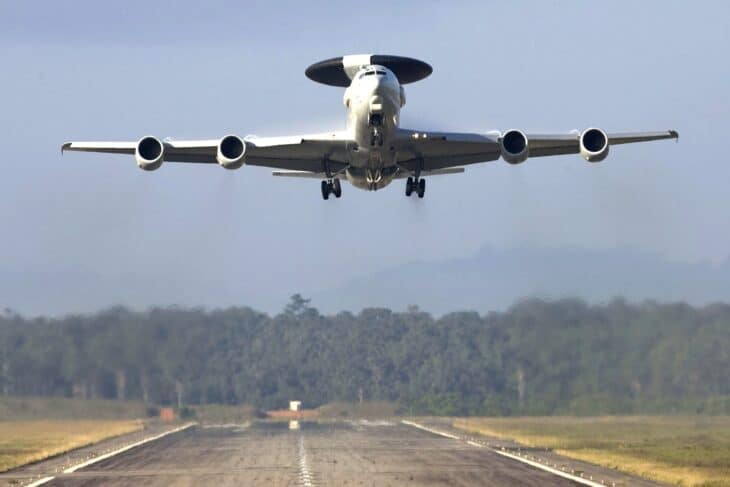

France’s four E-3F AWACS radar planes entered service in 1991 and fly from Avord with the 36th airborne command and control wing. They are due to retire by 2035 at the latest.
Their replacement is Swedish. On December 30, 2025, Saab announced a French order for two GlobalEye radar jets, based on the Bombardier Global 6500, worth about 12.3 billion Swedish kronor, with deliveries from 2029 to 2032 and an option for two more. The 2026 law update plans four GlobalEyes by 2035.
6. Airbus A400M Atlas: The Airlifter Order That Keeps Changing
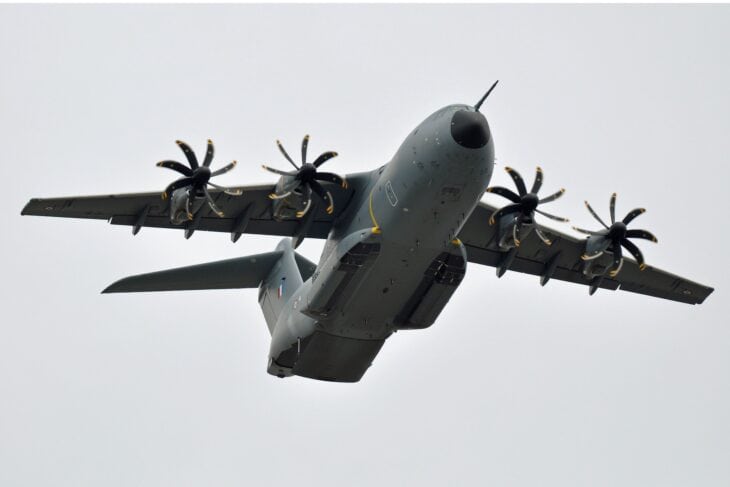
The Airbus A400M Atlas is France’s main airlifter, based at Orléans-Bricy. Airbus had delivered 25 to the French Air Force by the end of 2025, and an official Air Force article in July 2026 said it has “more than 25”.
France originally signed for 50. The 2024 law cut that to at least 35 by 2030, but the 2026 update raised the target to at least 41, partly to replace the old C-130H Hercules sooner. On September 3, 2026, transport squadron 3/61 Poitou switched from the C-130H to the A400M.
7. MQ-9 Reaper: The Armed Drone Fleet
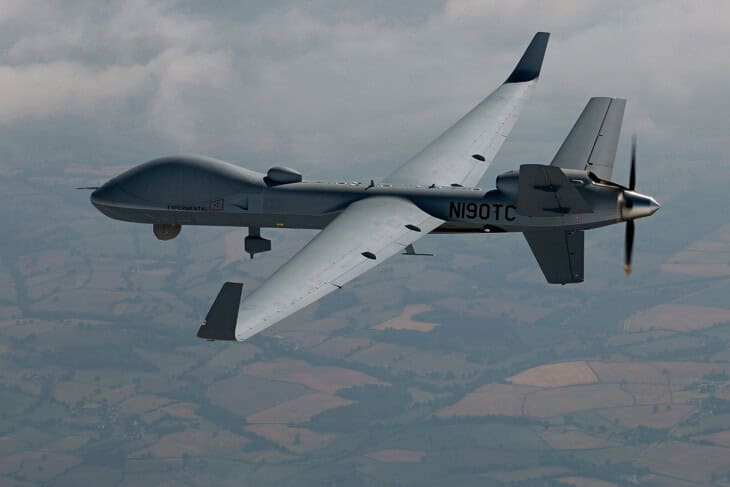
France flies the American MQ-9 Reaper from Cognac with squadron 1/33 Belfort, and from the French air base in Jordan. The ministry counted 10 at the end of 2024, and the 2026 law table lists 9.
Since December 19, 2024, the fleet has flown only the Block 5 Extended Range version, after France retired its six original Block 1 drones. Our comparison of the Reaper and Predator explains what separates the two generations.
Europe’s own drone is in doubt. France signed up for four of the 20 Eurodrone systems in 2022, but the 2026 law update cuts its share and calls the drone “less suited to high-intensity warfare”. Airbus still plans a first flight in 2029.
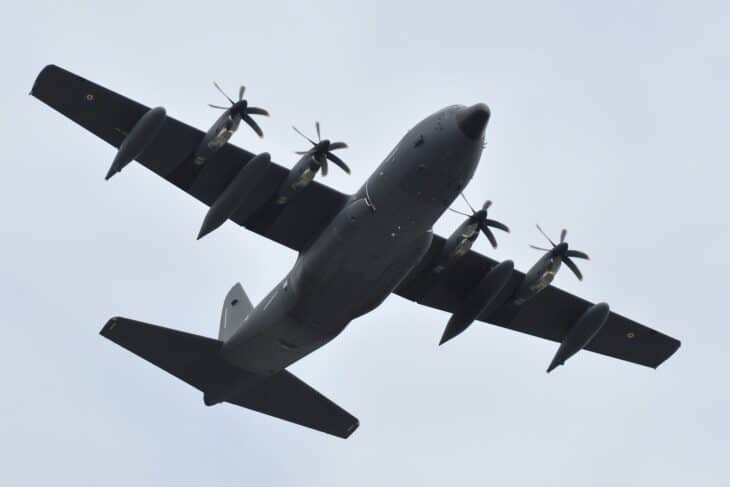
8. C-130 Hercules and CN235: The Tactical Transports
.jpg)
France had 14 old C-130H Hercules at the end of 2024, and it is getting rid of them early. Their maintenance costs have, in the Air Force chief’s words, “exploded”: the first was taken apart at Évreux in the summer of 2025, and about 10 more will follow by 2029.
The newer C-130J Super Hercules stays. France’s two C-130J-30 transports and two KC-130J tankers fly at Évreux in a joint squadron with six German C-130Js, an arrangement our guide to the German Air Force covers from Berlin’s side.
The smallest transport is the CASA CN235, a light tactical transport. France flies 27 and plans to keep them until about 2040.
9. Falcon 8X Archange and King Air 350: The Intelligence Planes
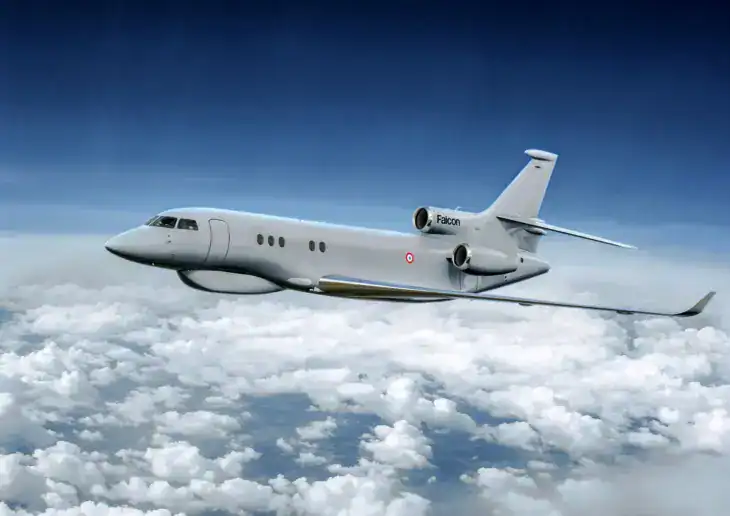
France has ordered three Archange signals-intelligence jets, built on the Dassault Falcon 8X business jet. They replace the C-160G Gabriel turboprops, retired early in 2022.
The first Archange flew in July 2025 and was seen at Mérignac in Air Force colors in June 2026. The first delivery was due in 2025 and slipped, and the Air Force chief hopes to have the capability in 2027.
Two Beechcraft King Air 350 surveillance planes, known as Vador, fly from Cognac. A third is expected in 2026 and will be based permanently in Djibouti.
10. Alpha Jet: The Patrouille de France Trainer
_-_La_Fert%C3%A9-Alais_2025_(1).jpg)
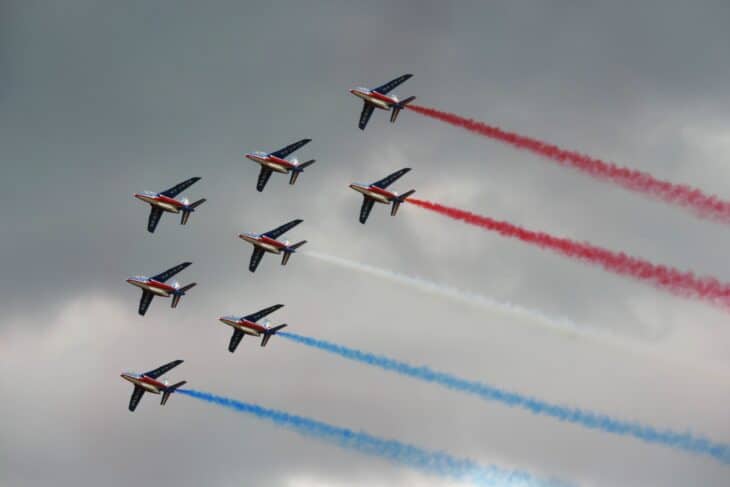
The Alpha Jet trains fighter pilots and flies with the Patrouille de France, the national aerobatic team, which has used it since 1981 from Salon-de-Provence. Counts differ: FlightGlobal lists 30, while the ministry counted 47 at the end of 2024, including the team’s jets.
The team was named on May 17, 1953, when four F-84 Thunderjets flew a display at Algiers. It toured the United States in 2026, and two of its jets collided near Saint-Dizier on March 25, 2025, when three crew members ejected.
No replacement has been chosen. The Air Force chief said in April 2026 that the Alpha Jet can be kept until 2032 to 2035, and that the search for a successor is underway. Its best-known European counterpart is Britain’s Red Arrows.
11. Pilatus PC-21: The Training Pipeline
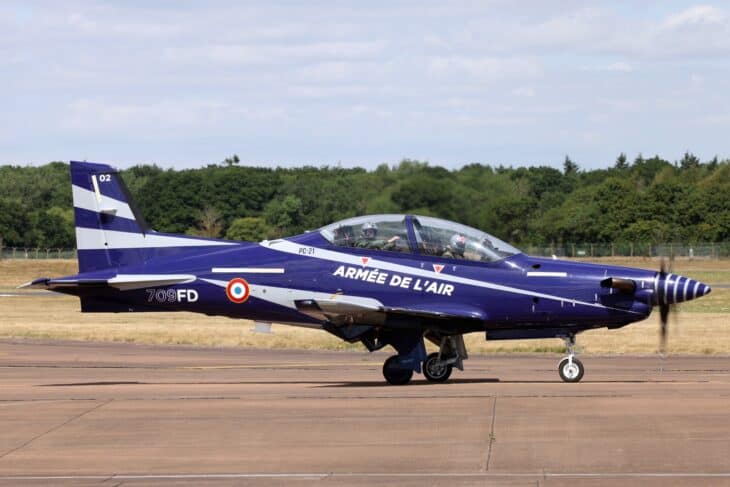
The Pilatus PC-21 turboprop is the Air Force’s trainer for future fighter crews. The first two arrived at Cognac on August 30, 2018, and France flies 26.
The first hours are contracted out. Airbus Flight Academy runs the Grob G 120 and Cirrus SR20 and SR22 trainers, and in January 2025 Babcock France won a contract to supply 22 Pilatus PC-7 MKX trainers at Salon-de-Provence from 2027 to replace them.
12. Fennec, Caracal and Puma: The Helicopters
.jpg)
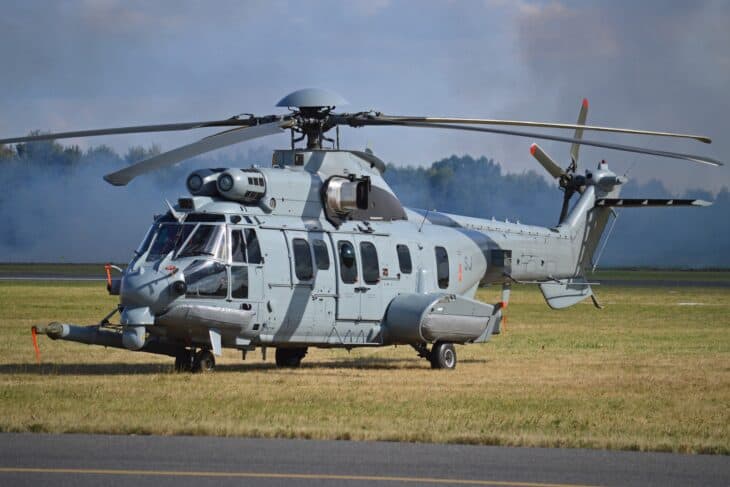
The Air Force flies 40 Fennec light helicopters, used for light transport, rescue and protecting sensitive sites against slow, low-flying aircraft. They are due to retire in 2035 as the new H160M Guépard arrives, though the Air Force does not expect its first Guépard before 2032.
The Caracal is the Air Force’s larger helicopter. France had 13 at the end of 2024, the last of eight extra Caracals ordered under the 2020 support plan was delivered on June 8, 2026, and the 2026 law targets at least 29 by 2030.
The old Puma is on its way out. The last Puma in French Guiana made its final flight on July 31, 2026, after 47 years there, and two Caracals replaced the Pumas in New Caledonia in July.
13. A330 and Falcons: The Government Fleet
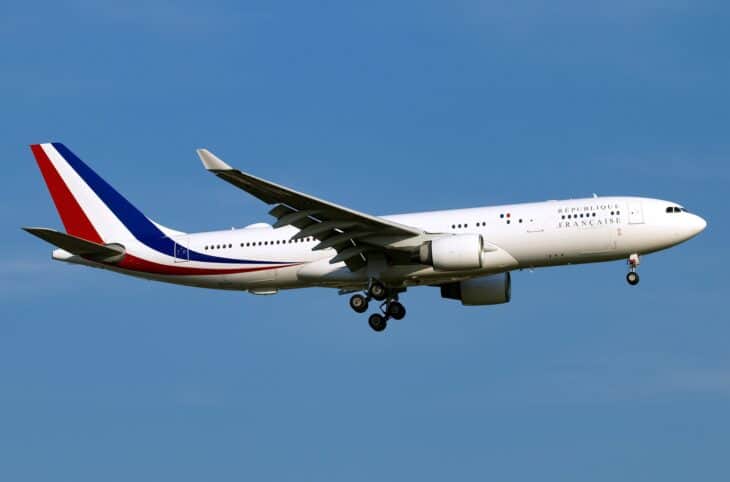
Squadron ET 60 at Villacoublay, near Paris, flies the president and government ministers. The ministry counted seven government aircraft at the end of 2024: an A330, Falcon 7X jets, Falcon 900s and Falcon 2000s.
The fleet is being renewed. A Falcon 900EX EASy entered service in December 2024 to replace the Falcon 2000LX, and the last of the two Falcon 2000LX jets left the fleet in September 2026.
What about the Rafale M and the carrier jets?
They belong to the French Navy, not the Air Force. FlightGlobal counts 41 Rafale M jets based at Landivisiau, plus E-2 Hawkeye radar planes and Atlantique 2 patrol aircraft. France’s official target of 225 Rafales splits into 185 for the Air and Space Force and 40 for the Navy, so the navy jets are left out of this ranking.
The Nuclear Mission: On Alert Since 1964
The Strategic Air Forces have kept nuclear-armed aircraft on alert without a break since October 8, 1964. Today that means Rafale B jets carrying the renovated ASMP-A cruise missile, which entered service on December 18, 2023. About half of all Air Force Rafale crews belong to this command.
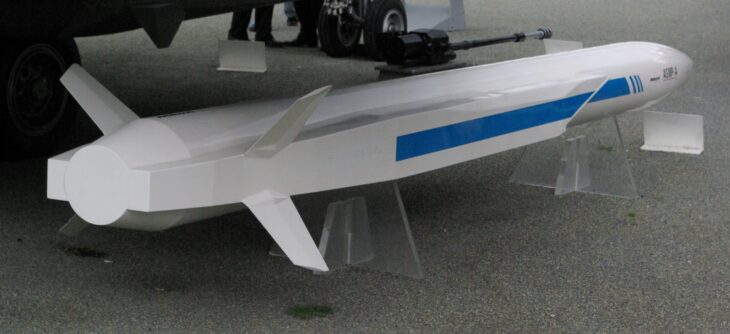

Three air bases hold the mission: Saint-Dizier, Istres and Avord. In March 2025, President Emmanuel Macron announced that Luxeuil would become the fourth by 2035, with two squadrons of Rafale F5s and the hypersonic ASN4G missile, which the DGA contracted MBDA to develop on June 2, 2026.
On March 2, 2026, Macron said he had ordered more nuclear warheads and that France would stop publishing the size of its arsenal. He described a “forward deterrence” in which Strategic Air Forces could deploy to allied countries across Europe, with no sharing of the final decision.
The force rehearses a full nuclear raid in Exercise Poker four times a year. The March 2026 edition used nearly 40 aircraft, and German Chancellor Friedrich Merz said in July that Germany would take part in a French nuclear exercise before the end of 2026.
The 2026 Gulf War: More Than 100 Drones and Missiles Shot Down
When Iran struck the Gulf states in March 2026, France already had Rafales at Al Dhafra. On March 3, Macron announced he was sending more, and the next day the foreign minister confirmed Rafales had shot down Iranian drones aimed at the UAE.
The head of the armed forces, General Fabien Mandon, told the Senate on April 29 that France had sent six extra Rafales and that “we shot down more than a hundred drones and cruise missiles”.
France is also looking for cheaper ways to stop drones. In July 2026 the Air Force successfully fired 68 mm laser-guided rockets from a Rafale at aerial targets, as part of its counter-drone work.
The Next Fighter: France Goes It Alone
France planned to replace the Rafale with a sixth-generation fighter built with Germany and Spain, a program known as FCAS in English and SCAF in French. After years of disputes between Dassault and Airbus, Germany and France agreed in June 2026 to stop working on a joint aircraft, keeping only the shared combat cloud.
France decided in July 2026 to carry on nationally. Its 2027 budget documents say a demonstrator phase starts in 2027 and development of the operational fighter in 2029, aiming for service in the early 2040s. Our guide to European fighter jets covers the rival programs.
From Balloons to Space: A Short History
The Air Force traces its roots to April 1794, when Captain Coutelle’s balloon company became what the ministry calls the world’s first military air unit. French military aviation began in September 1909, when the War Ministry bought its first airplanes, and became an independent service on July 2, 1934.
France entered World War I with 22 squadrons and ended it with 358. René Fonck scored 75 confirmed victories, the top Allied ace of the war, and Georges Guynemer, with 53, left the motto “Faire face” to the Air Force Academy. American volunteers flew for France from April 1916 in the squadron that became the Lafayette Escadrille.
In World War II, the Free French Normandie-Niemen regiment flew Yak fighters on the Eastern Front and was credited with 273 confirmed victories. The space role arrived later: France created its Space Command on September 3, 2019, and renamed the service the Air and Space Force a year later.
That name now has a face. Air Force Colonel Sophie Adenot, a former helicopter pilot, returned to Earth on October 8, 2026, after 235 days aboard the International Space Station.
Why There Is No US Air Base in France
The US Air Force ran 11 major air bases in France between 1950 and 1967. In February 1966, President Charles de Gaulle withdrew France from NATO’s integrated military command and ordered allied headquarters and forces off French soil. The US Air Force closed its last French bases in 1967.
France rejoined NATO’s military command in 2009, but the bases never came back. No American troops are permanently stationed in France today, although France sometimes lets US aircraft use its bases, as it did on a limited basis in March 2026.
How Strong Is the French Air Force?
It is one of the two strongest air forces in Western Europe. The World Directory of Modern Military Aircraft’s 2026 ranking puts it 10th in the world with 511 aircraft, tied on score with Britain’s Royal Air Force and ahead of every other European Union air force.
Its real edge is reach. Few air forces can rehearse a nuclear raid, fly a bombing mission of more than nine hours and send fighters across Asia with their own tankers and airlifters. In January 2013, four Rafales flew from Saint-Dizier to Chad in 9 hours 35 minutes, striking 21 targets in Mali.
Its weakness is numbers. With about 117 Rafales against a stated need of 185 fighters, the force is stretched, and its chief has said the Rafale fleet is flown about 15% harder than planned. Our ranking of the best air forces in the world shows where that leaves France.
FAQ
Sources and references used for research and fact-checking.
- FlightGlobal, World Air Forces 2026 directory
- Ministère des Armées, Chiffres clés de la défense 2025
- Journal officiel de la République française, Loi n° 2026-791 du 16 août 2026 actualisant la programmation militaire 2024-2030
- Assemblée nationale, Avis n° 2048, PLF 2026, Préparation et emploi des forces : Air
- Zone Militaire (opex360), Les 16 Rafale destinés à l'Ukraine vont-ils être prélevés dans la commande passée en 2024 ?
- Sénat, Rapport n° 666 (2025-2026) sur l'actualisation de la LPM
- Ministère des Armées, Commande de 42 Rafale pour l'armée de l'Air et de l'Espace
- Ministère des Armées, Livraison par la DGA du 14e et dernier Rafale de l'année 2024
- Ministère des Armées, Qualification du Rafale au standard F4.1
- DGA, La DGA commande les premiers travaux amont du standard F5 du Rafale
- Mer et Marine, La DGA commande les premiers travaux en amont du standard F5
- Assemblée nationale, Question écrite n° 32986, réponse du ministre
- Theatrum Belli, L'épopée du Rafale : une brève histoire industrielle et opérationnelle
- Dassault Aviation, The Rafale in the French Air and Space Force and the French Navy
- AeroTime, France's DGA denies plan for 61 extra Rafale jets
- Defense News, Greece and France ink $3 billion contract for Rafale fighter jets
- Aviacionline, Croatia took delivery of the first of 12 Rafale fighters purchased second-hand from France
- Aerobuzz, Collision en vol de deux Rafale de l'armée de l'Air et de l'Espace
- EUobserver, Libya strikes showcase French warplane
- DGA, La DGA livre à l'armée de l'Air et de l'Espace le dernier avion Mirage 2000D rénové à mi-vie
- AIN, End of the Line for the Nuclear Mirage
- The Aviationist, France retires legacy Mirage 2000C
- Ministère des Armées, Mirage 2000-5F
- Euromaidan Press, More Mirages
- Zona Militar, France will soon deliver additional Mirage 2000-5 fighters to the Ukrainian Air Force
- Janes, France receives final Phénix aircraft
- Ministère des Armées, Retrait du service des KC-135
- Ministère des Armées, PEGASE 26 : nouvelle projection de puissance aérospatiale
- The Defense Post, French Rafales begin global deployment
- Ministère des Armées, AWACS
- Saab, Saab receives order for GlobalEye from France
- La Tribune, Le programme A400M à nouveau en sursis
- Ministère des Armées, A400M Atlas : une capacité complémentaire dans la lutte contre les feux de forêts
- Ministère des Armées, L'escadron de transport 3/61 Poitou bascule sur A400M
- Ministère des Armées, MQ-9 Reaper
- Janes, France retires Reaper Block 1 for Block 5 Extended Range UAS
- Journal de l'Aviation, Le programme Eurodrone est lancé
- Airbus, Airbus signs memorandum of understanding to explore a Japanese anti-submarine variant of the Eurodrone
- Zone Militaire (opex360), L'armée de l'Air va retirer ses avions C-130H Hercules du service
- Janes, Joint Franco-German C-130 unit receives final aircraft
- AeroTime, France's Archange spy plane makes first flight
- Zone Militaire (opex360), Un premier avion de guerre électronique Archange repéré à Mérignac
- Zone Militaire (opex360), Le troisième avion léger de surveillance et de renseignement sera déployé en permanence à Djibouti
- Ministère des Armées, Patrouille de France
- The Aviationist, Patrouille de France collision
- Zone Militaire (opex360), L'armée de l'Air et de l'Espace va remplacer ses Alphajet dans le cadre du projet Red Air
- Ministère des Armées, Pilatus PC-21
- Aerospace Global News, Babcock scores another victory in France
- Aerospace Global News, PC-7 MKX trainers for French Air Force from 2027
- Ministère des Armées, Fennec AS555
- Horizon, La DGA livre le dernier des huit hélicoptères Caracal
- Ministère des Armées, Le Puma tire sa révérence en Guyane après 47 ans de mission
- Ministère des Armées, Nouvelle-Calédonie : deux Caracal modernisent les capacités de la base aérienne
- ch-aviation, France begins Falcon government jet fleet rollover
- ch-aviation, French Air Force disposes of last of two Falcon 2000LX jets
- Ministère des Armées, 60e anniversaire des Forces aériennes stratégiques
- Journal de l'Aviation, La base aérienne de Luxeuil va retrouver sa vocation nucléaire
- Naval News, French DGA commissions MBDA to develop ASN4G hypersonic missile
- Le Grand Continent, Discours d'Emmanuel Macron sur la dissuasion nucléaire à l'Île Longue
- Ministère des Armées, Évolution de la dissuasion nucléaire française : la dissuasion avancée
- Ministère des Armées, POKER : simulation d'un raid aérien nucléaire
- Zone Militaire (opex360), L'Allemagne va participer à un exercice nucléaire Poker d'ici la fin 2026
- Dakaractu, Guerre au Moyen-Orient : Emmanuel Macron annonce le déploiement du porte-avions Charles de Gaulle
- Al Arabiya, French Rafale fighter jets downed Iranian drones targeting UAE
- France 24, France deploys fighter jets over UAE to protect its military bases
- Ministère des Armées, Lutte antidrone : intégration réussie des roquettes guidées laser sur Rafale
- AeroTime, Germany and France abandon joint FCAS fighter
- Zone Militaire (opex360), Le ministère des Armées veut lancer le développement d'un avion de combat de nouvelle génération en 2029
- MigFlug, Rafale F5 contracts and the FCAS collapse
- Ministère des Armées, L'histoire de l'armée de l'Air et de l'Espace
- Ministère des Armées, Organisation et missions du Commandement de l'Espace
- École de l'air et de l'espace, History and traditions
- Hérodote, 11 septembre 1917 : mort de Georges Guynemer
- National Museum of the US Air Force, Lafayette Escadrille banner
- Ordre de la Libération, Fiche pédagogique : Normandie-Niemen
- Ministère des Armées, Retour sur Terre de l'aviatrice Sophie Adenot
- Wikipedia, United States Air Force in France
- SHAPE, 1966-1967: SHAPE finds a new home
- History.com, France's withdrawal from NATO
- The Local France, Explained: Why France doesn't have any US military bases
- Jüdische Allgemeine (dpa), Frankreich erlaubt USA beschränkte Nutzung von Militärbasen
- Bulletin officiel des armées, Arrêté du 4 juin 2025 pris en application de l'article R. 4126-6 du code de la défense
- Ministère des Armées, Les aviateurs
- Ministère des Armées, Service national : rentrée réussie pour les premiers appelés
- World Directory of Modern Military Aircraft, Global Air Powers Ranking 2026
- Dassault Aviation, Thales and Safran, Fox Three n° 17
Get the Newsletter
The latest aviation news and stories sent to your inbox.
About the Author

Tim is the owner and lead editor of AeroCorner since 2019, overseeing aviation content covering aircraft, airlines, airports, and the broader aviation industry. Through years of researching, writing, editing, and publishing aviation-focused content, he has developed extensive practical knowledge of commercial aviation and air travel. Based in Asia and a frequent traveler himself, Tim also brings firsthand passenger experience to AeroCorner’s coverage. Outside of publishing, he has also explored aviation firsthand through hands-on flight training in New Zealand.