Military Aircraft
The Dassault/Dornier Alpha Jet is a Franco-German twin-jet trainer and light attack aircraft, built in nearly 480 examples and still flown today by air forces and by adversary-training firms.
Updated: by Tim de Vries

The latest aviation news and stories sent to your inbox.
The Dassault/Dornier Alpha Jet is a tandem two-seat jet that France and West Germany designed together to replace aging trainers. The French Air Force bought it as an advanced trainer, while the Luftwaffe used it as a light ground-attack aircraft. It has since served in African wars, with display teams and as a simulated enemy in air combat training.
Live Fleet Activity (AJET)
Fetching live data…


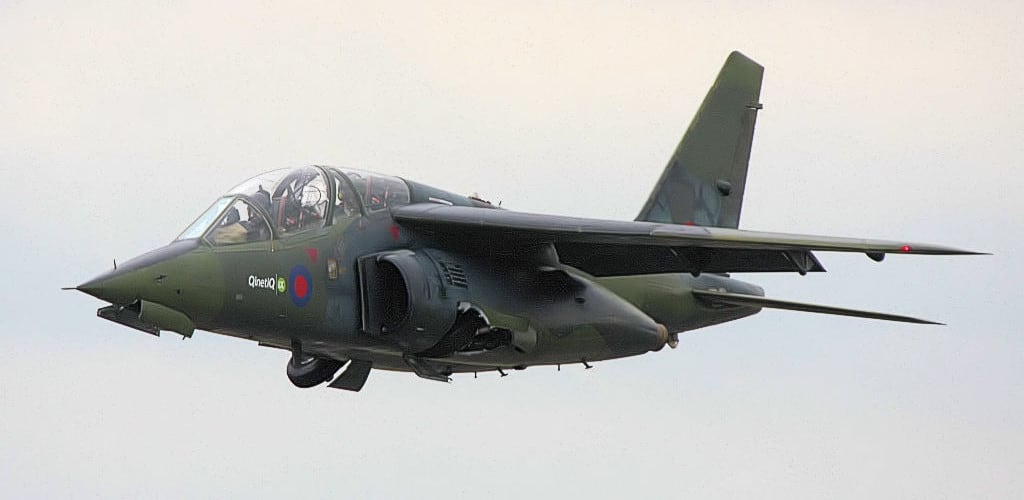
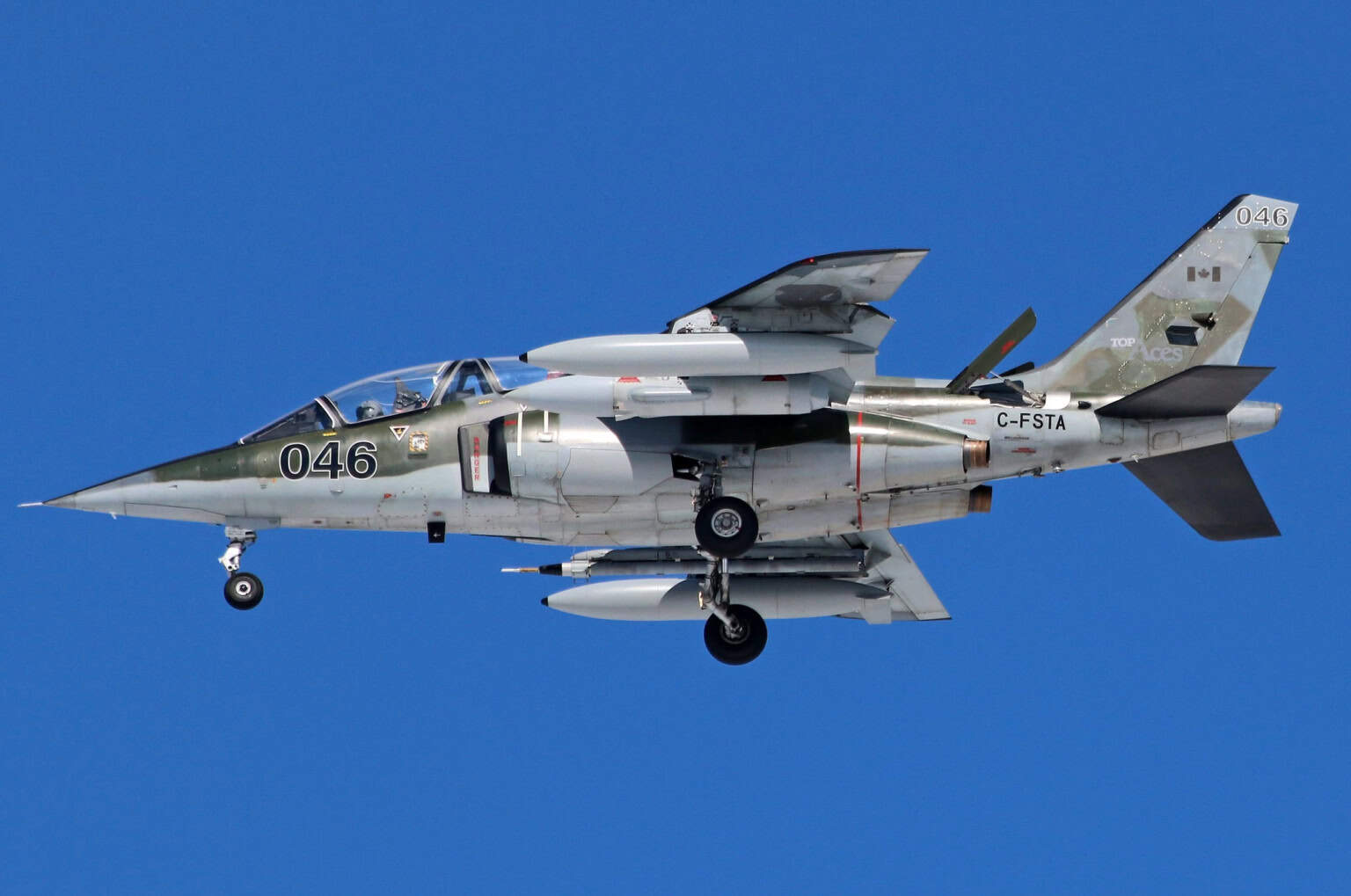
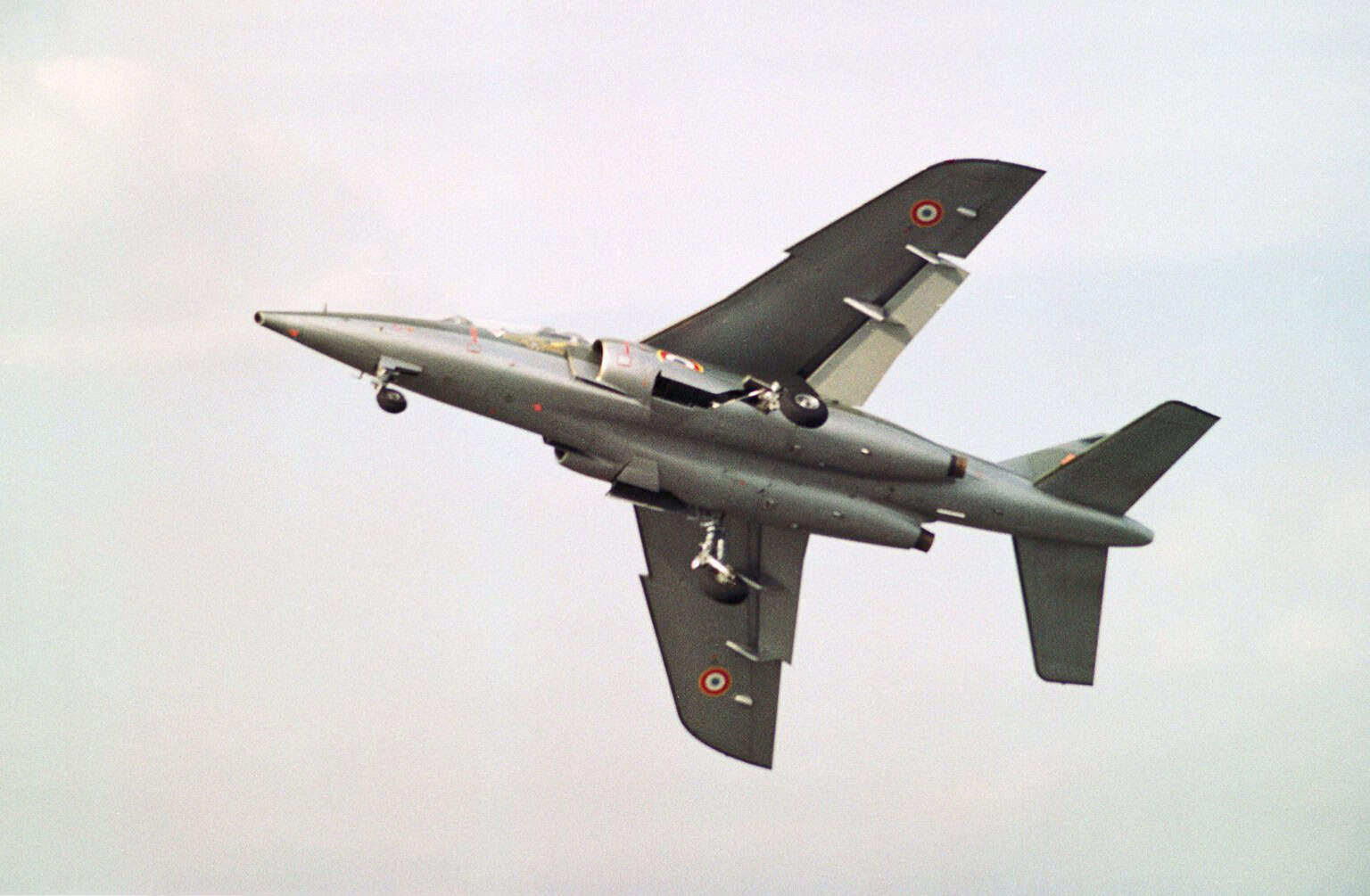
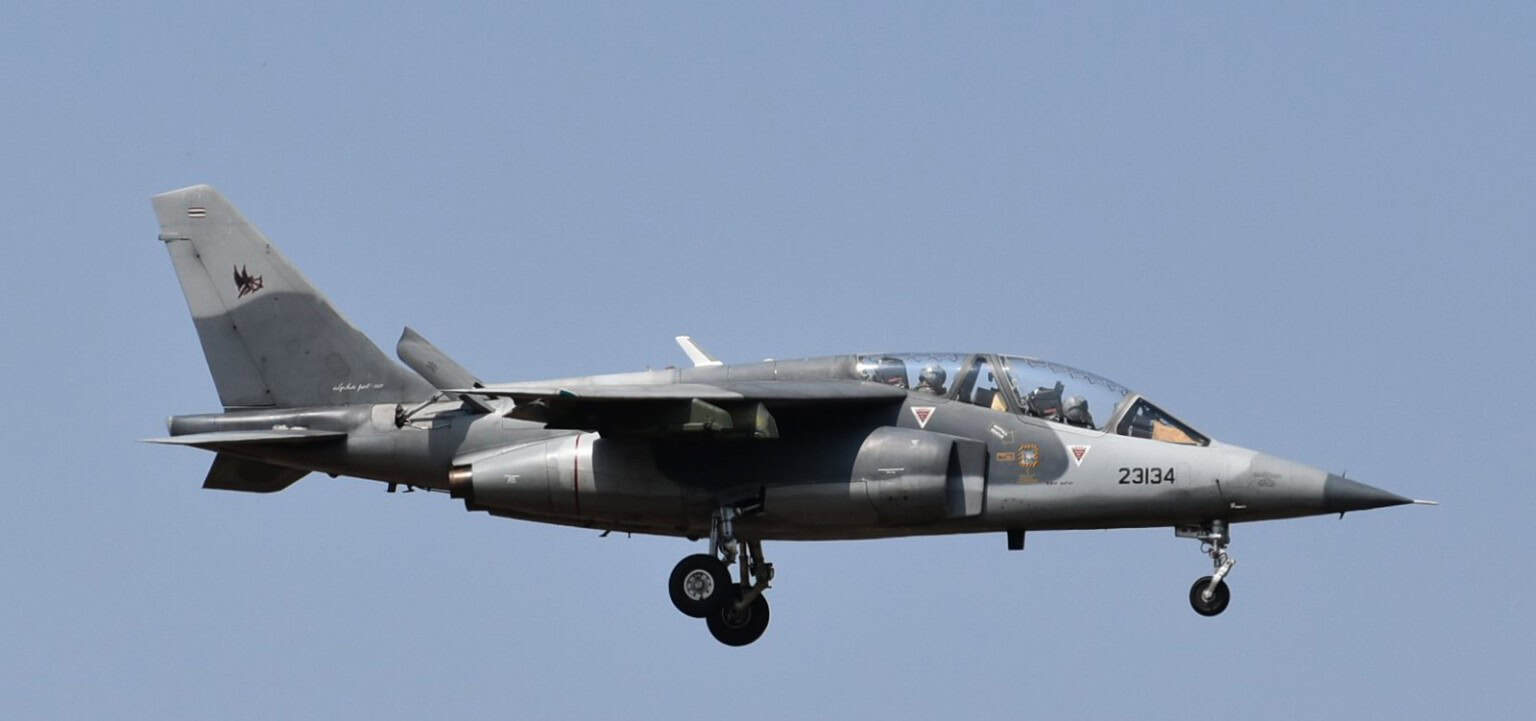


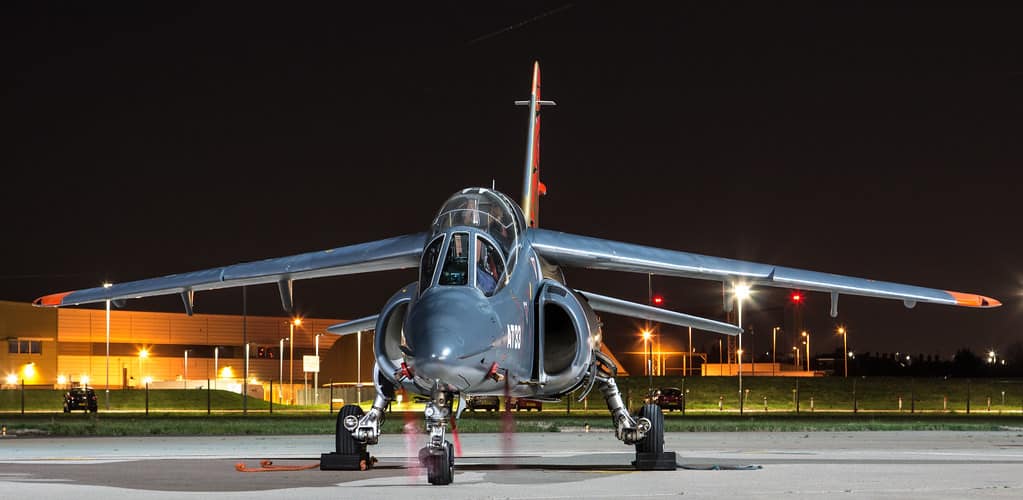


The Dassault/Dornier Alpha Jet is a light attack jet and advanced jet trainer built jointly by France and West Germany. It has a tandem two-seat cockpit, a high swept wing and two turbofan engines.
The full specification table for the aircraft is on this page. The sections below explain where the jet came from and what it did.
In the early 1960s, European air forces needed a replacement for trainers such as the Lockheed T-33 and the Fouga Magister. France and West Germany began talks in 1967 and agreed a joint specification in 1968 for a subsonic trainer.
A development and production agreement followed in July 1969. It covered 200 aircraft to be assembled in each country.
On 23 July 1970, the Breguet-Dassault-Dornier TA501 design beat the VFW-Fokker VFT-291 and the SNIAS/MBB E.650 Eurotrainer. Four prototypes were ordered in May 1972.
The first French prototype flew in October 1973 at Istres. The first German prototype followed in January 1974 from Oberpfaffenhofen, and the other two flew before the end of 1974.
The first production aircraft flew on 4 November 1977, and deliveries began in September 1978. About 480 were built between 1973 and 1991.
France received 176 Alpha Jet E trainers by 1985, fewer than the 200 planned. The Luftwaffe took 175 Alpha Jet A attack aircraft by 1983.

The two main versions share an airframe but not a job. The Alpha Jet E is the trainer used by France and Belgium, while the Alpha Jet A is the attack version Germany flew.
Belgium ordered 33 as the Alpha Jet 1B in 1973, assembled by SABCA. Later upgrades added a laser-gyro inertial navigation system, GPS and a head-up display.
Egypt ordered 30 MS1 and 15 MS2 aircraft, assembled locally. The MS2 has new avionics, an uprated engine and Magic missiles.
Other versions include the Alpha Jet 2 ground-attack development and the Alpha Jet ATS, also known as Alpha Jet 3 or Lancier, with a glass cockpit.

Yes. Nigerian Alpha Jets supported ECOMOG forces in Liberia, with four jets in 1990. In 1992, six were placed under ECOMOG command and flew roughly 3,000 combat missions without losses.
Morocco used its Alpha Jets against the Polisario Front in the Western Sahara War, and one was shot down in December 1985.
On 18 July 2021, gangs in Zamfara and Kaduna in Nigeria shot down a Nigerian Alpha Jet. The pilot ejected and evaded capture.
Germany deployed 18 Alpha Jets to Turkey during the 1991 Gulf War.
Yes, with a shrinking list of operators. The French Air Force still operated 85 as of 2025, plus eight with the Patrouille de France display team.
Other current operators include Cameroon, Egypt, Morocco, Nigeria, Qatar, Thailand and Togo. Thailand flies 19 former Luftwaffe Alpha Jet A aircraft.
The Luftwaffe began retiring its fleet in 1992, kept 45 for lead-in fighter training, and flew its last jets in 1998. Portugal received 50 in 1993, and Thailand bought 25 in 1999.

The Canadian company Top Aces uses Alpha Jets to play the enemy in air combat training. It operates 30 former Luftwaffe and QinetiQ Alpha Jet A aircraft, plus 25 Alpha Jet E aircraft it bought from Belgium after Belgium retired the type in 2019.
The jet suits the role because it is small, agile and cheap to fly compared with a fighter.

The spec panel on this page shows the unit price AeroCorner holds for the type. A new Alpha Jet has not been built for decades, so there is no current catalog price.
Retired airframes have changed hands between air forces and private operators, as in the Luftwaffe sales to Thailand and the Top Aces purchase from Belgium.
The price shown in this page’s spec panel is the figure AeroCorner holds for the type. Production ended in 1991, so used airframes are sold between air forces and operators, and prices are not published.
Yes. France, Cameroon, Egypt, Morocco, Nigeria, Qatar, Thailand and Togo all fly it, as does Top Aces in Canada.
Yes. Nigerian jets flew about 3,000 missions with ECOMOG in 1992 without losses, and Morocco used the type in the Western Sahara War.
Both. The Alpha Jet E is a trainer, while the Alpha Jet A is a light attack version. Many Alpha Jets are armed with a centerline cannon pod and underwing hardpoints.
Sources and references used for research and fact-checking.