Military Trainers
Pilatus PC-9 M
ICAO: PC9
The advanced turboprop trainer built to replace older jet trainers.
The latest aviation news and stories sent to your inbox.
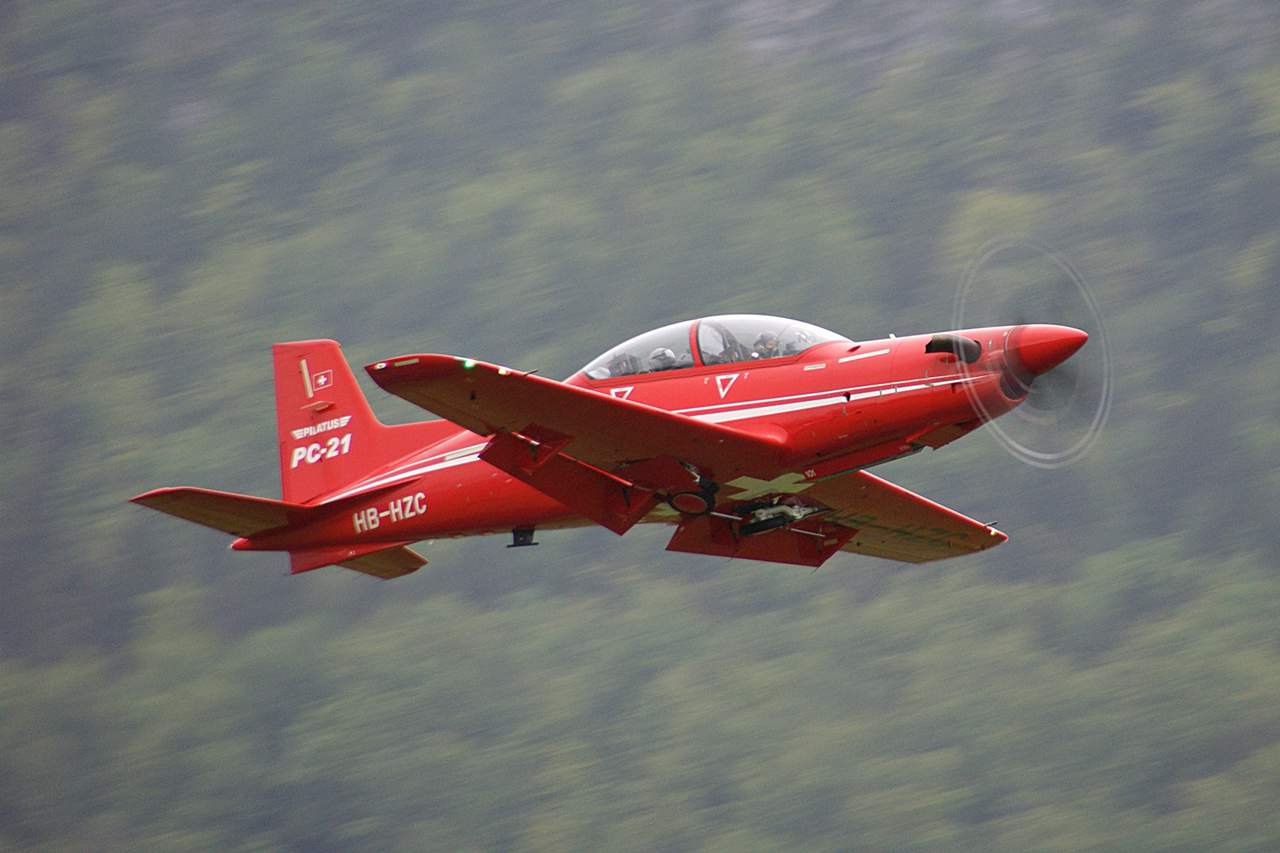
The Pilatus PC-21 is an advanced turboprop trainer developed to prepare military pilots for front-line jet aircraft. Designed to reduce training costs while maintaining high performance, it integrates modern avionics and mission simulation systems. The aircraft has been adopted by several air forces worldwide.

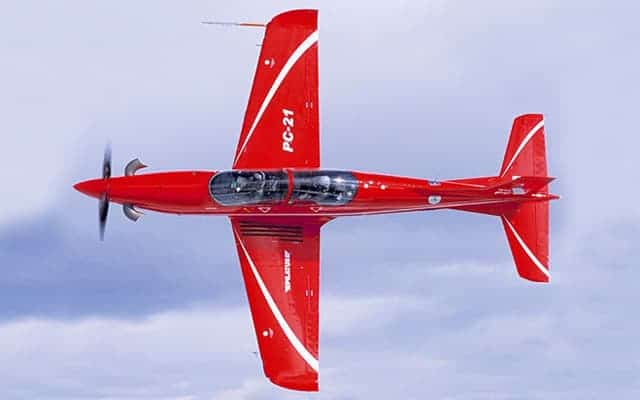


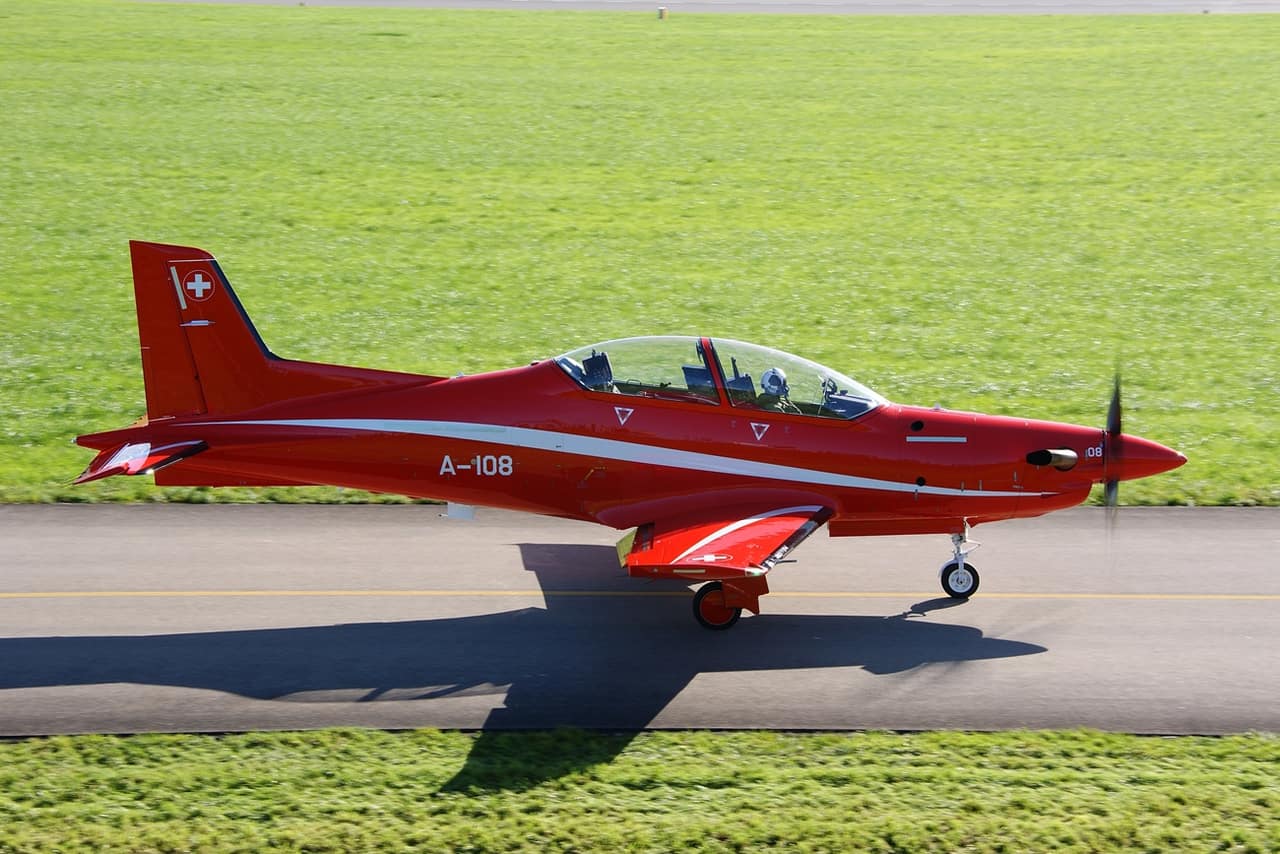
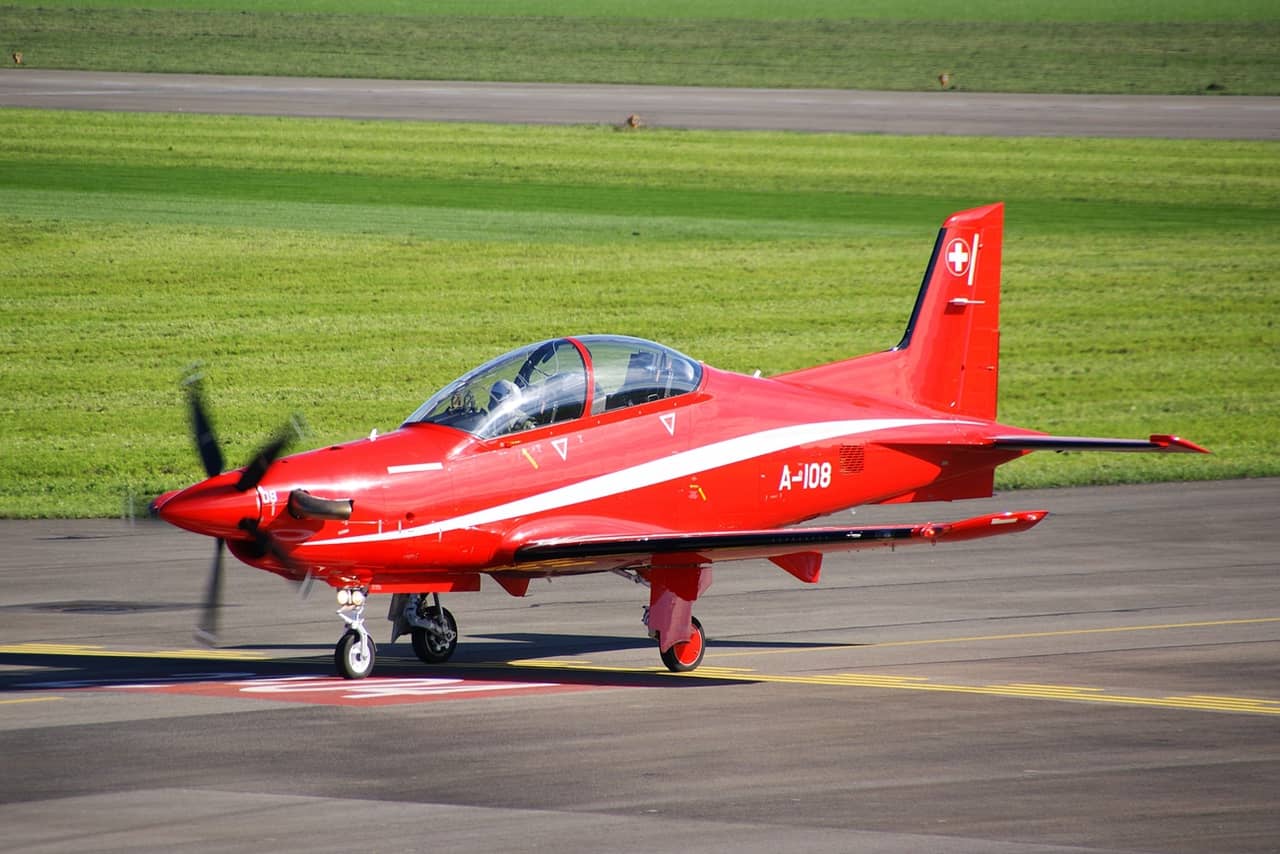
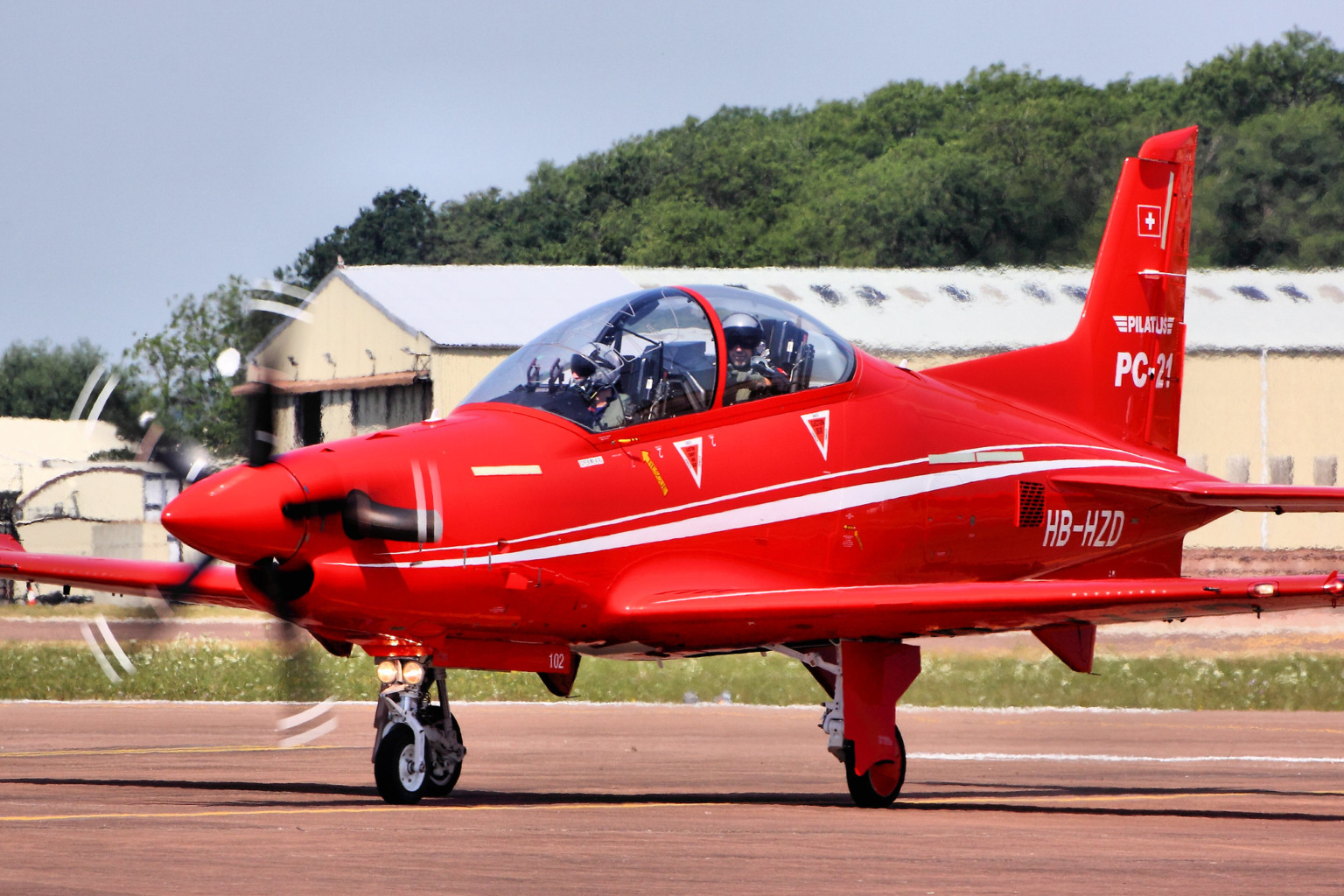


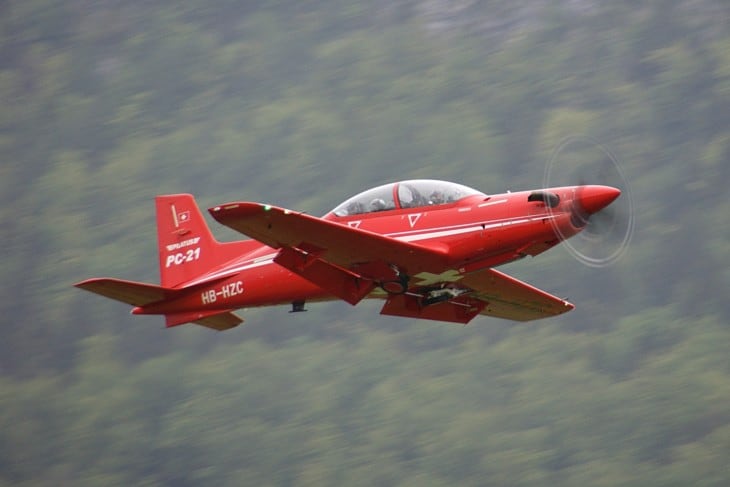
The PC-21 first flew in 2002 as a clean-sheet design intended to bridge the gap between basic trainers and advanced jet trainers. Pilatus engineered the aircraft with a high-performance turboprop engine, digital cockpit, and embedded simulation capabilities to replicate modern fighter environments. It entered operational service in the late 2000s.
Powered by a Pratt & Whitney Canada PT6A-68B turboprop engine producing approximately 1,600 shaft horsepower, the PC-21 cruises at around 370 knots (685 km/h). Maximum takeoff weight is roughly 9,000 pounds (4,100 kg). The aircraft features a pressurized tandem cockpit with advanced mission avionics and ejection seats.
The PC-21 enables student pilots to experience high-speed handling and advanced systems management before transitioning to jet aircraft. Its operating costs are significantly lower than those of jet trainers. The aircraft represents a modern approach to cost-effective military pilot training.
Sources and references used for research and fact-checking.