Fighter Jets
The indigenous light fighter built to modernize India’s combat fleet.
The latest aviation news and stories sent to your inbox.
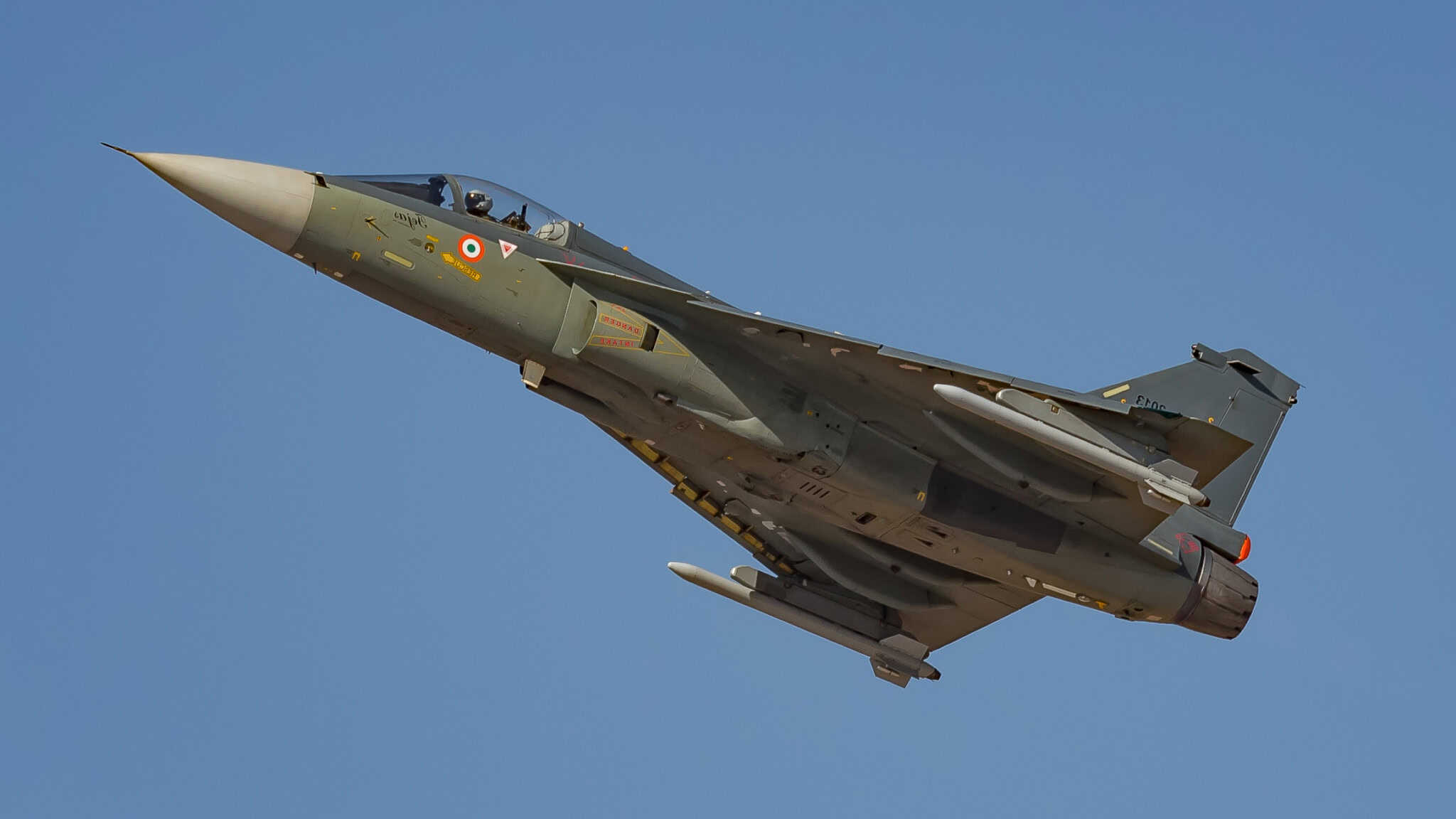
The HAL Tejas is a light multirole fighter developed in India. Entering service in the 2010s, it represents a major domestic aerospace effort. The aircraft replaces older fighters in Indian Air Force service.


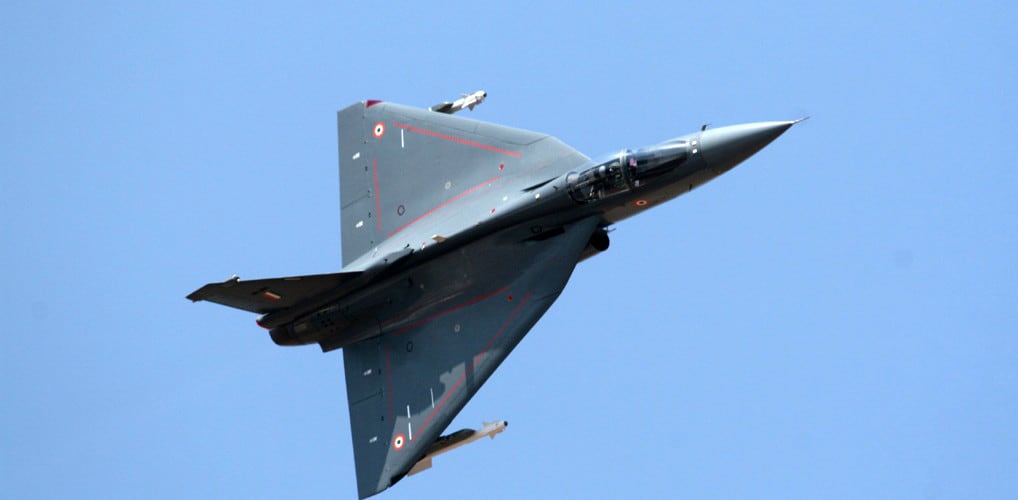


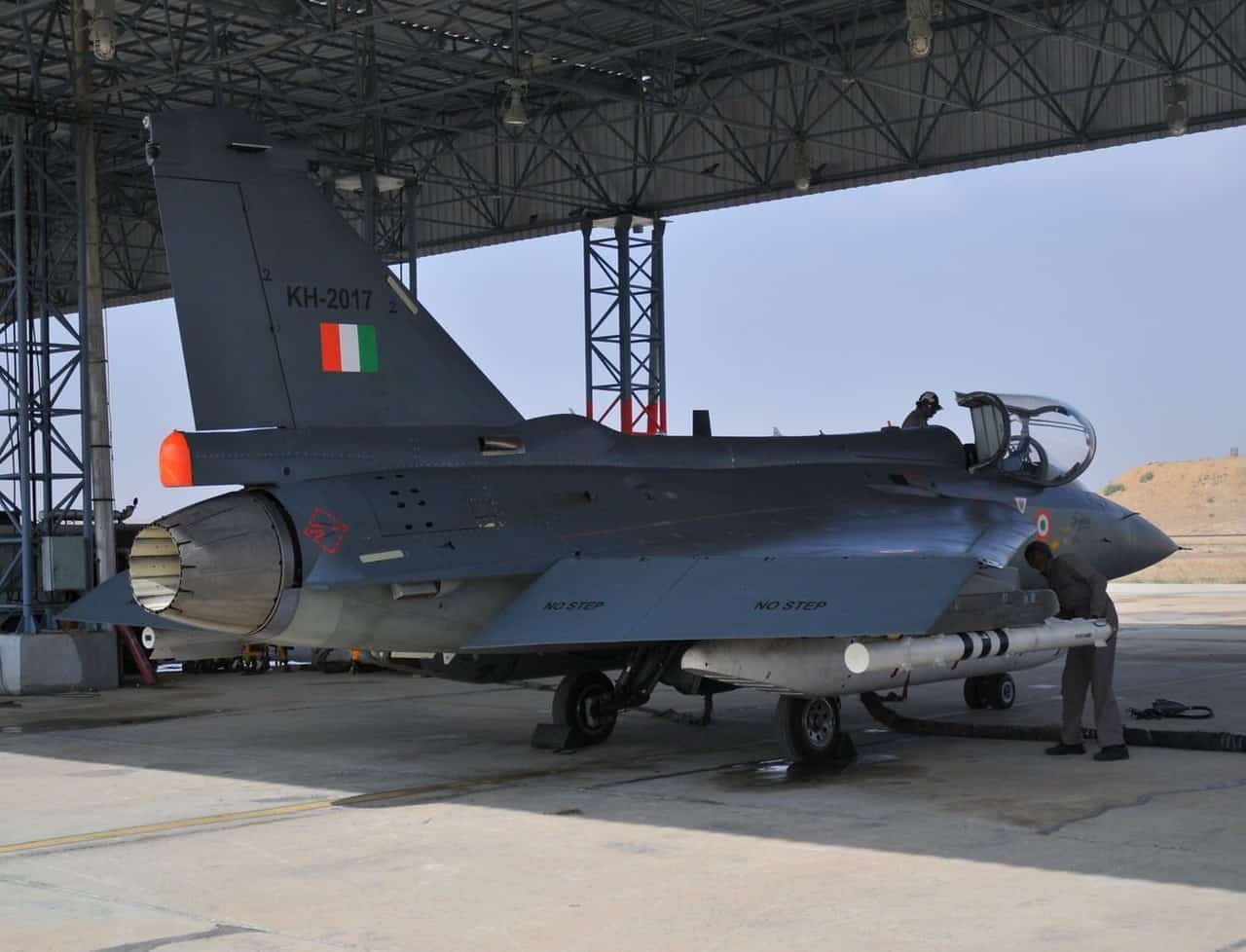


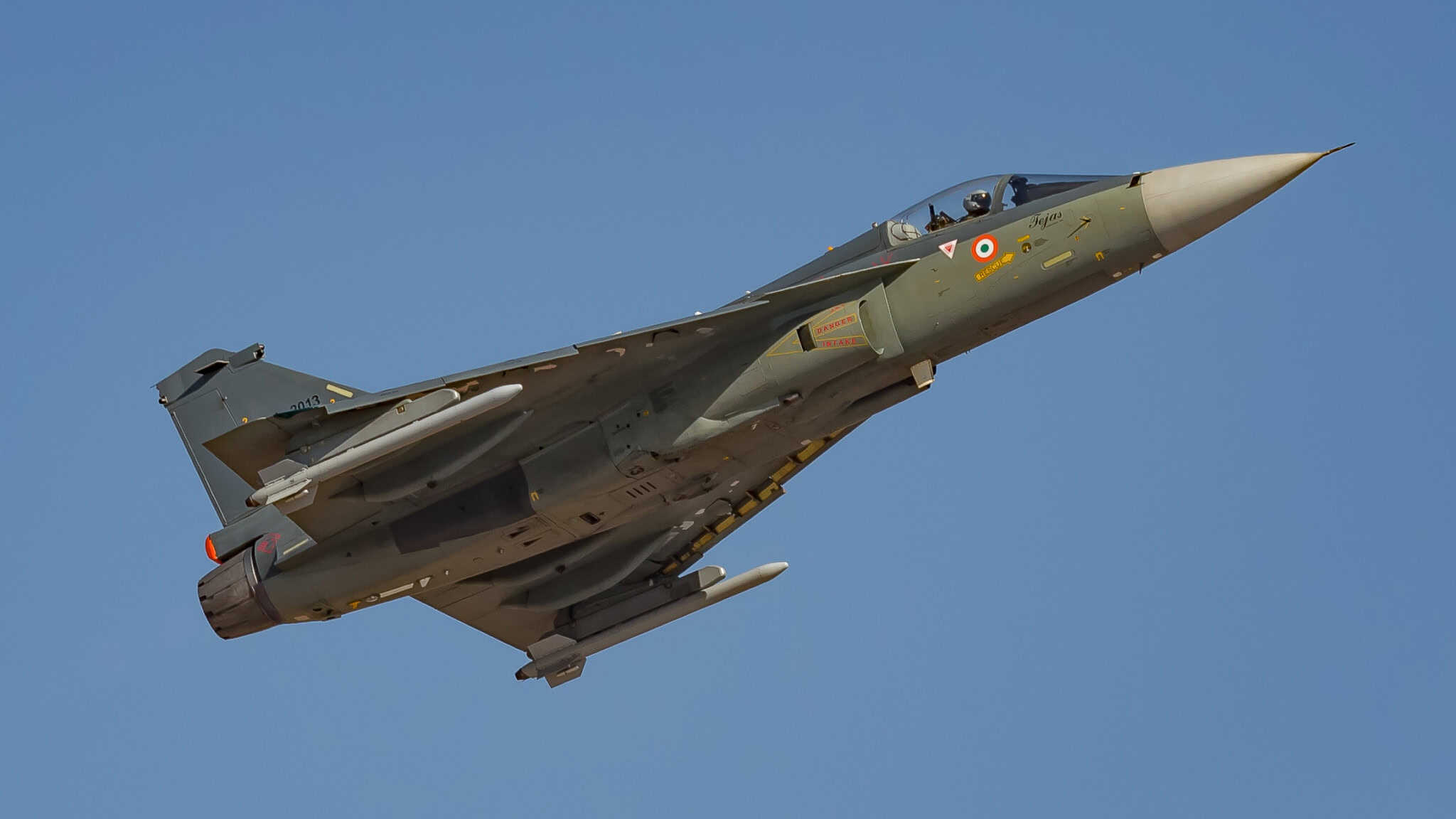

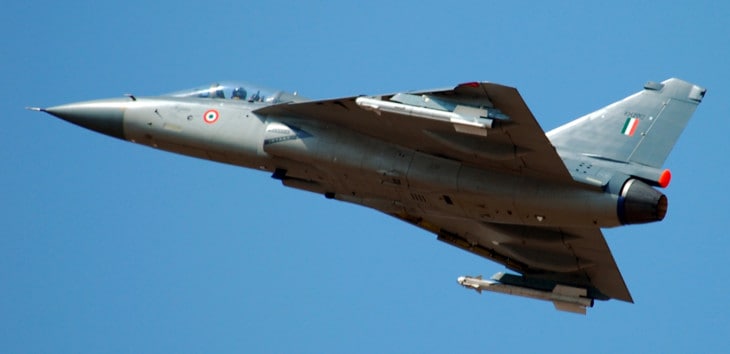
The Tejas first flew in 2001 and entered service in 2016. It features a delta wing design and advanced composite construction. The aircraft incorporates modern avionics and fly-by-wire flight controls.
Powered by a General Electric F404 turbofan engine producing approximately 19,000 pounds of thrust (84.5 kN) with afterburner, the Tejas exceeds Mach 1.6. Maximum takeoff weight exceeds 29,000 pounds (13,154 kg). The aircraft carries air-to-air and air-to-ground weapons on multiple hardpoints.
The Tejas represents a significant milestone for India’s aerospace industry. Ongoing upgrades aim to enhance radar and weapons capability. The aircraft continues to expand its role within the Indian Air Force.
Sources and references used for research and fact-checking.