

Table of Contents
The last Blackbird to fly is no longer where it has stood for more than two decades, and NASA will not say what it is doing with it.
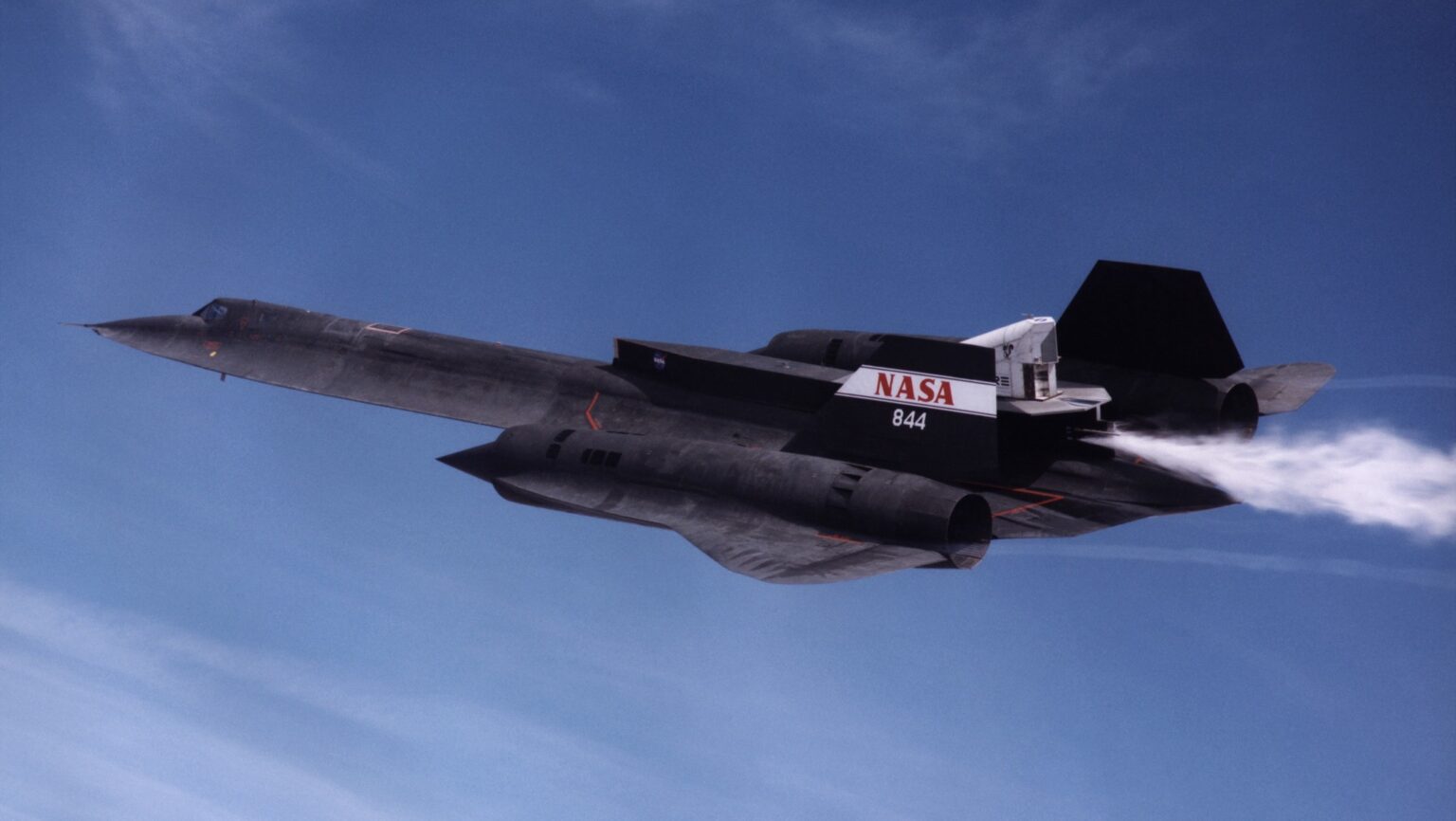
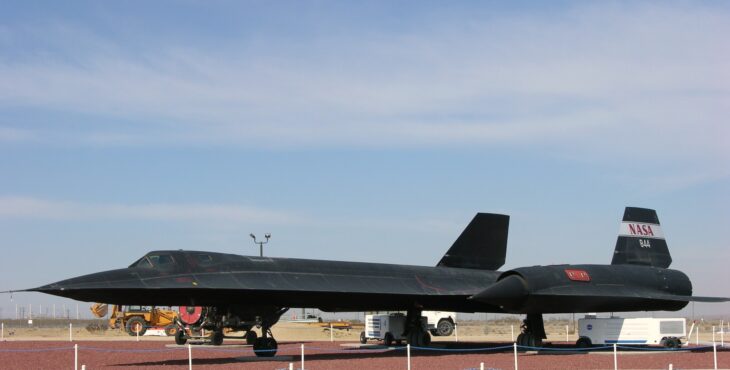
NASA 844, the SR-71A that the Air Force numbered 61-7980, flew the last flight any SR-71 has ever made, at an Edwards Air Force Base air show on Oct. 9, 1999. From 2002 it sat on static display outside what is now NASA’s Armstrong Flight Research Center in California.
Commercial satellite imagery shows it gone from that spot since at least May 17, 2026. Aviation Week reports that it was moved into a hangar and inspected, and that NASA has sounded out former SR-71 staff about flying it again. NASA has confirmed none of it.
Why the Last Flying Blackbird Belonged to NASA
The Lockheed SR-71 Blackbird was the Air Force’s Mach 3 Cold War reconnaissance jet. The Air Force retired it in 1989, largely for political reasons, then brought a few back in 1995 after Congress voted $100 million to reactivate three.
That second life ended in 1998, when the Air Force retired the type for good. NASA kept flying. Its Dryden Flight Research Center at Edwards, since renamed Armstrong, had taken 844 on loan in 1990 and flew Blackbirds from 1991 to 1999.
NASA used them as research platforms: aerodynamics, propulsion, structures, thermal protection, atmospheric science and sonic booms. Tail 844 also flew the Linear Aerospike SR-71 Experiment (LASRE) during that decade.
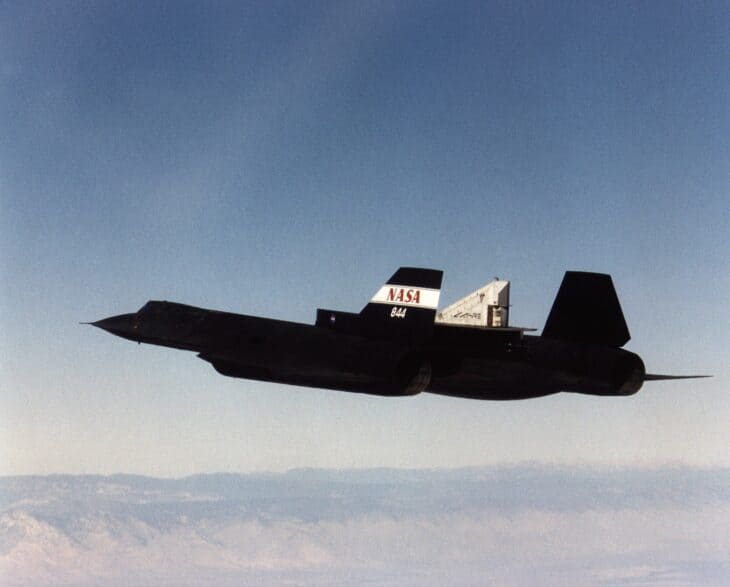

On Saturday, Oct. 9, 1999, NASA research pilot Rogers E. Smith and flight test engineer Robert R. Meyer Jr. flew 844 at the Edwards air show. It was meant to fly again on the Sunday, but a serious fuel leak grounded it. That Saturday flight became the last one any Blackbird made.
The jet went into flyable storage and, in 2002, onto a display stand at Dryden, where it stayed for more than two decades.

The Numbers Behind Tail 844
Lockheed built 32 SR-71s: 29 SR-71As, two SR-71B trainers and one SR-71C. Tail 844, Lockheed serial number 2031, was the final SR-71A built, and 12 of the 32 were lost in accidents. Our story on the 12 Blackbirds that were destroyed, none by enemy fire covers where the losses happened and what survives.
Its records from July 28, 1976, still stand. One SR-71 held 85,069 feet (25,929 m) in level flight, and another set an absolute speed record of 2,193.2 mph (3,529.6 km/h), about Mach 3.3.
That is why it still sits in our ranking of the fastest aircraft in the world as the fastest jet ever flown, nearly 50 years on.
Tail 844 last flew 27 years ago. The last tranche of SR-71 spare parts was destroyed in 2007, Task & Purpose reported.
About two years after the final flight, Aviation Week estimated that reactivating an SR-71 for intelligence work would cost $40 million to $45 million. The job is far harder now.
What NASA has actually said
Nothing about a flight program. A spokesperson told reporters the agency recognizes the interest in the SR-71 and its history at NASA but has no additional information to share regarding the aircraft at this time. The hangar move, the inspection and the approaches to retirees all come from Aviation Week’s sources and former staff.
Why a 27-Year-Old Spy Plane Still Matters to NASA
The timing is what made people look. At the All-In Summit in Los Angeles, NASA Administrator Jared Isaacman showed a slide titled “Rebuilding our X-plane portfolio” with a silhouette that looked a lot like a Blackbird.
Asked whether it was an SR-71, he answered, “You sure that’s a Blackbird?” He said NASA was “getting back in the business of flying high and fast again.” Asked at EAA AirVenture whether he could bring an SR-71 back, he said, “That’s classified.”
The people who once kept 844 flying are the most cautious voices in the story. Former NASA SR-71 test engineer Mike Relja told Aviation Week the jet was moved into the former space shuttle hangar at Edwards and inspected, and he warned of major challenges.
Aviation Week’s Steve Trimble reported that at least two former SR-71 engineers, now in their 70s, had been offered roles. The retirees’ own accounts are less tidy.
Tim Conners, lead propulsion engineer on NASA’s SR-71 program in the 1990s, told The War Zone that nobody formally reached out to him, only an informal text, and that he did not think he could turn down a real offer.
Conners thinks the goal may be “a high-speed engine test bed.” He put the odds of 844 flying again at 25%.
What Stands Between Tail 844 and the Runway Today
The engines are the first wall. The SR-71 flew on two Pratt & Whitney J58s, and Conners told The War Zone he has heard they were judged unserviceable on inspection, without anyone trying to run them.
Fuel is the second. The J58s burned a special fuel, JP-7, and Conners said NASA’s stockpile was discarded about 20 years ago. He thinks a refinery could make a substitute, or that Jet A with additives might work.
After that come 27-year-old wiring, seals and hydraulics, specialized ground equipment, and pilots who, Conners says, took about two years to train in the 1990s. Conners believes museum airframes could supply parts and that NASA “could do this work in probably a few years” if it moved with its old agility.
None of that is a plan, and NASA has published none. As of Oct. 25, 2026, what is established is narrow: the last Blackbird to fly has left its display stand at Edwards, its former engineers have been asked about it, and the agency is not saying why.
If 844 does fly, it will be the first SR-71 flight since a fuel leak cut short its weekend at Edwards in 1999. Until NASA says more, the missing jet is the only evidence anyone has.
Sources and references used for research and fact-checking.
- The War Zone, An SR-71 Blackbird Has Vanished (Updated)
- The War Zone, Former SR-71 Engineer Talks NASA's Blackbird Revival Program
- The Aviationist, Is An SR-71 Blackbird Returning to Flight 27 Years Later?
- International Business Times UK, NASA's Secret Bid To Revive SR-71 Blackbird Sparks Mystery
- Interesting Engineering, NASA quietly explores return to flight for historic SR-71A Blackbird after 27 years
- Task & Purpose, NASA wants an SR-71 to fly again
- The Defense Watch, NASA Moves SR-71 Tail 844 Into Hangar Amid Return-to-Flight Assessment
- This Day in Aviation, Tag: 61-7980
- Wikipedia, Lockheed SR-71 Blackbird
Get the Newsletter
The latest aviation news and stories sent to your inbox.
About the Author

Tim is the owner and lead editor of AeroCorner since 2019, overseeing aviation content covering aircraft, airlines, airports, and the broader aviation industry. Through years of researching, writing, editing, and publishing aviation-focused content, he has developed extensive practical knowledge of commercial aviation and air travel. Based in Asia and a frequent traveler himself, Tim also brings firsthand passenger experience to AeroCorner’s coverage. Outside of publishing, he has also explored aviation firsthand through hands-on flight training in New Zealand.