

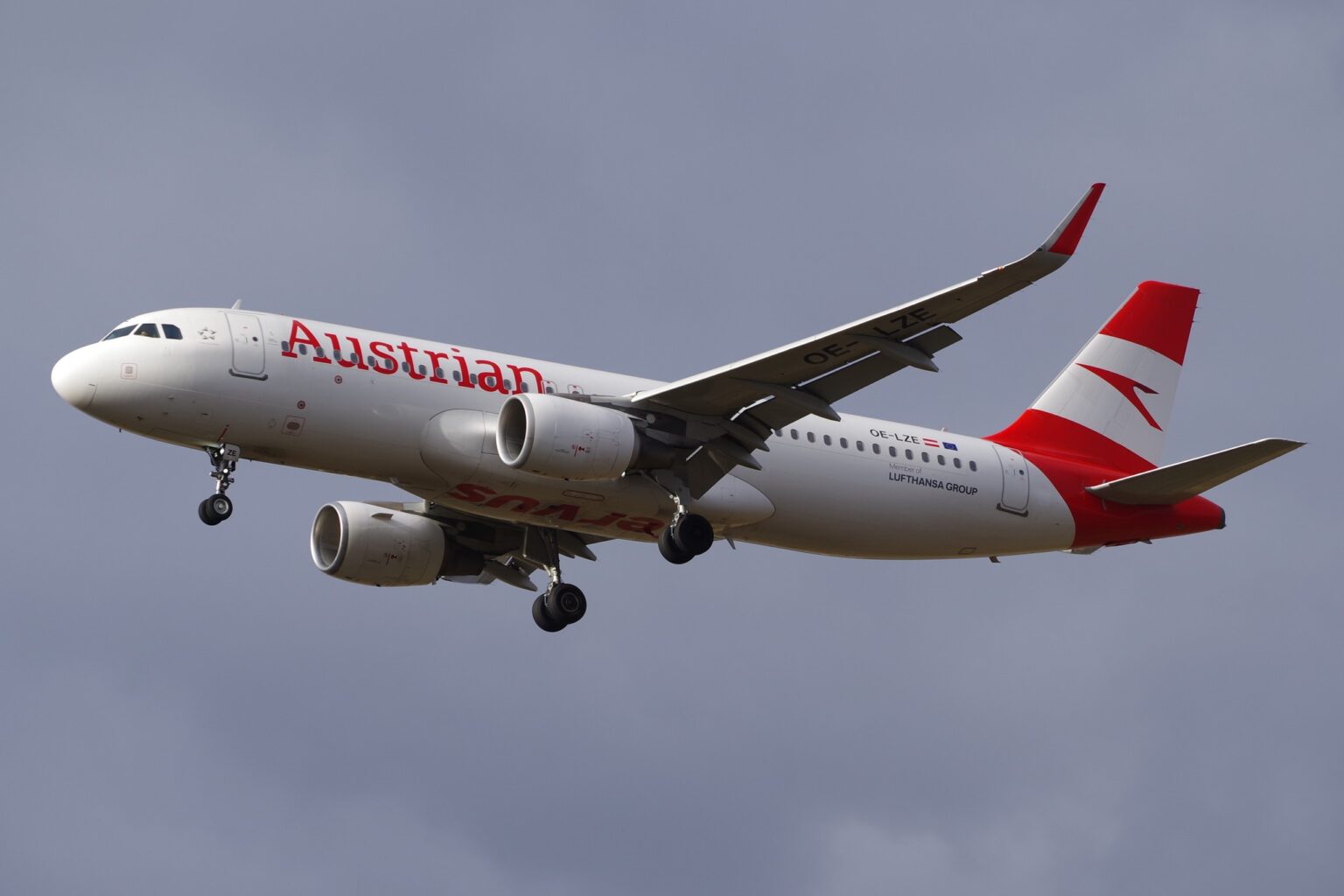
Austrian Airlines flight OS82 from Tel Aviv to Vienna made an unscheduled landing in Sofia, Bulgaria, on the evening of Sunday, October 18, 2026, after a bomb threat against the flight. Bulgaria’s Ministry of Transport and Communications said the Airbus A320 carried 51 passengers and six crew.
“We confirm that there was a threat against flight OS82 from Tel Aviv to Vienna, which made an intermediate landing in Sofia necessary,” an Austrian Airlines spokeswoman told the Vienna daily Der Standard. At the time of writing, no official source had said whether anything was found on board.
What happened on OS82
Flight-tracking data from FlightStats and FlightAware shows the A320, registered OE-LZE, pushing back at Ben Gurion Airport at 6:46 p.m. local time, against a 6:40 p.m. schedule, and taking off at about 7:05 p.m. It was due in Vienna at 9:25 p.m. Vienna time.
Bulgaria’s Ministry of Defense said that at 9:17 p.m. local time the aircraft signaled a bomb threat on board while it was in Bulgarian airspace. The transport ministry said the crew reported the threat near the border with Romania and decided to land in Sofia.
The jet touched down at Sofia Airport at 9:42 p.m. local time, about 25 minutes after the alert, according to the airline’s account in Der Standard and the tracking data. Passengers then left the aircraft and a working group of the responsible Bulgarian institutions began checks, the transport ministry said, as reported by the state news agency BTA.
According to Der Standard, which credited Israel’s Haaretz, the diversion followed an “anonymous report of a suspicious object.” Who made the report, and what exactly it said, has not been made public.
MiG-29s scrambled under NATO air policing
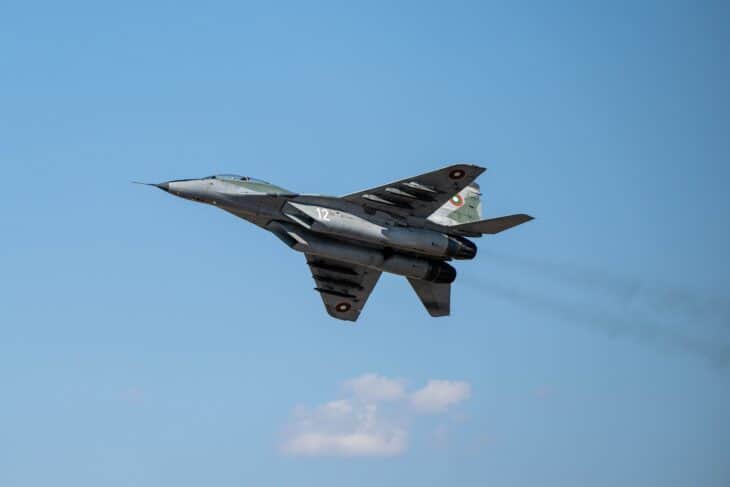
The Bulgarian Air Force launched its on-duty MiG-29 fighters as soon as the threat was signaled, the defense ministry’s press office said in a statement carried by BTA. The response ran under the “Air Policing” mission, in coordination with NATO’s Combined Air Operations Centre at Torrejón, Spain.
.jpg)
The transport ministry said a fighter escorted the airliner to its landing in Sofia, in line with standard procedures. The ministry described the passenger and crew numbers as initial information.
The Lufthansa Group, Austrian’s parent company, said the aircraft was undergoing security checks and that the safety of passengers and crew is always its top priority, according to the Times of Israel. The group said the passengers would be moved to another aircraft as soon as possible after the security screening.
Why a threat ends a flight early
When a crew is told of a possible bomb on board, the usual priority is to get the aircraft on the ground at a suitable airport quickly, rather than to judge the threat in the air. Sofia, Bulgaria’s main airport, was within reach, while Vienna was still about an hour away on the schedule.
Fighters launched in a case like this are an escort, not a threat to the airliner. Under NATO’s peacetime air policing system, quick reaction alert jets identify and shadow an aircraft in an abnormal situation and accompany it toward the ground.
On the ground, the usual pattern is a remote parking spot, an evacuation of the cabin and a search of the aircraft, the passengers and their bags before anyone continues. That search, not the landing, is what decides how long passengers wait for an onward flight.
The threat came days after another Tel Aviv flight was targeted. On October 13, a Delta flight was evacuated at Ben Gurion after an anonymous threat, and the Israel Airports Authority said the search ended with no unusual findings.
In July, a threat that sent RAF Typhoons after a Qatar Airways 777 also proved to be a hoax. Even a false alarm costs an airline a diversion, an Airbus A320 out of position and a night of disruption for everyone on board.
What is still unknown
Neither Austrian Airlines nor the Bulgarian authorities had said by the time of writing whether the search in Sofia found anything, who made the threat, or when passengers would reach Vienna. The passenger and crew count was given as initial information.
Sources and references used for research and fact-checking.
- Bulgarian Ministry of Transport and Communications (via BTA), Самолет с маршрут Тел Авив - Виена е кацнал в София заради сигнал за бомбена заплаха, съобщиха от Министерството на транспорта
- Bulgarian Ministry of Defense (via BTA), Дежурни изтребители МиГ-29 са задействани във връзка със сигнал за заплаха от бомба на борда на самолет от Тел Авив за Виена
- FlightStats, OS82 flight tracker, October 18, 2026
- FlightAware, OE-LZE flight history
Get the Newsletter
The latest aviation news and stories sent to your inbox.
About the Author

AeroCorner News is the aviation news desk of AeroCorner.com. It covers accidents and incidents, safety rulings, airline and airport disruption, and new aircraft. It works from primary sources such as the NTSB, FAA, EASA and the manufacturers' own announcements.