

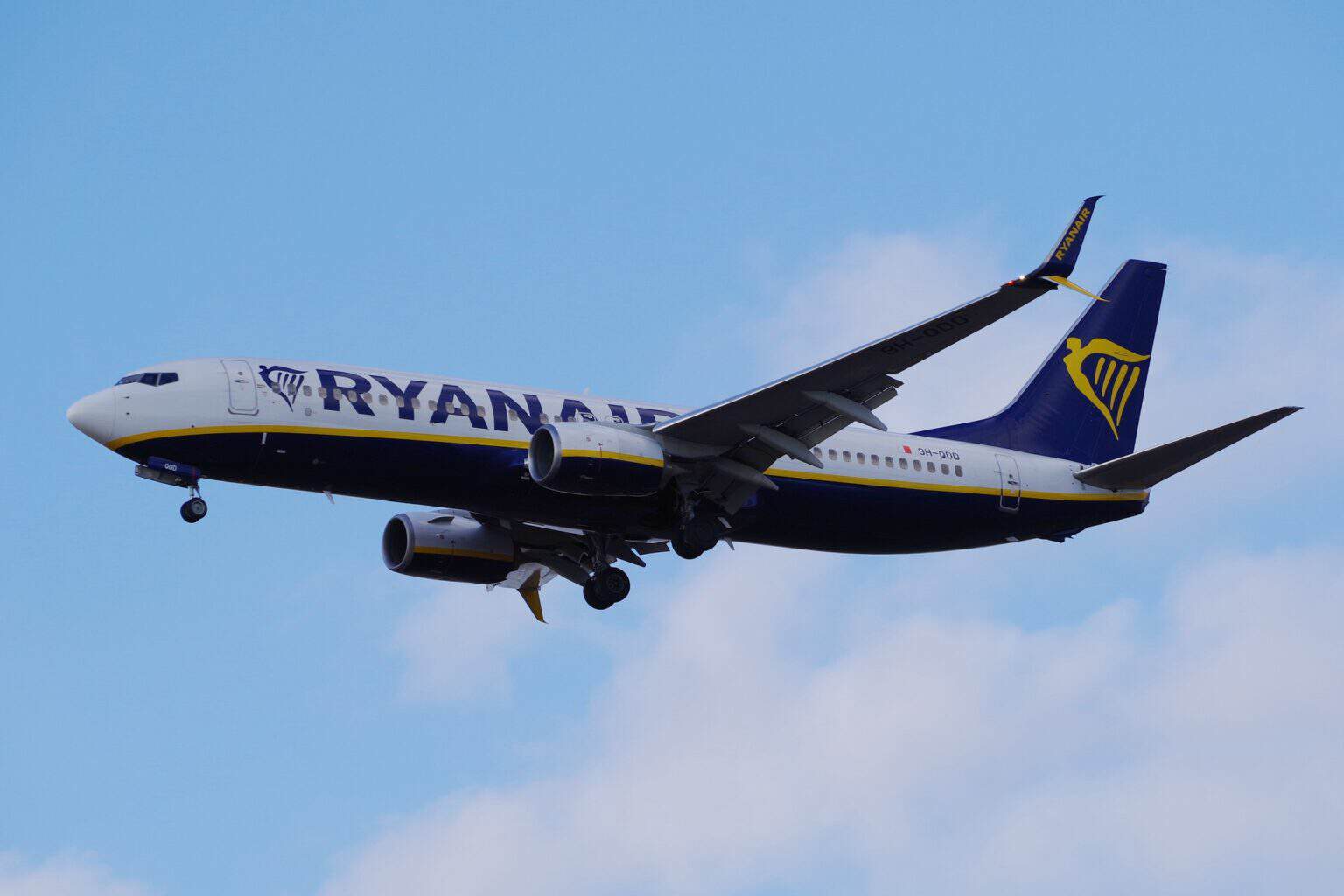
Ryanair flight FR6789, a Boeing 737-800 registered 9H-QDD, diverted to Venice on the morning of October 17, 2026, after an engine failed while it was climbing out of Trieste, The Aviation Herald reported on October 18. The jet, operated for Ryanair by its Maltese subsidiary Malta Air, had been bound for Paris Beauvais.
The crew stopped the climb at about 23,500 feet, entered a hold and landed safely at Venice roughly 50 minutes after departure, according to the report.
What the flight data shows
Tracking data published by FlightAware gives the outline of the flight. The 737 left the gate at Trieste on schedule at 6:00 a.m. local time and took off at 6:09 a.m., heading west.
About 10 minutes later it topped out at flight level 235, roughly 23,500 feet (7,200 m), about 24 miles (38 km) north of Venice. It then began a steady descent instead of continuing toward France.
The track shows the jet turning south and settling at 10,000 feet, where it flew several loops about 23 miles (37 km) southwest of Venice for about 13 minutes. It touched down at Venice Marco Polo Airport at 6:58 a.m., 48 minutes after takeoff.
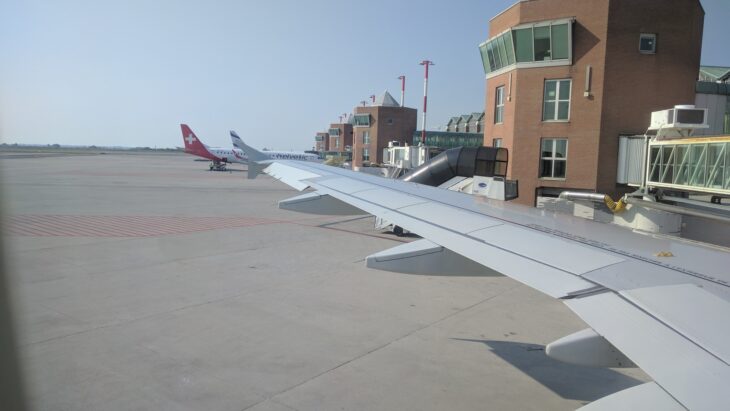

The Aviation Herald said the jet landed on runway 04R. The flight to Beauvais was canceled and passengers were rebooked onto other flights, according to the same report.
FlightAware’s log for 9H-QDD showed no further flights as of the evening of October 18, consistent with The Aviation Herald’s report that the aircraft was still on the ground in Venice about 37 hours after landing.
What is not yet known
No statement from Ryanair on the diversion could be found at the time of writing, and neither the cause of the engine failure nor which engine was affected has been made public. Italy’s air safety investigator, ANSV, had posted nothing about the flight on its website as of October 18.
The number of passengers on board has also not been reported.
Why a twin-jet heads for the nearest airport
Twin-jets like the Boeing 737-800 are certified against one-engine-out performance standards. The FAA’s 14 CFR 25.121, for example, requires a two-engine airliner to keep climbing with one engine inoperative after takeoff and on a go-around.
So losing an engine is serious but survivable by design. What changes is that the jet has no spare engine left if the second one develops a problem.
That is why the rules push crews to land quickly. In the United States, the FAA’s 14 CFR 121.565 requires an airline captain whose two-engine jet loses an engine to land at the nearest suitable airport, in point of time, at which a safe landing can be made.
FR6789 flew under European rather than US rules, but the logic carries over. Where the climb stopped, Venice was about 24 miles (38 km) away, while Beauvais was still more than an hour of flying ahead.
A short hold, like the one visible in the track, can be part of a diversion after a failure, giving a crew time to run checklists, brief the cabin and set up a one-engine approach. Why this crew held has not been reported.
It follows another engine failure on a Malta Air 737-800 flying for Ryanair. In July, flight FR1879 out of Thessaloniki turned back after a Ryanair 737 engine failure shattered a cabin window. Whether the Venice event involved anything similar is not known.
Who flew the jet
Malta Air is one of five airlines in the Ryanair Holdings group, alongside Ryanair DAC, Buzz, Lauda Europe and Ryanair UK. Ryanair says Malta Air, acquired in 2019, is headquartered in Malta and operates in Malta, Italy, Germany and France.
Trieste is one of Ryanair’s Italian bases. The airline’s summer 2026 schedule for the airport, announced in March, listed two based aircraft and 21 routes.
FlightAware’s records show 9H-QDD had spent the previous days flying round trips out of Trieste, including to Catania, Barcelona, Olbia, Naples, Palermo, Malta and London Stansted. FR6789 itself had flown the Trieste to Beauvais route normally on October 6, 10 and 13, taking roughly an hour and a half each time.
Sources and references used for research and fact-checking.
Get the Newsletter
The latest aviation news and stories sent to your inbox.
About the Author

AeroCorner News is the aviation news desk of AeroCorner.com. It covers accidents and incidents, safety rulings, airline and airport disruption, and new aircraft. It works from primary sources such as the NTSB, FAA, EASA and the manufacturers' own announcements.