

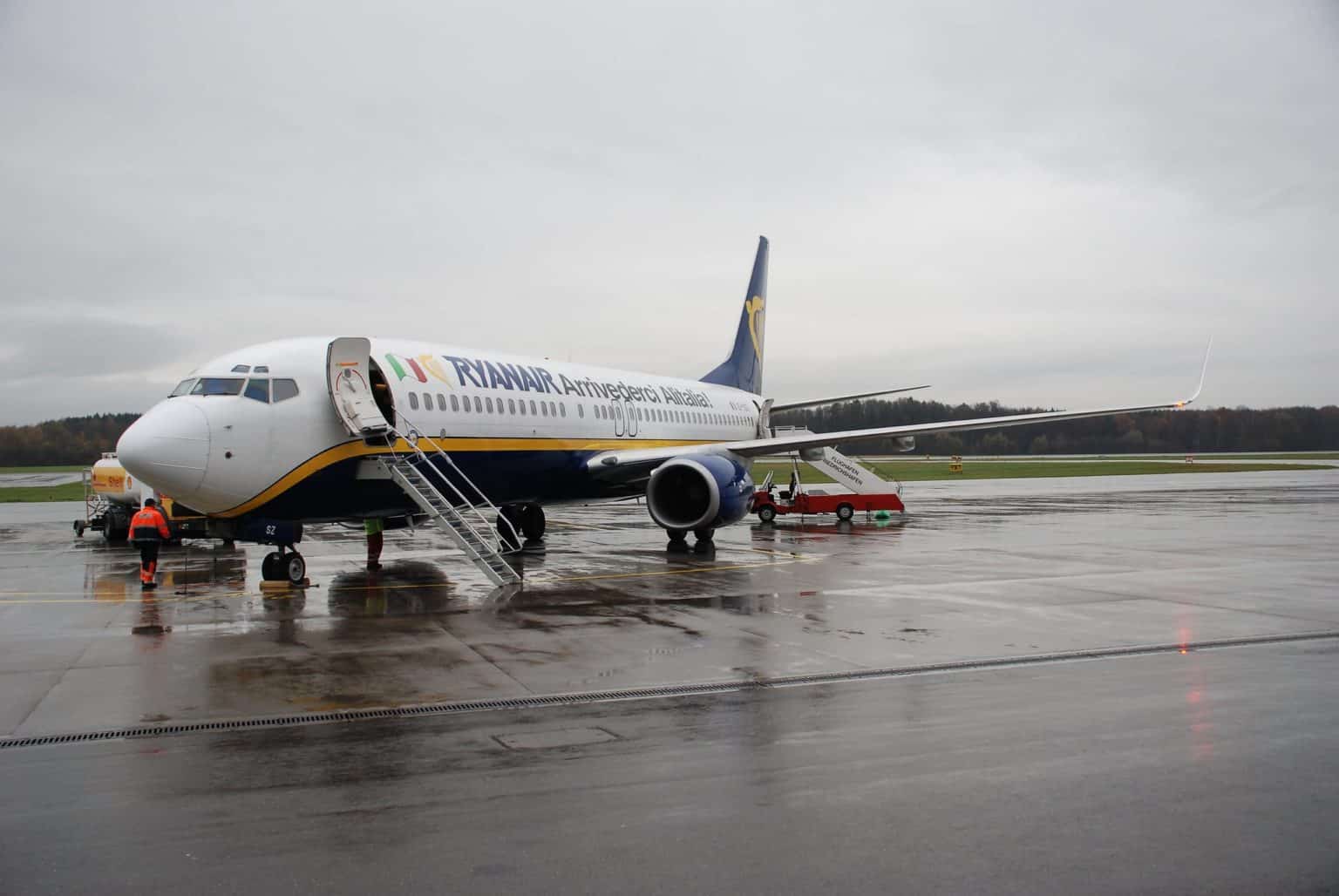
On the morning of July 10, 2026, a Ryanair Boeing 737-800 climbing out of Thessaloniki, Greece suffered a failure in its right engine that sent debris into the fuselage, shattered a cabin window and briefly opened the pressurized cabin to the sky. The aircraft, operating flight FR1879 to Memmingen, Germany, turned back and landed safely in Thessaloniki about an hour after departure. A week on, the failure has drawn in investigators from three countries and revived an uncomfortable question about an engine that powers thousands of 737s around the world.
What investigators know so far
The aircraft, registered 9H-QEU and operated by Ryanair subsidiary Malta Air, was about 18 years old, having been delivered in 2008. It is powered by CFM International CFM56-7B engines, the standard powerplant on the Boeing 737 Next Generation family. According to flight tracking and reporting corroborated by aerospace outlets, FR1879 departed at 06:12 local time and had climbed to roughly 15,000 feet within about ten minutes when the number two, or right, engine failed.
Multiple outlets, including AeroSpace Global News and The Air Current, reported that a fan blade in the right engine detached, producing an uncontained failure that flung debris into the fuselage. That debris struck and shattered a passenger window on the right-hand side, and the cabin decompressed. A 61-year-old Serbian man seated beside the window was partly pulled into the opening by the pressure differential before other passengers, including his wife, dragged him back inside. He received medical attention on the ground; injuries were reported as minor. The crew declared an emergency and returned to Thessaloniki, landing at about 07:10.
Investigators have not yet confirmed the exact sequence of events. The description of a detached fan blade comes from reporting rather than an official finding, and the formal cause will be established by the investigation now under way.
Why this echoes Southwest 1380
The reason the incident has attracted so much attention is the failure mode. In April 2018, Southwest Airlines flight 1380 suffered a fatigue fracture of a fan blade in the same CFM56-7B engine family. Debris broke a cabin window, and a passenger was partially pulled out and died, the first passenger fatality on a US airline in nearly a decade. That accident, and a similar non-fatal blade failure on Southwest 3472 in 2016, triggered a wave of regulatory action.
Following Southwest 1380, the US Federal Aviation Administration issued Emergency Airworthiness Directive 2018-09-51 and, days later, AD 2018-09-10, mandating repetitive ultrasonic and eddy-current inspections of CFM56-7B fan blade dovetails across the worldwide fleet to catch subsurface cracking before a blade lets go. Later directives added a redesigned engine inlet intended to better contain debris, with operators given until 2028 to comply. If the Ryanair blade failed in the same way, the central question for investigators will be whether those inspection intervals are catching every at-risk blade, or whether this points to a gap in the regime built after 2018.
2016
Southwest 3472. A CFM56-7B fan blade fractured in flight and debris damaged the aircraft, with no fatalities, prompting the first calls for tougher blade inspections.
April 2018
Southwest 1380. A fatigued fan blade broke apart, debris shattered a window and one passenger died, the deadliest US airline event in nearly a decade.
May 2018
Inspection mandate. The FAA ordered repetitive ultrasonic and eddy-current inspections of CFM56-7B fan blade dovetails across the fleet.
By 2028
Containment upgrade. Later directives added a redesigned engine inlet to improve debris containment, with operators required to comply by 2028.
July 10, 2026
Ryanair FR1879. A right-engine failure on a 737-800 again sent debris through a cabin window over North Macedonia, with no deaths reported.
The rapid loss of cabin pressure is what makes a broken window so dangerous. When a window fails at altitude, the higher-pressure cabin air rushes toward the opening, and anyone next to it can be pulled toward the breach, the same physics behind the far larger structural failure that opened the fuselage of an aging jet during the Aloha Airlines 243 accident. The Ryanair crew’s decision to turn back and descend quickly is the standard response, prioritizing getting the aircraft to a lower, breathable altitude and onto a runway.
Still a preliminary investigation
The cause has not been officially established. North Macedonia’s Aircraft Accident and Incident Investigation Committee is leading the probe because the failure occurred in its airspace during the climb. The US NTSB is an accredited representative, not the lead, because Boeing and engine maker GE Aerospace are US based, with the FAA also advising. Early reports that the NTSB had taken charge were inaccurate.
Sources and references used for research and fact-checking.
Get the Newsletter
The latest aviation news and stories sent to your inbox.
About the Author

Tim is the owner and lead editor of AeroCorner since 2019, overseeing aviation content covering aircraft, airlines, airports, and the broader aviation industry. Through years of researching, writing, editing, and publishing aviation-focused content, he has developed extensive practical knowledge of commercial aviation and air travel. Based in Asia and a frequent traveler himself, Tim also brings firsthand passenger experience to AeroCorner’s coverage. Outside of publishing, he has also explored aviation firsthand through hands-on flight training in New Zealand.