

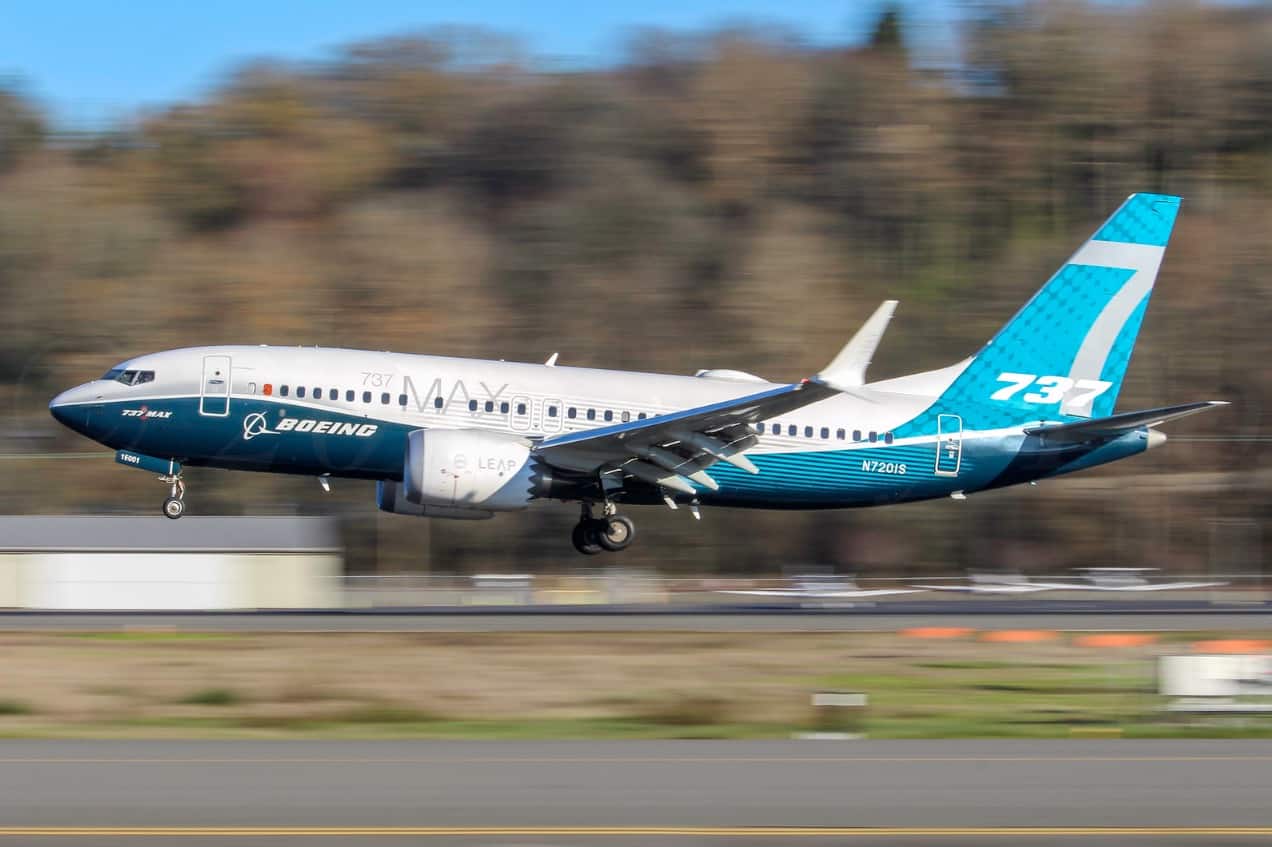
On July 16, 2026, Boeing published a progress report saying the long-delayed 737 MAX 7 is within reach of federal certification, with the larger MAX 10 and the 777-9 widebody moving through the final stretch of their own test programs. The update, posted to Boeing’s newsroom, offered the most detailed public accounting in months of how far each of the company’s three uncertified commercial aircraft has come.
Where each program stands
The 737 MAX 7, the smallest member of the MAX family, is the closest to the finish line. Boeing said its certification deliverables are 95 percent complete and that certification flight testing has finished, after 686 flight-test hours across 441 flights and another 349 hours of ground testing.
The remaining work, according to the company, is submitting the final deliverables to the Federal Aviation Administration and completing certification of the aircraft’s engine anti-ice solution in production. Several outlets, including Aviation Week and Bloomberg, reported that FAA sign-off could come within weeks, though the agency itself has not announced a date.
The stretched 737 MAX 10 is a step behind. Boeing said its certification flight testing is 98 percent complete, representing roughly 2,060 flight hours over 972 test flights and 1,033 ground-test hours. The company has finished the third of its development assurance reviews and is about 60 percent through the fourth.
Two changes coming out of the program, an updated engine anti-ice system and an enhanced Angle of Attack system, are planned as fleet-wide retrofits, meaning they will be applied to aircraft already flying as well as new ones.
The 777-9, Boeing’s next-generation widebody, has the longest road left. Boeing said it has completed about 50 percent of its certification testing, having logged more than 4,800 flight hours across roughly 1,700 flights, and that full-scale fatigue testing has now surpassed one simulated lifetime of the airframe.
Most of the required Type Inspection Authorizations, the FAA approvals that let company testing count toward certification, have been granted, with one remaining plus the authorizations covering extended overwater operations. Boeing continues to target first customer deliveries of the 777-9 in 2027.
“Certainty is more important than flow. Two years ago, the path forward wasn’t as clear as we wanted it to be. It is now.”
Mike Sinnett, Senior Vice President of Product Strategy, Product Development and Development Programs at Boeing Commercial Airplanes
How close is the MAX 7?
Boeing says the MAX 7’s certification deliverables are 95 percent complete and flight testing is finished. Certification itself is the FAA’s decision, and the agency has not set a public date.
Why it has taken this long
The MAX 7 and MAX 10 are the newest versions of a family that returned to service after the 737 MAX crisis, the two 2018 and 2019 crashes that killed 346 people and grounded the fleet worldwide for roughly 20 months. Both jets were originally expected to be certified years ago. Two separate hurdles pushed them back.
The first was a crew-alerting requirement. A law would have forced new derivatives to adopt a modern crew-alerting system, but in December 2022 Congress removed that deadline for the MAX 7 and MAX 10, allowing them to continue toward certification under the existing 737 type certificate.
The second, and more stubborn, hurdle emerged in 2024, when Boeing identified a flaw in the engine anti-ice system that could allow the composite engine inlet to overheat and, in a rare set of conditions, risk structural damage. Because the same engine inlet is used on the in-service MAX 8 and MAX 9, the fix is being handled as a retrofit across the fleet.
Boeing also withdrew a safety exemption request for the MAX 7 in early 2024 after opposition from lawmakers who pressed the company to solve the problem rather than seek a waiver.
Certification is the formal FAA process that confirms a new aircraft design meets federal safety standards before it can carry passengers. For a deeper look at how that approval works, see our explainer on the FAA type certificate. A manufacturer’s progress report describes work the company has completed, not a decision the regulator has made.
Progress is not approval
A progress report describes work completed, not a granted certificate. The FAA controls the timeline, and the final anti-ice and system-safety sign-offs still have to be accepted before any of these aircraft can enter service.
The certification saga at a glance:
2018-2019
Two MAX 8 crashes. Accidents involving Lion Air 610 and Ethiopian Airlines 302 kill 346 people and lead to a worldwide grounding of the 737 MAX that lasts about 20 months.
December 2022
Crew-alerting deadline removed. Congress exempts the MAX 7 and MAX 10 from a new crew-alerting mandate, removing one obstacle to their certification.
2024
Engine anti-ice flaw found. Boeing identifies an anti-ice issue that could overheat the composite engine inlet, pushing MAX 7 and MAX 10 certification into 2026.
July 16, 2026
Boeing reports the finish line. The company says MAX 7 deliverables are 95 percent complete, the MAX 10 has finished 98 percent of flight testing, and the 777-9 is halfway through certification testing.
Sources and references used for research and fact-checking.
Get the Newsletter
The latest aviation news and stories sent to your inbox.
About the Author

Tim is the owner and lead editor of AeroCorner since 2019, overseeing aviation content covering aircraft, airlines, airports, and the broader aviation industry. Through years of researching, writing, editing, and publishing aviation-focused content, he has developed extensive practical knowledge of commercial aviation and air travel. Based in Asia and a frequent traveler himself, Tim also brings firsthand passenger experience to AeroCorner’s coverage. Outside of publishing, he has also explored aviation firsthand through hands-on flight training in New Zealand.