

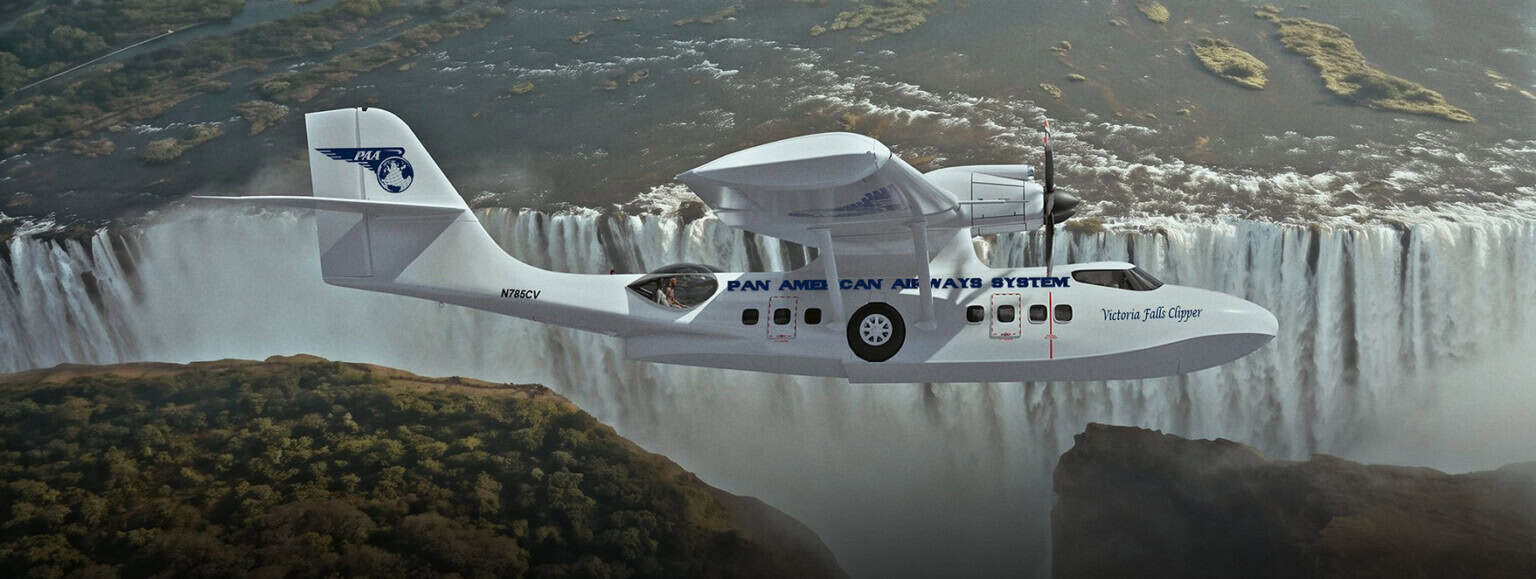
A modernized version of the World War II Catalina flying boat now has its first customer. On July 16, 2026, the Florida-based Catalina Aircraft Trust announced a funded letter of intent from Pan American Airways System, a Hong Kong startup licensing the Pan Am brand, covering up to 46 of its planned turboprop amphibians. If it holds, the deal would put flying boats back into scheduled luxury service under Pan Am’s famous Winged Globe for the first time in roughly eighty years.
The aircraft is the Next Generation Amphibious Aircraft, or Catalina II, a turboprop reworking of the 1930s design that the trust launched in 2023. The company holds the type certification for the original PBY Catalina and is pitching the new version at both civil operators and military and special-mission customers.
What a flying boat actually is, and why this one matters
A flying boat is an aircraft whose fuselage doubles as a hull, so it can take off and land on water. An amphibian adds retractable landing gear so it can also use a runway. Before long paved runways were common everywhere, this was how you reached much of the world, and Pan Am’s original Clippers crossed oceans this way in the 1930s. The Catalina became one of the most widely built examples, flying maritime patrol, anti-submarine, and search-and-rescue missions throughout the war.
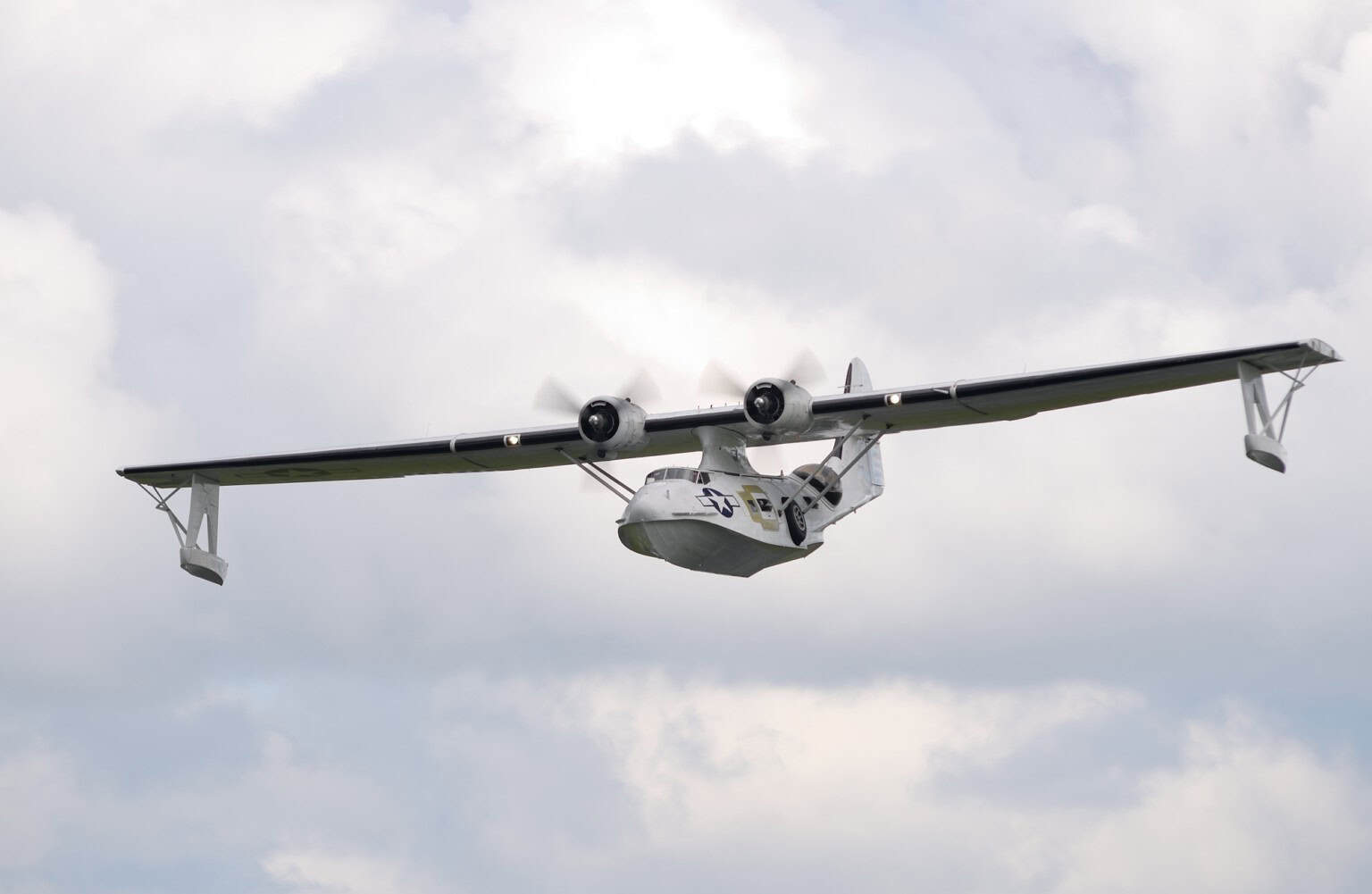


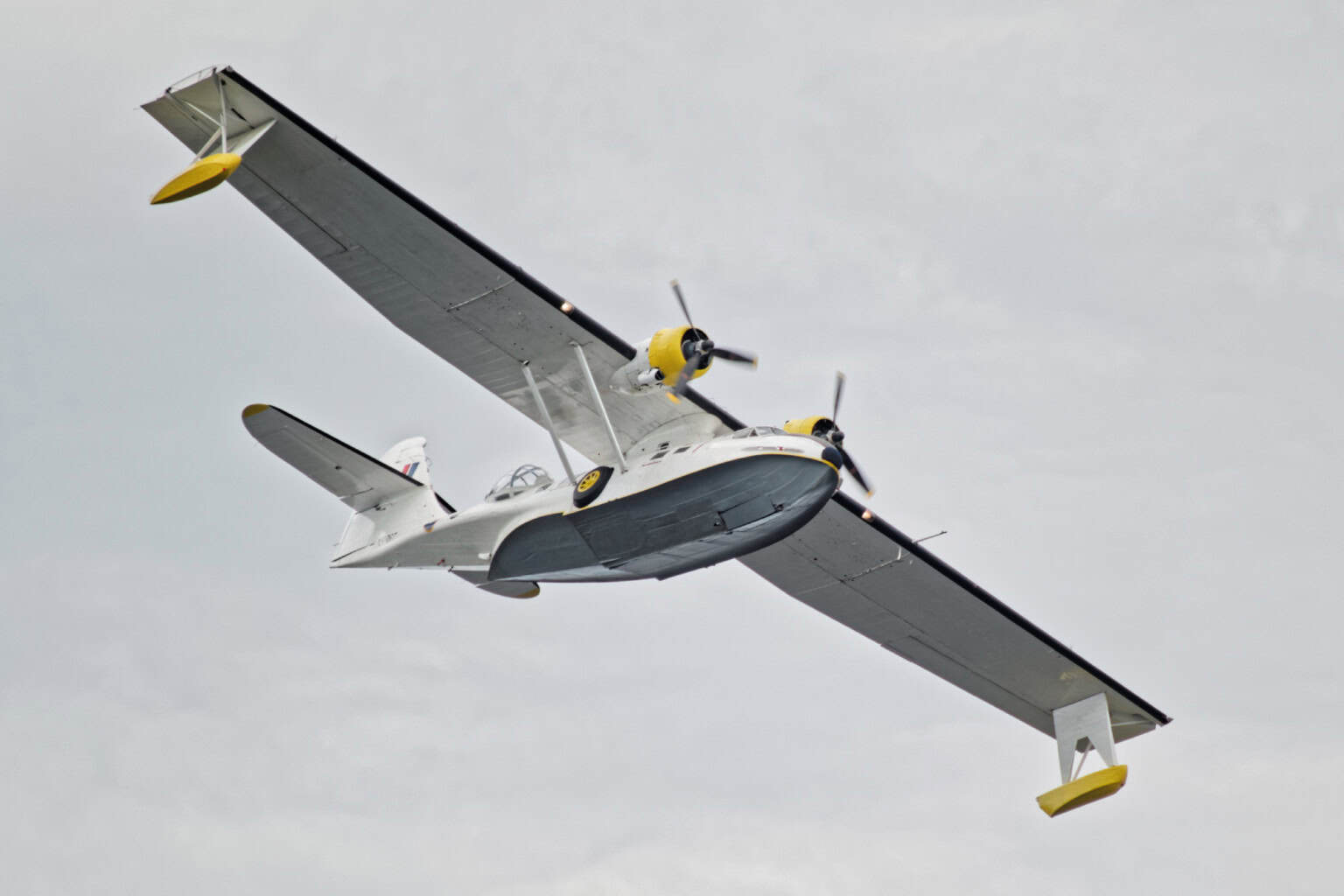
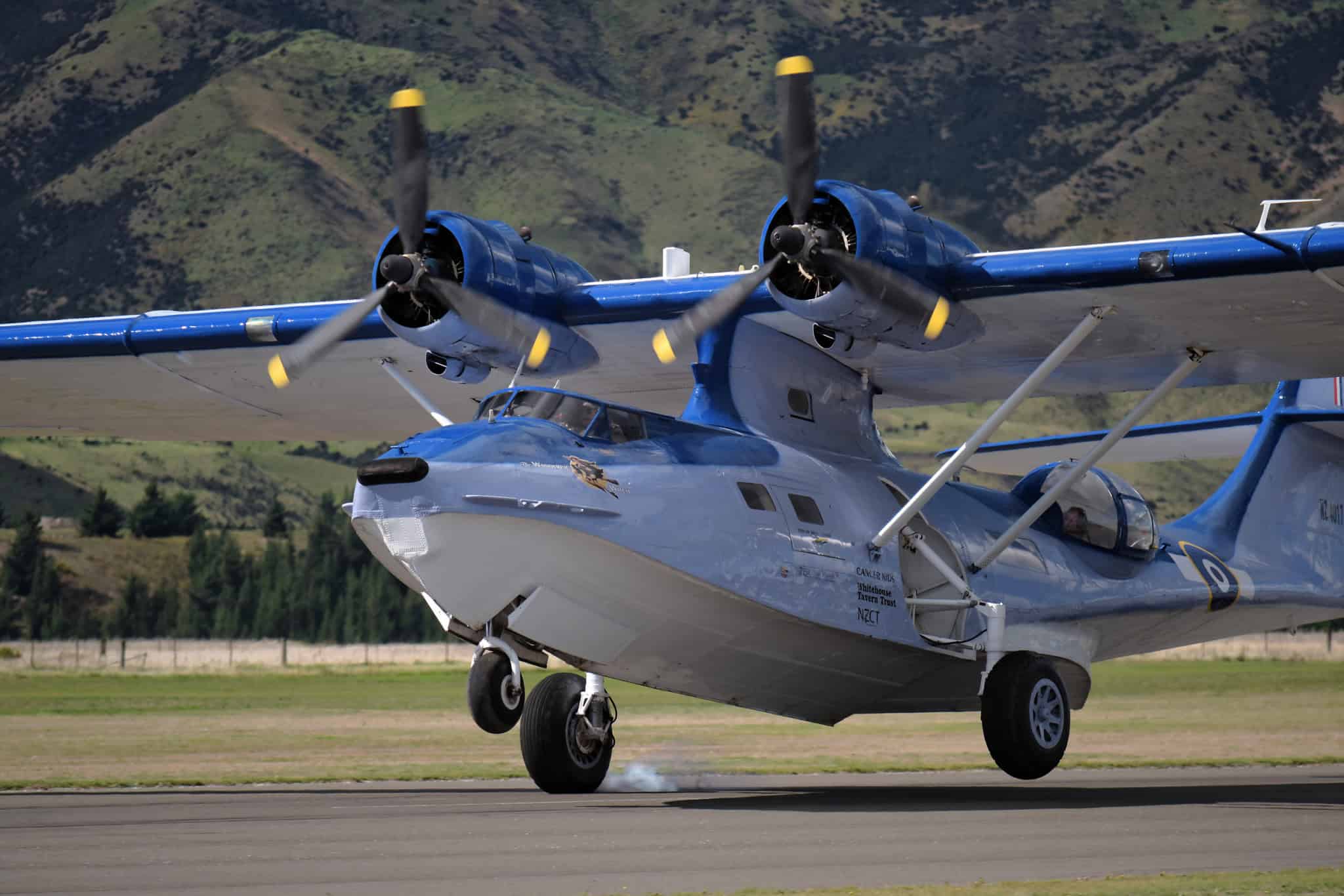

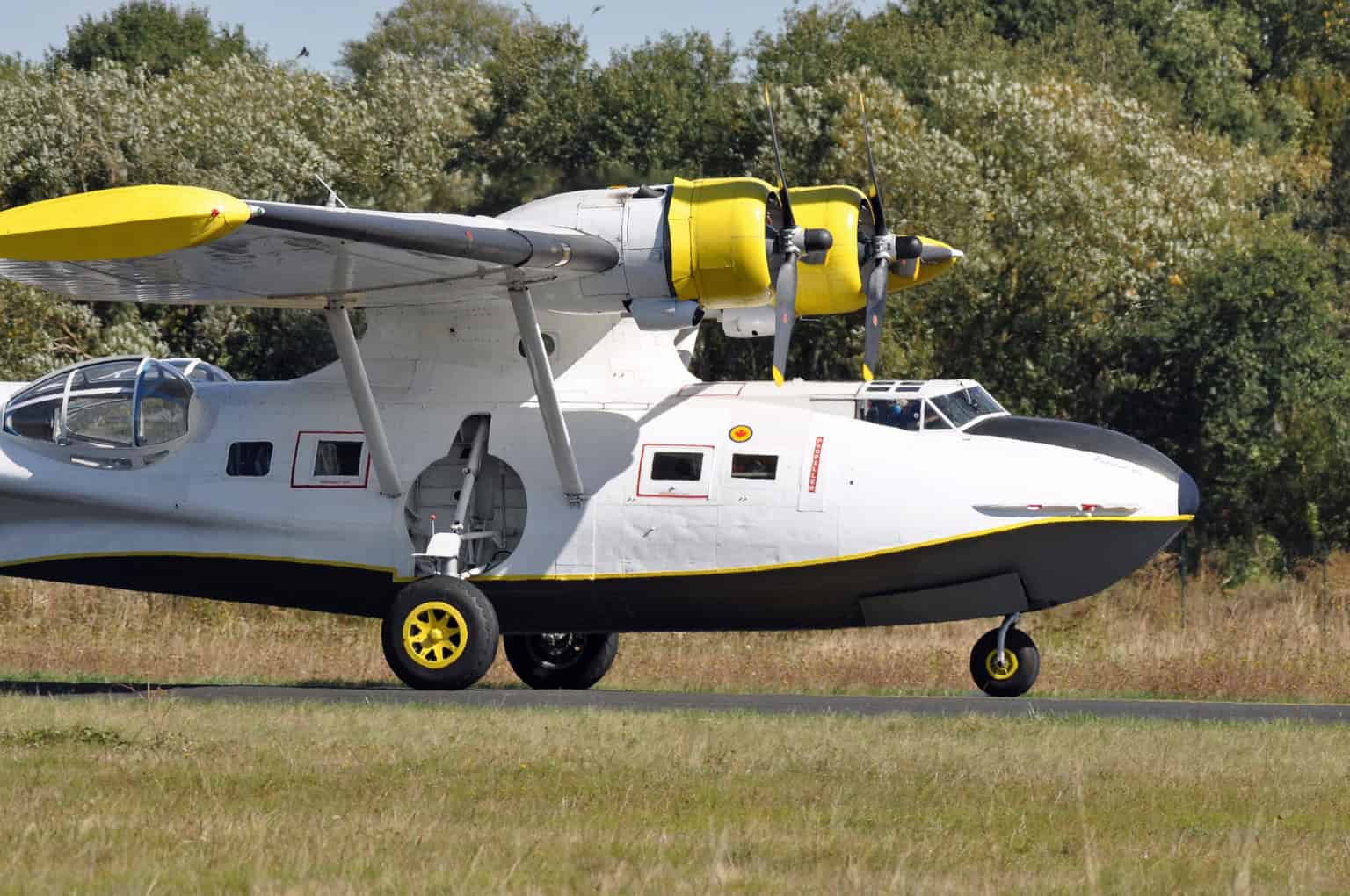





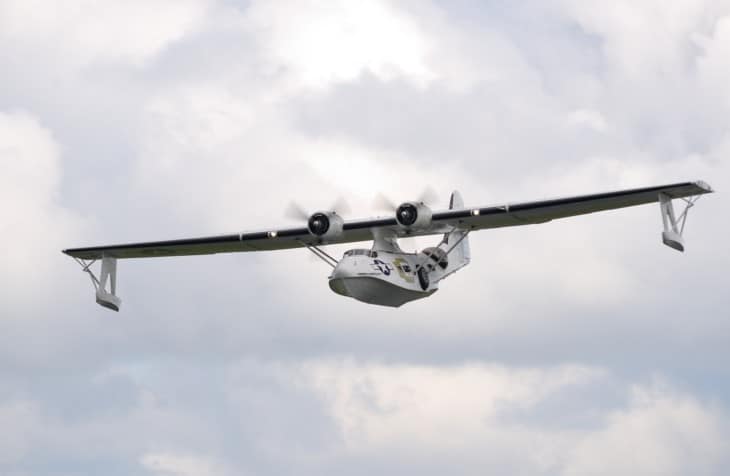
The revived aircraft keeps that water-and-land flexibility but swaps the piston engines for modern turboprops and, on the civil version, a glass cockpit. That combination is the whole sales pitch: reach places without airports, on an airframe whose certification path is shorter because it modifies an existing type rather than starting from a blank sheet.
1936
The original enters service. The PBY Catalina becomes one of the most-produced flying boats ever, a maritime patrol and rescue workhorse through World War II.
2023
A modern revival. The Catalina Aircraft Trust launches the Next Generation Amphibious Aircraft, a turboprop-powered Catalina II built on the original type certificate.
July 16, 2026
A first customer. Pan American Airways System signs a funded letter of intent for up to 46 aircraft.
2027
Targeted first service. PAAS aims to begin luxury “Clipper” operations, starting in Africa before expanding elsewhere.
The Pan Am revival angle
Pan American Airways System is not the old Pan Am. It is a Hong Kong company that licenses the Pan Am name and markets Golden Age of Aviation travel experiences to high-end passengers. Its plan is to fly the Catalina IIs as ultra-luxury Clippers, reportedly in a roughly ten-seat cabin with a lounge and galley rather than the higher-density layouts the airframe can support. Services would start in Africa, with one early route running the length of the continent, and later reach the Caribbean, South America, and South Asia.
Company president Lawrence Reece has framed the program’s central bet around certification, arguing that reviving an existing type is simpler than certifying a completely new, from-scratch design. That is a meaningful advantage in aviation, where certifying a clean-sheet aircraft can take many years and enormous sums.
Reality check: a letter of intent is not a firm order
A funded LOI signals serious commercial interest and some money behind it, but it is not a binding purchase contract. Published performance figures also vary by source and by configuration, because the Catalina II is offered in different civil and special-mission versions. Treat the specifications as targets until the aircraft is flying and delivering.
Figures reported by FlightGlobal and The Aviationist, which detailed the agreement, point to a twin-turboprop amphibian cruising around 185 to 200 knots, with the exact range, passenger count, and engine choice depending on the variant and still being finalized. What is confirmed today is the commercial signal: the first named customer, a target of up to 46 aircraft, and a stated goal of first operations in 2027.
Sources and references used for research and fact-checking.
Get the Newsletter
The latest aviation news and stories sent to your inbox.
About the Author

Tim is the owner and lead editor of AeroCorner since 2019, overseeing aviation content covering aircraft, airlines, airports, and the broader aviation industry. Through years of researching, writing, editing, and publishing aviation-focused content, he has developed extensive practical knowledge of commercial aviation and air travel. Based in Asia and a frequent traveler himself, Tim also brings firsthand passenger experience to AeroCorner’s coverage. Outside of publishing, he has also explored aviation firsthand through hands-on flight training in New Zealand.