

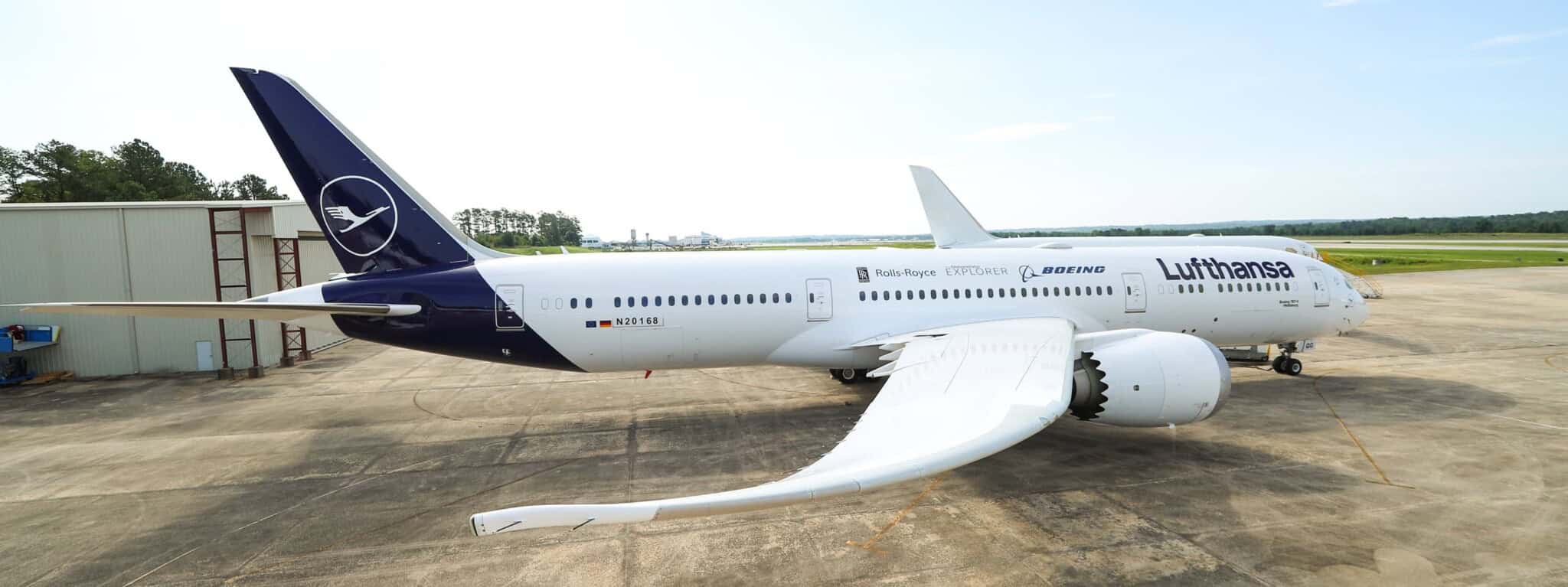
On July 16, 2026, Boeing announced that it is teaming with Lufthansa and Rolls-Royce to flight-test two fuel-efficiency and noise-reduction technologies on this year’s ecoDemonstrator aircraft. The test airplane is a Boeing 787-9 Dreamliner, powered by Rolls-Royce Trent 1000 engines, that is due to be delivered to Lufthansa later. Boeing said the testing begins in late July at its site in Glasgow, Montana, and runs through mid-August.
What is being tested
The first technology is what Boeing calls a Next Generation Inlet: a shorter engine inlet, the front lip of the nacelle that air flows into, fitted with advanced acoustic treatments. A shorter inlet cuts weight and drag, and Boeing says it is designed to help integrate more fuel-efficient engines onto future aircraft while keeping noise in check.
The second is a set of Intelligent Operations flight paths, algorithmically generated departure and arrival routes meant to find small efficiency and noise gains in how an aircraft actually climbs, descends, and approaches an airport.
Boeing quoted its chief technology officer, Lane Ballard, describing the inlet and the smarter flight paths as “among the many promising concepts” the company is evaluating. Lufthansa CTO Grazia Vittadini said the partners aim to “help advance aviation’s transformation by testing technologies with the potential to improve fuel efficiency,” and Rolls-Royce’s Alan Newby called the program “the culmination of a decade of collaboration” on reducing noise and improving efficiency.
Why a test airplane, and why it matters
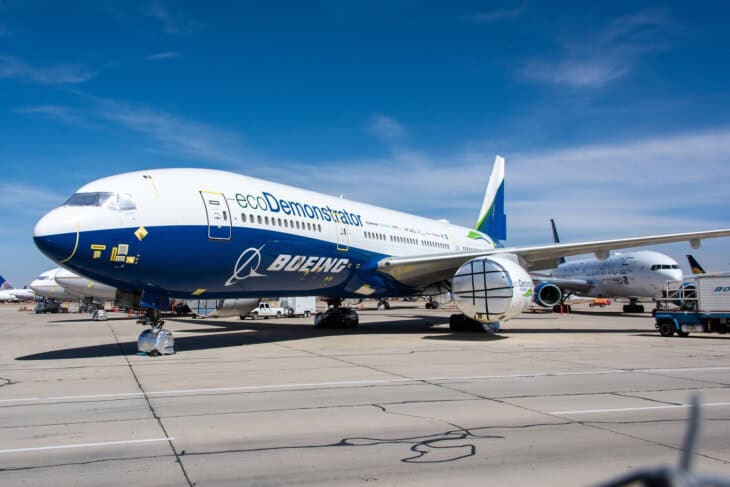
The ecoDemonstrator program is Boeing’s flying laboratory. Since 2012 it has used in-service and pre-delivery aircraft to trial new technology in real flight rather than only in simulation, and Boeing says it has tested more than 260 technologies through the effort.
The value of a program like this is that it de-risks ideas: a concept that looks good on paper gets flown, measured, and either advanced toward production or set aside, without committing a whole new aircraft design to it first.
That matters because most near-term efficiency gains in aviation are incremental. There is no single breakthrough that suddenly makes a jet burn far less fuel. Instead, airlines and manufacturers chase a few percent here from a lighter, cleaner engine inlet, and a bit more there from flying a smarter descent, and the gains compound across thousands of flights.
It is the same reason so much industry attention also goes to sustainable aviation fuel and to simply understanding how much fuel aircraft actually use. The Boeing tests sit inside Phase III of the FAA’s CLEEN program, short for Continuous Lower Energy, Emissions and Noise, which co-funds bringing quieter, lower-emission technologies into commercial fleets.
This is a technology trial, not a product
The shorter inlet and Intelligent Operations flight paths are being evaluated on a test aircraft. A successful trial is a step toward possible future use, not a confirmed feature on any airplane you can book a seat on today.
Sources and references used for research and fact-checking.
Get the Newsletter
The latest aviation news and stories sent to your inbox.
About the Author

Tim is the owner and lead editor of AeroCorner since 2019, overseeing aviation content covering aircraft, airlines, airports, and the broader aviation industry. Through years of researching, writing, editing, and publishing aviation-focused content, he has developed extensive practical knowledge of commercial aviation and air travel. Based in Asia and a frequent traveler himself, Tim also brings firsthand passenger experience to AeroCorner’s coverage. Outside of publishing, he has also explored aviation firsthand through hands-on flight training in New Zealand.