

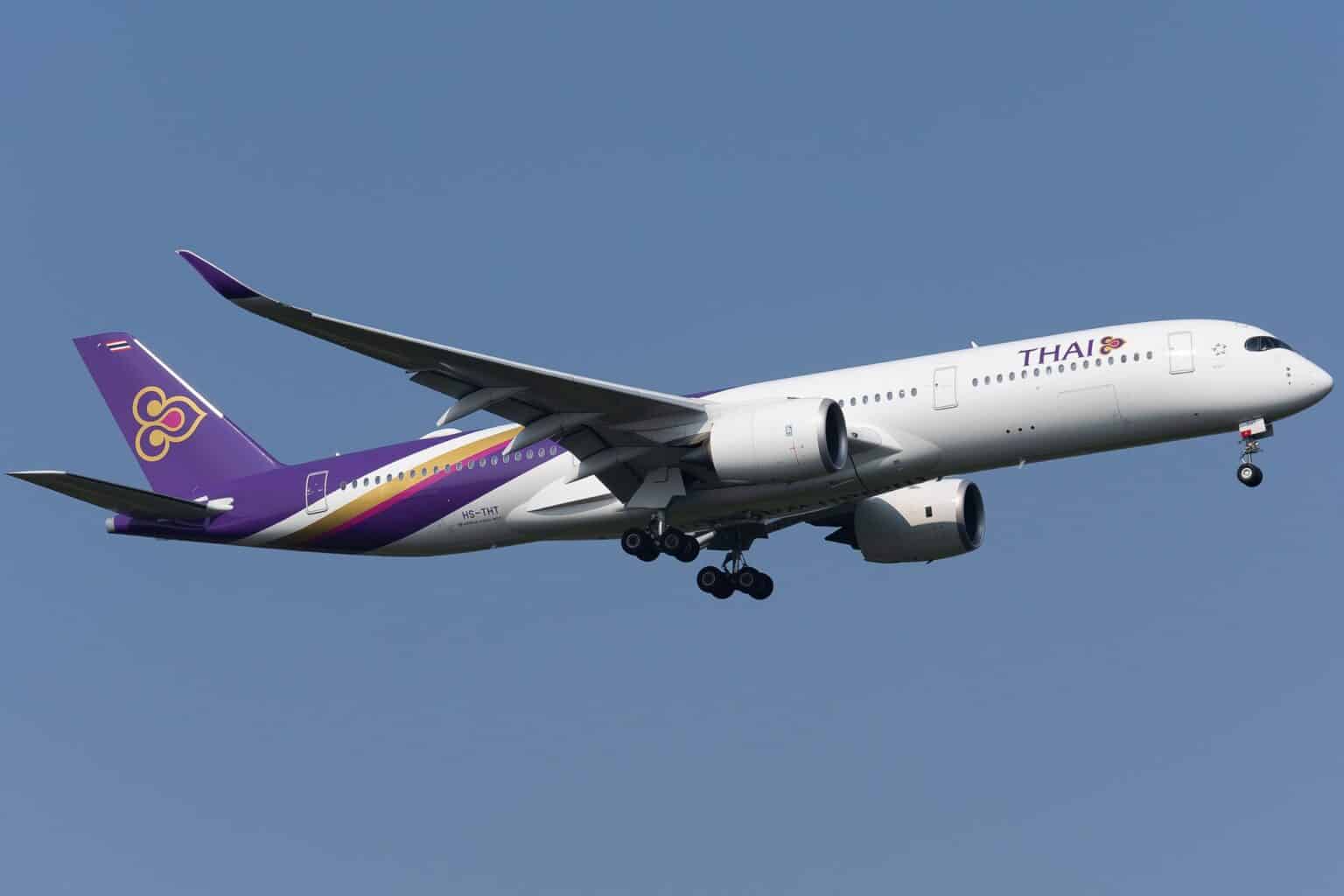
Thai Airways flight TG925, an Airbus A350-900 flying from Munich to Bangkok, diverted to New Delhi overnight on November 14-15, 2026, after what Thai media reported as an engine problem. Flight tracking data shows the jet landed at 01:23 local time on Sunday, November 15, about seven hours after leaving Germany.
Passengers spent the rest of the night in Delhi hotels, and reports say the aircraft cannot leave until replacement parts arrive from Thailand.
What happened on TG925
TG925 pushed back in Munich at 1:35 p.m. local time on Saturday and took off at 1:51 p.m., according to FlightAware. It was due in Bangkok at 6:10 a.m. on Sunday.
Flightradar24 lists the aircraft as A350-900 HS-THT and marks the flight “Diverted to DEL.” Thai Airways has not named the aircraft in any statement we could find.
The jet cruised at 37,000 feet over the Black Sea, Turkey, the Caspian region, Afghanistan and Pakistan, then into northern India, heading southeast toward Bangkok. FlightAware’s track shows it beginning a descent at about 19:01 UTC, roughly 20 miles (32 km) southwest of Delhi’s airport, with about four hours of the scheduled trip still to go.
It then swung more than 100 miles to the west-northwest at about 25,000 feet before turning back and landing at Indira Gandhi International Airport at 19:53 UTC. The data does not show why the crew flew that loop.
The first reports came from Thai outlets including Khaosod, which said a technical fault with an engine forced the landing and that parts had to be sent from Thailand. Its report is attributed to a reporter rather than to the airline.
What is not confirmed
The exact engine fault has not been disclosed, and neither has the number of passengers on board. As of November 15 we found no statement about the flight in Thai Airways’ newsroom. The engine detail comes from Thai media reports, not from the airline.
Hours on board, then hotels
Passengers stayed on the aircraft for almost two hours after landing before they were allowed off, according to Khaosod. They were then taken to hotels to wait for a new departure time.
A passenger account cited by Bild says immigration in Delhi took about three more hours, and that at first nobody told the travelers what would happen next.
Flightradar24 shows that a Delhi to Bangkok leg under the TG925 number, scheduled for 21:45 UTC on Saturday, was canceled. As of Sunday afternoon in Europe, HS-THT had not flown again.
Sunday’s TG925 left Munich with a different A350, HS-THY, according to the same data. No date for the stranded passengers’ onward flight had been reported at the time of writing.
Why a twinjet stops for an engine fault, and why parts have to travel
The A350 has only two engines, both Rolls-Royce Trent XWBs, which Rolls-Royce describes as the exclusive engine for the type. A twinjet crew facing an engine problem it cannot resolve will normally make a flight diversion to a suitable airport rather than continue for hours, and Delhi was only about 20 miles away.
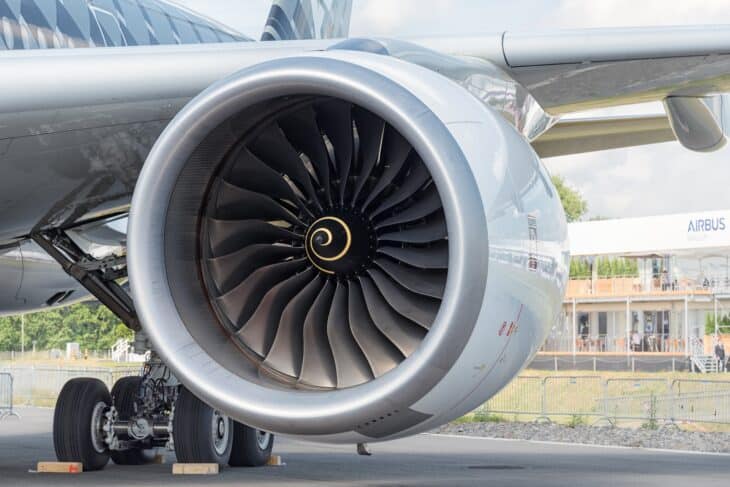

How serious the fault was is not public. No report says whether the engine was shut down in flight, and Thai Airways has not described it.
The slower part comes after landing. A widebody stuck away from its home base needs the right parts, and often the airline’s own engineers, flown in before it can be released. Until then the passengers wait or are moved to other flights.
Earlier this month, another Thai Airways flight, TG663, returned to Shanghai with a cracked cockpit window on a 787-9.
What EU rules mean for TG925 passengers
Because TG925 departed from Munich, EU passenger rights apply even though Thai Airways is not an EU airline. The EU’s own guidance covers flights that leave the EU on any carrier.
For a flight over 3,500 km (2,175 miles), arriving four hours or more late can mean compensation of €600 per passenger, and a new departure on a later day brings a right to a hotel and transfers. Munich to Bangkok is well over that distance.
Compensation is not owed when the cause is an extraordinary circumstance, such as weather, air traffic control decisions or security risks. The EU says most technical problems found during maintenance do not count, but an airline can still dispute how an in-flight fault is classed.
Sources and references used for research and fact-checking.
Get the Newsletter
The latest aviation news and stories sent to your inbox.
About the Author

AeroCorner News is the aviation news desk of AeroCorner.com. It covers accidents and incidents, safety rulings, airline and airport disruption, and new aircraft. It works from primary sources such as the NTSB, FAA, EASA and the manufacturers' own announcements.