

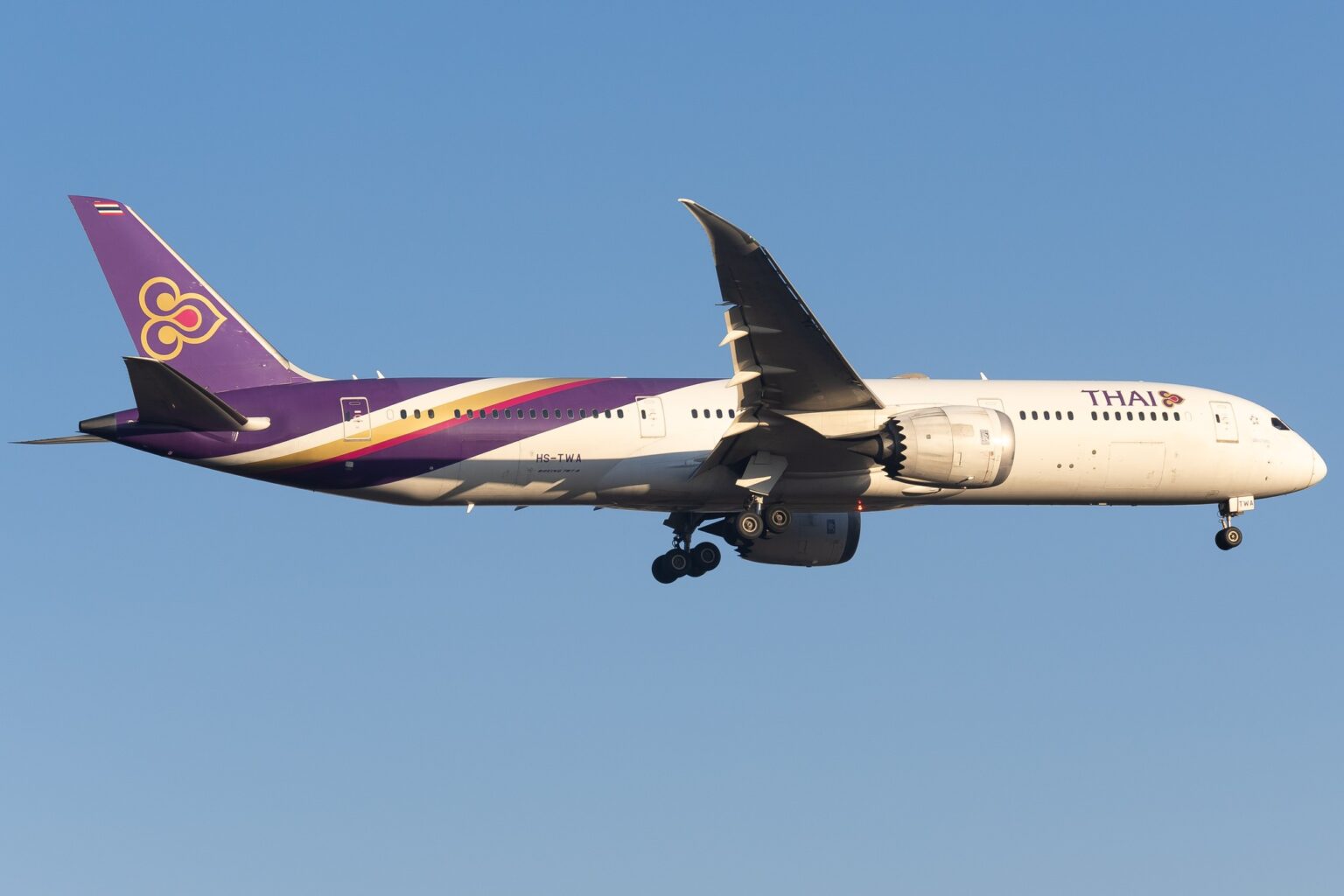
Thai Airways flight TG663, a Boeing 787-9 Dreamliner bound for Bangkok, returned to Shanghai Pudong on the morning of Wednesday, November 4, 2026, after its pilots found a crack in a cockpit window shortly after takeoff, Thai media reported. The same reports say the crew circled to dump fuel before landing safely back at the departure airport.
Thai Airways had not issued a statement on the cause, the number of people on board or the state of the window at the time of writing, according to Thaiger and business daily Kaohoon, which said it had asked the airline for comment.
What the flight track shows
TG663 was scheduled to leave Shanghai Pudong International Airport at 8:15 a.m. local time for the roughly 1,800-mile (2,900 km) trip to Suvarnabhumi. Flightradar24 logged the departure at 8:44 a.m. and identifies the jet as HS-TWA, the same 787-9 that had flown in from Bangkok overnight as TG662.

The track data show the climb stopping early. The jet leveled off at about 8,700 feet, well short of a normal cruising altitude, then turned east and headed out over the East China Sea instead of continuing toward Thailand.
Over the water it flew a long loop at up to about 9,900 feet, reaching roughly 106 miles (170 km) east of Pudong. The Thai reports, and a video shared on social media, say the crew jettisoned fuel before landing, though the track alone does not show when.
The 787-9 then descended back toward Shanghai and touched down at about 10:06 a.m. local time, roughly an hour and 20 minutes after it left. Flightradar24 lists the flight as diverted to Pudong.
Passengers were put up in hotels while another flight was arranged for those who wanted to continue to Bangkok, Thai PBS reported. The airline has not confirmed those arrangements publicly.
What is not yet known
Thai Airways has not said which cockpit window cracked, which layer of it failed, what caused the crack or how many passengers and crew were on board. The flight details here come from Flightradar24 tracking data and Thai media reports.
Why a cracked window sends a widebody back
An airliner’s flight deck windows are designed so that one failure does not cost the cabin its pressure. The US design standard for airliners, 14 CFR 25.775, requires windshield and window panels to carry full cabin pressure loads even after any single failure in the installation.
The same rule lets the design assume that, once a crew knows about such a failure, it reduces the cabin pressure differential and flies on with the cabin altitude at 15,000 feet or less. It also requires the windshield panels to be arranged so a pilot can still fly and land safely if vision through any one panel is lost.
That margin is meant to get the jet safely to a runway, not to finish a long trip on a damaged pane. TG663 stayed below 10,000 feet throughout, where the pressure difference across the window is far smaller than at cruise.
Turning back so soon after takeoff creates a second problem: weight. A Boeing 787-9 leaving for Bangkok carries almost all the fuel loaded for the trip, so dumping some of it brings the jet closer to its landing weight limit before it touches down.
It is a familiar sequence for the airline. In August, a Thai Airways 777 dumped fuel and returned to Frankfurt when its landing gear would not retract.
Not Thai Airways’ first cracked windshield
Thai Airways had a similar turnback in February 2025. Flight TG401 from Bangkok to Singapore returned to Suvarnabhumi on February 16 after the pilot found a crack in the outermost layer of the cockpit’s three-layer windshield, the airline confirmed at the time, as The Nation reported.
Windshield cracks have also ended other flights this fall. In October, United flight UA19, a 777 bound for Milan, diverted to Dublin after a reported windshield crack over the Atlantic. The two events involve different airlines and aircraft types.
Sources and references used for research and fact-checking.
Get the Newsletter
The latest aviation news and stories sent to your inbox.
About the Author

AeroCorner News is the aviation news desk of AeroCorner.com. It covers accidents and incidents, safety rulings, airline and airport disruption, and new aircraft. It works from primary sources such as the NTSB, FAA, EASA and the manufacturers' own announcements.