

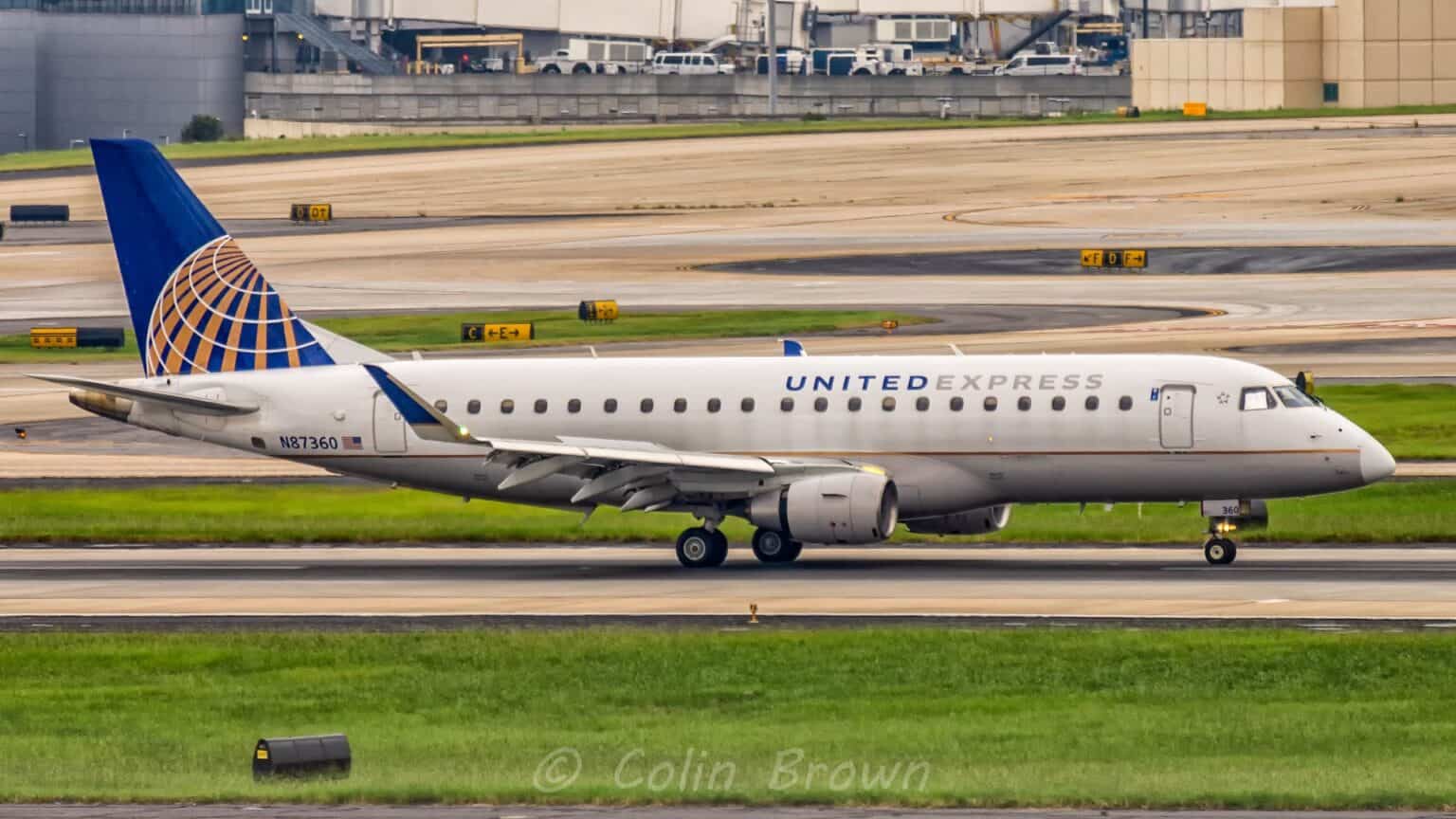
United Express flight UA6309 returned to Houston’s Bush Intercontinental on Sunday, September 27, 2026, after the first officer’s windshield shattered shortly after takeoff. The Mesa Airlines Embraer E175 was bound for El Paso and landed back in Houston about 40 minutes after it left the ground.
Mesa said the cabin did not lose pressure. No injuries were reported, officials told KTRK, ABC’s Houston station.
What happened on UA6309
Published reports did not give a flight number, but Flightradar24 and FlightAware both show the Houston to El Paso service UA6309 returning to Houston that afternoon. Flightradar24 lists the aircraft as the E175LR registered N87360.
The flight was scheduled to leave at 10:05 a.m. but took off at about 12:20 p.m., according to the same data. The reason for that earlier delay has not been published.
The jet was heading northwest when the crew turned back. FlightAware shows it landing at Bush Intercontinental at 12:58 p.m., which matches the “around 1 p.m.” landing time Mesa gave.
“The first officer’s windshield shattered shortly after takeoff and while there was no depressurization, standard procedure in such cases are to return to field,” a Mesa spokesperson told CNN.
The damage went deeper than a surface crack. On air traffic control audio obtained by ABC News, the pilot reported pieces of glass falling inside the cockpit, which ABC said indicated that several layers of the windshield had broken.
The Houston Fire Department met the aircraft and later declared it safe, the airport said in a statement to CNN.
Passengers reached El Paso four hours late
Mesa moved the passengers to a replacement aircraft. Flightradar24 shows a second E175, N87339, leaving Houston as UA6309 at 2:33 p.m. and landing in El Paso at 3:14 p.m. local time.
The flight had been due in El Paso at 11:14 a.m., so passengers arrived about four hours late. The number of people on board has not been published.
How airliner windshields are built to fail safely
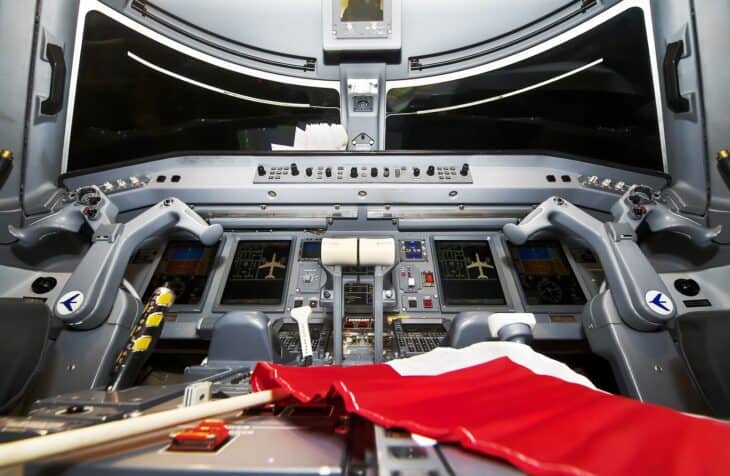
An airliner windshield is not a single sheet of glass. It is built in several layers, and as ABC News noted, damage to one layer is typically not a major problem.
FAA certification rules for transport jets are written around that idea. Under 14 CFR 25.775, windshields must keep withstanding cabin pressure loads after any single failure in the installation, and the inner panes must be made of material that does not splinter.
The same rule requires enough separate windshield panels that if a pilot loses vision through any one of them, another still allows a safe flight and landing.
.jpg)
Even so, Mesa called the return to Houston standard procedure. The rule lets designers assume the cabin pressure differential is reduced after a failure the crew can see, and turning back put the passengers where a replacement jet was available about an hour and a half after landing.
ABC News compared it to a case last year that also involved United. On October 16, 2025, United flight 1093, a Boeing 737 MAX 8, diverted to Salt Lake City after something struck the first officer’s windshield at 36,000 feet, and the NTSB’s preliminary report pointed to a WindBorne Systems weather balloon.
In that case, glass entered the cockpit and left the captain with minor injuries, but pressurization stayed stable for the rest of the flight, according to the report.
What is not known yet
Mesa has not said what caused the windshield to shatter or how high the jet was, and the number of people on board has not been published. CNN said it had asked United, the FAA and the NTSB for comment. No FAA or NTSB statement had been published at the time of writing.
Who flies UA6309
Mesa flies regional routes for United under the United Express brand. It merged with Republic Airways on November 25, 2025, and the combined Republic Airways Holdings says the two airlines will keep running in parallel until they are consolidated into a single carrier.
As part of that deal, Mesa signed a new 10-year contract to fly for United. Bush Intercontinental has seen turn-backs like this before: in July, an American Airlines 737 returned there over reported engine smoke.
Sources and references used for research and fact-checking.
Get the Newsletter
The latest aviation news and stories sent to your inbox.
About the Author

Tim is the owner and lead editor of AeroCorner since 2019, overseeing aviation content covering aircraft, airlines, airports, and the broader aviation industry. Through years of researching, writing, editing, and publishing aviation-focused content, he has developed extensive practical knowledge of commercial aviation and air travel. Based in Asia and a frequent traveler himself, Tim also brings firsthand passenger experience to AeroCorner’s coverage. Outside of publishing, he has also explored aviation firsthand through hands-on flight training in New Zealand.