

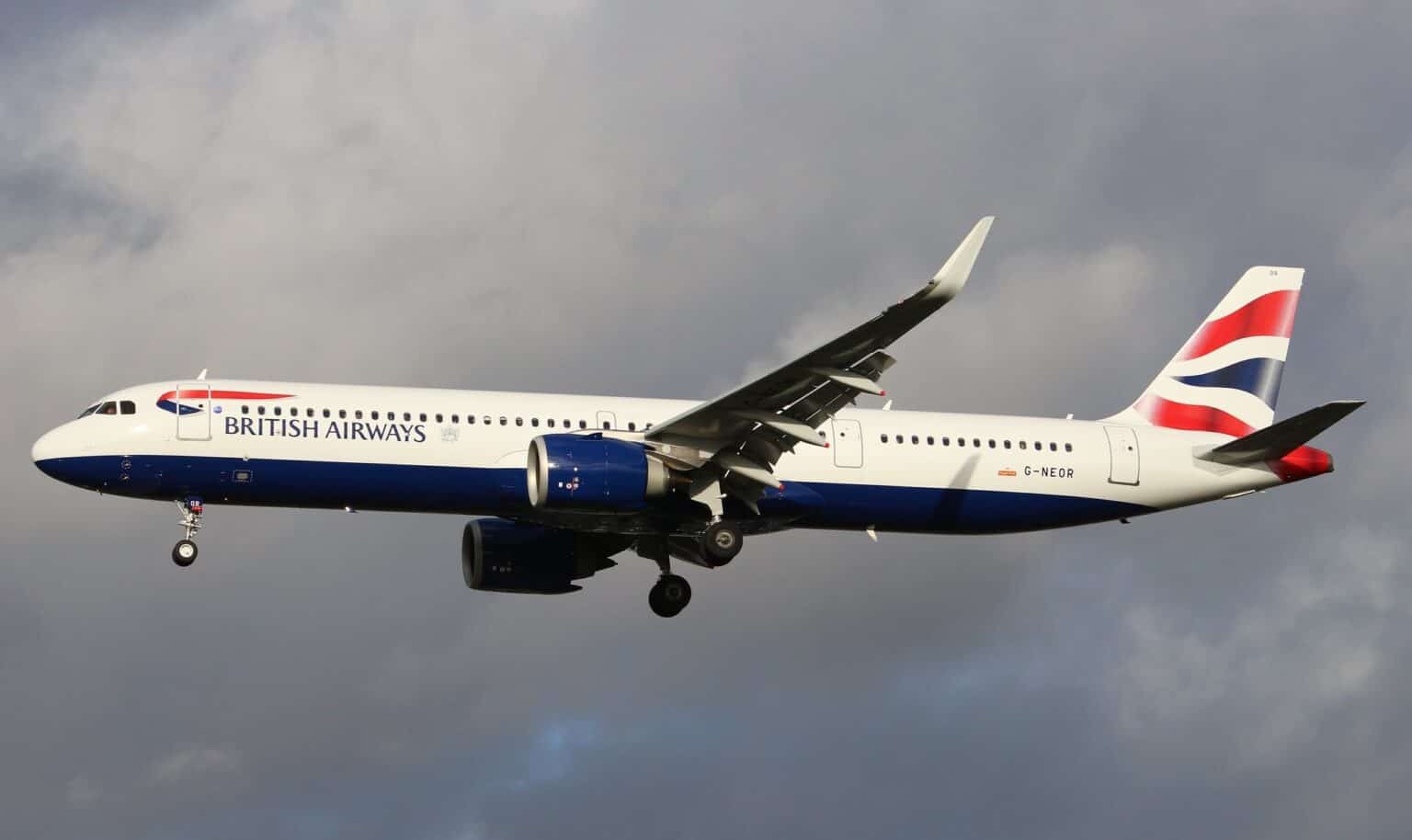
British Airways flight BA711 from Larnaca to London Heathrow diverted to Luxembourg on Sunday, September 27, 2026, after the crew declared an emergency over France. The cause was a medical emergency on board, according to AIRLIVE, which tracked the flight through the morning.
The Airbus A321neo, registered G-NEOR, landed at Luxembourg at 10:05 local time. It flew on to Heathrow less than three hours later, according to FlightAware data.
What happened on BA711
BA711 took off from Larnaca at 07:20 local time (04:20 UTC), about 10 minutes behind schedule, FlightAware’s records show. AIRLIVE reported that the jet was cruising at 34,000 feet when the crew set transponder code 7700, the general emergency code, shortly after entering French airspace.
The crew then left cruising altitude and asked to divert to Luxembourg Airport. The A321neo touched down on runway 24 after 3 hours and 45 minutes in the air, and AIRLIVE reported that it parked on a remote stand.
British Airways had not published a statement at the time of writing. The passenger’s condition, and whether the passenger left the aircraft in Luxembourg, has not been made public.
The flight left Luxembourg at 12:50 local time and reached Heathrow at 12:51 British time, about an hour later, FlightAware shows. Its scheduled gate arrival in London had been 10:10 British time.
G-NEOR is one of British Airways’ Airbus A321neo jets. It first flew on November 5, 2018, and was delivered to the airline on November 23 that year.
How a crew picks an airport for a sick passenger
A crew does not need a technical fault to squawk 7700: the code covers any distress or urgency condition. Under the FAA’s Aeronautical Information Manual, it “normally triggers an alarm or special indicator at all control positions,” so the flight stands out to controllers at once.
The choice of airport is a separate decision. Guidance from the Aerospace Medical Association says the captain must judge whether a diversion is possible and whether suitable medical facilities are available at the diversion point.
Airlines widely use ground-based medical services to advise crews during a medical emergency. The same guidance describes those medical officers as trained in aircraft-related medical advice and aware of the medical facilities near the aircraft, should a flight diversion need to be considered.
Luxembourg Airport has a single runway about 13,130 feet (4,002 m) long and is the home base of the cargo airline Cargolux. It sits about 320 miles (510 km) from Heathrow, the leg BA711 flew in an hour once it resumed.
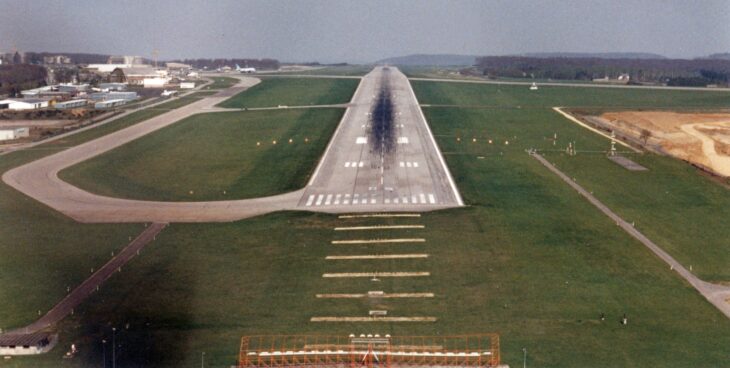

Why the crew chose Luxembourg rather than continuing to London has not been explained. AIRLIVE described it as the nearest suitable airport for the aircraft.
How often medical cases end in a diversion
Most in-flight medical emergencies never lead to one. A study of five airlines published in the New England Journal of Medicine in 2013 counted 11,920 calls to a ground-based medical center, or one medical emergency for every 604 flights.
The aircraft diverted in 7.3% of those cases. Fainting or near-fainting was the most common problem at 37.4%, and a doctor traveling as a passenger helped in 48.1% of them.
Of the passengers the researchers could follow up, 25.8% went to a hospital and 0.3% died. Among the conditions the study named, possible stroke carried the highest odds of a hospital admission.
BA711 is not the only medical 7700 this month. On September 16, PIA flight PK701 squawked the same code on its way into Manchester, its scheduled destination.
Sources and references used for research and fact-checking.
- FlightAware, British Airways 711 (BAW711) flight history
- FAA, Aeronautical Information Manual 6-2-2, Transponder Emergency Operation
- Aerospace Medical Association, Medical Emergencies: Managing In-Flight Medical Events (guidance document, revised July 2016)
- New England Journal of Medicine, Outcomes of Medical Emergencies on Commercial Airline Flights (Peterson et al., 2013)
Get the Newsletter
The latest aviation news and stories sent to your inbox.
About the Author

Tim is the owner and lead editor of AeroCorner since 2019, overseeing aviation content covering aircraft, airlines, airports, and the broader aviation industry. Through years of researching, writing, editing, and publishing aviation-focused content, he has developed extensive practical knowledge of commercial aviation and air travel. Based in Asia and a frequent traveler himself, Tim also brings firsthand passenger experience to AeroCorner’s coverage. Outside of publishing, he has also explored aviation firsthand through hands-on flight training in New Zealand.