

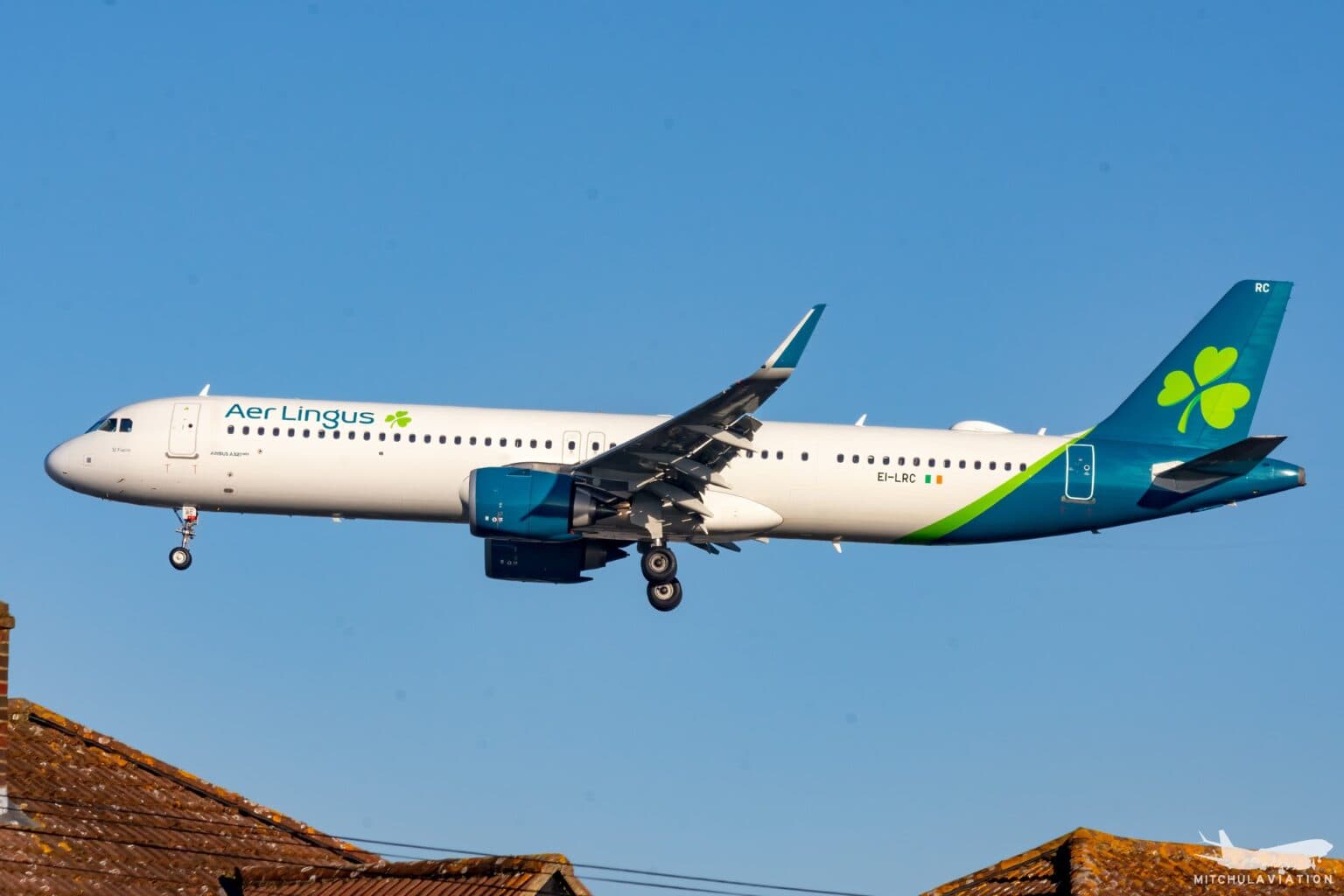
Aer Lingus flight EI990, an Airbus A321neo registered EI-LRC, returned to Shannon Airport on Monday, November 16, 2026, after its left engine stalled and then shut itself down during the climb. It was a positioning flight to Dublin with two crew on board and no passengers, and it landed safely.
An Aer Lingus spokesperson confirmed the return to the Clare Herald, describing EI990 as a positioning flight that came back to Shannon shortly after takeoff “following a technical issue.” The airline did not say what the issue was.
What happened on the climb out of Shannon
The jet departed at 12:22 p.m. local time, according to the Clare Herald, and Flightradar24 data show EIN990 leaving Shannon for Dublin against a 12:10 schedule. The same log marks the flight as diverted back to Shannon.
According to The Aviation Herald, the crew had taken off from runway 06 with clearance to FL240, then stopped the climb at FL205, about 20,500 feet. They reported that the left engine, a CFM LEAP, had stalled and then shut itself down, leaving the A321neo on one engine.
The Clare Herald’s account matches: the crew told air traffic control of an “engine stall” on the number 1 engine, which had then shut down on its own. Shannon’s own fire and rescue service took up holding points beside the runway before the jet arrived.
The A321neo landed back on runway 06 about 30 minutes after it left, The Aviation Herald reported. Emergency crews followed it down the runway and escorted it to the terminal, according to the Clare Herald.
It was the second Aer Lingus turnback in a week, after flight EI107 to New York returned to Dublin on November 9 with a reported weather radar failure. The two events involved different aircraft types and are not known to be connected.
A first flight after three weeks on the ground
The Aviation Herald reported that EI-LRC had been on the ground at Shannon since October 26 and that EI990 was its first sector since then. The airline’s statement did not say why the jet sat idle for three weeks, or whether any work done in that time involved the engine.
The aircraft was still at Shannon about six hours after it landed, according to The Aviation Herald. At 8 a.m. UTC on November 17, Flightradar24’s public history for EI-LRC showed no flight after the return, and the Clare Herald reported that engineers were expected to examine the problem before the jet is cleared to fly again.
Flightradar24 lists EI-LRC as an A321-253NX(LR), the long-range version of the Airbus A321neo. Aer Lingus began taking A321LRs in 2019 on lease from Air Lease Corporation, whose announcement of the first delivery listed CFM International LEAP-1A33 engines and said the type would let Aer Lingus add flights between Ireland and the US and Canada.
What it means when an engine “shuts itself down”
The wording in both reports matters. They say the engine stopped on its own after stalling, rather than being shut down by the pilots.
A compressor stall is a breakdown of the airflow through an engine’s compressor when its blades stall aerodynamically, as the aviation safety reference SKYbrary explains it. Pilots typically see engine temperature rise and engine speed fluctuate, and a sustained stall can damage the engine and lead to its failure.
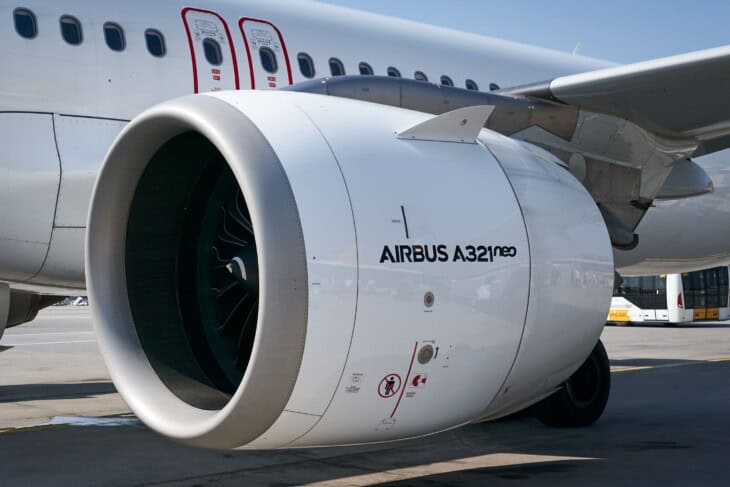
SKYbrary lists foreign objects such as birds, worn or contaminated compressor parts, icing and operation outside the engine’s design limits among the causes. No cause has been given for EI990, and nothing published so far points to any one of them.
Finding out falls to Aer Lingus’s engineers and possibly to Ireland’s Air Accident Investigation Unit. At the time of writing, the AAIU’s website showed no notice about the event.
Losing an engine in the climb is a scenario airliners are designed around. Under the FAA’s certification rules for transport airplanes, a twin-engine jet must still be able to climb at a gradient of at least 2.4% with its critical engine inoperative once the landing gear is retracted after takeoff.
That margin is what let the crew of two level off, work through their checklists and fly back to the runway they had left about half an hour earlier.
Sources and references used for research and fact-checking.
Get the Newsletter
The latest aviation news and stories sent to your inbox.
About the Author

AeroCorner News is the aviation news desk of AeroCorner.com. It covers accidents and incidents, safety rulings, airline and airport disruption, and new aircraft. It works from primary sources such as the NTSB, FAA, EASA and the manufacturers' own announcements.