

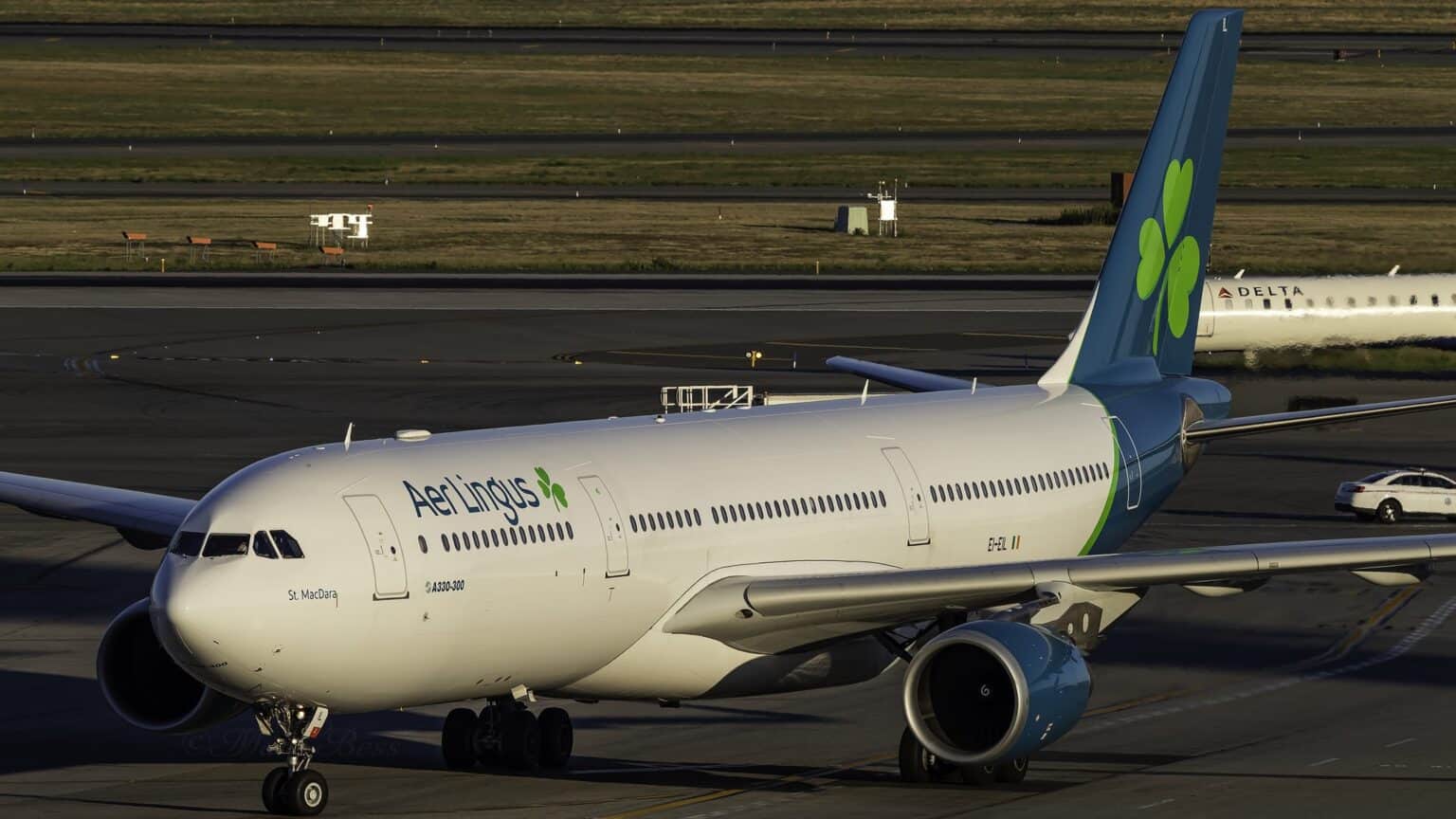
Aer Lingus flight EI107 from Dublin to New York JFK turned back over the west of Ireland on Monday, November 9, 2026, and landed in Dublin about an hour after takeoff. The Airbus A330-300, registration EI-EIL, was reportedly dealing with a weather radar that failed twice and a brief burning smell.
The return is confirmed by flight tracking data from FlightAware, Flightradar24 and FlightStats. The cause rests for now on cockpit radio traffic overheard by a listener, and AeroCorner found no public statement from Aer Lingus at the time of writing.
What the tracking data shows
FlightAware’s track shows the Airbus A330-300 leaving the gate at 17:00 GMT (noon ET) and taking off at 17:15. It climbed west across Ireland and reached 34,000 feet (10,400 m) at about 17:35.
The jet held that altitude for only a few minutes. Shortly after 17:40, near Ireland’s Atlantic coast, it turned around and began a steady descent back toward Dublin.
It landed in Dublin at 18:16 GMT, 61 minutes after takeoff, according to FlightAware. Flightradar24 and FlightStats both list the flight as diverted to Dublin, and Flightradar24’s history names EI-EIL as the aircraft.
EI107 had been due at JFK at 19:29 local time. The same jet had flown EI107 through to JFK on November 7 and 8, the tracking history shows.
What the crew reportedly told controllers
The account of what went wrong comes from The Aviation Herald, which cited a listener on the air traffic control frequency. It placed the aircraft about 80 nautical miles northwest of Shannon at 34,000 feet when the crew decided to return, and said it landed on Dublin’s runway 10L.
According to that listener, the crew had heard a loud clunking noise while climbing out of Dublin and noticed an odor. The weather radar then failed briefly and came back.
A burning smell followed and quickly faded, the listener reported, before the radar failed a second time. Whether the noise, the smell and the radar faults share one cause has not been established.
How many people were on board, and when the passengers continued to New York, was not public at the time of writing.
What is confirmed so far
Tracking data confirms the turnback and the one-hour flight. The radar faults, the clunk and the burning smell come from overheard radio calls reported by The Aviation Herald, not from Aer Lingus or Irish investigators, and could change.
Why a radar fault and a smell send a jet home
An airliner’s weather radar scans the sky ahead for heavy precipitation, which is how crews find and steer around thunderstorm cells. At night or inside cloud it is the main tool they have for that job.
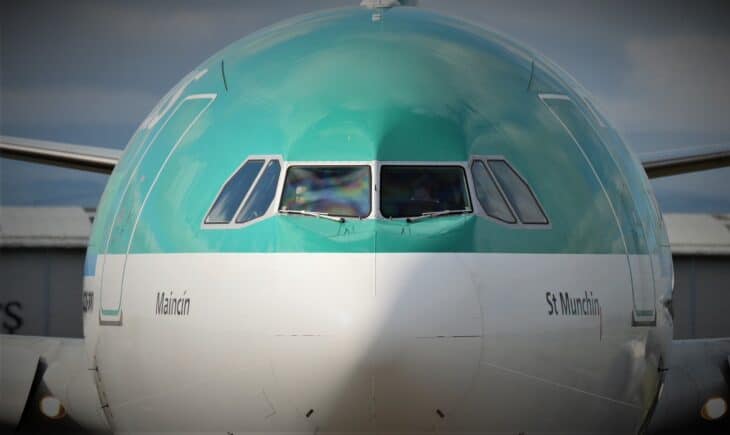
A radar that fails twice in a short time is hard to trust for a crossing of several hours over open ocean. Paired with a burning smell, it also raises the question of an electrical problem somewhere in the aircraft.
Timing shapes the choice. When EI107 turned, it was still close to the Irish coast, and Dublin was well under an hour away.
Dublin is also Aer Lingus’s home base. Turning back there, rather than diverting to another airport, generally keeps the fault, the repair and the rebooking in one place.
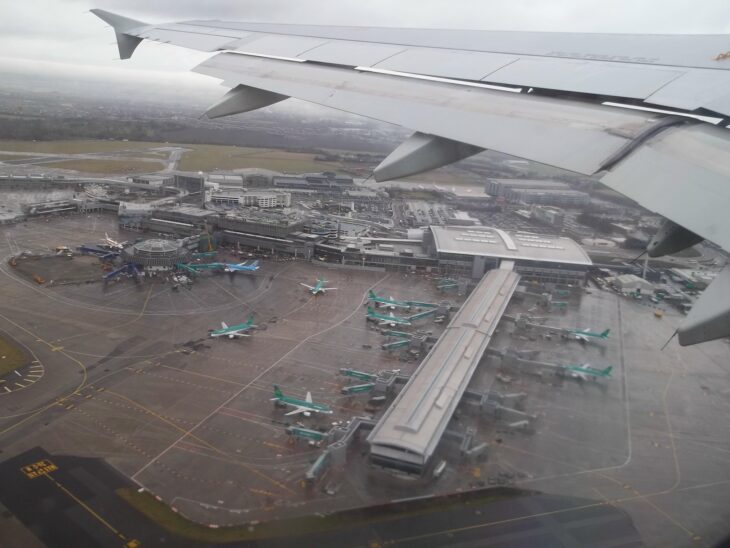

Once the jet is over the Atlantic, the nearest runways can be hours away. A crew that is unsure about a system before that point has the simpler option of coming home.
Other Aer Lingus smell and smoke events this year
Monday’s return follows other smell and smoke reports on the airline’s transatlantic flights in 2026. AeroInside logged an unidentified source of smoke on A330-300 EI-DUZ, flying EI104 from New York to Dublin, near Boston on March 27.
It also recorded fumes on board an A321neo, EI-LRF, operating EI101 from Dublin to Newark on August 23. Nothing published so far links those events to EI-EIL.
Smoke and odor events over the ocean are not unique to one airline. In July, a SWISS A330 diverted to Bangor after smoke filled its business-class cabin over the Atlantic.
It has been a disrupted week for the Irish carrier. Four days earlier, a bomb threat sent its Dublin to Rome flight EI402 to a French air base under fighter escort.
AeroCorner will update this story if Aer Lingus or Ireland’s Air Accident Investigation Unit releases details on the cause.
Sources and references used for research and fact-checking.
Get the Newsletter
The latest aviation news and stories sent to your inbox.
About the Author

AeroCorner News is the aviation news desk of AeroCorner.com. It covers accidents and incidents, safety rulings, airline and airport disruption, and new aircraft. It works from primary sources such as the NTSB, FAA, EASA and the manufacturers' own announcements.