

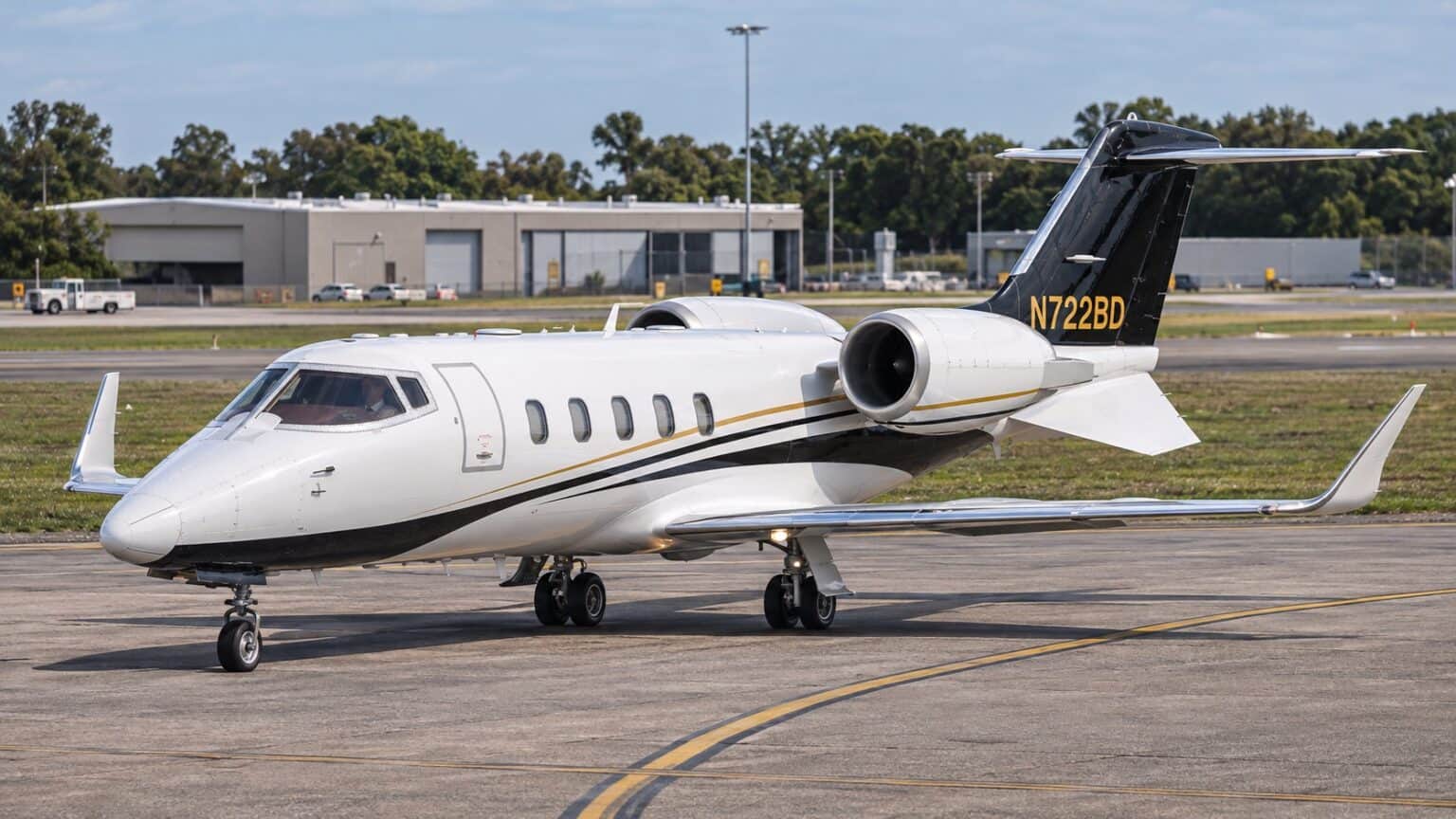
The NTSB has recovered the cockpit voice recorder (CVR) from the N722BD Learjet 60 that crashed near Greenacres, Florida, the agency said in an update on Monday, November 9, 2026. The recorder was found at the site of initial impact and is being evaluated at the NTSB Vehicle Recorders Laboratory in Washington, D.C.
The same update said the excavation of the impact site is complete. Crews started digging out the crater late on November 4 and had found part of an engine by the next day.
The jet, which tracking and registry data identify as N722BD, crashed on Military Trail on November 1, killing all nine people aboard. The NTSB says it was operated by Aurora Aviation, doing business as Upper Jet, and was flying from Austin, Texas, to North Eleuthera in the Bahamas.
An open question from the first briefing
At the NTSB’s first media briefing on November 2, Member Tom Chapman said maintenance records indicated a CVR had been installed. Investigators did not yet know whether it was still on board, CBS12 reported.
Monday’s update settles that: the recorder was aboard, and it was found where the jet first hit. The NTSB has not said what condition it is in, or whether it holds audio from the accident flight.
That second question is not a formality. After the Learjet 55 medevac crash in Philadelphia in January 2025, the NTSB also recovered the CVR at the site of initial impact. The investigation later found that recorder had likely been broken for years, and it captured nothing of the accident flight.
What a working recorder could add here is the flight deck itself. Chapman said the crew reported light clear ice and moderate turbulence at 35,000 feet around 12:47 p.m., asked to climb, and less than 30 seconds later radioed that they were descending, followed by a mayday and a call that the jet was “in an overspeed condition descending.”
Those calls went to air traffic control. A CVR also records what the two pilots said to each other, and the sounds in the cockpit, during the same seconds.
What happens in the recorder lab
The NTSB’s Vehicle Recorder Division extracts and analyzes data from flight data recorders and CVRs. Its engineers use digital and analog filtering to extract critical information from recordings, and line up the timing of voice, data and video sources.
In earlier cases the agency has described the order of work. For Atlas Air Flight 3591 in 2019, engineers first inspected the CVR’s memory boards for damage and water intrusion, then downloaded and auditioned the recording, the NTSB said at the time.
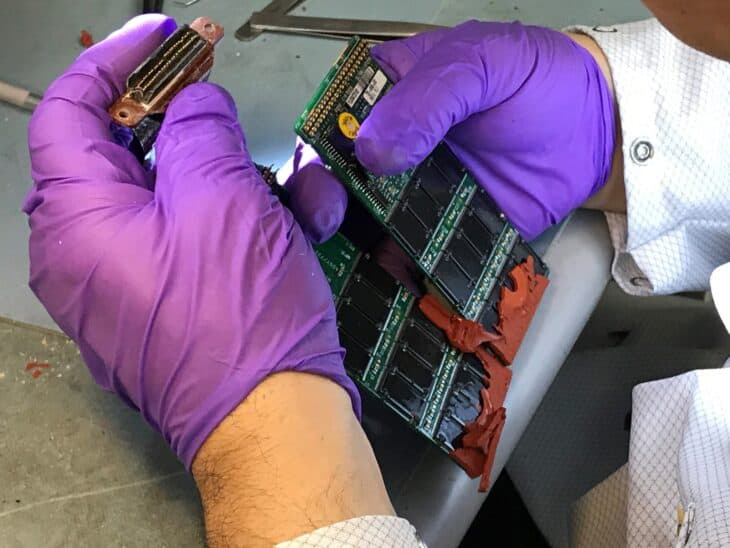

A CVR group of technical experts then reviews the whole recording and writes a transcript, which the NTSB called a time-consuming process.
The audio itself never becomes public. Federal law bars the NTSB from releasing cockpit voice recordings. It releases only the parts of the transcript it judges relevant, at a public hearing or when most of the factual reports go into the public docket.
Does a Learjet 60 carry a flight data recorder?
The NTSB’s updates on this crash mention only the voice recorder, and the agency has not said whether N722BD had a flight data recorder (FDR), the box that logs airspeed, altitude and control inputs.
Cabin size decides it. Under the FAA’s charter rules, Part 135 requires a CVR on a multi-engine turbine airplane with six or more passenger seats that needs two pilots, but generally requires an FDR only from 10 passenger seats up.
The NTSB has not said which rules this flight was operated under or how many passenger seats N722BD had, so whether it was required to carry an FDR is not known. AeroCorner’s guide to private jet black boxes explains how the requirements work.
What comes next
On November 8 the NTSB said the crater dig was the only on-scene work left, and Monday’s update says it is now complete. Parts from both engines, both wings and the flight deck had already been recovered, and some went to the agency’s Washington labs.
Nov. 1
Crash. The Learjet 60 crashes near Greenacres, killing all nine aboard.
Nov. 2
First briefing. The NTSB says records show a CVR was installed but it is not known if it was still aboard.
Nov. 4-5
Crater dig begins. Excavation starts and turns up a portion of one engine.
Nov. 8
Most on-scene work done. Five areas cleared; only the impact-site excavation remains.
Nov. 9
CVR recovered. The recorder is found at the site of initial impact and the excavation is completed.
The NTSB has not given a date for its preliminary report on this crash. On other recent major cases its investigation pages say to expect one within 30 days of the accident, which here would point to around the start of December.
A preliminary report holds factual information from the early phase of an investigation, not a cause. The probable cause comes in the final report, which the NTSB says on other cases to expect in 12 to 24 months.
Sources and references used for research and fact-checking.
- NTSB, Crash of Learjet 60, ERA27MA026 (update Nov. 9, 2026)
- NTSB, Office of Research and Engineering: Vehicle Recorder Division
- NTSB, NTSB Laboratory Completes Initial Review of Cockpit Voice Recorder, Recovers Flight Data Recorder (Atlas Air 3591, Mar. 5, 2019)
- Cornell LII (U.S. Code), 49 U.S. Code 1114, Disclosure, availability, and use of information
- eCFR, 14 CFR 135.151 Cockpit voice recorders
- eCFR, 14 CFR 135.152 Flight data recorders
- NTSB, Learjet 55 Medevac Crash, ERA25MA106 (Philadelphia)
- NTSB, Crash of Cessna 550, WPR26MA063
Get the Newsletter
The latest aviation news and stories sent to your inbox.
About the Author

AeroCorner News is the aviation news desk of AeroCorner.com. It covers accidents and incidents, safety rulings, airline and airport disruption, and new aircraft. It works from primary sources such as the NTSB, FAA, EASA and the manufacturers' own announcements.