

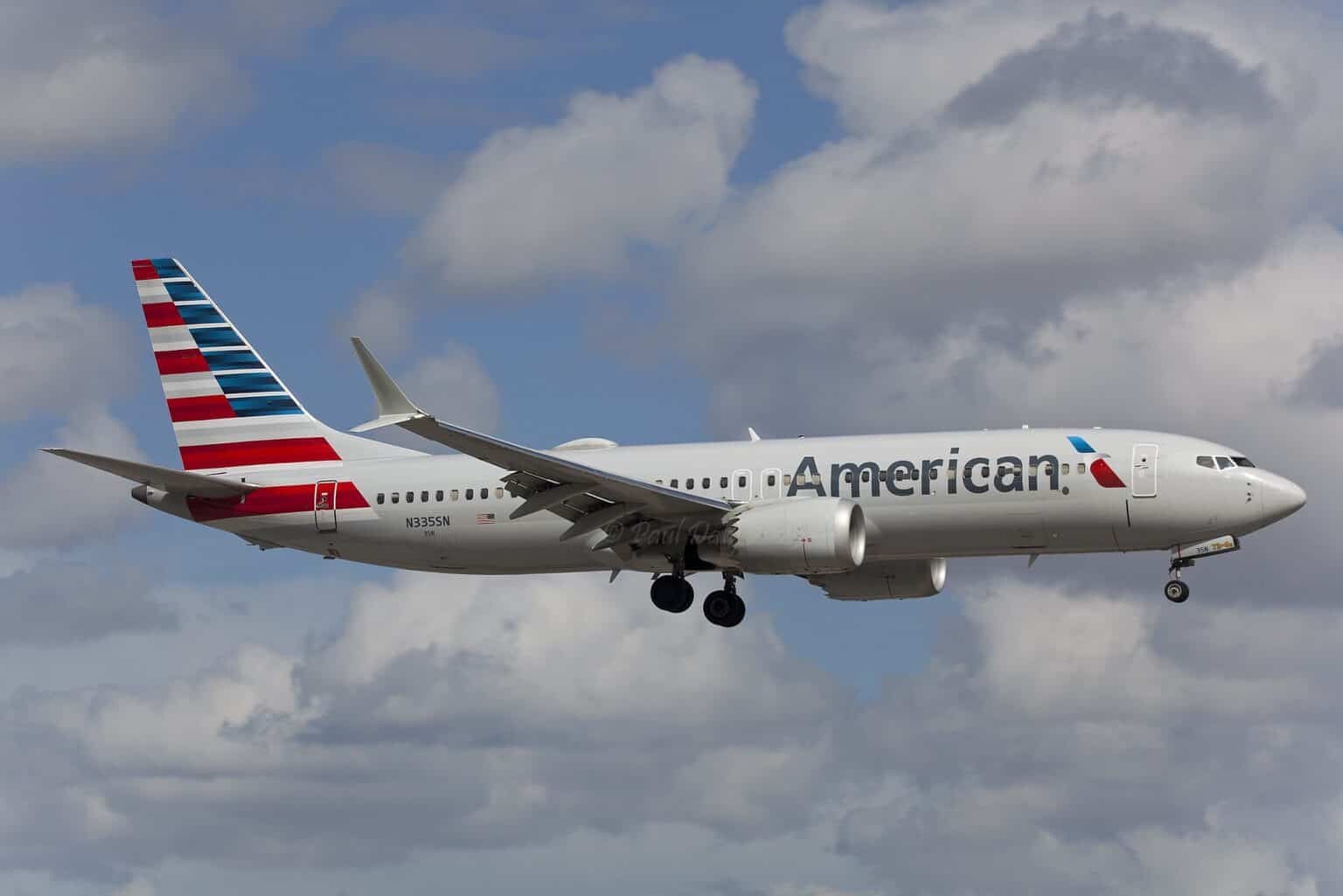
American Airlines flight AA806, a Boeing 737 MAX 8 arriving from Dallas/Fort Worth, struck its tail on the runway during a go-around at John Wayne Airport in Santa Ana, California, on the evening of October 29, 2026. The event only became public on November 9, more than a week later, when The Aviation Herald reported a preliminary FAA incident entry.
The FAA’s entry, as published by The Aviation Herald, reads in full capitals: “AIRCRAFT EXPERIENCED A TAIL STRIKE DURING GO-AROUND.” The jet landed safely on its second approach.
What happened on approach to runway 20R
The aircraft was the 737-8 registered N335SN, according to The Aviation Herald. The FAA aircraft registry lists N335SN as a 2021 Boeing 737-8 with CFM LEAP-1B25 engines and a trust company as the registered owner.
The Aviation Herald reported that the crew began the go-around at a very low height on short final to runway 20R, and the tail contacted the runway during the go-around. The aircraft then climbed to 3,000 feet, positioned for another approach to the same runway and landed without further trouble about 13 minutes later.
FlightAware’s tracking data fits that account. Flight AAL806 took off from Dallas/Fort Worth at 7:17 p.m. Central time and descended over Orange County to its lowest reported reading, about 100 feet, near the airport at around 8:04 p.m. Pacific time.
The track then climbs away to about 3,100 feet, loops back around and lands at 8:17 p.m. FlightAware’s history for N335SN shows it flew the Dallas to Santa Ana leg that evening, its third flight of the day.
The John Wayne Airport weather observation closest to the go-around recorded a light west-northwesterly wind of 3 knots, 10 miles of visibility and broken cloud at 3,000 feet. That does not rule out a gust or wind shift on short final, and no cause has been published.

Damage, passengers and the aircraft’s return
The number of passengers and crew on board has not been published, and the Aviation Herald report, which quotes the FAA entry, does not mention injuries. AeroCorner found no public statement from American Airlines about the flight.
How long the jet stayed on the ground is unclear. The Aviation Herald says it returned to service about 14 hours after landing, but FlightAware’s history for N335SN logs its next flight as a departure from Santa Ana to Charlotte at 10:03 a.m. on October 31, about 38 hours later.
Under federal rules (49 CFR 830.2), damage that “adversely affects the structural strength” of an aircraft and would normally need major repair makes an event an accident.
Anything short of that is an incident, and The Aviation Herald classed AA806 as one. The FAA’s preliminary entries are early notices, not findings, and the details can change.
Why a late go-around can put the tail on the runway
A go-around is a normal maneuver, and the right call whenever an approach or landing is not working out. The risk lies in the timing: a go-around begun very close to the ground leaves almost no height between the tail and the runway.
The safety reference SKYbrary lists a go-around started during the flare or after a bounce as a common precursor to a tail strike. Engine thrust can lag behind the pilot’s pitch input, so SKYbrary advises keeping the pitch change small until the engines have spooled up.
Landing tail strikes also tend to do more damage than takeoff ones, according to SKYbrary, and the aft pressure bulkhead is often the part that gets hurt.
A similar sequence was reported at Kolkata in October: Akasa Air flight QP1925 went around before landing, and a post-flight inspection found its tail had touched the ground.
Neither the FAA nor American has said publicly whether the event will be investigated further, and no cause for the low go-around has been published.
Sources and references used for research and fact-checking.
Get the Newsletter
The latest aviation news and stories sent to your inbox.
About the Author

AeroCorner News is the aviation news desk of AeroCorner.com. It covers accidents and incidents, safety rulings, airline and airport disruption, and new aircraft. It works from primary sources such as the NTSB, FAA, EASA and the manufacturers' own announcements.