

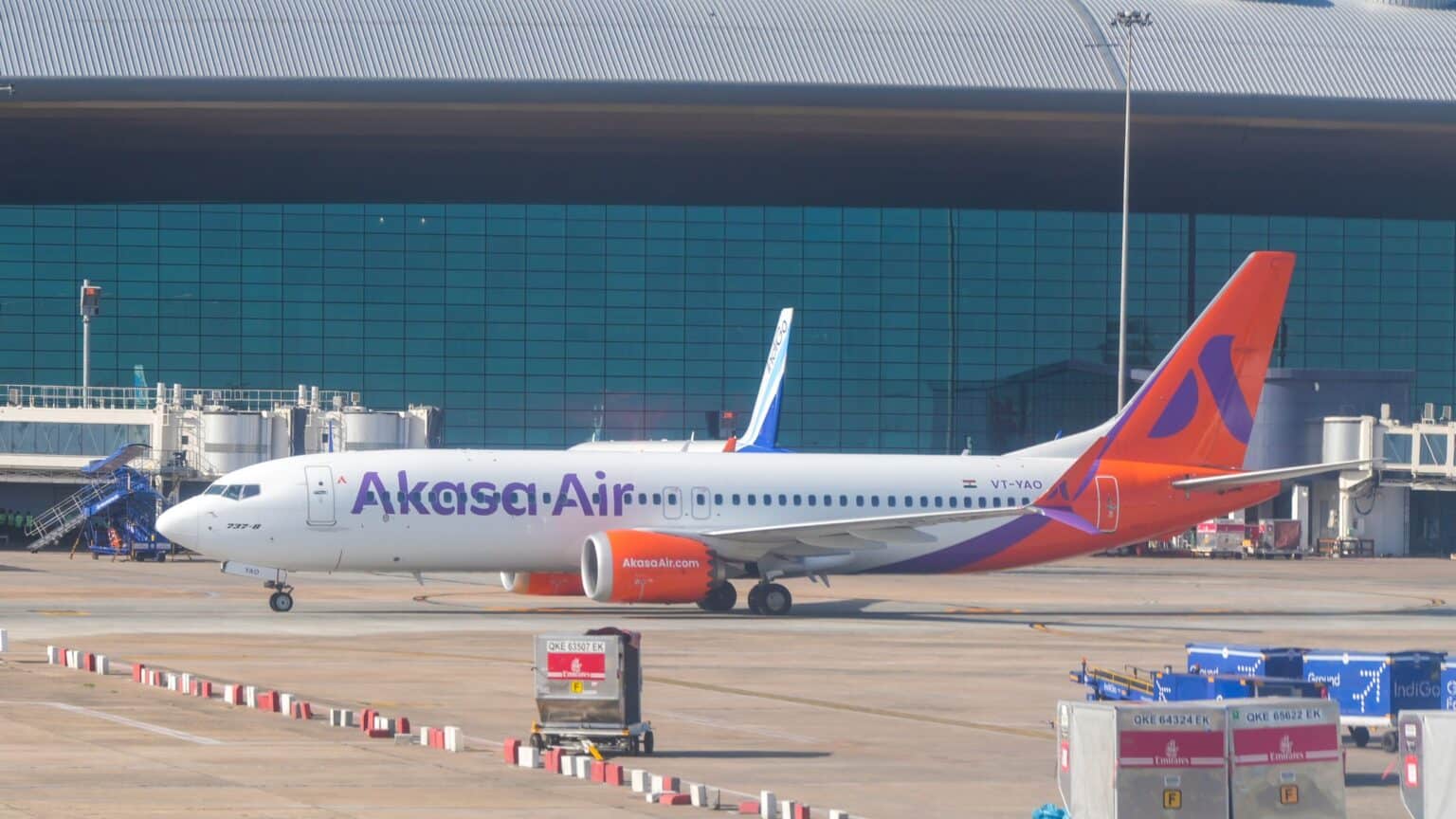
Akasa Air flight QP1925, a Boeing 737 MAX 8 from Ahmedabad, had its tail section contact the ground at Kolkata airport on Saturday, October 31, 2026, the airline said. A post-flight inspection found the contact after the jet had flown a go-around and then landed.
All passengers disembarked safely and no injuries were reported, according to The Daily Jagran. That report says the number of people aboard has not been established, and none of the reports AeroCorner read gives the registration.
Developing story
As of November 1, no official cause has been published, and neither has the extent of any damage. AeroCorner found no statement on this event on the websites of India’s aviation regulator, the DGCA, or its accident investigator, the AAIB.
What Akasa Air has said
Akasa’s statement, as quoted by the PTI news agency and carried by The Daily Jagran, is brief. “A post-flight inspection found that the aircraft’s tail section had come in contact with the ground,” it says, adding: “In line with established protocols, the relevant authorities have been informed, and the matter is under investigation.”
The same report says that, according to the airline, the flight was instructed to perform a go-around before landing safely. It does not say who gave the instruction or why, and the quoted statement does not use the words “tail strike,” though the outlets covering it do.
Where the reports disagree
When the tail touched. The quoted statement does not say at which moment it happened. The Daily Jagran describes a tail strike while landing, after a go-around during the approach, while UPUKLive says the rear of the aircraft touched the runway on the first landing attempt, before the crew climbed away.
Where the aircraft is. The Daily Jagran and Amar Ujala cite unnamed sources saying it is parked at Kolkata for a detailed inspection. Whalesbook calls it grounded for a technical investigation.
Who is investigating. Akasa’s quoted statement names no agency. Whalesbook says the airline reported the event to the DGCA, and its Hinglish edition says the DGCA is looking into it, while Amar Ujala says regulators it does not name are investigating and that the inquiry will include black box data.
What the tracking data shows
The FlightAware track for the flight, callsign AKJ1925, shows a first approach from the north that came down to the airfield. Its altitude read 0 feet at 7:17:55 a.m. local time, just under a mile north of the airport’s center point, then 100 feet 16 seconds later and 300 feet after another 16 seconds.
The jet then flew a wide circuit east of the airport at up to 2,900 feet and approached from the north again. FlightAware logs the landing at 7:37 a.m., close to the “around 7:40” in press reports, with its lowest reading on that approach at almost the same spot as on the first.
So the first approach came very low before the climb, which fits a late go-around. But the feed reports altitude in 100-foot steps, so it cannot show whether the wheels or the tail touched on that pass, and it does not settle the disagreement above.
Kolkata’s weather reports for 7:00 and 7:30 a.m. show calm wind, haze and visibility of about 2 miles (3,200 m). Those are airport observations, not a finding about this flight.
How a tail strike happens, and why the inspection matters
A tail strike is what it sounds like: the nose is raised far enough, with the main wheels at or close to the runway, for the rear fuselage to reach the ground. Boeing’s AERO magazine said in 2007 that most tail strikes happen on landing, and it listed four factors there: an unstabilized approach, holding the airplane off in the flare, mishandled crosswinds and overrotation during a go-around.
A recent case shows how close to the runway this plays out. Delta’s A321 tail strike at LaGuardia in July came from too much nose-up after a bounce, the NTSB found, with a go-around following it.
Boeing’s article says landing tail strikes generally cause more damage than takeoff ones, because the tail may hit before the main gear and damage the aft pressure bulkhead. It warns that a bulkhead failure in pressurized flight can be catastrophic, and that even long, shallow scratches raise the risk if they are not repaired correctly.
A 2015 Kolkata tail strike was also found on the walk-around
Indian investigators have dealt with a tail strike at this airport before. In January 2015 a Jet Airways 737-800, VT-JGE, scraped its tail while landing at Kolkata and taxied to the bay under its own power, and a maintenance engineer found the damage on the post-flight walk-around, according to the final report.
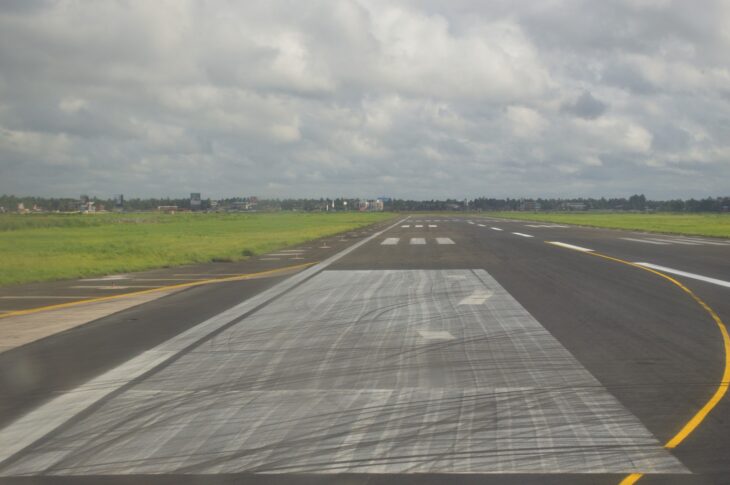

That report classed the event as a serious incident, investigated by a committee chaired by a DGCA official, and gave the probable cause as airspeed falling below the reference speed and a rising pitch attitude. How QP1925 will be classified has not been published, and the 2015 findings say nothing about this flight.
Tail strikes have also drawn the regulator’s attention at the airline level. The DGCA fined IndiGo 3 million rupees in 2023 after a special audit that followed four A321 tail strikes in six months.
Sources and references used for research and fact-checking.
- FlightAware, AKJ1925 track log, Ahmedabad to Kolkata, October 31, 2026
- NOAA Aviation Weather Center, VECC METARs, October 31, 2026 (0130Z and 0200Z)
- Committee of Inquiry, AAIB India, Final Investigation Report on Serious Incident to Jet Airways B-737-800 VT-JGE, 14 January 2015, Kolkata
- Boeing, Tail Strikes: Prevention, AERO Quarterly Q1 2007 (Capt. Dave Carbaugh)
Get the Newsletter
The latest aviation news and stories sent to your inbox.
About the Author

AeroCorner News is the aviation news desk of AeroCorner.com. It covers accidents and incidents, safety rulings, airline and airport disruption, and new aircraft. It works from primary sources such as the NTSB, FAA, EASA and the manufacturers' own announcements.