

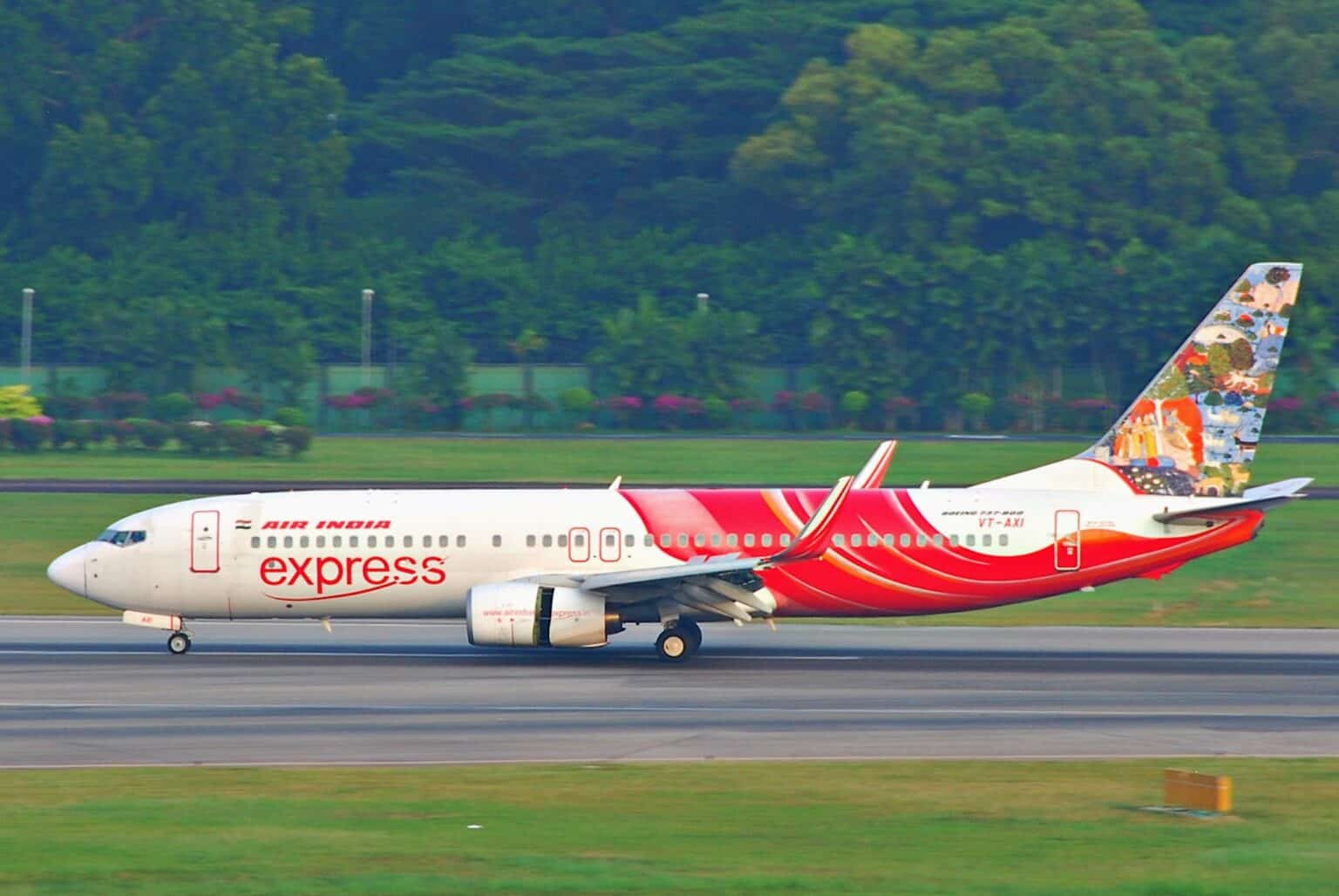
Air India Express flight AXB1109, a Boeing 737 registered VT-BXL with 171 people aboard, entered the runway at Goa’s Dabolim Airport on April 3, 2026, while an Indian Navy fighter was taking off toward it. India’s Aircraft Accident Investigation Bureau (AAIB) says in its final report that the crew took the ground controller’s “expect backtrack” as a clearance to enter.
The fighter lifted off about 2,950 to 3,280 feet (900 to 1,000 m) from the airliner, by the Navy tower controller’s account. No one was hurt and neither aircraft was damaged, says the report, whose findings ETV Bharat reported on October 31.
The report’s summary lists a B 737-800, but its aircraft section gives a Boeing 737-8 (MAX) built in 2024.
A runway change, then a missed hold
Dabolim’s runway in use changed to runway 08 at 7:39 a.m. local time. The Airports Authority of India (AAI) ground controller who took over at 8 a.m. presumed it was still runway 26, the report infers, and approved a pushback for that direction.
The Navy tower spotted the mismatch and agreed to bring the jet to holding point N2, normally a taxi-in route for arrivals, so it could backtrack later.
At 8:12 the controller told the crew to “expect back track.” At 8:16 came the instruction: “taxi via November two, hold at holding point runway zero eight.”
The trainee first officer’s reply dropped the hold, and the controller did not insist on a complete readback. The jet stopped at N2 for 16 seconds, and the recorder caught the captain prompting, “entering runway bol do” (“say entering runway”).
Told to contact 119.7 MHz, the first officer answered “one one nine seven entering runway.” The controller did not respond, presuming the Navy had cleared the jet on that frequency, while the captain assumed ATC was busy and had already cleared him.
The jet entered the runway at 8:17:50 without having contacted the tower or approach controllers. The crew did not know Navy flying had started, the AAIB says.
What the fighter pilot faced
The Navy tower cleared the fighter, leader of a two-ship formation whose type the report does not name, after seeing the airliner holding at N2.
With the fighter rolling, controllers saw the airliner on the runway. It was not on their frequency, so they warned the pilot an unidentified aircraft had entered.
The report puts the fighter at 130 knots, past its 100-knot decision speed, about 6,070 feet (1,850 m) down the runway when the call came. The pilot could not see the airliner over the runway’s slope, expedited the takeoff and lifted off at roughly 6,560 feet (2,000 m).
The fighter’s recorder was not shared with investigators, for technical reasons, and the report states no exact separation. A Navy controller called it a “NEAR MISS” on the hotline.
The pilot said he ruled out a rejected takeoff, lacking the runway to stop. The AAIB says the event could have been catastrophic had the fighter suffered an emergency.
The airliner sped up from 15 to 26 knots on the runway, with the first officer heads down recalculating takeoff numbers. It stopped at 8:20 on the approach controller’s order, and departed at 8:35 for a safe landing in Delhi.
Why “expect backtrack” is not a clearance
A backtrack means taxiing along the runway itself to reach the takeoff end, and “expect” gives notice of what is planned. The controller told the crew afterward it was information, not permission, and the ICAO rule the report cites says aircraft stop at every runway-holding position unless the tower authorizes otherwise.
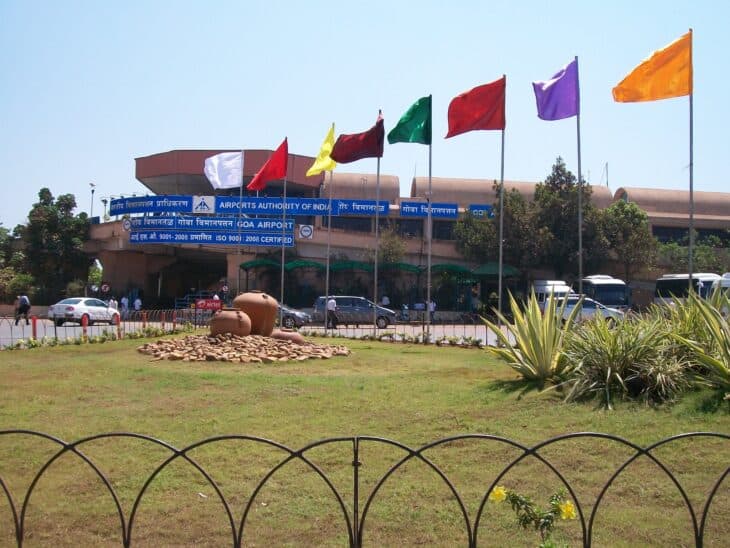
Dabolim is a civil enclave inside the naval base INS Hansa, not Goa’s newer Manohar International Airport at Mopa. Navy controllers run the tower, approach and runway, while AAI controllers handle civil ground movement under a 2023 agreement.

Stop bars are installed at N2 but used only in low visibility, and Dabolim’s published airport information listed none. The captain cited the unlit bars, while the AAIB notes that holding-position markings remain the primary protection.
What the AAIB wants changed
The AAIB gives two probable causes: the misreading of “expect back track,” and the crew not following the instruction to hold and contact the Navy. Contributing factors were the trainee’s reliance on the instructor and the controller’s hear-back error.
The captain had 9,500 flight hours and the first officer about 285, on their first flight together. The report’s stated aim is prevention, not blame.
It recommends counseling for the crew, training for the captain and a circular to all the airline’s crews. AAI is asked to review phrases like “expect backtrack,” echoing the NTSB’s JFK incursion report this week on nonstandard phrasing, and to consider N2 a hotspot.
The Navy is asked to publish the stop bars and consider a standard frequency changeover. Changes agreed in April already send departures to holding points P1 or P2 before they change to the tower, and have ground controllers confirm the runway with the Navy each day.
Navy video and hotline recordings and AAI apron camera footage were erased before investigators could get them. The AAIB credits the Navy with cooperating, but asks India’s DGCA to set up a formal evidence-sharing framework with defense authorities, after earlier recommendations went unmet.
Sources and references used for research and fact-checking.
Get the Newsletter
The latest aviation news and stories sent to your inbox.
About the Author

AeroCorner News is the aviation news desk of AeroCorner.com. It covers accidents and incidents, safety rulings, airline and airport disruption, and new aircraft. It works from primary sources such as the NTSB, FAA, EASA and the manufacturers' own announcements.