

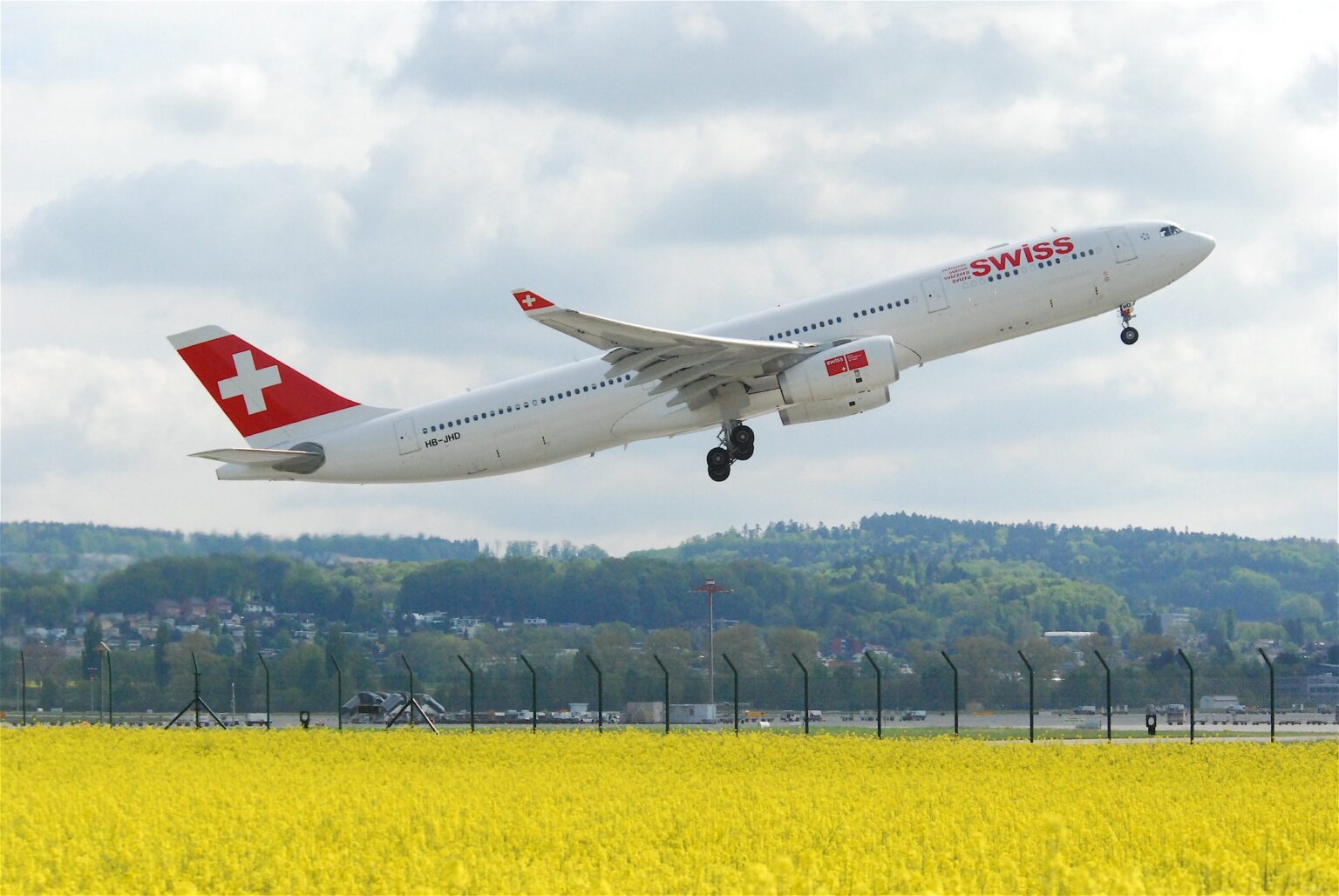
On October 29, 2026, the NTSB published its final report on the April 17, 2024, runway incursion that forced Swiss flight LX17, an Airbus A330 bound for Zurich, to reject its takeoff at New York’s JFK. Four airliners had been cleared to cross runway 4L in front of it.
The board found the probable cause was “nonstandard crossing phraseology and ineffective coordination” between the two tower controllers working JFK’s parallel runways. None of the five aircraft was damaged and no one aboard was hurt, the report says.
What happened on runway 4L
JFK was landing and departing on runways 4L and 4R that afternoon. One local controller, called LC2 in the report, ran runway 4L, while a second, LC1, ran runway 4R and the taxiways between the two, on a separate radio frequency.
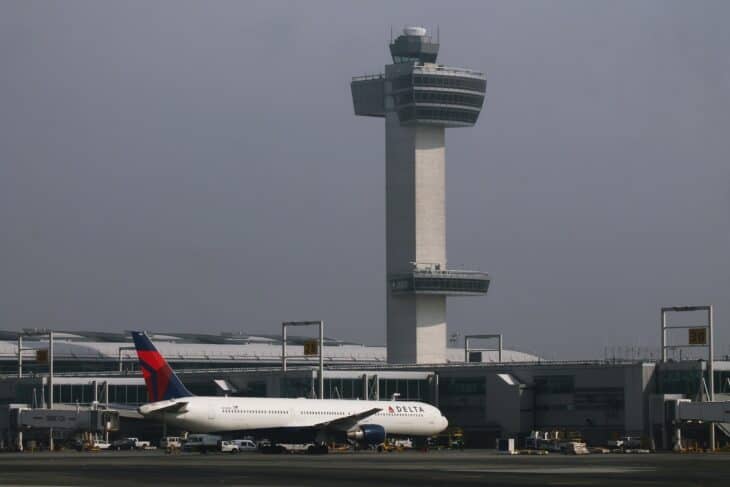
Four jets that had landed on 4R needed to cross 4L to reach the terminal. They were Delta 29, a Boeing 767-400ER arriving from Nice, Delta 420, an Airbus A220-100, Republic Airways 5752, an Embraer E175, and American Airlines 2246, a Boeing 737 MAX 8.

At 4:44:40 p.m. local time, LC2 cleared a Delta A321, flight 550, for takeoff on 4L and then told the Swiss crew, flying the A330-300 HB-JHD under the callsign SWR17K, to line up and wait. LC2 then told LC1 to cross the waiting jets behind the Swiss aircraft at taxiways YA, G, F and H.
LC1 replied: “roger, behind the departure, I’ll go one at each.” According to the NTSB, he took “the departure” to mean the Delta A321 ahead of the Swiss jet, while LC2 meant the Swiss A330 itself.
So LC1 began crossing traffic behind the A321. He cleared Delta 29 to cross at taxiway H at 4:45:41, and nine seconds later LC2 cleared the Swiss jet for takeoff.
In the 10 seconds after that takeoff clearance, LC1 also cleared American 2246, Republic 5752 and Delta 420 to cross. The Swiss A330 began its roll at 4:46:10 with all four jets heading for the runway.
Five seconds later the Swiss crew reported rejecting the takeoff for traffic on the runway, having reached about 50 knots. Three of the crossing jets were on 4L by then and the A220 was nearing its edge.
The closest, Delta 29, was crossing at taxiway H at 14 knots, about 4,692 feet (1,430 m) from the Swiss jet. Swiss told aeroTELEGRAPH at the time that its cockpit crew had reacted very professionally.
The phrase JFK’s own rules ban
JFK’s tower procedures do allow several aircraft to cross a runway at several intersections at once. But they require controllers to name the runway and each intersection explicitly, and the crossing section states plainly: “Do not use phraseology such as ‘one at each.'”
The same procedures say the controller receiving a conditional clearance should restate its limiting condition when acknowledging it. The NTSB found that the missing standard phrasing, and the failure to restate the condition, likely led LC1 to misidentify the aircraft the crossings were meant to follow.
The exchange was spoken aloud in the tower cab rather than over an interphone line, and the report notes that a recorded line was not required. LC2 told investigators he took a verbal “roger” and a visual acknowledgment as agreement, and that he checked the ASDE-X display and the runway before clearing the Swiss jet.
LC1 said he began crossing the jets once an airplane ahead of the Swiss A330 had departed. He then heard LC2 clarify that “it was behind Swiss.”
Why the alarms stayed quiet
JFK has ASDE-X, the FAA’s surface surveillance system, whose safety logic predicts the paths of aircraft on the runways and sounds visual and aural alarms at a likely conflict. It did not alarm here, and the NTSB said it “functioned as designed.”
The reason is a threshold: the Swiss jet never reached the thresholds the logic uses to classify an aircraft as taking off. The runway entrance lights on 4L lit at 4:46:16, one second after the crew had already called the rejected takeoff.
The same runway produced the opposite case 15 months earlier. In January 2023 an American Airlines 777 crossed 4L without clearance as a Delta 737 was taking off, and there ASDE-X did alert the tower, the NTSB said; the Delta jet stopped from a top speed of 121 mph (195 km/h).
Read together, the two reports show where the automation draws its line. A conflict caught early in the roll, as LX17’s was, sits below the point where the alarm logic engages, which left the Swiss pilots’ own lookout as the safeguard that worked.
The finding also puts this error in the tower rather than the cockpit, unlike the Etihad EY7 incursion at Boston Logan this month, where the crew entered a runway after reading back a hold-short instruction. The JFK final report, from a Class 2 investigation, contains no safety recommendations.
Sources and references used for research and fact-checking.
Get the Newsletter
The latest aviation news and stories sent to your inbox.
About the Author

AeroCorner News is the aviation news desk of AeroCorner.com. It covers accidents and incidents, safety rulings, airline and airport disruption, and new aircraft. It works from primary sources such as the NTSB, FAA, EASA and the manufacturers' own announcements.