

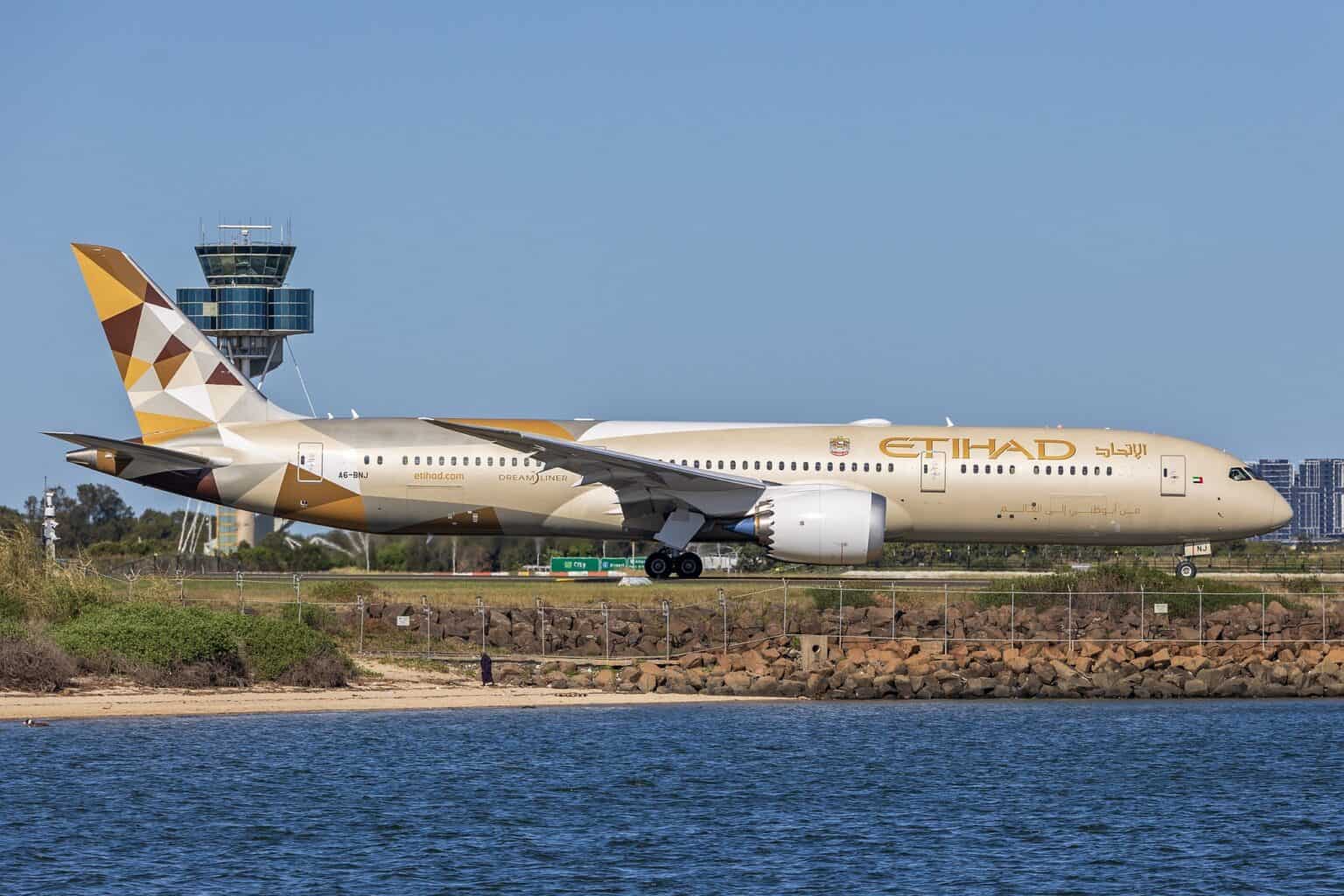
Etihad Airways flight EY7, a Boeing 787-9 that had just arrived from Abu Dhabi, entered runway 4L at Boston Logan without clearance on Thursday, October 15, 2026, after reading back an instruction to hold short of it. The tower sent a Republic Airways jet that was cleared to land on that runway around.
The event became public five days later, on October 20, when One Mile at a Time wrote it up. Its source was a reconstruction of the air traffic control audio posted on October 19 by the YouTube channel You Can See ATC.
The FAA’s public log of incident statements had no entry for it as of October 20, and AeroCorner found no statement from Etihad or Republic Airways.
What the tower recording shows
The reconstruction pairs Boston tower and ground audio archived by LiveATC.net with flight-tracking data. It identifies the jet as Boeing 787-9 A6-BNJ, flying under the radio callsign “Etihad 3MB.”
FlightAware’s record for EY7 that day shows the 787-9 landing at Logan at 2:55 p.m. local time. Its tail number is hidden from public view on FlightAware.
After landing, a tower controller told the crew to taxi via taxiways R and N and hold short of runway 4L, which was in use for arrivals. The crew read it back as “R, N, hold short of 04L,” and was then told to monitor the tower frequency that was landing traffic on 4L.
On that frequency, the controller had just cleared Republic Airways flight 5739, callsign “Brickyard 5739,” to land on 4L behind a twin-engine Cessna on short final. The tracking data in the video shows the Republic aircraft as an Embraer 175.
According to the reconstruction, the 787 entered runway 4L shortly after the Cessna had cleared it. The controller called “Etihad 3MB Heavy, stop,” then immediately told Brickyard 5739 to go around.
The channel estimates that the Republic jet was about 200 feet above the ground when it began the go-around. Departure control then told it to expect vectors for another visual approach to runway 4L.
With the 787 already on the runway, the tower told it to keep going, cross 4L on taxiway N and hold short of runway 15L. It then crossed 15L on clearance, switched to ground control and was cleared across 15R.
As the jet taxied on, the ground controller told the crew “possible pilot deviation” and asked them to copy down a phone number.
A correct readback is not a stop
The FAA’s air traffic control handbook, Order JO 7110.65, requires a separate crossing clearance for each runway a taxi route crosses. It also tells controllers to request a readback of any runway hold-short instruction a pilot does not read back.
The readback is the check that a crew heard the instruction. In this recording it was correct, so the question is one of execution: why a crew that said “hold short of 04L” did not stop at the hold line.
No explanation has been made public.
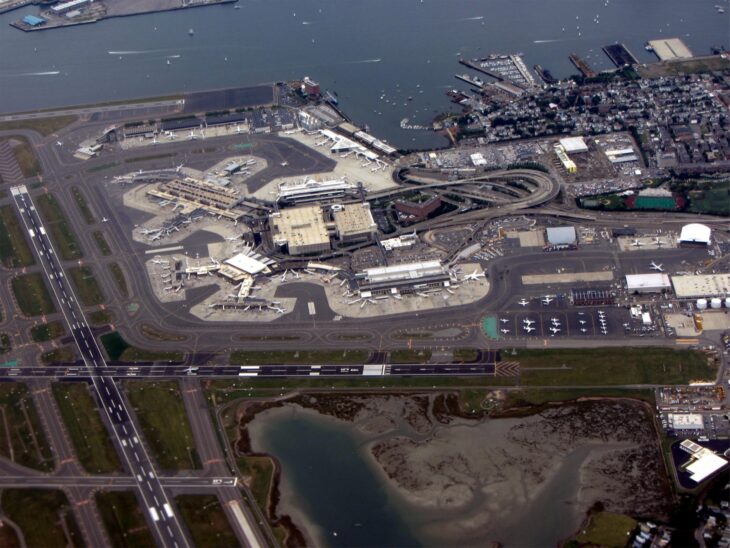
EY7’s own taxi shows how many hold lines a Logan arrival can meet. The airport has six runways, according to FAA data published by AirNav, and the 787’s taxi in from its landing crossed three of them: 4L, 15L and 15R.

What a “possible pilot deviation” call means
The FAA sorts runway incursions into three types: operational incidents caused by controllers, pilot deviations, and vehicle or pedestrian deviations. Its own example of a pilot deviation is “a pilot crosses a runway without a clearance while enroute to an airport gate.”
Each incursion also gets a severity rating, from Category D, with no immediate safety consequences, to Category A, where a collision was narrowly avoided. No rating for the Boston event has been made public.
The phone number is what pilots call a Brasher warning. As AvWeb has explained, the name comes from Captain Jack Brasher, who was not given the warning after an altitude deviation in 1985.
The controller handbook tells controllers to notify a pilot, workload permitting, when it appears the pilot’s actions constitute a pilot deviation. A 2008 FAA notice on pilot deviations has the facility document the event and keep the recorded radio exchanges, the data the agency needs to decide on enforcement action.
“Possible” is the operative word. The controller reports what appears to be a deviation; whether a violation occurred is decided later.
An earlier Logan close call
The Etihad event follows a more serious one at Logan this summer. On June 20, 2026, Delta flight 2351, an Airbus A319 landing on runway 33L, went around after American Airlines flight 3161, a Boeing 737-800, was cleared to take off on intersecting runway 27.
The NTSB’s preliminary report put the two jets about 670 feet apart and found the controller believed he had not cleared the American jet, WKRC reported. Those findings pointed at the tower; in the Etihad recording, it was the controller who flagged a possible pilot deviation.
Go-arounds have ended other recent runway conflicts. On July 30, a Republic Airways regional jet taxied onto a runway at Reagan National with a 737 on final, and on October 7 Delta Connection DL5415 went around at LaGuardia when a business jet took off without clearance.
Sources and references used for research and fact-checking.
- FAA, Order JO 7110.65, Air Traffic Control, Chapter 3 Section 7 (paragraph 3-7-2, Taxi and Ground Movement Operations)
- FAA, Order JO 7110.65, Air Traffic Control, Chapter 2 Section 1 (paragraph 2-1-27, Possible Pilot Deviation Notification)
- FAA, Runway Incursions
- FAA, Notice N JO 8020.177, Pilot Deviation reporting
Get the Newsletter
The latest aviation news and stories sent to your inbox.
About the Author

AeroCorner News is the aviation news desk of AeroCorner.com. It covers accidents and incidents, safety rulings, airline and airport disruption, and new aircraft. It works from primary sources such as the NTSB, FAA, EASA and the manufacturers' own announcements.