

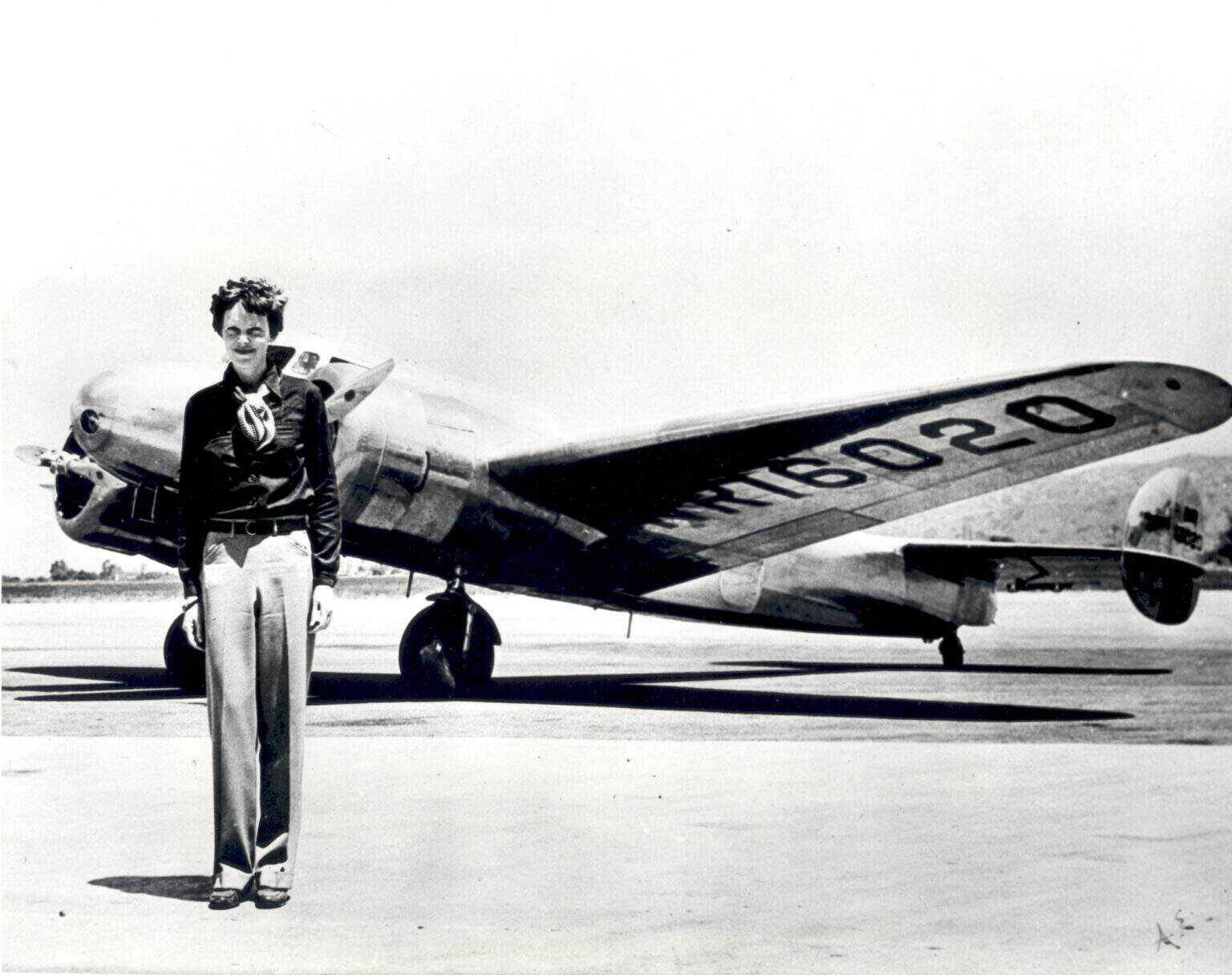
A lagoon anomaly on Nikumaroro that researchers hoped was Amelia Earhart’s Lockheed Electra 10-E is not her plane. On Sunday, Oct. 18, 2026, Purdue University and the Archaeological Legacy Institute (ALI) said their expedition to the remote Kiribati atoll found no conclusive evidence linking the “Taraia Object” to the aircraft.
The team concluded that the shape seen in satellite images since 2020 was most likely a collection of large trees deposited along the sandspit of the Taraia Peninsula. Its reflective surface, once thought to be metal, came from a carbonate veneer.
What the expedition found
The expedition, run by ALI with the Purdue Research Foundation and Purdue University, sailed from Tarawa, Kiribati, on Oct. 6, according to Purdue’s announcement. The voyage to Nikumaroro took five days.
Weather stretched the visit to seven days near the atoll, four of them spent working onshore. By the time the team reached the site, much of the debris had broken up and washed away.
Only a single Y-shaped segment remained, a fraction of the anomaly’s original size. Purdue said other items there carried a similar shiny coating of concreted coral sand.
“We think it’s most likely that the object was a collection of debris that accumulated here,” ALI executive director Rick Pettigrew said in a video message reported by NBC News. In Purdue’s release, he said the team “accomplished our goal to determine what the Taraia Object was.”
The search still produced artifacts from both the lagoon and the shore, Purdue said. Among them is a steel tube about 30 inches (76 cm) long, found in the lagoon near the Taraia Peninsula.
Those finds will be studied to test an idea about the lagoon itself: that objects drift in through the Tatiman Passage, cross the lagoon and end up on the Taraia Peninsula. Purdue’s announcement does not identify the tube.
Steve Schultz, Purdue’s general counsel and a member of the field team, said the trip was built to test an idea, not to prove one. “We set out to test a hypothesis, not to guarantee a particular result, and we followed the evidence to the end,” he said.
A lead more than a year in the making
The anomaly was spotted in 2020 satellite imagery by Michael Ashmore, according to Newsweek. The Purdue Research Foundation and ALI announced the expedition on July 2, 2025, the 88th anniversary of Earhart’s disappearance.
The first plan was to sail from Majuro in the Marshall Islands in early November 2025. That October, Purdue postponed the trip to 2026, saying the team was still awaiting clearance from the Kiribati government and that the South Pacific cyclone season ruled out a later departure.
The 2025 plan had a second phase: if the object proved to be the Electra, the partners would return in 2026 for a larger excavation.
Why the search keeps returning to Nikumaroro
Earhart and navigator Fred Noonan left Lae, Papua New Guinea, on July 2, 1937, on the third-to-last leg of her round-the-world attempt. They were bound for Howland Island, about 400 miles (645 km) northwest of Nikumaroro, and never arrived.
The US then mounted one of the largest air and sea searches in history, covering an area of the Pacific roughly the size of Texas over two weeks. The conventional explanation, still the most widely accepted, is that the pair could not find Howland, ran out of fuel and went down in the ocean.
The alternative, which Purdue calls the castaway hypothesis, has been developed since the 1980s by The International Group for Historic Aircraft Recovery (TIGHAR). It holds that Earhart landed on Nikumaroro’s reef flat and that she and Noonan were stranded there.


Purdue points to radio bearings from the US Navy, the US Coast Guard and Pan American World Airways that converge on the island. It also cites a 2018 analysis of bones found there in 1940, which suggested a woman of Earhart’s stature.
Then there are 1930s objects from the island: a woman’s shoe, a compact case, a jar of freckle cream and a medicine vial. Purdue also cites the Bevington Object, a reef photo taken three months after the disappearance that appears to show the Electra’s landing gear.
Purdue concedes the expedition “did not uncover the ‘smoking gun’.” The team says it still believes the castaway hypothesis is correct.
Why Purdue will keep looking
For Purdue the search is personal. Earhart served at the university as a counselor and mentor to women students and helped shape its aviation program.
Her Electra, known as her “Flying Laboratory,” was bought with Purdue Research Foundation funds, and she intended to return it to Purdue after the flight. It was a Lockheed 10-E, not to be confused with the company’s later L-188 Electra turboprop.
The Electra’s fate remains one of aviation’s longest-running mysteries, alongside the passenger planes that disappeared without a full explanation. Schultz put the university’s position in one line: “She kept flying, and we will keep searching.”
Sources and references used for research and fact-checking.
- Purdue University, Search for Amelia Earhart's plane continues after Taraia Object expedition on Nikumaroro rules out latest hypothesis
- Purdue Research Foundation, The Taraia Object Expedition (expedition site)
- Purdue Research Foundation, Purdue expedition to locate Amelia Earhart's plane (July 2, 2025 announcement)
- Purdue University, Expedition to search for Amelia Earhart's plane postponed to 2026
Get the Newsletter
The latest aviation news and stories sent to your inbox.
About the Author

AeroCorner News is the aviation news desk of AeroCorner.com. It covers accidents and incidents, safety rulings, airline and airport disruption, and new aircraft. It works from primary sources such as the NTSB, FAA, EASA and the manufacturers' own announcements.