

Table of Contents
The university that helped pay for the plane is now helping to look for it, 89 years after it vanished, with a hydraulic dredge and a plan to bring it home.
On Friday, Oct. 2, three members of the Taraia Object expedition took off from the Purdue University Airport in Indiana, the field that served as the base for Amelia Earhart’s world-flight research. The full 17-person team meets in Tarawa, Kiribati, on Oct. 6 and sails the next day for Nikumaroro.
Their target is a dark shape in the island’s lagoon that the Archaeological Legacy Institute (ALI) believes is the fuselage and tail of Earhart’s Lockheed Electra 10E. Nobody has touched it yet. Within about two weeks, someone should.
Why Purdue Is Going Back for a Plane It Paid For
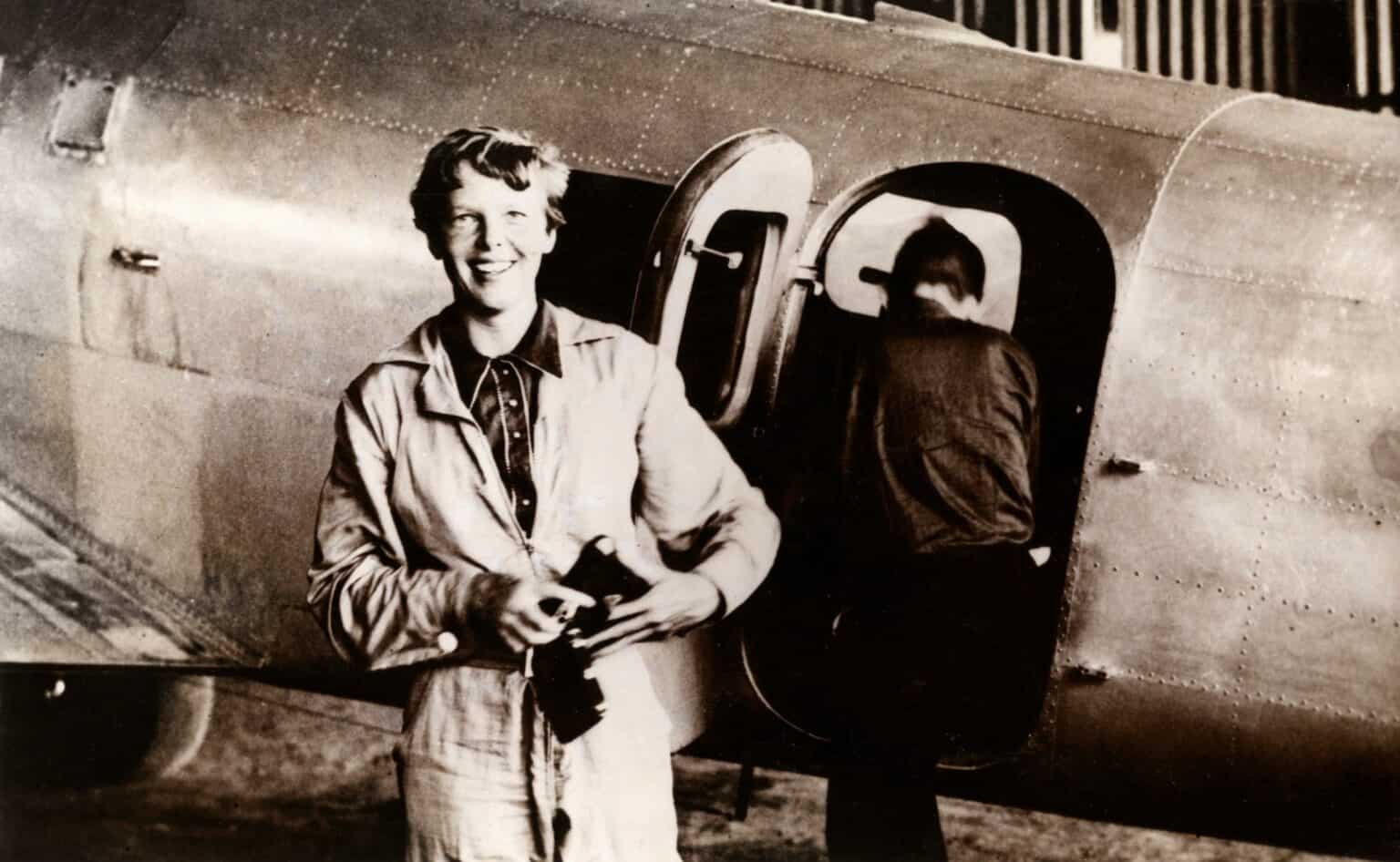
Earhart joined Purdue in 1935, at the height of her fame, as a counselor on careers for women and an adviser to the university’s aeronautics department. She was already one of the most famous pilots in history, and she wanted a record nobody had set: a flight around the world at the equator.
Purdue President Edward Elliott offered to help. The newly formed Purdue Research Foundation set up the Amelia Earhart Fund for Aeronautical Research, with money from trustee David Ross, J.K. Lilly, Vincent Bendix and companies including Western Electric, Goodrich and Goodyear.
In 1936, Earhart bought a Lockheed Electra 10E with just over $40,000 from that fund, according to Purdue’s own history of the deal. She called it her “Flying Laboratory,” and her plan was to return it to Purdue after the flight for aeronautical research.
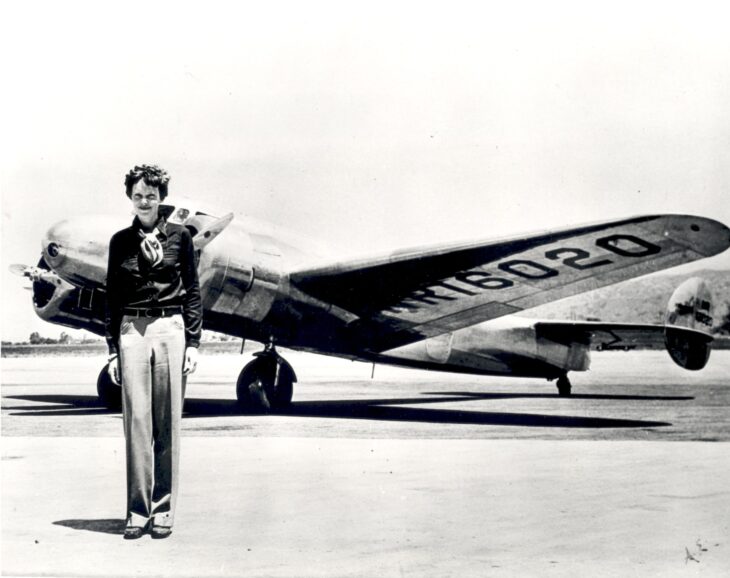

That never happened. Earhart and navigator Fred Noonan disappeared on July 2, 1937, flying from Lae, New Guinea, toward tiny Howland Island. The three main theories of what happened to Amelia Earhart have competed ever since.
One of them holds that the pair missed Howland and landed on the reef at Nikumaroro, then called Gardner Island, about 400 miles (640 km) to the southeast. The Taraia Object expedition is built on that theory, and Purdue has signed on as a partner alongside ALI.
“Successfully identifying the Electra would be the first step toward fulfilling her intention to return it to the university,” said Steve Schultz, Purdue’s senior vice president and general counsel, who is sailing with the team.
The Taraia Object, by the Numbers
Researcher Michael Ashmore first noticed the shape in 2020, in an Apple Maps satellite image of the lagoon beside the Taraia Peninsula. ALI then obtained 26 more satellite images covering 2009 to 2021, plus later ones through April 2026.
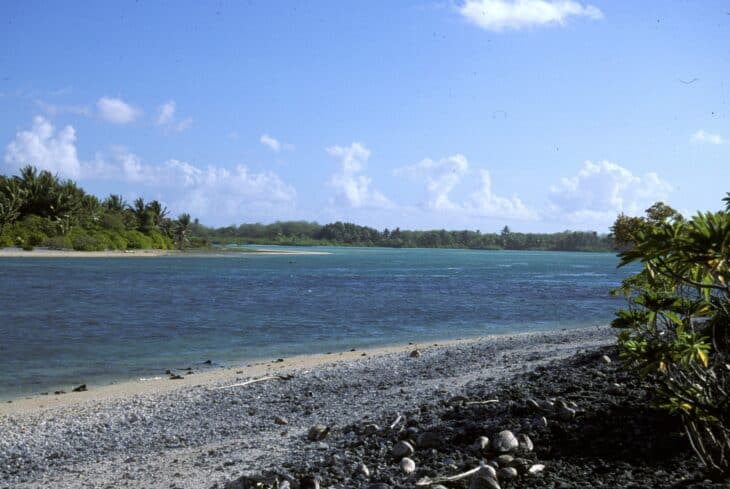

In that series, ALI says, the object first appears on April 27, 2015, weeks after Tropical Cyclone Pam’s storm surge struck the island. ALI’s reading is that the storm stripped away sediment that had buried it. By 2022 it showed only as a dark shape, probably under a thin layer of sediment again.
ALI also says the object is likely visible in two frames of aerial film the New Zealand military shot over the lagoon in 1938, a year after the disappearance. If that holds, the shape was there 77 years before the 2015 storm.
The object measures roughly 39 to 46 feet (12 to 14 m) long, as reported by ExplorersWeb. The Model 10 Electra was 38 feet 7 inches (11.76 m) long, with a 55-foot (16.8 m) wingspan. ALI says the shape is “exactly the right size” for the fuselage and tail, and that it looks reflective enough to be metal.
Its theory runs like this: the Electra floated off the reef about five days after landing, shed its outer wings and engines as it broke up, and the buoyant fuselage drifted through Tatiman Passage into the lagoon, where it sank in shallow water and was slowly buried.
The trip itself is about 830 nautical miles (955 miles, or 1,540 km) by sea from Tarawa, a six-day voyage aboard the Kiribati ship LC Marin Mainiku. ALI has budgeted five days on site and put the cost of this first phase at about $900,000.
A word on the name, since it confuses searches: Lockheed later reused “Electra” for the L-188 Electra turboprop airliner, which first flew in December 1957. It is a different, four-engine aircraft. Earhart’s was the twin-engine Model 10, first flown in 1934.
Why Even a Fallen Tree Would Settle Something
The sharpest skeptic is the group that made Nikumaroro famous. The International Group for Historic Aircraft Recovery, known as TIGHAR, has spent more than three decades arguing that Earhart died on the island, and it does not believe the Taraia Object is her plane.
TIGHAR founder Ric Gillespie has said the satellite shape is a downed coconut tree. “We’ve looked there in that spot, and there’s nothing there,” he told TODAY in 2025, as NBC News reported.
Nothing has been found yet
The Taraia Object is unidentified. No wreckage from Nikumaroro has ever been confirmed as part of Earhart’s Electra, and the expedition’s own leaders say it may turn out to be something else.
The two sides agree on one thing: the only way to find out is to put people in the water. Other searches have tried and come up empty, including Robert Ballard’s 2019 deep-water survey around Nikumaroro and a 2024 sonar target near Howland that turned out to be a rock formation.
That is why a negative answer still counts. ALI writes that proving the object is not the Electra “would still be a successful test” of its hypothesis, ruling out one more location in a search that has burned through many.
A positive answer would be far bigger. Earhart’s Electra is among the most famous planes that disappeared and were never found. One riveted panel with the right pattern would end an 89-year argument.
“Finding Amelia Earhart’s Electra aircraft would be the discovery of a lifetime,” said ALI executive director Richard Pettigrew, who is leading the expedition.
What Happens After the Ship Leaves Tarawa
The team has rehearsed for one specific moment. Members visited the Museum of Flight in Seattle in 2025 to crawl through its restored Lockheed 10-E, learning the rivet patterns and small parts they would need to recognize in broken wreckage.
On site, the order is fixed. Drone photos come first, then magnetometers, side-scan sonar and a sub-bottom profiler to map the object before anyone clouds the water. A hydroprobe then pushes through the sediment to touch it, and only after that does a hydraulic dredge uncover it.
The test is simple, in ALI’s words: if the object is “made of aircraft aluminum and has the specific shape and rivet patterns of the Electra,” the plane has been found. The team is scheduled back in Tarawa around Oct. 22.
If it is the Electra, ALI plans a full excavation in 2027 and, if feasible, recovery in 2027 or 2028 for display at Purdue. Any removal would need the approval of Kiribati, whose government calls Nikumaroro part of its heritage.
Either way, the plane Purdue helped buy in 1936 is closer to an answer than it has been since the morning it went missing.
Sources and references used for research and fact-checking.
- Purdue University, 1 week out: Countdown to the search for Amelia Earhart's plane begins
- Purdue University, Earhart expedition update: Crew departs from Purdue University Airport
- Purdue University, ALI, Purdue expedition to search for Amelia Earhart's plane will depart in October
- Purdue University, Amelia Earhart: Aviator. Legend. Boilermaker.
- Archaeological Legacy Institute, The Taraia Object: Amelia Earhart's Aircraft?
- AeroTime, Purdue-backed expedition to investigate Earhart plane claim
- NBC News, Expedition to find Amelia Earhart's plane will begin this year
- ExplorersWeb, Search for Amelia Earhart's Plane Delayed
- FLYING Magazine, Earhart Expedition Prepares for South Pacific Search
- Wikipedia, Lockheed Model 10 Electra
- Wikipedia, Lockheed L-188 Electra
Get the Newsletter
The latest aviation news and stories sent to your inbox.
About the Author
Tim is the owner and lead editor of AeroCorner since 2019, overseeing aviation content covering aircraft, airlines, airports, and the broader aviation industry. Through years of researching, writing, editing, and publishing aviation-focused content, he has developed extensive practical knowledge of commercial aviation and air travel. Based in Asia and a frequent traveler himself, Tim also brings firsthand passenger experience to AeroCorner’s coverage. Outside of publishing, he has also explored aviation firsthand through hands-on flight training in New Zealand.