

Table of Contents
The most famous pilot in history, measured by how many people actually go looking for them, is Howard Hughes. Over the 12 months to August 2026, his English Wikipedia article drew 1,917,886 human readers, narrowly ahead of Amelia Earhart at 1,831,818.
Most “famous pilots” lists are one writer’s opinion. This one ranks 20 aviators by a number anyone can check: a full year of English Wikipedia pageviews, bots excluded, from September 1, 2025 to August 31, 2026.
The Wright brothers come third and Charles Lindbergh fourth. The biggest surprise sits at number five: Chesley “Sully” Sullenberger, the airline captain who put an Airbus in the Hudson, now draws more readers than the Red Baron.
| Rank | Pilot | Famous for | Readers, 12 months |
|---|---|---|---|
| 1 | Howard Hughes | Speed records, the H-4 Hercules | 1,917,886 |
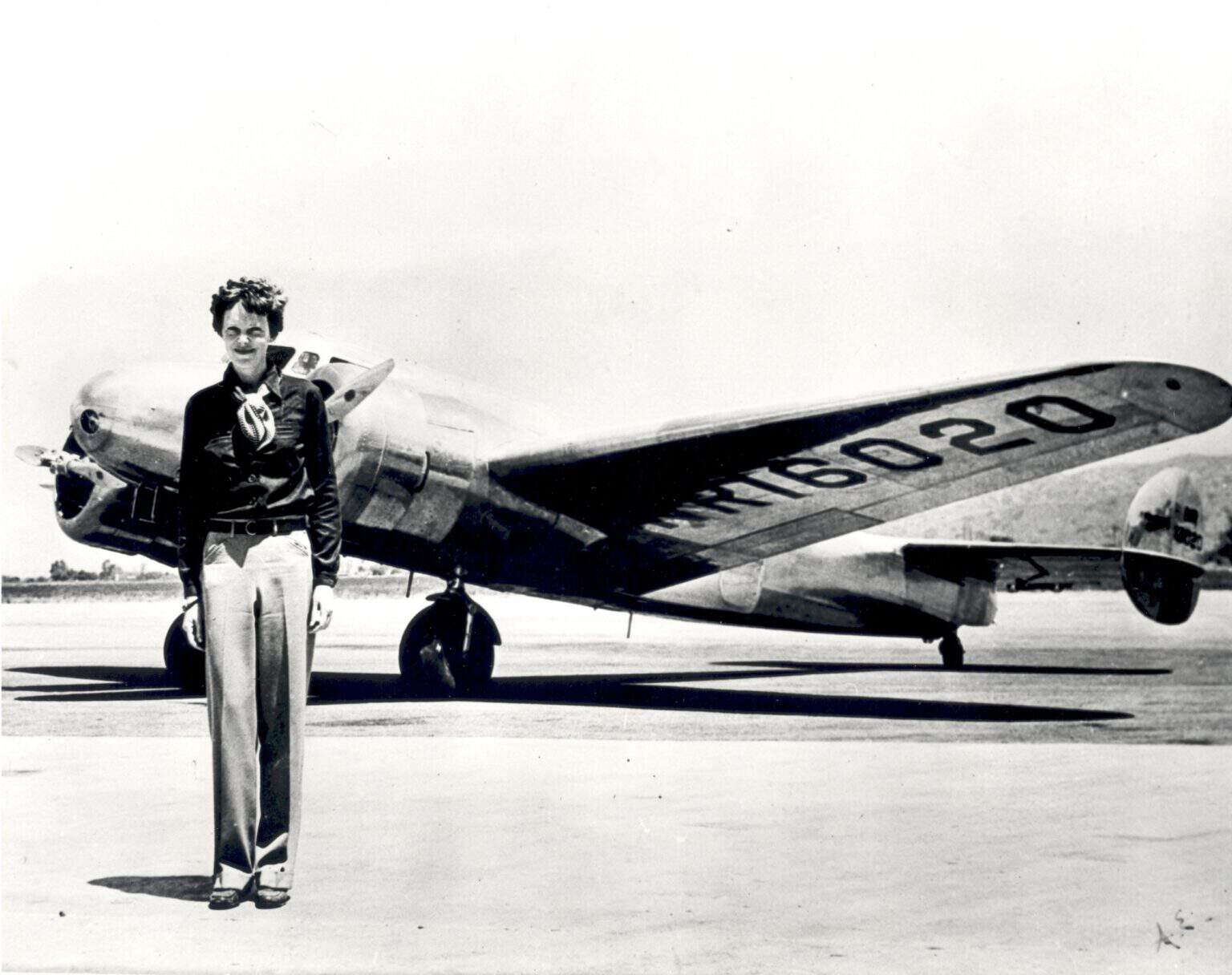
| 2 | Amelia Earhart | 1932 solo Atlantic crossing, 1937 disappearance | 1,831,818 |
| 3 | Wright brothers | First powered, controlled flights, 1903 | 948,006 |
| 4 | Charles Lindbergh | First solo nonstop Atlantic crossing, 1927 | 905,640 |
| 5 | Chesley “Sully” Sullenberger | US Airways 1549 Hudson ditching, 2009 | 746,970 |
| 6 | Manfred von Richthofen | The Red Baron, 80 credited victories | 675,572 |
| 7 | Chuck Yeager | First verified supersonic flight, 1947 | 398,603 |
| 8 | Antoine de Saint-Exupéry | Airmail pilot and author, lost in 1944 | 354,041 |
| 9 | Francis Gary Powers | U-2 shot down over the USSR, 1960 | 342,298 |
| 10 | Jimmy Doolittle | Blind flight, the 1942 Tokyo raid | 291,369 |
| 11 | Paul Tibbets | Piloted the Enola Gay, 1945 | 280,765 |
| 12 | Erich Hartmann | 352 claimed victories | 280,699 |
| 13 | Bessie Coleman | First African American woman licensed, 1921 | 234,790 |
| 14 | Douglas Bader | Legless Battle of Britain leader | 196,224 |
| 15 | Hans-Ulrich Rudel | Stuka pilot, 2,530 claimed missions | 186,573 |
| 16 | Robin Olds | Operation Bolo, Vietnam, 1967 | 178,540 |
| 17 | Gregory “Pappy” Boyington | Black Sheep Squadron commander | 171,349 |
| 18 | Richard Bong | Top American ace, 40 victories | 154,431 |
| 19 | Hanna Reitsch | Test pilot, first woman to fly a helicopter | 153,920 |
| 20 | Eddie Rickenbacker | Top American ace of World War I | 153,417 |
How this ranking works
Fame is ranked by one year of English Wikipedia pageviews from human readers, counted on each article’s current title. To qualify, a person had to be a pilot whose fame rests substantially on flying aircraft. That rules out astronauts famous for spaceflight, aircraft designers, airline founders, and units such as the Tuskegee Airmen (264,736 readers). The Wright brothers count once, under their shared article; their two individual pages would add another 55,531. The facts under each name come from museum, government and investigation records wherever possible, not from the pageviews.
Two notes on scope. This is a list of aviators, not of celebrities who happen to fly; actors and musicians with licences have their own ranking in our celebrity pilots list.
And fame is not skill. Eight of these 20 were combat aces, but if you want the aces ranked by what they did in the air, that is a different question, answered in our list of the best fighter pilots in history.
1. Howard Hughes
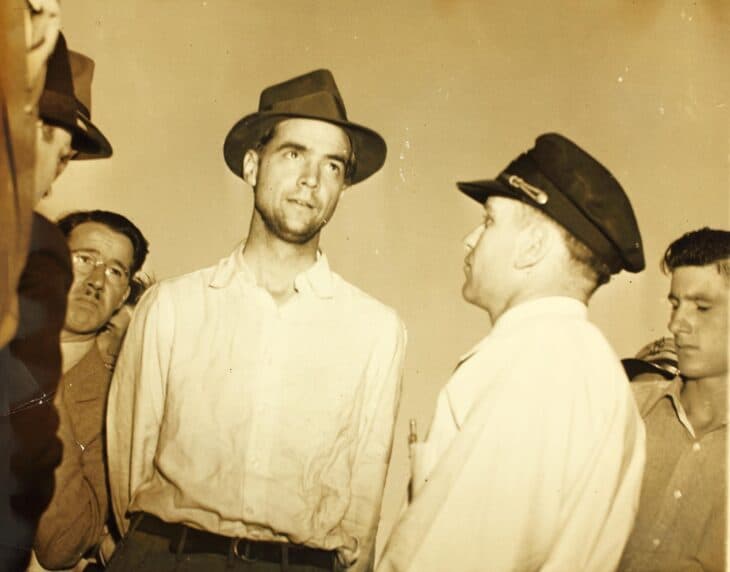
Hughes tops the list partly because he was famous for so much besides flying. But the flying was real, and some of it set world records.
On September 13, 1935, he flew his own H-1 racer to a world landplane speed record of 352 mph (567 km/h) over a timed course near Santa Ana, California. The flight ended with a wheels-up landing in a beet field after the fuel ran out.
In January 1937, the same H-1 crossed the United States in 7 hours, 28 minutes and 25 seconds, averaging 332 mph (535 km/h). In July 1938, he and his crew flew a Lockheed 14 around the world in 91 hours and 14 minutes, although the route was too short to count as an official circumnavigation record.
His best-known flight was his shortest. On November 2, 1947, he lifted the giant H-4 Hercules flying boat off the water for its only flight, about 70 feet up for roughly a mile, by most accounts. The “Spruce Goose” was built almost entirely of birch.
The last private speed king
According to the Smithsonian, the H-1 was the last airplane financed, built and flown by a private individual to set a world speed record. Every speed record since has belonged to a government or a major manufacturer.
2. Amelia Earhart

Earhart’s first Atlantic crossing, in June 1928, made her famous, but she did not fly the airplane. She rode as a passenger with two male pilots, and said afterward she felt like “a sack of potatoes.”
She fixed that on May 20 and 21, 1932, flying a Lockheed Vega 5B alone from Harbor Grace, Newfoundland to a field near Londonderry, Northern Ireland. The 2,026-mile (3,260 km) crossing took about 15 hours and made her the first woman, and only the second person after Lindbergh, to fly the Atlantic nonstop and solo.
In January 1935, she became the first person of either sex to fly solo from Hawaii to the US mainland. Two years later, she and navigator Fred Noonan vanished in her Lockheed Electra 10E on the 2,556-mile (4,113 km) leg from Lae, New Guinea to Howland Island.
They left Lae on July 2, 1937, with 22,000 miles (35,400 km) of the world flight already behind them. She was declared lost at sea on July 19.
3. The Wright Brothers
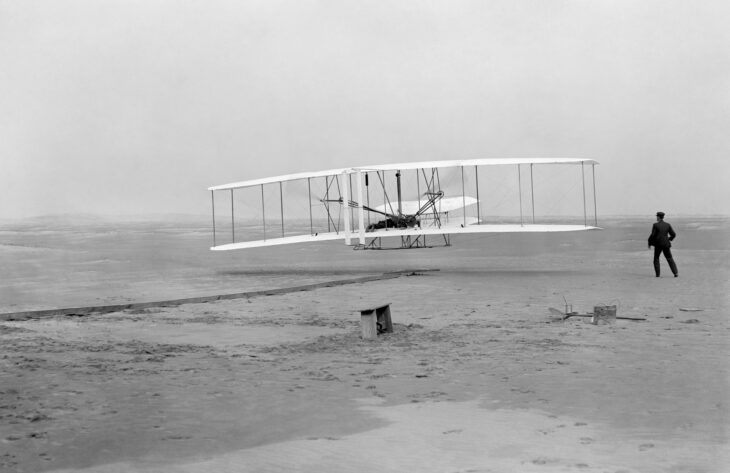

On December 17, 1903, Orville and Wilbur Wright made four flights in a powered, controlled airplane at Kill Devil Hills, North Carolina. That is about 4 miles south of Kitty Hawk, the nearest village and telegraph station, which is why the name stuck.
Orville flew first: 120 feet (37 m) in 12 seconds. Wilbur flew last and longest: 852 feet (260 m) in 59 seconds. The Flyer had a 12-horsepower engine, and a gust wrecked it after the fourth flight; it never flew again.
A number that gets misquoted: the first flight’s often-cited 6.8 mph (11 km/h) was its speed over the ground, into a 27 mph headwind. Its airspeed was about 34 mph (55 km/h), according to the National Park Service.
They flew together only once
The two men who invented the airplane flew in one together exactly once, on May 25, 1910, near Dayton: a six-minute flight with Orville at the controls and Wilbur as his passenger.
4. Charles Lindbergh
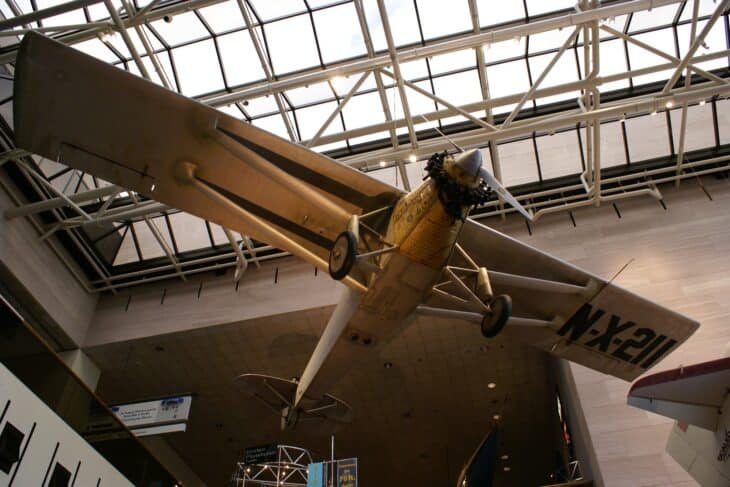
Lindbergh was not the first to fly the Atlantic nonstop. John Alcock and Arthur Brown did that in June 1919, flying a Vickers Vimy from Newfoundland to Ireland.
What Lindbergh did was fly it alone, and all the way from New York to Paris. He took off from Roosevelt Field on May 20, 1927, in the Ryan NYP Spirit of St. Louis, and landed at Le Bourget 33 hours and 30 minutes later, 3,610 miles (5,810 km) away.
He was 25, and the flight won him the $25,000 Orteig Prize. He also could not see straight ahead. The fuel tanks sat in front of the cockpit, so he looked forward through a periscope or by turning the aircraft to look out a side window.
5. Chesley “Sully” Sullenberger
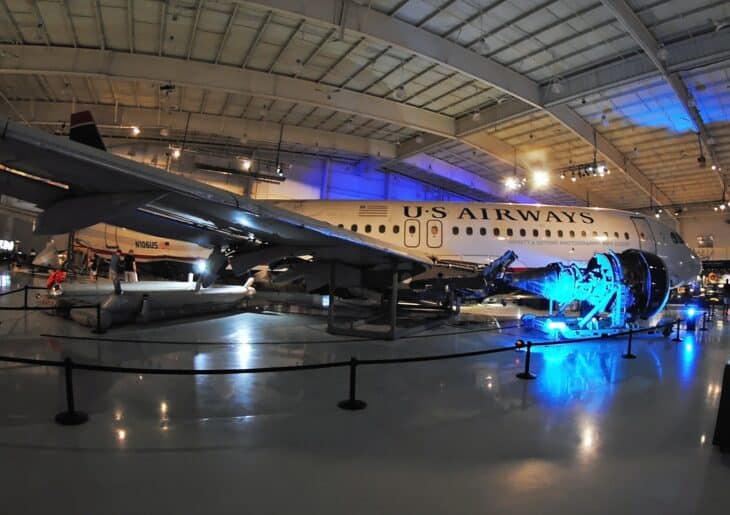
On January 15, 2009, US Airways flight 1549, an Airbus A320, hit a flock of Canada geese at 2,818 feet about two minutes after leaving LaGuardia. Both engines lost almost all their thrust.
Sullenberger took control and ditched in the Hudson River about 8.5 miles (13.7 km) from the airport. By the timestamps in the NTSB report, about three and a half minutes passed between the call of “birds” and the end of the cockpit recording. All 155 people aboard survived.
The 2016 film suggested investigators thought he could have made a runway. The final report says a return worked in simulation only if the turn began immediately after the bird strike, and concluded that ditching gave the best chance of survival. The full story is in our breakdown of US Airways Flight 1549.
Look up the wrong name and he barely registers
Sully’s Wikipedia article is titled “Sully Sullenberger.” Counted under his birth name, Chesley Sullenberger, which now only redirects, he drew 47,204 readers and would sit near the bottom of this list. Under the real title he drew 746,970, more than the Red Baron.
6. Manfred von Richthofen, the Red Baron
_-_btv1b530050250.jpg)
Richthofen is officially credited with 80 victories, the highest total of any pilot in the air war of World War I. He was killed on April 21, 1918, at 25.
The famous red triplane accounts for only part of that. He scored most of his victories in Albatros fighters, and only 19 of his last 21 in the Fokker Dr.I; the first aircraft he painted bright red was an Albatros D.III, in January 1917.
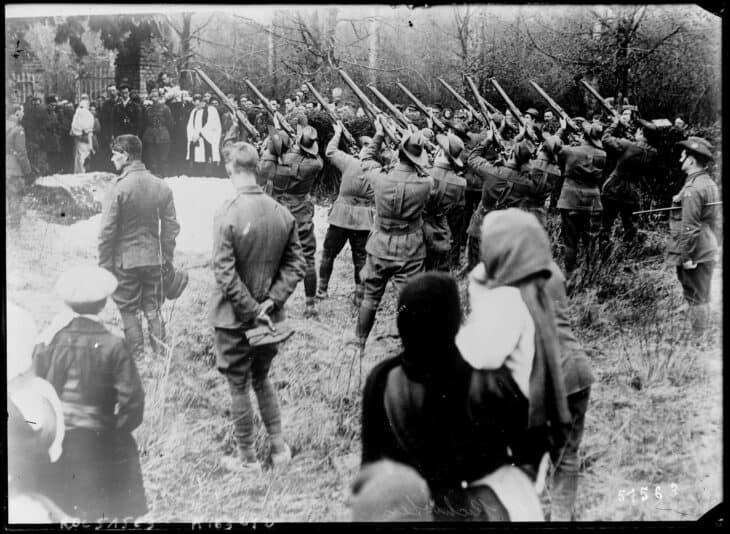
The RAF officially credited Canadian pilot Roy Brown with shooting him down. Later analysis found the fatal bullet could only have come from the ground, and historians now point to Australian ground fire, most likely Sergeant Cedric Popkin’s machine gun. Australian officers carried his coffin at a full military funeral.
7. Chuck Yeager
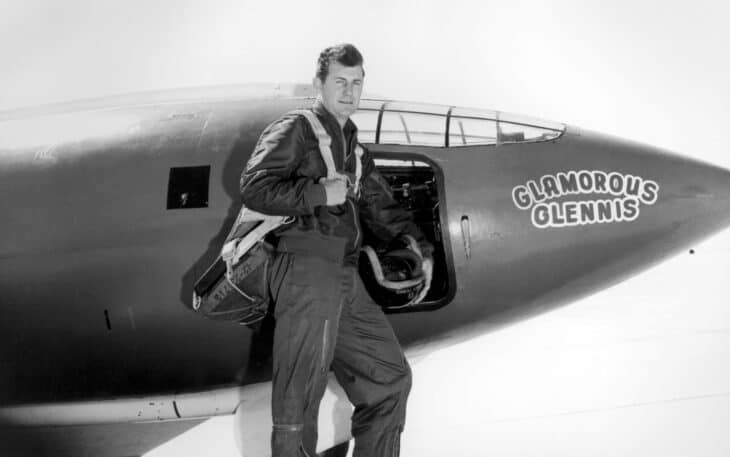

On October 14, 1947, Yeager was dropped from a B-29 in the Bell XS-1 Glamorous Glennis and flew it to Mach 1.06, about 700 mph (1,127 km/h), at 43,000 feet over the Mojave. It was the first verified, instrumented supersonic flight in level flight.
He did it with two broken ribs from a horseback riding accident the weekend before. He told only fellow pilot Jack Ridley, who helped him squeeze into the cockpit.
North American test pilot George Welch may have gone supersonic in a dive in the XP-86 that same month, but his aircraft was not instrumented, so the claim cannot be proven.
Yeager went on to fly the X-1A to Mach 2.44 in 1953, on the way to the records in our fastest aircraft in the world ranking, and died in 2020 at 97.
8. Antoine de Saint-Exupéry
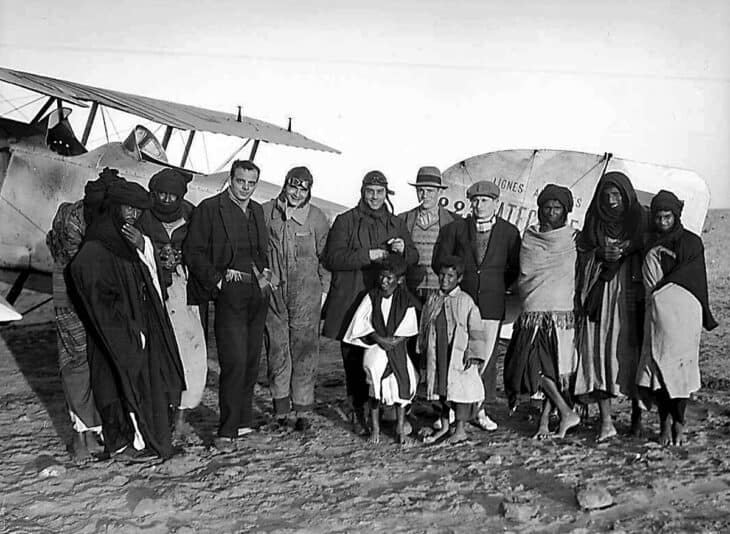
Most of his readers know him as the author of The Little Prince, but Saint-Exupéry was a working pilot first. He flew the mail for Aéropostale from 1926, on the route from Toulouse to Dakar, and later ran its Argentine subsidiary.
In December 1935, during an attempt at a Paris-to-Saigon flight, he crashed in the Sahara with his mechanic, André Prévot. They survived four days in the desert before Bedouin found them, a story he told in Wind, Sand and Stars.
On July 31, 1944, he took off from Corsica in an F-5B, an unarmed photo-reconnaissance version of the P-38 Lightning, and never returned.
His bracelet turned up in a fishing net in 1998, and the wreck was found off Marseille in 2000. Why he went down is still unknown; a former Luftwaffe pilot’s 2008 claim to have shot him down has never been verified.
9. Francis Gary Powers
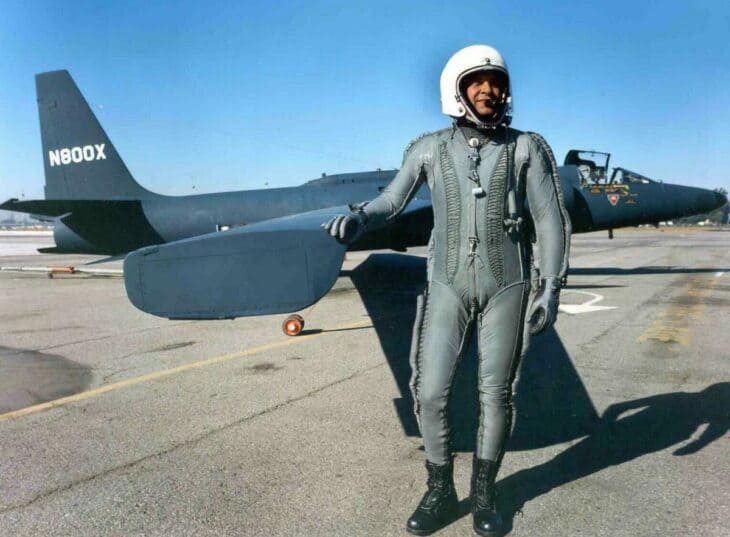

On May 1, 1960, Powers, a CIA pilot, was flying a U-2 spy plane from Peshawar, Pakistan across the Soviet Union when the Soviets fired 14 SA-2 missiles at him. One exploded behind his aircraft at about 70,500 feet.
G-forces pinned him against the canopy, so he could not use the ejection seat and climbed out instead. The same salvo also shot down a Soviet MiG-19, killing its pilot.
A Soviet court sentenced him to three years in prison and seven more of hard labor. On February 10, 1962, he was exchanged for the Soviet spy Rudolf Abel on Berlin’s Glienicke Bridge.
Critics said he should have destroyed the plane, but the destruct charge was only designed to wreck the camera. The Air Force awarded him a posthumous Silver Star in 2012; he had died in 1977, flying a TV news helicopter in Los Angeles.
10. Jimmy Doolittle
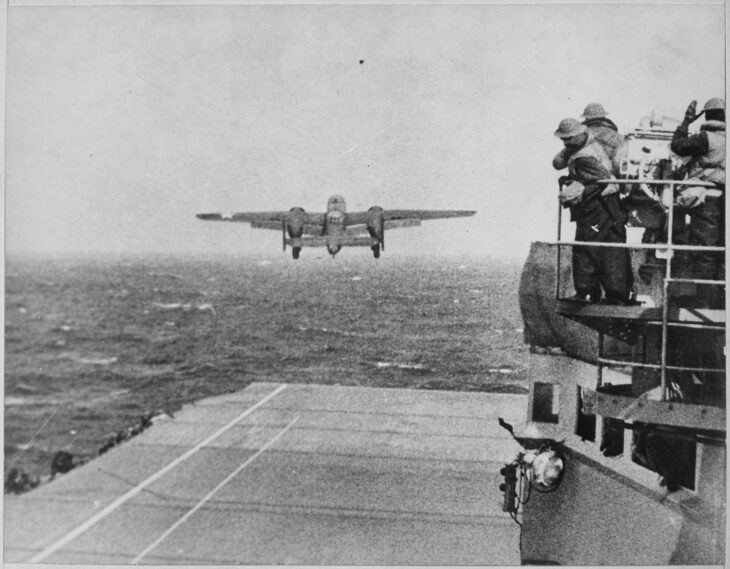
Doolittle is remembered for one raid, but he was aviation’s great test pilot between the wars. He won the 1925 Schneider Trophy at 232 mph (373 km/h), took a doctorate in aeronautics from MIT the same year, and won both the Bendix and Thompson races in the early 1930s.
On September 24, 1929, he made the first flight entirely by instruments, from takeoff to landing, in a Consolidated NY-2 with a safety pilot along. It lasted 15 minutes.
On April 18, 1942, he led 16 B-25 Mitchell bombers off the carrier USS Hornet to bomb Tokyo and other Japanese cities. Spotted by a picket boat, they launched about 10 hours early and 170 nautical miles farther out than planned; 15 crashed in China and one landed at Vladivostok.
Having lost every aircraft, Doolittle expected a court-martial. Instead he was promoted two grades to brigadier general and awarded the Medal of Honor.
11. Paul Tibbets
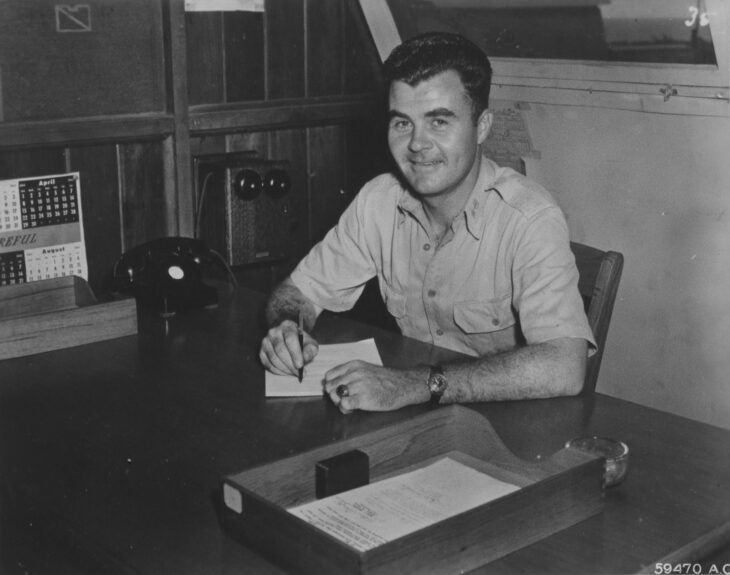

Tibbets piloted the B-29 Superfortress Enola Gay, named after his mother, which dropped the atomic bomb on Hiroshima on August 6, 1945. The bomb was released at 8:15 a.m. local time from 31,060 feet, with a crew of 12 aboard.
He commanded the 509th Composite Group, about 1,800 men formed for the atomic mission, and had more B-29 time than any other pilot. Earlier in the war, he flew General Eisenhower to Gibraltar ahead of the invasion of North Africa.
The legend of the Hiroshima pilot driven mad by guilt belongs to Claude Eatherly, who flew a weather plane that day. Tibbets said he slept clearly every night. He died in 2007 and asked for no funeral or headstone, fearing protesters.
12. Erich Hartmann
.jpg)
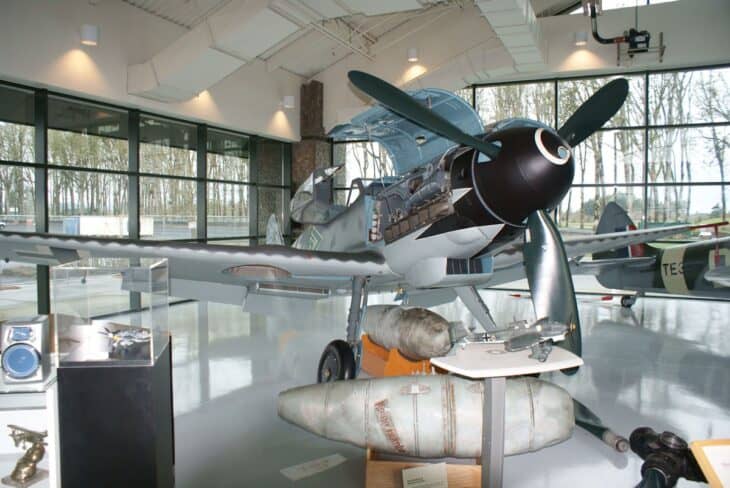
Hartmann is credited with 352 aerial victories, 345 of them Soviet, the highest tally ever claimed by a fighter pilot. He flew the Messerschmitt Bf 109 with JG 52 on the Eastern Front, across 1,404 combat missions.
The number is a wartime claim, not a confirmed count. Researchers who compared his claims against Soviet loss records put the real figure much lower, with one Russian estimate at 70 to 80.
He surrendered to US forces in May 1945, was handed to the Soviets, and spent about 10 years in prison camps before his release in 1955. His mother, one of Germany’s first women glider pilots, taught him to fly.
13. Bessie Coleman
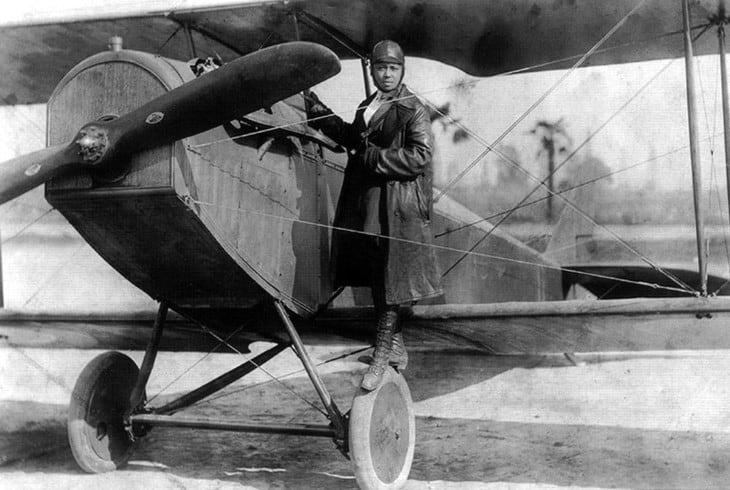
No American flight school would accept Bessie Coleman, so she trained in France. On June 15, 1921, the Fédération Aéronautique Internationale issued her a pilot’s licence, the first held by an African American woman and, according to the Smithsonian, by a Native American woman.
Back home she became a barnstormer, and refused to perform for segregated crowds. She died on April 30, 1926, near Jacksonville, Florida, when a loose wrench jammed the controls of a Curtiss JN-4 flown by her mechanic. She was not strapped in and was thrown out.
She is sometimes called the first Black pilot of all, which is not quite right: Eugene Bullard flew in combat for France from 1917. In 1992, astronaut Mae Jemison carried Coleman’s photo into space.
14. Douglas Bader
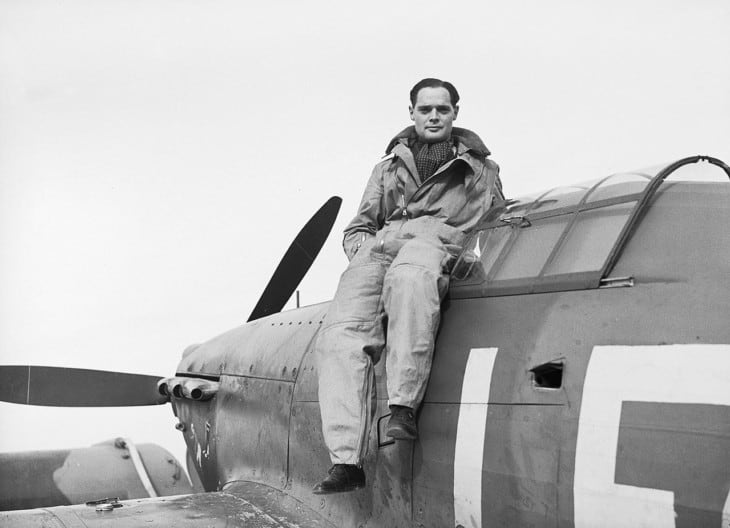
Bader did not lose his legs in combat. On December 14, 1931, he tried a low roll in a Bristol Bulldog on a dare, caught a wingtip, and lost both legs.
His logbook entry read: “Crashed slow-rolling near ground. Bad show.”
A medical board ended his flying in 1933, but he passed the RAF’s flying tests and rejoined in 1939. He flew Hurricanes and Spitfires in 1940, led a wing in 1941, and was credited with 20 confirmed victories by the RAF Museum’s count.
He was brought down over France in August 1941, possibly by friendly fire, and left one artificial leg in the cockpit. The RAF dropped him a replacement during a bombing raid, and he ended the war in Colditz.
15. Hans-Ulrich Rudel

Rudel flew the Junkers Ju 87 Stuka on the Eastern Front and is credited with 2,530 combat missions and 519 tanks destroyed. The tank figure is his claim, and no primary source confirms it.
He was the only recipient of the Knight’s Cross with Golden Oak Leaves, Swords and Diamonds. After losing his right leg in February 1945, he was flying combat again within weeks.
He is on this list because people look him up, not because he is admired here. He remained a committed Nazi, helped fugitives including Josef Mengele from Argentina, and in 1976 cost two West German generals their jobs by attending a veterans’ meeting at an air base.
16. Robin Olds
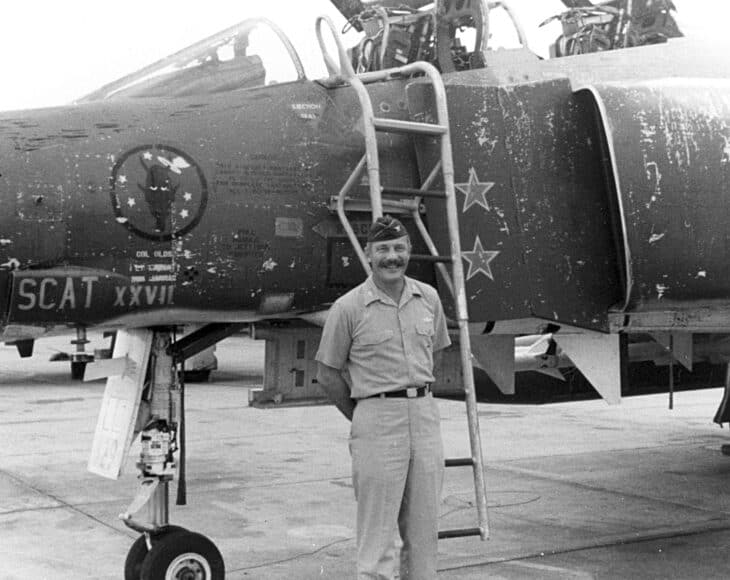

Olds was a World War II ace with 12 official victories in P-38s and P-51s. Two decades later, he commanded the 8th Tactical Fighter Wing, the “Wolfpack,” in Vietnam.
On January 2, 1967, he led Operation Bolo, sending F-4 Phantoms along the routes, altitudes and formations of slower F-105 bombers. North Vietnamese MiG-21s rose to meet what they thought were bombers, and seven were shot down in 12 minutes, with no US losses.
He downed four MiGs in Vietnam and, by his own account, avoided a fifth on purpose, because becoming an ace would have gotten him sent home. His unregulation handlebar mustache is the origin of the Air Force’s “Mustache March.”
17. Gregory “Pappy” Boyington
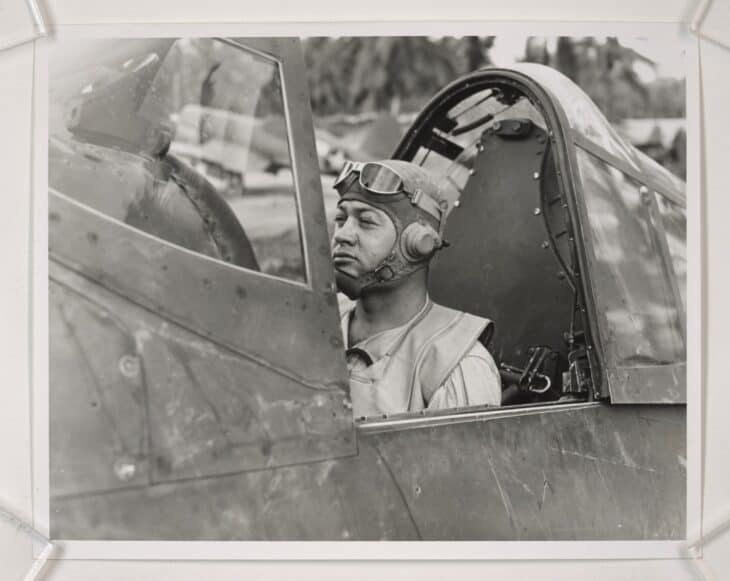

Boyington commanded the Marine squadron VMF-214, the “Black Sheep,” flying the F4U Corsair in the Solomon Islands in 1943. At 31 he was about a decade older than his pilots, hence “Pappy.”
His Medal of Honor citation credits him with 26 aircraft destroyed. The Marine Corps later made it 28, counting six victories he claimed with the Flying Tigers, although Flying Tigers records credit him with fewer.
Shot down over Rabaul on January 3, 1944, he spent 20 months as a prisoner of war. His memoir became the 1970s TV series Baa Baa Black Sheep, which Boyington himself called “hogwash and Hollywood hokum.”
18. Richard Bong
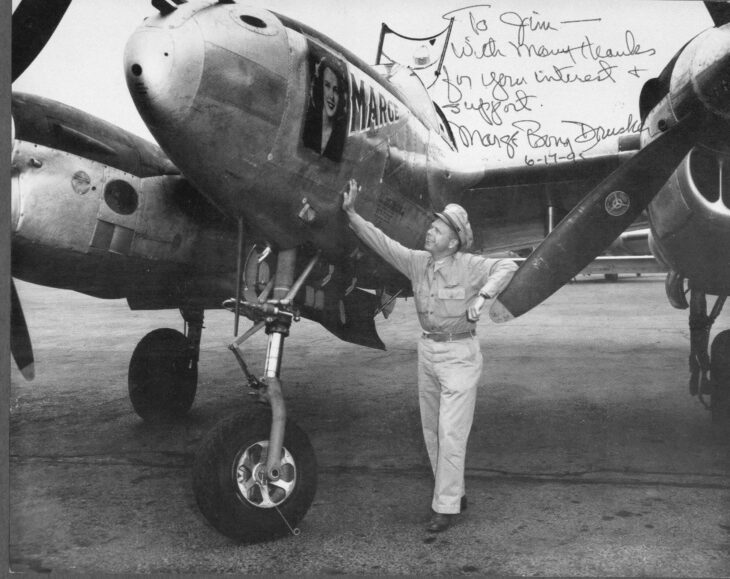

Bong is America’s top-scoring ace, with 40 victories, every one of them in a P-38 Lightning over the Pacific. He passed Eddie Rickenbacker’s World War I record of 26 on April 12, 1944.
General Douglas MacArthur presented his Medal of Honor on December 12, 1944. He admitted he was a poor shot and made up for it by closing to point-blank range.
He died on August 6, 1945, when the fuel pump failed on a P-80 Shooting Star jet he was testing at Burbank. His death shared the front pages with the bombing of Hiroshima the same day.
19. Hanna Reitsch
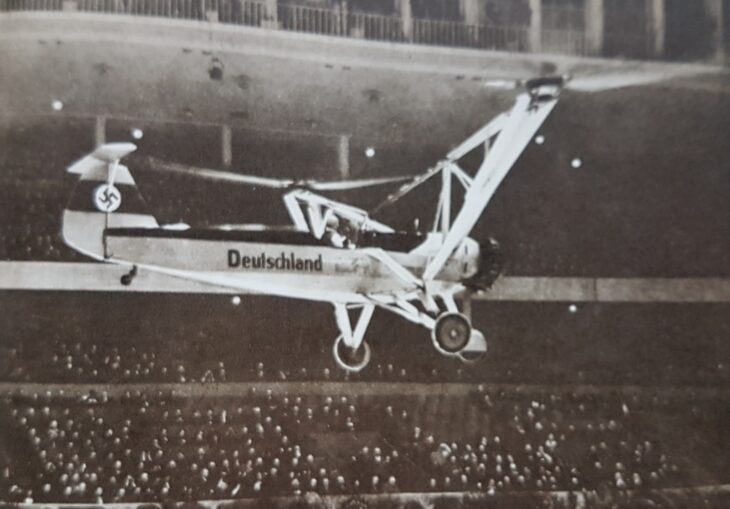

Reitsch was the first woman to fly a helicopter, the Focke-Wulf Fw 61, in 1937, and in 1938 she flew it inside a Berlin sports hall. She set more than 40 altitude and endurance records in powered aircraft and gliders.
As a wartime test pilot, she crash-landed the rocket-powered Messerschmitt Me 163 Komet in 1942 and spent five months in hospital. On April 26, 1945, she flew into besieged Berlin with General Robert Ritter von Greim, landing their light plane on the city’s East-West Axis boulevard after he was wounded at the controls.
In the 1970s she still said she was not ashamed of having believed in National Socialism. She was setting records in 1979, the year she died, with a 498-mile (802 km) women’s gliding record flown along the Appalachians.
20. Eddie Rickenbacker
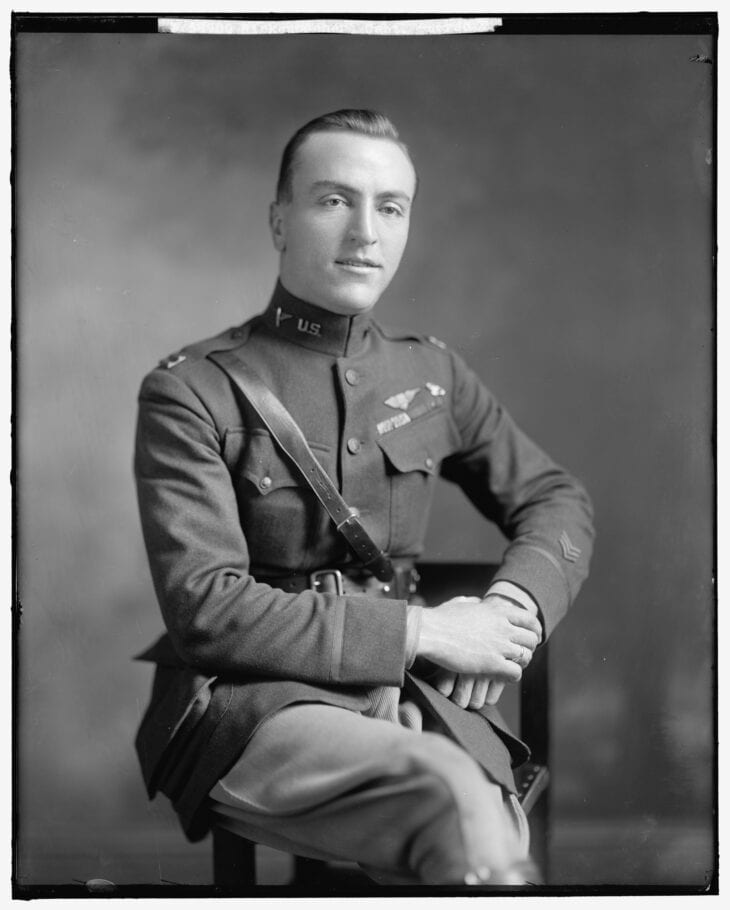

Rickenbacker was already a famous race car driver, a starter in the 1912 Indianapolis 500, before he went to war. With 26 confirmed victories, he became America’s top ace of World War I, commanding the 94th Aero Squadron.
President Hoover awarded him the Medal of Honor in 1930 for attacking seven German aircraft alone on September 25, 1918. He later ran Eastern Air Lines.
In October 1942, a B-17 carrying him across the Pacific got lost and ditched in the Pacific. The survivors drifted for three weeks or more, 21 to 24 days depending on the account, and lived partly on a seagull that landed on Rickenbacker’s head.
What the Ranking Shows
Fourteen of the 20 are American, which partly reflects the English-language Wikipedia used to measure them. Four are German, one French and one British.
War dominates the list. Eight of the 20 were fighter aces, and three more, Powers, Doolittle and Tibbets, are best known for a single wartime or Cold War mission.
Only three are women: Earhart, Coleman and Reitsch. And only one, Sully, flew for an airline.
What about Neil Armstrong?
On pageviews alone, Neil Armstrong (1,860,647 readers) would rank second, and he was a serious pilot: 78 combat missions over Korea, then seven X-15 flights reaching 207,500 feet and 3,989 mph (6,420 km/h). Yuri Gagarin (1,020,405) was a MiG-15 fighter pilot, and John Glenn (678,579) made the first flight across the United States at an average supersonic speed in 1957. We left all three off because their fame rests on spaceflight, not on flying aircraft. Counting them would turn this into a list of space explorers.
FAQ
Sources and references used for research and fact-checking.
- Wikimedia Foundation, Pageviews API: Howard Hughes, September 2025 to August 2026
- Smithsonian National Air and Space Museum, Hughes H-1 Racer
- Air and Space Quarterly, The Hughes H-1 Racer
- This Day in Aviation, 10-14 July 1938
- This Day in Aviation, 2 November 1947
- Evergreen Aviation and Space Museum, The Spruce Goose
- Smithsonian National Air and Space Museum, Lockheed Vega 5B, Amelia Earhart
- Smithsonian National Air and Space Museum, Medal, Amelia Earhart, First Woman to Cross Atlantic in an Airplane
- Smithsonian National Air and Space Museum, Amelia Earhart
- Smithsonian National Air and Space Museum, Model, Static, Lockheed Electra, Amelia Earhart
- National Park Service, Wright Brothers National Memorial: Site of the First Controlled Powered Flight
- National Park Service, The First Flight
- Smithsonian National Air and Space Museum, 1903 Wright Flyer
- Wikipedia, Wright brothers
- Smithsonian National Air and Space Museum, Ryan NYP Spirit of St. Louis
- RAF Museum, A Transatlantic Tale
- National Transportation Safety Board, Aircraft Accident Report AAR-10/03: Loss of Thrust in Both Engines, US Airways Flight 1549
- National Museum of the US Air Force, Baron Manfred von Richthofen
- National Museum of the US Air Force, Fokker Dr.I
- Armidale Express, Who shot down the notorious Red Baron?
- Wikipedia, Manfred von Richthofen
- Smithsonian National Air and Space Museum, Bell X-1 Glamorous Glennis
- NASA, Chapter 3 (SP-4219)
- Aerospaceweb, Who was the first person to break the sound barrier?
- Hill Air Force Base, Renowned test pilot Chuck Yeager dies
- AOPA, Aviation history: Celebrating Saint-Exupery
- This Day in Aviation, Antoine de Saint-Exupery
- French Ministry of Culture, The P-38 flown by Saint-Exupery
- CBS News, Little Prince mystery solved
- National Museum of the US Air Force, The Powers Incident
- Aviation Week, Seven artifacts surrounding the 1960 U-2 shootdown
- US Department of State, Office of the Historian, The U-2 Incident, 1960
- CIA, May Day Over Moscow: The Francis Gary Powers Story
- US Air Force, Cold War U-2 pilot gets posthumous Silver Star
- US Air Force, General James Harold Doolittle
- Smithsonian Pioneers of Flight, Curtiss R3C-2
- Smithsonian Pioneers of Flight, 1931 Bendix Trophy Race
- Engineering and Technology History Wiki, Milestones: First Blind Takeoff, Flight and Landing, 1929
- Naval History and Heritage Command, Halsey-Doolittle Raid
- Wikipedia, Doolittle Raid
- Atomic Heritage Foundation, Paul Tibbets
- National Park Service, The Atomic Bombings of Hiroshima and Nagasaki
- Smithsonian National Air and Space Museum, Boeing B-29 Superfortress Enola Gay
- NBC News, Pilot who dropped atomic bomb dies
- Wikipedia, Claude Eatherly
- Wikipedia, Erich Hartmann
- HistoryNet, Erich Hartmann: Best in the East
- MilitaryHistoryNow, 352 Kills: How Germany's Erich Hartmann Became History's Deadliest Flying Ace
- Smithsonian National Air and Space Museum, Bessie Coleman
- Smithsonian National Air and Space Museum, Celebrating the Centennial of Bessie Coleman
- Texas State Historical Association, Coleman, Bessie
- National Women's History Museum, Bessie Coleman
- National Museum of the US Air Force, Eugene Jacques Bullard
- RAF Museum, Douglas Bader: Early Career
- RAF Museum, Douglas Bader: A Fighter Pilot Again
- RAF Museum, Douglas Bader: Prisoner of War
- Wikipedia, Douglas Bader
- Wikipedia, Hans-Ulrich Rudel
- EBSCO Research Starters, German Generals Must Retire for Supporting Neo-Nazi Pilot
- National Museum of the US Air Force, Brig. Gen. Robin Olds: Combat Leader and Fighter Ace
- National Museum of the US Air Force, Operation Bolo
- Tinker Air Force Base, Air Force history: Mustache March from days of Olds
- Wikipedia, Robin Olds
- Marine Corps University History Division, Maj Gregory Boyington
- Arlington National Cemetery, Gregory Pappy Boyington
- Wikipedia, Pappy Boyington
- National Museum of the US Air Force, America's Top Two Aces
- This Day in Aviation, 6 August 1945
- Wikipedia, Richard Bong
- HistoryNet, Hanna Reitsch: Hitler's Female Test Pilot
- Wikipedia, Hanna Reitsch
- National Museum of the US Air Force, Capt. Edward V. Rickenbacker
- National Museum of the US Air Force, Eddie Rickenbacker: Race Car Driver
- Pacific Wrecks, B-17D Flying Fortress 40-3089
- Wikipedia, Eddie Rickenbacker
- NASA, Neil A. Armstrong
- European Space Agency, Yuri Gagarin
- This Day in Aviation, 16 July 1957
Get the Newsletter
The latest aviation news and stories sent to your inbox.
About the Author
Tim is the owner and lead editor of AeroCorner since 2019, overseeing aviation content covering aircraft, airlines, airports, and the broader aviation industry. Through years of researching, writing, editing, and publishing aviation-focused content, he has developed extensive practical knowledge of commercial aviation and air travel. Based in Asia and a frequent traveler himself, Tim also brings firsthand passenger experience to AeroCorner’s coverage. Outside of publishing, he has also explored aviation firsthand through hands-on flight training in New Zealand.