Military Transport Planes
The legendary failed development of Howard Hughes
The latest aviation news and stories sent to your inbox.
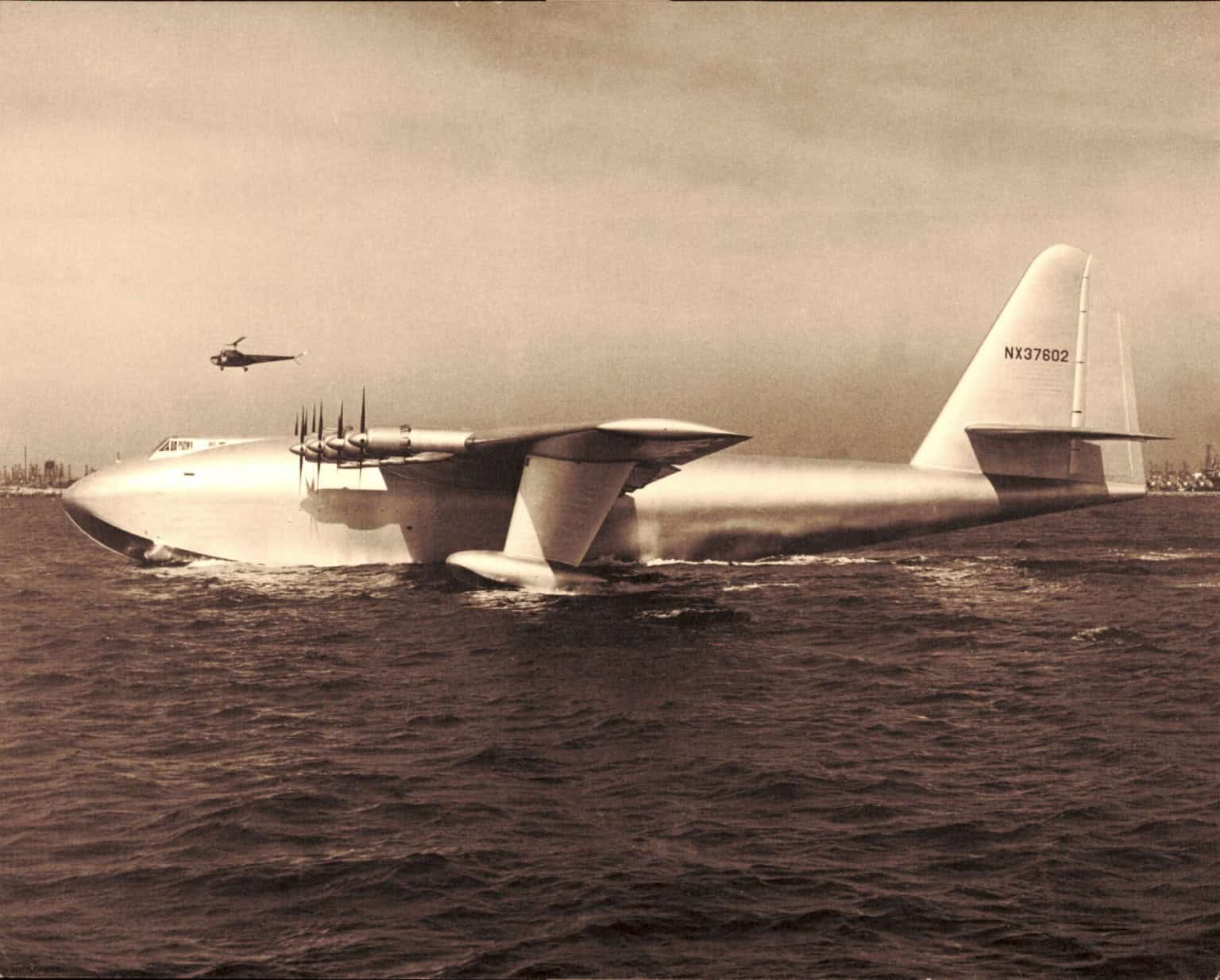
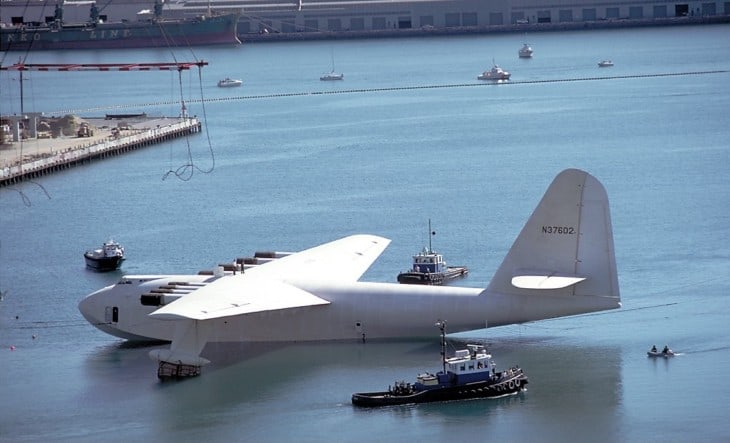
The Hughes H-4 Hercules was developed and built by the Hughes Aircraft Company as a prototype strategic airlift flying boat. It was planned to be a transatlantic flight transport to be used in the course of the Second World War, however, it was not completed promptly to be in service during the war. On November 2, 1947, the aircraft performed its first and only flight and there was only one prototype produced.


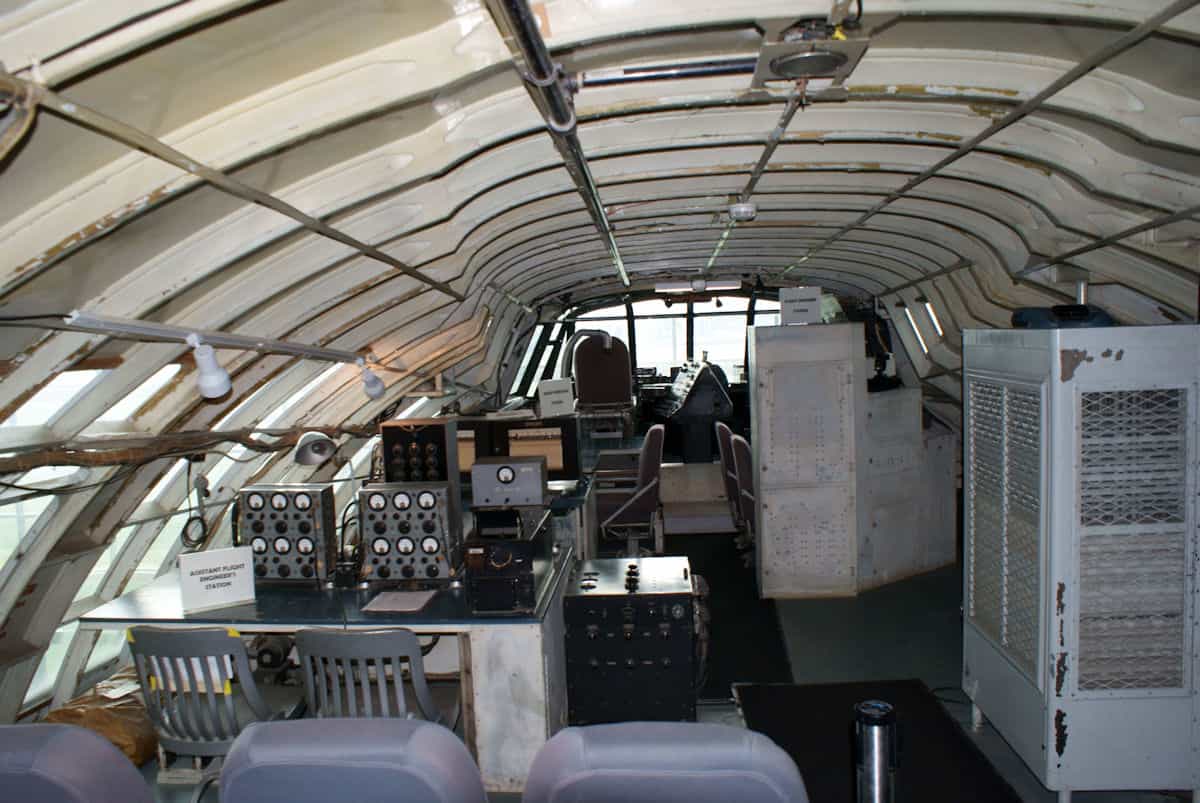


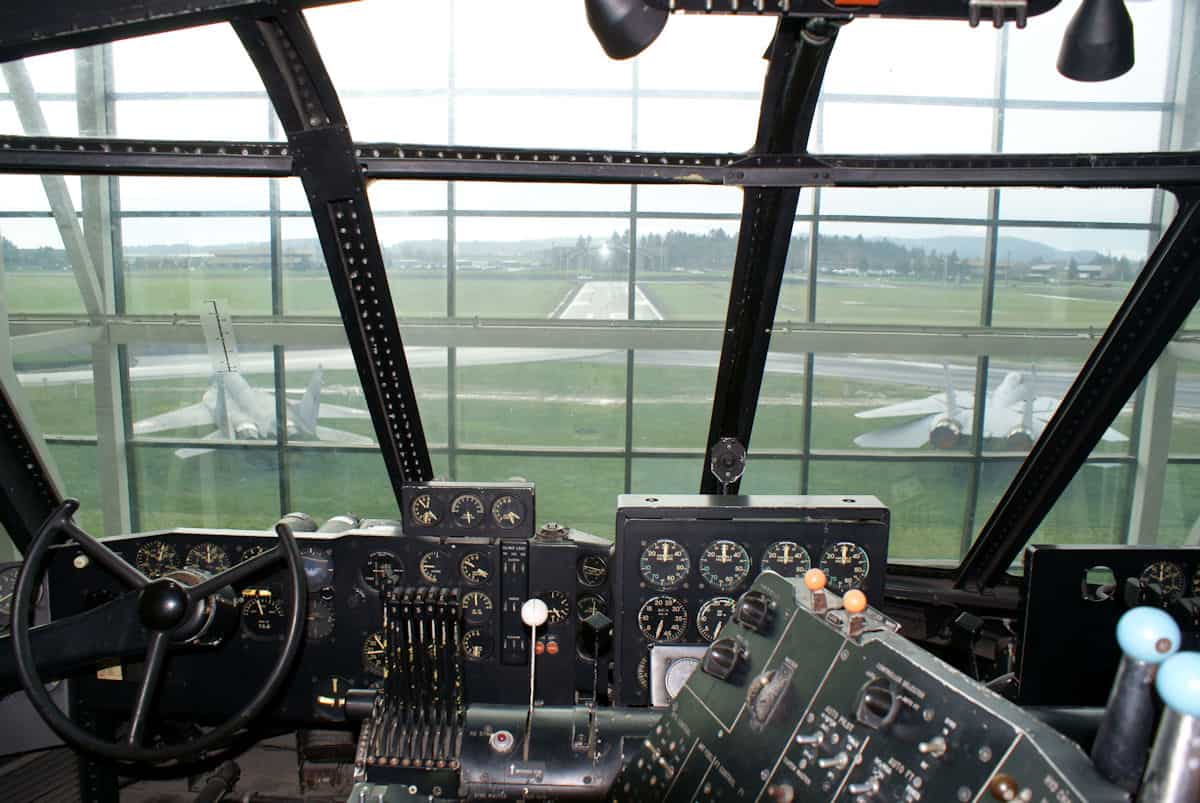
In 1942, a requirement to build a transatlantic flight transport with a large payload was issued that led to the development of an aircraft that could carry 68,000 kg of payload with 750 fully equipped troops or two 30,000 kg M4 Sherman medium tanks. The aircraft was designed by Henry J. Kaiser and Howard Robard Hughes Jr. and was initially designated as HK-1 to honor the collaboration of the two.
It was also known as the Spruce Goose, the Flying Lumberyard, and the H-4 Hercules. On November 2, 1947, the H-4 took to the skies for the first time. It was piloted by Hughes, with Dave Grant as his copilot, as well as two flight engineers, sixteen aircraft mechanics, and two more flight crew. There were also fourteen invited passengers on board.
The Hughes H-4 Hercules can accommodate up to three crew members. It has an external length of 66.65 meters, an external height of 9.1 meters, and a fuselage diameter of 8 meters. The tail height is 24.18 meters and the wingspan is 97.82 meters. It has an empty weight of 113,398 kg, a maximum payload of 68,000 kg, and a maximum takeoff weight of 181,436 kg.
The aircraft is powered by eight Pratt and Whitney R-4360 Wasp Major engines. It is a twenty-eight cylinder supercharged air-cooled four-row radial engine with two popper valves per cylinder, gear-driven single-stage variable-speed centrifugal-type supercharger, an optional General Electric CHM-2 turbocharger, Bendix-Stromberg PR-100E2 pressure carburetor, dry sump oil system, and an air cooling system. Each engine produces a maximum takeoff thrust of 3,000 horsepower and drives four-bladed Hamilton Standard constant-speed propellers.
The H-4 Hercules has a cruise speed of 220 knots and a travel range of 2,600 nautical miles. It can fly up to 20,900 feet.
Sources and references used for research and fact-checking.