Military Propellor Planes
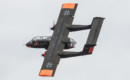
North American O-47
ICAO: O47
Iconic WW2 bomber
The latest aviation news and stories sent to your inbox.
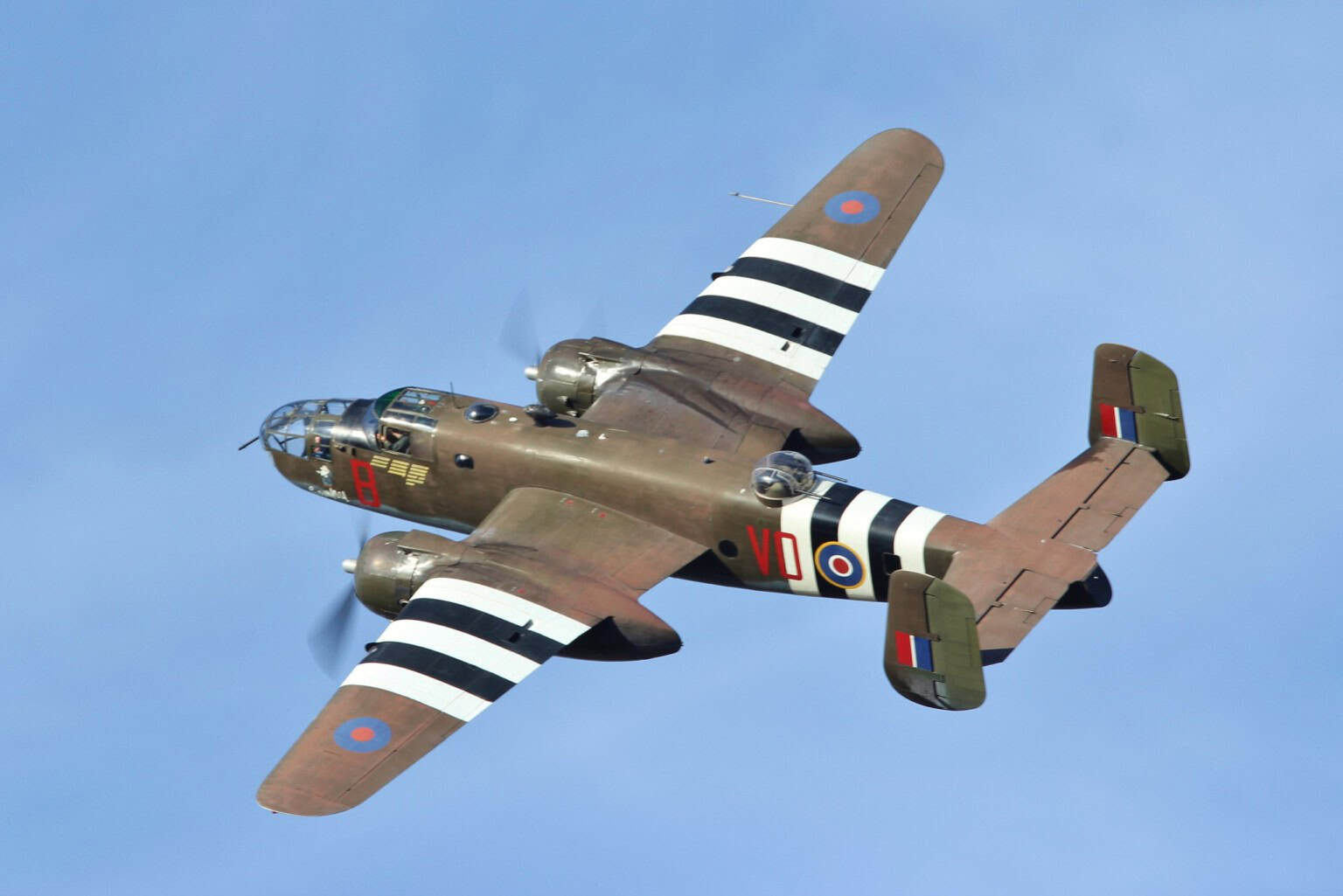
The North American B-25 Mitchell was introduced in 1941 and named after the late Major General William “Billy” Mitchell, the father of the United States Air Force. The aircraft was in service with different Allied air forces during the Second World War, and many still remained in service after the war and operated over forty years. It was manufactured by North American Aviation and first flew in August 1940.
Live Fleet Activity (B25)
Fetching live data…


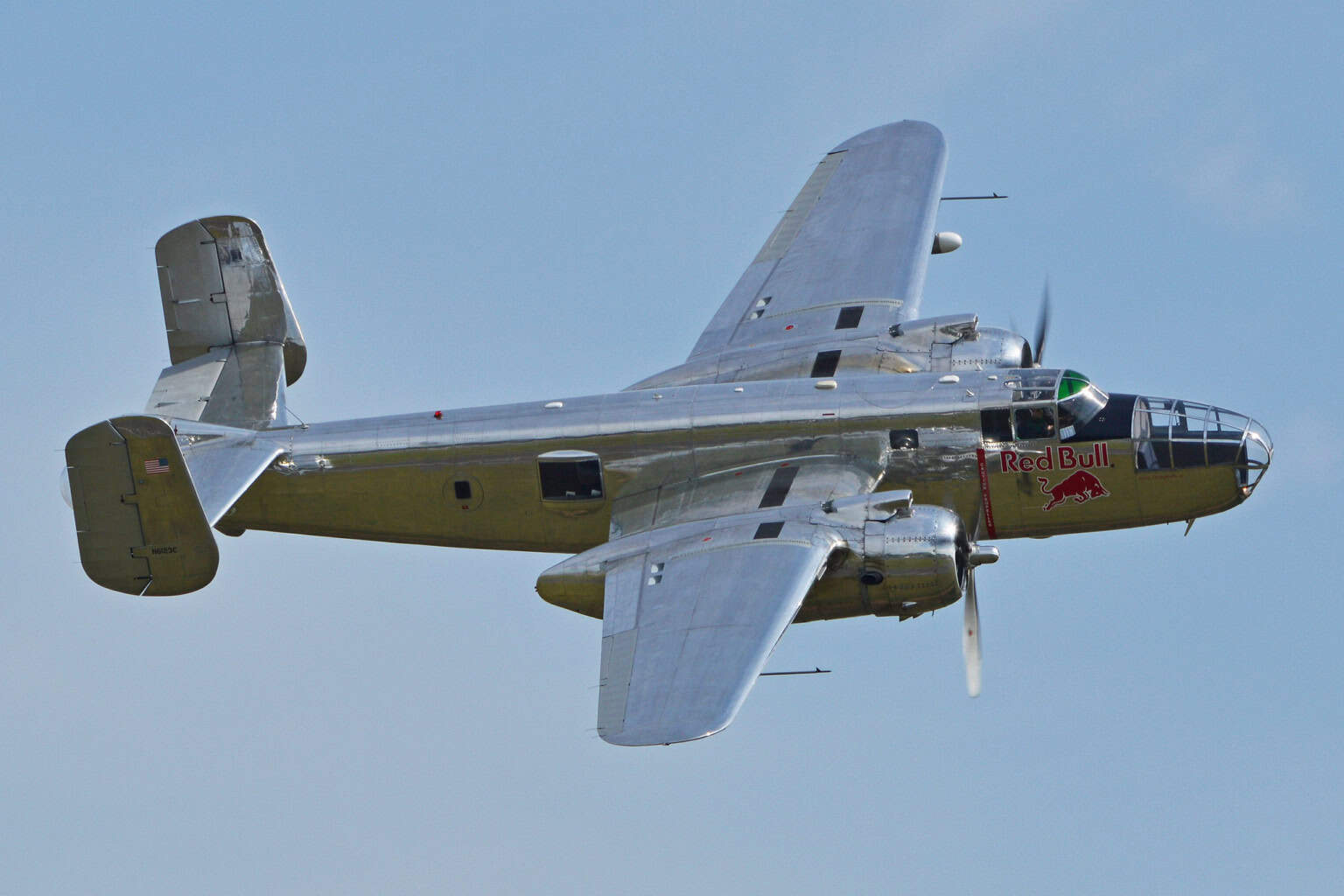

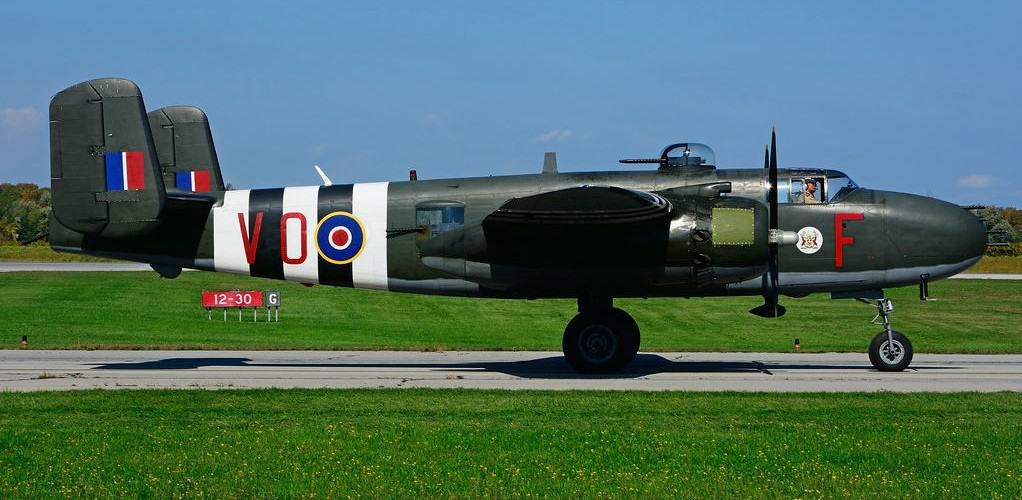


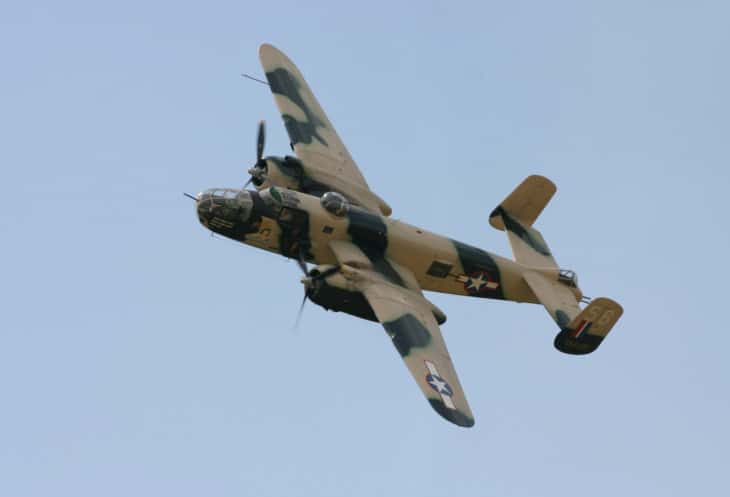
The B-25 Mitchell was developed and manufactured by North American Aviation Inc. as a response to a prewar requirement by the Air Corps for a medium bomber that could carry a 1,100 kg of payload over 1,042 nautical miles at 260 knots. The resulting aircraft was a high-wing monoplane with twin tail configuration, tricycle undercarriage, and was fitted with twin Wright radial engines.
The B-25 was first flown on August 19, 1940. It was introduced in 1941 and was in service with the United States Army Air Force, United States Marine Corps, Royal Air Force, and Soviet Air Force. It was retired in 1979 after four decades of service. The B-25 was developed from the NA-40 and a total of almost ten thousand aircraft were built.
The B-25 was produced in many versions; the B-25H is an updated variant of the B-25G with a repositioned manned dorsal turret toward the forward fuselage. It can carry five crew members including a pilot, navigator/bombardier/ turret gunner/engineer, radio operator/waist gunner, and tail gunner.
The aircraft has an exterior length of 16.13 meters, an exterior height of 3.9 meters, and a fuselage diameter of 1.4 meters. The twin tail has a height of 4.98 meters. It has a wingspan of 20.60 meters and a wing area of 57.4 square meters. The empty weight is 8,836 kg and the maximum takeoff weight is 15,876 kg. It has a maximum payload of 3060 kg and a fuel tank capacity of 974 US gal.
The B-25G is powered by two Wright R-2600-92 Twin Cyclone fourteen-cylinder two-row air-cooled radial piston engines. Each engine produces a maximum thrust of 1,700 horsepower. The aircraft has a maximum speed of 236 knots at 13,000 feet, a cruise speed of 200 knots, and a travel range of 1,170 nautical miles. It can fly up to 24,200 feet and can climb at a rate of 1,000 feet per minute. The B-25G is armed with 12-18 12.77 mm machine guns and 75 mm T13E1 cannon, 900 kg of ventral shackles to hold 1 external Mark 13 torpedo, rockets, and 1,360 kg of bombs.
Sources and references used for research and fact-checking.