

Table of Contents
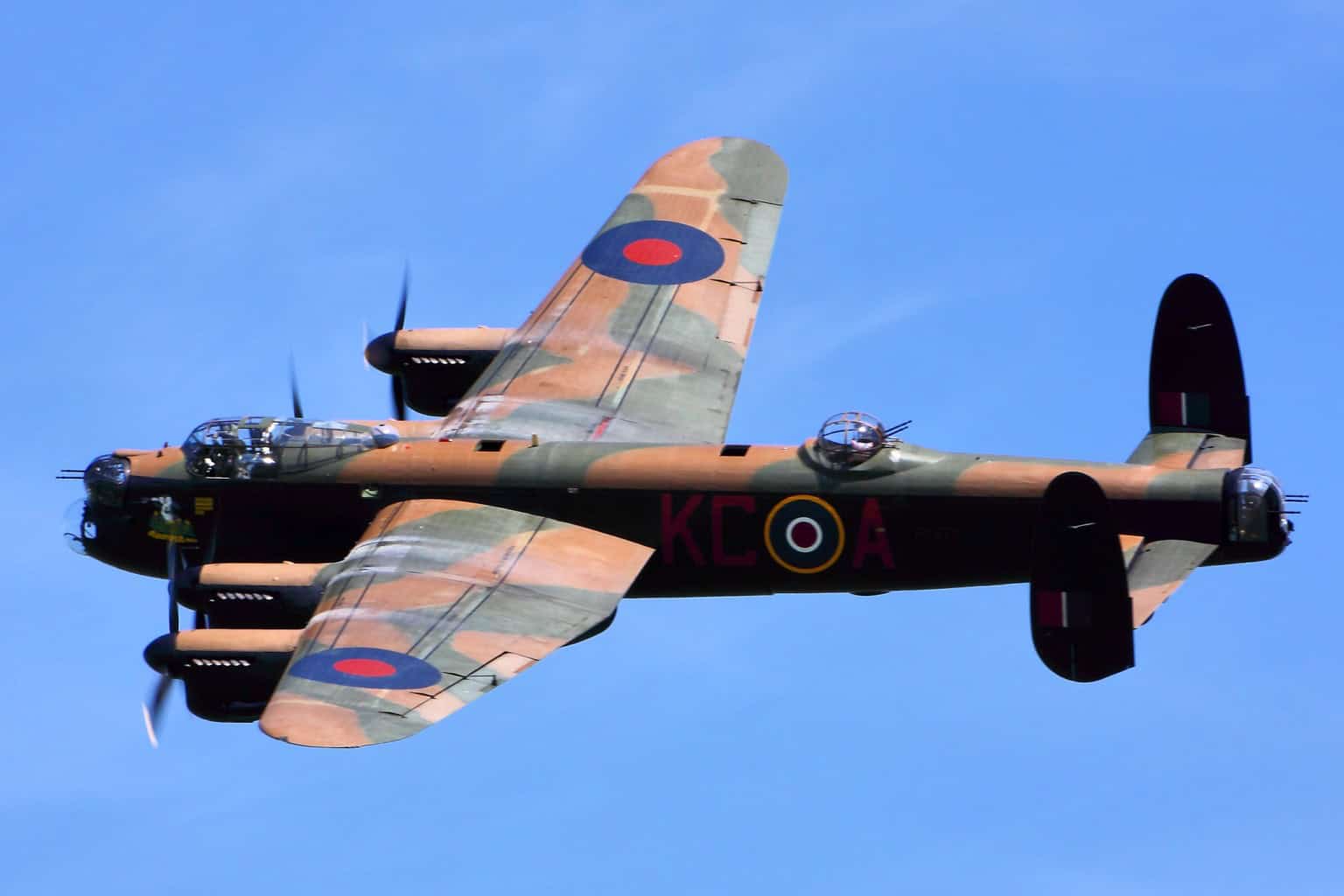
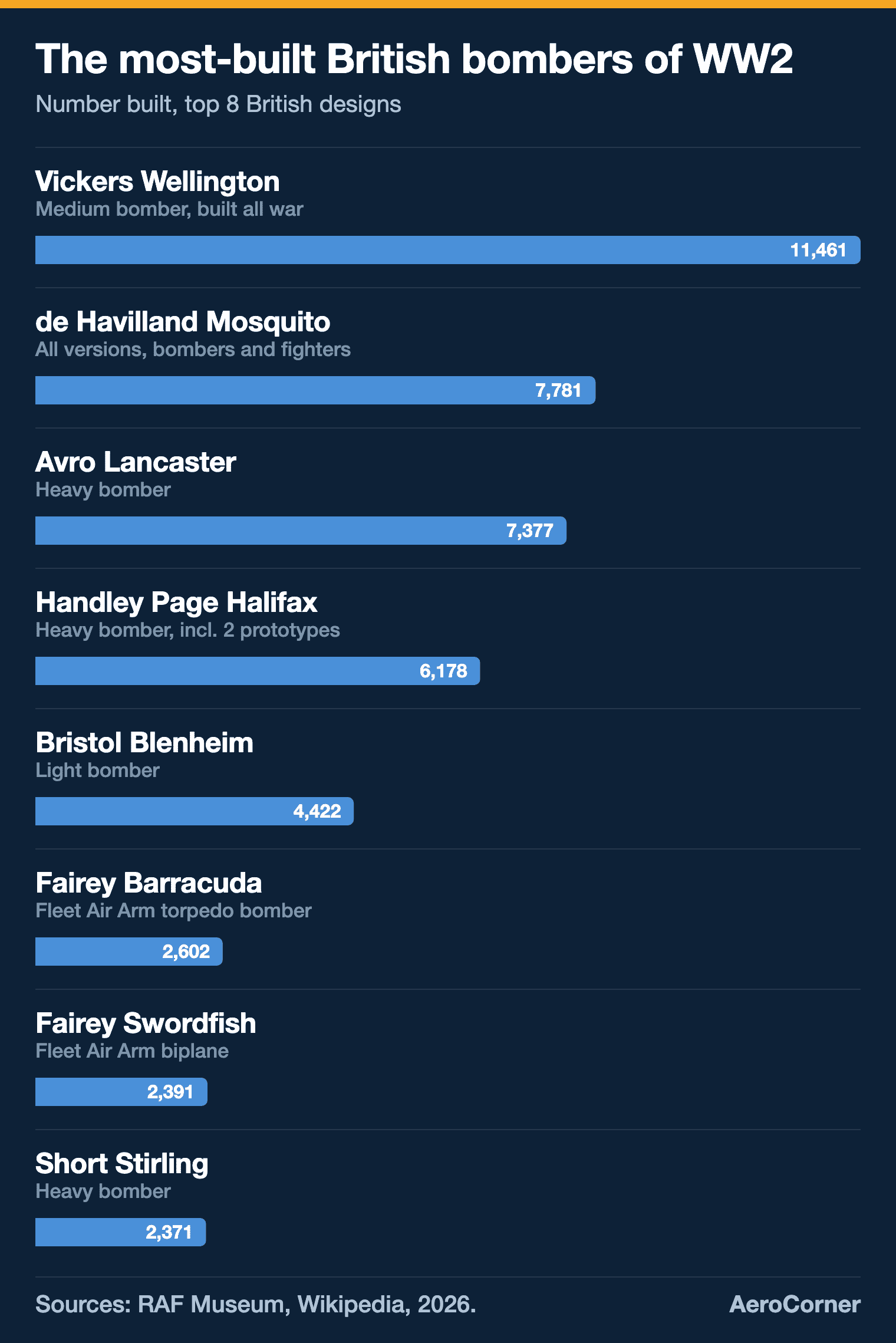
The most important British bomber of World War II was the Avro Lancaster: 7,377 were built, and they flew about 156,000 sorties and dropped 608,612 tons of bombs. The most-produced British bomber was the Vickers Wellington, at 11,461, the only British bomber built for the whole war.
Below are 20 British-designed bombers and strike aircraft flown by the Royal Air Force and the Royal Navy’s Fleet Air Arm, grouped by role: heavy, medium, light, coastal and naval. A separate section covers the 11 American-built bombers Britain flew, because several of them are often listed as British when they were not.
Every figure comes from the RAF Museum, the RAF Benevolent Fund or each type’s documented history, and the sources are listed at the end. Where sources disagree, we say so.
| Aircraft | Role | First flight | Number built | Top speed |
|---|---|---|---|---|
| Avro Lancaster | Heavy bomber | 1941 | 7,377 | 282 mph (454 km/h) |
| Handley Page Halifax | Heavy bomber | 1939 | 6,178 | 282 mph (454 km/h) |
| Short Stirling | Heavy bomber | 1939 | 2,371 | 282 mph (454 km/h) |
| Avro Manchester | Heavy bomber | 1939 | 209 | 265 mph (426 km/h) |
| Vickers Wellington | Medium bomber | 1936 | 11,461 | 235 mph (378 km/h) |
| Armstrong Whitworth Whitley | Medium bomber | 1936 | 1,814 | 230 mph (370 km/h) |
| Handley Page Hampden | Medium bomber | 1936 | 1,430 | 247 mph (398 km/h) |
| Bristol Blenheim | Light bomber | 1935 | 4,422 | 266 mph (428 km/h) |
| Fairey Battle | Light bomber | 1936 | 2,201 | 257 mph (414 km/h) |
| de Havilland Mosquito | Fast bomber | 1940 | 7,781 (all versions) | 415 mph (668 km/h) |
| Hawker Hart | Light bomber | 1928 | At least 1,004 | 185 mph (298 km/h) |
| Hawker Hind | Light bomber | 1934 | 528 | 185 mph (298 km/h) |
| Bristol Beaufort | Torpedo bomber | 1938 | 1,121, plus 700 in Australia | 271 mph (436 km/h) |
| Bristol Beaufighter | Strike fighter | 1939 | 5,928 | 320 mph (515 km/h) |
| Vickers Vildebeest | Torpedo bomber | 1928 | 209 | 143 mph (230 km/h) |
| Hawker Typhoon | Fighter-bomber | 1940 | 3,317 | 422 mph (679 km/h) |
| Fairey Swordfish | Naval torpedo bomber | 1934 | 2,391 | 143 mph (230 km/h) |
| Fairey Albacore | Naval torpedo bomber | 1938 | 800 | 161 mph (259 km/h) |
| Fairey Barracuda | Naval torpedo and dive bomber | 1940 | 2,602 | 240 mph (386 km/h) |
| Blackburn Skua | Naval dive bomber | 1937 | 192 | 225 mph (362 km/h) |
How this list is organized
This is not a ranking. The bombers are grouped by role, because a Lancaster and a Swordfish did different jobs and cannot be scored on one scale. Within each group they run roughly in order of wartime importance. American-built aircraft the RAF flew get their own section at the end.
British Heavy Bombers of WW2
Bomber Command’s night offensive against Germany was flown mostly by three four-engined heavies: the Stirling, the Halifax and the Lancaster. They entered service in that order, and each one outclassed the last.
1. Avro Lancaster

The Avro Lancaster first flew on January 9, 1941, and No. 44 (Rhodesia) Squadron took it on operations in March 1942. Four Rolls-Royce Merlin engines carried a crew of seven and a normal bomb load of 14,000 pounds (6,350 kg).
Modified Lancasters carried far more. No. 617 Squadron used them to drop the Upkeep bouncing bomb on the Ruhr dams on the night of May 16 to 17, 1943, and specially adapted aircraft carried the 22,000-pound (9,980 kg) Grand Slam.
The RAF Museum credits Lancasters with about 156,000 sorties and 608,612 tons of bombs. The cost was high: 3,249 were lost in action.
2. Handley Page Halifax
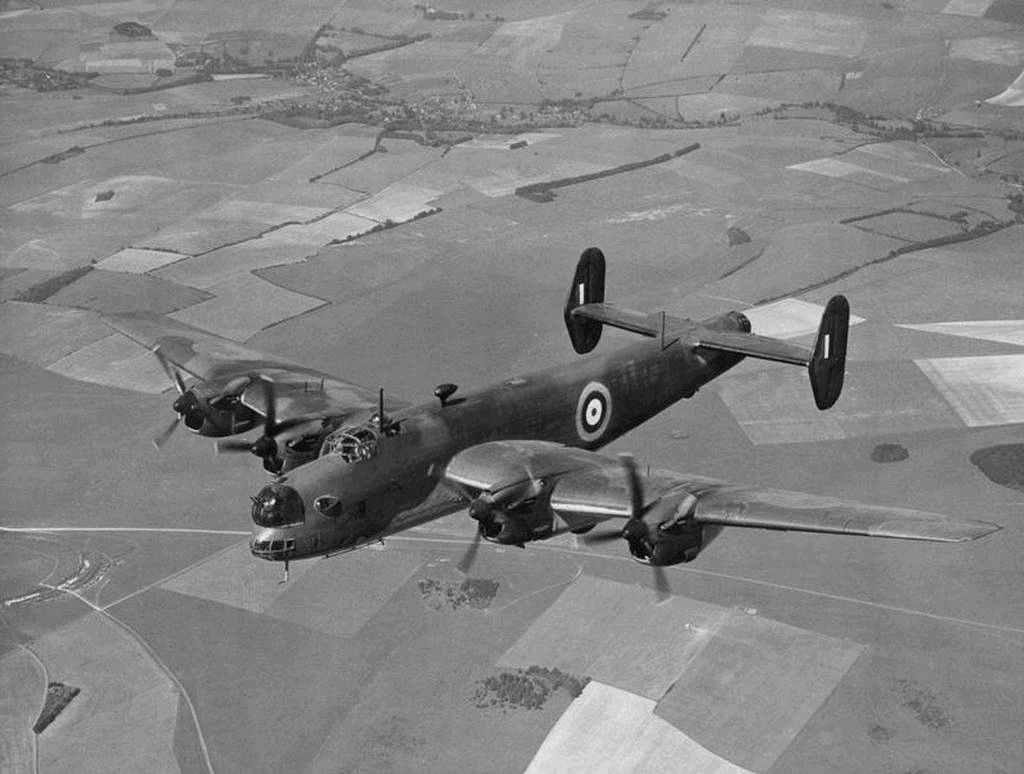
The Halifax first flew on October 25, 1939, and entered service in November 1940, more than a year before the Lancaster. The Bristol Hercules-engined Mk III matched the Lancaster’s 282 mph (454 km/h) top speed.
In all, 6,178 were built, counting two prototypes. Halifaxes flew 82,773 operations and lost 1,833 aircraft.
3. Short Stirling

The Stirling was the first four-engined bomber to enter RAF service in the war, delivered to No. 7 Squadron in August 1940. It could lift 14,000 pounds, but its bomb bay was split into cells that could not take anything larger than a 500-pound bomb.
Its service ceiling was only 16,500 feet. From late 1943 it was moved to second-line work, laying mines, towing gliders and flying transport missions. In all, 2,371 were built.
4. Avro Manchester


The Manchester is the bomber that failed its way into a success. It entered service with No. 207 Squadron in November 1940, powered by two Rolls-Royce Vulture engines that proved underdeveloped, underpowered and unreliable.
Only 209 were built before production ended in 1941. Avro redesigned it with four Rolls-Royce Merlins instead, and the result was the Lancaster.
The Lancaster began as a failed twin
The Lancaster was not a clean-sheet design. It was the Avro Manchester with four Merlin engines in place of two unreliable Vultures. The bomber that failed in 1941 became the one Bomber Command relied on until 1945.
British Medium Bombers of WW2
Britain went to war with three twin-engined medium bombers. They carried the night offensive until the heavies arrived in numbers, and only one of them lasted the whole war.
5. Vickers Wellington


The Vickers Wellington first flew in June 1936 and joined No. 9 Squadron in October 1938. Its airframe used a basket-weave geodetic structure, principally designed by Barnes Wallis,.
It carried 4,500 pounds (2,040 kg) of bombs with a crew of five or six. Production reached 11,461 (some sources give 11,462), and it was the only British bomber still in production from the first year of the war to the last.
6. Armstrong Whitworth Whitley

The Whitley joined No. 10 Squadron in March 1937. On the first night of the war, Whitleys flew over Germany dropping propaganda leaflets, the first Bomber Command aircraft over the country.
It could carry up to 7,000 pounds (3,180 kg) of bombs. Its last bomber-squadron raid was on Ostend in April 1942, and the type left RAF service in 1945. In all, 1,814 were built.
7. Handley Page Hampden
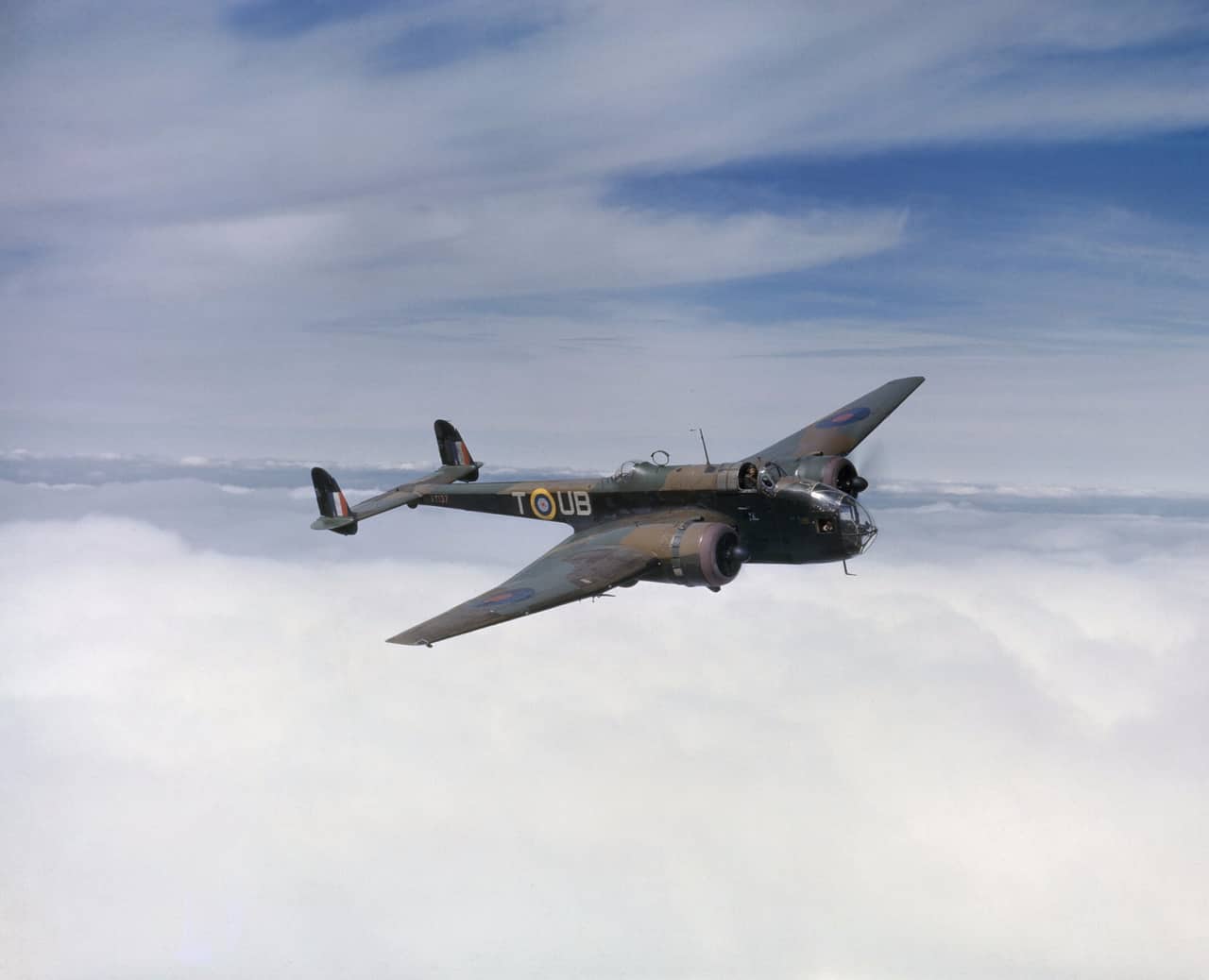
The Hampden’s fuselage was so narrow that the editor of The Aeroplane said it looked like a flying suitcase, and the nickname stuck. It entered service with No. 49 Squadron in 1938 with a crew of four and a 4,000-pound (1,810 kg) bomb load.
Handley Page and Canadian factories built 1,430 Hampdens. It could also carry a torpedo or mines, and it was retired in 1943.
British Light Bombers of WW2
8. Bristol Blenheim

On September 3, 1939, the day Britain declared war, a Blenheim IV became the first British aircraft to cross the German coast, photographing German warships near Wilhelmshaven. The next day Blenheims attacked those ships.
The Blenheim entered service in 1937 with a crew of three and a top speed of 266 mph (428 km/h). In all, 4,422 were built.
9. Fairey Battle


The single-engined, three-seat Battle was a front-line RAF bomber when the war began. On September 20, 1939, a Battle gunner, Sergeant F. Letchford, shot down a Messerschmitt Bf 109 near Aachen, recognized as the RAF’s first aerial victory of the war.
In May 1940 the Battle suffered heavy losses. On May 12, five Battles of No. 12 Squadron attacked the Albert Canal bridges and four were lost; Flying Officer Donald Garland and Sergeant Thomas Gray were awarded posthumous Victoria Crosses. In all, 2,201 were built.
10. de Havilland Mosquito

The Mosquito broke every rule of bomber design. It was built mostly of wood and relied on speed: the B Mk XVI bomber reached 415 mph (668 km/h).
The “Wooden Wonder” first flew in November 1940 and the first bomber went to No. 105 Squadron in November 1941. From 1943, converted Mosquitoes carried a 4,000-pound “cookie” blast bomb with the Light Night Striking Force, with a crew of only two.
In all, 7,781 Mosquitoes of all versions were built, bombers and fighters included.
11. Hawker Hart
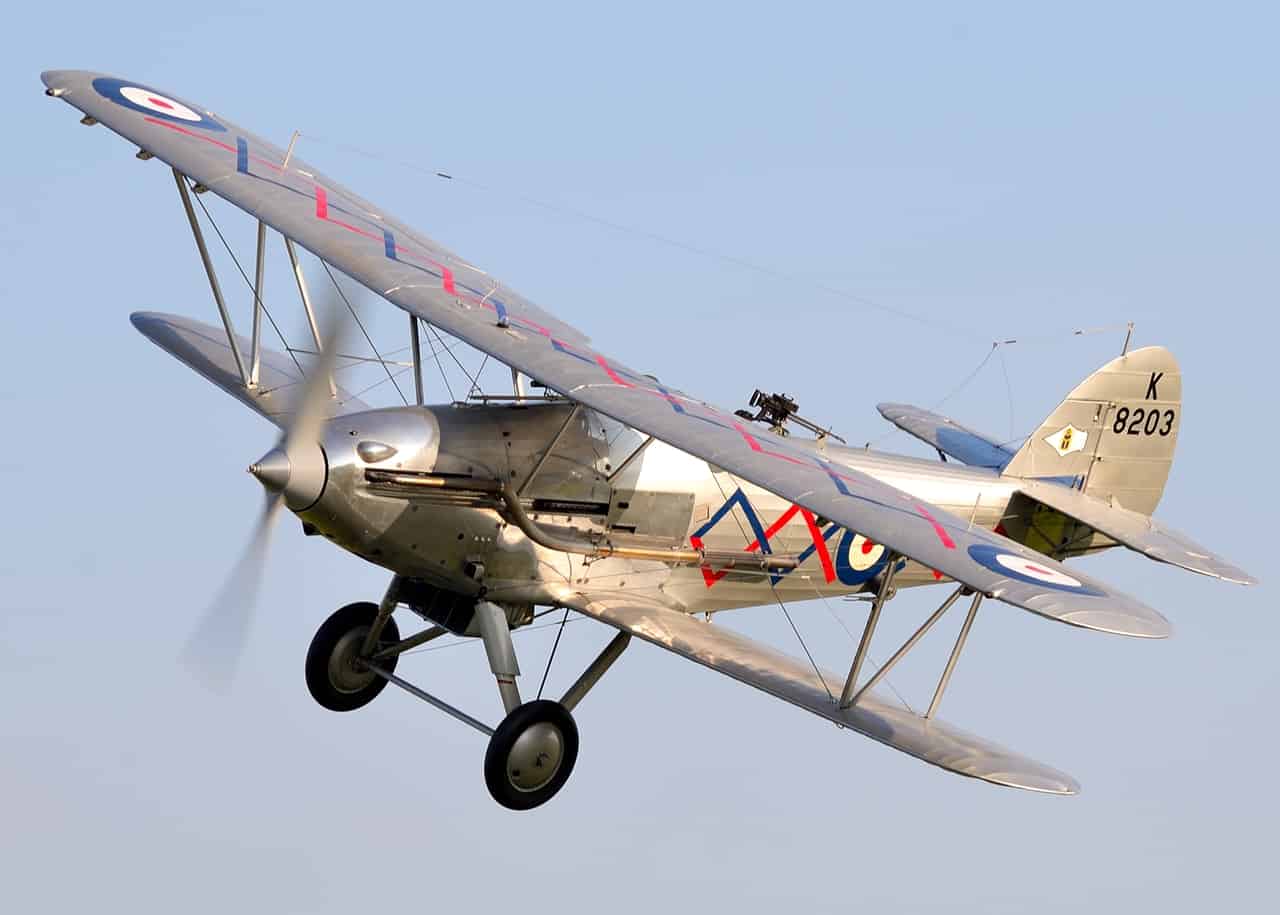
The Hart biplane first flew in 1928 and entered RAF service in 1930. By 1939 its 185 mph (298 km/h) top speed made it obsolete as a front-line bomber.
At least 1,004 were built, and the type retired from RAF service in 1943.
12. Hawker Hind
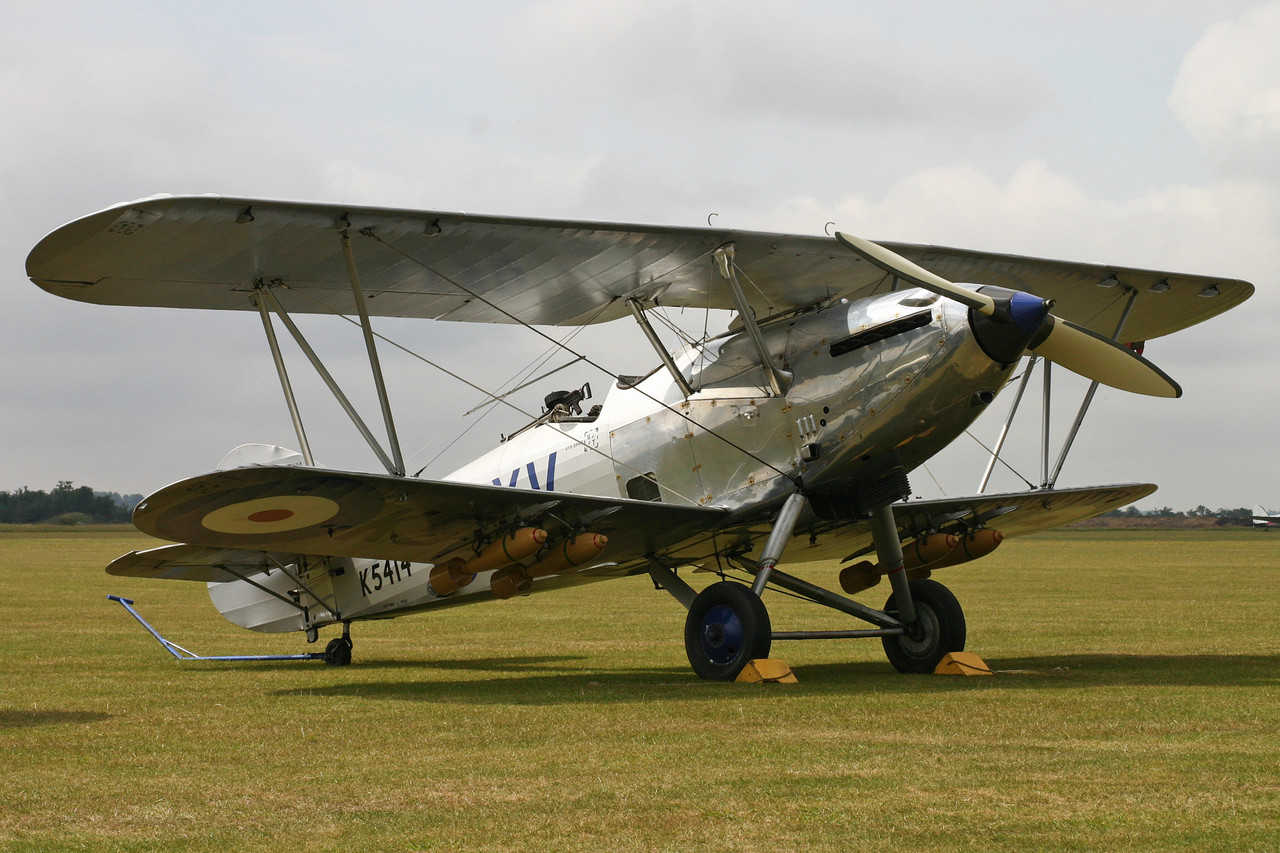
The Hind was the Hart’s improved successor, with a more powerful Kestrel V engine. It entered service in 1935 with a crew of two and up to 510 pounds of bombs.
Hawker built 528.
Coastal Strike and Fighter-Bombers
13. Bristol Beaufort

The Beaufort was Coastal Command’s front-line torpedo bomber from 1940 to 1942, with a crew of four. It could carry one torpedo or a 2,000-pound (907 kg) bomb.
Britain built 1,121 and Australia built another 700. In British service it became a trainer after 1942.
14. Bristol Beaufighter
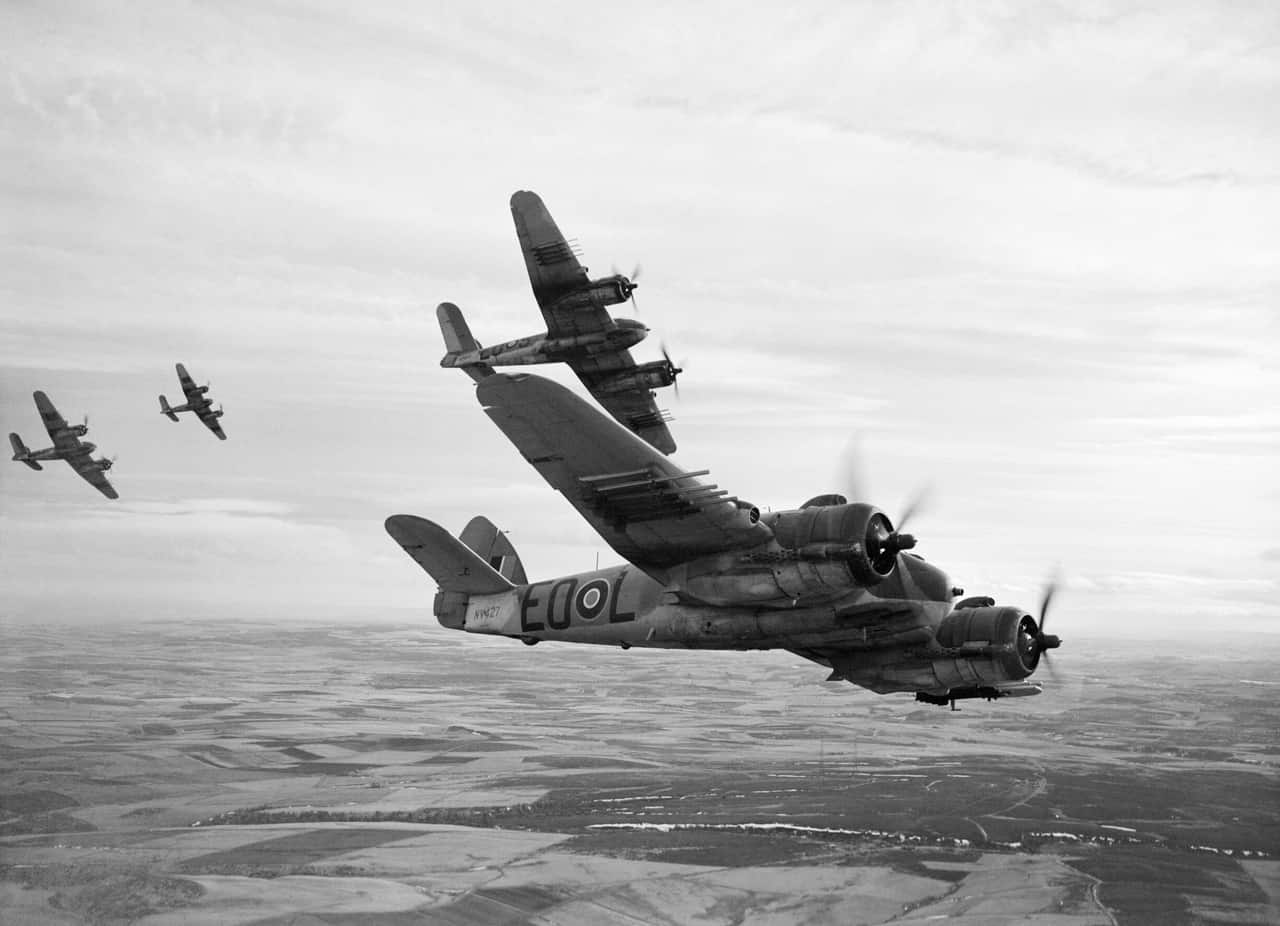

The Bristol Beaufighter was developed from the Beaufort as a heavy fighter, and the TF Mk X version became a Coastal Command anti-shipping strike aircraft. It carried a torpedo or bombs plus eight RP-3 rockets.
Bristol built 5,928 of all versions.
15. Vickers Vildebeest


The Vildebeest was a biplane torpedo bomber that first flew in 1928 and replaced the Hawker Horsley in RAF service. It was already old when the war began.
Vickers built 209, plus 197 of the closely related Vincent. An airframe is under restoration at the Air Force Museum of New Zealand.
16. Hawker Typhoon


The Typhoon was designed as an interceptor and entered service in September 1941, and the RAF went on to use it as a fighter-bomber.
It carried four 20 mm cannon plus either two bombs of up to 1,000 pounds or eight RP-3 rockets. In all, 3,317 were built.
Fleet Air Arm Bombers
The Royal Navy’s Fleet Air Arm flew its own bombers from aircraft carriers and shore bases. Its slowest aircraft produced some of Britain’s biggest successes of the war.
17. Fairey Swordfish

The Swordfish was a biplane and a top speed of 143 mph (230 km/h). On the night of November 11 to 12, 1940, 21 Swordfish from HMS Illustrious attacked the Italian fleet at Taranto, sinking one battleship and damaging two more for the loss of two aircraft.
Six months later, on May 26, 1941, a Swordfish torpedo from HMS Ark Royal jammed the rudder of the German battleship Bismarck. Fairey and Blackburn built 2,391.
18. Fairey Albacore
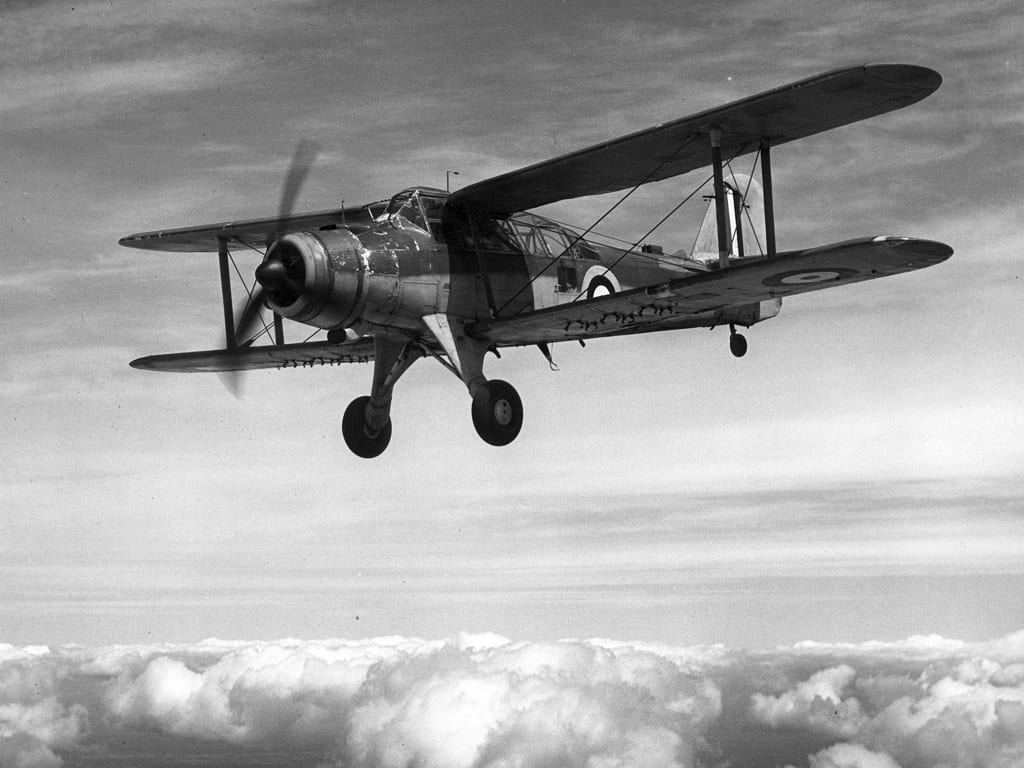

The Albacore was meant to replace the Swordfish, with a 1,130-horsepower Bristol Taurus engine. It reached 161 mph (259 km/h) and climbed to 6,000 feet in eight minutes.
Fairey built 800, and the Albacore entered service in 1940.
19. Fairey Barracuda


The Barracuda torpedo and dive bomber entered service in January 1943. Its finest day was Operation Tungsten on April 3, 1944, when 42 Barracudas from HMS Victorious and HMS Furious hit the battleship Tirpitz 14 times for the loss of one bomber.
The attack killed 122 of Tirpitz’s crew and put her out of action for more than two months. In all, 2,602 Barracudas were built.
20. Blackburn Skua
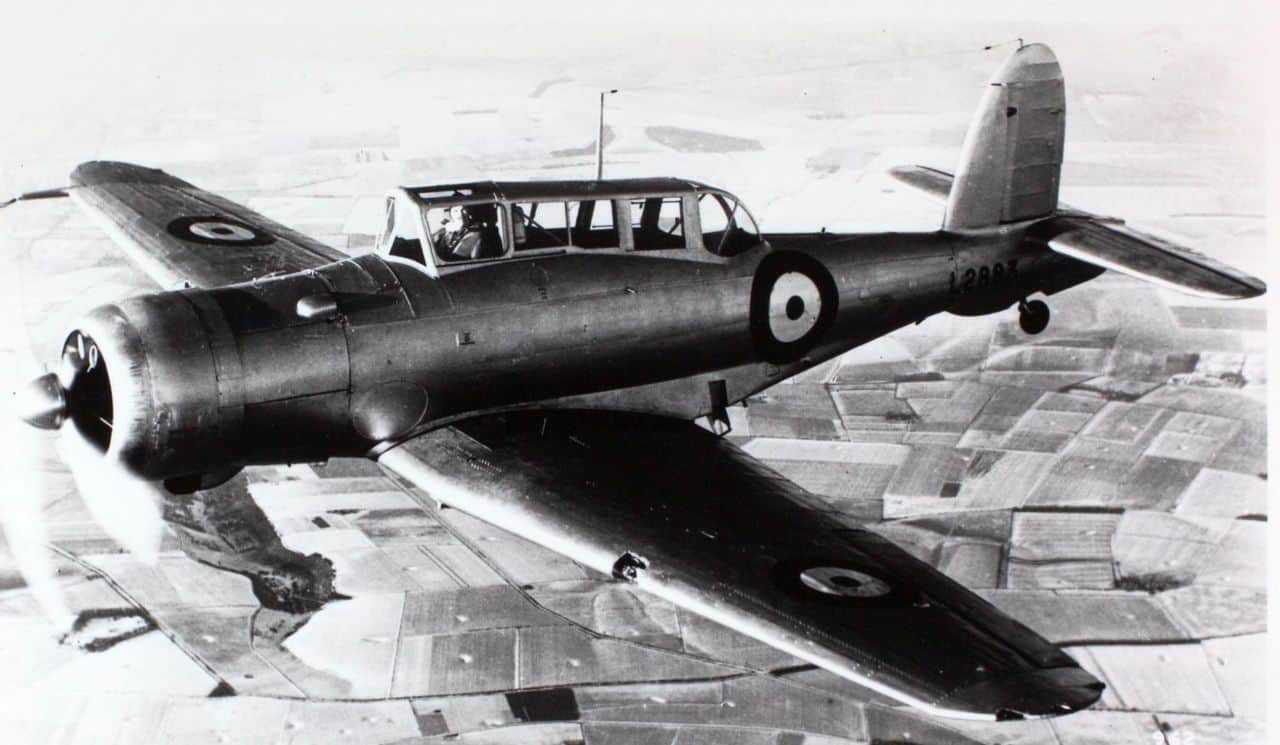

The two-seat Skua was a naval dive bomber that doubled as a fighter. On April 10, 1940, 16 Skuas flying from RNAS Hatston in Orkney sank the German cruiser Königsberg at Bergen, Norway, losing one aircraft.
It was the first major warship sunk in war by air attack and by dive bombers. Only 192 Skuas were built.
A forgotten first
Before Pearl Harbor and before Taranto, a handful of British Skua dive bombers sank the cruiser Konigsberg in Bergen harbor on April 10, 1940. It was the first major warship sunk in war by air attack.
American Bombers in RAF and Fleet Air Arm Service
Britain bought American bombers from 1939 and received many more under the Lend-Lease Act, signed on March 11, 1941. They were flown by British crews under British names, but they were American designs. Our guide to American bombers of WW2 covers their US service.
Not British bombers
Many lists of British WW2 bombers include the B-17, B-25, B-26, A-20 and Avenger. Britain flew all of them, but none was a British design, and several flew in British service only in small numbers. They are listed separately here for that reason.
Boeing B-17 Fortress I

The RAF acquired 20 early B-17C Flying Fortresses as the Fortress I and sent No. 90 Squadron to bomb Wilhelmshaven with them on July 8, 1941. The raid failed, eight aircraft were lost in combat by September, and Bomber Command gave up daylight Fortress raids.
Coastal Command did better. Later Fortresses flew long-range anti-submarine patrols, and one from No. 206 Squadron sank U-627 on October 27, 1942, the first of 11 U-boat kills credited to RAF Fortresses.
Lockheed Hudson

The twin-engined Hudson was Coastal Command’s patrol bomber in the early war. On October 8, 1939, a Hudson became the first Allied aircraft operating from the British Isles to shoot down an enemy aircraft.
Lockheed built 2,941 between 1938 and 1943. It carried a crew of five and reached 246 mph (396 km/h).
Lockheed Ventura
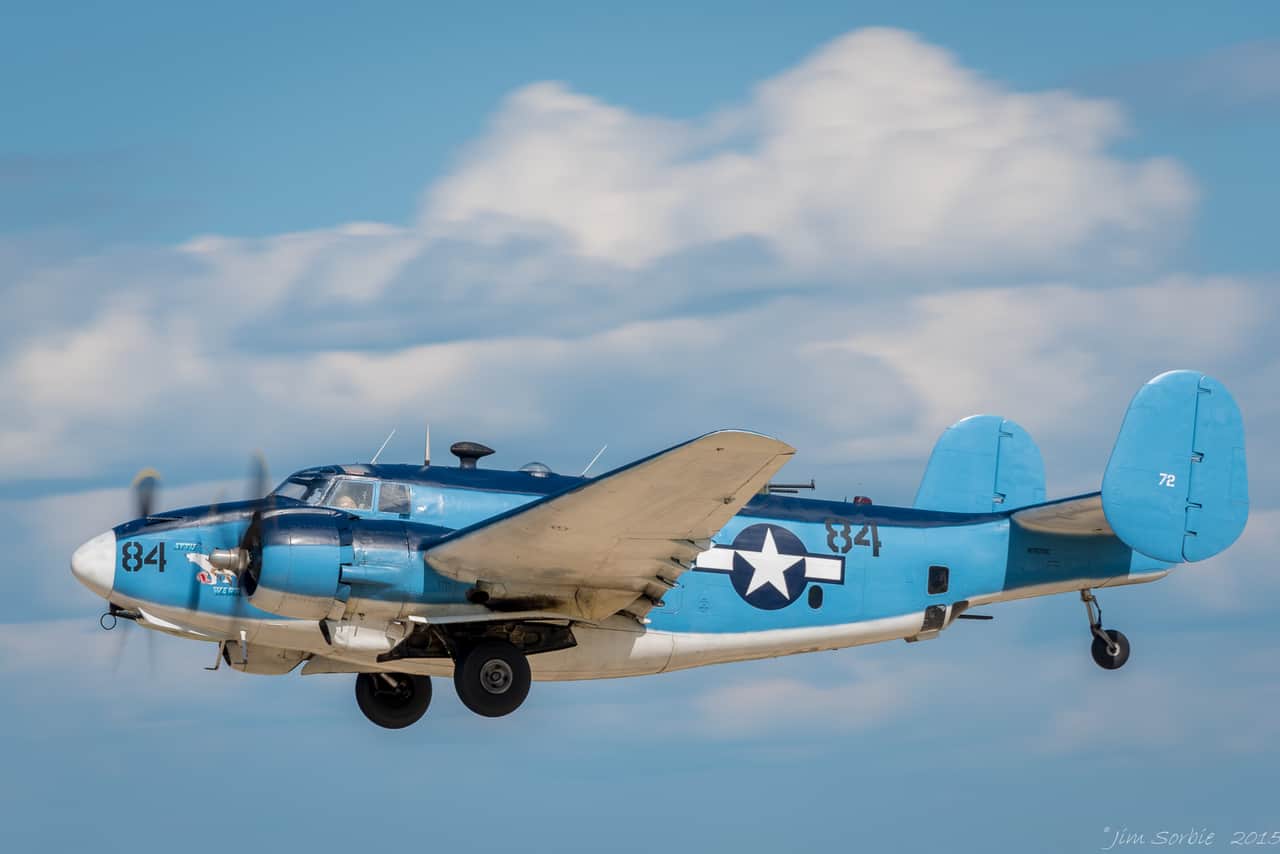
The Ventura had a crew of six and a top speed of 322 mph (518 km/h). RAF crews disliked it, and it was replaced as a bomber by summer 1943.
Its best-known raid was on an Amsterdam power station on May 3, 1943. All 11 attacking Venturas of No. 487 Squadron, Royal New Zealand Air Force, were lost, and their leader, Squadron Leader Leonard Trent, was awarded the Victoria Cross.
Martin Maryland
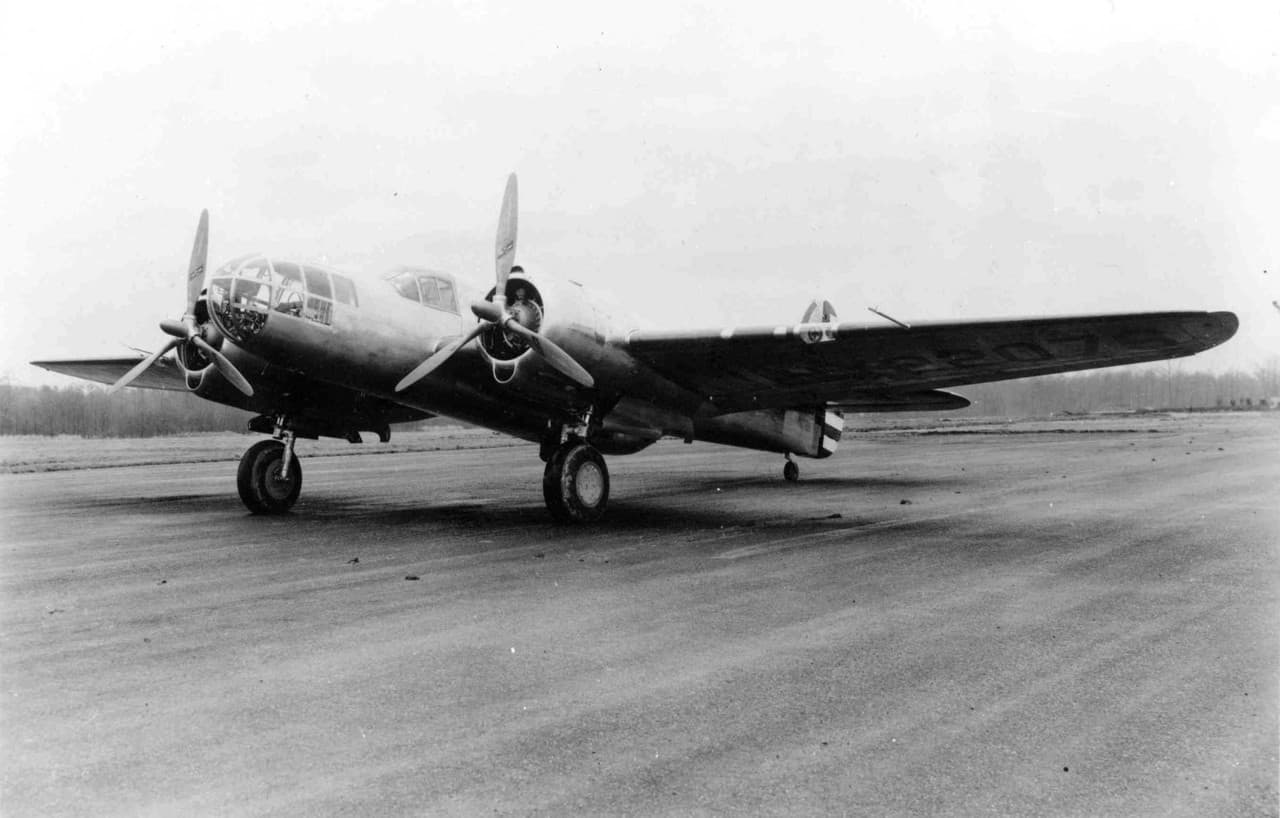

Britain took over the last 75 Marylands of a French order and bought 150 more. In RAF hands the three-seat Maryland was mostly a photo-reconnaissance aircraft over North Africa and from Malta.
A Malta Maryland flown by Adrian Warburton photographed the Italian fleet at Taranto before and after the Swordfish attack. Only 450 Marylands were built.
Martin Baltimore


Every series of the Martin Baltimore was built for the RAF. It flew operationally only in the Mediterranean and North Africa, from late 1941.
Martin built 1,575. It had a crew of four and a top speed of 305 mph (491 km/h).
Douglas Boston and Havoc
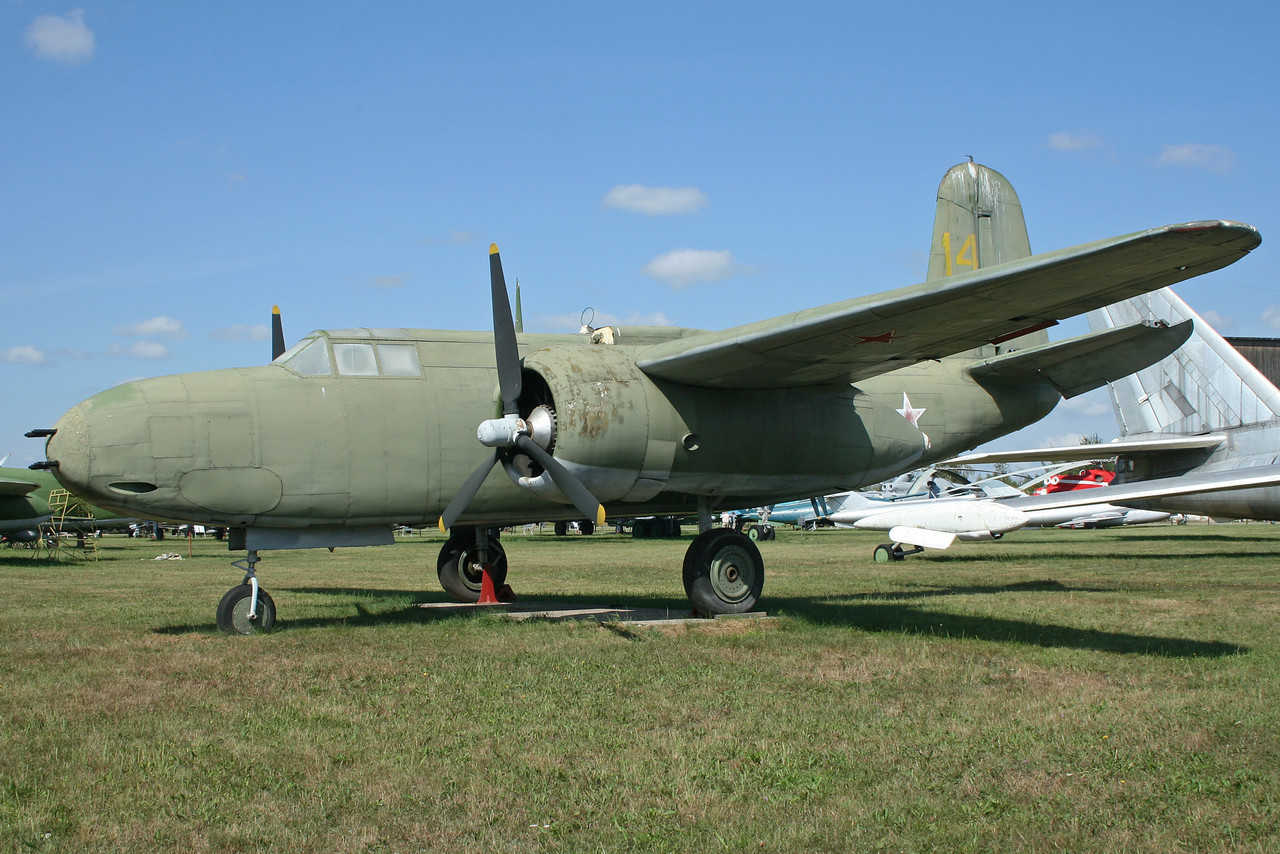
The RAF named the Douglas DB-7 and A-20 the Boston when it flew as a bomber and the Havoc when it flew as a night fighter or intruder. Britain ordered 300 Boston IIIs in February 1940.
On July 4, 1942, American crews flew their first US Eighth Air Force combat mission in Bostons borrowed from No. 226 Squadron. Douglas built 7,478 of the family, and more than a third went to the Soviet Union.
North American B-25 Mitchell

The B-25 Mitchell kept its American name in the RAF. It served with 2 Group, the RAF’s tactical medium-bomber force, from January 1943, and moved to France and Belgium after D-Day.
The RAF received 167 B-25Cs and 371 B-25Ds as the Mitchell II. North American built 9,816 in all.
Martin B-26 Marauder
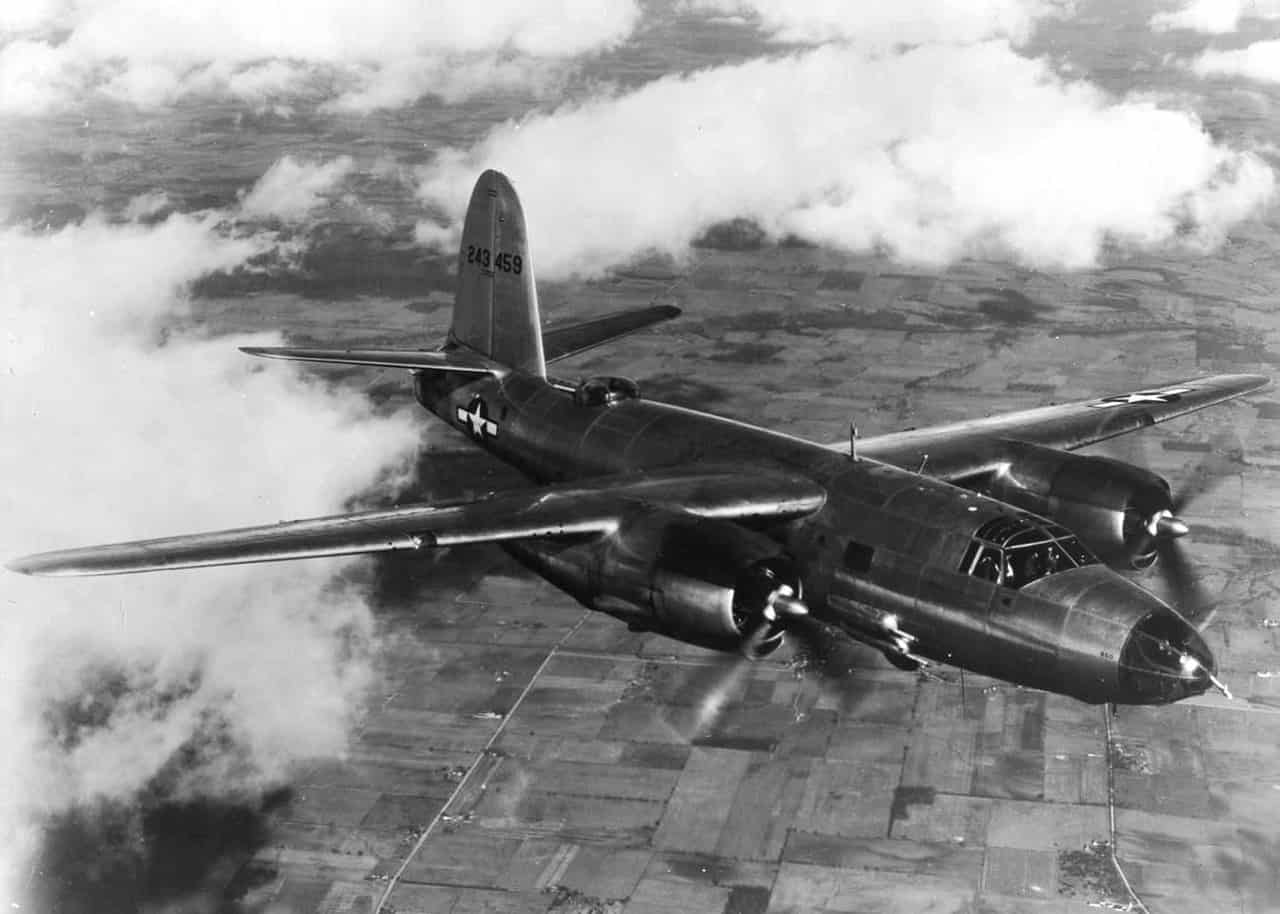
The RAF and the South African Air Force flew 522 Martin B-26 Marauders, mostly in the Mediterranean. Martin built 5,288 between 1941 and 1945.
Vultee Vengeance

The US never used the Vengeance in combat, but the RAF, the Royal Australian Air Force and the Royal Indian Air Force flew it as a front-line dive bomber over Burma from 1942 to 1944. Vultee built 1,931.
Grumman Avenger (Tarpon)

The Fleet Air Arm first called the Grumman Avenger the Tarpon, then adopted the American name. It received 1,070 during the war, out of 9,839 built.
Brewster Bermuda and Vought Chesapeake
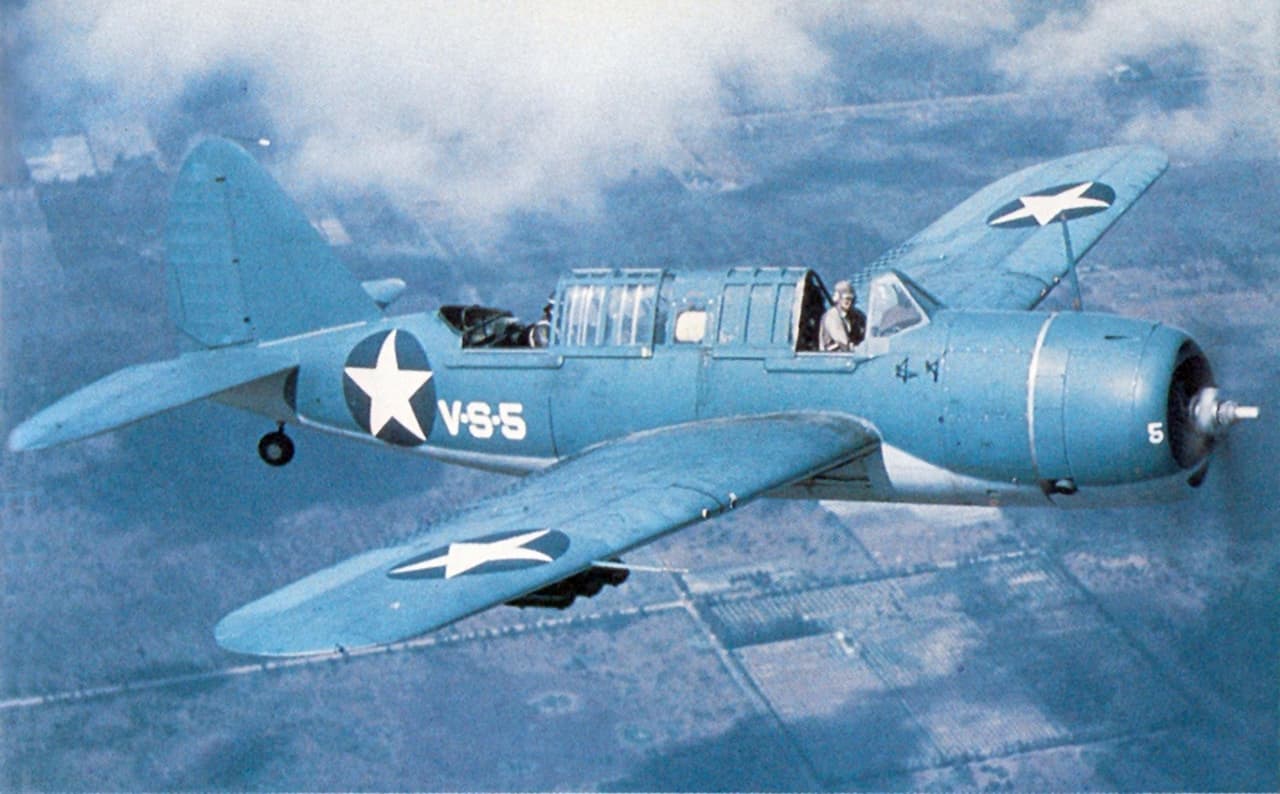

Two American dive bombers reached Britain and saw almost no action. The RAF judged the Brewster SB2A Buccaneer, which it called the Bermuda, unfit for combat and turned most into target tugs.
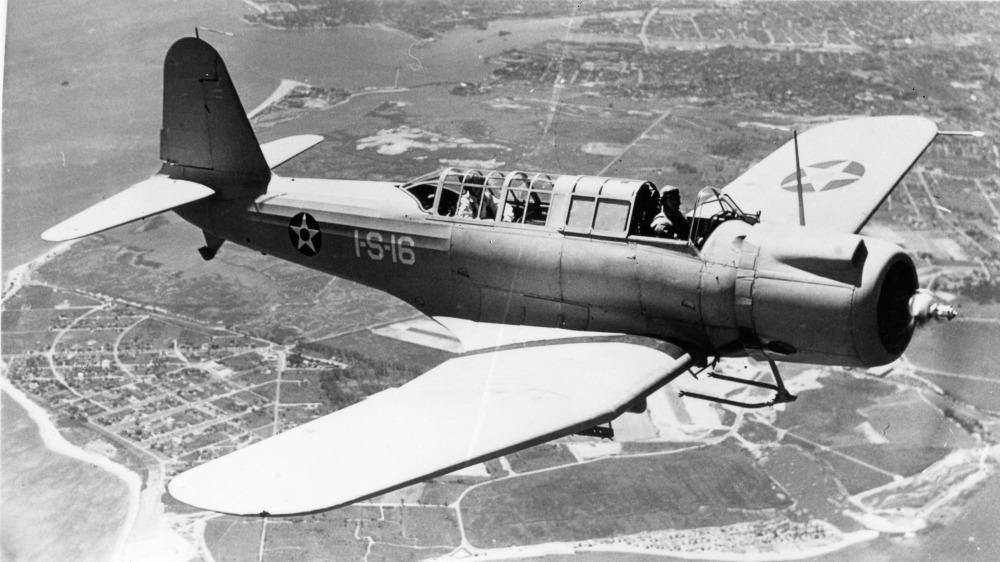

The Fleet Air Arm’s 50 Vought Chesapeakes, taken over from a French order for the SB2U Vindicator, were judged too underpowered for escort carriers by the end of October 1941.
What Bomber Command Cost
RAF Bomber Command dropped 1,005,091 tons of bombs in 364,514 operational sorties and lost 8,325 aircraft in action. Those are long tons, the British measure of 2,240 pounds.
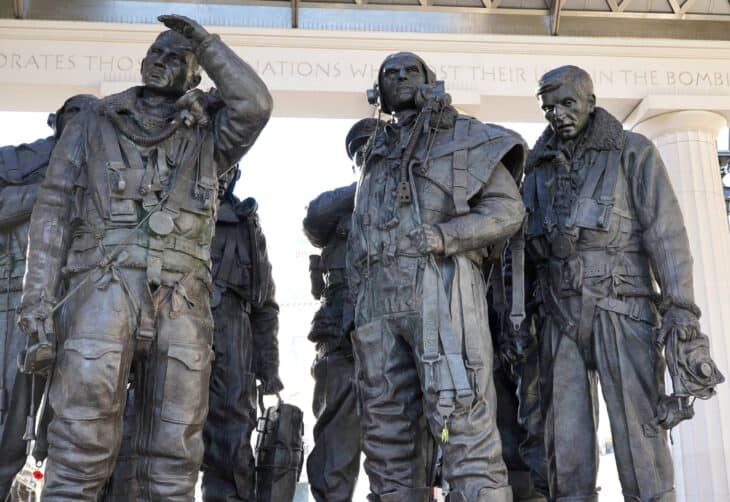
According to the RAF Benevolent Fund, 55,573 men died flying with Bomber Command. Of roughly 125,000 aircrew who served, that is 44.4%, and another 9,838 became prisoners of war.

For how the RAF’s bomber force compared with the Luftwaffe’s, see our guide to German bombers of WW2, and our explainer on the types of bomber planes for how heavy, medium and light bombers differ.
Which British WW2 Bombers Still Fly?
Of the 17 surviving Lancasters, two are airworthy: PA474 of the RAF Battle of Britain Memorial Flight and FM213 of the Canadian Warplane Heritage Museum in Hamilton, Ontario. Two others, including NX611 “Just Jane”, can run their engines but do not fly.
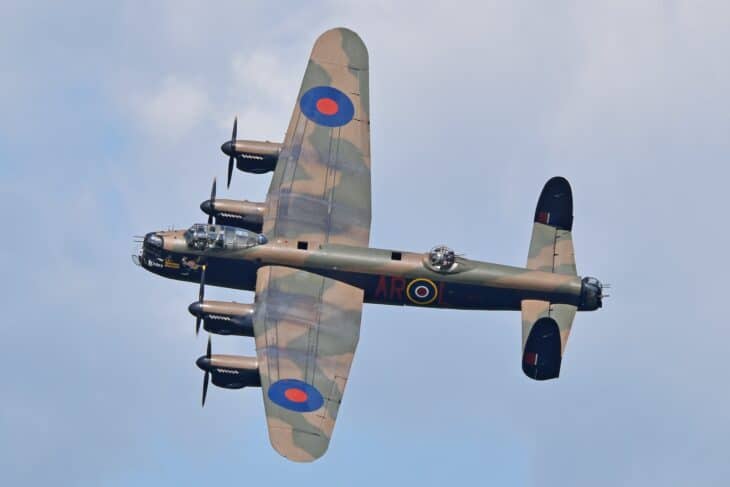
PA474 flew to Duxford in October 2025 for an overhaul of at least 18 months, led by the Aircraft Restoration Company, so it will miss the 2026 display season.
FAQ
Sources and references used for research and fact-checking.
- RAF Museum, The Lancaster enters the fray
- RAF Museum, History of aviation timeline: 1940
- RAF Benevolent Fund, About Bomber Command
- The Aviationist, BBMF Lancaster begins major overhaul
- Wikipedia, RAF Bomber Command
- Wikipedia, Avro Lancaster
- Wikipedia, Handley Page Halifax
- Wikipedia, Short Stirling
- Wikipedia, Avro Manchester
- Wikipedia, Vickers Wellington
- Wikipedia, Armstrong Whitworth Whitley
- Wikipedia, Handley Page Hampden
- Wikipedia, Bristol Blenheim
- Wikipedia, Fairey Battle
- Wikipedia, de Havilland Mosquito
- Wikipedia, Hawker Hart
- Wikipedia, Hawker Hind
- Wikipedia, Bristol Beaufort
- Wikipedia, Bristol Beaufighter
- Wikipedia, Vickers Vildebeest
- Wikipedia, Hawker Typhoon
- Wikipedia, Fairey Swordfish
- Wikipedia, Fairey Albacore
- Wikipedia, Fairey Barracuda
- Wikipedia, Blackburn Skua
- Wikipedia, Boeing B-17 Flying Fortress
- Wikipedia, Lockheed Hudson
- Wikipedia, Lockheed Ventura
- Wikipedia, Martin Maryland
- Wikipedia, Martin Baltimore
- Wikipedia, Douglas A-20 Havoc
- Wikipedia, North American B-25 Mitchell
- Wikipedia, Martin B-26 Marauder
- Wikipedia, Vultee A-31 Vengeance
- Wikipedia, Grumman TBF Avenger
- Wikipedia, Brewster SB2A Buccaneer
- Wikipedia, Vought SB2U Vindicator
- Wikipedia, Lend-Lease
Get the Newsletter
The latest aviation news and stories sent to your inbox.
About the Author

Tim is the owner and lead editor of AeroCorner since 2019, overseeing aviation content covering aircraft, airlines, airports, and the broader aviation industry. Through years of researching, writing, editing, and publishing aviation-focused content, he has developed extensive practical knowledge of commercial aviation and air travel. Based in Asia and a frequent traveler himself, Tim also brings firsthand passenger experience to AeroCorner’s coverage. Outside of publishing, he has also explored aviation firsthand through hands-on flight training in New Zealand.