Military Propellor Planes
North American O-47
ICAO: O47
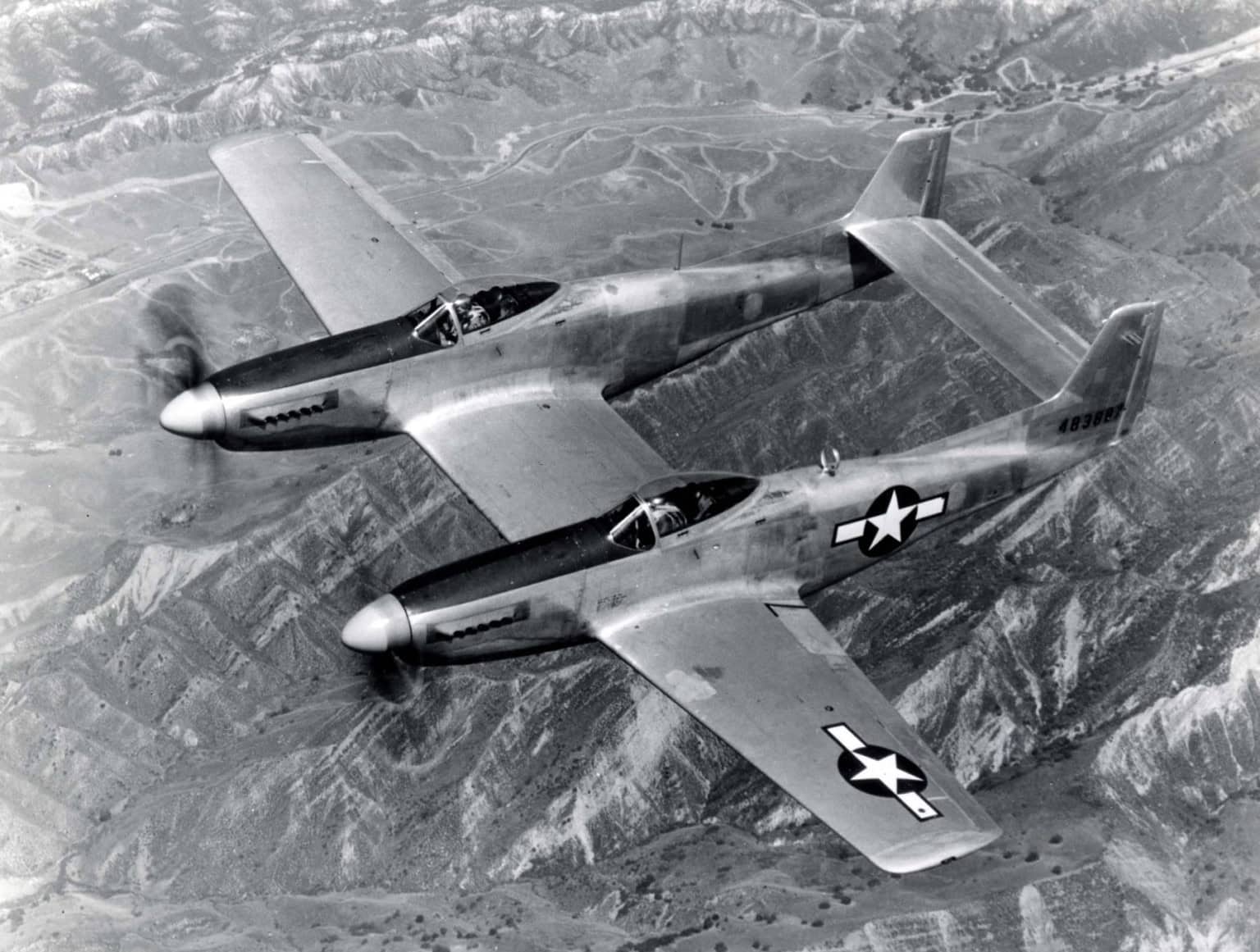
The F-82 Twin Mustang was developed at the end of World War II as a long-range escort fighter. Its distinctive twin-fuselage configuration provided extended endurance and a second crew position. The aircraft later served in early Korean War operations.
The latest aviation news and stories sent to your inbox.
North American F-82 Twin Mustang — long-range escort fighterThe F-82 first flew in 1945 as an evolution of the P-51 Mustang. By joining two fuselages with a common wing and tailplane, designers increased range and cockpit space. The aircraft was intended to escort bombers on extended missions.Two Packard-built Merlin piston engines, each producing approximately 1,600 horsepower, powered the Twin Mustang. Cruise speed approached 320 knots (593 km/h). Maximum takeoff weight exceeded 25,000 pounds (11,340 kg), reflecting its large fuel capacity.The F-82 saw limited combat in the Korean War and performed night-fighter duties. Jet technology soon rendered piston escort fighters obsolete. Nevertheless, the Twin Mustang remains one of the most unusual fighter designs ever fielded.
Live Fleet Activity (F82)
Fetching live data…
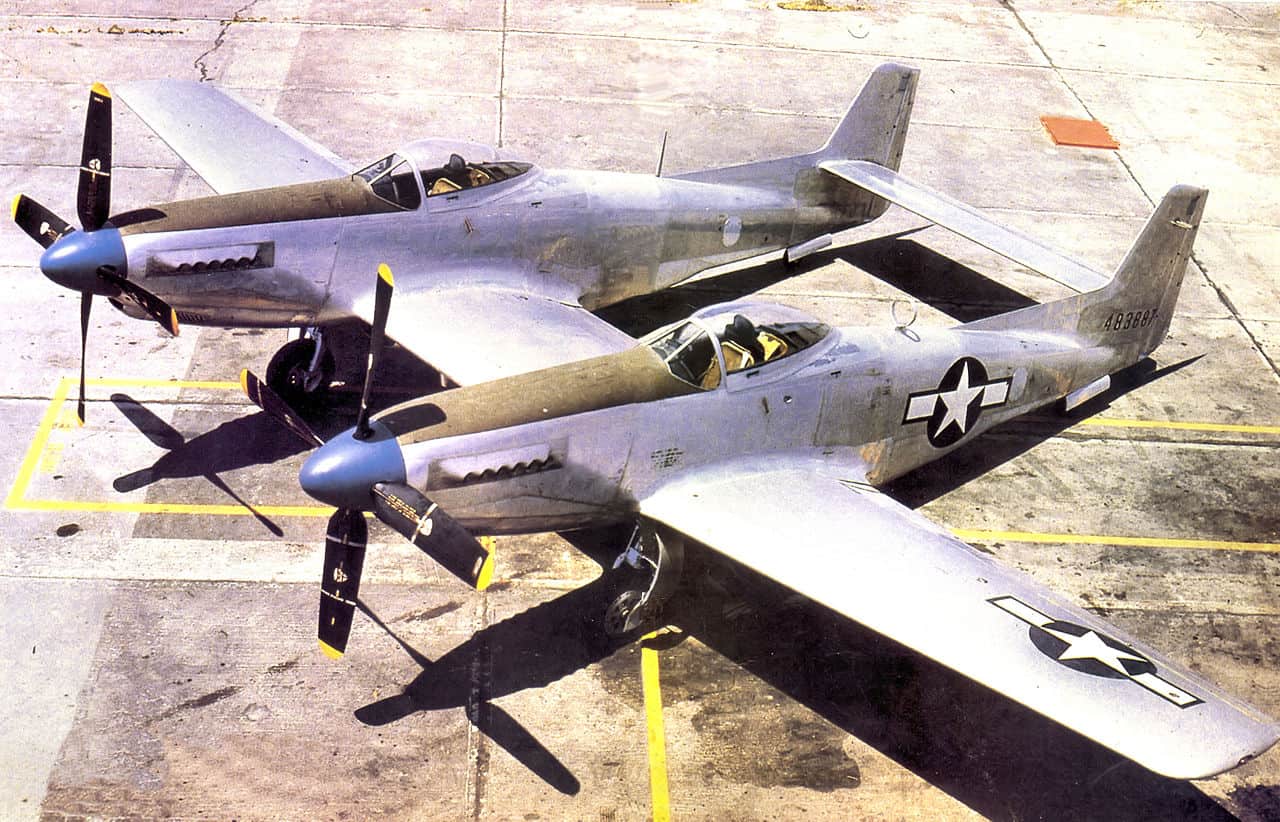
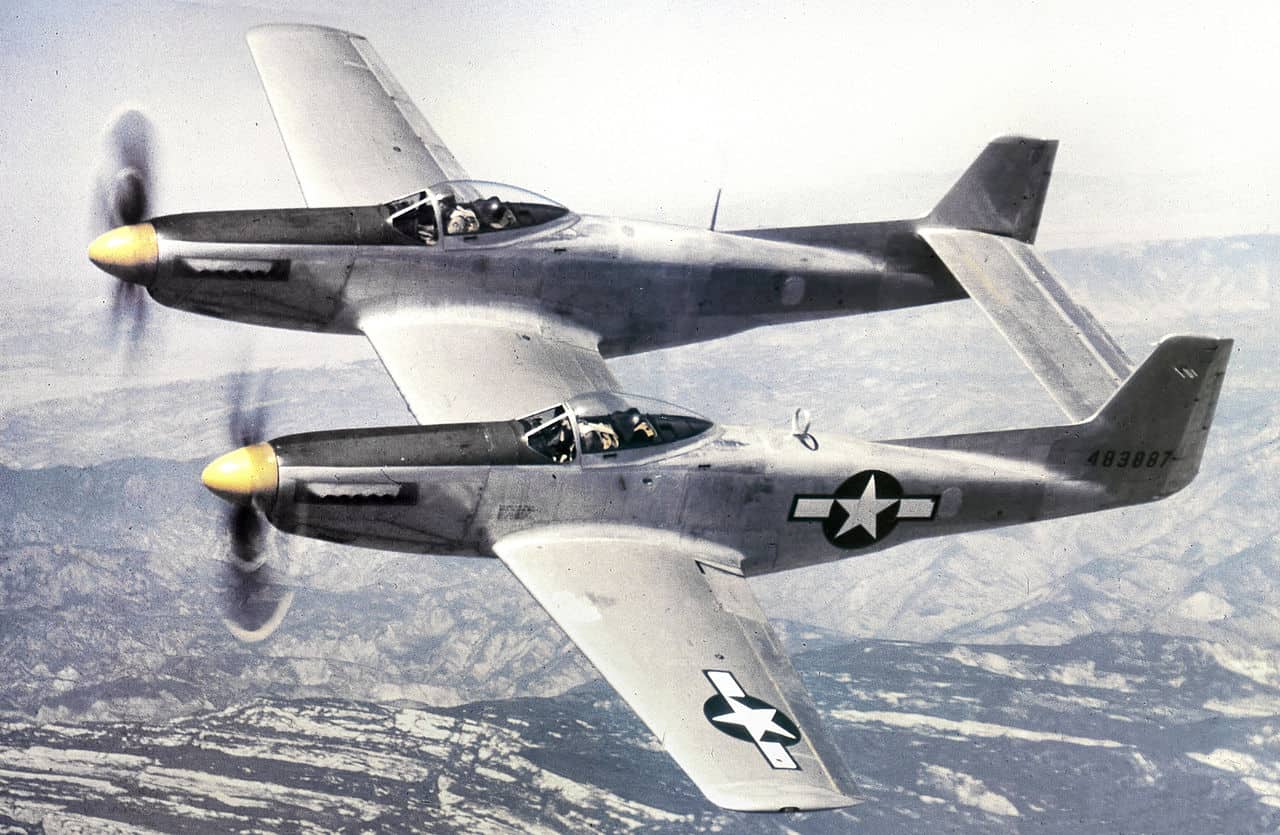


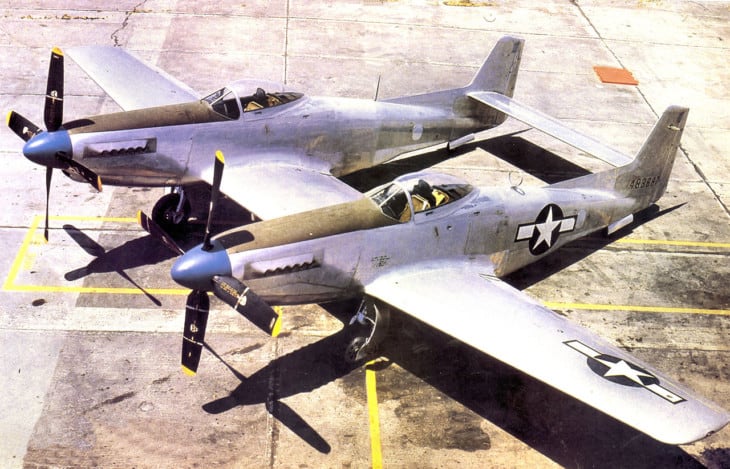
The North American F-82 was originally planned to become a very long-range (VLR) escort fighter and was built to escort the four-engine Boeing B-29 Superfortress heavy bomber during the Second World War. The F82 Twin Mustang was built in different versions. The F-82G is a night fighter version. It was designed with a nacelle below the center-wing that lodged SCR-720C18 radar equipment. It was also equipped with an automatic pilot and a radar operator that would replace the co-pilot. In September 1948, the type entered into operational service. One aircraft was accepted in February while the rest were accepted in the fiscal year 1949. In March 1949, the final F-82G was received.
The F-82G has a tandem configuration. It has an exterior length of 12.93 meters, an exterior height of 3.2 meters, and a diameter of 0.95 meters. The tail height is 4.22 meters and the wheelbase is 7.75 meters. It has a wingspan of 15.62 meters and a wing area of 37.9 square meters. The aircraft has an empty weight of 7,256 kg, a maximum takeoff weight of 11,608 kg, and a maximum payload of 2,000 kg. The maximum fuel tank capacity is 576 US gal.
The aircraft is powered by a single V-12 liquid-cooled Allison V-1710-143 piston engine that produces a 2,250 horsepower in War emergency rating and was fitted to port, or a single Allison V-1710-145 fitted to starboard. The engine drives a four-bladed Aeroproducts A-542F-D1 constant-speed fully-feathering propellers. The F-82G has a maximum speed of 401 knots at 21,000 feet and a cruise speed of 249 knots. The travel range is 1,950 nautical miles. It can fly up to 38,900 feet and can climb at a rate of 3,770 feet per minute. The aircraft could be loaded with six .50 caliber M3 Browning heavy machine guns, twenty-five 127 mm rockets, and four 454 kg of bombs.
Sources and references used for research and fact-checking.