

Table of Contents
If you have flown commercial your whole life, your first private jet empty leg will involve a series of small surprises, starting with the fact that you do not go to the main airport terminal at all. The experience is genuinely different from anything commercial aviation offers, and most of the differences will be pleasant. A few will catch you off guard if you are not prepared for them.
This article walks through what actually happens on the day of your flight, from the moment you receive your confirmation to the moment you land. It covers the airport experience, the aircraft itself, what is included onboard, and the handful of things that can still go differently than you expect on a repositioning flight.
If you are still in the process of deciding whether to book, the catches guide is worth reading first. This article assumes you have a confirmed booking and are focused on what comes next.
Browse current private jet empty leg deals on AeroCorner.
The confirmation you receive
Unlike a commercial airline ticket, there is no single standardised document for a private charter booking. Your confirmation will typically arrive as a direct email from the broker or operator, sometimes with a formal booking confirmation PDF attached. It will include the aircraft type, the departure FBO name and address, an estimated departure window, and a contact number for the day of travel.
Keep this confirmation accessible. You will be asked to provide it at the FBO along with your ID. If you are travelling internationally, your passport details will have been submitted to the operator in advance as part of the booking process, but carry your passport regardless.
Check in with your broker the day before
Most operators and brokers recommend a brief check-in call or message the evening before departure to confirm nothing has changed. On a repositioning flight, the anchor charter is still active, and any last-minute amendment to it could affect your booking. A quick confirmation gives both parties a chance to flag changes before the day.
Where to go: the FBO, not the terminal
The most important practical difference between private and commercial aviation is where you start. Private jets depart from Fixed Base Operators — FBOs — which are separate facilities from the main airport terminal. At many airports they are on a completely different part of the airfield, sometimes with a separate entrance and road access. Your broker confirmation will include the name of the specific FBO. Search for that name and address, not the airport name.
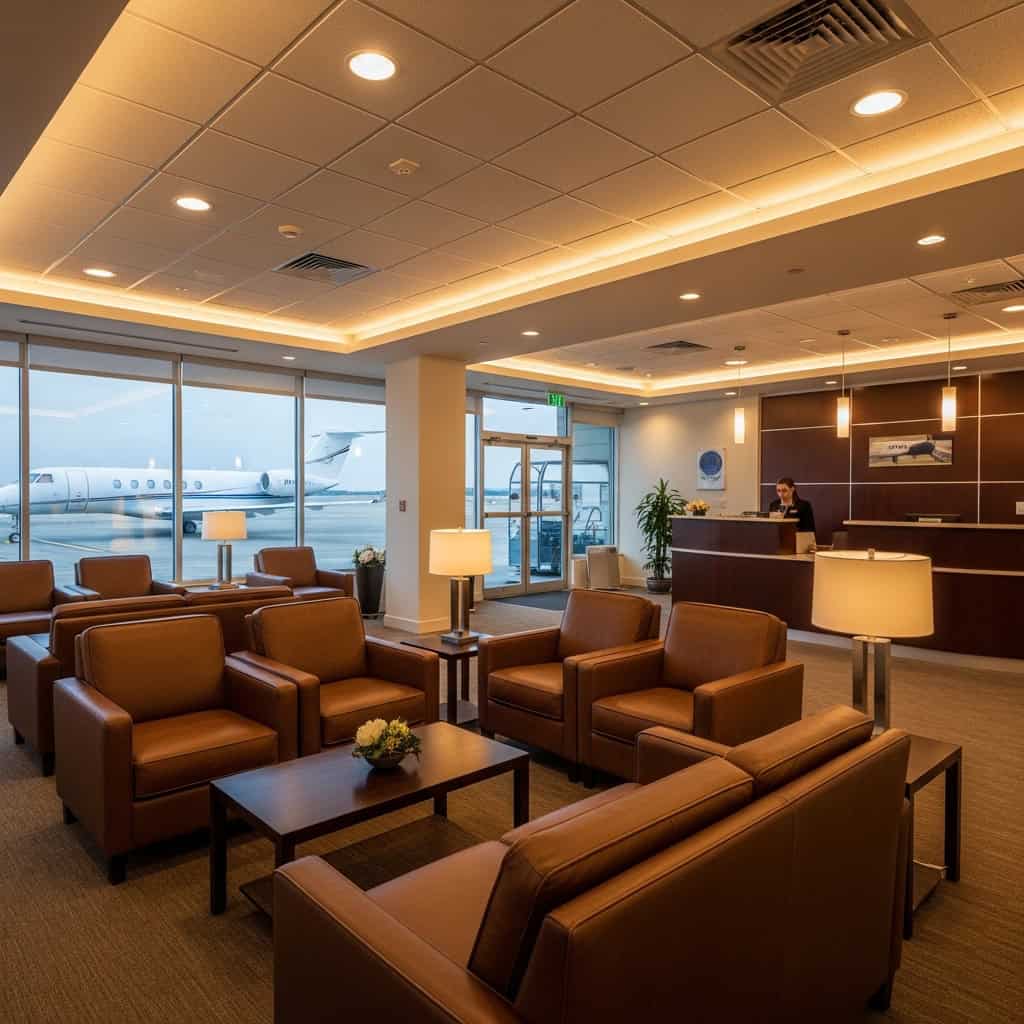
FBOs range significantly in scale and style. At major business aviation hubs, they can be impressive facilities with comfortable lounges, showers, catering services, and concierge staff. At smaller regional airports, the FBO may be a modest building with a few chairs and a coffee machine. Both will get you onto your aircraft. The key is finding the right one.
Arriving 30 to 45 minutes before your departure window is usually sufficient. Unlike commercial flying, there is no check-in queue, no security line to factor in, and no gate to reach. The process is fast once you arrive, and if you are early, the lounge is a significantly more pleasant place to wait than a commercial terminal.
The day of your flight, step by step
Private aviation moves at a different pace from commercial flying. The timeline below reflects how most first empty leg experiences unfold.
The day before
Confirm with your broker. Send a quick message or make a brief call to verify the flight is operating as planned. Note the FBO name, address, and departure window in your phone. Make sure you have the broker’s mobile number saved.
Departure day — 45 minutes out
Head to the FBO, not the terminal. Navigate to the specific FBO your broker confirmed, not the main terminal building. At larger airports these can be on opposite sides of the airfield. Give yourself a little more time the first occasion so you are not rushing.
On arrival at the FBO
Check-in takes about five minutes. A staff member greets you at the door, checks your ID, and takes your bags to the aircraft. You will be shown to the lounge to wait. There is no queue.
Before boarding
Security varies by country and flight type. Domestic private flights in the US are not subject to TSA screening. The operator may conduct an identity check or ask to view bags. For international departures, passport control is handled, often at a private aviation facility that is much faster than the commercial terminal equivalent.
Boarding
You walk out to the aircraft. No jetway, no crowd. The aircraft is usually visible from the FBO or parked just outside the door. You board via air stairs. The crew greets you by name. The cabin is exactly as described in the booking — and it is yours.
In flight
Service depends on the operator. Some repositioning flights include full catering; others offer light snacks and drinks. The aircraft is quiet at cruise altitude. You arrive feeling genuinely different from how you feel after a commercial flight.
Security and documentation
Security on private aviation works differently from commercial. In the United States, TSA screening does not apply to private charter flights. Passengers typically go through an identity check by the operator or FBO, but the process is brief and discreet rather than the mass screening of a commercial terminal. The absence of a security queue is one of the details first-time passengers find most striking.
For international departures, customs and immigration requirements still apply in full. Most airports that handle private aviation have dedicated customs facilities at or near the FBO, separate from the commercial terminal’s immigration queues. Processing through these facilities is typically much faster. Your passport details will already have been submitted to the relevant authorities by the operator in advance, but carry your passport and any required visas as you would on any international trip.
International documentation requirements do not change
Flying privately does not exempt you from customs, immigration, or visa requirements. Entry documentation, passport validity rules, and any health or travel requirements for your destination apply in exactly the same way as on a commercial flight. Check your documentation well before departure.
The aircraft
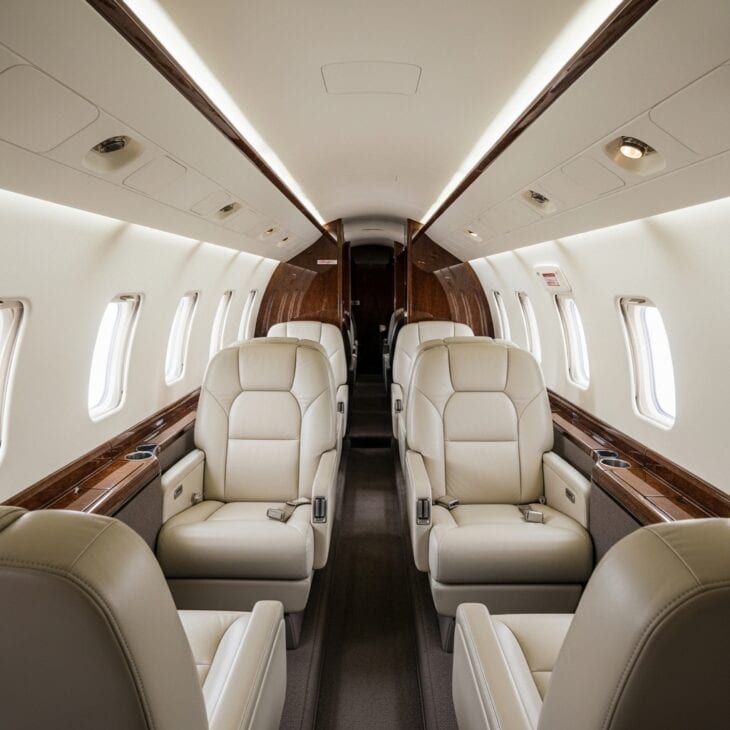
Your booking confirmation will specify the aircraft type, and often the category: light jet, mid-size, super-mid-size, or large cabin. On a light jet, the cabin typically seats four to six passengers in a relatively compact space with limited headroom on some types. Mid-size jets open up noticeably — more cabin height, more seat pitch, and room to move around. Large cabin aircraft are a significant step again.
The condition and age of private jet cabins varies considerably. Repositioning flights sometimes use older fleet aircraft with cabins that show their age. Other times you end up on something almost new. Both operate to the same airworthiness standards, but the aesthetic difference can be noticeable. If the specific aircraft type and cabin condition matter to you, it is worth asking the broker for the tail number in advance and doing a quick search to check its registration date. Our guide to types of private jets covers what to expect from each category in terms of range, space, and typical cabin setup.
Catering and onboard service
Catering on repositioning flights varies considerably between operators. Some provide the same standard of service as on a fully booked charter: a proper meal, a full drinks selection, and attentive crew service throughout the flight. Others offer a lighter arrangement, typically snacks, sandwiches, soft drinks, and water, particularly on short sectors or where the turnaround between this leg and the next charter is tight.
The booking confirmation should indicate what catering is included. If it does not, it is worth asking the broker directly before the day of travel. On sectors of under two hours, light catering is the norm. On longer legs, a more substantial service is reasonable to expect, though it will still vary by operator.
What does not vary is the nature of the experience itself. A quiet aircraft, a crew who know your name, and no other passengers sharing the cabin is the constant regardless of whether the catering is a full meal or a bowl of nuts.
Boarding and the flight
Boarding a private jet is one of those moments that tends to stay with first-time flyers. You walk out from the FBO — sometimes across a short stretch of apron, sometimes directly to an aircraft parked just outside the door — and board via air stairs. There is no jetway, no crowd shuffling forward, no overhead locker scramble. The crew greets you by name. The cabin is ready.
Private jets are noisier at take-off than at cruise, particularly on light jets where engine placement puts them close to the cabin. At cruise altitude the noise settles considerably. Flight times on private jets are often marginally shorter than their commercial equivalents, partly because private jets can file more direct routings and partly because they are not subject to the arrival sequencing delays of major hub airports. On routes between cities with limited direct commercial service, the time saving can be more significant.

What can still go differently than expected
Repositioning flights carry a cancellation and amendment risk that commercial bookings do not. The anchor charter that created the empty leg is still operating until close to departure, and any change to it can affect your flight. Departure times may shift by an hour or more. In some cases the flight may be cancelled with limited notice. This is not the norm, but it does happen, and going into your first empty leg with that awareness makes any change easier to handle.
The good news is that operators list empty legs only when they are confident the underlying charter is stable. By the time you are within 24 hours of your departure, the vast majority of the logistics are locked in. Most first empty leg experiences run exactly as planned and leave passengers wondering why they did not try one sooner.
Once you have experienced the difference, the timing guide is useful for understanding how to catch the next one before it sells. Current availability across a range of routes is listed here: private jet empty leg deals.
Get the Newsletter
The latest aviation news and stories sent to your inbox.
About the Author

Tim is the owner and lead editor of AeroCorner since 2019, overseeing aviation content covering aircraft, airlines, airports, and the broader aviation industry. Through years of researching, writing, editing, and publishing aviation-focused content, he has developed extensive practical knowledge of commercial aviation and air travel. Based in Asia and a frequent traveler himself, Tim also brings firsthand passenger experience to AeroCorner’s coverage. Outside of publishing, he has also explored aviation firsthand through hands-on flight training in New Zealand.