Table of Contents
Every airline ticket carries a single letter called a booking class, or fare class, code. It is not your seat number and it is not quite your cabin. It is the price bucket the airline sold you.
Four letters are close to universal. Y is full-fare economy, J is full-fare business, F is full-fare first, and W is usually premium economy. If you only remember four, remember those.
Every other letter is where it falls apart. Booking codes were originally defined by IATA, but airlines have drifted so far from that standard that the same letter now means different cabins on different carriers.
B is a perfectly good Main Cabin fare on Delta and full-fare economy on United. On American, B is Basic Economy, the most restricted ticket they sell. That is the single most useful thing to know about fare codes, and it is the thing most charts leave out.
Flight Class Codes at a Glance
This is the conventional reading of each letter, plus how far you can actually trust it. Treat the reliable rows as facts and the variable rows as a starting guess.
| Code | Usual meaning | How reliable |
|---|---|---|
| F | First class, full fare | Reliable where a true first class exists |
| A | First class, discounted | Varies: premium cabin on Delta and United |
| J | Business class, full fare | Highly reliable |
| C | Business class, full or high fare | Mostly, but Comfort+ on Delta |
| D, I, Z | Business class, discounted | Reliable |
| W | Premium economy | Varies: economy on United, Comfort+ on Delta |
| P | Premium cabin of some kind | Unreliable, means three different things |
| Y | Economy, full fare | Highly reliable |
| B, M, H | Economy, higher priced | Varies: B is Basic Economy on American |
| K, L, Q, V, T, S, G, O, X, U | Economy, discounted | Order and meaning vary by airline |
| E, N | Depends entirely on the carrier | Basic Economy on Delta (E) and United (N) |
How to read this guide
There is no single official chart, because there is no longer a single official standard. IATA defined the original booking codes, but carriers now set their own. Use the tables here to understand what a letter probably means, then confirm it against your own airline’s fare rules before you rely on it for an upgrade or a refund.
What a Fare Class Code Actually Is
A booking class is an inventory bucket. The airline splits a single physical cabin into a dozen or more price levels and releases seats from each one according to how well the flight is selling.
Ten people sitting in the same row of economy can hold ten different fare codes. They are in identical seats with identical legroom, but they bought from different buckets at different times.
This is why the letter matters more than it looks. It is the airline’s record of what you paid for, and it drives your miles, your upgrade priority, and whether you can change your mind later. The mechanics behind those buckets are covered in our guide to why the seat next to you cost twice what you paid.
Cabin Class vs Booking Class vs Fare Basis Code
Three different things get called “class” and they sit in layers. Getting them straight solves most of the confusion.
Cabin class is the physical section of the aircraft: economy, premium economy, business, or first. It is what you see when you board, and it is what determines your seat. Our guide to the different types of airplane seats covers what each cabin physically gets you.
Booking class is the single letter inside that cabin. It identifies the price bucket, not the seat.
Fare basis code is the longer string that begins with the booking class letter, typically three to eight characters, such as TLXNR or QW14NR. The letters and digits after the first character encode the fare’s conditions.
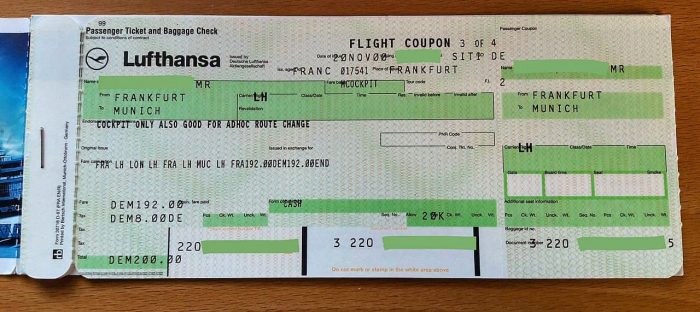
Those trailing characters are not standardized either, but some conventions recur across carriers. Numbers such as 7, 14 or 21 signal an advance purchase requirement in days.
Other common fragments include NR for non-refundable, H or L for high or low season, X for weekday and W for weekend travel, OW or RT for one-way and round-trip, and CH or IN for child and infant fares.
Economy Class Codes
Economy carries the most codes by far, because it is the cabin airlines slice most finely. A single economy cabin routinely holds a dozen price buckets.
| Code | Typical meaning |
|---|---|
| Y | Full-fare economy, the most flexible and most expensive |
| B | High-priced economy on most carriers, Basic Economy on American |
| M, H | Mid-priced economy, often upgrade eligible |
| K, Q, V | Discounted economy |
| L, T, S, G | Deeply discounted economy, limited flexibility |
| N | Basic Economy on United, award or discount inventory elsewhere |
| E | Basic Economy on Delta, mid-priced economy on United |
| O, X, U | Varies widely, often deep discount or award inventory |
There is no such thing as a standard Basic Economy letter, which catches people out constantly. Delta sells it as E, United as N, and American as B.
Three airlines, one product, three different letters
Basic Economy is effectively the same restricted product at all three US majors, yet Delta codes it E, United codes it N, and American codes it B. Worse, each of those letters means something quite different at the other two carriers. A traveler who learns “B is a decent economy fare” on United and then books B on American has just bought the most restricted ticket on the aircraft.
Premium Economy Class Codes
Premium economy is the newest cabin, and it never got a settled code. W is the closest thing to a common standard and is used by many carriers, with P and S also appearing.
The two biggest US carriers both break the pattern. United sells its Premium Plus cabin as O, A and R, while W is an ordinary economy fare there.
Delta is stranger still. Its Premium Select cabin uses A, G, P, Q and U, and Delta’s W is Comfort+, which is an extra-legroom economy section rather than a true premium cabin.
Business Class Codes
Business is the most consistent cabin across the industry. J is full-fare business almost everywhere, and C is usually the next tier down.
| Code | Typical meaning |
|---|---|
| J | Business class, full fare, fully flexible |
| C | Business class, high fare |
| D | Business class, discounted |
| I | Business class, discounted, often award or upgrade inventory |
| Z | Business class, deeply discounted |
Two exceptions are worth knowing. Delta uses C for Comfort+, an economy product, so a Delta C fare is not business class at all.
United uses PZ as a distinct code for deeply discounted business fares that clear instant upgrades, which is why it turns up in upgrade discussions far more than its volume would suggest.
First Class Codes
First class codes are simple, but the cabin itself is disappearing. F is full-fare first and A is the discounted version.
| Code | Typical meaning |
|---|---|
| F | First class, full fare |
| A | First class, discounted |
| P | Premium or first on some carriers, premium economy on others |
| R | Historically supersonic and first class suites, now often premium economy |
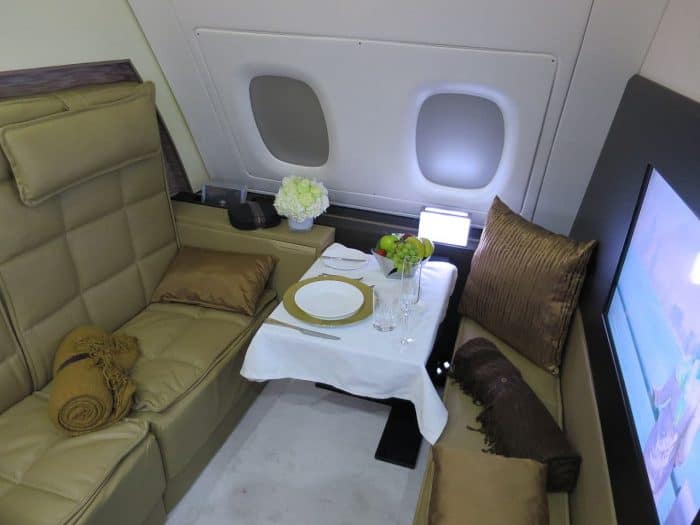
Note the terminology trap on US domestic routes. A domestic F seat is the front cabin of a two-cabin aircraft, which is a recliner broadly comparable to international business, not an international first class suite.
True international first class has been retreating for years. Neither Delta nor United sells it on long-haul routes any more, and their premium long-haul products, Delta One and United Polaris, are business class. If you are weighing the front cabin against chartering, we compare the economics in private jet vs first class.
The Same Letter, Three Different Airlines
This is the table most guides will not give you, and it is the reason a generic chart keeps letting you down. Each row is one letter, read across the three largest US carriers.
| Code | Delta | United | American |
|---|---|---|---|
| A | Premium Select | Premium Plus | First class, discounted |
| B | Main Cabin, upgradeable | Economy, full fare | Basic Economy |
| C | Comfort+ | Business, high fare | Business class |
| E | Basic Economy | Economy, higher fare | Main Cabin economy |
| N | Award coach inventory | Basic Economy | Main Cabin economy |
| P | First class, discounted | Business, deepest discount | Premium Economy |
| W | Comfort+ | Economy, upgrade eligible | Premium Economy |
Read the P row again. The same letter is discounted first class at Delta, the cheapest business fare at United, and premium economy at American.
No universal chart can survive that. This is why the only correct answer to “what does class P mean” is another question: on which airline?
Is Coach the Same as Economy?
Yes. Coach and economy are the same cabin, and the difference is purely vocabulary.
“Coach” is the American English term, inherited from railroad travel where the coach car was the standard, unreserved accommodation. “Economy” is the international term and the one airlines use in their own fare rules.
Flying coach, flying economy, and traveling in the main cabin all describe the same seat. There is no separate coach fare class code, because coach is not a fare class at all.
US airlines have largely retired the word. Delta and American both call the cabin Main Cabin, and United simply calls it Economy, so you will hear “coach” from passengers far more often than from the carrier.
What Your Fare Class Actually Controls
The letter is not cosmetic. It governs five things that decide how good your ticket really is.
Miles and status earning
Earning is set by fare class, not by distance flown. A discounted economy code can earn a fraction of what a full-fare ticket on the identical flight earns.
Basic Economy is the extreme case. American Basic Economy tickets bought on or after 17 December 2025 earn no AAdvantage miles and no Loyalty Points at all, and Delta Basic Economy earns no SkyMiles or Medallion credit.
Upgrade eligibility
Airlines gate upgrades by booking class, which is where the letter earns its keep. Full-fare Y is normally fully upgradeable, mid-tier codes clear only for higher status tiers, and Basic Economy is never upgradeable.
Each carrier reserves specific codes for the mechanism. Delta clears complimentary Medallion upgrades into OU inventory, United uses PZ, and Alaska uses U.
Changes and refunds
Refundability is a property of the fare, and the fare is the letter. Y, J and F are typically refundable and changeable, while deep discount codes are neither.
Baggage allowance
Some discounted codes carry reduced or zero checked baggage entitlement. American raised Basic Economy domestic bag fees to $55 for the first bag and $65 for the second in 2026.
Seat selection, standby and boarding
Restricted codes commonly lose free advance seat selection and same-day standby, and board last. American Basic Economy passengers generally board in Group 9, which is the practical reason those tickets feel worse than the fare difference suggests. Boarding order itself is built on these cabin and fare tiers, as we explain in why boarding takes so long.
How to Find Your Own Fare Class
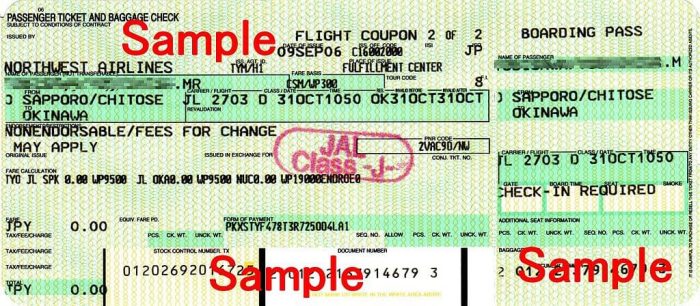
Your booking class is printed on your documents, though rarely where you would look first.
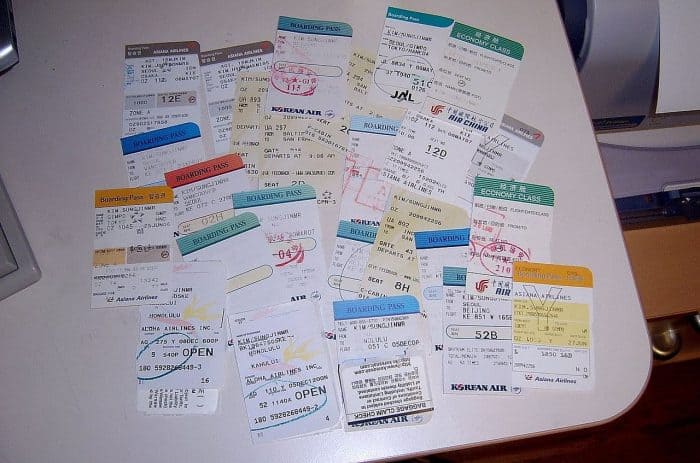
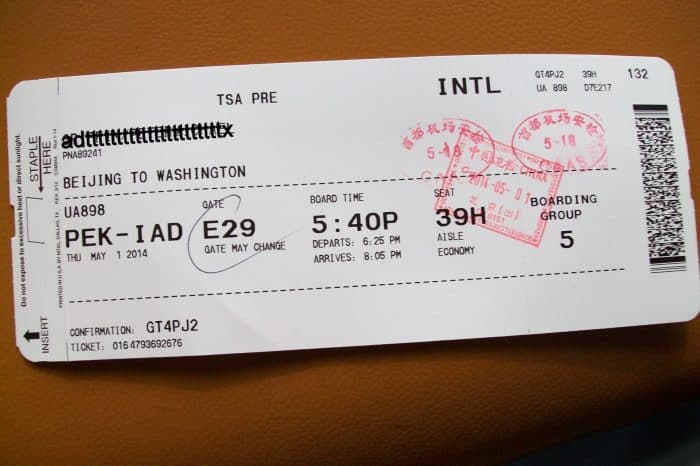
- Your boarding pass. Look for a field marked “Class” or “Cabin”, usually a single letter near the flight number.
- Your e-ticket receipt. The fare basis code appears against each flight segment, and its first character is your booking class.
- The fare rules. Airline booking sites hide these behind a “fare conditions” or “fare rules” link, often set in all capitals.
- Manage my booking. Most carriers show the class against each segment once you retrieve the reservation.
One warning. Some boarding passes print the cabin rather than the booking class, so a pass reading “Class: Y” on a carrier that never sold you a Y fare is showing you the cabin. The e-ticket receipt is the reliable source.
The "lowercase n means a night flight" myth
A claim circulates widely, including in earlier versions of this article, that an n appended to a code such as “Yn” marks a nighttime flight. It does not. On United, the N suffix denotes award and upgrade inventory: XN and YN are economy award buckets, IN and JN are business award buckets, and none of them has anything to do with the time of day. Wikipedia’s reference entry on fare basis codes makes no mention of a night-flight convention at all.
Why the Codes Are Worth Learning
Two tickets in the same cabin, on the same aircraft, can be worth very different amounts. One earns full miles and clears an upgrade, the other earns nothing and boards last.
The only visible difference between them is a letter. Checking that letter before you book, against your own airline’s chart rather than a generic one, is the whole skill.
FAQ
Sources and references used for research and fact-checking.
Get the Newsletter
The latest aviation news and stories sent to your inbox.