


Table of Contents
Aviation has always attracted writers of unusual quality. Perhaps it is because the stakes are so high, or because the perspective from altitude makes everything below look different, or because the people who have lived inside cockpits tend to have stories worth telling. Whatever the reason, the aviation bookshelf is extraordinarily rich: memoirs that put you in the seat beside some of history’s finest pilots, histories that rescue extraordinary events from obscurity, and novels that capture something essential about what it means to fly that no technical manual ever could.
This list covers the full range. You will find airline memoirs from the propeller era, combat accounts from three wars, the stories of extraordinary test pilots and barnstormers, histories of the people who built and flew some of the most remarkable machines ever designed, and a handful of novels and works of literary nonfiction that belong on any serious aviation bookshelf regardless of the reader’s background. Some of these books have been read by virtually every pilot alive. Others are less well known but deserve exactly the same attention.
You do not need to be a pilot to love any of them. The best aviation books work as pure narrative, with the flight as setting for stories about courage, engineering ingenuity, human error, and what it feels like to push past the edge of what seems possible. Start anywhere on this list and you will find yourself ordering the next one before you have finished the first.
01. Fate Is the Hunter by Ernest K. Gann
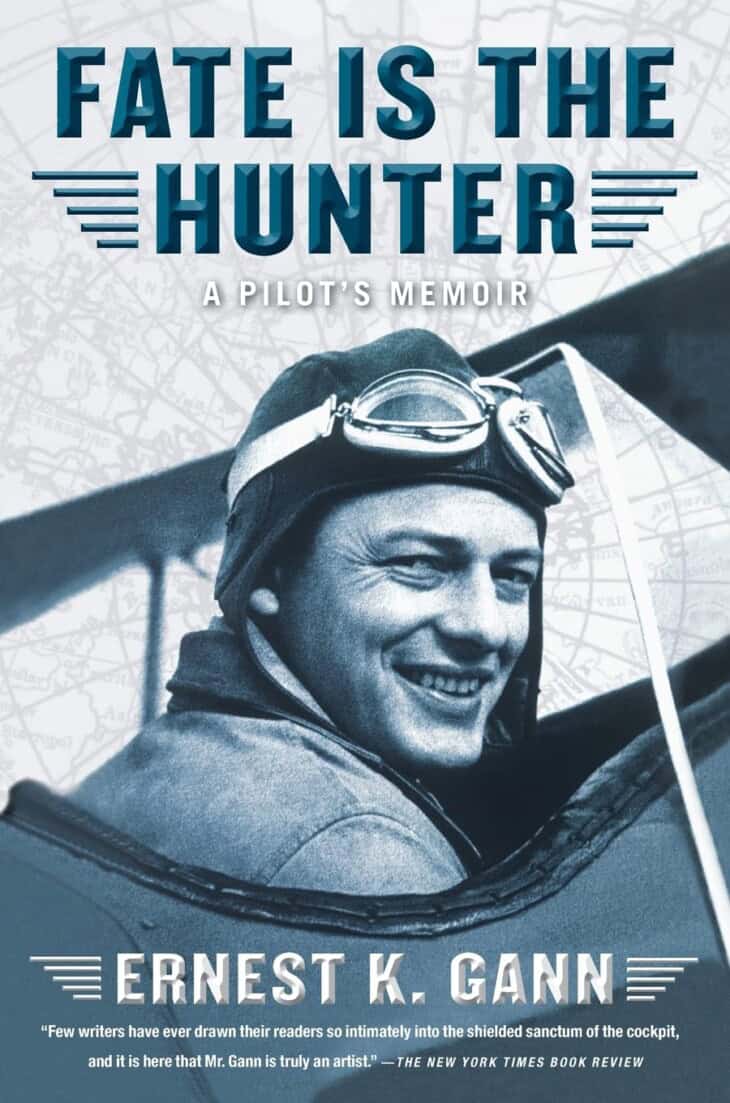
Why it works Widely considered the finest aviation memoir ever written, Ernest Gann’s account of his years as an airline pilot in the 1930s and 1940s is also a meditation on fate, luck, and the invisible forces that determine who survives and who does not. Gann flew DC-2s, DC-3s, C-87s, and C-54s in an era before weather radar, reliable navigation, or pressurisation, and his prose captures the physical reality of that flying with remarkable precision. The title refers to his conviction that something beyond skill and judgement governs who returns from each flight. Nearly every pilot who has read it names it among the books that most shaped how they think about flying.
How to get it Fate Is the Hunter has remained in print almost continuously since 1961 and is available in paperback, hardcover, and ebook formats. New readers sometimes begin with a chapter in the middle and are immediately pulled back to the beginning; the book works as a collection of linked episodes rather than a strict chronological narrative, which makes it accessible to dip into anywhere. If you enjoy it, Gann also wrote several aviation novels including The High and the Mighty, which was adapted into a well-known film and is equally gripping as a piece of aviation writing.
02. The Right Stuff by Tom Wolfe
Why it works Tom Wolfe’s account of the test pilot culture at Edwards Air Force Base and the early Mercury astronaut program is one of the great works of American journalism. He coined the phrase that gives the book its title: that ineffable quality possessed by pilots who could push aircraft beyond any reasonable boundary and come back to talk about it. The book is as much about status, masculinity, and the warrior ethos as it is about aviation, which is why it works for readers who have never sat in a cockpit. It also explains, better than any other source, the culture that produced the people who first broke the sound barrier and first flew in space.
How to get it The Right Stuff has been continuously in print since 1979 and was made into a celebrated 1983 film. The book is considerably richer than the film and covers personalities and events the film omits. Read the book first if you can, because the film’s casting shapes how you imagine the characters in ways that are sometimes at odds with Wolfe’s own portraits. This is also an excellent book to recommend to non-enthusiast friends who want to understand what draws people to aviation: the answer Wolfe arrives at is genuinely illuminating.
03. Wind, Sand and Stars by Antoine de Saint-Exupery

Why it works Antoine de Saint-Exupery flew mail routes across the Sahara and over the Andes in the 1920s and 1930s, an era when navigation aids were almost nonexistent and a forced landing in the desert or the mountains meant almost certain death. Wind, Sand and Stars is his account of that flying transformed into something approaching philosophy: reflections on solitude, courage, the relationship between humans and machines, and what the perspective of flight reveals about the world below. It won the Grand Prix du Roman de l’Academie francaise and the National Book Award. Almost every pilot who has read it describes it as unlike any other aviation book.
How to get it Several English translations exist and opinions differ on which is best: the Lewis Galantiere translation was the standard for decades but more recent translations aim for closer fidelity to Saint-Exupery’s original French. Any major edition is worth reading. If you enjoy Wind, Sand and Stars, also read Night Flight (listed later in this article) and consider The Little Prince, which is not an aviation book but shares the author’s characteristic way of looking at the world through the clarity that flight provides.
Start here if you want literary aviation
If you are new to aviation writing and want to understand why pilots say flying changed how they see everything, Wind, Sand and Stars is the place to start. It is short, available in most libraries, and unlike almost anything else in the genre.
04. Yeager: An Autobiography by Chuck Yeager and Leo Janos
Why it works Chuck Yeager broke the sound barrier on October 14, 1947, with two broken ribs from a riding accident the previous night, a fact he did not disclose to his commanders because he was afraid they would ground him. His autobiography is the account of a West Virginia farm boy who became the finest test pilot of his generation through a combination of natural skill, near-supernatural calm under pressure, and an absolute refusal to be intimidated by anything a machine could do. It covers his WWII career as a fighter ace, his postwar test pilot years, and his later life. The voice is blunt, direct, and completely free of false modesty.
How to get it Yeager was published in 1985 and is widely available in used and new editions. Read The Right Stuff first if you have not already, because Wolfe’s account of Yeager’s world provides useful context for the autobiography. The two books cover overlapping periods and events from different perspectives and together give a remarkably complete picture of the test pilot era. Yeager is also one of the best books about WWII fighter combat available, particularly his accounts of air battles over occupied Europe in 1943 and 1944.
05. Skunk Works by Ben Rich
Why it works Ben Rich ran Lockheed’s Skunk Works division after Kelly Johnson and oversaw the development of the F-117 stealth fighter. His book is the inside account of how the most secret and technically advanced aircraft programs in US history actually worked: the culture of the team, the engineering problems that seemed unsolvable until they were solved, the relationship between the program and the CIA and Pentagon, and the personalities of the extraordinary engineers who built aircraft that still look futuristic decades after they flew. For anyone interested in how great engineering actually happens, this is one of the best books available in any field.
How to get it Skunk Works was published in 1994 and has been in print ever since. It covers programs including the U-2, SR-71 Blackbird, and F-117, and provides more technical and operational detail than most officially published accounts because Rich was directly involved in all of them. Pair it with Sled Driver (listed later in this article) for the pilot’s perspective on the aircraft whose birth Rich describes. Together the two books give a complete picture of the SR-71 program from conception to cockpit.
06. The Spirit of St. Louis by Charles Lindbergh
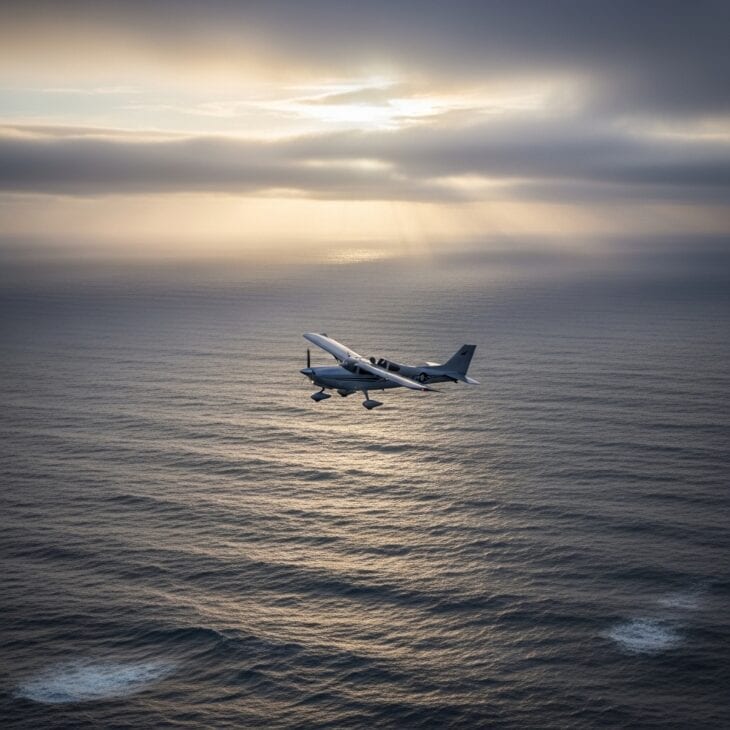
Why it works Charles Lindbergh’s own account of his 1927 solo transatlantic flight won the Pulitzer Prize for Biography and is widely regarded as one of the great works of aviation literature. Lindbergh structured the book so that memories from his past interweave with the moment-by-moment experience of the 33-hour flight, which creates a narrative structure that keeps the tension constant even though the reader knows the outcome. His descriptions of exhaustion, spatial disorientation, and the hypnotic hours over featureless ocean are among the most precise accounts of the inner experience of flight ever published. Understanding the firsts in aviation history makes the context of this crossing even more striking.
How to get it The Spirit of St. Louis has been continuously in print since 1953. A Pulitzer Prize-winning audiobook edition read by Bronson Pinchot is also excellent. The book requires some patience in the early chapters, which establish Lindbergh’s background and training at a deliberate pace, but the payoff during the flight itself is worth it. Note that this is purely the flying memoir: Lindbergh’s personal life and political views in later years are a separate, more complicated story that this book does not address.
07. Carrying the Fire by Michael Collins
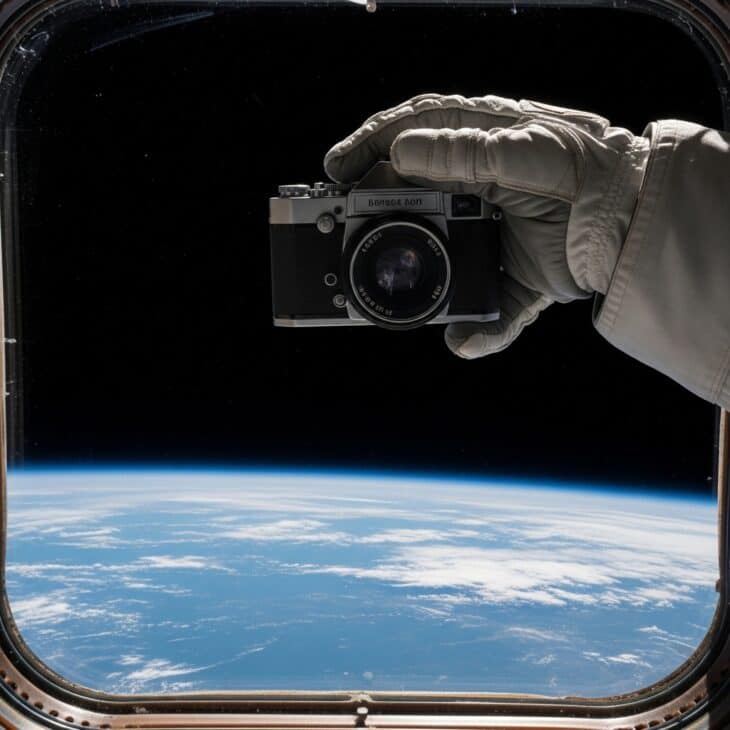
Why it works Michael Collins was the command module pilot for Apollo 11, the man who flew alone in lunar orbit while Armstrong and Aldrin landed on the surface below. Carrying the Fire, published in 1974, is consistently rated by astronauts and aviation writers as the finest memoir to come out of the space program. Collins writes with intelligence, self-awareness, and a dry wit that makes the technical content accessible without dumbing it down, and his account of what it actually felt like to be in lunar orbit alone, for hours, is unlike anything else in the literature. Neil Armstrong himself said it was the best book written by any of the astronauts.
How to get it Carrying the Fire was out of print for many years and available only as a sought-after used copy. It has been reissued and is now readily available in new editions. If you read only one astronaut memoir, this is the one. It covers Collins’s test pilot career before NASA, the Gemini program, and the full Apollo 11 mission in detail that feels genuinely illuminating rather than performatively modest or falsely heroic. Collins is honest about doubt, about his relationship to fame, and about what the experience actually meant to him.
08. Chickenhawk by Robert Mason

Why it works Robert Mason flew over 1,000 combat missions in Vietnam as a Huey helicopter pilot, and Chickenhawk is his account of that experience. Published in 1983, it is one of the most unflinching accounts of rotary-wing combat flying ever written. Mason describes the mechanics of combat flying with precision and the psychological disintegration of prolonged combat exposure with even more: the book is simultaneously a technical document about how helicopter warfare actually worked and an honest account of what it does to the people doing it. It is also frequently cited by military helicopter pilots as the book that most accurately represents their experience.
How to get it Chickenhawk has been continuously in print since the 1980s and is widely available. The book covers Mason’s training, his first combat tour, and the aftermath, and does not flinch from the moral complexity of the war. It is a demanding read emotionally but an enormously rewarding one. For readers who want more Vietnam helicopter content after finishing it, low-hour pilot and aviation history communities maintain reading lists of companion volumes that cover different aspects of the same air war.
The helicopter memoirs
Chickenhawk and God Is My Co-Pilot together represent two different generations of combat aviation memoir. Reading them together shows how the experience of military flying changed between the WWII and Vietnam eras, and how much stayed the same.
09. The Wright Brothers by David McCullough
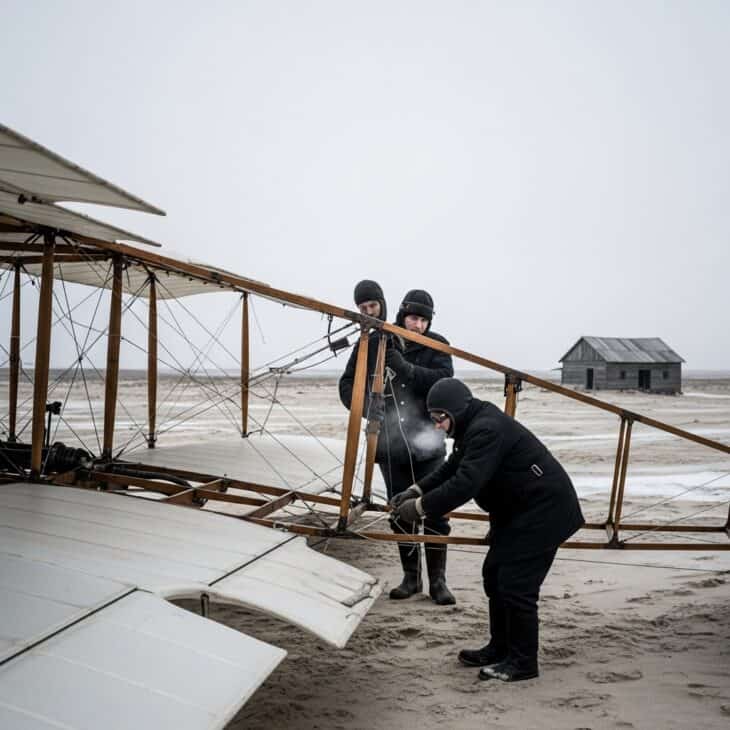
Why it works David McCullough is one of America’s greatest popular historians, and this 2015 account of Orville and Wilbur Wright is among his best work. What he gives the reader is not the familiar capsule biography but a fully dimensional account of two self-taught bicycle mechanics from Dayton, Ohio, who solved the problem of powered flight through rigorous methodology, extraordinary patience, and a willingness to rebuild from scratch each time their theories proved wrong. The book is also a portrait of a specific kind of American ingenuity: systematic, humble, and ultimately world-changing. It works for readers with no prior aviation interest as well as for aviation enthusiasts who think they already know the story.
How to get it The Wright Brothers was a number-one New York Times bestseller and is widely available in all formats. It is an excellent gift for anyone curious about aviation history, engineering history, or American history more broadly. McCullough draws on primary sources including the brothers’ own letters and diaries, which gives the account an immediacy that more distant biographical approaches lose. Pair it with the broader story of aviation firsts to put the Wrights in the context of the century of achievement that followed their first flight.
10. Masters of the Air by Donald L. Miller
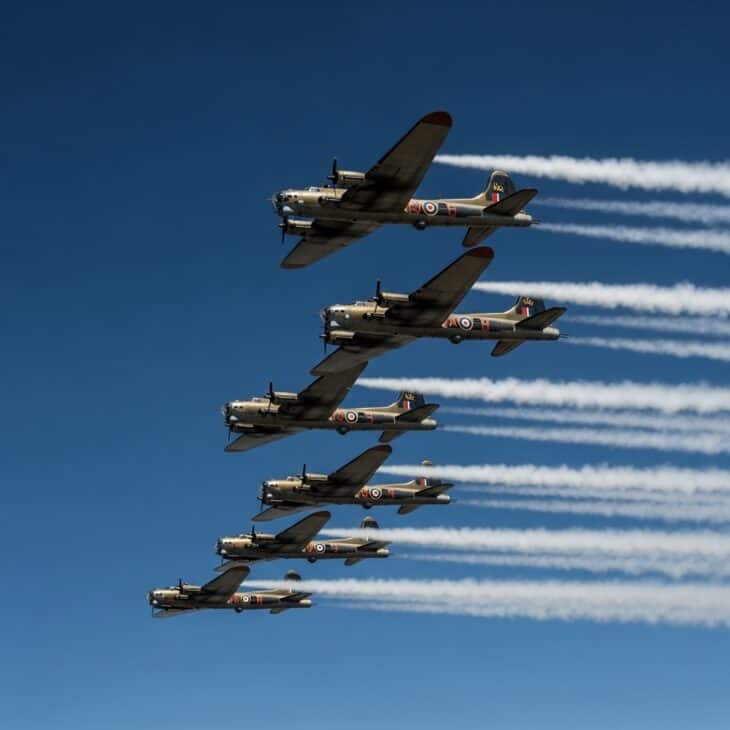
Why it works Donald Miller’s comprehensive account of the Eighth Air Force’s daylight bombing campaign over Nazi-occupied Europe is the definitive popular history of that extraordinary and costly effort. The heavy bomber crews who flew from England between 1942 and 1945 suffered casualty rates comparable to infantry combat and yet continued flying because the mission demanded it. Miller tells this story through the individual experiences of airmen and through the broader strategic and command context, producing a book that works both as human narrative and as serious military history. The Apple TV+ series of the same name is based on this book.
How to get it Masters of the Air was published in 2007 and saw a significant revival of interest with the streaming series. New and used copies are widely available. If you read it having watched the series, the book provides enormous additional depth on personalities, missions, and the strategic context that the series necessarily compresses. If you read it before watching, you will find the series a visually immersive companion to events you already know in detail. Either order works well.
11. Baa Baa Black Sheep by Gregory Boyington
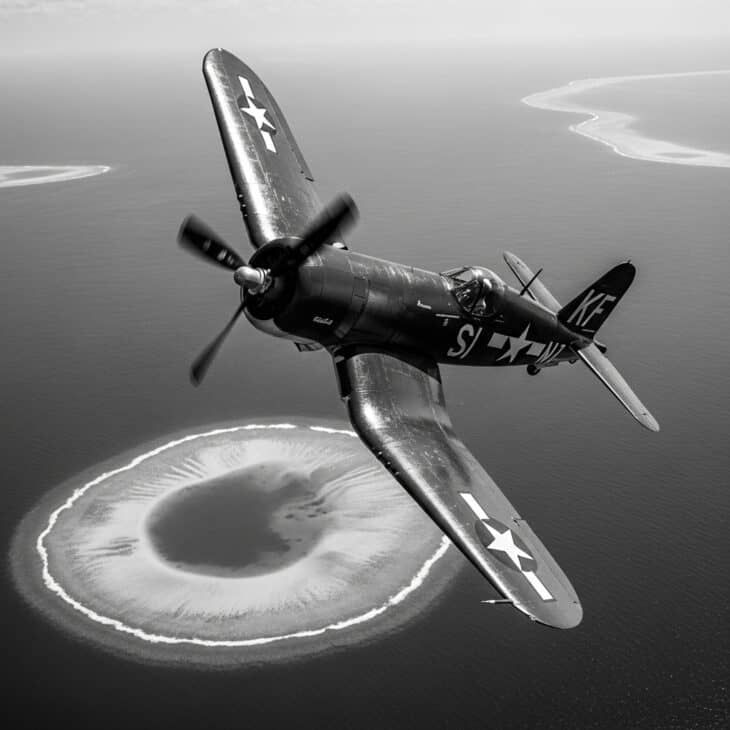
Why it works Gregory “Pappy” Boyington commanded the famous Black Sheep Squadron in the Pacific theater, was shot down over Rabaul in January 1944, survived 20 months as a Japanese prisoner of war, and returned to receive the Medal of Honor. His autobiography is the account of a brilliant, deeply flawed, and frequently drunk fighter pilot who was also one of the finest combat aviators of the war. Boyington’s voice is self-lacerating and often darkly funny, and his account of both the flying and the imprisonment is remarkably honest. It is a book about what talent and recklessness look like when they coexist in the same person.
How to get it Baa Baa Black Sheep was published in 1958 and a television series of the same name ran in the 1970s with Robert Conrad playing Boyington. The book differs significantly from the TV series in tone and content: Boyington’s writing is considerably darker and more honest than the sanitised version presented on screen. Used copies are widely available and the book is often reprinted. Read it alongside Chickenhawk if you want to compare the different cultures of WWII and Vietnam-era combat aviation memoir.
12. Unbroken by Laura Hillenbrand

Why it works Laura Hillenbrand’s account of Olympic runner and WWII bombardier Louis Zamperini is not primarily an aviation book, but Zamperini’s story begins with a B-24 crash in the Pacific and his 47 days on a life raft before capture by Japanese forces makes the aviation context inescapable. The book is among the finest WWII narratives published in the last 30 years and the survival account is genuinely harrowing. For aviation readers, it provides an extraordinary ground-level account of what WWII bomber crews faced over the Pacific, where distances were so vast that mechanical failure or navigation error could be as deadly as enemy action.
How to get it Unbroken was a multi-year New York Times bestseller and is one of the most widely read WWII narratives available. It has been adapted into a film and audiobook. Hillenbrand’s research is meticulous and her writing handles the most extreme material with restraint and precision. Pair it with Masters of the Air for a fuller picture of what WWII bomber crews experienced across both the European and Pacific theaters.
13. Fly Girls by Keith O’Brien
Why it works During WWII, the Women Airforce Service Pilots (WASPs) flew every type of military aircraft in the American inventory, ferried aircraft across the country, towed targets for live anti-aircraft gunnery practice, and performed virtually every non-combat flying role the military needed. They did all of this while being denied military status, equal pay, and in many cases basic recognition. Keith O’Brien’s 2019 account of these women and the fight to get their contribution acknowledged is rigorously researched and genuinely moving. For aviation enthusiasts, it also fills in a significant gap in the standard WWII aviation narrative.
How to get it Fly Girls was published in 2019 and won the PEN/ESPN Award for Literary Sports Writing. It is widely available in all formats. The book focuses on five women in particular: Louise Thaden, Blanche Noyes, Ruth Nichols, Jackie Cochran, and Florence Klingensmith. Their individual stories allow O’Brien to trace the broader arc of women in aviation from the early barnstorming era through the WWII WASP program. Pair it with Barnstormers and the golden age of aviation history to understand the cultural context these pioneers were operating in.
14. Stick and Rudder by Wolfgang Langewiesche
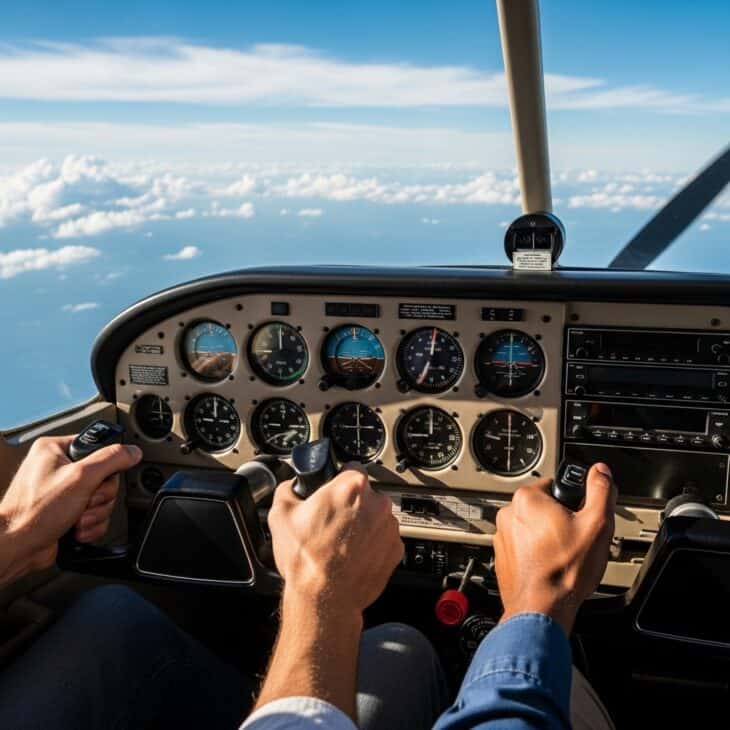
Why it works First published in 1944, Stick and Rudder is arguably the most important book ever written for pilots. Wolfgang Langewiesche explained, for the first time in plain language accessible to non-engineers, what an aircraft actually does in flight and why it does it. His account of lift, stall, the relationship between angle of attack and airspeed, and why pilots die doing certain things wrong is still assigned in flight training programs over 80 years after it was written. For non-pilots, it is a window into the physics of flight that makes watching any aircraft more interesting. For pilots and student pilots, it belongs on the bedside table alongside the aircraft operating handbook.
How to get it Stick and Rudder has been continuously in print since 1944 and is available from aviation specialty booksellers worldwide. Some readers find the prose style dated; the book reflects its era in various ways that modern readers may notice. But the core content remains accurate and useful, and no subsequent book has displaced it as the standard popular explanation of flight mechanics for general readers. If you want to understand general aviation at a level beyond the surface, this is the book that provides the conceptual foundation.
15. God Is My Co-Pilot by Robert L. Scott
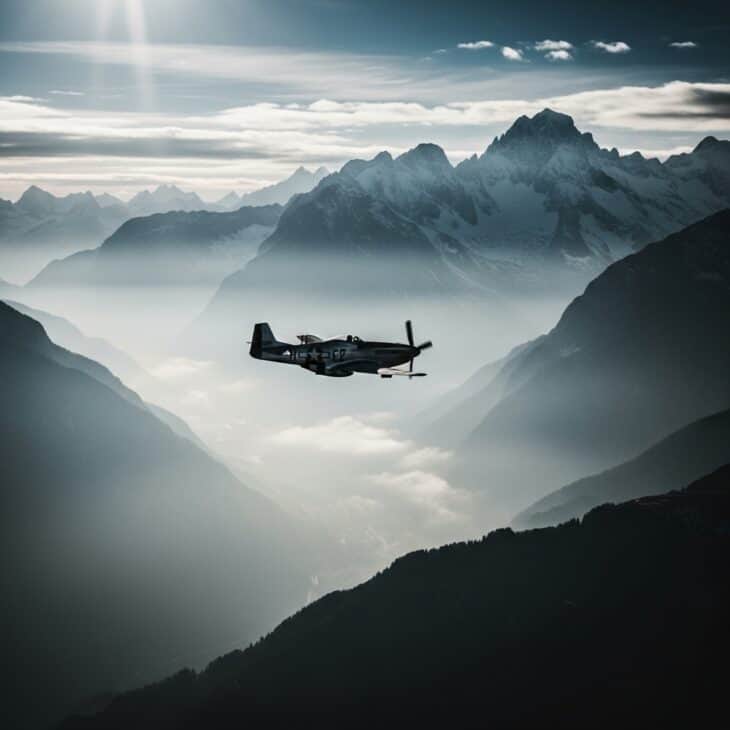
Why it works Robert L. Scott flew P-40s with the American Volunteer Group and later the 23rd Fighter Group over China from 1942, and his memoir of that experience became one of the great WWII aviation bestsellers. The book is less sophisticated than some of the later memoirs on this list, but it captures the specific quality of fighter pilot experience in the CBI theater with immediacy and enthusiasm that no more polished account has replicated. Scott was 34 when he finally got to fly combat, significantly older than most of his colleagues, and his perspective has a self-awareness that the youngest fighter pilots rarely brought to their memoirs.
How to get it God Is My Co-Pilot was published in 1943, while Scott was still actively flying combat, and became an immediate bestseller. A 1945 film starred Dennis Morgan as Scott. Used copies are widely available and the book has been reprinted several times. It is a quick read and one that works well as an introduction to WWII fighter pilot memoirs before moving to more complex accounts like Baa Baa Black Sheep or the test pilot memoirs of the postwar period.
16. Nothing by Chance by Richard Bach
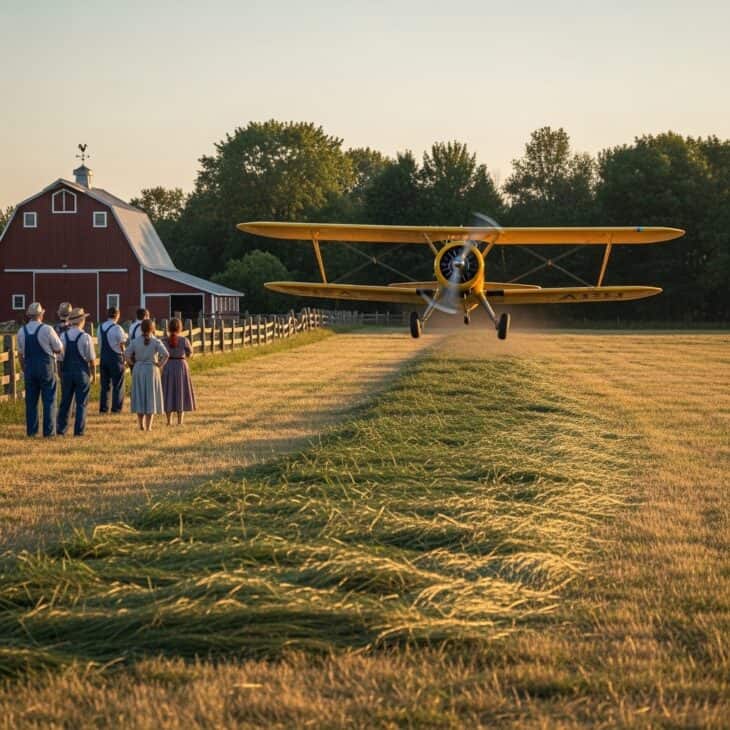
Why it works Richard Bach spent a summer barnstorming the American Midwest in an antique biplane with a group of friends, offering rides to locals for a few dollars and living entirely on the proceeds. Nothing by Chance is his account of that summer, and it captures something about small-town America, the freedom of flight, and the culture of barnstorming that no other book has replicated. Bach writes with a specific quality of wonder that makes reading him feel like flying: he notices things that most writers walk past. This is the lightest and most joyful book on this list, and it is exactly what it needs to be.
How to get it Nothing by Chance is available in used editions and has been periodically reprinted. It is a short book and a quick read, which makes it a good choice for an afternoon on its own or as a palate-cleanser between heavier titles on this list. If you enjoy it, Bach’s more famous book Jonathan Livingston Seagull (listed later) shares some of its qualities but moves in a more metaphorical direction. Both are worth reading.
17. Highest Duty by Chesley Sullenberger and Jeffrey Zaslow
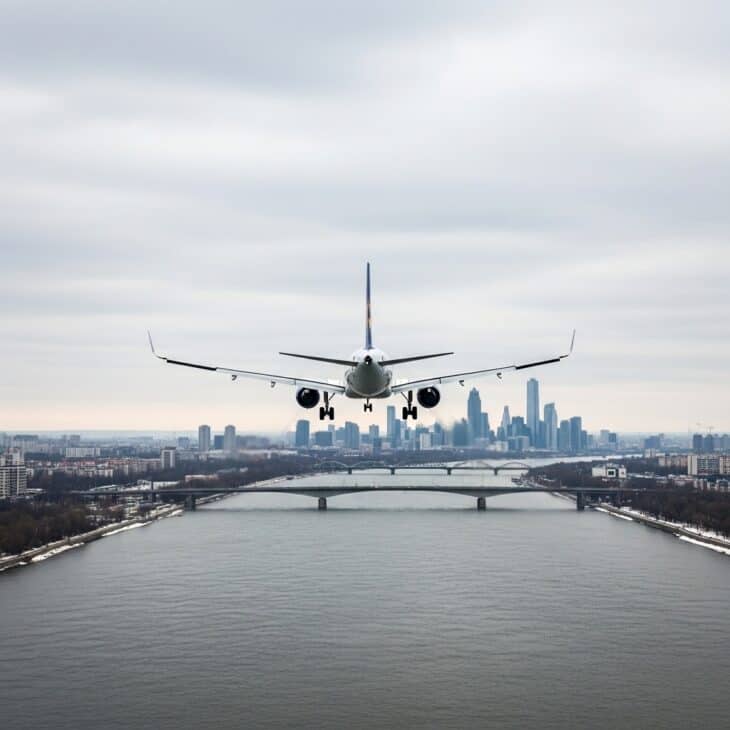
Why it works The full story of what Chesley Sullenberger did on January 15, 2009 is far more complex than the headline account of a successful water landing. Sullenberger’s memoir covers the 35 years of professional experience, the thousands of hours of training, and the specific cognitive and procedural decisions that produced the outcome they did. It is also a reflection on what a career in professional aviation actually means: the cumulative knowledge, the relationship with risk, and the responsibility that professional pilots carry on every flight. You can read about the events at US Airways Flight 1549 in detail on AeroCorner.
How to get it Highest Duty was published in 2009 and is widely available. The Clint Eastwood film Sully, with Tom Hanks in the title role, dramatises the events covered in the book but adds a fictional NTSB investigation framing that Sullenberger himself has noted does not reflect his actual experience. The book is considerably more nuanced than the film on the specifics of what happened and what it meant. Both are worth your time, but read the book if you want to understand the thinking behind the flying.
The professional pilot's library
Fate Is the Hunter, Stick and Rudder, and Highest Duty together represent three perspectives on professional flying: what it was like in the propeller era, how flight mechanics actually work, and what a modern airline career produces in a crisis. Read all three and you will understand professional aviation from multiple angles.
18. The Shepherd by Frederick Forsyth
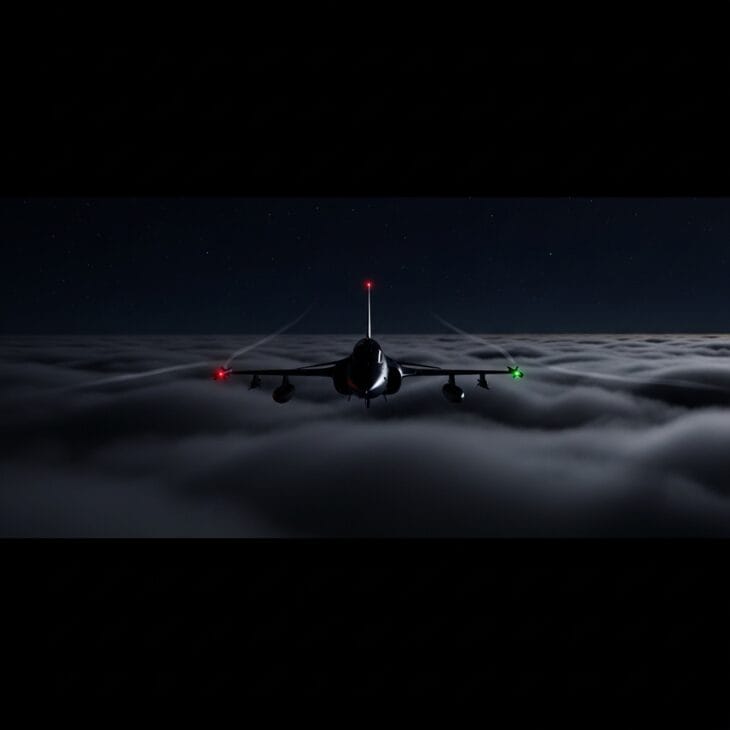
Why it works The Shepherd is a novella rather than a full-length novel, but it earns its place on any aviation reading list because it is the finest piece of short aviation fiction ever written. Published in 1975, it follows a young RAF pilot flying home on Christmas Eve whose instruments fail over the North Sea in thick cloud. A vintage aircraft appears to guide him home. Forsyth, who learned to fly and drew on his knowledge of RAF procedures and aircraft of the period, writes the aviation content with precision and the supernatural element with enough restraint that the story works on multiple levels simultaneously. It has been reissued annually in the UK as a Christmas book and is worth reading every few years.
How to get it The Shepherd is very short and can be read in a single sitting. It is published as a standalone volume in the UK and is included in some Forsyth short story collections. US availability in new editions varies; used copies are inexpensive and widely available. If you have never read it, it is most powerful when read on Christmas Eve, which is when it is set, though the aviation content is compelling at any time of year.
19. Sled Driver by Brian Shul
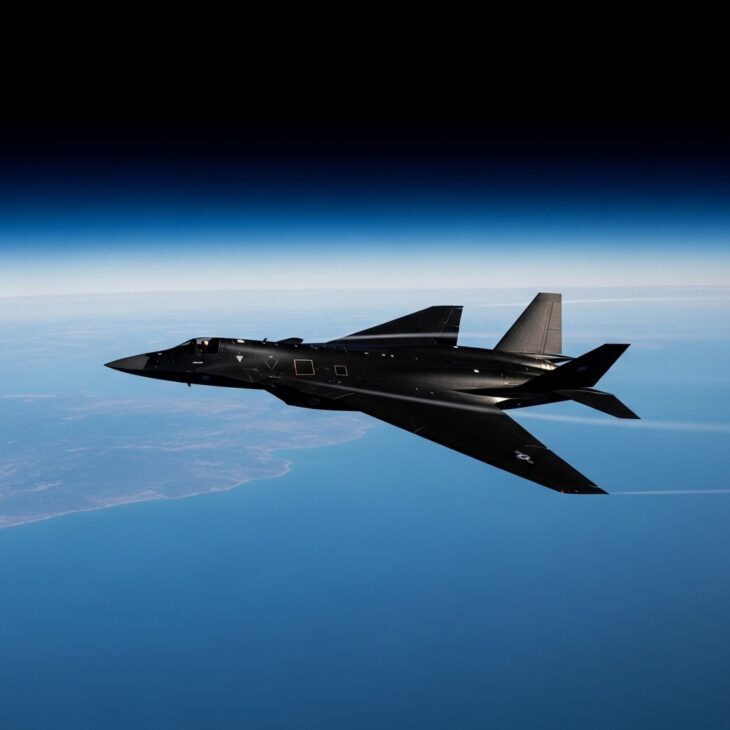
Why it works Brian Shul flew the SR-71 Blackbird and his memoir of that experience is one of the most coveted books in aviation: the original edition was a limited print run with stunning photography and currently sells for hundreds of dollars as a collector’s item. The writing captures what it actually felt like to operate an aircraft that cruised at Mach 3-plus at altitudes where the sky above begins to shade toward black. Shul also survived being shot down in Southeast Asia and spent over a year recovering from severe burns before qualifying to fly the SR-71, which gives the book an additional layer of hard-won perspective on what it means to fly. A beautifully illustrated format makes the production itself worth seeking out.
How to get it Sled Driver is periodically reprinted and new runs tend to sell out quickly. Check aviation specialty booksellers and online marketplaces for current availability. The images in the book are a significant part of the experience, so a quality hardcover edition is strongly preferable to digital formats. For broader context on the aircraft itself, pair it with Skunk Works, which covers the SR-71’s development from the engineering side. You can also read more about the SR-71 Blackbird’s specifications and history on AeroCorner.
20. Night Flight by Antoine de Saint-Exupery
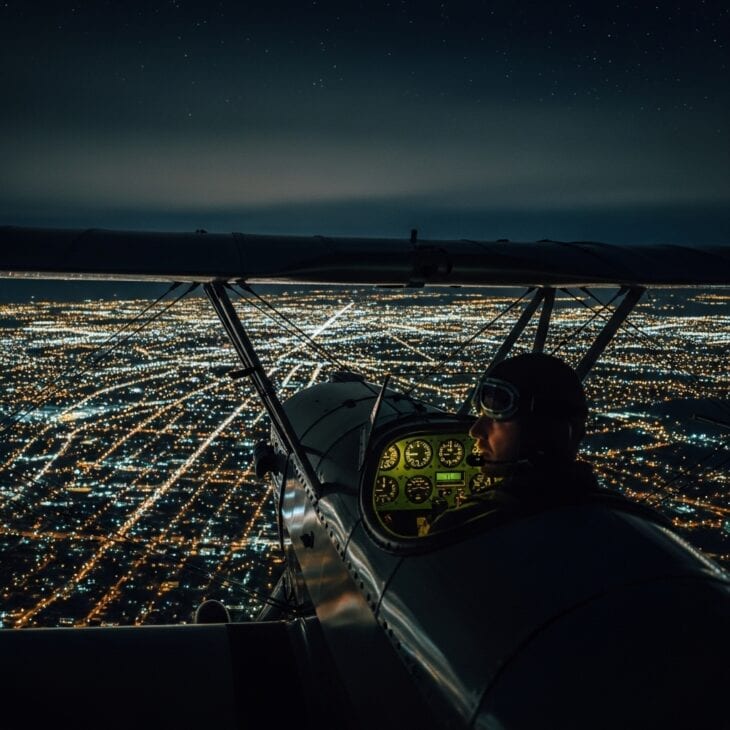
Why it works Saint-Exupery’s novella about a night mail supervisor overseeing multiple pilots flying dangerous night routes over South America is the first of his books and arguably the most tightly plotted. Where Wind, Sand and Stars is discursive and philosophical, Night Flight is a driven narrative with real stakes and a genuinely moving ending. Andre Gide wrote the preface to the original French edition and described it as one of the most significant works of aviation literature. It is brief, precise, and very beautiful. For readers who want to understand the early airline era and the culture of mail aviation, it also works as a kind of historical document about a specific and vanished world.
How to get it Night Flight is available in several English translations and is often published in a combined volume with Wind, Sand and Stars, which is a sensible pairing. The book can be read in two to three hours, which makes it an ideal starting point for readers who want to sample Saint-Exupery before committing to the longer and more discursive Wind, Sand and Stars. If you read both, the order does not significantly matter: they are set in the same world but are independent works.
21. Jonathan Livingston Seagull by Richard Bach

Why it works Richard Bach’s short fable about a seagull who cares more about perfect flight than about fishing for food is not, technically, an aviation book. But it has been given to more pilots by more flight instructors than almost any other book on this list because it captures something essential about why people fly: not to get somewhere, not for practical reasons, but because flight itself is the point. Published in 1970, it became a global phenomenon and sold millions of copies. Non-pilots sometimes find it slight; pilots almost universally find something in it that corresponds to their own experience of the air.
How to get it Jonathan Livingston Seagull is widely available in editions that include the original photographs of actual seagulls in flight that appeared in the first edition. The full edition with photography is the one to seek: the images add a dimension to the text that later text-only editions lose. It is a book that reads differently at different ages and stages of flying experience, which means it is worth returning to periodically rather than reading once and setting aside.
22. The Wild Blue by Stephen Ambrose
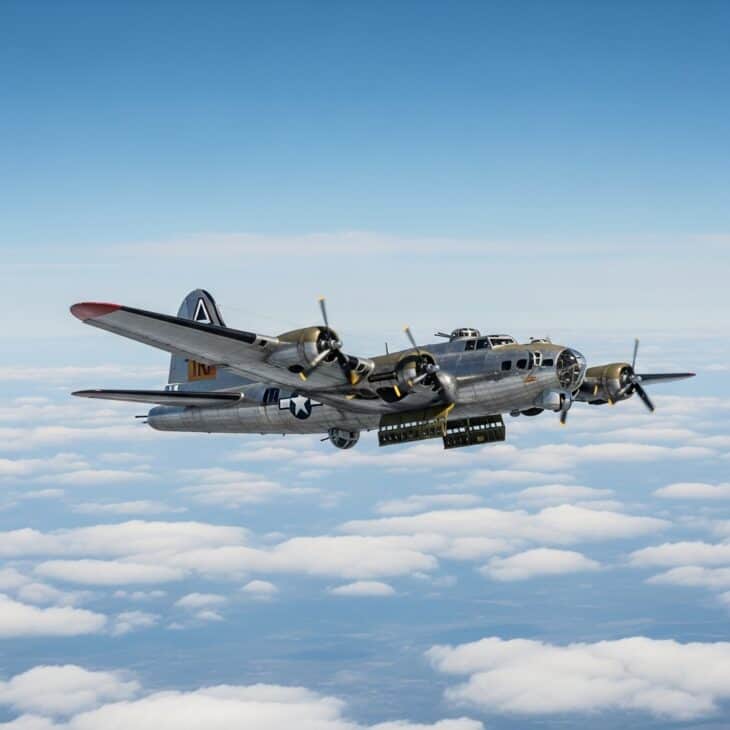
Why it works Stephen Ambrose, best known for Band of Brothers and D-Day, wrote The Wild Blue as a companion account of the WWII air war, focusing on B-24 Liberator crews flying from Italy against targets in occupied Europe and Germany. The book follows a specific group of airmen including a young George McGovern, later a US senator and presidential candidate. Ambrose’s gift was making historical figures fully human, and his account of what it was like inside a B-24 at high altitude over enemy territory is as vivid as anything in the genre. For readers who found Masters of the Air compelling, this provides a slightly different perspective on the same strategic air campaign.
How to get it The Wild Blue was published in 2001 and is widely available. It is a relatively short and quick read by WWII history standards, which makes it an accessible entry point for readers less familiar with the genre. It pairs naturally with Masters of the Air: the two books cover the B-17 and B-24 programs respectively and together give a comprehensive picture of the American daylight bombing campaign against Germany and occupied Europe.
23. Flight of the Intruder by Stephen Coonts
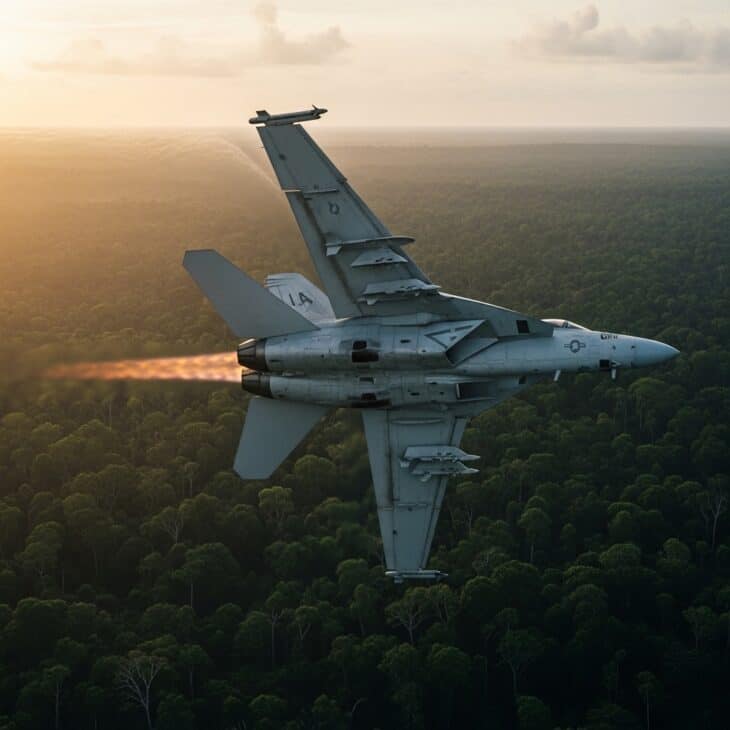
Why it works Stephen Coonts flew A-6 Intruders off carriers during the Vietnam War and Flight of the Intruder, his first novel published in 1986, draws directly on that experience. The result is the finest piece of naval aviation fiction ever written: technically accurate to a degree that only direct experience can produce, and narratively driven in a way that nonfiction accounts of the same conflict sometimes struggle to achieve. The book captures the specific culture of carrier aviation, the relationship between pilots and their aircraft, and the moral weight of individual missions in an air war that many participants came to question. A film version appeared in 1991.
How to get it Flight of the Intruder has been continuously in print since its publication and is available in all formats. The novel spawned a series featuring the same protagonist, Jake Grafton, but the first book stands entirely on its own and the later novels vary in quality. Read the original for the Vietnam carrier aviation content; the subsequent series is more conventional thriller territory. Pair it with Chickenhawk for a view of the same air war from the perspective of helicopter crews operating from land bases.
24. No Highway by Nevil Shute

Why it works Nevil Shute was an aeronautical engineer before he became a novelist, and No Highway, published in 1948, is the story of an eccentric scientist who calculates that a new airliner will suffer metal fatigue failure at a specific point in its operational life. When nobody will listen to him, he takes drastic unilateral action to prevent it flying. The book predates the actual de Havilland Comet crashes of 1953 by five years, yet Shute’s description of the fatigue failure mechanism and the institutional resistance to an engineer raising uncomfortable questions reads as almost prophetic. For aviation enthusiasts, it is also a remarkably accurate account of how commercial aviation worked in the early postwar period.
How to get it No Highway has been periodically reprinted in various editions. Used copies are widely available and inexpensive. Shute also wrote Slide Rule, his autobiography of working as an engineer on the R100 airship project in the 1920s, which is an excellent companion volume for readers interested in the engineering history of aviation. Both books demonstrate that Shute’s technical understanding of aircraft was deep and genuine, which makes his fiction about aviation uniquely trustworthy on technical matters.
25. The Aviators by Winston Groom
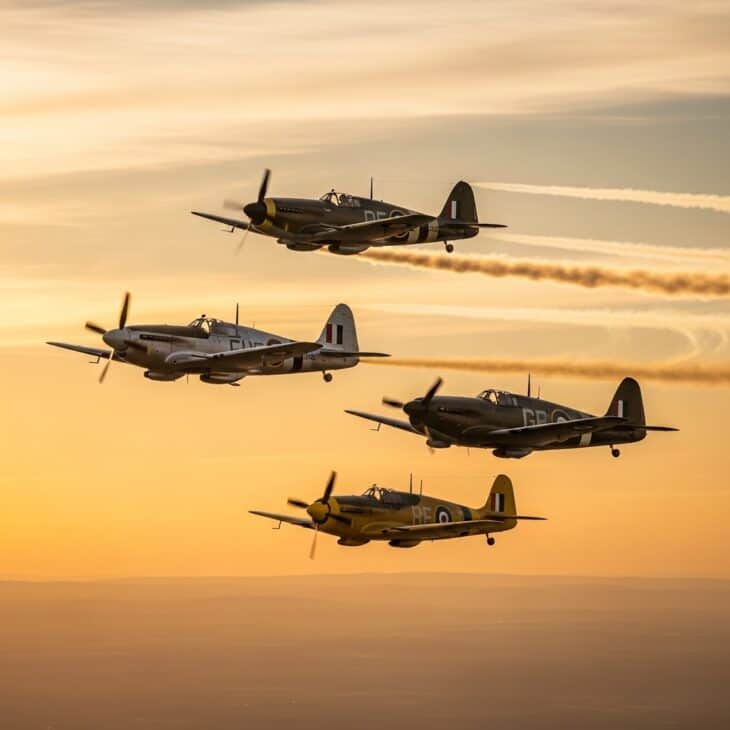
Why it works Winston Groom, author of Forrest Gump, turned his attention to three of the defining aviation figures of the WWII era: Jimmy Doolittle, who led the Tokyo raid of 1942; Chuck Yeager, who became the first person to break the sound barrier; and George Kenney, the air commander who shaped the Pacific air war. By following three parallel lives across the same period, Groom creates a composite portrait of what military aviation leadership looked like at its finest, and how different qualities of mind produce different kinds of excellence. The result is more accessible than a single-subject biography and more satisfying than a general history.
How to get it The Aviators was published in 2013 and is widely available. It works well as a gateway book for readers who want to explore WWII aviation history but are not sure where to start: the triple-biography structure means that if one of the three figures does not immediately engage you, another one will. From here, you can follow individual interests into the dedicated single-subject memoirs and histories that cover each figure in more depth. It is also an excellent book to recommend to friends who are curious about aviation history but have not yet found their entry point into the literature.
Get the Newsletter
The latest aviation news and stories sent to your inbox.
About the Author

Hanna writes AeroCorner's aviation-lifestyle and decor guides, turning a love of flight into ideas for your home, celebrations, and gift lists.