

Table of Contents
Aviation wall art can make a room feel adventurous without turning it into a themed set. One strong aircraft print, navigation chart, or sculptural propeller is often enough to give an otherwise ordinary wall a sense of movement and story.
The best pieces also work as design, even before anyone notices the aviation connection. Graphic silhouettes suit modern rooms, weathered posters bring warmth, and technical drawings add quiet detail to offices, bedrooms, bars, and hallways.
Use these aviation wall art ideas as a starting point for your own space. Choose one style that fits the room, repeat two or three colors already present, and give the art enough open wall around it to feel intentional.
01. Aircraft Blueprint Triptych
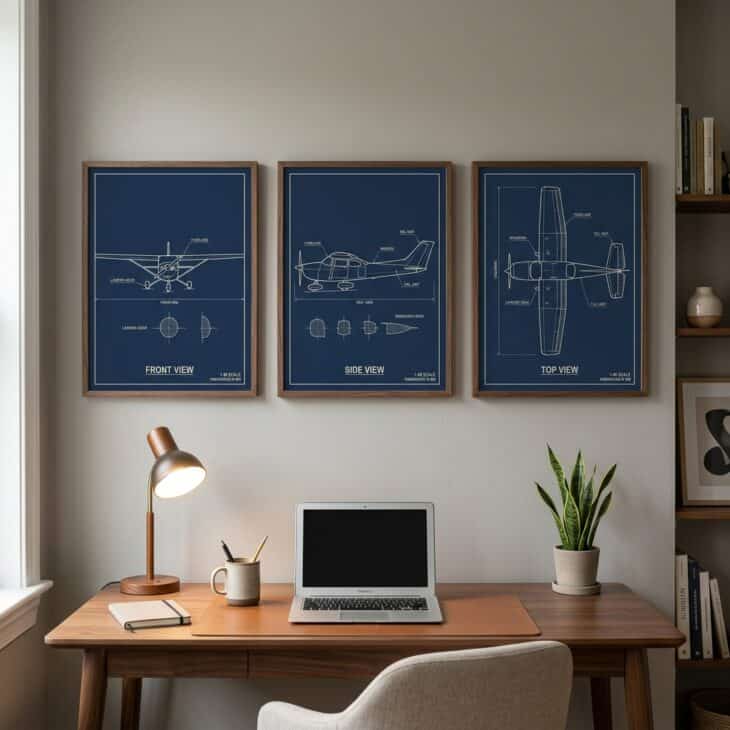
What you see Three matching navy panels show a generic propeller aircraft from the front, side, and above. Fine ivory lines, narrow walnut frames, and generous spacing make the set feel more like architectural drafting than novelty decor.
Why it works A triptych fills a wide wall while keeping the composition orderly and balanced. The technical look is especially natural in an aviation home office, where precise linework complements desks, shelving, and task lighting.
How to get it Buy a coordinated three-print set or divide one large schematic into three equal digital crops. Print each panel at the same size on matte paper, then use identical frames and two-inch gaps. Keep labels decorative rather than presenting an invented drawing as a genuine engineering document.
02. Framed Sectional Chart
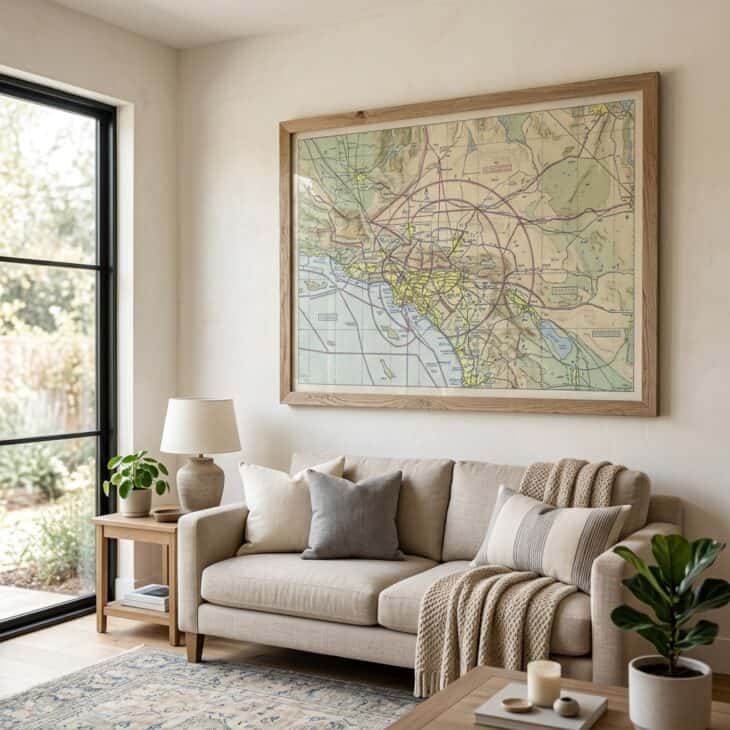
What you see A single oversized navigation chart hangs above a pale sofa, its soft terrain colors crossed by rings, routes, and tiny symbols. A simple oak frame keeps the dense image from overwhelming the room.
Why it works Sectional charts are functional documents with an unexpectedly rich graphic texture. The FAA describes them as a primary visual-navigation reference, but on a wall their topography and airspace geometry also read as intricate map art.
How to get it Choose a retired chart from a region that matters to you, since current charts should stay available for actual flight planning. Flatten it under books before framing, then use an acid-free backing and UV-filtering acrylic. For a softer look, select a light wood frame that pulls out the chart’s tan and green tones.
03. Golden-Age Travel Poster
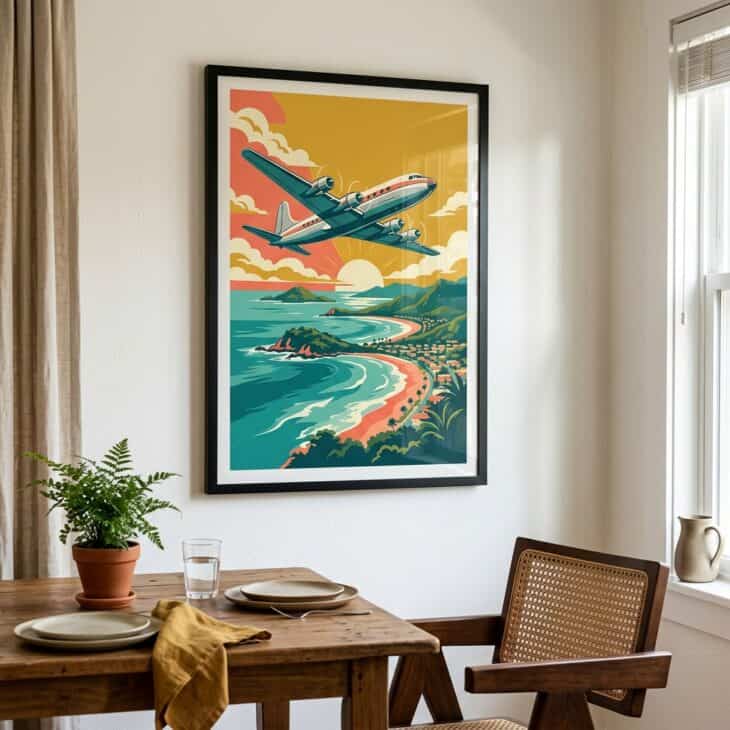
What you see A silver propeller airliner sweeps across a saturated tropical scene in coral, teal, and mustard. The poster sits alone in a slim black frame, giving its bold shapes and sunlit palette room to carry the wall.
Why it works Historic aviation posters sold possibility as much as transportation, which is why their designs still feel energetic. They are a natural entry point into vintage aviation decor without requiring heavy furniture or actual aircraft parts.
How to get it Browse museum collections for period inspiration, then buy a licensed reproduction from a reputable print seller. Pick one poster whose main color already appears in your rug, curtains, or upholstery. Use matte paper behind UV-filtering acrylic to control glare and slow fading.
Framing tip
Match the frame to the room, not necessarily to the artwork. Black sharpens colorful posters, oak softens technical charts, and brushed metal suits industrial aircraft pieces.
04. Brushed-Metal Aircraft Silhouette
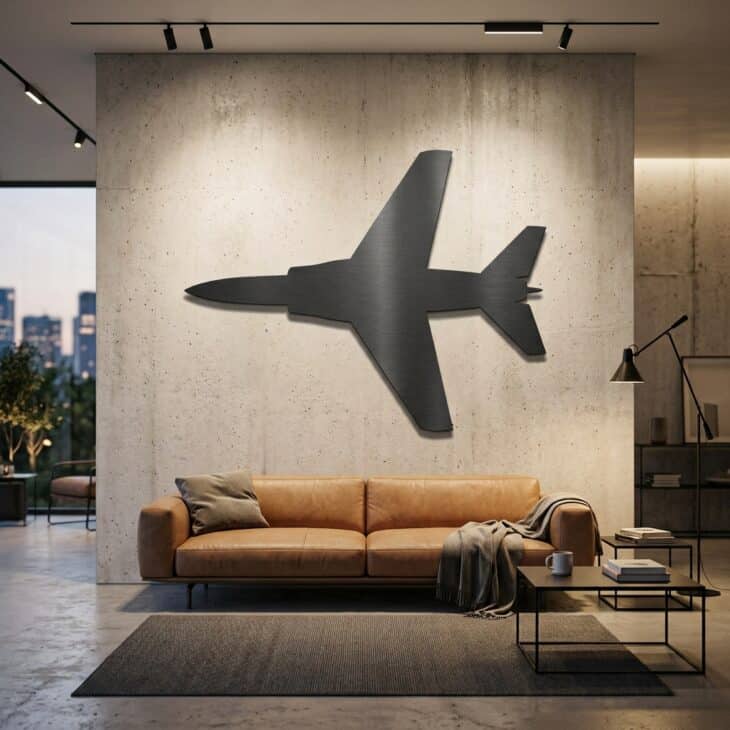
What you see A single swept-wing aircraft shape stretches across a pale concrete wall in dark brushed steel. Hidden spacers lift it slightly from the surface, so side lighting draws a thin shadow around the outline.
Why it works The silhouette communicates speed with one clean gesture, making it ideal for modern and industrial rooms. Its long, low shape also fits naturally above a sofa or back bar in an aviation home bar.
How to get it Choose powder-coated steel or lightweight aluminum in a width that covers about two-thirds of the furniture below it. Ask the maker for hidden stand-off mounts if you want the halo-shadow effect. Use a paper template first, and anchor every mounting point into a stud or correctly rated wall plug.
05. Wooden Propeller Wall Sculpture
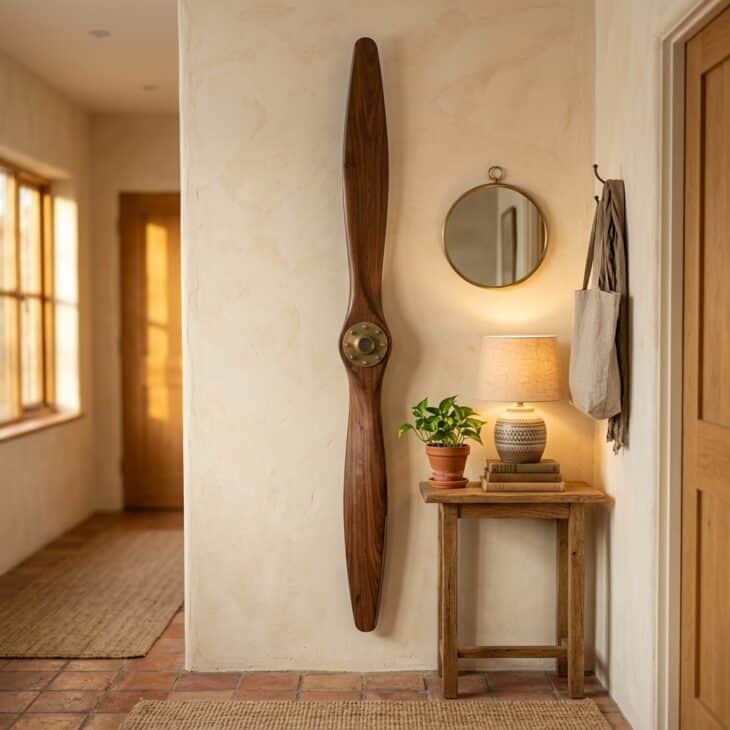
What you see A dark walnut propeller stands upright above a slim console table, its curved blades glowing against a softly textured wall. The brass-toned hub provides one small metallic highlight without making the display feel busy.
Why it works Propellers already have the sweeping shape and carved surface of sculpture. A vertical mount uses less width than the familiar horizontal arrangement and highlights the twist that helps airplane propellers move air.
How to get it A lightweight decorative replica is simplest for most homes, while genuine retired parts require provenance and careful inspection. Measure the wall height before buying and leave at least 8 inches of clear space above and below. Use a concealed metal bracket rated well beyond the propeller’s weight.
06. Cockpit Instrument Macro Print
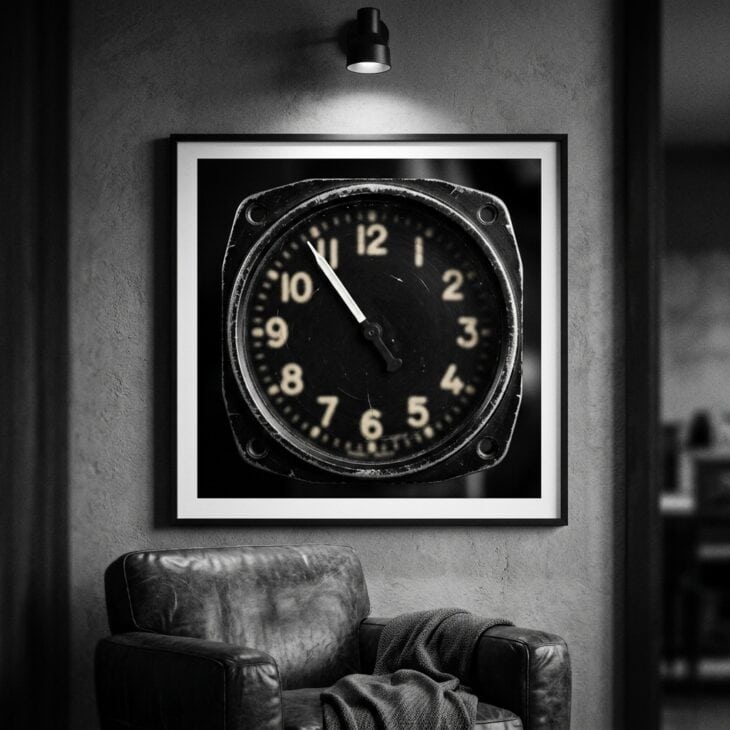
What you see An old black instrument dial fills a square frame, revealing tiny scratches, aged paint, and the sweep of one pale needle. Enlarged far beyond its original size, the circular face reads almost like abstract graphic design.
Why it works Macro photography keeps the aviation reference specific while stripping away cockpit clutter. Anyone curious about the real dials can connect the image to AeroCorner’s guide to cockpit instruments.
How to get it Photograph a legally owned retired gauge with soft window light, or purchase a licensed fine-art image. Convert it to black and white, increase contrast gently, and print it at least 20 inches square for impact. A wide white mat keeps the dark dial from feeling heavy.
07. Runway Perspective Canvas
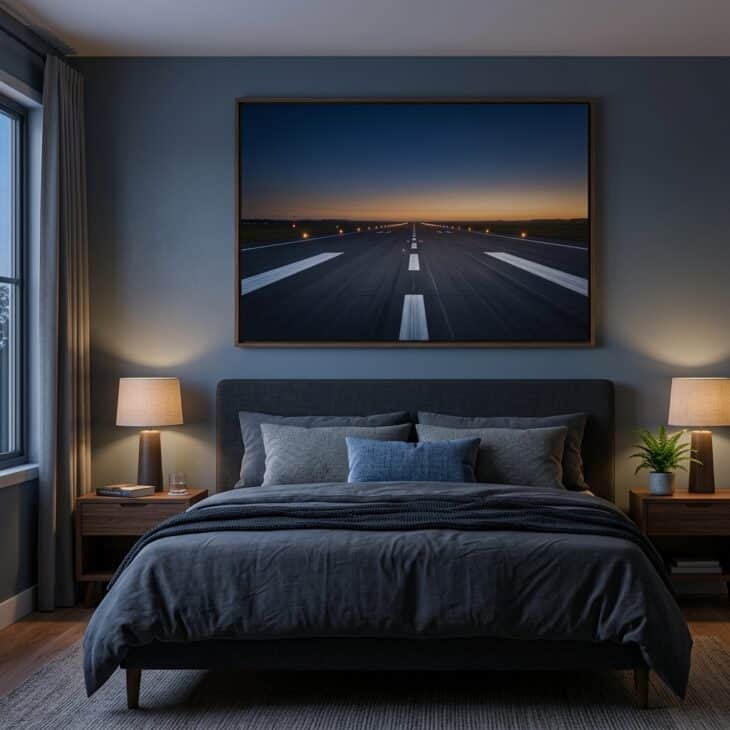
What you see An empty runway recedes into an indigo horizon, with pale centerline marks and tiny amber lights pulling the eye forward. The low viewpoint makes the canvas feel almost like an open window at the head of the bed.
Why it works Strong one-point perspective visually lengthens a small room and turns aviation into atmosphere rather than equipment. The geometric composition also makes the piece compatible with clean, contemporary furniture.
How to get it Look for licensed runway photography with an empty foreground and an unbranded location. Order a panoramic canvas or crop the image wide, keeping the vanishing point near the center. Echo one sky color in a throw or bedside lamp so the print feels tied to the room.
08. Wing-Rib Shadow Box
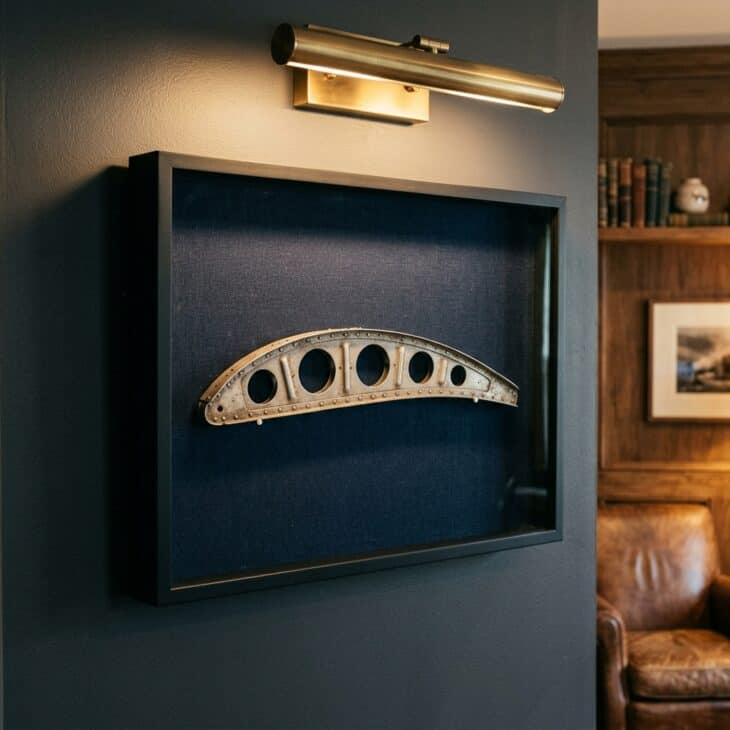
What you see A curved aluminum wing rib sits inside a deep black frame against navy linen. Its round lightening holes, worn edges, and small rivet marks become the decorative pattern.
Why it works Isolating one structural part makes its engineering easier to appreciate. The exposed metal also pairs naturally with the visible fasteners discussed in why airplanes are riveted.
How to get it Purchase only a documented, decommissioned component from a reputable salvage source. Clean loose grime without polishing away every mark, then secure it to a reinforced backing board with discreet metal clips. Use acrylic glazing instead of glass if the finished box will be large or heavy.
09. Minimal Contrail Line Art
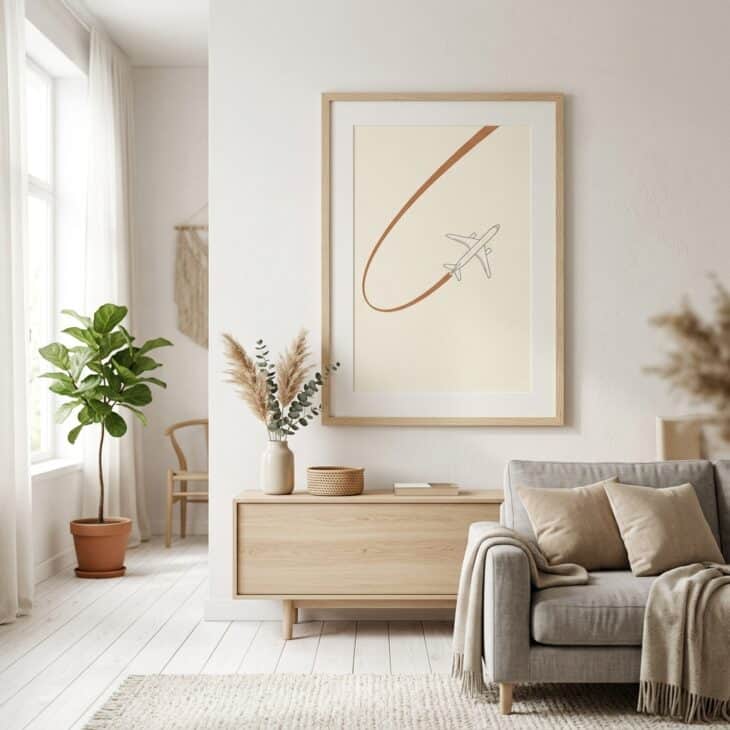
What you see A tiny aircraft outline pulls one rust-colored curve across a field of warm cream. The oversized mat and pale wood frame leave more open space than ink, keeping the whole arrangement light.
Why it works Minimal line art suggests flight without demanding a heavily themed room. The curve creates movement, while the limited palette makes it easy to repeat the accent color in cushions, ceramics, or books.
How to get it Draw a continuous route line yourself or commission a simple vector print from an independent artist. Choose one accent color already present in the room and print on textured cotton paper. A frame one size larger than expected gives the piece the generous mat it needs.
10. Black-and-White Hangar Photograph
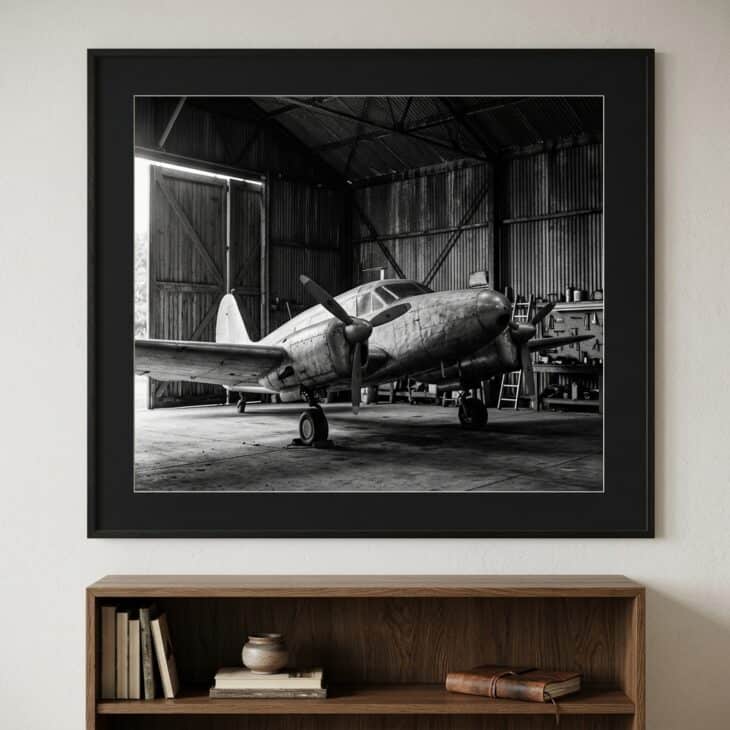
What you see A lone propeller aircraft sits just inside a shadowy hangar, outlined by daylight from the open doors. Corrugated walls and a polished floor create repeating lines around the quiet silhouette.
Why it works Black-and-white photography adds aviation history without locking you into a color scheme. The tonal range suits offices, bedrooms, and living rooms, while the hangar setting brings in texture and scale.
How to get it Use your own photograph only where photography is permitted, or buy a licensed archival-style print. Select a frame with a low-sheen finish and avoid glossy paper if the wall faces windows. Hang a small picture light above it to deepen the shadows after dark.
11. Aerial Runway Geometry Print
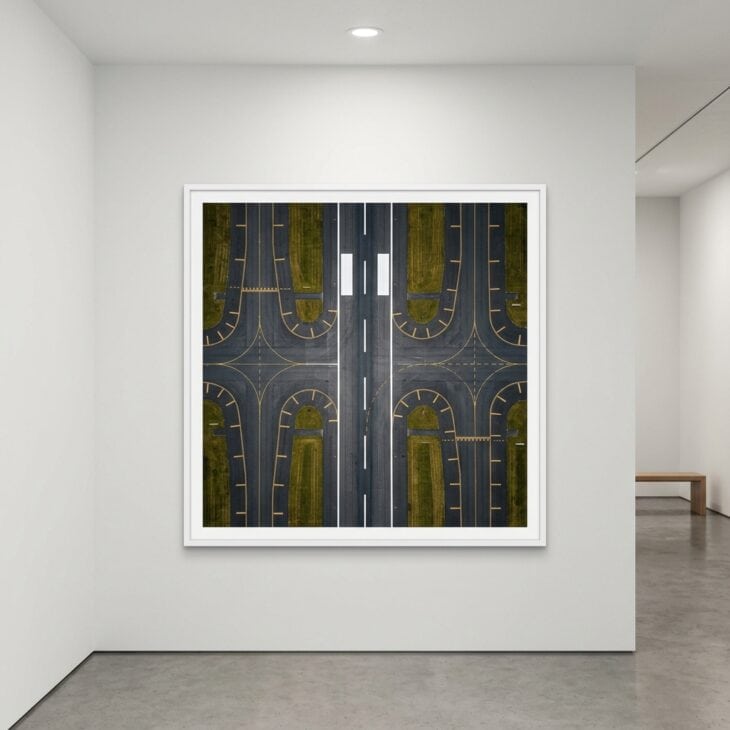
What you see Dark pavement, bright lines, and blocks of dry grass meet in a square overhead composition. Without a visible horizon, the taxiways and markings look like a piece of hard-edged abstract art.
Why it works The aviation subject reveals itself slowly, which gives the print more staying power than a literal aircraft portrait. Its clean geometry also relates to the real logic behind runway markings.
How to get it Search licensed aerial photography libraries for symmetrical runway or taxiway views. Crop tightly enough to remove identifying signs and emphasize intersecting lines. Print it square in a high-contrast finish, then choose a white or charcoal frame based on the wall color.
Renter-friendly option
Large picture ledges can carry several framed pieces with only a few wall fixings. For lighter prints, removable picture strips make seasonal swaps easy without creating a grid of nail holes.
12. Stacked Propeller-Blade Panels
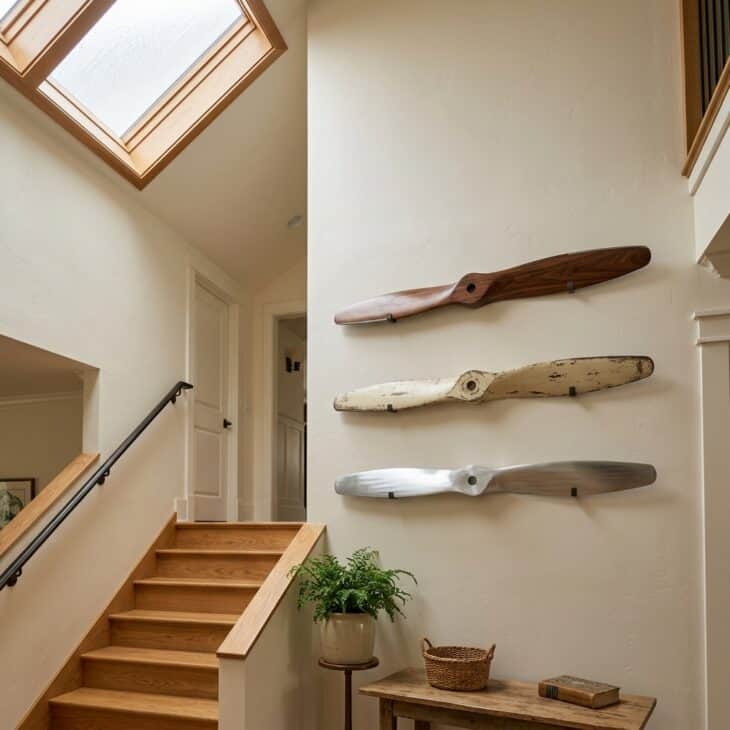
What you see Three long blade shapes run across a tall stair wall, one in walnut, one in weathered cream, and one in brushed aluminum. Their slight curves echo each other while the mixed finishes prevent the stack from feeling too uniform.
Why it works Repeating one form creates rhythm on an awkward vertical wall. Mixing materials also bridges warm traditional furniture and cooler industrial details, so the display can unify a transition space.
How to get it Use lightweight carved replicas or flat blade-shaped panels rather than heavy full propellers. Lay the arrangement out on the floor first, keeping the gaps consistent and the centers aligned. Mount the lowest piece above handrail height so nobody brushes it while using the stairs.
13. Aviation Patch Textile Banner
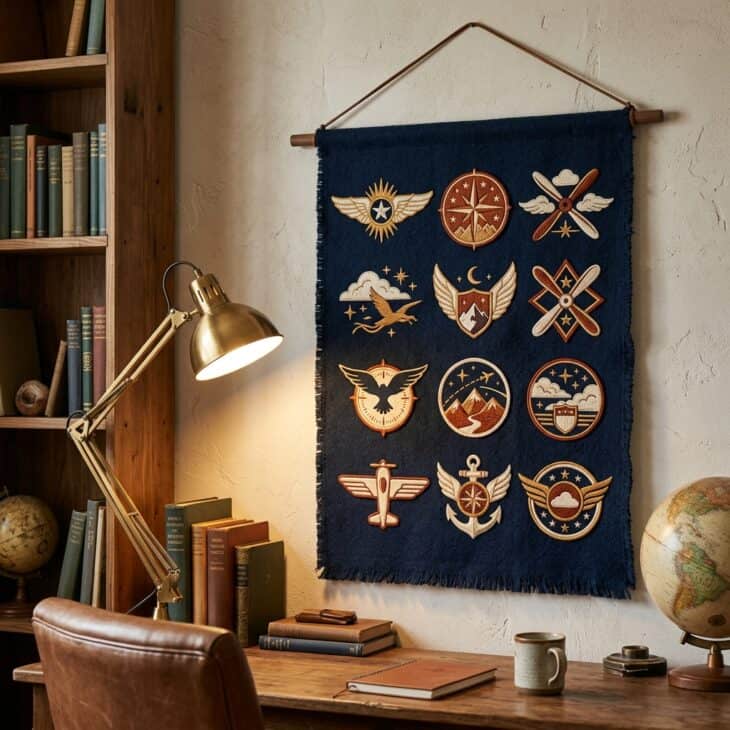
What you see A navy wool banner holds a neat field of embroidered wings, propellers, stars, and cloud motifs. Cream, rust, and gold thread add color, while a walnut dowel gives the soft piece a crisp top edge.
Why it works Textile art softens rooms already filled with wood, glass, and metal. A patch banner also delivers the layered look of a collection without needing 20 separate frames or a permanent gallery layout.
How to get it Collect fictional or personally meaningful patches rather than copying protected unit insignia. Stitch them to heavy wool felt, leaving equal space around every shape, then add a sleeve for a wood dowel. Hang the banner from one centered hook and use a small weight in the lower hem if it curls.
14. Watercolor Biplane Print
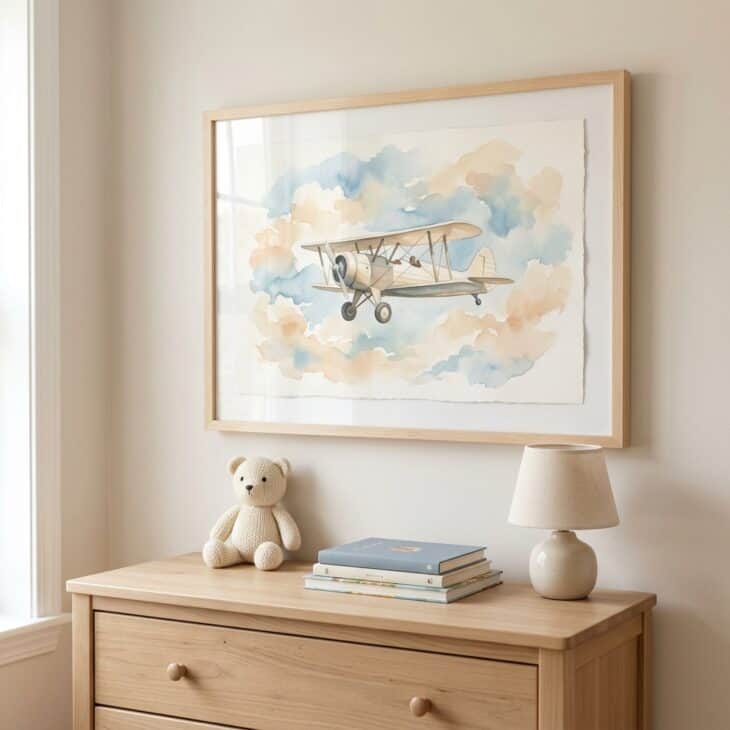
What you see A small cream biplane floats through washed blue and peach clouds on textured white paper. Loose edges and visible brush blooms keep the aircraft feeling light rather than technical.
Why it works Watercolor takes the hardness out of an aircraft subject, making it ideal for an airplane nursery or a calm guest bedroom. The pale palette also leaves room for the space to grow and change.
How to get it Commission an artist, buy an original, or paint a loose silhouette using two or three diluted colors. Float the paper on a white mat so the deckled edge remains visible. Use acrylic glazing and secure the frame carefully above furniture, especially in a child’s room.
15. Riveted Aluminum Panel Art
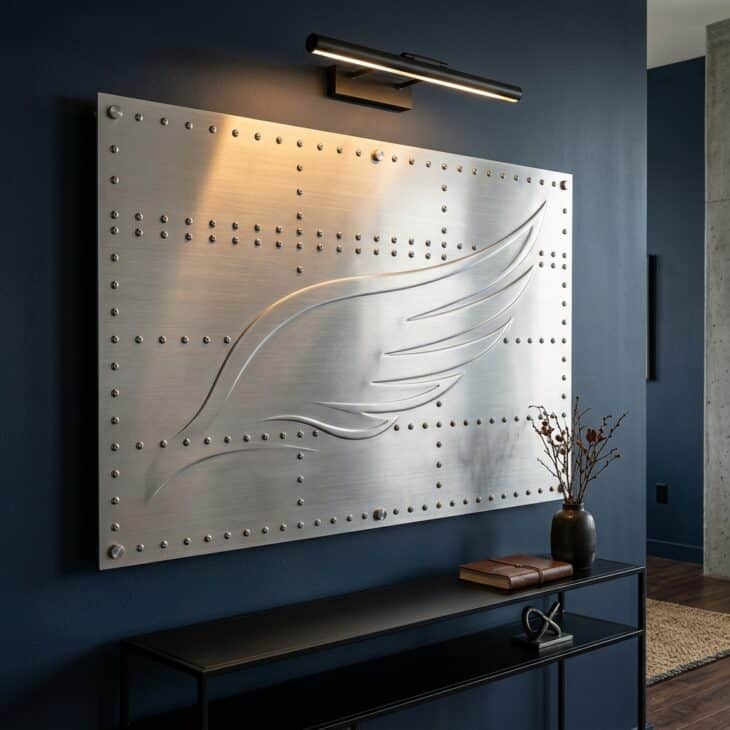
What you see A broad sheet of brushed aluminum carries tidy rivet rows and one shallow wing-shaped contour. Warm picture light glances across the metal, revealing small changes in texture rather than a printed image.
Why it works This piece borrows the material vocabulary of an airframe while remaining abstract enough for a polished interior. It gives dark walls a reflective focal point and adds texture without introducing another color.
How to get it Commission a metalworker to build a lightweight decorative panel with rolled edges and a reinforced back. Specify a satin finish, since mirror-polished metal shows fingerprints and reflections. Mount it on a hidden french cleat and add a picture light above to reveal the surface.
16. Personal Flight-Path Map
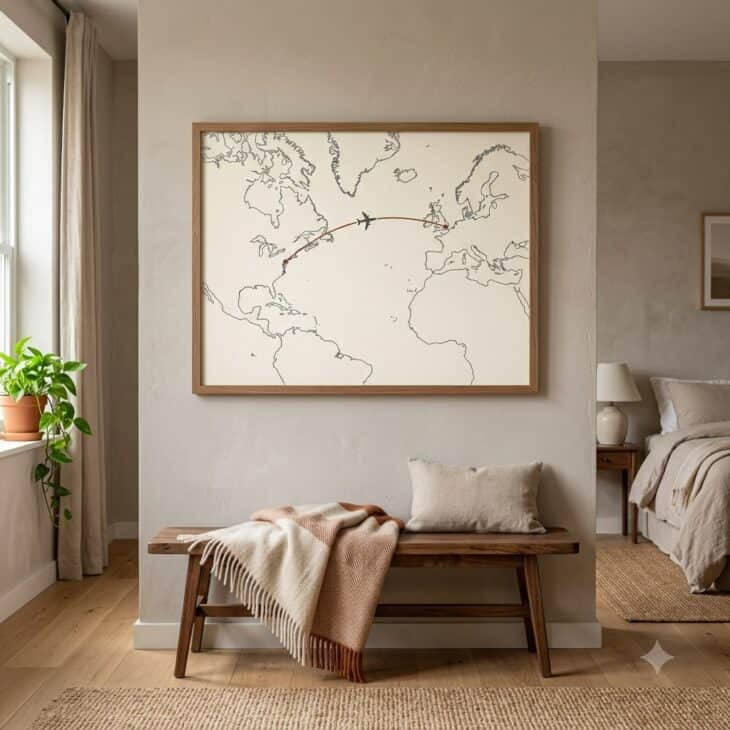
What you see One rust-colored arc crosses a quiet charcoal map between two small points. A tiny aircraft symbol sits midway along the route, while the warm white background and walnut frame keep the composition intimate.
Why it works The route can represent a first trip together, a move overseas, or a favorite city pair, so the art carries meaning beyond the theme. Curved paths also echo the way long flights can appear on maps because of great-circle routes.
How to get it Use a custom map service or commission a designer with the two locations and date that matter to you. Limit the palette to the wall color, frame color, and one route accent. If the piece is a gift, add names or a date only in a small caption area rather than across the map.
17. Window-Seat Photo Canvas
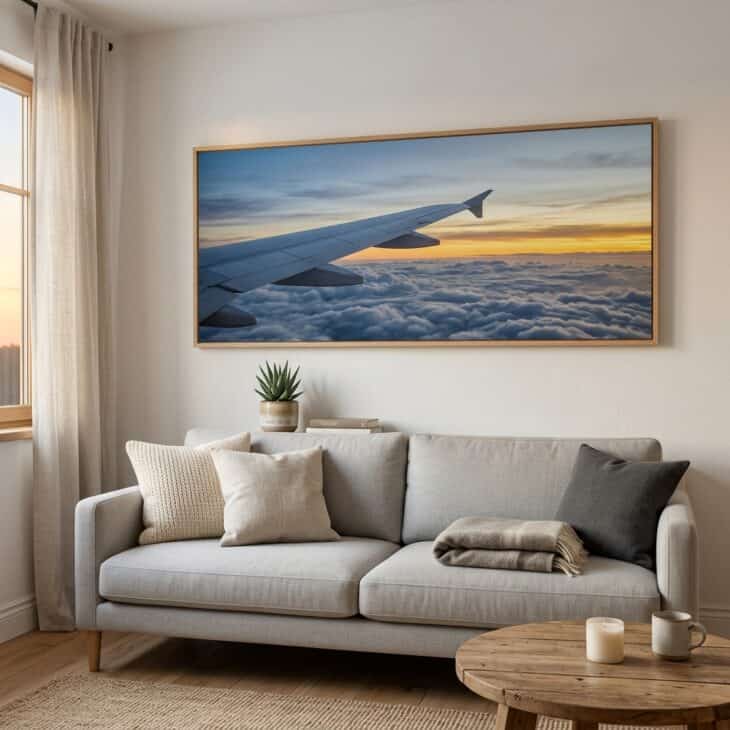
What you see A generic wing crosses a wide field of layered clouds, with amber light at the horizon fading into cool blue. Printed large, the scene opens the wall and makes the room feel connected to a much bigger sky.
Why it works Using your own image makes the artwork personal and avoids the impersonal feel of generic stock photography. AeroCorner’s window-seat photo ideas offer several compositions that translate well to a wide canvas.
How to get it Choose a sharp image with a clean window and enough sky to survive a panoramic crop. Correct the horizon, reduce reflections gently, and test-print a small proof before ordering large. A matte canvas or acrylic print keeps glare from competing with the subtle cloud layers.
18. Vintage Air-Mail Collage
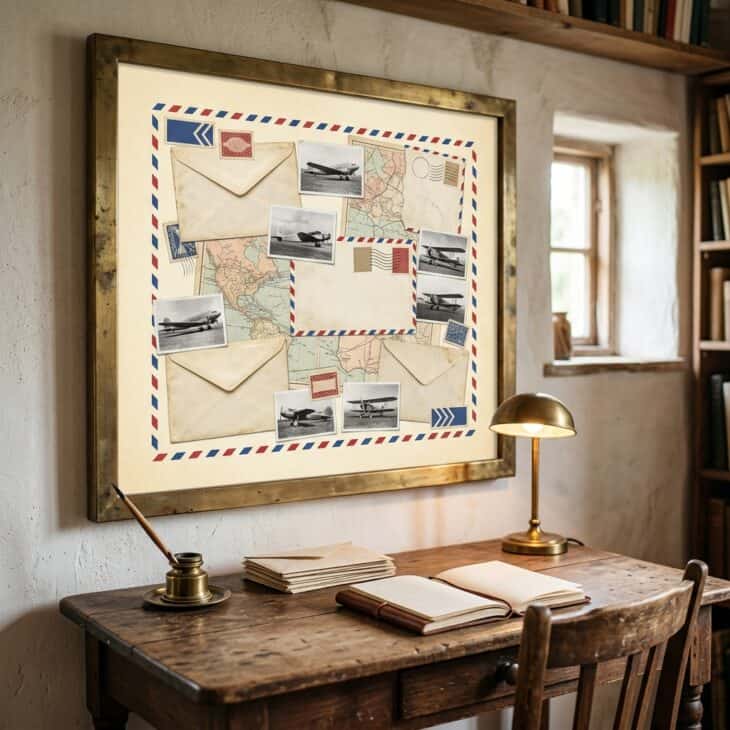
What you see Faded envelopes, route-map fragments, blue-and-red borders, and tiny aircraft photographs overlap inside a slim brass frame. The layered paper edges and uneven tones make the piece feel assembled over years.
Why it works Air-mail graphics bring warmth and human scale to aviation decor, balancing rooms with metal or dark wood. The collage format also lets small inexpensive items combine into one substantial piece.
How to get it Use blank vintage envelopes, reproduction labels, photocopied maps, and your own travel ephemera rather than documents containing personal information. Arrange everything without glue first, then attach pieces with archival photo corners. Leave a narrow cream border around the collage so the layers do not touch the frame.
19. Faux Cabin-Window Wall Panels
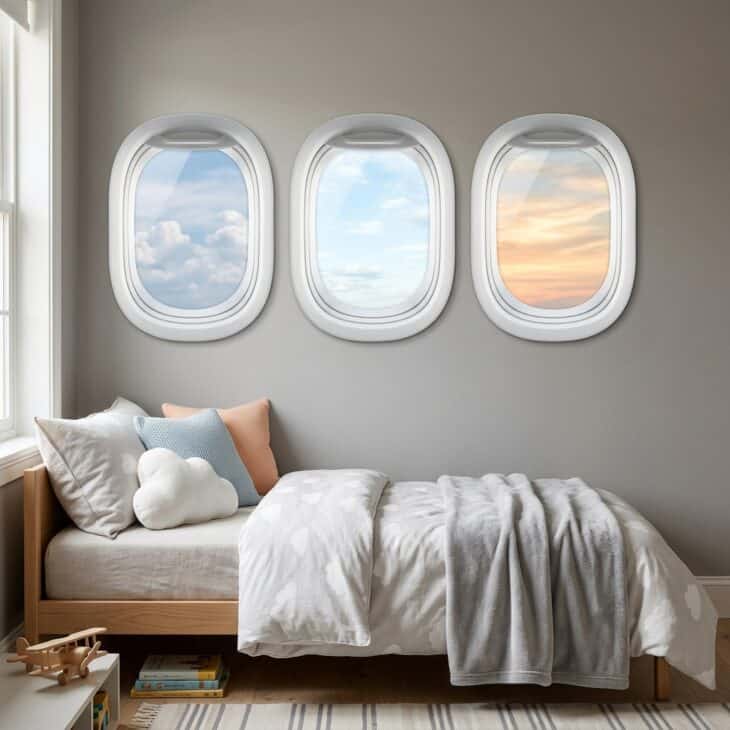
What you see Three oval panels sit above a bed like a row of cabin windows, each opening onto a different cloud scene. Soft blues and sunset peach keep the effect playful without making the room feel like a literal airplane cabin.
Why it works Repetition makes the illusion convincing, while separate panels are easier to move than a mural. The idea fits naturally among other aviation bedroom ideas for kids, especially when the rest of the room stays simple.
How to get it Print three cloud photographs behind lightweight oval frames or buy removable window-style decals. Keep every frame identical and line up the centers before mounting. In children’s rooms, use shatter-resistant acrylic and wall fixings that cannot be pulled loose.
20. Illuminated Flight-Path Map
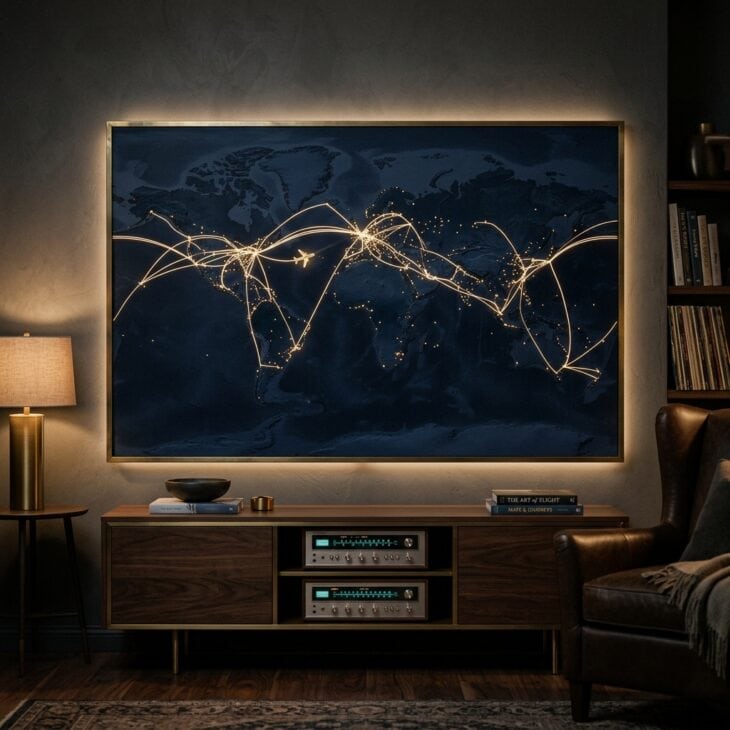
What you see Fine warm lights trace a handful of routes across a dark navy world map. Small brass points mark destinations, and the panel seems flat by day but gains a soft layered glow after sunset.
Why it works Lighting transforms the map from a print into an architectural feature, which makes it useful in media rooms and bars. Limiting the routes prevents the panel from becoming a bright web of visual clutter.
How to get it Buy a low-voltage LED map panel or build one with a laser-cut face and a shallow backing box. Plan the cable route and outlet location before mounting, then add a dimmer so the glow stays gentle. Use warm-white lights rather than color-changing strips for a more timeless result.
21. Abstract Wing-Form Canvas
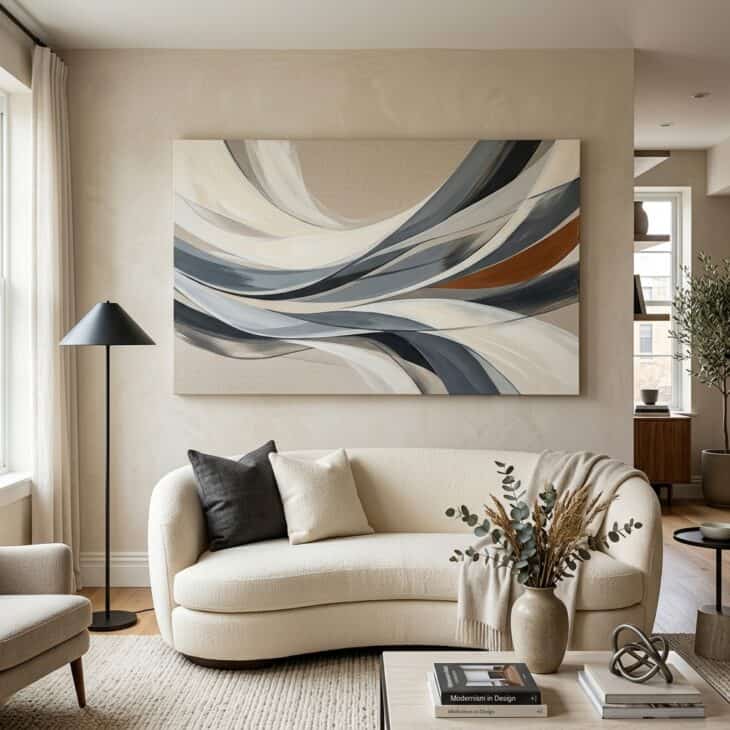
What you see Broad ivory and slate shapes sweep diagonally across a textured canvas, edged by charcoal and one thin copper accent. The composition hints at a wing and airflow without showing a recognizable aircraft.
Why it works Abstract art is the subtlest way to carry an aviation idea into a formal living room. The angled forms create lift and motion, while the restrained palette lets furniture remain the focus.
How to get it Commission an artist with reference images of wing curves, cloud layers, and brushed aluminum rather than a specific airplane. Request paint samples or a small color sketch before approving the full canvas. Hang it low enough to relate to the sofa, usually 6 to 8 inches above the back.
22. Split-Flap Departure Board Art
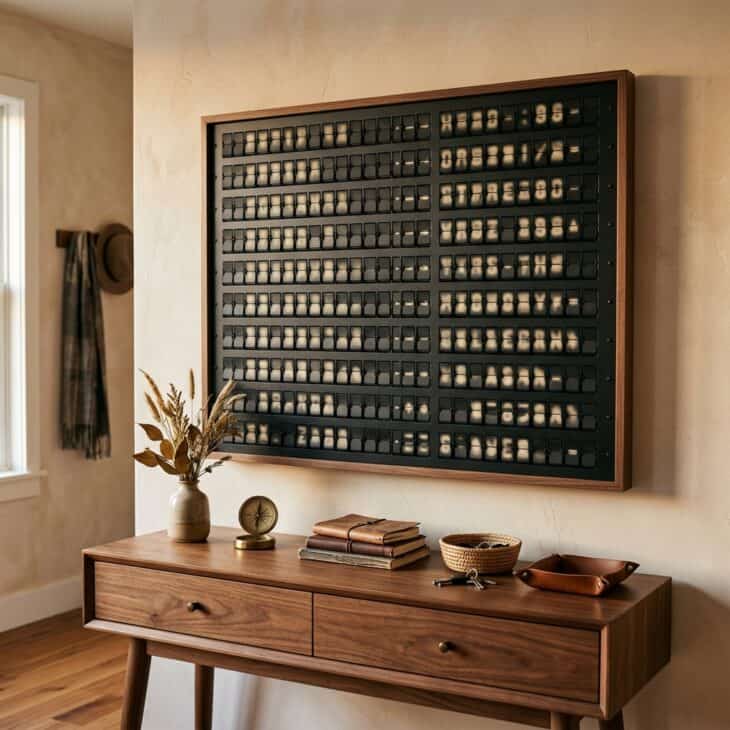
What you see Rows of small black mechanical tiles form a compact rectangular panel above a walnut console. Cream characters appear as soft patterns rather than a readable timetable, keeping attention on the grid and its tactile depth.
Why it works The split-flap look instantly recalls classic departure halls, yet its black grid also fits modern interiors. It provides texture and nostalgia without relying on a framed aircraft image.
How to get it Choose a static printed panel for the lowest cost or a working mechanical display if movement matters. Program a functional version with personal destinations rather than copying a live airport board. Check noise levels before placing a moving display near a bedroom or home office.
23. Cloud-and-Plane Wall Decals
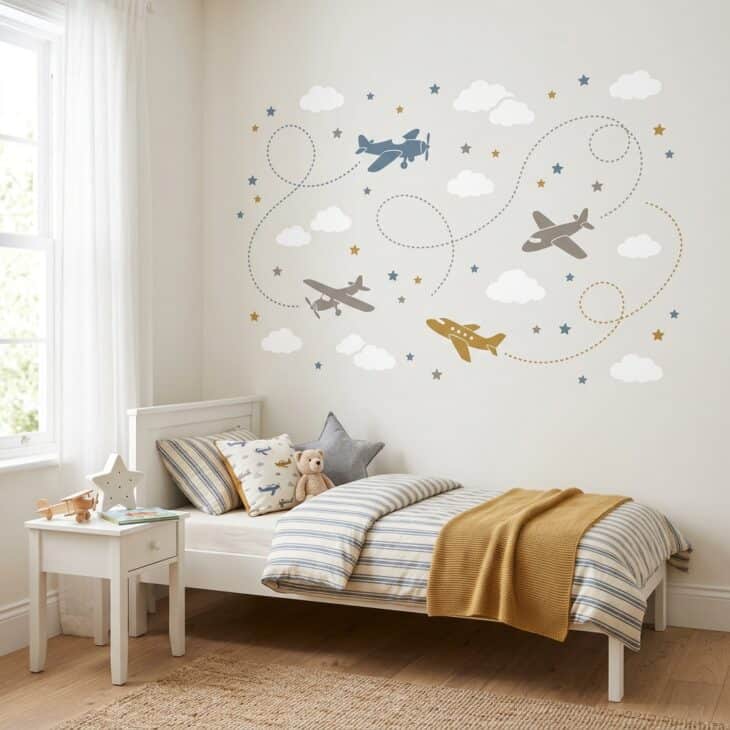
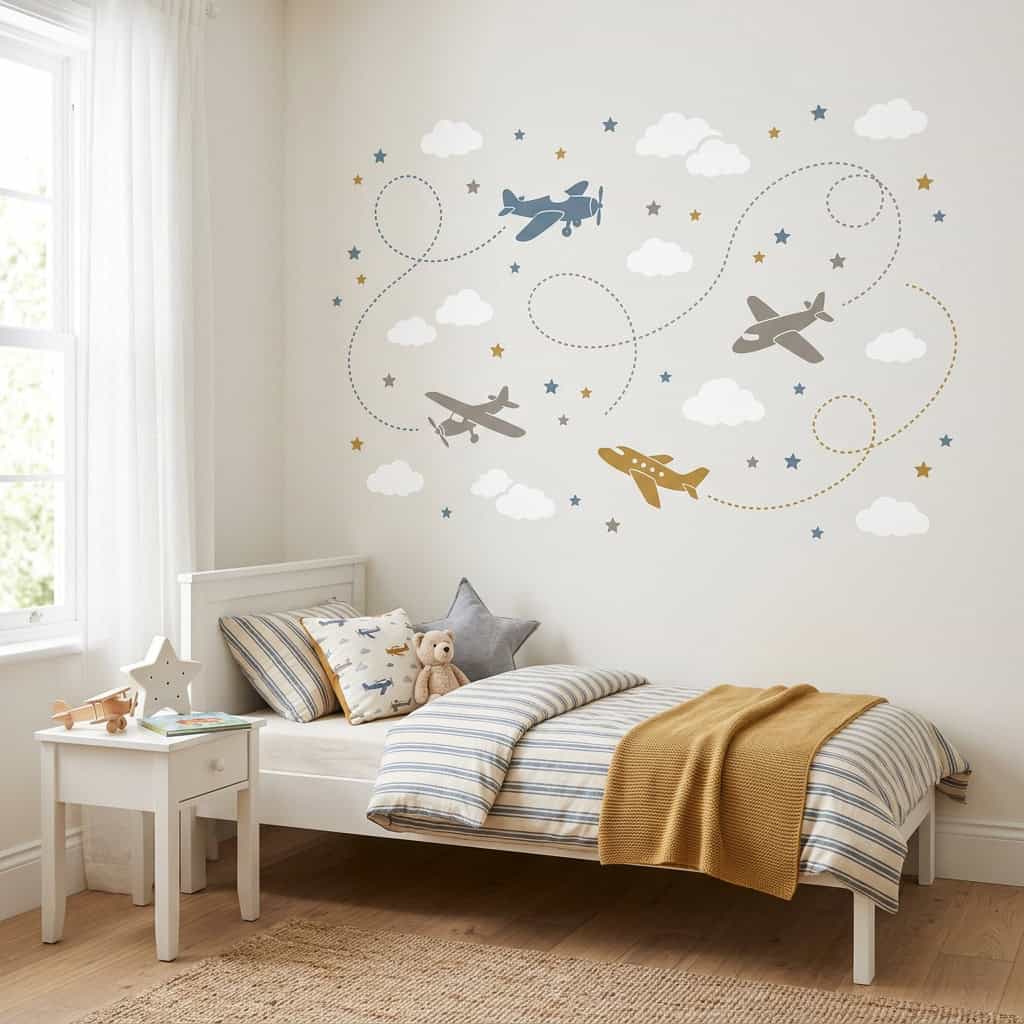
What you see Small planes weave between white clouds and muted mustard stars above a low bed. Dotted flight paths connect the shapes, while plenty of bare wall keeps the arrangement lively rather than crowded.
Why it works Decals cover a large area cheaply and can change as a child grows. Their matte finish looks painted on from a distance, but renters can usually remove them without repainting the entire wall.
How to get it Pick a three-color decal set that repeats the room’s bedding and rug. Tape paper cutouts to the wall first, then apply the real pieces from the center outward. Keep decals away from cribs and peeling edges, and follow the maker’s wall-paint curing guidance.
24. Aircraft Formation Relief
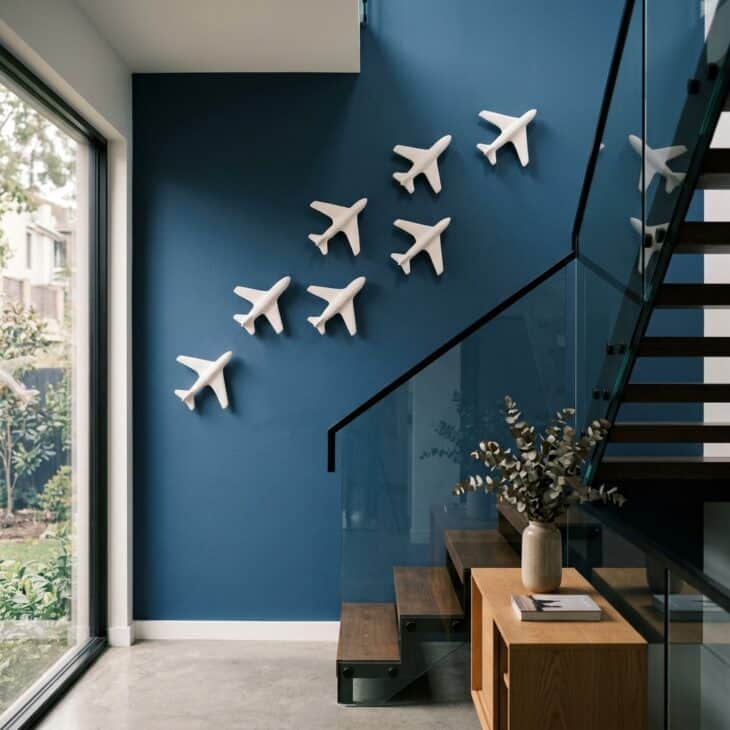
What you see Seven small white aircraft forms climb diagonally across a deep blue wall. Each sits slightly proud of the surface, creating a soft individual shadow that makes the formation appear to move as the light changes.
Why it works A scattered relief can follow stairs, sloped ceilings, or other spaces where a rectangular frame feels awkward. Painting every form one color keeps the arrangement sculptural and avoids the look of a toy collection.
How to get it Use lightweight wood, resin, or plaster aircraft forms with no real insignia. Cut paper templates for each piece and adjust the climb angle until the group feels balanced. Mount them with hidden screws or rated removable strips, placing the largest form near the visual center.
25. Framed Aviation Book-Cover Grid
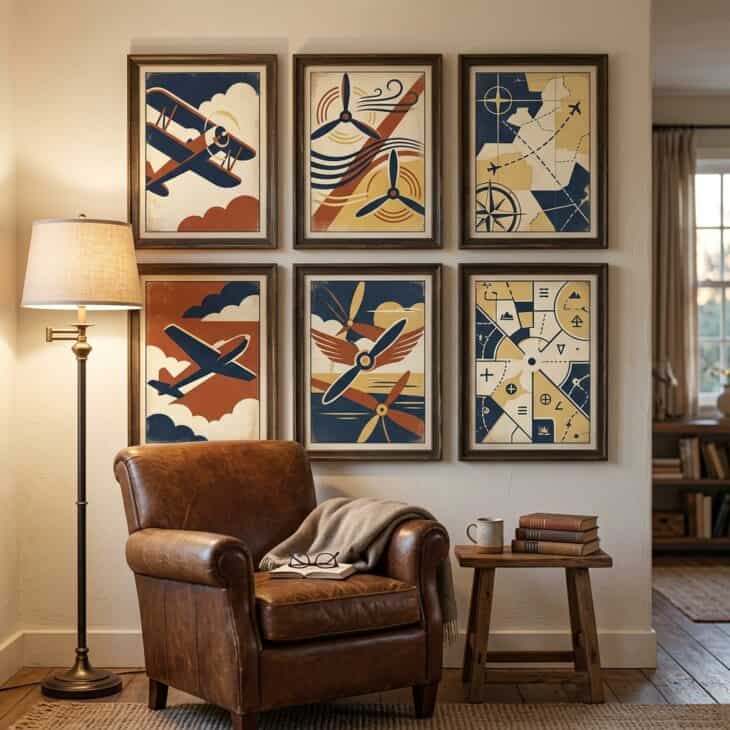
What you see Six compact covers combine propellers, wings, clouds, and maps in faded navy, rust, cream, and yellow. Identical frames turn the varied graphics into a disciplined grid above a leather reading chair.
Why it works Book art connects the visual romance of flight with the stories that make people love it. The idea is especially fitting beside a shelf of aviation books, where the covers can introduce a reading corner from across the room.
How to get it Frame licensed cover reproductions, public-domain jacket art, or your own fictional designs rather than scanning copyrighted modern covers. Standardize the print size, mat, and frame, then test the full grid with paper templates. Leave two inches between frames and center the whole group over the chair or bookcase.
FAQ
Sources and references used for research and fact-checking.
Get the Newsletter
The latest aviation news and stories sent to your inbox.
About the Author

Hanna writes AeroCorner's aviation-lifestyle and decor guides, turning a love of flight into ideas for your home, celebrations, and gift lists.