

Table of Contents
There is a particular romance to old aviation. It lives in weathered propeller blades, hand-painted airline posters, and brass instruments that once guided pilots across oceans by dead reckoning alone.
Vintage aviation decor works because it carries real history into a room. A polished cowling or a cracked leather flight jacket is not just an object, it is a story from the golden age of aviation when flying was still an adventure.
Use this list as a menu, not a checklist. Mix a few statement pieces with smaller finds, lean into warm woods, aged aluminum, and honest patina, and let each idea suggest the next corner of your home.
01. Salvaged Propeller Wall Mount
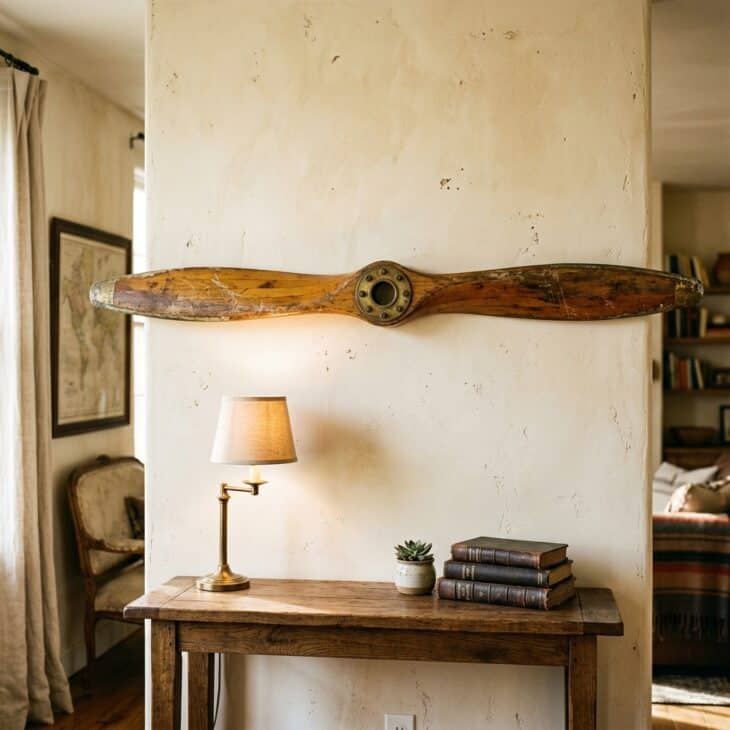
What you see A long, gently curved wooden propeller stretched across a warm wall, its grain glowing and its brass hub softly tarnished. Below it, a console table anchors the arrangement with a lamp and a stack of old books.
Why it works A real or replica propeller is the single most iconic aviation object you can hang, and its sculptural sweep fills a wide wall with almost nothing else needed. The worn wood signals age and authenticity instantly.
How to get it Genuine vintage wooden propellers turn up at estate sales, aviation swap meets, and specialist dealers, though decorative reproductions cost far less. Look for a two-blade wood prop three to six feet long so it reads clearly from across the room. Mount it on heavy-duty french cleats rated well above its weight, and center it about 60 inches (150 cm) from the floor. A quick coat of clear satin wax revives dull grain without erasing the patina you paid for.
02. Vintage Airline Travel Poster Gallery
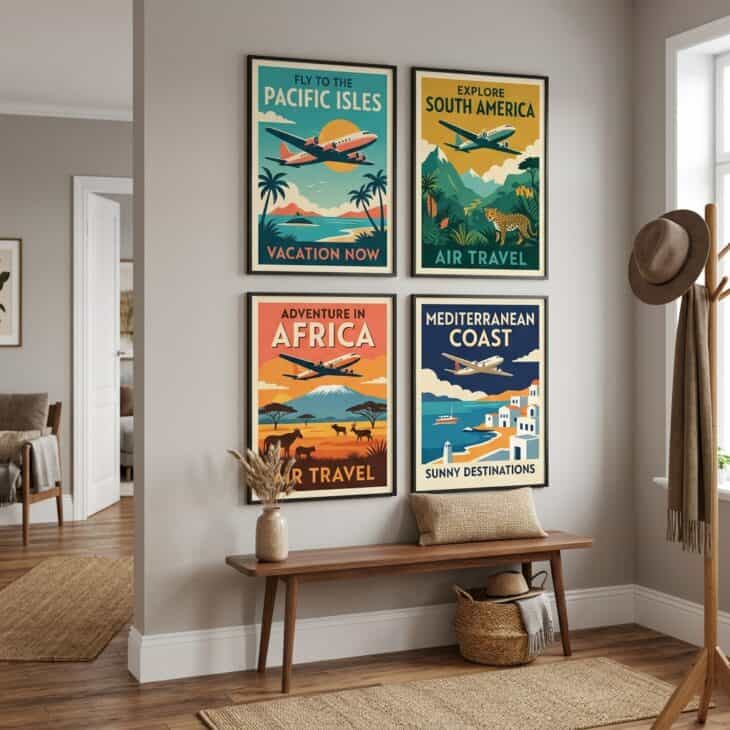
What you see Half a dozen bold travel posters in matching frames, each showing a stylized airliner soaring over a sun-drenched destination. The saturated colors and deco lettering pull the whole wall back to the 1950s.
Why it works Golden-age airline advertising was some of the best commercial art ever made, full of optimism and motion. Grouped together, the posters read as a single graphic statement rather than scattered prints.
How to get it Reproduction poster shops and print-on-demand sites sell high-resolution versions cheaply, so you can build a set that matches your palette. Choose a consistent frame color and mat width to keep the grid tidy, then space frames two inches apart. The classic airliners in these posters echo the iconic 1930s airplanes that made long-haul travel glamorous. Hang the grid as one rectangle and use a paper template on the wall before you drill.
Budget tip
You do not need original vintage posters, which can run into the thousands. Museum-quality reproductions printed on matte stock look nearly identical behind glass and cost a fraction as much.
03. Riveted Aluminum Wing Coffee Table
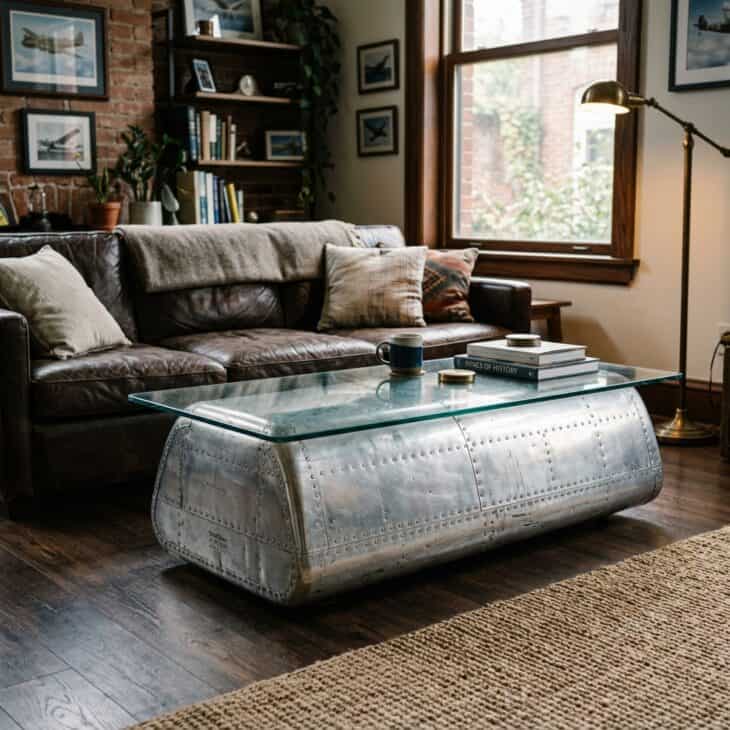
What you see A low table whose base is an actual aircraft wing panel, all brushed aluminum and neat rivet lines, capped with a slab of glass. It sits low and wide in front of a leather sofa.
Why it works Nothing says authentic aviation like real riveted skin, the same construction that has held airframes together for a century. The industrial texture plays beautifully against soft leather and wool.
How to get it Aircraft salvage yards and aviation furniture makers sell wing and flap sections already cleaned and sealed. If a full panel is out of budget, a smaller control-surface piece works as a side table instead. The riveted look is no accident, and there is real engineering behind why airplanes are riveted the way they are. Add a tempered glass top with rounded corners and felt pads so the metal never scratches the glass.
04. Aviator Globe Bar Cart
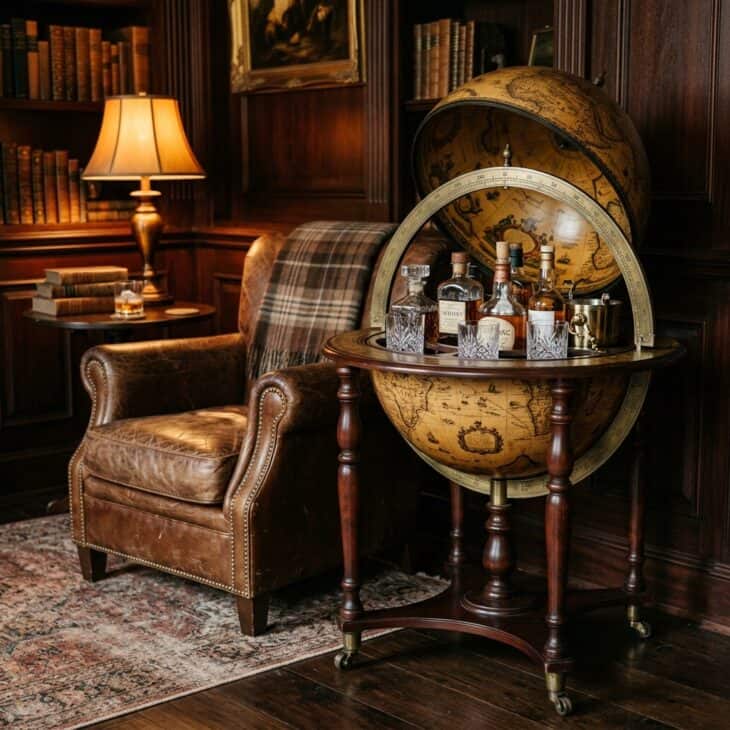
What you see A tripod-mounted globe that swings open at the equator to hold bottles and glassware, its parchment-colored map ringed in brass. It glows under a warm lamp beside a worn leather chair.
Why it works The globe bar ties aviation to the era of great expeditions and record flights, when a map was a promise of somewhere far away. It is decorative and useful at once.
How to get it Reproduction globe bars are widely sold, and antique versions surface at auction for more. Pick one with an antiqued map finish rather than a bright modern print so it reads vintage. This piece slots naturally into a broader aviation home bar setup with route maps and hangar-style lighting. Place it near seating and keep a small tray of coasters on the shelf below.
05. Wooden Propeller Ceiling Fan
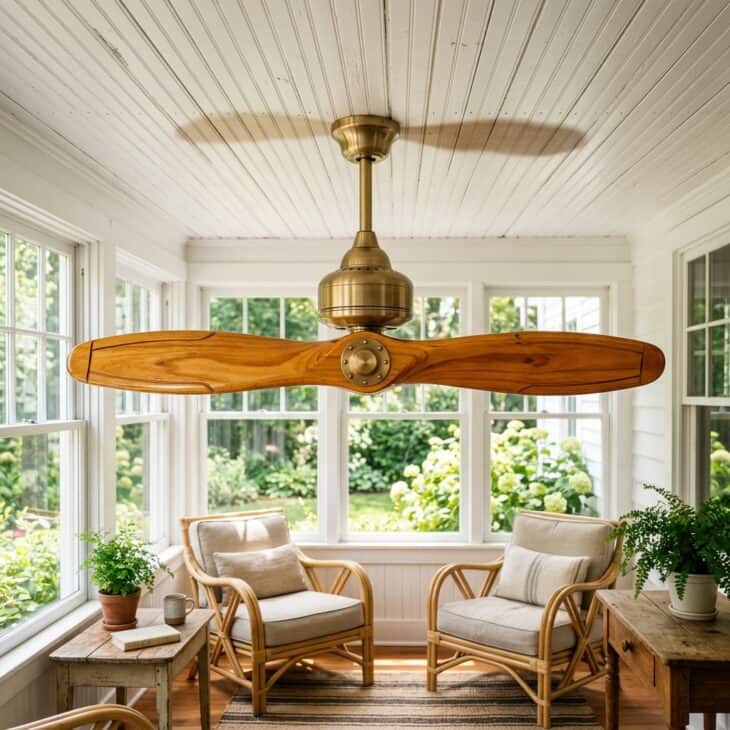
What you see A ceiling fan whose blades curve like a real propeller in warm varnished wood, spinning slowly under a brass hub. It reads as sculpture when still and function when moving.
Why it works It hides a practical appliance inside the most recognizable aviation shape there is. In a sunroom or porch it doubles the theme without taking up any floor or wall space.
How to get it Several lighting brands make propeller-style fans in three-blade and four-blade designs, from small 42-inch models to large 60-inch spans. Match the wood tone to your floors or trim so it feels built in. There is a reason the blades are twisted rather than flat, tied to how airplane propellers actually generate thrust. Have an electrician confirm the ceiling box is fan-rated before installing.
06. Cockpit Gauge Shadow Box
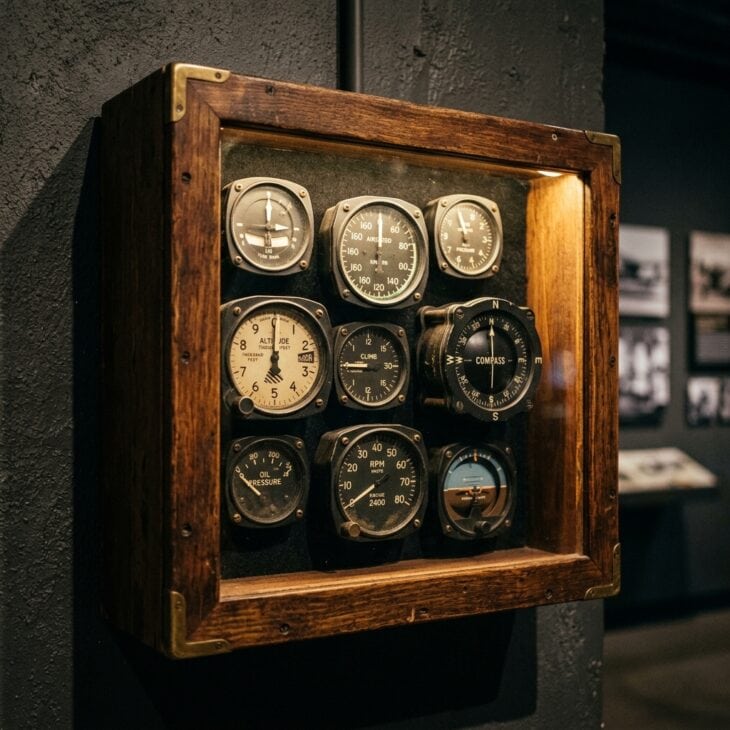
What you see A deep-framed box holding several old cockpit gauges, their cream faces and worn needles lit from within. Grouped tightly, they look like a small slice of an instrument panel.
Why it works Retired instruments carry obvious authenticity, and the round dials make a satisfying rhythm behind glass. A shadow box protects fragile pieces while letting them stay visible.
How to get it Decommissioned gauges appear regularly at aviation salvage sellers and online marketplaces, often for the price of a nice picture frame. Mount three to five on a fabric-covered backing board inside a deep shadow box. If you want to know what each dial actually did, the altimeter is the classic place to start. Add a small LED puck light inside the frame to make the faces glow at night.
07. Leather Aviator Club Chair
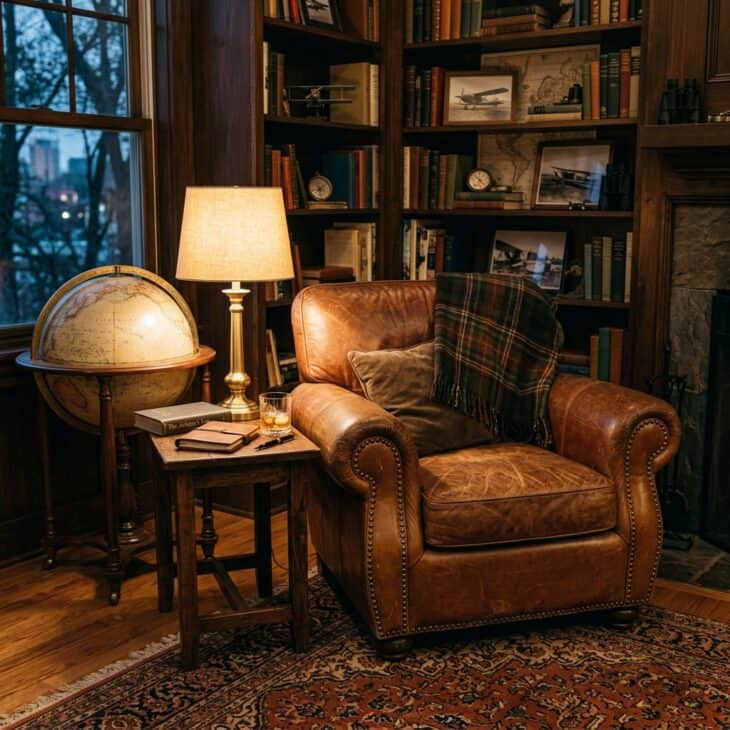
What you see A low, broad club chair in cognac leather softened by years of use, its arms studded with brass rivets. It sits in a reading corner with a globe and warm lamplight nearby.
Why it works Aged leather is the connective tissue of aviation nostalgia, echoing flight jackets and old cabin seats. One good chair sets the whole tone of a room before you add a single aircraft object.
How to get it Look for a distressed or antiqued full-grain leather chair rather than a slick modern finish, and check estate sales for genuine broken-in examples. Rivet or nailhead detailing pushes it toward the aviator look. Pair it with a small side table and a brass floor lamp to complete the corner. A leather conditioner twice a year keeps the patina supple instead of cracked.
08. Sectional Chart Accent Wall
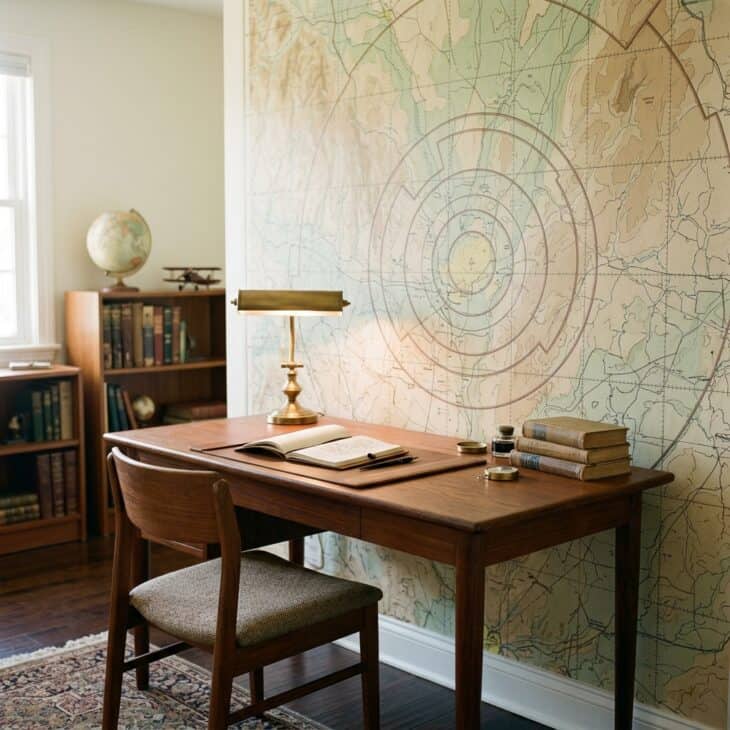
What you see One wall covered edge to edge in a faded sectional chart, all soft greens, tans, and thin airspace rings. A simple wooden desk sits against it, letting the map be the whole backdrop.
Why it works Navigation charts are quietly beautiful, dense with lines and symbols that reward a closer look. As an accent wall the chart adds depth and story without competing with furniture.
How to get it Order a large-format vintage or vintage-style chart printed on peel-and-stick wallpaper, or paste up several matching panels. Choose an aged, muted print so it feels historic rather than clinical. This idea shines in a home office or den, and it layers well with the broader aviation home office decor approach. Smooth each panel from the center out to avoid bubbles, and start from a plumb line.
09. Brass Navigation Instrument Display
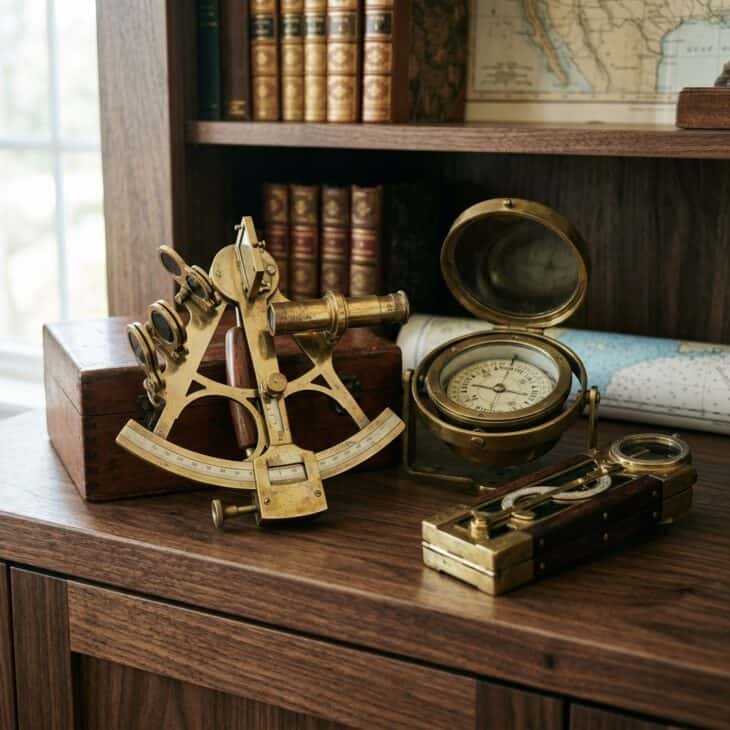
What you see A tight grouping of brass instruments, a sextant, a compass, and a folding octant, arranged on a dark wood shelf. The warm metal and light tarnish catch the side light.
Why it works Before radios and satellites, aviators navigated by sun, stars, and careful arithmetic. These instruments carry that heritage and add a jewel-like glint to any shelf or mantel.
How to get it Reproduction brass sextants and compasses are affordable and convincing, while genuine antiques cost more and vary in condition. Group odd numbers of pieces at different heights for a collected look. These tools are the ancestors of modern dead reckoning navigation that pilots still learn today. A soft cloth and a light hand keep the brass warm without stripping its character.
10. Engine Cowling Wall Clock
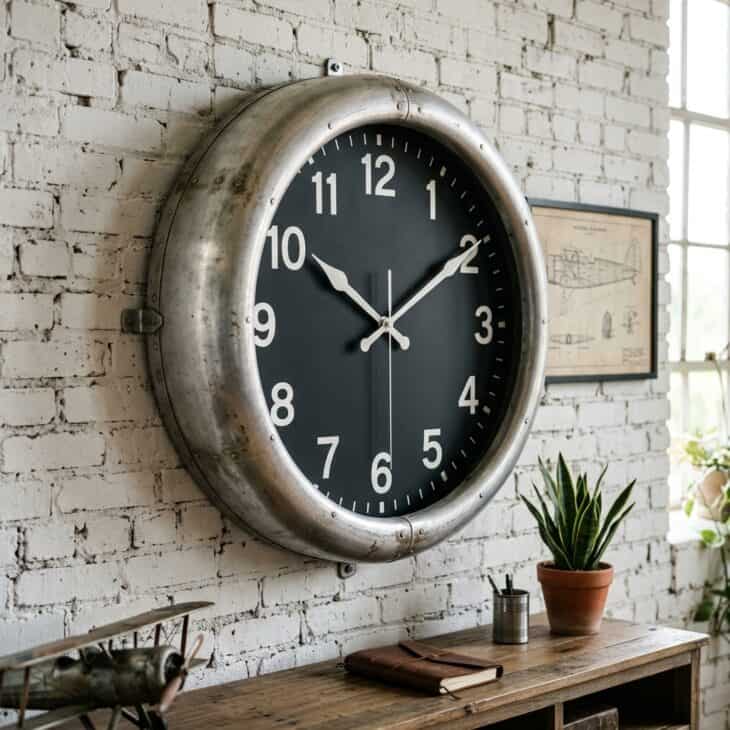
What you see A big round clock built inside a metal engine cowling ring, its aluminum rim wrapping a dark face with clean aviation numerals. On white brick it reads as both machine and timepiece.
Why it works Round engine parts practically ask to become clocks, and the scale of a cowling makes a bold anchor for a large wall. It is functional decor that earns its space.
How to get it Specialty makers sell clocks built from real cowling rings, hubs, and turbine parts, or you can commission one from a local metal shop. Aim for a diameter of at least 24 inches (60 cm) so it holds a large wall. Choose a silent sweep movement so a bedroom or office stays quiet. Hang it on a stud or a heavy anchor, since metal clocks weigh far more than they look.
11. Steamer Trunk Storage Table
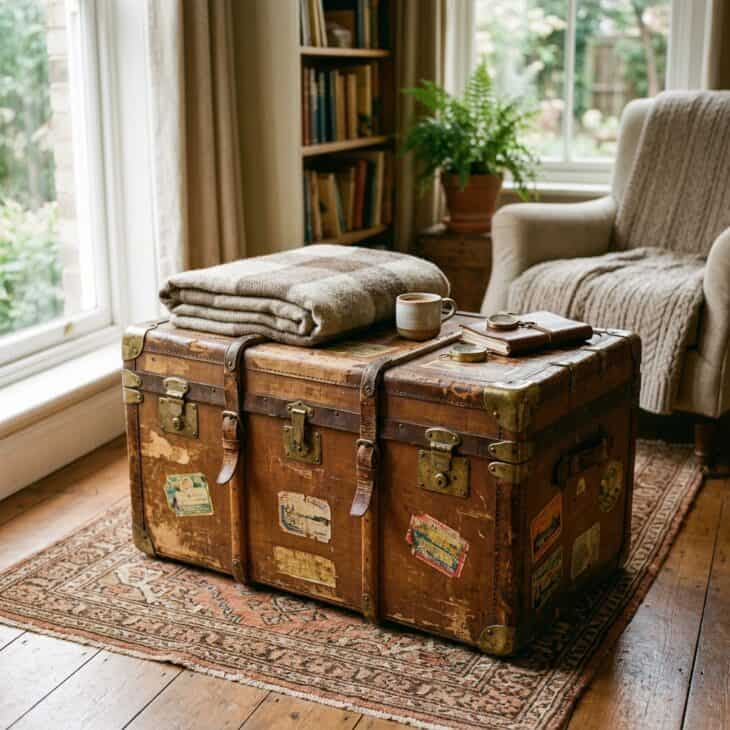
What you see A weathered steamer trunk with leather straps, brass corners, and softly faded labels, set low as a table. A folded blanket rests on the lid and warm light falls across the worn surface.
Why it works Trunks belong to the same era of glamorous long-distance travel as the first airliners, when getting there took days and required real luggage. It adds storage and instant patina in one piece.
How to get it Antique malls and flea markets are full of trunks at every price, from rough project pieces to restored showpieces. Look for solid hardware and a lid that closes flat if you want to use it as a table. It nods to the age captured in 1920s air travel, when flying was a rare luxury. Line the interior with fabric or cedar to protect whatever you store inside.
12. Goggles and Helmet Shadow Box
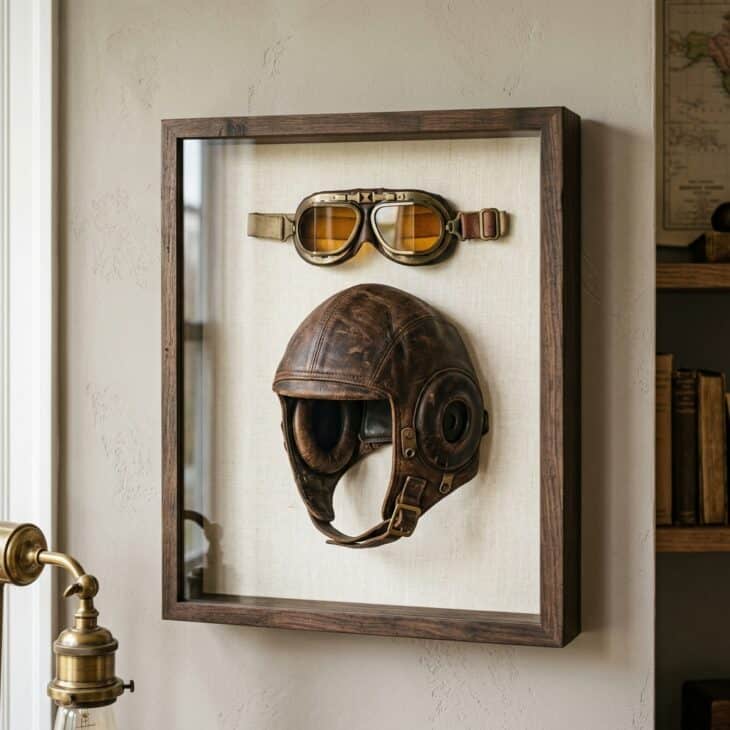
What you see A shadow box holding a brown leather flying helmet and a pair of amber-lensed goggles against cream linen. The worn leather and brass buckles feel almost like a portrait.
Why it works Early aviators flew in open cockpits wrapped in leather and glass, and these two objects summon that whole bygone image. Framed together they become a single sculptural piece.
How to get it Reproduction leather helmets and goggles are sold as costume and decor items, while genuine period gear shows up at militaria and aviation dealers. Mount them on hidden pins so they float against the backing fabric. They evoke the daredevil era of the barnstormers who toured the country performing aerial stunts. Use a deep frame so nothing presses against the glass.
13. Cockpit Seat Armchair
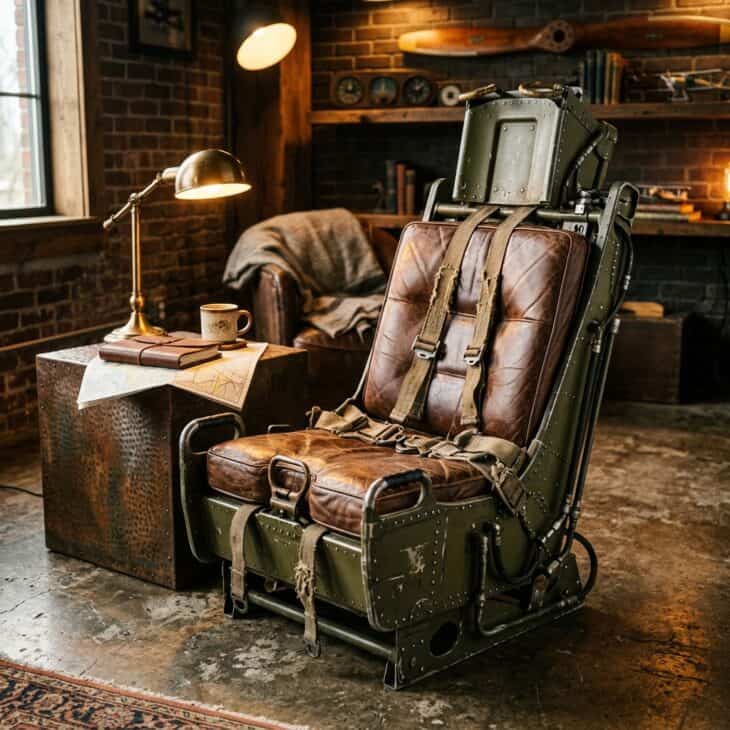
What you see An armchair made from a genuine aircraft seat, its olive metal frame paired with a padded leather cushion and worn webbing. It sits low and purposeful in a den corner.
Why it works Few decor pieces spark conversation like a seat that actually flew. The mix of hard metal and soft leather makes it surprisingly comfortable as well as dramatic.
How to get it Aviation salvage specialists restore old seats into safe, stable chairs with new cushions and reinforced bases. Confirm the seat has been de-milled and made inert before it enters your home. Many of these seats came out of the famous aircraft of World War II era and later jets. Place it where its silhouette can be seen from several angles, not crammed against a wall.
14. Brass Airplane Desk Model
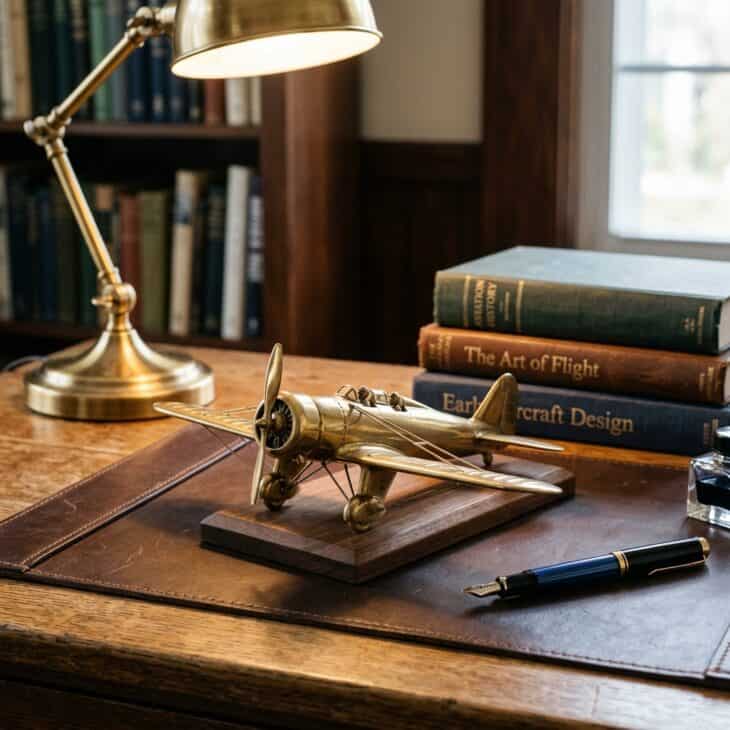
What you see A small brass model of a classic propeller plane on a wooden base, glowing warm under a desk lamp. It shares the blotter with a pen and a short stack of books.
Why it works A desk model is the easiest entry point into aviation decor, adding character to a workspace in a footprint the size of your hand. Brass keeps it feeling vintage rather than toy-like.
How to get it Desktop models come in brass, aluminum, and painted metal, so pick a finish that matches your other hardware. A generic radial-engine biplane or an early monoplane reads more vintage than a modern jet. It is a natural fit on a desk alongside a chart wall or a globe. Keep it on a stable shelf or blotter where a sleeve will not knock it over.
Start small
If a whole vintage-aviation room feels ambitious, begin with one desk model or a single framed poster. A theme reads best when it grows a few strong pieces at a time rather than arriving all at once.
15. Distressed Hangar Sign
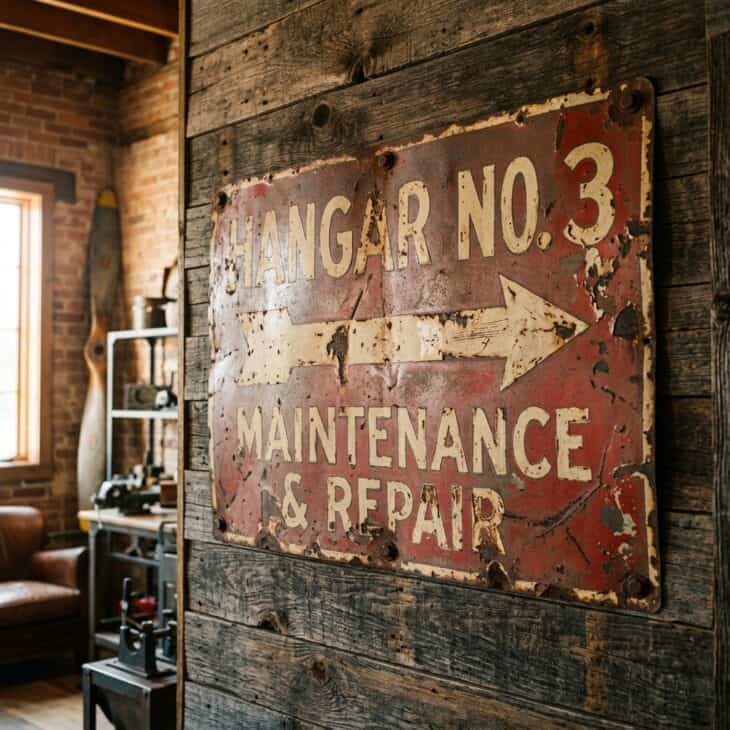
What you see A big metal sign with the look of an old airfield marker, its cream and red paint chipped down to rusted steel. Mounted on reclaimed wood, it feels pulled straight from a hangar wall.
Why it works Weathered signage adds instant place and history, suggesting a working airfield rather than a showroom. The graphic scale makes it a strong anchor for garages, entryways, and game rooms.
How to get it Reproduction airfield and hangar signs are sold pre-distressed, or you can age a plain metal sign yourself with sanding and a light rust glaze. Keep the wording generic, like a runway heading or a hangar number, so it reads timeless. A cluster of one large sign and two small enamel-style plaques builds a believable wall. Hang heavier metal signs on cleats or lag bolts into studs.
16. Airmail Envelope Collage
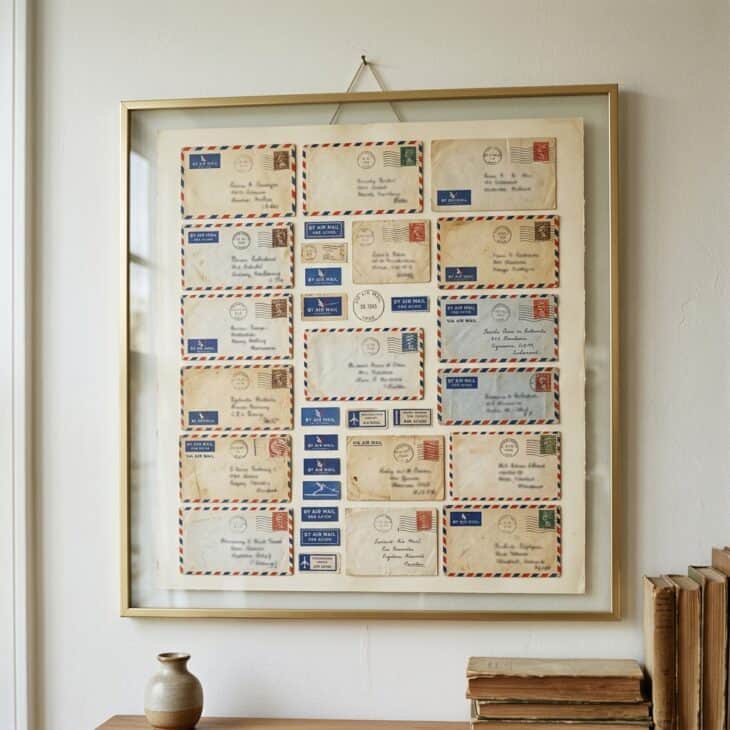
What you see A framed grid of old airmail envelopes, their red-and-blue striped borders and soft postmarks arranged behind glass. The aged cream paper gives the whole piece a gentle, papery warmth.
Why it works Airmail was one of aviation’s first real jobs, and these envelopes tie decor to that early purpose of flight. As a collage they add texture and story in a small, low-cost frame.
How to get it Bundles of vintage airmail covers are cheap at stamp shows, antique shops, and online auctions. Arrange eight to twelve in a grid on neutral matting for a clean look. This corner of history connects to the whole story of famous firsts in aviation, when routes and records were being set constantly. Use acid-free matting so the old paper does not yellow further behind glass.
17. Wing Rib Bookshelf
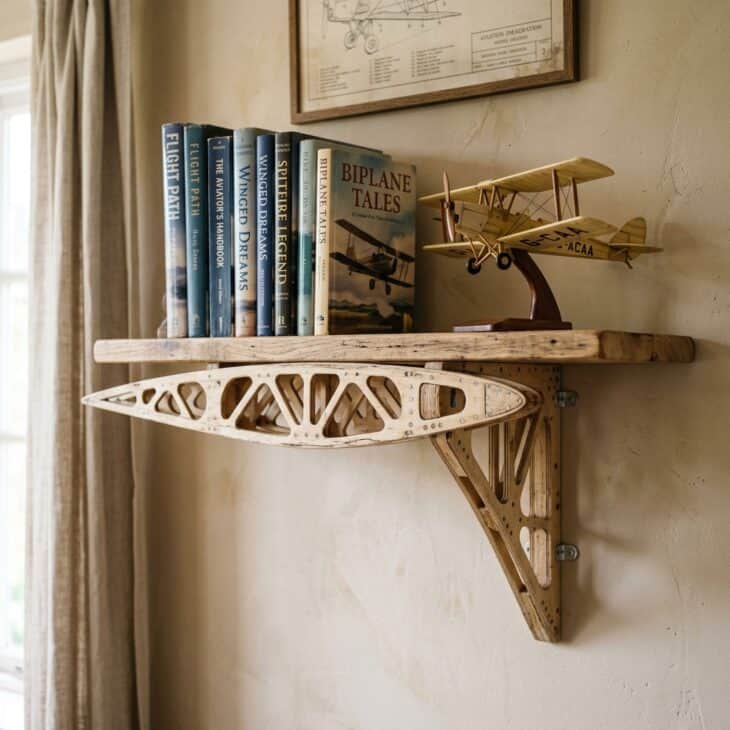
What you see A shelf whose structure is a lattice wooden wing rib, all pale birch and neat lightening holes. It holds a few books and a small model, showing off the internal geometry of a wing.
Why it works Wing ribs are hidden engineering, and revealing that skeleton is both beautiful and educational. The open latticework keeps a shelf feeling light rather than bulky.
How to get it Reproduction wing ribs are sold as decor, and woodworkers can build one from birch plywood using vintage rib patterns. Seal the wood and add a discreet flat shelf surface so books sit level. Fill it with a small set of aviation books to lean fully into the theme. Anchor it well, since the open structure is lighter than it looks and can tip under weight.
18. Split-Flap Departure Board
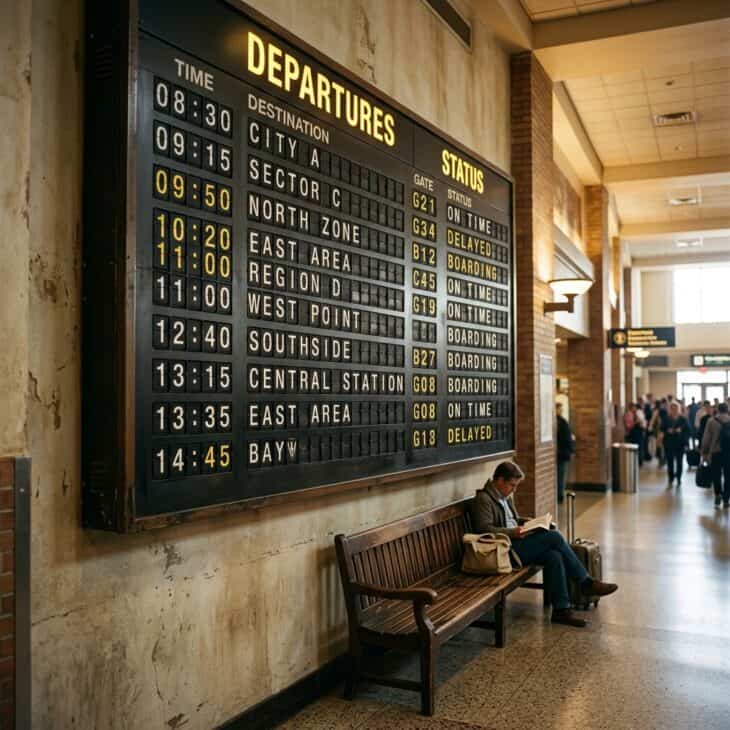
What you see A black split-flap board on the wall, its rows of flip characters spelling out destinations and times. It hangs above a bench like a slice of an old terminal concourse.
Why it works The split-flap display is pure travel nostalgia, tied to the sound and anticipation of a departures hall. Even a small one brings motion and a sense of going somewhere.
How to get it Modern makers sell working split-flap displays you can program, while static reproduction panels cost far less. Set yours to a favorite fictional route or a meaningful date for a personal touch. It pairs naturally with a poster gallery to build a full terminal corner. Working units need a nearby outlet and occasional dusting between the flaps.
19. Propeller Blade Wall Sconce
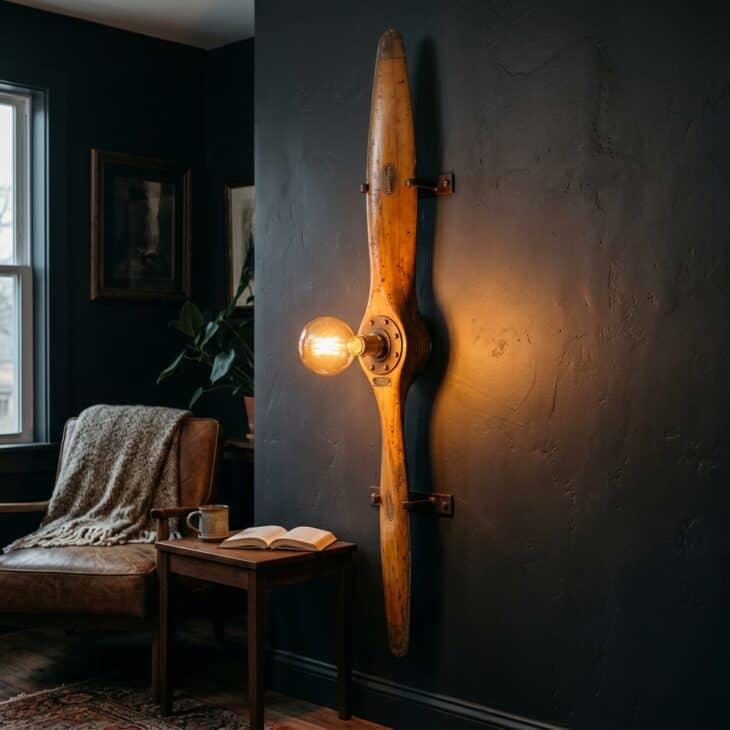
What you see A single varnished propeller blade mounted upright on a dark wall, with a warm bulb glowing near its hub. The light pools softly and the wood grain stands out against the charcoal.
Why it works Splitting a propeller into single-blade sconces spreads the iconic shape around a room as lighting. The warm glow makes wood grain and old finish come alive after dark.
How to get it Salvage yards sometimes sell single damaged blades cheaply, which are perfect for a sconce that does not need to fly. Have an electrician wire a low-wattage fixture, or use a plug-in puck light to avoid rewiring. Mount a matched pair flanking a bed or fireplace for symmetry. Use a warm LED bulb so the wood never gets hot near the finish.
20. Repurposed Seatbelt Accents
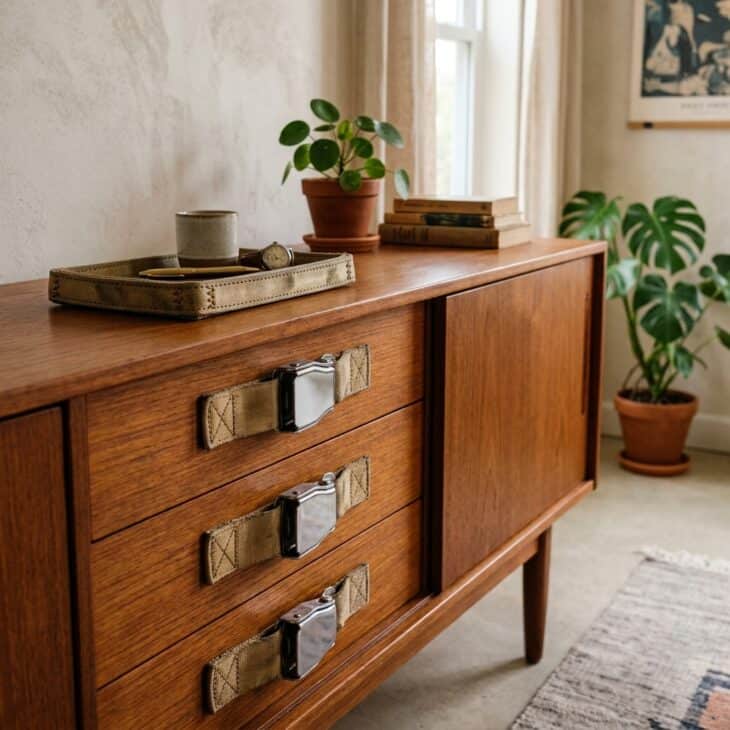
What you see Chrome aircraft lap-belt buckles repurposed as drawer pulls and a small catch-all tray, their worn webbing still attached. On a mid-century sideboard they read as clever, tactile details.
Why it works The lift-latch buckle is one of the most familiar objects in all of flying, instantly recognizable by touch. Reusing it adds a subtle aviation wink without dominating a room.
How to get it Surplus aircraft seatbelt hardware is sold by the piece and often comes polished and ready. Turn buckles into drawer pulls, keychains, bag straps, or a small valet tray. The lift-latch design has barely changed in decades, a reminder of why planes have seat belts at all. Add felt washers behind buckle pulls so they do not scratch the drawer face.
21. Leather Flight Jacket Display
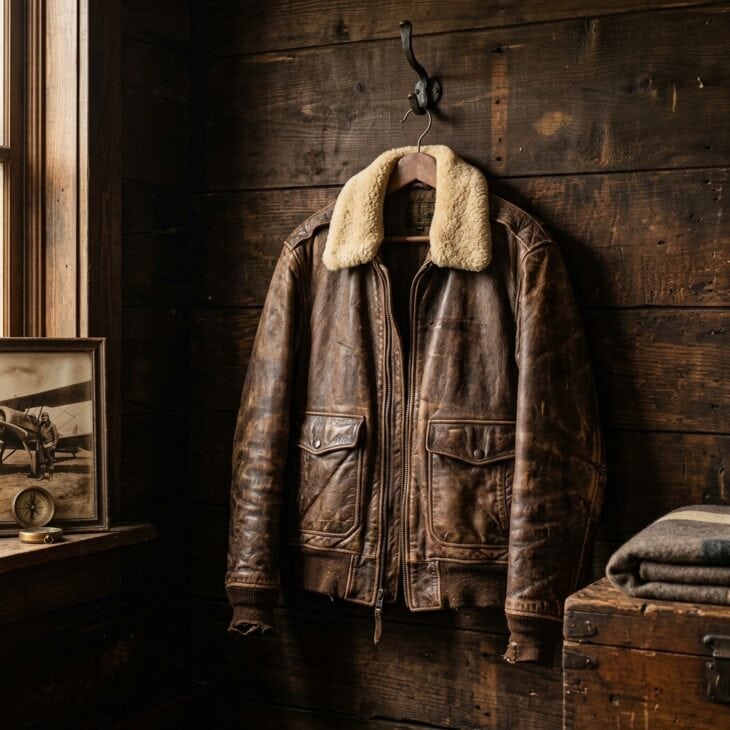
What you see A brown leather flight jacket with a shearling collar hung on a stand as deliberate decor, its leather cracked and creased from age. Warm side light picks out every fold in a paneled corner.
Why it works A flight jacket is decor you can also wear, and displayed openly it becomes a warm, human centerpiece. The leather ties directly to the aviator aesthetic that anchors this whole style.
How to get it Vintage-style bomber and A-2 jackets are widely available, and thrift stores occasionally hide a genuine broken-in one. Display it on a valet stand, a dress form, or a sturdy wall hook rather than folded away. Keep patches and insignia generic or absent so the piece stays timeless. Store it out of direct sun so the leather does not dry and fade.
22. Compass Rose Floor Medallion
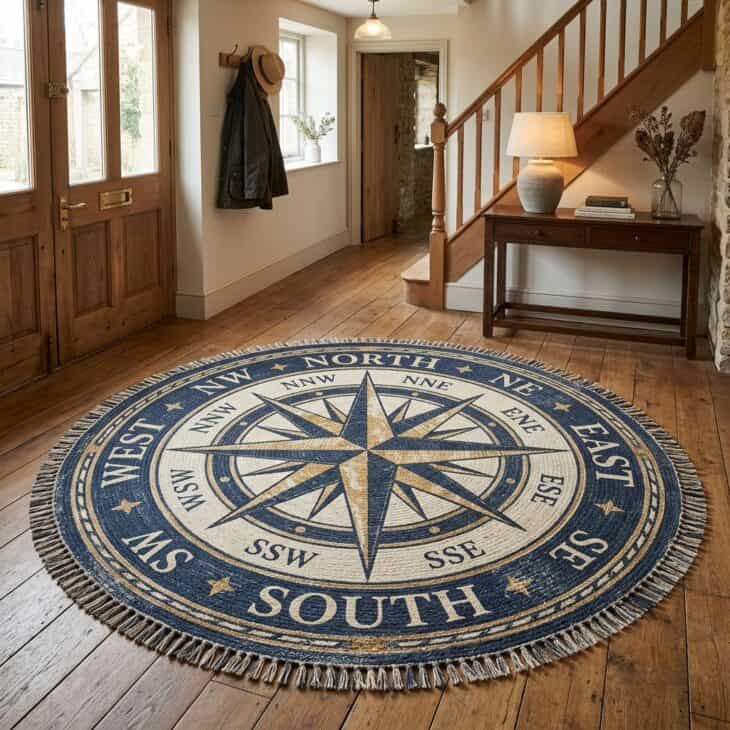
What you see A round rug woven with a classic compass rose in navy, cream, and gold, its star radiating toward the cardinal points. Centered in an entry hall, it turns the floor itself into a map.
Why it works The compass rose bridges sea and air navigation and adds a graphic anchor underfoot. A floor medallion pulls the aviation theme down to a layer most rooms ignore.
How to get it Compass-rose rugs are sold in round and square formats, or you can stencil one onto a plain sisal rug for a custom size. Choose aged, muted colors rather than bright ones to keep it vintage. It works under a round entry table or centered in a reading nook. Add a non-slip pad underneath, especially on smooth wood or tile.
23. Nose Art Canvas Print
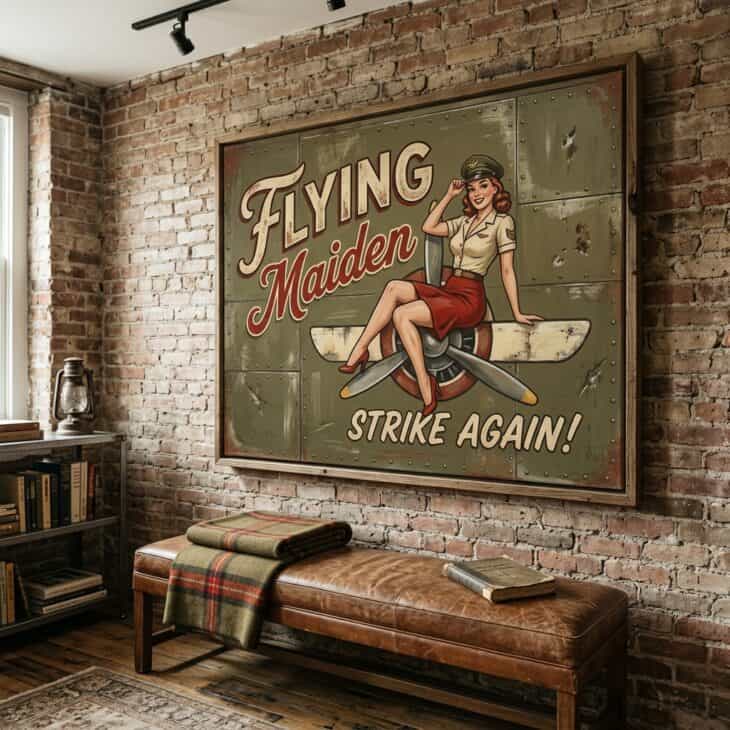
What you see A big canvas reproducing warbird nose art in a hand-painted pin-up and lettering style, set against a distressed riveted metal background. Above a leather bench, it carries real swagger.
Why it works Nose art is one of aviation’s most personal traditions, where crews painted identity onto cold metal. As a print it adds color, attitude, and a strong focal point to a large wall.
How to get it Artists and print shops sell nose-art canvases and metal prints in many styles, from cheeky pin-ups to bold typography. Choose generic artwork rather than a specific historic aircraft to keep it your own. The same hand-painted spirit shows up in aviation tattoo ideas if you want to carry the motif further. Hang it as a solo statement rather than crowding it with smaller frames.
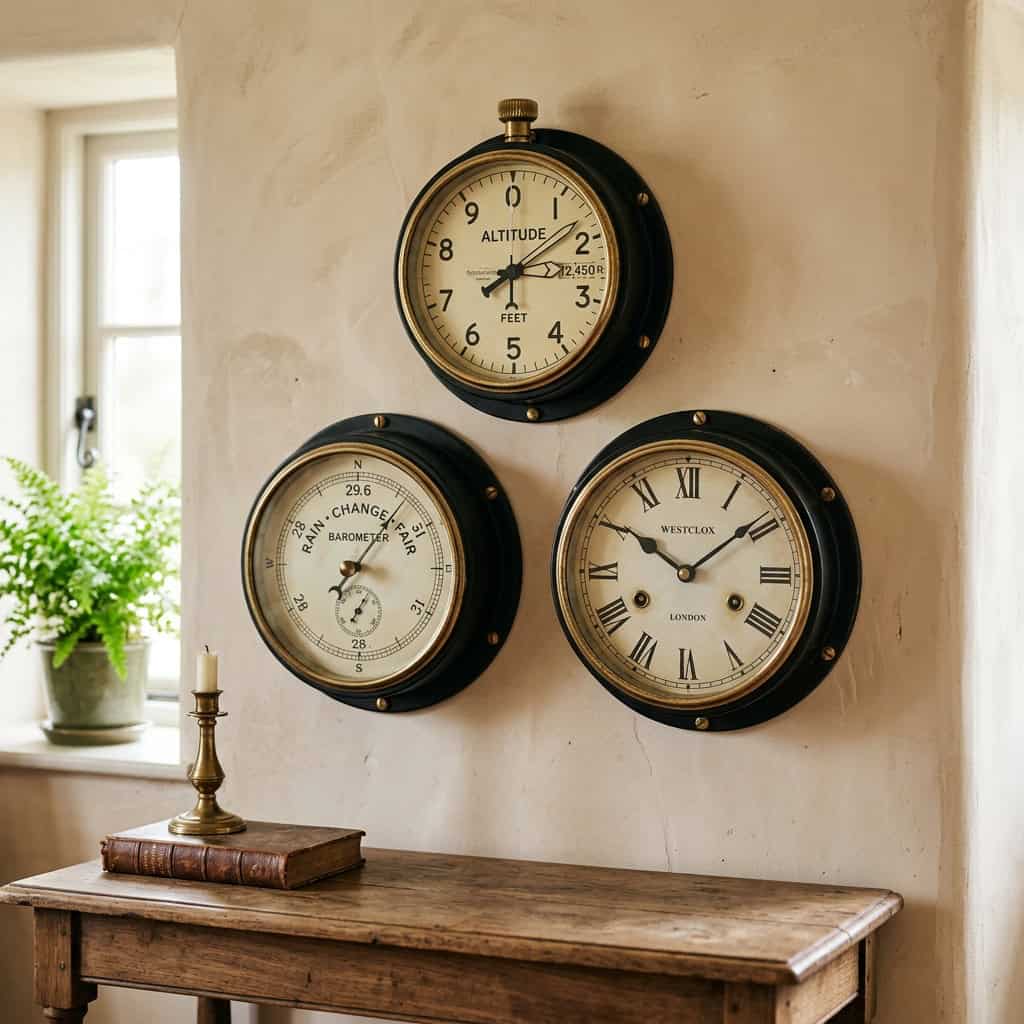
24. Altimeter and Barometer Wall Grouping
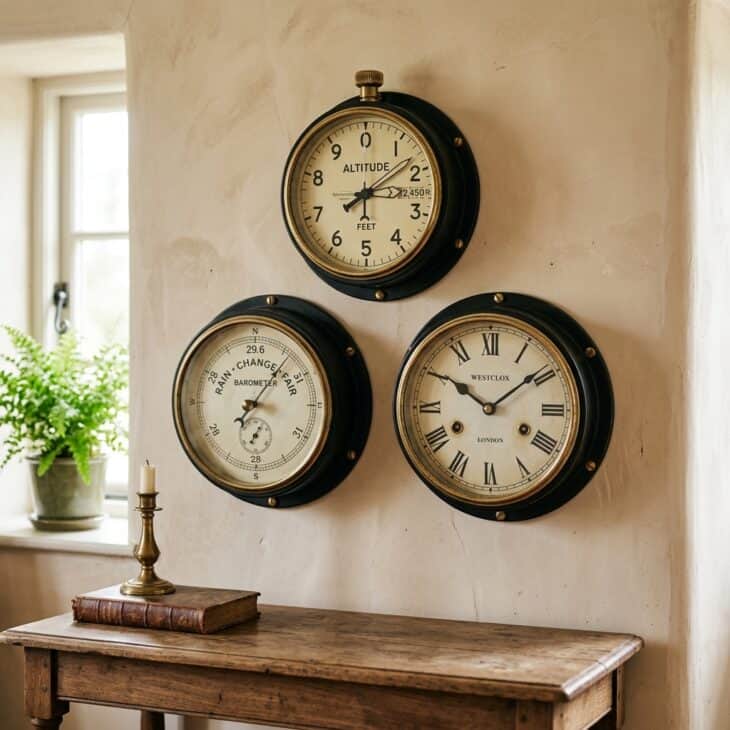
What you see Three round instruments, an altimeter, a barometer, and a clock, arranged in a neat triangle on a warm wall. Their matching cream faces and brass rims make a calm, orderly grouping.
Why it works Round dials repeat beautifully, and a matched set feels intentional rather than cluttered. Mixing a working clock and barometer with an altimeter keeps the grouping useful too.
How to get it Home decor brands sell aviation-styled instrument sets, or you can mix a real salvaged altimeter with a matching barometer and clock. Keep bezel color and diameter consistent so the trio reads as a family. It suits a hallway, office, or the wall above a desk. Hang them with a paper template first to nail the spacing before you drill.
25. Reclaimed Hangar Wood Headboard
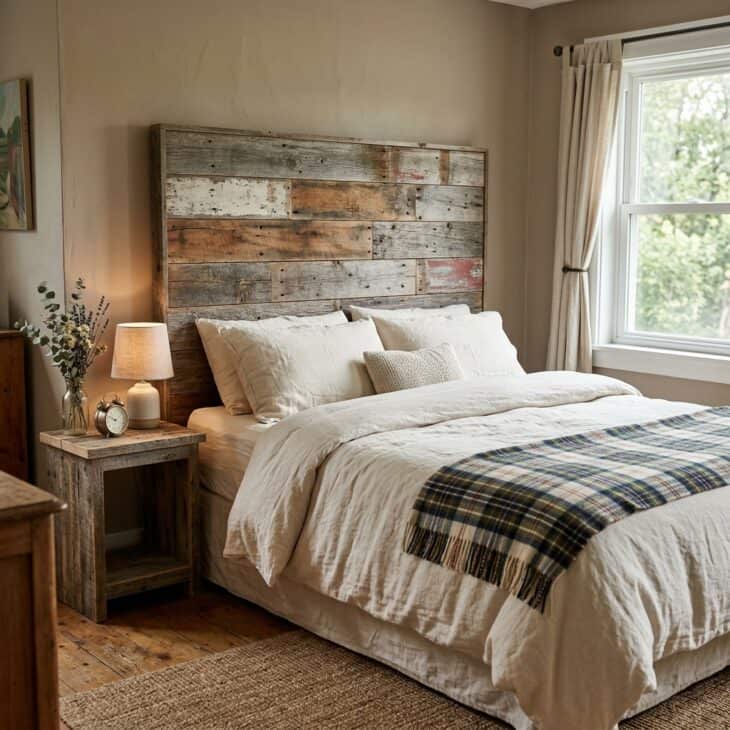
What you see A headboard built from weathered reclaimed planks in mixed grays and browns, faint old paint still visible in the grain. Behind cream linens and a plaid throw, it warms the whole bed.
Why it works Reclaimed wood from old airfield structures carries genuine age and texture that new lumber cannot fake. As a headboard it anchors a bedroom in vintage warmth without shouting the theme.
How to get it Salvage suppliers sell reclaimed planks by the board, and a simple frame turns them into a headboard over a weekend. Mix plank widths and tones for an authentically patched look. For a child’s room, the same weathered wood pairs well with an aviation bedroom theme. Seal the wood lightly and anchor the headboard to the wall or bed frame for stability.
Vintage aviation decor rewards patience. Hunt slowly, favor honest patina over perfect reproductions, and let each salvaged propeller, brass dial, and cracked leather find tell its own story. A room built this way does not just look like aviation history, it holds a piece of it.
FAQ
Sources and references used for research and fact-checking.
Get the Newsletter
The latest aviation news and stories sent to your inbox.
About the Author

Hanna writes AeroCorner's aviation-lifestyle and decor guides, turning a love of flight into ideas for your home, celebrations, and gift lists.