

Table of Contents
Aviation tattoos work because flight already carries symbolism. A wing can mean freedom, a compass can mean direction, and a tiny paper plane can mean curiosity without turning the body into a technical manual. The best aviation tattoo ideas feel personal first and aviation-themed second.
This list is built for pilots, frequent flyers, plane spotters, cabin crew, student pilots, military aviation fans, and anyone who wants a design with altitude in it. Some ideas are subtle enough for a wrist or ankle. Others belong on a forearm, shoulder blade, calf, or full sleeve. If you are actively flying or hoping to fly professionally, read up on whether pilots can have tattoos before choosing a placement that shows in uniform.
Use these concepts as starting points, not copy-paste flash. Bring references to a reputable artist, ask what will age well on your skin, and simplify the details before the needle touches your body. Fine lines, tiny instruments, and delicate lettering can look beautiful on day one, but the strongest tattoos are designed to survive years of sun, movement, and healing.
01. Tiny Paper Airplane
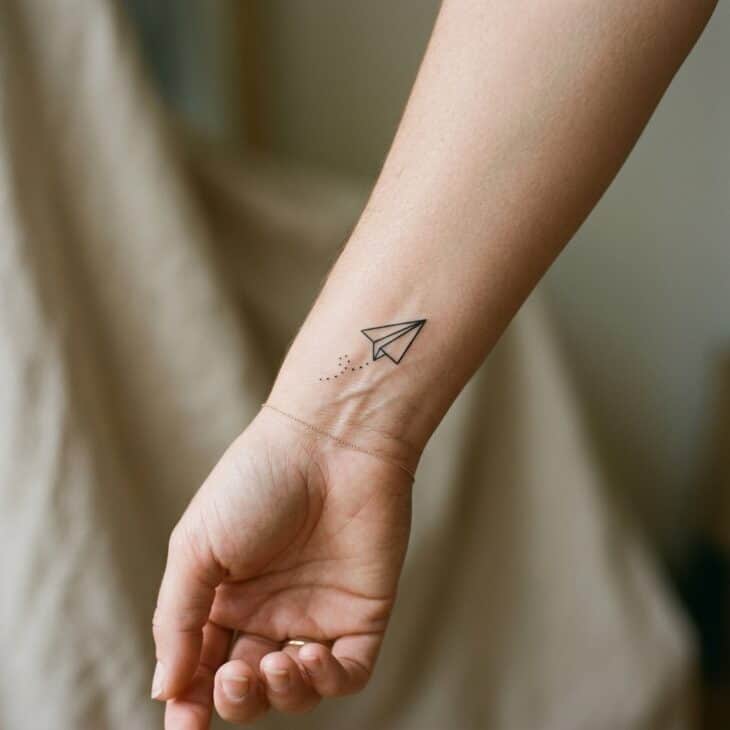
What you see A tiny paper airplane sits on the inner wrist, drawn in a few clean black lines. A short dotted trail curves behind it, giving the design a sense of motion without taking up much space. The scale is delicate enough to disappear under a watch strap but clear enough to read from a normal distance.
Why it works The paper airplane is the most approachable aviation symbol. It suggests curiosity, childhood wonder, travel, and starting small before going far. It also avoids the seriousness of wings, military aircraft, or memorial imagery, which makes it a good first aviation tattoo for someone who wants a light, optimistic design.
How to get it Keep the shape simple and avoid too many fold lines, because tiny geometry can blur as it ages. The wrist, ankle, behind the ear, or side of the ribcage all work well. Ask the artist to stencil it slightly larger than your first instinct if you want the dotted trail to stay legible. If you want it to feel more personal, angle the plane toward a small star, initial, or coordinate rather than adding a long quote.
02. Runway Centerline
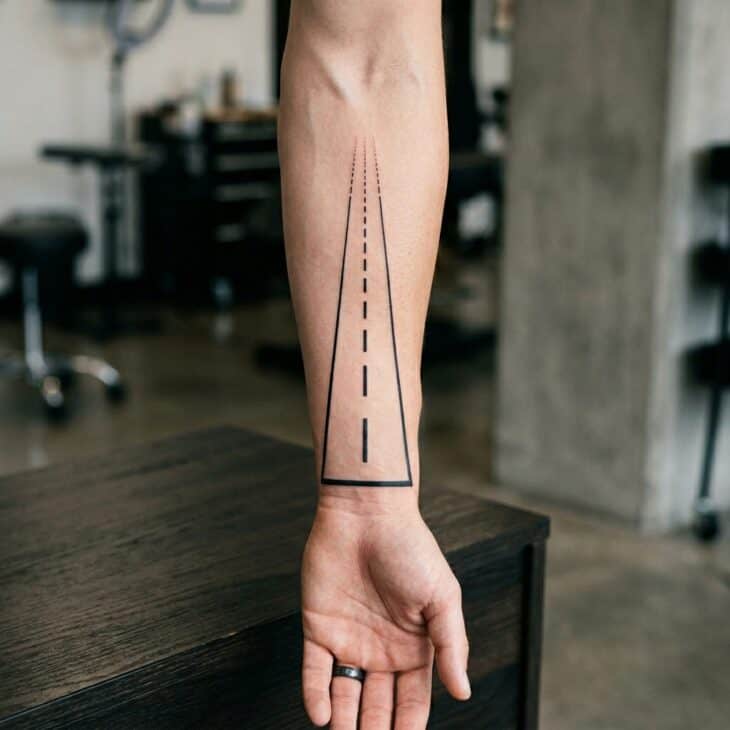
What you see A runway stretches down the forearm in sharp perspective, with dashed centerline markings narrowing as they move toward the elbow. Simple threshold bars anchor the design near the wrist. The tattoo is graphic, symmetrical, and immediately recognizable to anyone who has looked down a runway before takeoff.
Why it works A runway tattoo is about commitment. It marks the moment before motion, the decision to accelerate, and the trust that the path ahead is long enough. For student pilots, it can symbolize training. For travelers, it can stand for the beginning of every trip. It also connects naturally to plane spotting, since runways are where patience turns into action.
How to get it Use clean black lines and leave enough negative space between the dashed markings. This design works best on a long vertical area: forearm, calf, spine, or the outside of the upper arm. Avoid adding real runway numbers unless they have personal meaning, because they can make the design feel like a specific airport. A good artist can bend the perspective slightly so it follows the natural shape of the limb.
03. Classic Wings
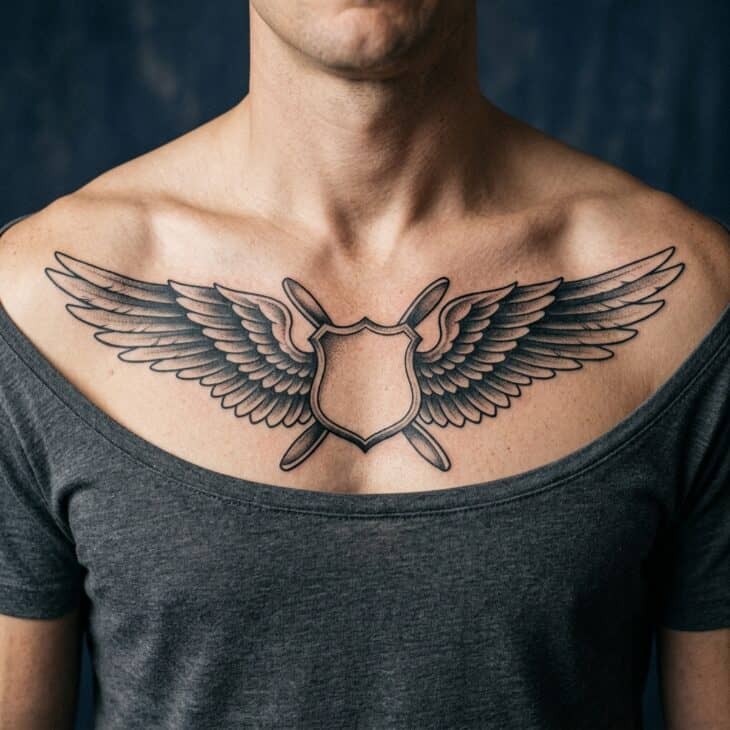
What you see A pair of balanced wings spreads below the collarbones, shaded in black and grey with a small blank shield at the center. The feathers are stylized rather than realistic, giving the tattoo the feeling of an old aviation badge without copying any official insignia. It looks formal, deliberate, and permanent in the best sense.
Why it works Wings are the universal symbol of aviation. They can mean qualification, aspiration, protection, or freedom depending on the wearer. The trick is to make them personal without borrowing real airline, military, or association badges. A generic wing design gives you the emotional weight of the symbol while staying original.
How to get it Decide first whether you want badge-style wings or more organic feathered wings. Badge-style designs need clean symmetry and enough size to avoid muddy detail. Chest, upper back, shoulder cap, and sternum placements all work well. Leave the center shield blank, fill it with initials, or use a small compass star instead of anything that resembles an official qualification mark.
04. Compass Rose Flight Path
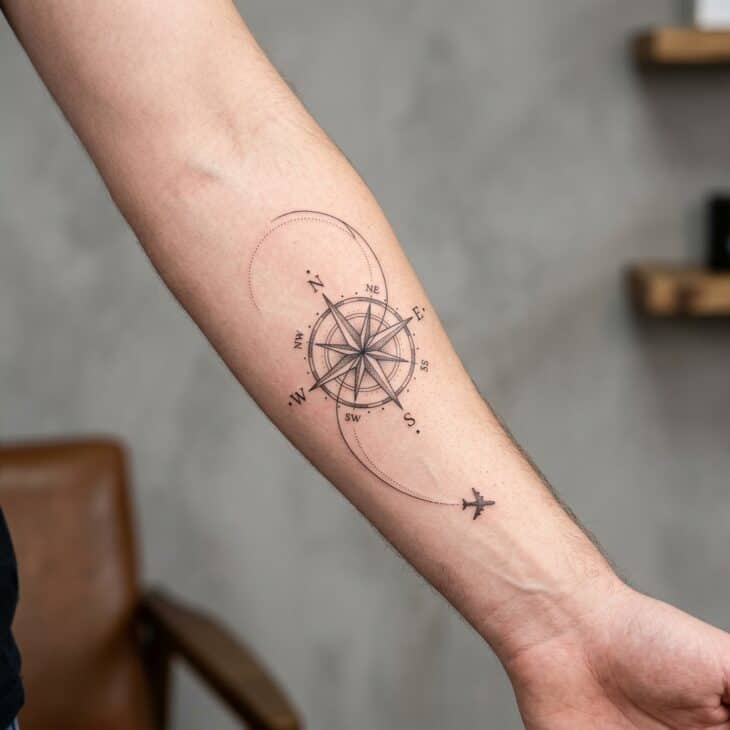
What you see A fine-line compass rose sits on the forearm, its north point slightly longer than the rest. A thin flight path arcs around it and ends in a tiny generic airplane silhouette. Dotwork shading gives the center of the compass a little depth without making the design heavy.
Why it works A compass turns an aviation tattoo into a navigation tattoo. It suggests direction, discipline, and the habit of finding your way even when the route changes. For pilots, it nods to the fundamentals. For travelers, it says that movement matters but so does orientation.
How to get it Keep the compass simple enough that the points stay sharp after healing. Forearm, shoulder blade, ankle, and upper arm placements all handle circular geometry well. If you want coordinates, place them outside the compass as tiny supporting text, but avoid cramming them into the center. For a larger version, ask your artist to add faint latitude and longitude lines behind the rose.
05. Altimeter Dial
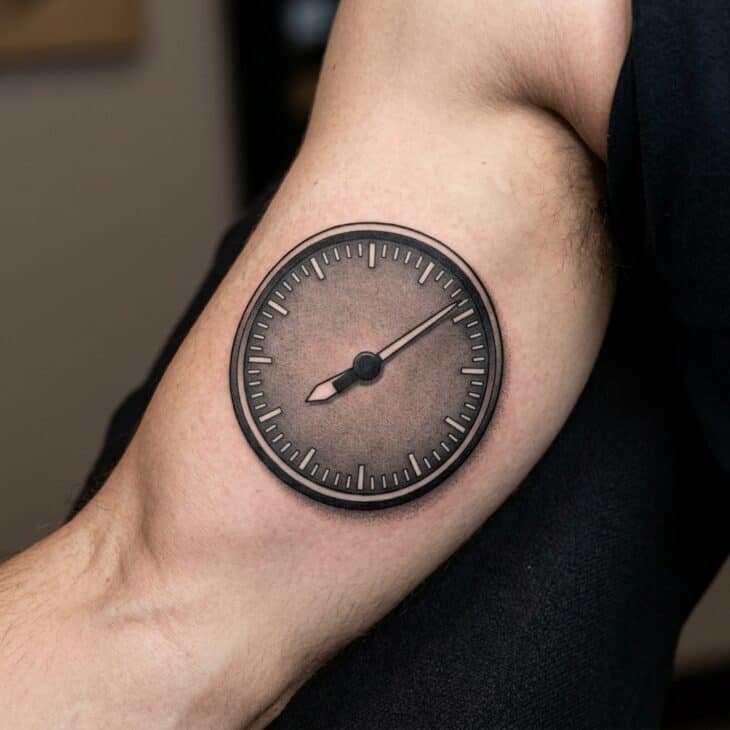
What you see A round cockpit instrument fills the upper arm, with crisp tick marks, two clean needles, and a shaded bezel. The design clearly reads as an altimeter but avoids brand names, serial markings, and tiny labels. It has the satisfying look of a real gauge without becoming too technical for skin.
Why it works The altimeter is a strong symbol for perspective. It measures height, but as a tattoo it can mean distance from old problems, a new level reached, or the discipline required to keep climbing. It is also one of the cockpit instruments most non-pilots can understand at a glance.
How to get it Do not make this one too small. Instrument faces need enough room for the needles, bezel, and tick marks to breathe. Upper arm, calf, thigh, and shoulder blade are safer placements than wrist or ankle. If you want a specific altitude represented by the needles, bring that number to your artist, but keep the dial itself generic and uncluttered.
Design for aging
Tiny labels, micro numbers, and crowded cockpit markings look sharp in a stencil but can blur over time. Let one or two recognizable details carry the meaning instead.
06. Airplane Window View
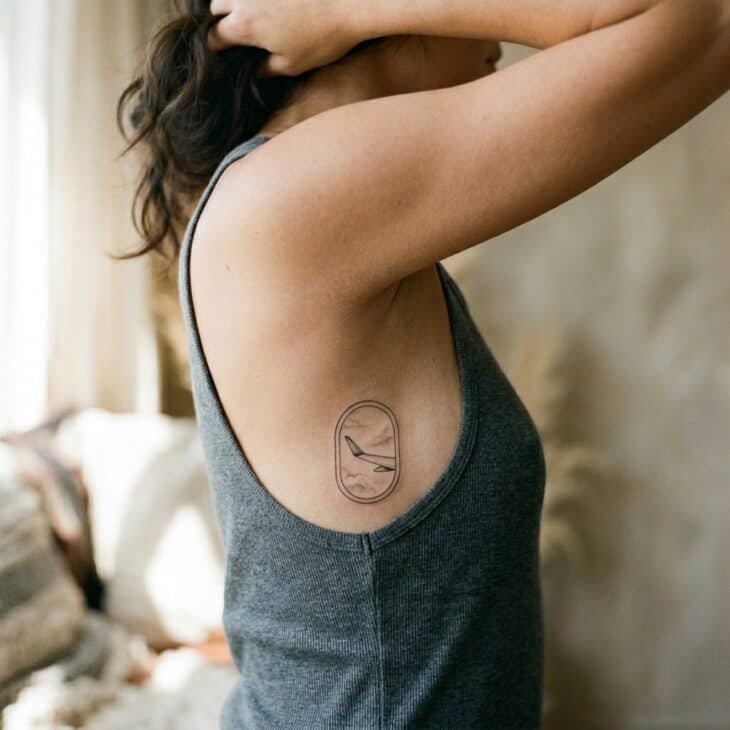
What you see An oval aircraft window is drawn as a fine black frame, with soft clouds and a small wing silhouette visible inside. The image is contained and quiet, like a memory seen through glass. A little shading in the clouds gives the design depth while keeping it light.
Why it works The window seat is one of the most emotional views in aviation. It is where anticipation, escape, solitude, and wonder all fit inside one frame. If you already collect window seat photos, this tattoo turns that habit into a permanent symbol without needing a full aircraft.
How to get it Keep the oval clean and let the interior scene stay simple. Ribs, upper arm, ankle, and shoulder blade work well because the window shape can sit naturally on curved skin. Avoid adding a detailed cabin wall around it, which can make the design bulky. For a softer version, ask for dotwork clouds and a plain silhouette wing.
07. Contrail Heart
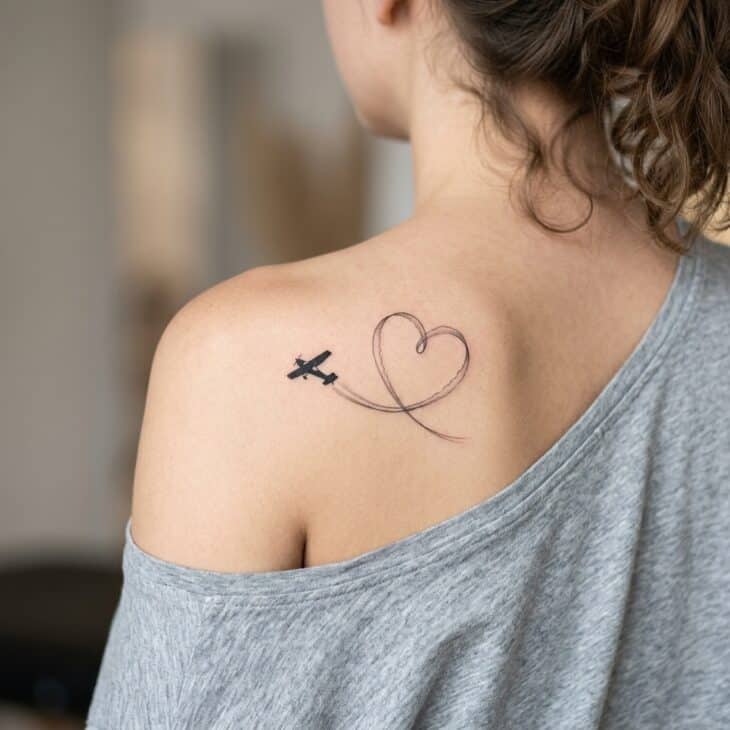
What you see A tiny airplane silhouette curves across the shoulder, leaving a thin contrail that loops into a loose heart. The line is imperfect enough to feel natural, not like a clip-art icon. It is sweet without being overly sentimental.
Why it works This is the aviation tattoo for someone whose love story involves travel, distance, or reunion. The heart reads instantly, but the contrail gives it context. It can represent a partner, a family member far away, a favorite route, or simply the feeling of loving flight itself.
How to get it Ask for a loose hand-drawn curve rather than a mathematically perfect heart. The shoulder, collarbone, forearm, and ankle are all good placements for a sweeping line. Keep the airplane very small and generic. If you add initials, put them below the trail so the heart shape remains the focus.
08. Coordinates of a First Flight
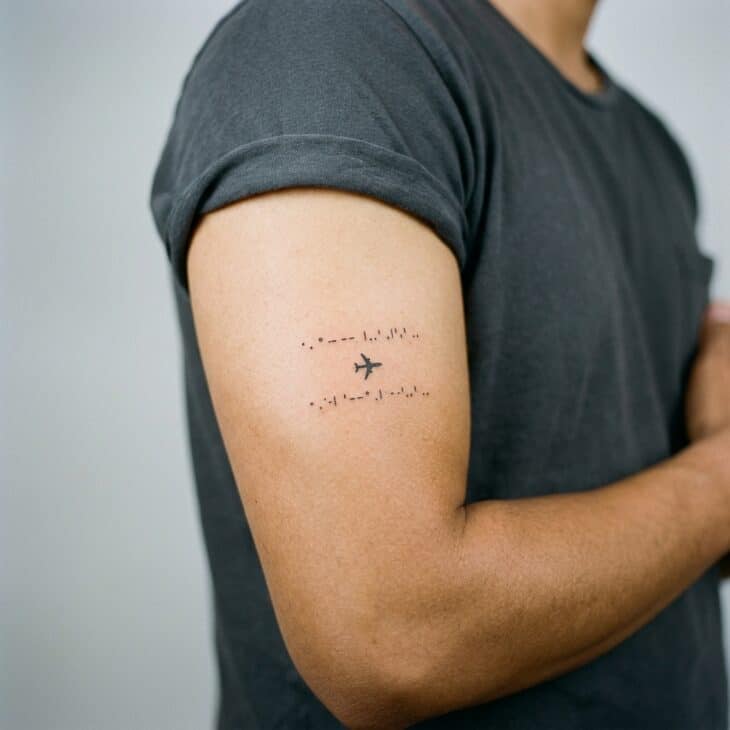
What you see Two slim coordinate lines sit on the inner bicep, separated by a tiny airplane icon. The spacing is elegant and the numbers feel private rather than decorative. From a distance it reads as a simple text tattoo, but up close it becomes a map point.
Why it works Coordinates make an aviation tattoo personal without explaining everything to everyone. They can mark a first solo, first international trip, home airport, proposal location, graduation field, or the place where flying became part of your identity. The meaning belongs to the wearer.
How to get it Double-check the coordinates before the stencil goes on. Use a clean font with enough spacing that the punctuation does not blur. Inner bicep, forearm, ribcage, and upper back are good placements for horizontal text. If visible tattoos affect your work, choose a spot that stays covered by standard clothing.
09. Vintage Propeller
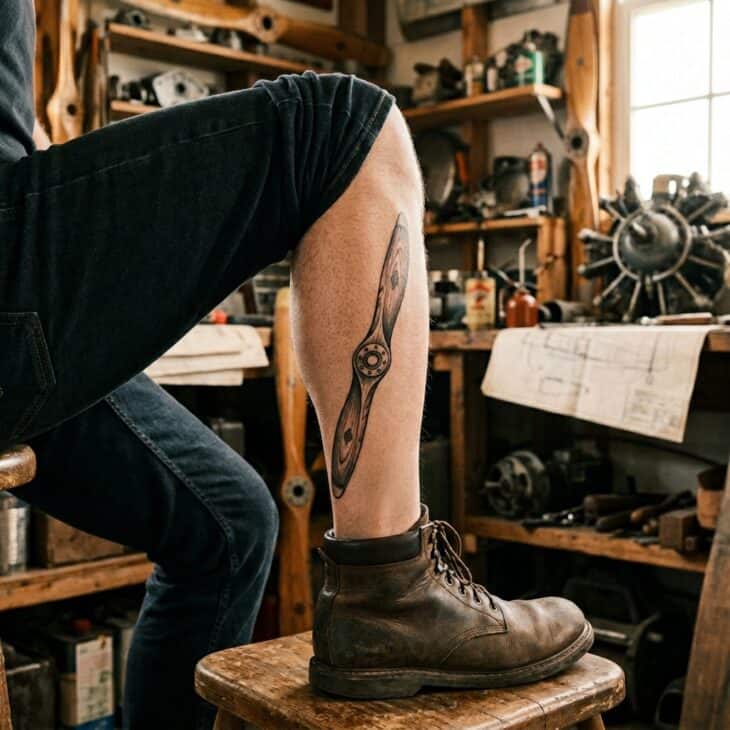
What you see A two-blade propeller sits vertically on the calf, shaded to suggest polished woodgrain. The central hub is simple and round, and the blade tips curve gently. It feels like a piece of early aviation hardware turned into a clean graphic emblem.
Why it works A propeller tattoo points toward the mechanical romance of early flight. It suits people drawn to barnstormers, vintage aircraft, hangars, and the golden age of aviation. It also has a strong shape, which matters for tattoo design: even without tiny details, the silhouette reads clearly.
How to get it Use black and grey shading if you want the tattoo to age cleanly, or add restrained warm browns if your artist is strong with color. Calf, forearm, shoulder blade, and upper arm all work. Avoid tiny rivets, serial plates, or brand marks. A larger design can include a faint circular motion blur behind the blades, but keep the propeller itself sharp.
10. Lift Equation Linework
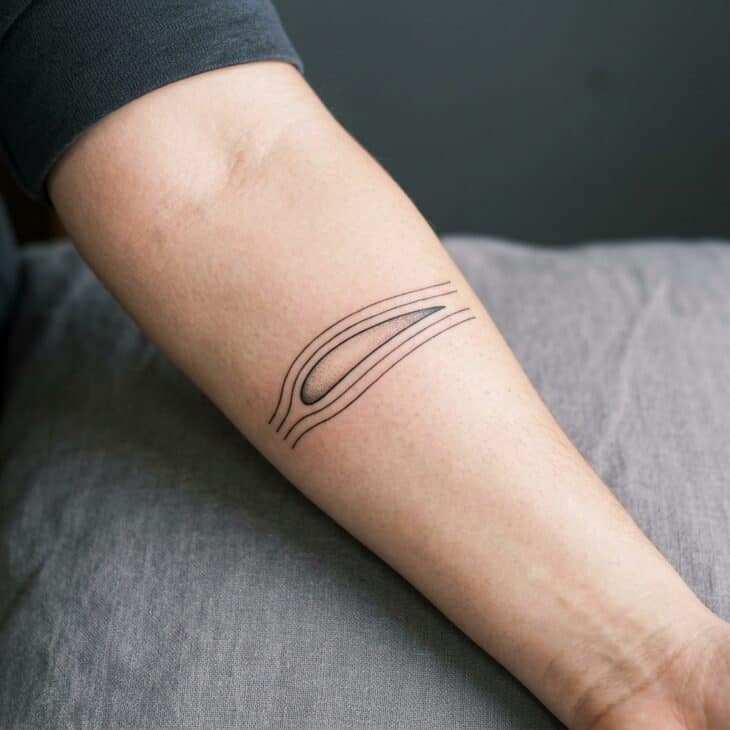
What you see A clean airfoil cross-section runs along the forearm, with smooth airflow lines passing above and below it. The design is technical without being crowded. It looks like a diagram pulled from a notebook and refined into tattoo form.
Why it works Not every aviation tattoo needs an airplane. An airfoil points to the invisible physics that makes flight possible. It is especially good for engineers, student pilots, mechanics, instructors, and anyone who loves the logic behind the magic.
How to get it Keep it diagrammatic and skip the actual formula unless you have enough space for readable lettering. Forearm, upper arm, calf, and rib placements all suit the long horizontal shape. Ask the artist to leave clear negative space between the airflow lines. If you want more detail, add a tiny angle-of-attack marker rather than extra text.
11. Aircraft Silhouette Trio
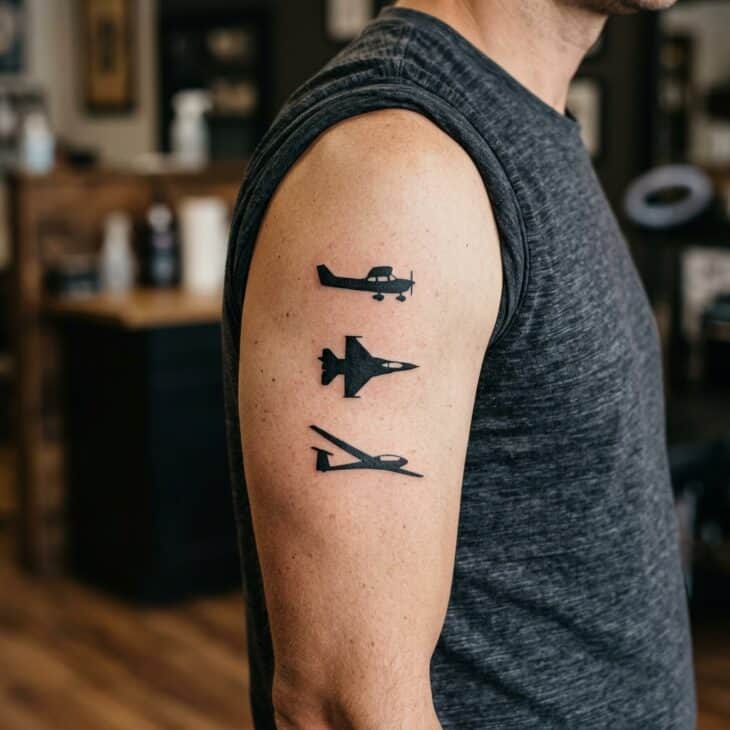
What you see Three small aircraft silhouettes are stacked vertically with generous spacing: a simple propeller plane, a swept-wing jet, and a glider. Each is solid black and stripped down to its most recognizable shape. Together they feel like a tiny aviation collection.
Why it works A silhouette trio lets you show range without committing to one aircraft type. It can represent past, present, and future, or training, travel, and freedom. It also avoids the problem of getting one very specific aircraft wrong, which aviation people will notice immediately.
How to get it Keep the silhouettes generic and do not copy a manufacturer’s exact planform unless that is truly the point. Upper arm, forearm, calf, and side rib placements work well. Use consistent scale and line weight so the trio feels intentional. If you want to add another symbol later, this design can grow into a sleeve of small aviation icons.
12. Boarding Pass Memory
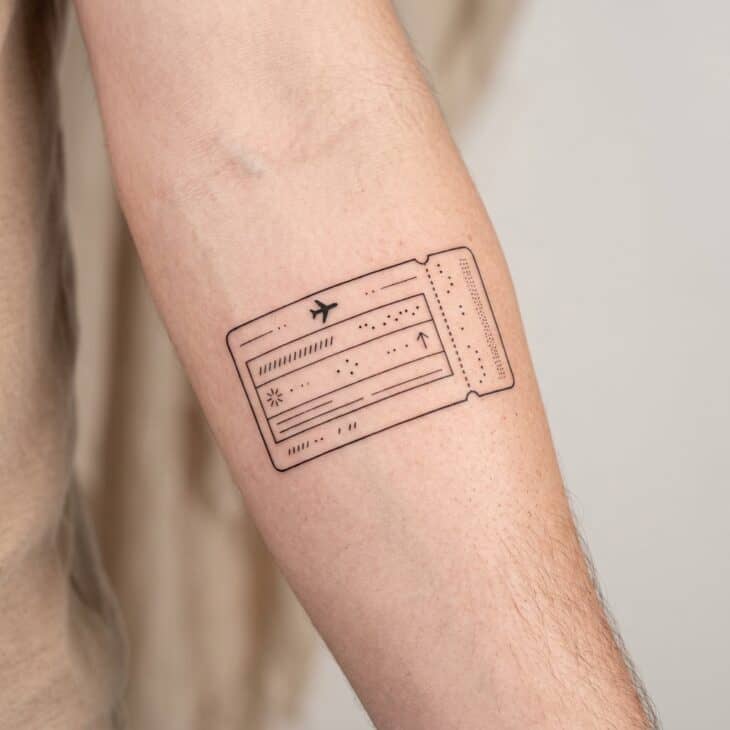
What you see A small boarding-pass rectangle sits on the forearm, with a perforated edge, a tiny airplane icon, and abstract lines where flight details would be. It looks like a travel document but does not display a real airline, airport code, or ticket number. The design is neat, personal, and slightly nostalgic.
Why it works Boarding passes are temporary objects attached to permanent memories. This tattoo is ideal for a life-changing trip, a first solo journey, a move abroad, a honeymoon flight, or the route that connected two people. It also works for anyone who keeps old boarding passes tucked in books and passport sleeves.
How to get it Resist the urge to include every real detail from the ticket. Tiny text ages poorly and may make the design too literal. Pick one meaningful date, route, or seat if you must include text, and let the rest be visual texture. Forearm and upper arm placements give the rectangle enough room to stay crisp.
13. Cloud Layer Sleeve Starter
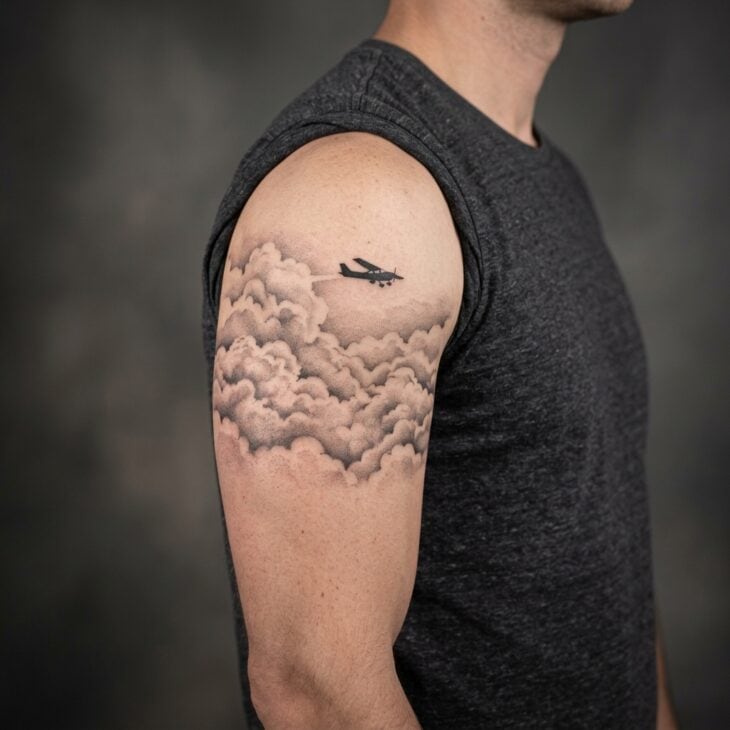
What you see Layered clouds wrap around the upper arm, softly shaded in black and grey. A small airplane silhouette emerges above the cloud tops, giving the piece a sense of altitude. The clouds create a base that could stand alone or become the start of a larger sleeve.
Why it works Clouds are flexible tattoo material. They can be peaceful, dramatic, or atmospheric, and they support almost any aviation symbol you might add later. As a sleeve starter, they give future aircraft, stars, instruments, maps, or weather motifs somewhere to live.
How to get it Find an artist who can shade softly without turning the clouds into smoke or waves. Upper arm and thigh placements are best if you may expand the piece later. Keep the aircraft small and generic so the clouds remain the main structure. If you want more drama, add a break in the cloud layer with light coming through it.
14. First Solo Date
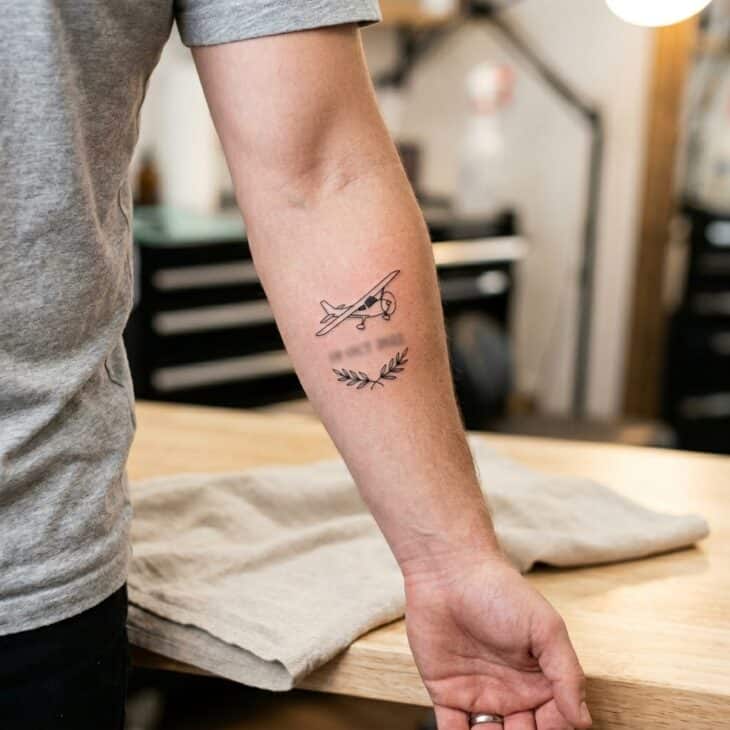
What you see A simple airplane silhouette sits above a small date, with a tiny laurel branch beneath it. The design is compact and ceremonial without feeling loud. It reads like a private award for a milestone that mattered.
Why it works First solo is one of the defining moments in a pilot’s life. The tattoo marks the day the instructor stepped out and trust became real. Even if the wearer never flies professionally, that moment carries the weight of a rite of passage.
How to get it Use the actual date, but choose a simple numeral style and keep it large enough to heal well. Inner forearm, ribcage, upper arm, or calf are good options. You can use a generic training aircraft silhouette, but avoid making it so specific that small errors stand out. A tiny pair of wings or a runway line can replace the laurel if that feels more personal.
15. Map Line Route
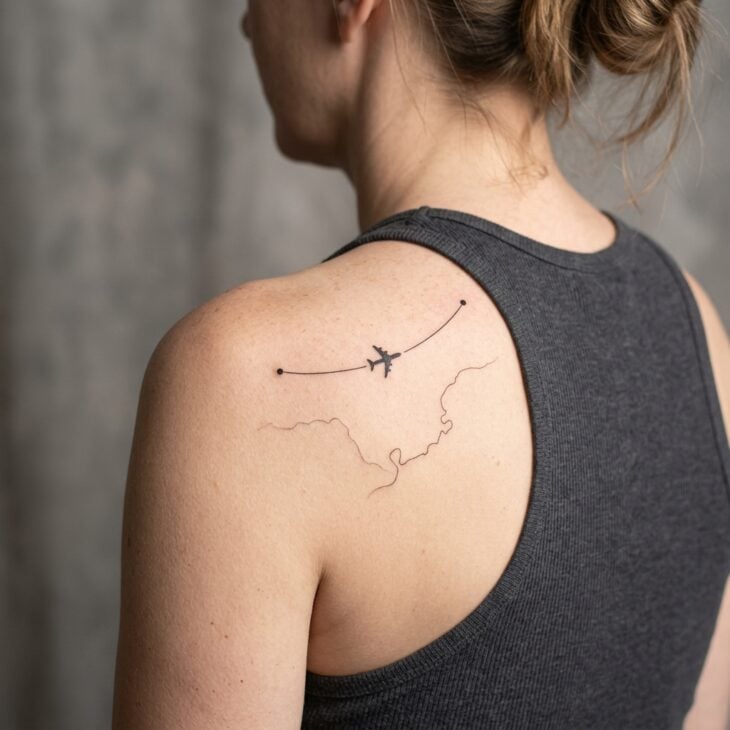
What you see Two small dots are connected by a curved flight path across the shoulder blade, with a tiny airplane silhouette placed along the arc. A faint abstract coastline line gives the tattoo a map-like quality without naming a real location. It feels like a route remembered more than a route documented.
Why it works Route tattoos are perfect for people whose lives are defined by two places. They can mark immigration, long-distance love, family across oceans, or a trip that changed everything. The curved line is visually graceful and immediately aviation-coded.
How to get it Choose whether the route should be geographically accurate or emotionally suggestive. Accurate maps need more planning, while abstract routes age more cleanly. Shoulder blade, forearm, ribs, and upper back all fit the curve. If you add airport codes, keep them to two or three letters and make sure they are not too small.
16. Cockpit Horizon Line
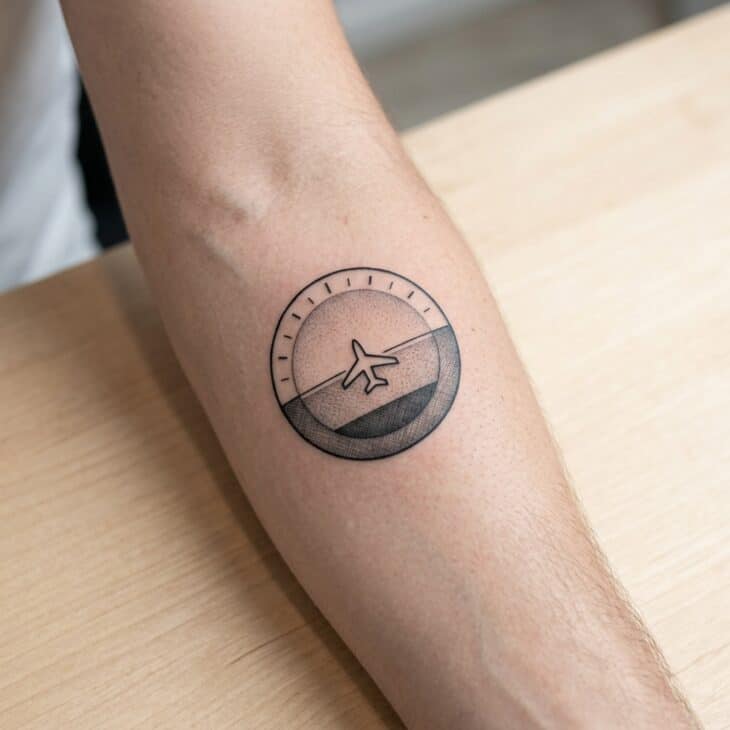
What you see A simplified attitude indicator sits on the forearm, split by a clean horizon line with a tiny aircraft symbol at the center. The upper half is light, the lower half is shaded darker, and the whole instrument is reduced to its essential geometry. It feels steady and composed.
Why it works The attitude indicator is about orientation. It tells you which way is up when your senses may be wrong. As a tattoo, it can mean balance, recovery, trust in instruments, or staying level through difficult moments. It is one of the most meaningful cockpit symbols for pilots.
How to get it Keep the instrument face clean and skip the tiny labels. A round design works on forearm, calf, upper arm, or shoulder. If you want color, use restrained blue and warm brown, but black and grey will age more predictably. Ask your artist to make the horizon line perfectly level when your arm rests naturally, not only when it is twisted for the stencil.
17. Minimal Jet Outline
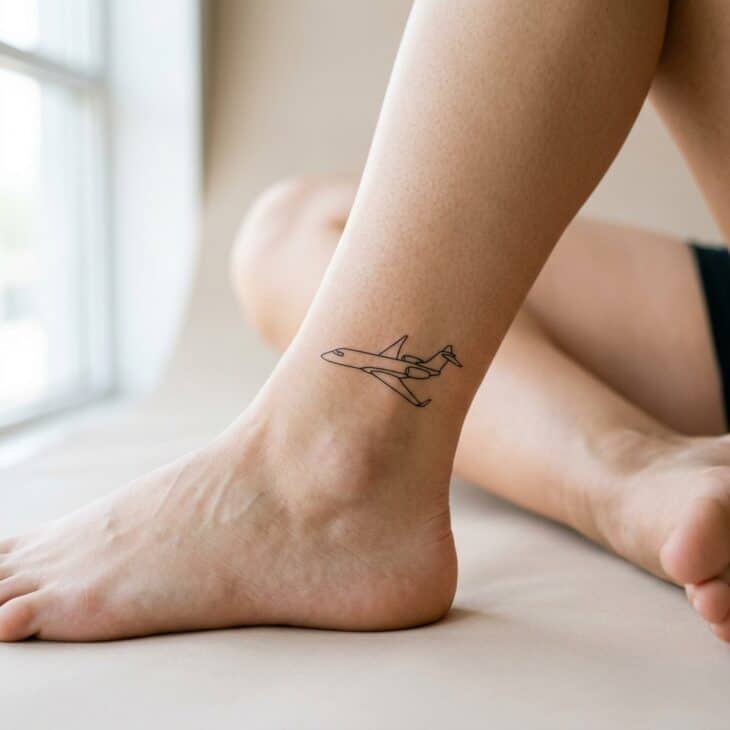
What you see A tiny swept-wing jet is drawn in one continuous black line along the ankle. The nose, wings, tail, and fuselage are suggested rather than detailed. It is sleek, modern, and easy to miss until the wearer moves.
Why it works Minimal jet outlines suit people who want aviation without vintage romance or heavy symbolism. They feel contemporary and travel-focused. The simplicity also makes the tattoo adaptable: it can be elegant, playful, or professional depending on placement.
How to get it Choose a clean silhouette and resist adding windows, engines, or tiny tail details. Ankle, wrist, collarbone, and behind-the-ear placements work for small versions. If you want it larger, place it along the forearm or ribs so the line can stretch. A single-line style depends on confident execution, so review your artist’s healed linework before booking.
18. Aviation Quote Fragment
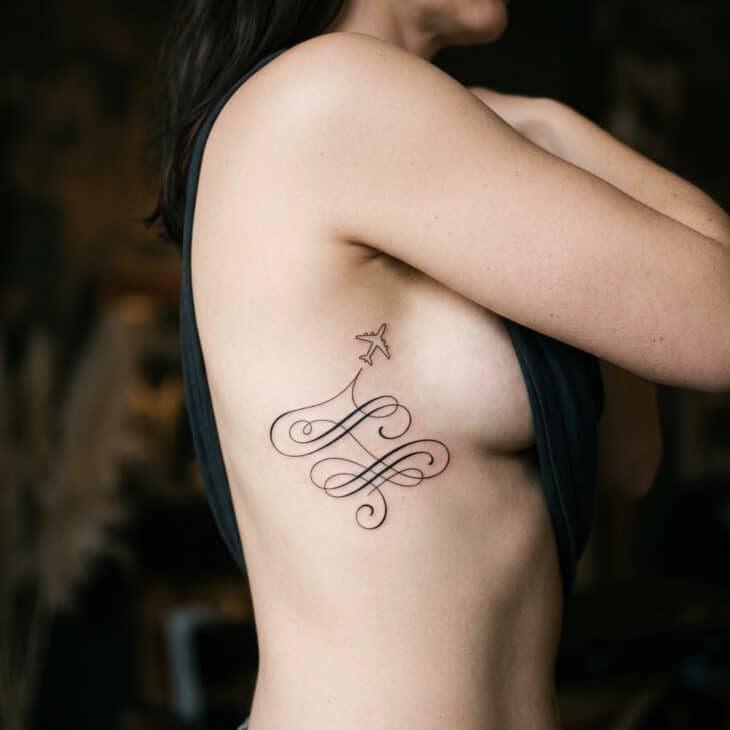
What you see A short line of elegant script follows the curve of the ribs, with a tiny airplane line above it. The design is mostly about rhythm and placement, not a large block of text. It feels literary, private, and a little romantic.
Why it works Aviation has produced a remarkable amount of memorable writing, from cockpit memoirs to travel essays. A quote fragment can honor that tradition while keeping the tattoo personal. The best versions use a short phrase with direct meaning rather than a long passage that becomes unreadable.
How to get it Keep text short, original, and easy to read. Avoid copying long copyrighted passages from books or films. If you are looking for inspiration, a reading list of aviation books is a better starting point than generic quote boards. Ribcage, forearm, collarbone, and upper back placements all work, but ask to see the stencil in motion before approving it.
19. Radar Sweep
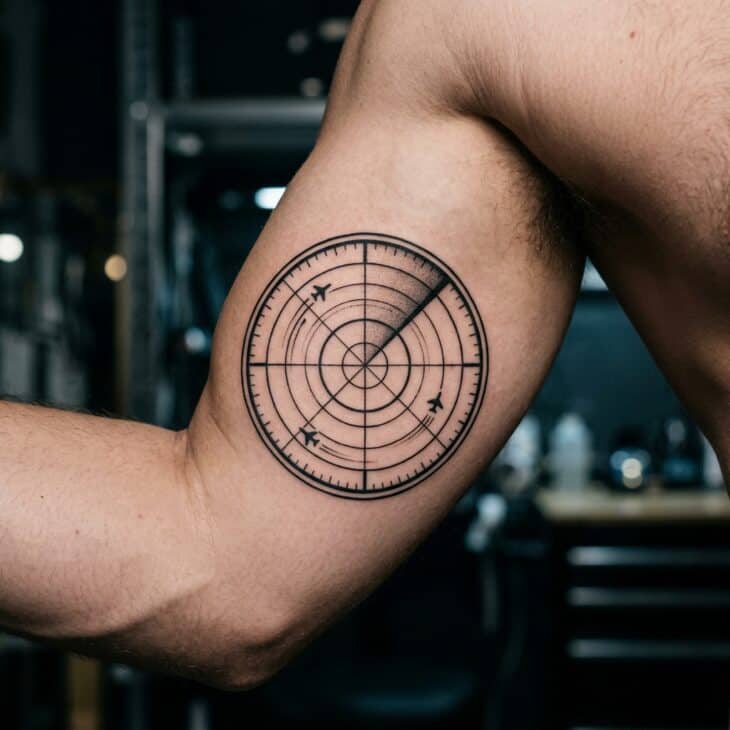
What you see A circular radar screen fills the upper arm, with concentric rings, a sweeping triangular beam, and a few tiny aircraft blips. The linework is geometric and clean, with just enough shading to suggest the glow of a screen. It feels technical and nocturnal.
Why it works Radar tattoos are about awareness. They suggest watching, tracking, protecting, and staying alert to what is moving around you. For aviation people, they also nod to air traffic control, weather avoidance, and the unseen systems that keep aircraft separated.
How to get it Make the circle large enough for the rings and blips to stay distinct. Upper arm, calf, shoulder blade, or thigh are better than small placements. Use monochrome blackwork or a restrained green accent if your artist is comfortable with color. Do not include real callsigns, airport labels, or screen text unless they are deliberately abstracted.
20. Tiny Helicopter
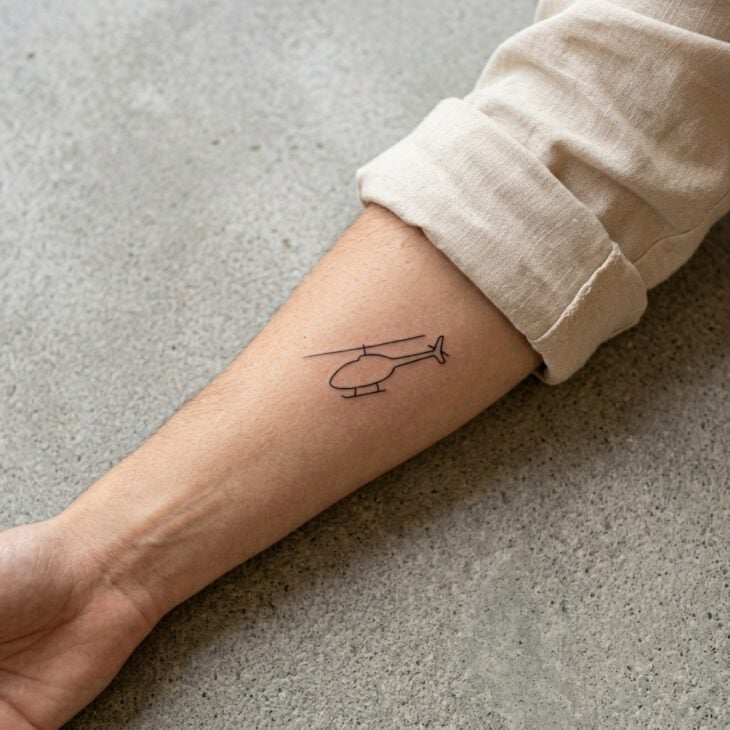
What you see A small helicopter silhouette sits on the forearm, with a clean rotor line, tail boom, and compact cabin shape. The design is simple enough to read quickly and generic enough not to depend on one specific model. It has a little movement in it even while still.
Why it works Helicopters carry a different meaning than airplanes. They suggest rescue, utility, hovering, precision, and getting into places fixed-wing aircraft cannot. This is a strong choice for rotorcraft pilots, medevac crews, mechanics, military aviation fans, or anyone who simply loves the look of rotary-wing flight.
How to get it Keep the rotor as a clean line or slight blur rather than drawing every blade. Forearm, calf, ankle, and shoulder placements work well. If you want a larger design, place the helicopter over mountains, ocean, or a landing pad, but keep the aircraft generic. Tiny skids and tail rotors can blur, so give them enough space.
21. Star Chart Flight

What you see Small constellation dots spread across the upper back, connected by fine black lines. A tiny airplane silhouette crosses through the star field, as if navigating by the night sky. The piece is delicate, open, and quietly celestial.
Why it works Navigation by stars is one of the oldest ways humans found direction, and aviation added machines to that ancient instinct. This tattoo works for night-flight lovers, long-haul travelers, and anyone drawn to the romance of crossing darkness toward a destination.
How to get it Use a real constellation only if it has meaning to you, otherwise keep it abstract. Upper back, shoulder, forearm, and ribs are good placements for scattered dots and lines. Avoid making the dots too tiny, because very small stars can fade. A pale grey wash behind the airplane can add depth without making the tattoo heavy.
22. Air Traffic Control Phrase
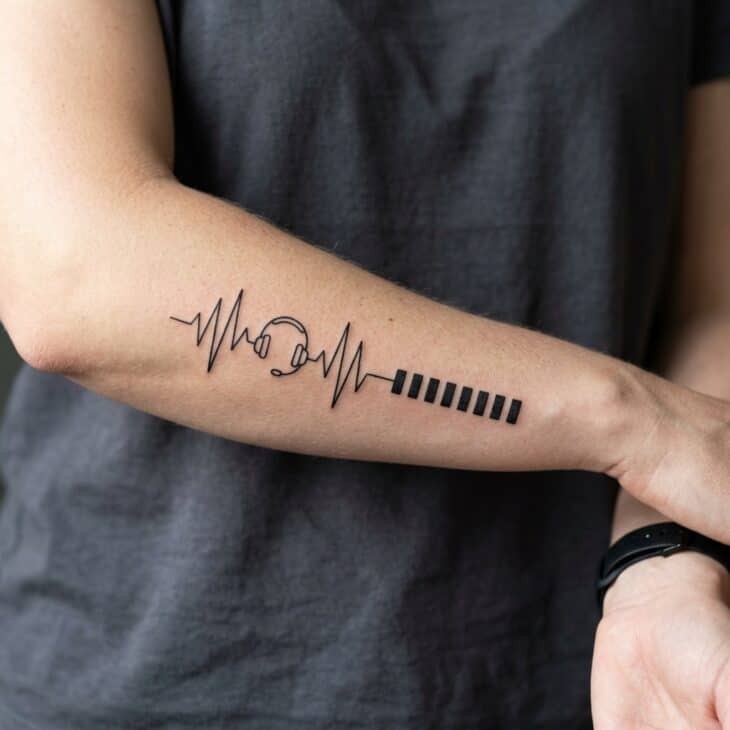
What you see A short block of radio-style lettering sits beside thin waveform lines and a tiny headset icon. The tattoo is compact and operational, like a phrase remembered from a headset. It has the clipped rhythm of aviation communication without turning into a paragraph.
Why it works ATC phrases carry emotional weight for people who fly. “Cleared for takeoff,” “line up and wait,” or “welcome home” can mean more than the words themselves. They recall training flights, checkrides, deployments, arrivals, or the first time a voice on the radio made the dream feel real.
How to get it Choose a phrase that is short enough to stay readable at tattoo size. Use plain block lettering instead of ornate script, because radio phrases should feel crisp. Inner forearm, bicep, ribs, and calf are good placements. If the phrase is personal but long, pair one or two words with a headset, frequency line, or tiny tower icon instead.
23. Pilot Logbook Stamp
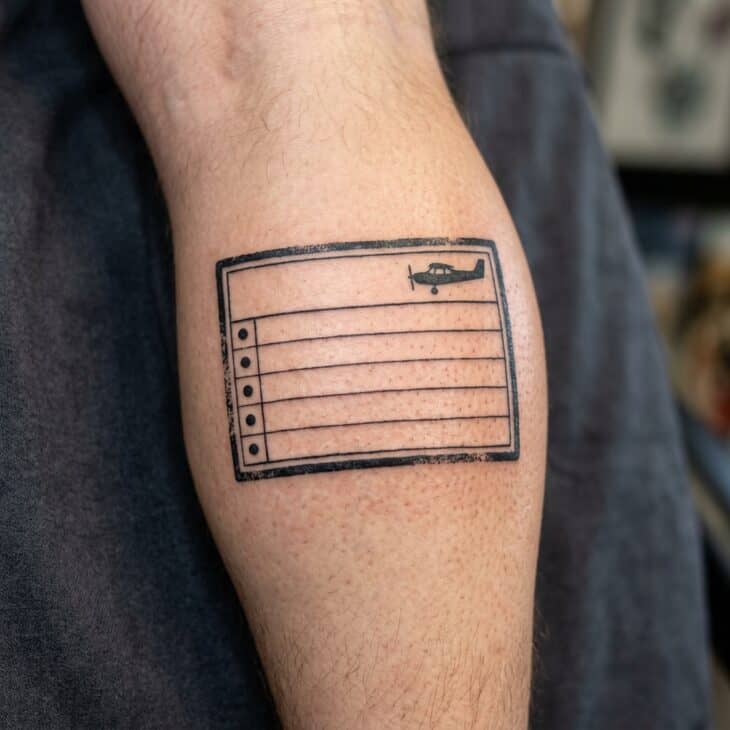
What you see A rectangular stamp-like tattoo sits on the calf, with abstract logbook rows, a tiny aircraft icon, and a slightly worn edge. It looks like something pressed into paper after a meaningful flight. The texture gives it warmth without making it messy.
Why it works Logbooks are where aviation turns experience into record. Every line stands for time, skill, weather, routes, mistakes, and progress. A logbook stamp tattoo is perfect for pilots who care less about flashy aircraft imagery and more about the quiet accumulation of hours.
How to get it Use the stamp shape and maybe one meaningful number, but avoid a full fake logbook entry. Fine rows can blur if the tattoo is too small. Calf, thigh, upper arm, and shoulder blade placements give the rectangle enough space. Ask for a lightly distressed border if you want it to feel like ink on paper.
24. Airshow Smoke Trail
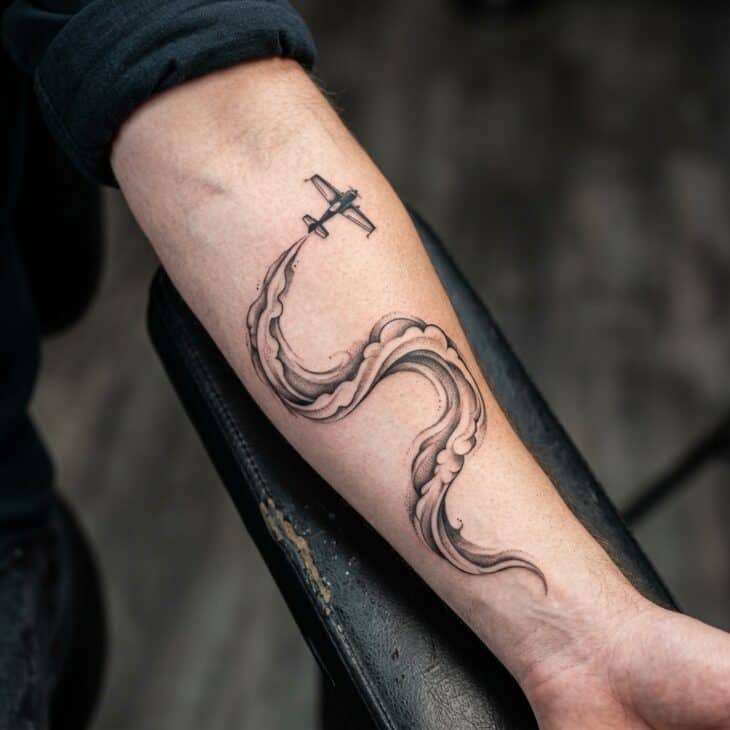
What you see A tiny aerobatic plane pulls a sweeping ribbon of smoke along the outer forearm. The smoke curves in an S-shape, shaded softly so it feels airborne rather than solid. The aircraft is small, but the movement of the trail makes the whole tattoo feel alive.
Why it works Airshow smoke is pure visual drama. It captures control, risk, skill, and performance in one image. For aviation fans who grew up watching aerobatics, this design can carry the same excitement as standing near the crowd line with your eyes on the sky.
How to get it Let the smoke trail be the composition and keep the airplane simple. Forearm, calf, ribs, and upper arm placements are best because they give the curve room to move. Avoid copying a real aerobatic team’s livery or formation pattern. A good artist can use stipple shading to make the smoke soft without losing the line of motion.
25. Airport Code Minimalist
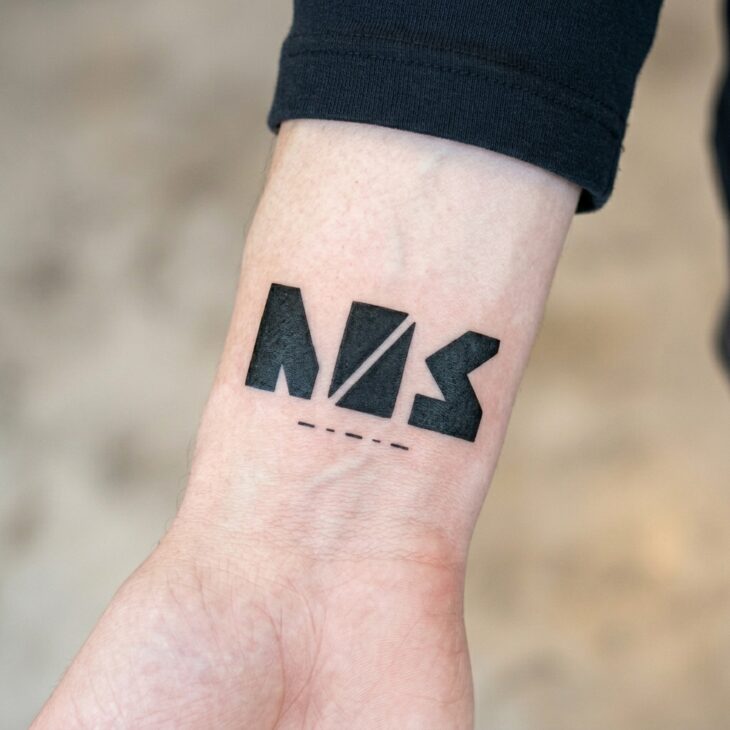
What you see Three bold letters sit above a tiny runway line on the wrist. The layout is clean, balanced, and instantly suggestive of airport codes. It feels modern and graphic, like a small piece of travel identity.
Why it works Airport codes are compact emotional shorthand. Three letters can mean home, escape, work, heartbreak, family, or the place you always return to. They are especially strong for people whose lives are split between cities.
How to get it Pick a code that will still matter years from now. Use a clear sans-serif style, and do not make the letters too small. Wrist, ankle, forearm, and behind-the-arm placements work well. If you want a more subtle version, use the runway line alone and hide the code inside the design as tiny supporting text.
26. Parachute Canopy
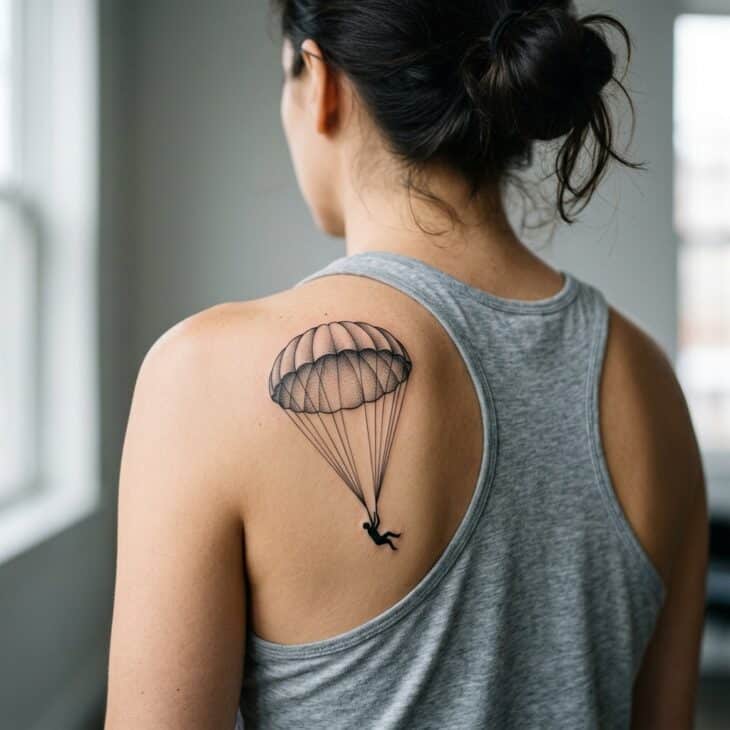
What you see An open parachute canopy spreads across the shoulder blade, with clean suspension lines descending to a tiny abstract figure. The shading is soft and airy. The design feels weightless, quiet, and suspended in the moment after opening.
Why it works A parachute tattoo is about trust and release. It can represent skydiving, military service, survival, or the moment you stop fighting gravity and work with it. It is also a broader aviation symbol that does not require an airplane to tell the story.
How to get it Give the canopy enough width so the suspension lines do not collapse visually. Shoulder blade, upper back, thigh, and calf placements work well. Keep the figure abstract unless it represents a specific person. If the tattoo is about service, avoid official insignia unless you have the right to wear that symbol permanently.
27. Mechanic’s Safety Wire
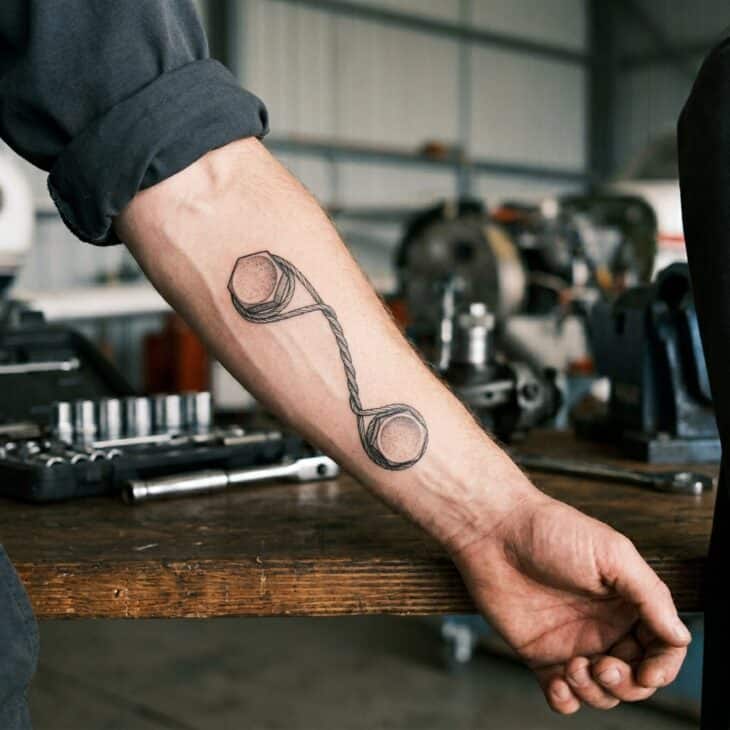
What you see Two small bolt heads are connected by a twist of safety wire, drawn with precise black and grey linework. The tattoo is understated and industrial, more shop-floor than sky-poster. It looks like a detail only mechanics and technically minded pilots will fully appreciate.
Why it works Aviation is not only romance and views from the window. It is maintenance, inspection, discipline, and tiny details done correctly every time. Safety wire is a perfect tattoo symbol for mechanics because it represents the craft of keeping aircraft safe through work most passengers never see.
How to get it Keep the design slightly larger than a real bolt detail so the wire twist remains visible. Forearm, calf, upper arm, and wrist-adjacent placements all work. Ask for clean technical linework, not overly realistic chrome. If you want to expand it later, this motif can connect to tools, rivets, inspection tags, or a panel-line sleeve.
28. Memorial Flight Path
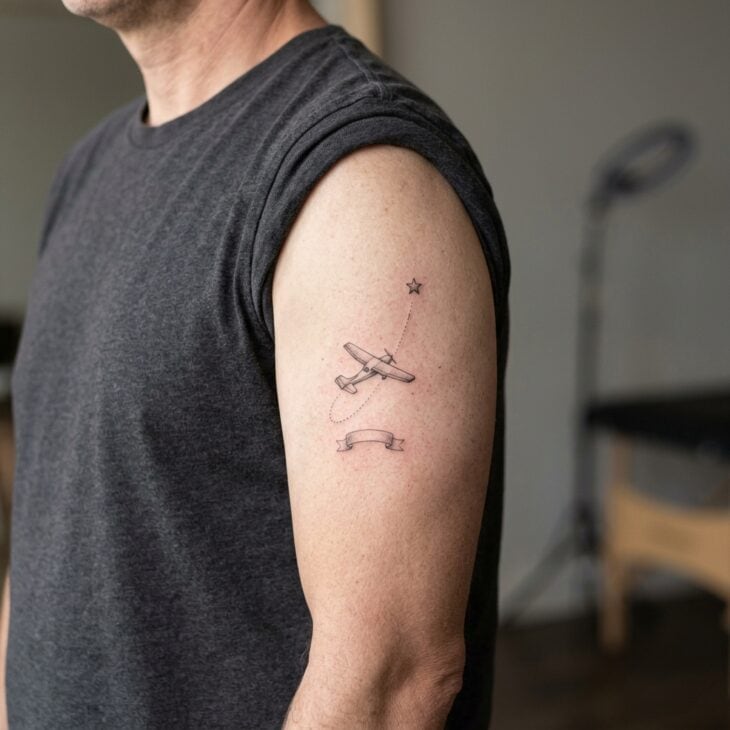
What you see A small airplane silhouette climbs along a curved path toward a single star. Beneath the path is a tiny blank ribbon shape that could hold initials or a date. The design is quiet, spare, and reverent without becoming visually heavy.
Why it works Aviation memorial tattoos can be deeply meaningful, especially for families connected to pilots, crew, service members, or loved ones who shared a passion for flight. The ascending path suggests departure and continuation rather than tragedy alone. It leaves room for grief and pride at the same time.
How to get it Take your time with memorial designs. Decide whether you want initials, a date, a route, or no text at all. Upper arm, chest, shoulder blade, and ribs are common placements for private memorial pieces. Avoid overloading the design with every symbol connected to the person; one aircraft, one star, and one date may say more.
29. Blueprint Aircraft
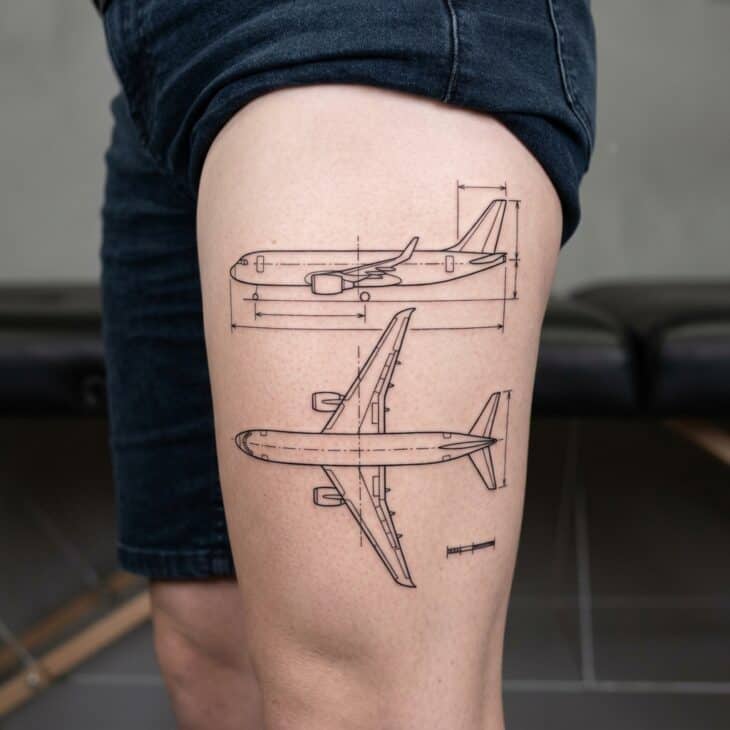
What you see A generic aircraft appears in side view and top view, drawn like a clean technical blueprint. Fine measurement ticks and construction lines surround it, but the details stay abstract rather than readable. The tattoo feels engineered, precise, and intentionally nerdy.
Why it works Blueprint tattoos honor the design side of aviation. They are ideal for aerospace engineers, model builders, designers, and people who love the structure of aircraft as much as the romance of flight. They also connect naturally to the long history of aviation firsts, where drawings became machines and machines became milestones.
How to get it Go larger than you think. Blueprint linework needs room, especially if you want both top and side views. Thigh, upper arm, back, and calf placements are best. Keep the aircraft generic unless your artist is comfortable researching and simplifying a specific type. Too many measurement marks will blur, so use them as texture rather than information.
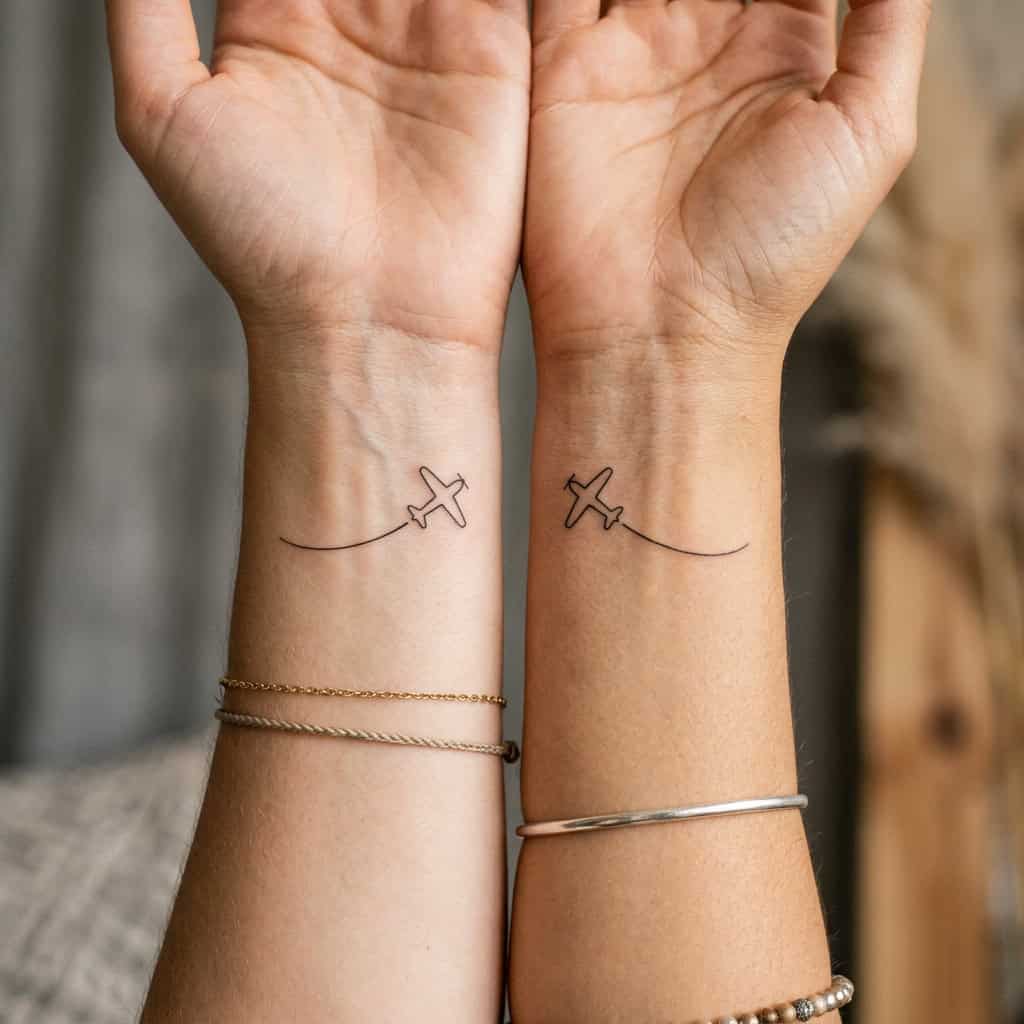
30. Matching Travel Planes
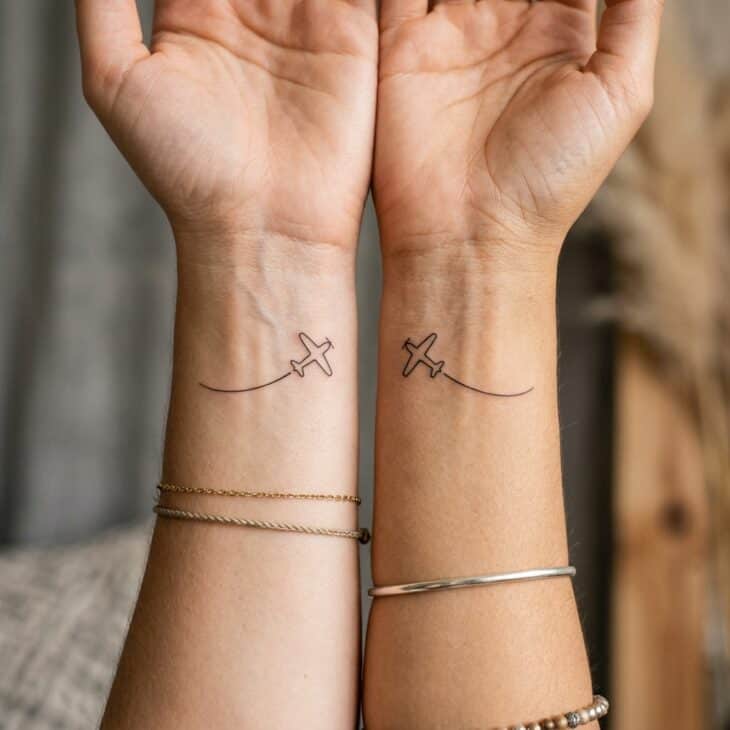
What you see Two wrists sit side by side, each with a tiny fine-line airplane and a curved trail. The trails mirror each other without being identical. Together they make a small shared design, but each tattoo still works on its own.
Why it works Matching aviation tattoos are good for siblings, partners, best friends, crew members, or travel companions. The airplane represents shared movement, but the separate trails let each person keep their own direction. It is a softer alternative to names or full matching quotes.
How to get it Agree on the symbol but let each person choose placement and curve direction. Wrists, ankles, inner arms, and collarbones are common matching placements. Keep the design simple so both tattoos age similarly even on different skin. If one person needs a hidden tattoo for work, use the same airplane on a rib or upper arm instead.
Get the Newsletter
The latest aviation news and stories sent to your inbox.
About the Author

Hanna writes AeroCorner's aviation-lifestyle and decor guides, turning a love of flight into ideas for your home, celebrations, and gift lists.