

Table of Contents
A model airplane hidden in a box is a shame. Half the joy of the hobby is the detail, and detail only pays off when it is out where you can see it every day.
The right display does two jobs at once. It protects the model from dust and knocks, and it turns a shelf, a wall, or a whole corner into something that stops visitors mid-sentence.
These 25 ideas run from a single hero model on a pedestal to a full squadron in formation across the ceiling. Mix the ones that fit your space, your scale, and your budget, and build the display your collection deserves.
01. Backlit Glass Display Cabinet
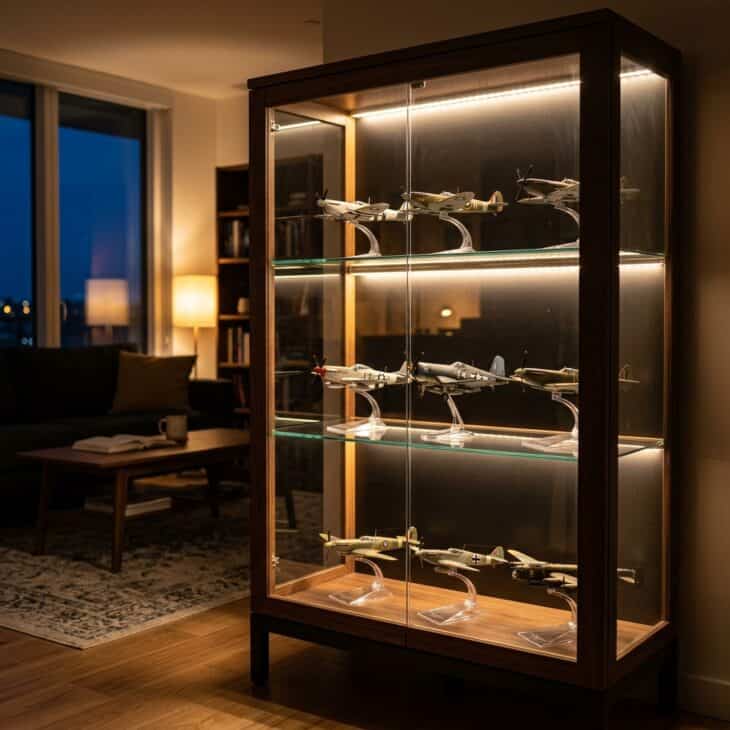
What you see A slim glass cabinet with three lit shelves, each holding a row of silver and green models. LED strips behind the glass throw a soft glow that makes every panel line and canopy catch the light.
Why it works Glass keeps dust off without hiding anything, and backlighting is the single biggest upgrade you can make to any display. Light from behind separates each model from its background so the collection reads as a gallery, not a cluttered shelf.
How to get it Start with a glass-front cabinet with adjustable shelves. Add self-adhesive warm-white LED strips along the back edge of each shelf and hide the wire down the rear corner. Use a cabinet with a lock if you have young kids, and leave a few inches of headroom above tall tails. Space models evenly so no two crowd each other.
02. Floating Acrylic Wall Mounts
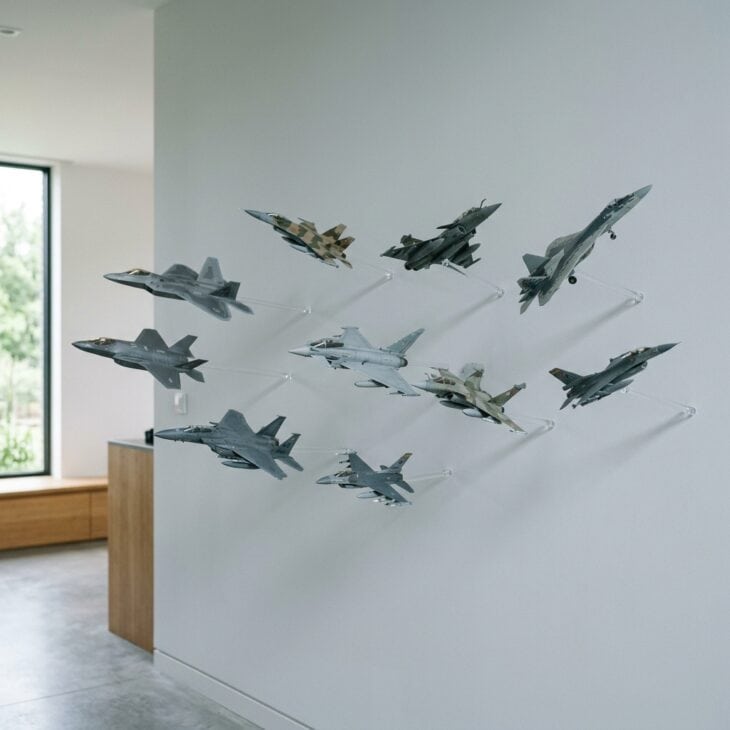
What you see Three or four models pushed out from the wall on clear rods, each banked at a slight angle. Because the mount nearly disappears, the planes look frozen in mid-flight.
Why it works Displaying a plane in a flying pose beats a flat static shelf every time, and it frees up your surfaces. It reads as intentional aviation wall art rather than a shelf that ran out of room.
How to get it Buy clear acrylic display rods with a wall flange and a peg that fits the model’s belly mounting hole. Anchor each flange into a stud or use a proper drywall anchor, since a heavy diecast model needs real support. Vary the bank angles so the group feels like a formation, not a row. Keep them at or just above eye level so you look up at them slightly.
03. WWII Warbird Squadron Shelf
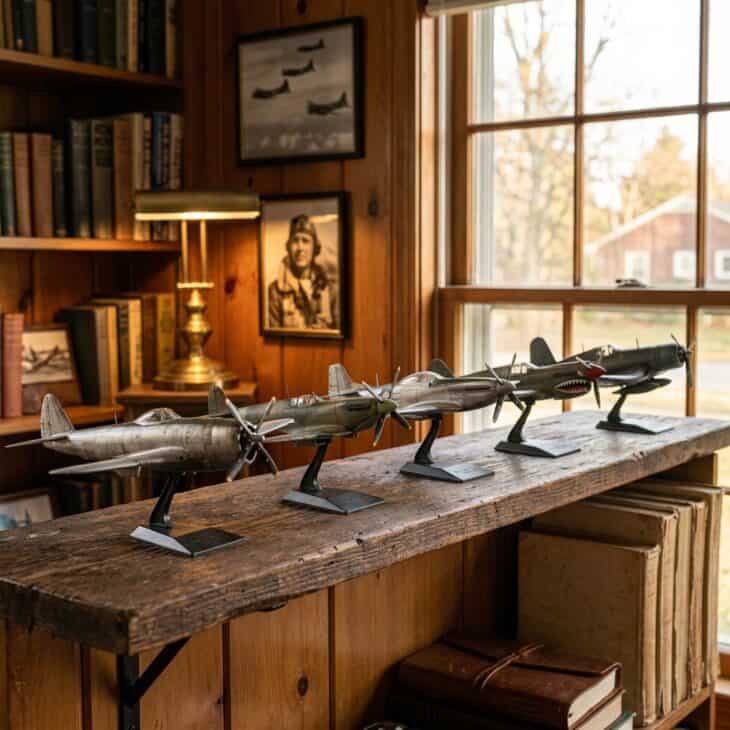
What you see Five propeller fighters in olive and bare-metal finishes, all nose-forward on one long shelf. Lined up and evenly spaced, they read as a squadron waiting on the flight line.
Why it works Repetition is powerful. A single Mustang looks like a model, but five warbirds facing the same way looks like a collection with a theme. This is the natural home for a fleet of famous WWII aircraft built to the same scale.
How to get it Pick one scale, usually 1:72 or 1:48, so the models look right next to each other. Mount a deep floating shelf so tails do not overhang. Keep the spacing identical between each aircraft, which is the trick that makes a row look deliberate. If you are still building the set, leave gaps for the models you plan to add.
04. Ceiling-Hung Flying Formation
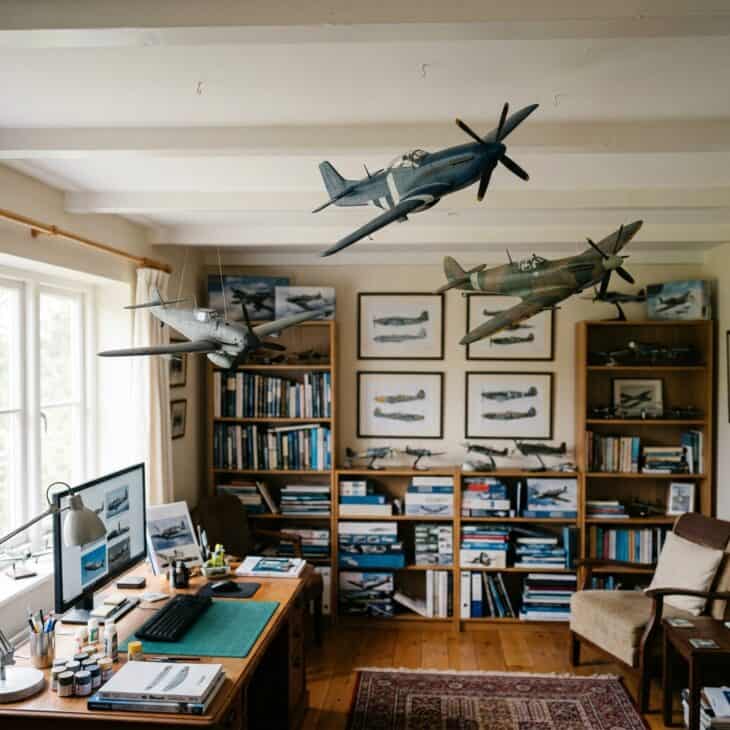
What you see A trio of models hanging from the ceiling on near-invisible line, staggered into a diagonal formation. From below they look like they are crossing the room together.
Why it works Ceiling space is almost always wasted, and hanging models there frees your walls and shelves entirely. It also gives kids something to look up at, which makes it a favorite trick in an aviation bedroom.
How to get it Use clear braided fishing line rated well above the model’s weight, and hang each plane from two points so it sits level and does not spin. Screw small hooks into ceiling joists, not just drywall. Set the models at slightly different heights to suggest depth. Keep lightweight plastic kits up here and save heavy diecast for a shelf.
05. Riker Mount Shadow Boxes
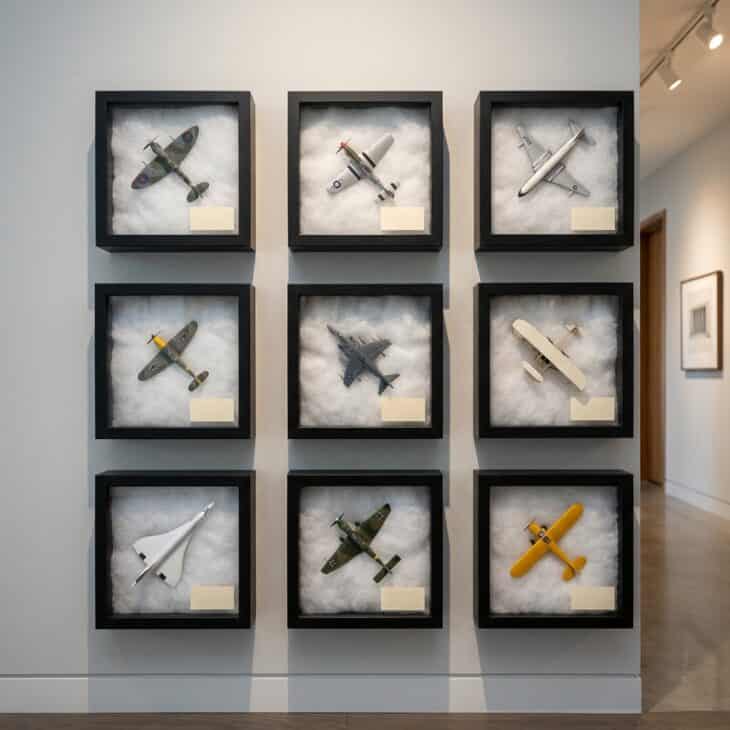
What you see A grid of shallow glass-topped boxes, each cradling one small model on a bed of white cotton. A tiny label sits beside each aircraft, giving the whole wall a museum-case feel.
Why it works Riker mounts are cheap, sealed against dust, and hang flat like picture frames. They are perfect for tiny 1:200 and 1:400 models that would vanish on an open shelf.
How to get it Buy riker display cases in a size that suits your smallest models. Lay the aircraft on the cotton and add a printed label with the type and scale. Hang the boxes in a tight, even grid using a level, since the alignment is what sells the look. Group them by era or manufacturer for an extra layer of order.
06. Airliner Lineup on a Picture Ledge
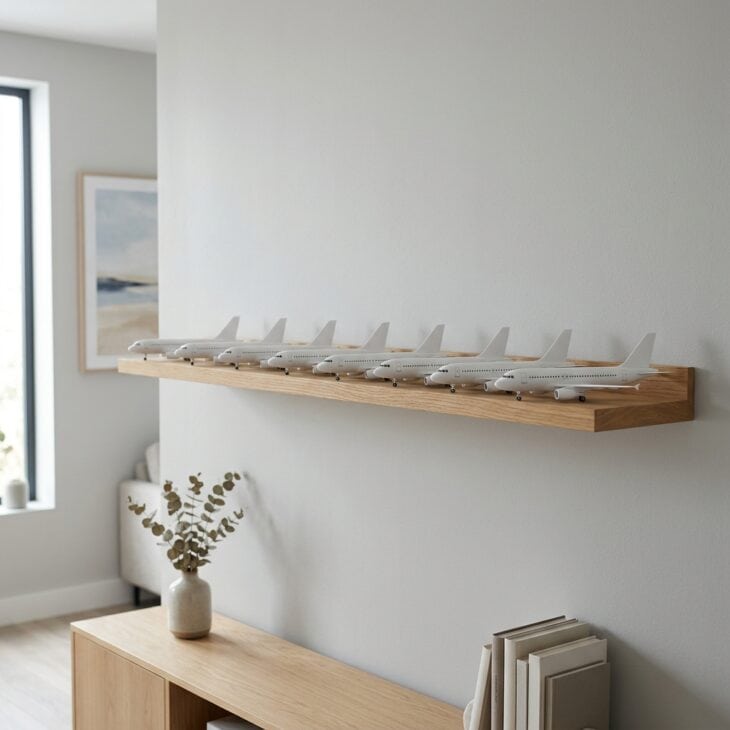
What you see A slim ledge holding a line of small white airliners, all pointed the same way. The narrow shelf almost disappears, so the row of jets seems to float against the wall.
Why it works Collectors of 1:200 and 1:400 airliners often end up with dozens of models, and a picture ledge holds a lot of them in a small footprint. The uniform scale and matching pose make even a big fleet look calm and organized.
How to get it Mount two or three narrow picture ledges stacked a foot apart. Line the models up nose-forward with equal gaps. A small strip of museum putty under each fuselage stops them sliding if the shelf gets bumped. Rotate favorites to the front over time so the display never feels static.
07. Rotating Turntable Spotlight
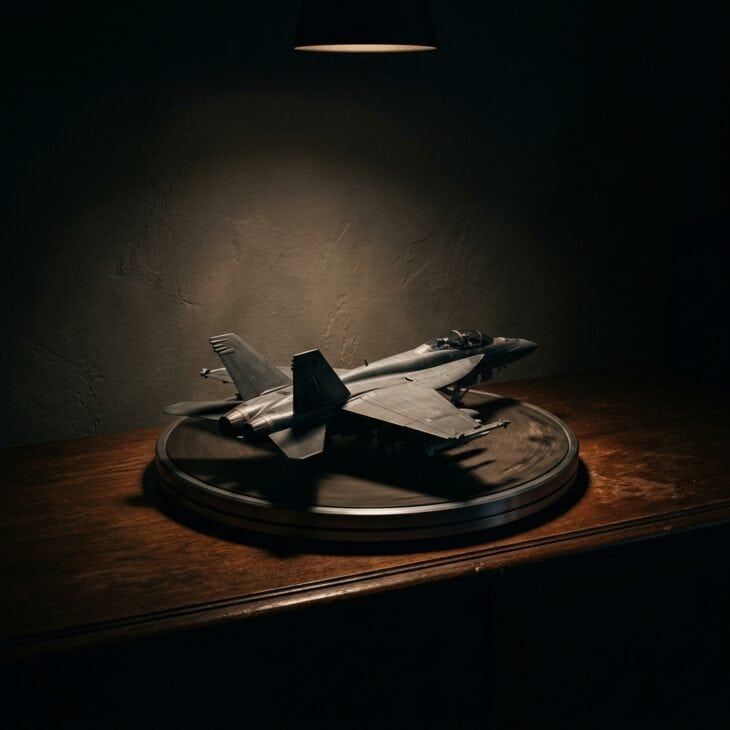
What you see One large model on a slowly turning base, caught in a tight pool of overhead light. Everything around it falls into shadow, so all attention lands on the aircraft.
Why it works A rotating spotlight display treats a single model as the star it is, letting you see every angle without touching it. It is the ideal way to show off your best or most detailed build.
How to get it Use a battery or USB motorized turntable rated for the model’s weight. Place it on a dark surface against a dark wall so nothing competes with the aircraft. Add a single small spotlight or a clip-on picture light angled down onto it. This works best as a solo statement piece, not one of many.
08. Desktop Pedestal Stand

What you see A single business jet lifted off the desk on a chrome pedestal, nose angled slightly up. It sits right beside the laptop, at eye level while you work.
Why it works A desk is the one surface you look at all day, which makes it prime real estate for a model. A single jet on a metal pedestal reads as polished and intentional, a natural fit for aviation home office decor.
How to get it Choose a metal or acrylic pedestal that matches your desk hardware. Angle the model slightly nose-up so it looks like it is climbing, not parked. Keep it on the side away from your mouse hand so it never gets knocked. One clean model beats a crowded desk of five.
Scale matters
Before you buy display furniture, decide on one or two core scales and stick to them. Models mixed across wildly different scales look chaotic on a shelf, while a matched scale makes even a modest collection look curated.
09. Detolf-Style Collector Cabinet
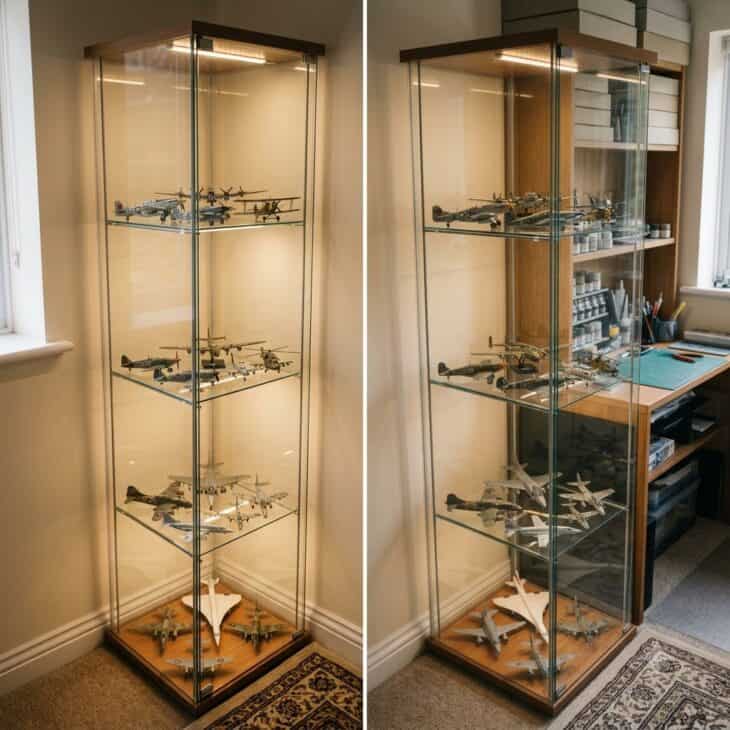
What you see A tall, narrow glass tower packed with models across four shelves, glowing from a light in the top. Because every side is glass, the fleet is visible from across the room and up close.
Why it works The all-glass tower is a collector classic because it holds a big collection in a tiny floor footprint. It fits neatly into a corner and seals your models away from dust behind a door.
How to get it Look for a glass tower cabinet with a single glass door and adjustable shelves. Add a puck light or LED strip at the top, since these cabinets are usually sold without lighting. Put your tallest models on the bottom and smaller ones up high for balance. Anchor a tall glass cabinet to the wall so it cannot tip.
10. Grass Airfield Diorama Base
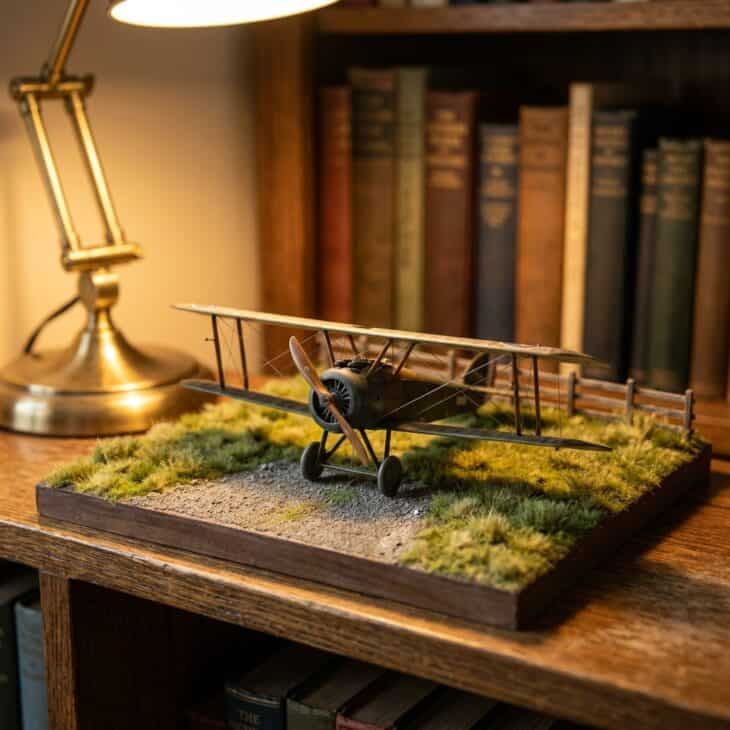
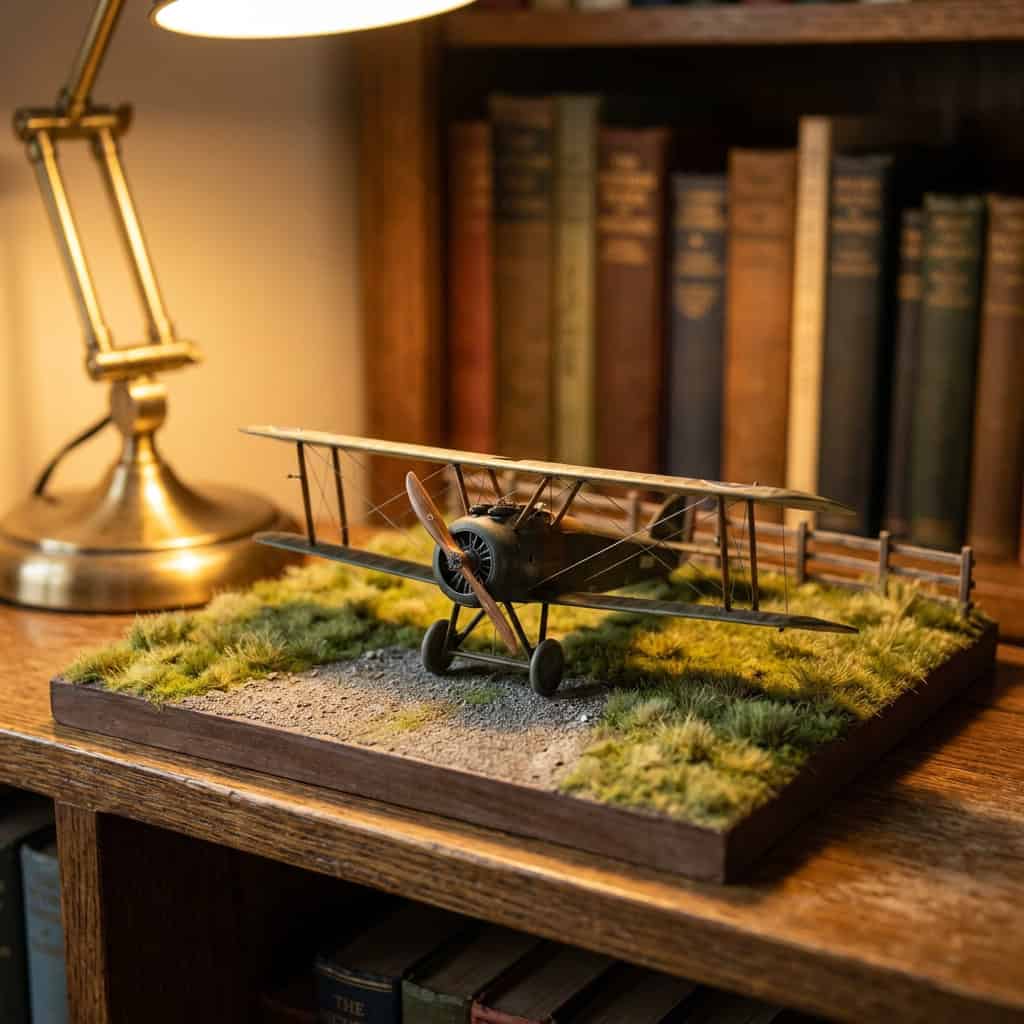
What you see A vintage biplane sitting on a small textured base built to look like a grass airfield, complete with a gravel apron and a low fence. The scene tells a tiny story instead of just presenting a model.
Why it works A diorama base turns a static model into a moment, which is why they draw the eye at any show. A grass field suits early aircraft and pairs beautifully with vintage aviation decor elsewhere in the room.
How to get it Start with a small wooden plaque as the base and cover it with a hobby grass mat or static grass. Add fine gravel for an apron and a scratch-built fence or two. Keep the scene small so it frames the aircraft rather than overwhelming it. Seal the base edges with a strip of trim for a finished look.
11. Under-Stair Nook Gallery
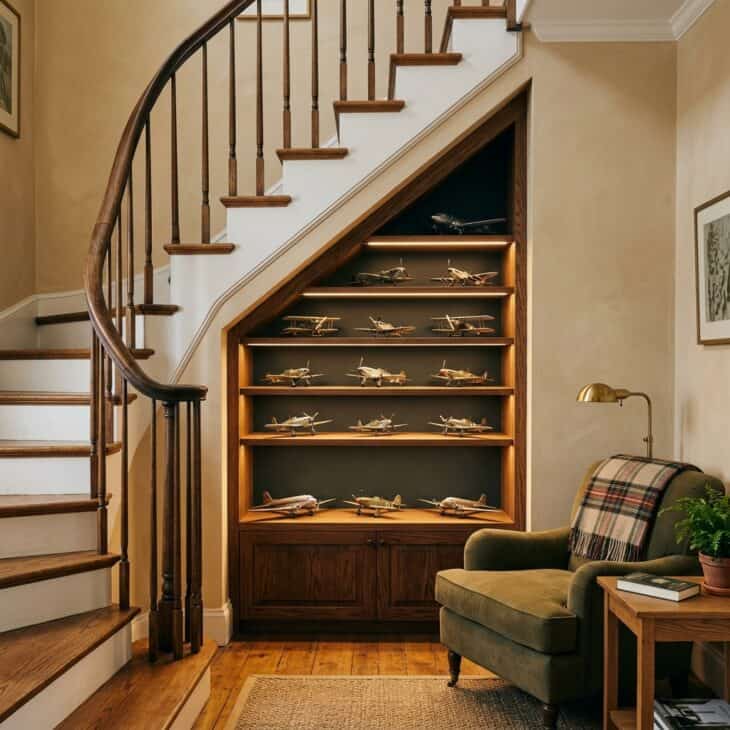
What you see A set of small lit shelves built into the awkward space under a staircase, each holding a model or two. What was dead space becomes a warm little gallery.
Why it works Every home has forgotten corners, and a model collection is the perfect thing to fill them. An under-stair nook keeps the display out of the traffic path while still putting it on show.
How to get it Fit floating shelves or a shallow cabinet into the sloped space. Run low-voltage LED strips under each shelf lip for warmth. Angle a couple of models outward so they greet you as you pass. Paint the back wall a dark shade so the lit models pop against it.
12. Dynamic Nose-Down Dive Angle
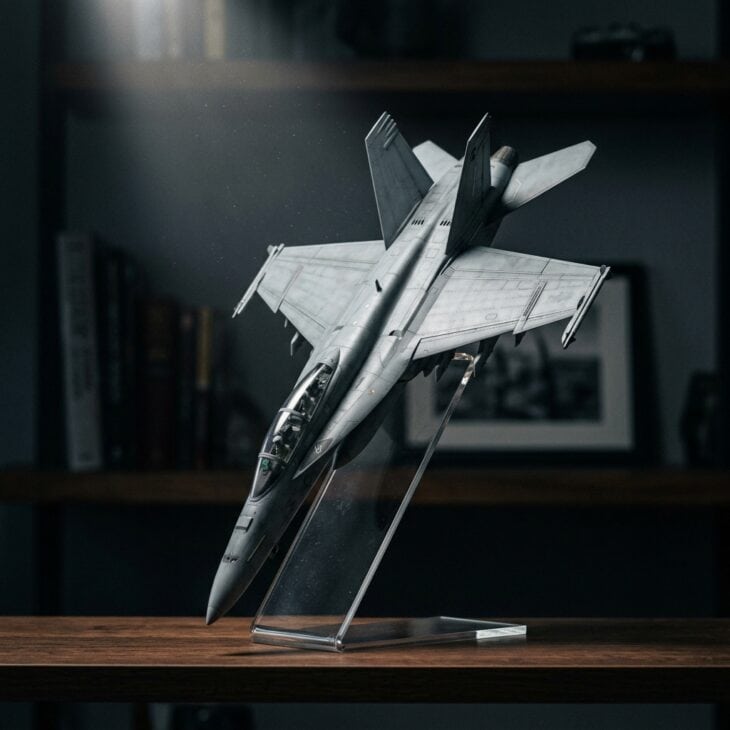
What you see A fighter jet locked into a steep nose-down dive on a clear angled stand. Even sitting still on a shelf, it looks like it is pulling hard toward the deck.
Why it works Angle is free drama. A model posed climbing, banking, or diving carries far more energy than the same aircraft sitting flat, and it makes a fast jet look as quick as the real thing.
How to get it Use an adjustable flight stand that grips the belly mount and locks at an angle. Pose one or two models in dynamic attitudes rather than the whole shelf, so the drama stays special. Point the nose into open space, not into a wall. Make sure the stand base is wide enough that the tilted model cannot topple.
13. Corner Curio Tower
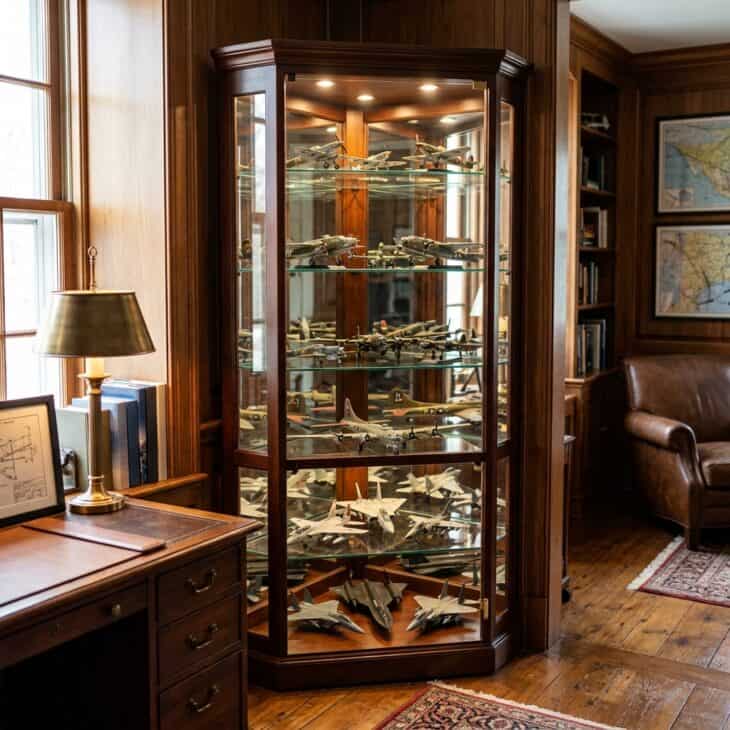
What you see A triangular glass cabinet slotted into a room corner, its shelves filled with models arranged from large at the bottom to small at the top. It fills a spot most furniture cannot reach.
Why it works Corner cabinets use space that otherwise sits empty, and their angled front shows models from a flattering three-quarter view. For a growing collection, the vertical shelving adds capacity without eating floor space.
How to get it Find a corner curio with glass sides and adjustable shelves. Sort the models by size for a settled, balanced look. Add a small light at the top since corners tend to be dim. Leave the odd empty patch so the display has room to breathe and grow.
14. Golden Age Era Shelf
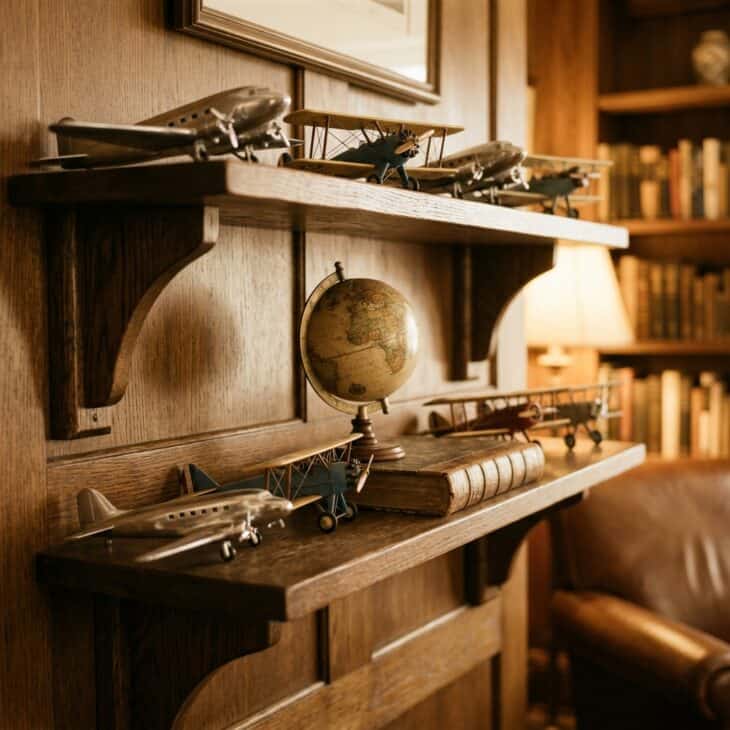
What you see A shelf of silver streamlined airliners and classic biplanes, staged beside a small globe and a worn leather book. Warm light gives the whole scene a sepia, between-the-wars feeling.
Why it works Grouping by era gives a display a story to tell. A shelf devoted to golden age airplanes feels like a curated exhibit rather than a random assortment, and the period props reinforce the theme.
How to get it Choose models from a single era and finish, such as polished aluminum airliners of the 1930s. Add one or two period objects, a globe, a compass, or an old map, but keep them subtle. Use warm-toned bulbs to match the mood. Resist crowding the shelf, since a few pieces with space read as more intentional.
15. Carrier Deck Diorama
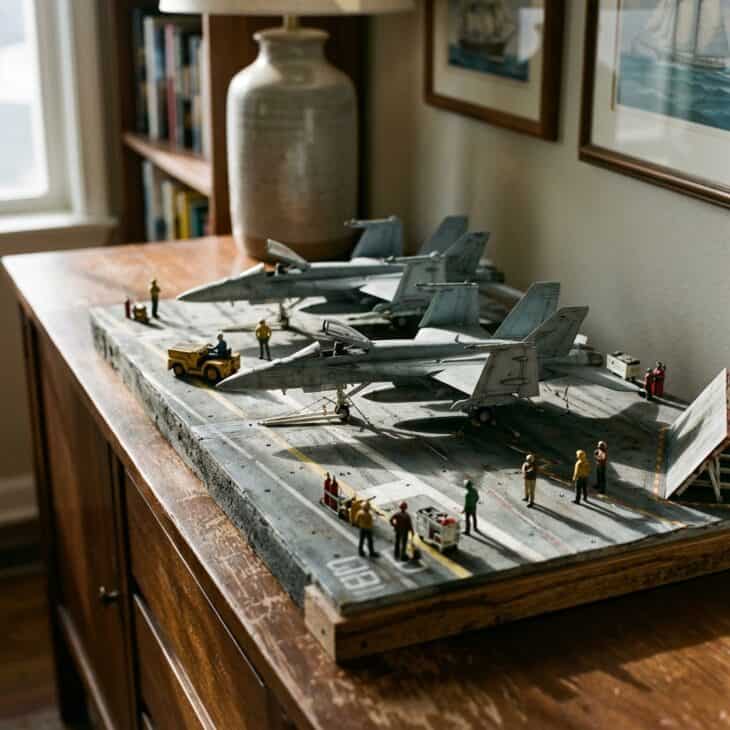
What you see A slice of carrier flight deck in gray, with painted deck lines and two naval jets, wings folded, parked as if on the real thing. Small deck carts and gear complete the scene.
Why it works Naval aircraft look their best in their working environment, and a deck section supplies exactly that context. The folded wings and clutter of deck equipment tell anyone glancing over that these planes go to sea.
How to get it Build the base from a flat board painted deck gray, then mask and paint the deck markings. Add a few 3D-printed or kit deck accessories for realism. Fold the wings on models that allow it to save space and boost authenticity. Keep the deck section modest so it fits a sideboard or shelf.
16. Clear Cradle Peg Rail
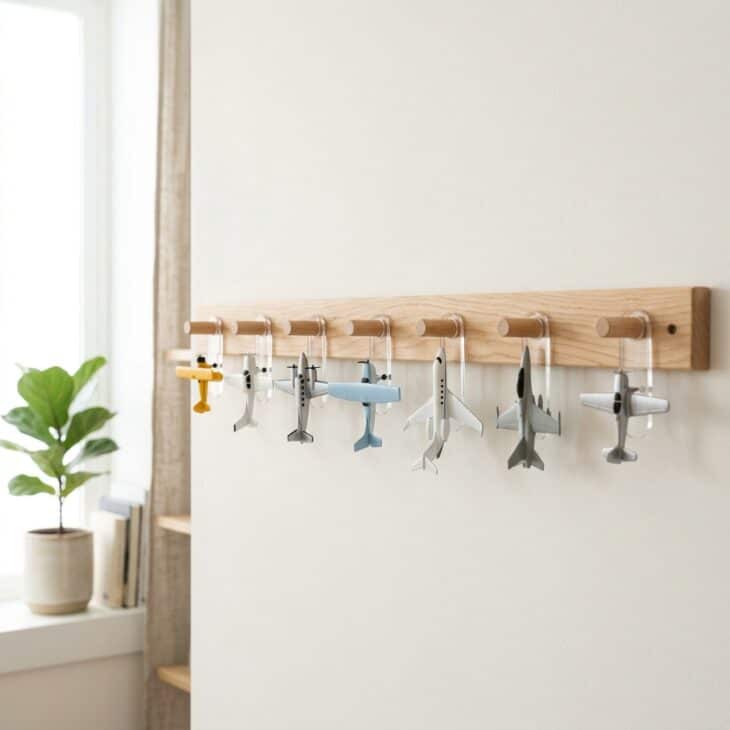
What you see A wooden rail on the wall studded with clear cradles, each holding a small model belly-down. The cradles slide along the rail, so the whole layout can change on a whim.
Why it works A peg rail turns the display into something you can rearrange without tools. That flexibility is ideal while a collection is still growing and its final shape is unknown.
How to get it Mount a sturdy rail or a length of shelf-standard hardware into studs. Fit clear acrylic cradle mounts sized to your fuselages. Rest each model in its cradle rather than gluing it, so swaps are easy. Keep heavier diecast toward the ends where the rail is best supported.
17. Illuminated Floating LED Shelves
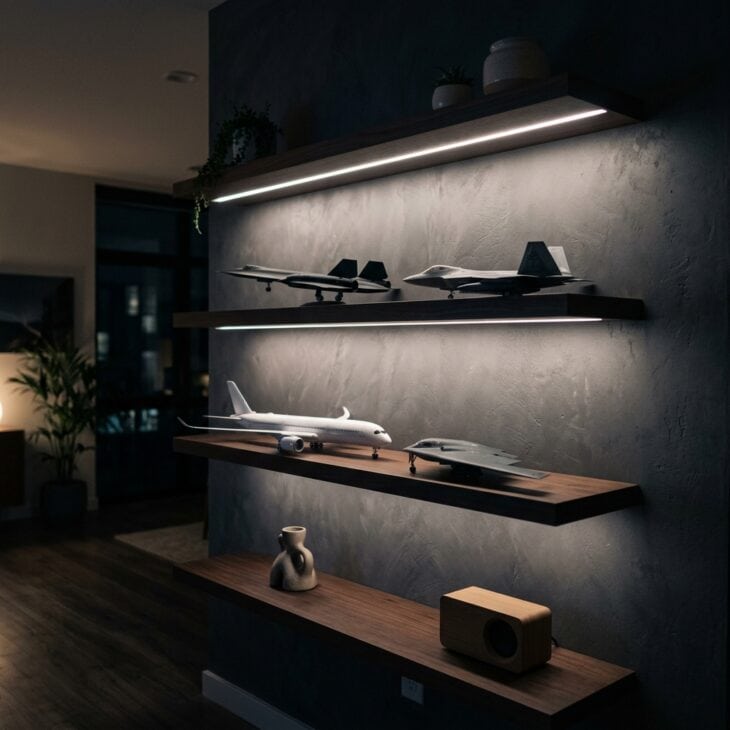
What you see A stack of slim floating shelves, each with a hidden LED strip underneath washing light down onto the models on the shelf below. In a dim room the aircraft seem to glow on their own.
Why it works Open floating shelves keep the look airy while the concealed lighting adds the drama a plain shelf lacks. Lit from above, every model gets its own soft spotlight without a cabinet.
How to get it Install sturdy floating shelves and stick LED strips to the underside of each, facing down. Hide the wiring inside the shelf bracket or run it down a corner. Choose warm white for warbirds and cool white for modern jets. Dust open shelves more often, since there is no glass to keep them clean.
18. Model and Blueprint Pairing
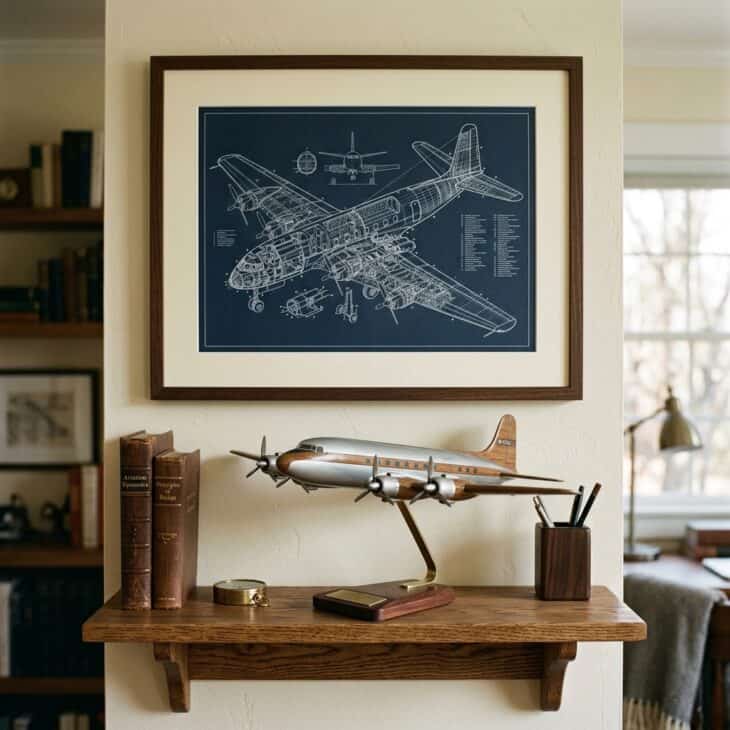
What you see A model on a stand set directly in front of a framed blueprint of a similar aircraft. The three-dimensional plane and the flat cutaway drawing echo each other and read as one composition.
Why it works Pairing a model with matching aviation wall art creates a layered display with real depth. The blueprint fills the wall behind the shelf and turns a single model into a finished vignette.
How to get it Frame a technical drawing or cutaway poster of an aircraft close to the model’s type. Hang it centered above a small shelf, then place the model on the shelf in front. Keep the frame color simple so the model stays the focus. Repeat the pairing along a wall for a coordinated series.
19. Bookshelf Integration

What you see Models standing in the gaps between books and acting as bookends along a shelf. The planes and the aviation books share the same space and feel like they belong together.
Why it works Not every collection needs its own cabinet. Slotting models in among your favorite aviation books keeps the display casual and personal, and it makes a home library feel unmistakably like an enthusiast’s.
How to get it Leave deliberate gaps between book stacks and set a model in each one. Use a couple of sturdier models as bookends at the ends of a row. Vary the height of the book stacks so the planes sit at different levels. Keep the most delicate builds on a higher shelf away from busy hands.
20. Iconic Airliner Centerpiece
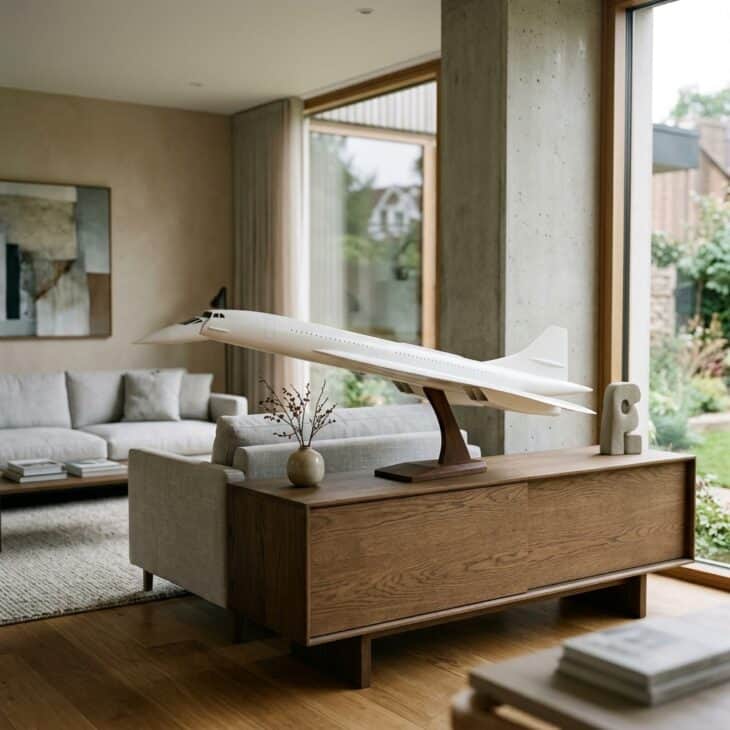
What you see A single large airliner with a slender delta wing and drooping nose, displayed alone on a low sideboard. With no clutter around it, the elegant shape does all the talking.
Why it works Some aircraft are so recognizable that one large model carries a whole room. Giving an icon its own surface, the way you would treat one of the most famous aircraft ever built, signals that it matters.
How to get it Invest in one larger-scale model of an aircraft you truly love. Give it an uncluttered surface at a comfortable viewing height. Add a discreet light nearby to catch the lines. Let empty space around it do the work, since a centerpiece needs room to be a centerpiece.
21. Seasonal Rotation Display
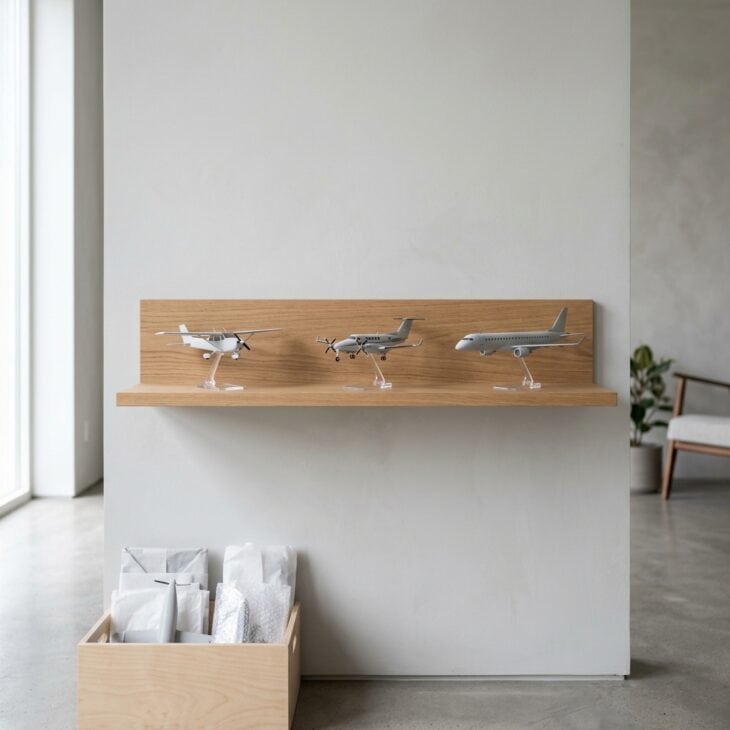
What you see A single clean shelf showing just three models with space to spare, while a box of carefully wrapped spares waits nearby. Only a fraction of the collection is on show at once.
Why it works A big collection crammed onto every surface loses its impact. Rotating a small, curated set keeps the display uncluttered and gives you a fresh look every few months without buying anything new.
How to get it Choose a handful of models to feature and store the rest in a dust-free box with padding. Swap the lineup each season or around a theme you feel like exploring. Keep stored models in their original foam or wrapped in acid-free tissue. Note which ones are out so the rotation stays even over time.
22. Kids’ Eye-Level Low Shelf
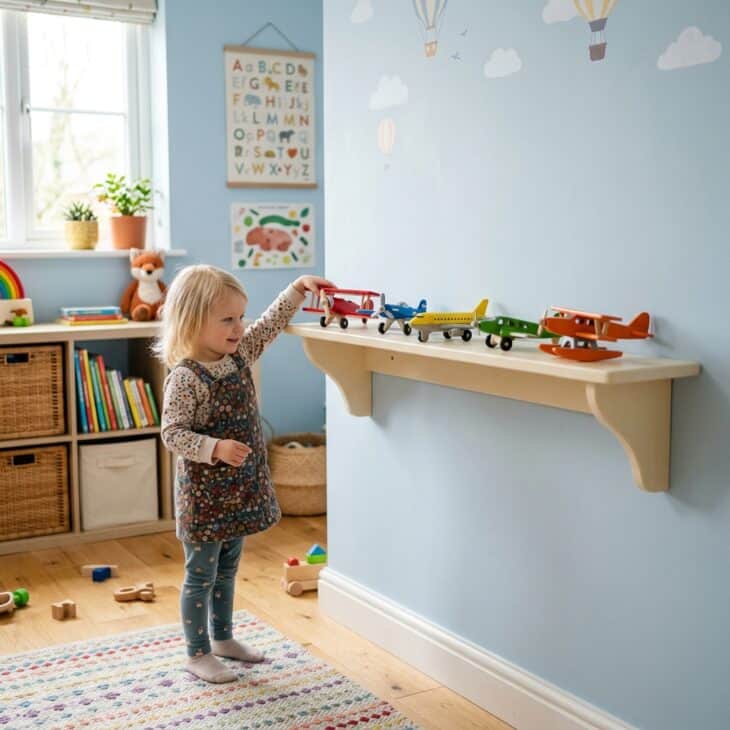
What you see A low shelf at child height holding a few chunky, colorful models within easy reach. Everything sits where a small aviation fan can actually see and enjoy it.
Why it works A display kids can look at head-on sparks far more interest than models locked away up high. It fits naturally into an aviation bedroom and turns a decorative collection into a daily conversation starter.
How to get it Mount a shelf low on the wall, well secured into studs. Stock it with durable diecast or resin models rather than fragile display kits. Keep any truly delicate or valuable pieces on a higher shelf for now. Rotate a couple of planes down within reach so the child feels part of the hobby.
23. Cutaway Model on a Riser

What you see A cutaway model with one side opened to reveal seats, structure, and systems inside, raised on a small acrylic riser under a bright light. The interior detail is the whole point, so it sits front and center.
Why it works A cutaway shows what a normal model hides, and that makes it a natural talking point. Lifting it on a riser and lighting it well invites people to lean in and look inside.
How to get it Set the cutaway on a clear riser so the opened side faces the room. Aim a small, bright light into the exposed interior. Keep the background plain and dark so the detail reads clearly. Give this model its own spot rather than burying it in a crowded shelf.
24. Travel Souvenir Model Map
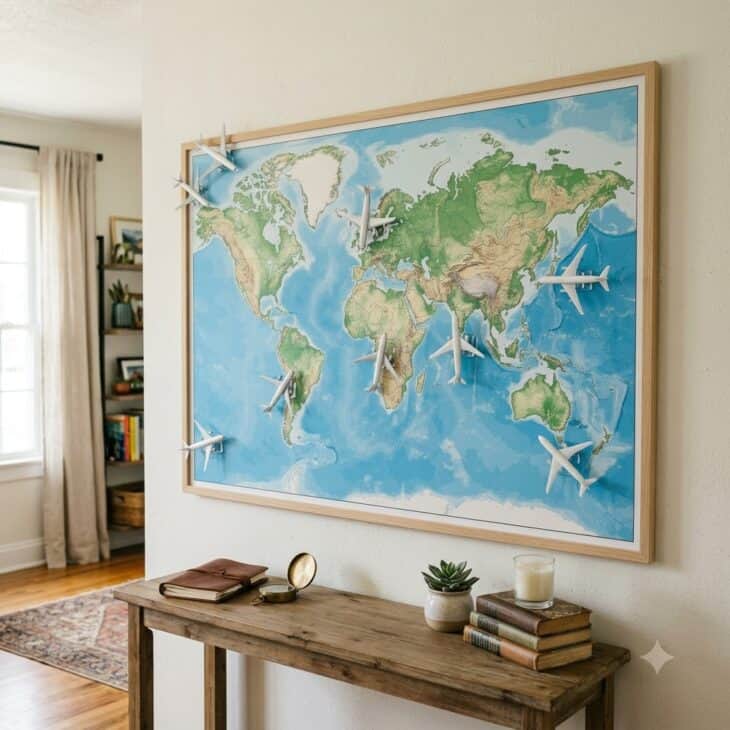
What you see A large framed world map with small airliner models mounted on clear brackets around its edges, each near a different region. The wall reads as a travel diary told in aircraft.
Why it works Many collectors pick up a model on each trip, and a map display gives those souvenirs a shared story. It ties the collection to real journeys, which makes it a favorite in a frequent flyer’s home.
How to get it Frame a simple world map as the centerpiece. Mount small models on clear wall brackets around it, roughly near where each was bought or flown. Keep the models a uniform small scale so they frame the map rather than overwhelm it. Add one as a small ritual after each trip.
25. Museum-Style Label Cards
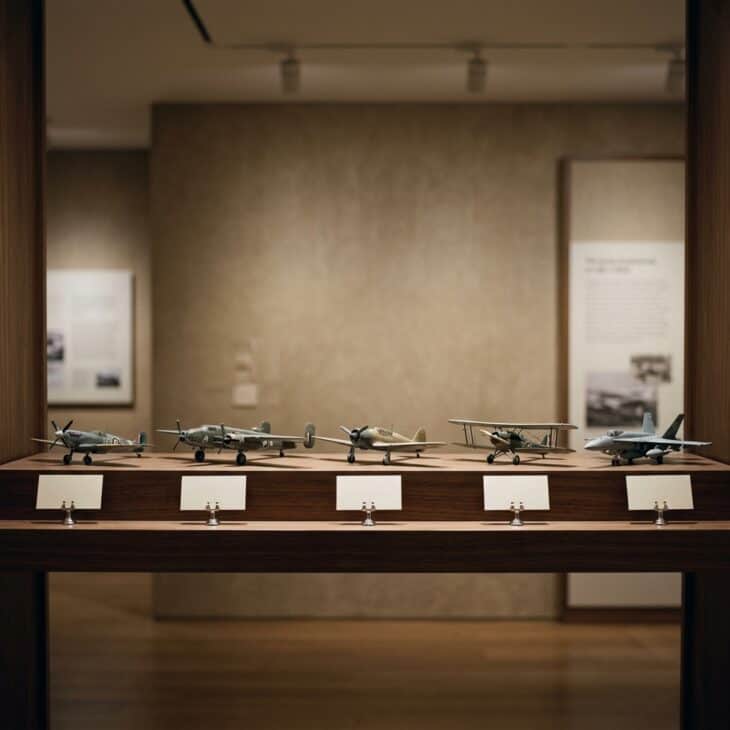
What you see A shelf of models, each with a small printed placard on a little stand in front of it. The clean labels give the row the quiet authority of a museum exhibit.
Why it works A label answers the first question every visitor asks, which is what am I looking at. It also adds a layer of care and polish that lifts a home shelf toward gallery quality, and it rewards the plane spotting instinct to name every aircraft.
How to get it Print small uniform cards with the type, scale, and a line of history for each model. Mount them on tiny acrylic or folded-card stands set just in front of each aircraft. Keep the font and layout identical across every card for consistency. Update the set as your collection grows so no model goes unlabeled.
FAQ
Sources and references used for research and fact-checking.
Get the Newsletter
The latest aviation news and stories sent to your inbox.
About the Author

Hanna writes AeroCorner's aviation-lifestyle and decor guides, turning a love of flight into ideas for your home, celebrations, and gift lists.