

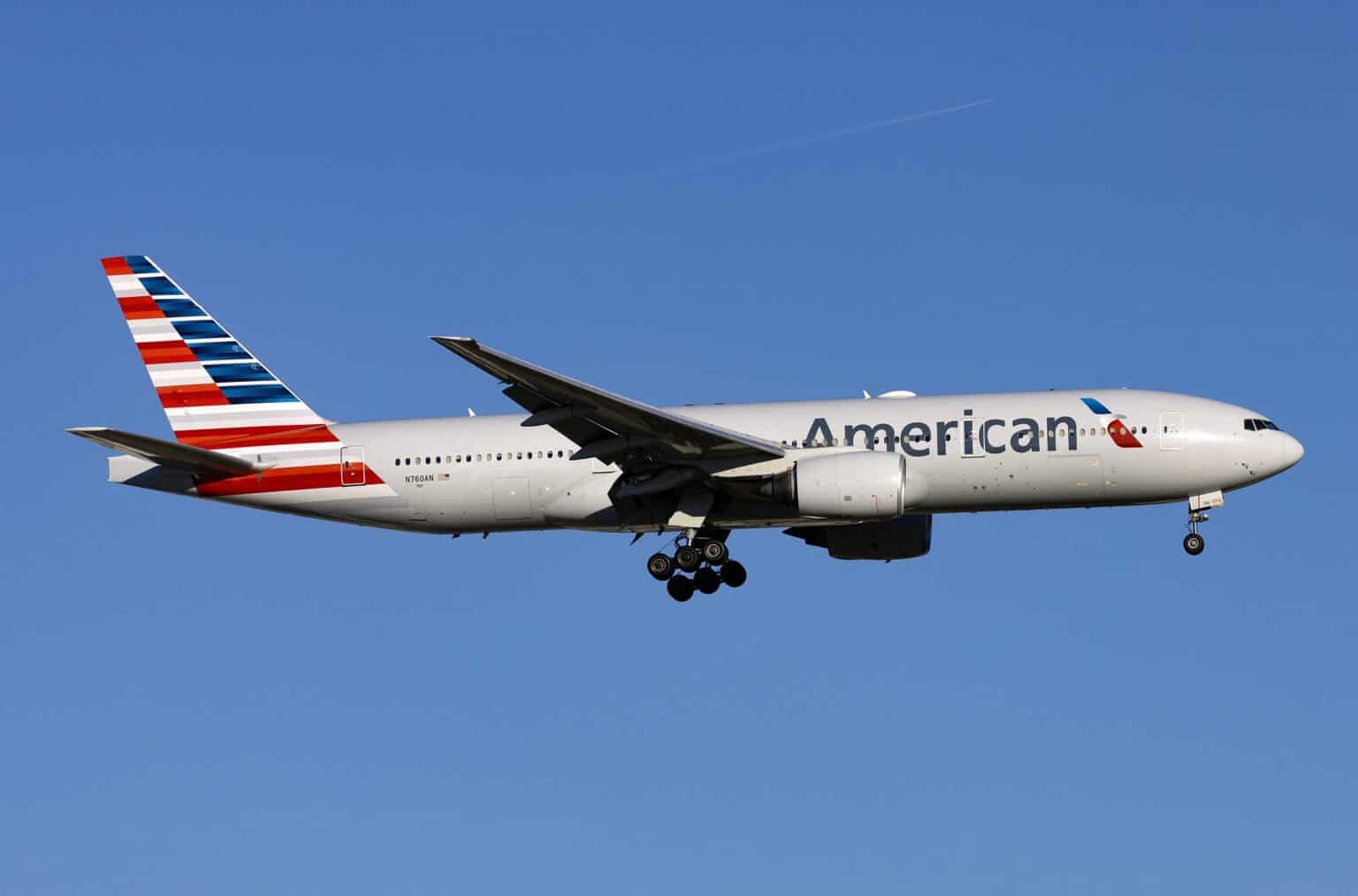
American Airlines flight AA198 from New York JFK landed safely at Milan Malpensa on the morning of October 29, 2026, after its crew reported a hydraulic problem that affected the nose-wheel steering. The Boeing 777-200ER, registered N760AN, had 153 people on board.
The jet was still on the ground in Milan about 12 hours after landing, and its return flight to New York was cancelled.
What happened on AA198
The overnight flight left New York on the evening of October 28. FlightAware’s history for N760AN shows it taking off from JFK at 7:31 p.m. local time and touching down at Malpensa at 7:27 a.m. Milan time, after 6 hours and 55 minutes in the air.
The crew reported the hydraulic problem while descending toward Milan, The Aviation Herald reported. The aircraft continued to a safe landing on runway 35R.
According to the same report, the runway had to be swept after the landing. It did not say what was found on it.
FlightStats logged the flight’s arrival at the gate at 8:13 a.m., 46 minutes after FlightAware’s touchdown time. Neither source says how the jet reached the gate.
No statement from American Airlines on the incident could be found at the time of writing.
The return flight and the passengers
The jet was due to fly straight back as AA199, scheduled to leave Milan Malpensa at 10:25 a.m. on October 29. FlightStats lists that flight as cancelled.
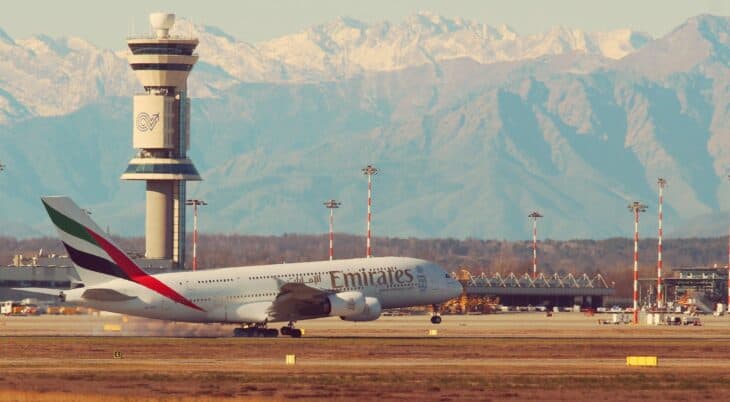

FlightAware also shows a later departure for N760AN from Milan to JFK, planned for 8:10 a.m. on Friday, October 30, as cancelled. Friday’s regular AA199 was assigned to a different 777-200ER, N762AN, according to FlightStats at the time of writing.
Why nose-wheel steering matters
Nose-wheel steering is how a jet turns on the ground. On large aircraft, the pilot in the left seat steers with a tiller, a small wheel usually mounted on the cockpit’s side console.
The 777 has three redundant hydraulic systems, and only one of them is needed to land. That is why a hydraulic fault like AA198’s usually ends in a normal landing, even when it takes a ground function such as steering with it.
The aircraft hydraulics explainer covers how those systems move gear, brakes and control surfaces.
Loss of nose-wheel steering is most often caused by a failure in the hydraulic system that powers it, according to the aviation safety knowledge base SKYbrary. Crews are generally not trained to taxi a large jet using differential braking or thrust alone.
For that reason, SKYbrary says it is often most prudent to stop the aircraft and have it towed to the ramp. It advises crews who learn of a steering problem in flight, as the AA198 crew did, to try to have a tow crew waiting when they land.
N760AN and American’s 777-200 fleet
N760AN is one of American’s Boeing 777-200ERs, listed in the FAA registry as a 777-223 with serial number 31477. The FAA registry lists it as built in 2002, with an airworthiness date of January 4, 2002, which makes it nearly 25 years old.
The registry lists Rolls-Royce RB211-series engines. The jet had been busy: in the two weeks before Milan, its flights included Dallas Fort Worth to Tokyo Narita, Madrid and Paris, and Miami to Buenos Aires, and it reached JFK from London Heathrow the evening before AA198.
American had 47 777-200ERs in its mainline fleet at the end of 2025, alongside 20 larger 777-300ERs, according to its July 2026 fleet count. The same fleet count projects all 47 still in service at the end of 2027.
The same fleet made news in July, when another American 777-200ER, N772AN, diverted to JFK with its gear jammed down after leaving Boston for London.
The cause of the hydraulic problem on N760AN had not been made public at the time of writing.
Sources and references used for research and fact-checking.
Get the Newsletter
The latest aviation news and stories sent to your inbox.
About the Author

AeroCorner News is the aviation news desk of AeroCorner.com. It covers accidents and incidents, safety rulings, airline and airport disruption, and new aircraft. It works from primary sources such as the NTSB, FAA, EASA and the manufacturers' own announcements.