

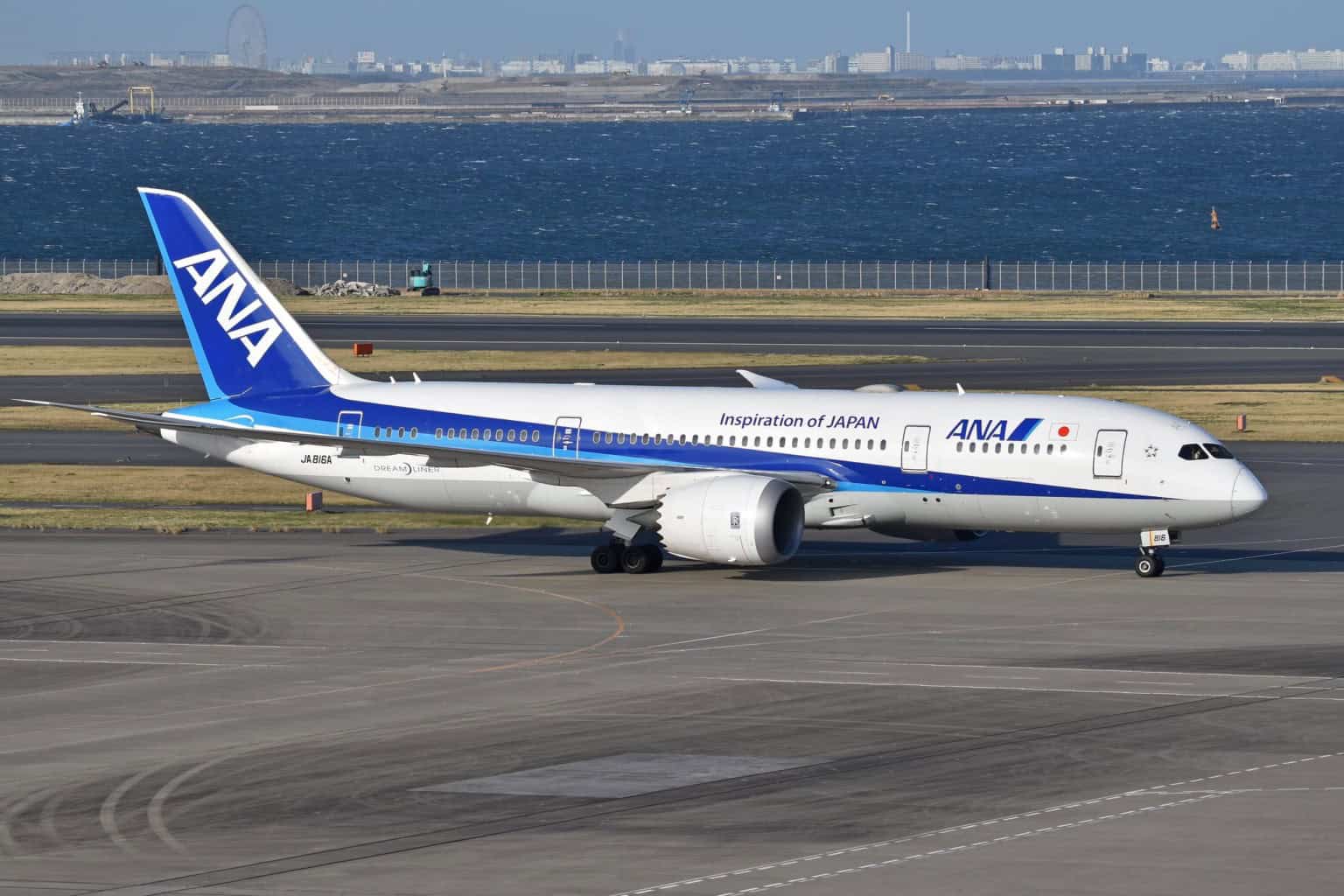
An All Nippon Airways Boeing 787-9 struck its tail on the runway at Houston in February because the captain inadvertently pressed the takeoff/go-around switch just after touchdown, the National Transportation Safety Board has concluded. The board’s final report on ANA flight 114 from Tokyo Haneda is dated September 8, 2026.
None of the 197 passengers and 12 crew members were hurt, but the lower fuselage of the jet was substantially damaged.
What happened on runway 26L
The flight arrived at George Bush Intercontinental Airport on the morning of February 27, 2026, in fog with a 200-foot ceiling. The crew flew a Category III approach, letting the autoland system fly the aircraft all the way onto runway 26L.
The captain was the pilot flying. He told investigators he confirmed the thrust levers were at idle after touchdown, saw the speedbrakes deploy, and was moving to raise the thrust reversers when the nose rose unexpectedly.
The first officer, watching the flight mode annunciator at the top of his primary flight display, called out that the system had entered TOGA mode. Neither pilot recalled pressing the switch.
The flight data tells the rest. About half a second after the wheels touched down, the TOGA switch was pressed, and both the autopilot pitch mode and the autothrottle changed from flare mode to TOGA.
Pulling the throttles into reverse cancelled the autothrottle half of that command. The autopilot, still in TOGA, kept driving the elevator and stabilizer toward a go-around attitude, and pitch climbed from 3.5 degrees to 7.4 degrees in two seconds.
About five seconds after TOGA engaged, the control column was pushed forward. Two seconds later a peak force of 40 pounds (about 18 kg) disconnected the autopilot, but by then pitch had reached 7.8 degrees, enough for the tail to hit the runway. It peaked at 7.9 degrees.
The crew learned of the strike only while leaving the runway, when a “tailstrike” message appeared on the engine indicating and crew alerting system.
Why one switch press can lift the nose
TO/GA switches sit on the thrust levers so a pilot can start a go-around instantly, without moving a hand. After landing, the pilot’s hand is on those same levers to select reverse thrust, which is where the NTSB believes the captain’s inadvertent press happened.
A press tells the aircraft to climb away: the autothrottle heads for go-around thrust and the autopilot targets a nose-up climb attitude. That is exactly right in the air and exactly wrong with the main wheels already rolling on the concrete.
Boeing’s logic blocks the switch from engaging go-around modes once certain conditions are met after landing. According to Boeing, those conditions had not yet been satisfied when the switch was pressed, so the command went through.
The 787 also carries a tailstrike protection function, and the data shows it was already commanding the elevator against the pitch-up. The NTSB says its authority is limited, and it could not stop the nose from rising.
The margin involved is small. The jet touched down at 3.5 degrees of pitch and its tail met the runway at 7.8 degrees, a change of just over four degrees in a few seconds.
Investigators found the crew did not know TOGA mode had engaged, and that their delayed detection of the rising pitch prevented a timely correction.
The probable cause reads: “The captain’s inadvertent activation of the takeoff/go around switch at touchdown that caused an increase in the airplane pitch attitude that was not corrected before the lower fuselage contacted the runway.”
The crew, the aircraft and the investigation
The captain had 16,413 flight hours, 2,969 of them on the 787. The first officer had 3,929 hours, including 2,575 on type. The report found no mechanical malfunction that contributed to the pitch-up and no evidence of an autopilot fault.
JA873A was built in 2015, is powered by Rolls-Royce Trent 1000 engines, and had logged about 44,394 hours at the time. The Aviation Herald reported the jet was still grounded in Houston for repairs as of May 8.
The NTSB ran the case as a Class 4 investigation and did not travel to the scene. ANA, the Japan Transport Safety Board, the FAA and Boeing took part.
What the report does not cover
The final report contains no safety recommendations, and it does not say whether ANA or Boeing have changed training, procedures or software since the accident. Nothing in it suggests the switch press was anything other than inadvertent.
Sources and references used for research and fact-checking.
Get the Newsletter
The latest aviation news and stories sent to your inbox.
About the Author

Tim is the owner and lead editor of AeroCorner since 2019, overseeing aviation content covering aircraft, airlines, airports, and the broader aviation industry. Through years of researching, writing, editing, and publishing aviation-focused content, he has developed extensive practical knowledge of commercial aviation and air travel. Based in Asia and a frequent traveler himself, Tim also brings firsthand passenger experience to AeroCorner’s coverage. Outside of publishing, he has also explored aviation firsthand through hands-on flight training in New Zealand.