

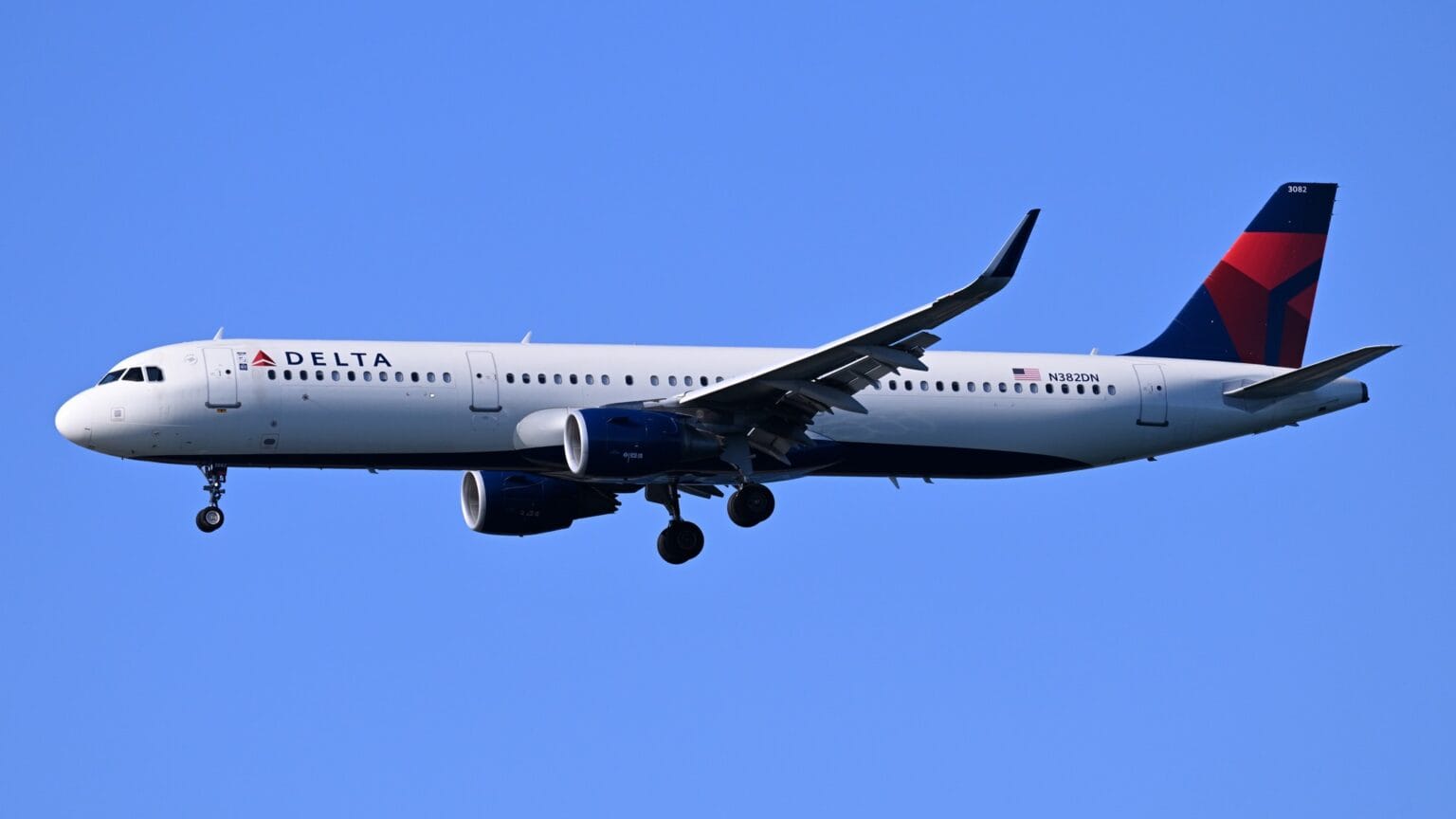
Delta Air Lines flight DL1181, an Airbus A321 registered N382DN, struck its tail on the runway while landing at LaGuardia Airport on July 14, 2026, after a firm touchdown and a bounce. The National Transportation Safety Board’s final report, published on October 22, blames the first officer’s excessive nose-up sidestick input after the bounce and the captain’s delayed takeover.
Nobody was hurt among the 188 passengers and six crew on the scheduled flight from Fort Lauderdale, Florida, but the airplane’s lower fuselage was substantially damaged, according to the report.
A training flight with a check pilot in the left seat
The first officer was in operational experience training, flying scheduled trips under supervision, and the captain was serving as the line check pilot. It was the pair’s fourth leg together and the first officer’s third as pilot flying, the NTSB said.
The report lists the 29-year-old first officer with 2,879 total flight hours, of which 19 were on the A321. The 63-year-old captain had 13,482 hours, 3,170 of them on the type.
The captain asked the first officer to hand-fly the arrival. The autopilot came off at about 18,000 feet and the autothrottles at about 10,000 feet, and the captain told investigators the arrival was flown well until final approach.
What happened on short final to runway 22
On short final, the airspeed began to drop below the target approach speed. The first officer added thrust, but not enough, and made a second correction only after the captain called out the speed deviation.
The flare started slightly late, and the jet touched down firmly and bounced. Flight data showed a pitch angle of about 7 degrees and a vertical load of 1.91 g at that first touchdown.
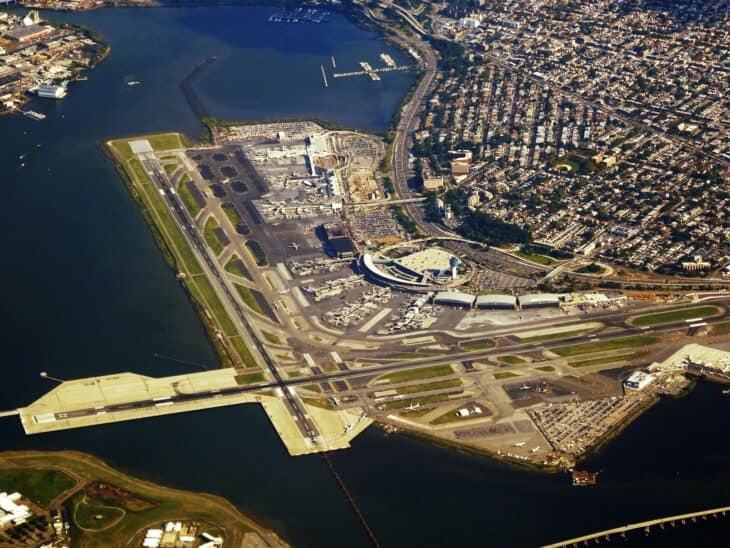

During the bounce the first officer pulled the sidestick too far aft, and the airplane came down a second time. Its pitch reached 10.02 degrees before the captain’s go-around inputs appear in the data.
The captain then took control, lowered the nose and initiated a go-around. Once the climb was established, the first officer took back the controls and landed on the next approach without further trouble.
Flight attendants told the cockpit they had heard a loud scraping noise. The pilots’ own inspection after landing found substantial damage to the lower fuselage, and the NTSB found no mechanical problem behind the high pitch angle.
Why a bounce is the moment to stop pitching up
Delta’s bounced-landing procedure, quoted in the report, tells pilots to initiate a go-around after a “high hard bounce”, apply TOGA thrust and “not allow the pitch attitude to increase.” The NTSB said the tail strike likely would have been avoided had the first officer followed it, or had the check pilot stepped in sooner.
An A321 operator’s flight crew techniques manual, quoted in an Irish investigation report, names the trap: after a bounce, a pilot “may be tempted to increase the pitch attitude to ensure a smooth second touchdown.” With the main wheels close to the runway, that extra pitch brings the tail down toward it.
Airbus’s own Safety First guidance on the landing flare says pilots should hold the pitch attitude after a bounce and go around if the bounce is high. It also warns that letting the speed decay well below approach speed before the flare raises the tail strike risk, which is how the DL1181 approach began.
The Airbus A321 is a stretched A320, and crews brief tail strike risk on it for that reason. Ireland’s Air Accident Investigation Unit described a near-identical sequence on an A321neo at Washington Dulles in August 2023: a bounce, an aft sidestick input, a pitch of 10.1 degrees and a tail strike.
That report put the A321neo’s pitch limit with the main gear compressed at 9.7 degrees. The NTSB report does not give the limit for Delta’s A321-211, so the margin on DL1181 is not published.
A bounce-triggered tail strike is a different chain from the ANA 787 tail strike at Houston, which the NTSB traced to a go-around switch pressed just after touchdown.
What the NTSB did and did not do
The case, DCA26LA282, was handled as a Class 4 investigation, and the NTSB did not travel to the scene. The report carries no safety recommendations.
Its findings list three personnel issues: the first officer’s aircraft control, the first officer’s incorrect action, and the captain’s monitoring of the other pilot.
Sources and references used for research and fact-checking.
- NTSB, Aviation Investigation Final Report DCA26LA282 (Delta Air Lines flight 1181, Airbus A321-211 N382DN, LaGuardia, July 14, 2026)
- Airbus, Safety First: A Focus on the Landing Flare (September 2020)
- Air Accident Investigation Unit (Ireland), Final Report 2025-007: Airbus A321neo LR EI-LRD, Washington Dulles Airport, 30 August 2023
Get the Newsletter
The latest aviation news and stories sent to your inbox.
About the Author

AeroCorner News is the aviation news desk of AeroCorner.com. It covers accidents and incidents, safety rulings, airline and airport disruption, and new aircraft. It works from primary sources such as the NTSB, FAA, EASA and the manufacturers' own announcements.