

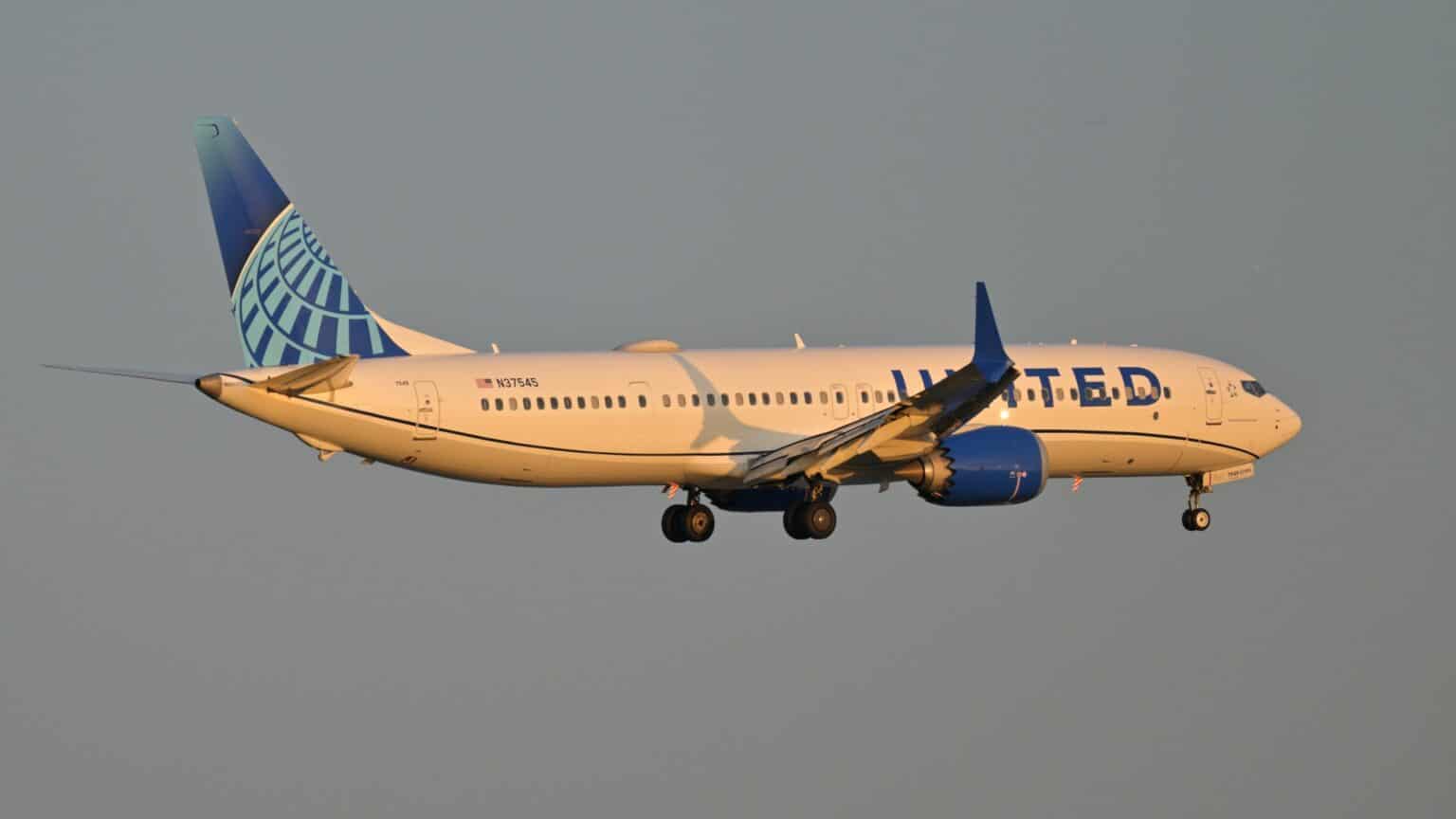
United Airlines flight UA1854 from Grand Cayman declared an emergency on its arrival at Houston’s George Bush Intercontinental Airport on Sunday night, October 25, 2026, and landed safely. United said the Boeing 737 had a mechanical issue, according to KPRC 2.
The flight carried 83 passengers and six crew members, and passengers left the aircraft at the gate. United has not said publicly what the mechanical issue was.
What the tracking data shows
FlightStats records the aircraft as N27474, a Boeing 737 MAX 9. It left the gate at Owen Roberts International at 4:28 p.m. local time, 17 minutes ahead of schedule, and cruised toward Texas at 36,000 feet, according to ADS-B Exchange data.
The jet did not land on its first approach. At about 7:30 p.m. Central time it flew east along the line of Runway 8R at Houston Bush at under 1,000 feet, then climbed away and circled northwest of the airport at around 2,700 feet.
Shortly before 8 p.m. it came back for a second pass along the same runway, this time a few hundred feet up, and again climbed away. It touched down on Runway 9, the airport’s southern east-west runway, at about 8:12 p.m., roughly 43 minutes after the first pass.
The 737 reached Gate E16 at 8:24 p.m., 27 minutes behind schedule despite the early departure, FlightStats shows. The transponder never showed the 7700 emergency code in the ADS-B Exchange data, though a crew can declare an emergency by radio without setting it.
A reported landing gear problem, not yet confirmed
An account relayed by Cedar News, citing preliminary reports of air traffic control communications, says the crew reported that the right main landing gear would not extend. The same account says controllers suggested Runway 9 so it could be closed after the landing if needed.
Neither United nor the FAA has confirmed that description. The airline’s only public explanation so far is a mechanical issue, so the gear account remains unverified at the time of writing.
The tracking data is consistent with the account: the jet did land on Runway 9, after two passes that suggest the crew took time over a problem before landing. The data cannot show why the crew made them.
Why a crew flies past the runway first
A missed approach or a low pass buys time. It can give a crew room to run checklists and, in some cases, let people on the ground look at the aircraft, for example to see whether the gear is down.
The runway matters too. Bush Intercontinental has five runways, so closing one behind a stricken jet still leaves the others for arrivals.
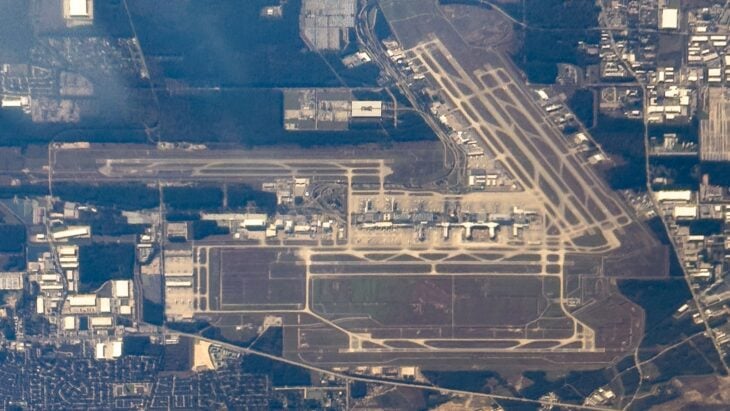

A single-runway airport has no such cushion. When Swiss flight LX2142 extended its gear mechanically at Valencia in September after a hydraulic warning, it could not steer off the only runway, and some arrivals were sent elsewhere.
A two-month-old aircraft
N27474 is close to new. FAA registry records list it as a 737-9 built in 2026, serial number 67665, powered by CFM LEAP-1B28 engines, with its airworthiness date on August 18, 2026.
The flight came a day after another United-branded scare at Houston Bush. On Saturday morning, United Express flight UA6153 was evacuated after smoke filled its cabin as it taxied out; that flight was operated by Mesa Airlines, not United’s mainline fleet.
Whether the FAA or the NTSB will look into UA1854 had not been announced at the time of writing.
Sources and references used for research and fact-checking.
Get the Newsletter
The latest aviation news and stories sent to your inbox.
About the Author

AeroCorner News is the aviation news desk of AeroCorner.com. It covers accidents and incidents, safety rulings, airline and airport disruption, and new aircraft. It works from primary sources such as the NTSB, FAA, EASA and the manufacturers' own announcements.