

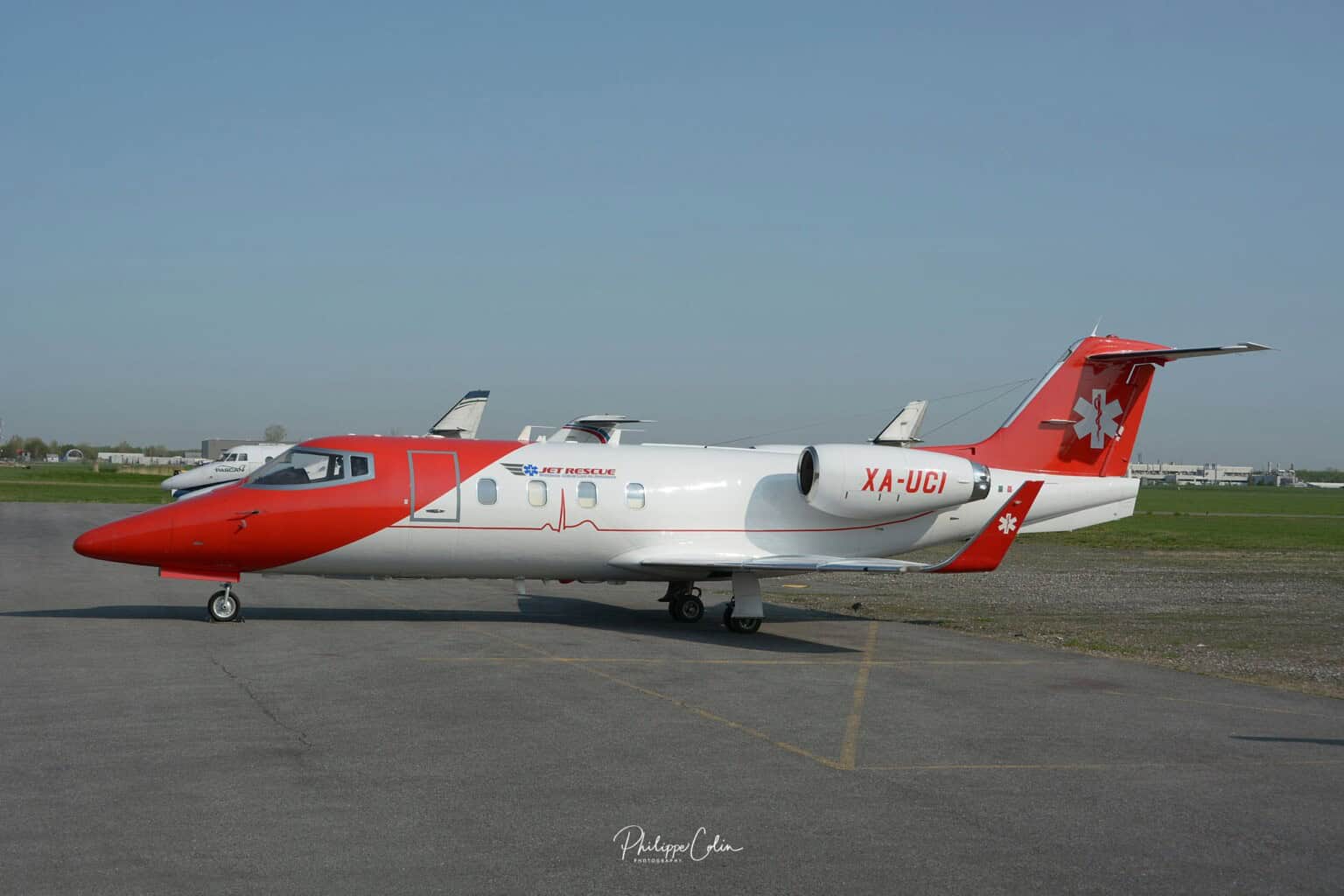
On August 19, 2026, the National Transportation Safety Board released a public docket on the January 31, 2025 crash of a medical Learjet in Northeast Philadelphia. The evidence shows the aircraft’s operator had never been inspected by the FAA, despite three prior accidents.
What the Docket Adds
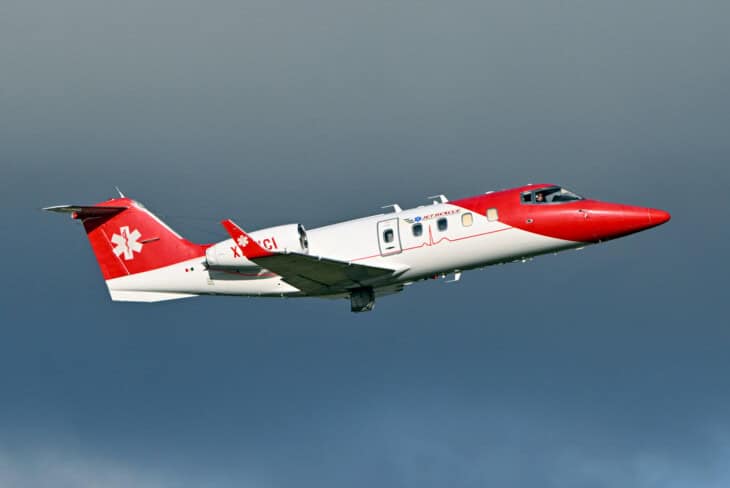
The Learjet 55, operated by Jet Rescue Air Ambulance and carrying a pediatric patient bound for Tijuana, took off from Northeast Philadelphia Airport just after 6 p.m. It was airborne for only 22 seconds before crashing onto Cottman Avenue near Roosevelt Mall, in the Castor Gardens neighborhood.
Eight people were killed, six on board and two on the ground, with more than 20 others injured. The new docket adds hundreds of pages of factual material, including doorbell and drive-thru security footage of the aircraft’s final seconds, first reported by the Northeast Times.
A Mis-Set Trim and a Recorder That Wasn’t Working
The docket includes a discrepancy in the aircraft’s pitch trim. The calculated takeoff setting was 5.5 degrees, but the recovered actuator showed 3.97 degrees, meaning the pilots would have needed roughly 53 pounds of force on the yoke to hold level flight, NBC10 Philadelphia reported from the docket.
Investigators also found the cockpit voice recorder had likely been broken for years, and the Learjet carried no flight data recorder at all. Neither black box captured the accident flight.
No recording of the crash flight
The Learjet’s cockpit voice recorder had likely been inoperative for years, and the aircraft carried no flight data recorder. Investigators are working the crash without either black box.
A Theory: Spatial Disorientation at Night
Radar data in the docket shows the jet rolled right, then rolled sharply left within 10 seconds of its last radio call. Former NTSB investigator Jeff Guzzetti told the Philadelphia Inquirer that low cloud, night conditions, and a rapid climb are consistent with spatial disorientation.
One specific form, somatogravic illusion, can trick a climbing pilot into feeling the nose is pitching up when it isn’t, prompting an unneeded push toward the ground. Neither pilot had flown into Northeast Philadelphia Airport before that night, per NBC10’s review of training records.
The FAA Never Inspected the Operator
Jet Rescue Air Ambulance was not on the FAA’s Heightened Surveillance List, a flag reserved for operators needing closer scrutiny, despite three prior accidents: a fatal 2012 crash in Fort Lauderdale, a nonfatal 2019 accident in Toluca, Mexico, and a fatal 2023 accident in Cuernavaca, Mexico.
The FAA’s field office responsible for the operator had no record of ever conducting a ramp check, an unannounced inspection, and no surveillance plan in place before the crash. Asked whether ramp checks were required, the office’s primary inspector for the carrier said “Oh, I’m not sure,” according to the Inquirer’s review of the docket.
A pattern regulators missed
FAA staff overseeing Jet Rescue Air Ambulance told investigators they had no knowledge of the operator’s prior accident history. Three accidents, two of them fatal, preceded the Philadelphia crash.
The NTSB has not determined a cause. The docket is factual material only, gathered so far in the investigation, and a final report with a probable cause, like the one that closed the Bering Air crash investigation last month, is not expected for several more months.
Sources and references used for research and fact-checking.
Get the Newsletter
The latest aviation news and stories sent to your inbox.
About the Author

Tim is the owner and lead editor of AeroCorner since 2019, overseeing aviation content covering aircraft, airlines, airports, and the broader aviation industry. Through years of researching, writing, editing, and publishing aviation-focused content, he has developed extensive practical knowledge of commercial aviation and air travel. Based in Asia and a frequent traveler himself, Tim also brings firsthand passenger experience to AeroCorner’s coverage. Outside of publishing, he has also explored aviation firsthand through hands-on flight training in New Zealand.